Assessing Mental Impact
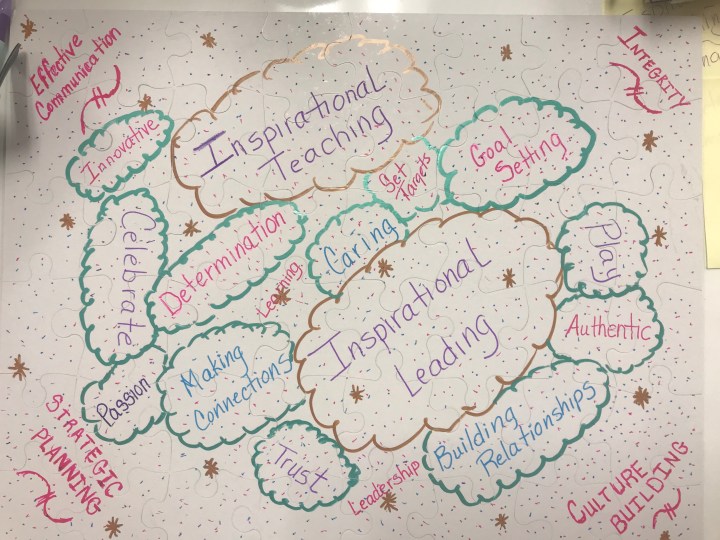 Today during a meeting I made a comment that we needed to assess the mental impact that a decision would make. This term made an impression on the group who said they had never thought about the mental impact a decision would have on others. We then proceeded to discuss the impacts.
I really wasn’t trying to come up with new terminology, but when I reflected on the great discussion I decided to look up mental impact. Guess what I found? Nothing. It seems I’m on to something. Again, it is not anything that is earth shattering; it is just doing the right thing. It is about considering how any decision made will affect those impacted by a decision.
Great leaders understand how to balance emotion with reason and make decisions that positively impact themselves, their employees, their customers and stakeholders, and their organizations. Making good decisions in difficult situations is no small feat because these decisions involve change. We must consider the mental impact these decisions have because change involves uncertainty, anxiety, stress, and sometimes unfavorable reactions of others. To get this right, I believe we must approach decisions as human beings and not humans doing.
Our core values come into play here. Never forget that our actions testify much more powerfully than words. Therefore, taking time to evaluate the mental impact of our decisions on people. Nearly every decision we make will affect different people in one way or another. We need to take time to understand and be fully aware of the influence our decisions will have, and understand what the mental impact will be on all individuals.
Constant connection with people enables us to recognize opportunities and threats, and figure out how to be adaptive to these threats or opportunities. Habitual outreach and taking stock of mental impact prevents insular thinking, opens doors to ideas and collaborative relationships, and expands our ability to problem- solve. By taking mental impact into account leaders can make better decisions.
Success In Aspirational Terms
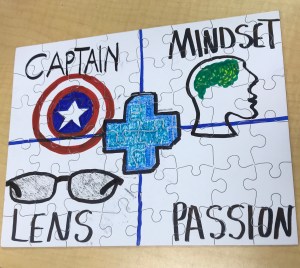 This past week I heard a person say that “success should be measured in aspirational terms.” The more I thought about it, the more I like it. In education I believe we need to think more aspirational in the way we prepare students. In other words looking beyond just credits and a diploma to the outcomes of what a student should be able to do now and be capable of learning to do later.
Let’s use an example that gets used a lot – welding. It is short-sided to think that having a student be in the single pathway of learning to fuse two pieces of metal together is enough. Don’t get me wrong, good careers await the student, but that’s not aspirational enough. This is why I believe in achieving multiple pathways. A student with aspirations for welding should also be studying computer science. Computers have become an indispensable part of welding processes. Computer, and even artificial intelligence, are required for the execution of many welding operations today. We can only imagine this need for knowledge of computer science will increase. Industry is telling us that welders will need knowledge of lasers, computer program, robotics, artificial intelligence, materials engineering, and systems integration to advance.
With the increased demand for highly skilled and technically sound workers, our students will need to shape their careers around multiple areas of expertise. This aspirational approach will enable their lifelong learning and ability to be agile to a ever-increasingly fast changing world.
We need to be deliberately aligning our student’s aspirations and abilities. The scene in the movie “The Martian” where it doesn’t look like it will end well for astronaut Mark Watney he sends this message to be relayed to his parents:
“Tell them I love what I do and I’m really good at it. And that I’m dying for something big and beautiful and greater than me. Tell them I said I can live with that.” ~ Mark Watney, played by Matt Damon, in The Martian (2015)
Try and tell me that’s not aspirational. We all need to find what we love and what we are good at. It’s not either or, and we need to help students find that balance as well. Some would say that aspiration is magical thinking. I don’t believe it is a magic trick to strategize about the future, help students invent themselves and us reinvent ourselves, push upscale, and keep a growth mindset. Without deep thought and planning about measuring success in aspirational terms, it just becomes a vacuous platitude, or “thing,” as I like to say. But taken in the context of enabling the future, career/skill agility, and student outcomes, measuring success in aspirational terms becomes about being prepared for what we don’t know we need to be prepared for.
Leading With Compassionate Solutions
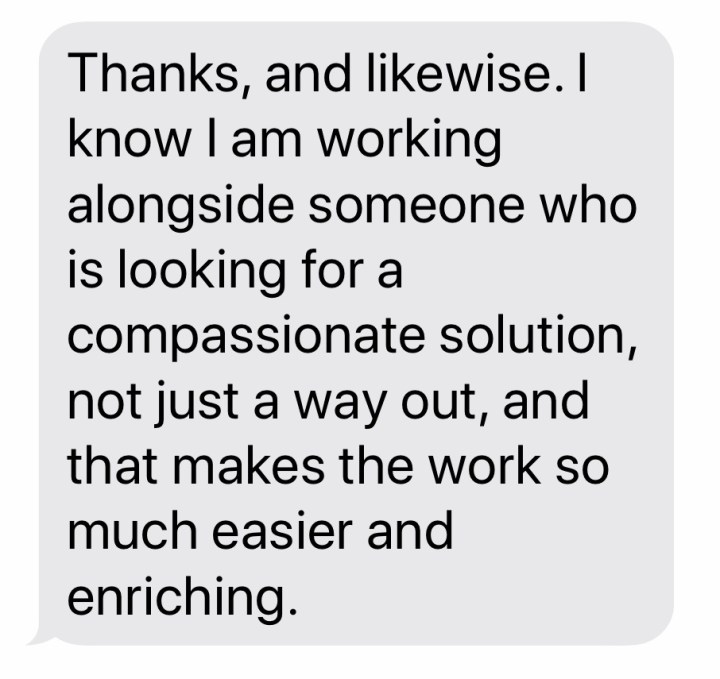 One of the driving forces of exceptional leadership is compassion. I am working through a situation right now that prompted the much appreciated text pictured above from a staff member and thought partner I am working on the situation with. Usually I pride myself on being very creative and innovative, but to be credited for finding a compassionate solution made me feel good and made me reflect on whether I was consistently a compassionate leader.
To be great, leaders must have the necessary empathy to inspire understanding and knowledge in team members. I teach about this in the leadership trainings I do. Empathy begins with taking an understanding from the experience and perception of another. Empathy, however, is just about understanding. Empathy is about opening doors and removing confusion. Compassion is the action step; compassion is about actually doing something.
The compassionate leader can then be creative in solving situations, problems, and opportunities. Looking for compassionate solutions allows the leader to look past “the easy way out” referenced in the text pictured above. This allows the team to look at challenges as opportunities to be dealt with as obstacles, not barriers. Barriers stop completely and obstacles can be removed, gone around, over, or under. I blogged about this in Obstacles Vs. Barriers. Actually, I said to the author of the above text, “Let’s make sure we look at any challenges as obstacles and not barriers. We are not allowing any barriers.” The compassionate leader seeks to understand people, families, and communities; knowing that understanding is the gateway to having the greatest influence as a leader.
Manatee Leadership Lessons


Yesterday, I had the opportunity of a lifetime to learn leadership lessons from the West Indian Manatee. Our Central Florida/Tampa 3D Leadership Program participants decided that we would start our gathering at the Tampa Electric Company Manatee Viewing Center. The Big Bend Power Station in Apollo Beach delivers reliable electricity to the community. When the Tampa Bay water temperature reaches 68ºF or colder, the Manatees gather in large numbers in the power station’s discharge canal, where saltwater – taken from Tampa Bay to cool Unit 4 flows, clean and warm, back to the bay. The discharge canal is a state and federally designated Manatee sanctuary that provides critical protection from the cold for these unique, gentle animals. It has also been developed into an incredible education center dedicated to the Manatee, Sting Ray, birds, butterflies, and other wildlife and plant life indigenous to the area. I even got to smell the breath of a Manatee. For the farm kid from Indiana this was an incredible experience.


Prior to arriving for the experience I did a a little studying and learned how the Manatee handle thermoregulation by doing central-place grazing. In other words, they go out into the cold bay water to graze on plant life (they are herbivores) and then come back to the warm water near the power plant to get warmed up. I was also able to study the migratory maps of these amazing mammals.
The objective of participants was to come up with the leadership lessons learned from our Manatee experience. Here is what we came up:
- Must be caring
- Adaptive to change
- Lead by example
- Able to function alone
- Still move forward through the unknown
As you can see there are so many great leadership lessons to be learned from studying and observing these wonderful animals. I have done other blog posts with lessons from animals, such as Pelican Leadership Lessons, Living and Leading Like A Lobster, and Leading Like A Platypus. Using animals as metaphors for great leadership is a great way to learn and teach leadership. Do you have any examples? Share them by replying to my post.
Contrarian Thinker
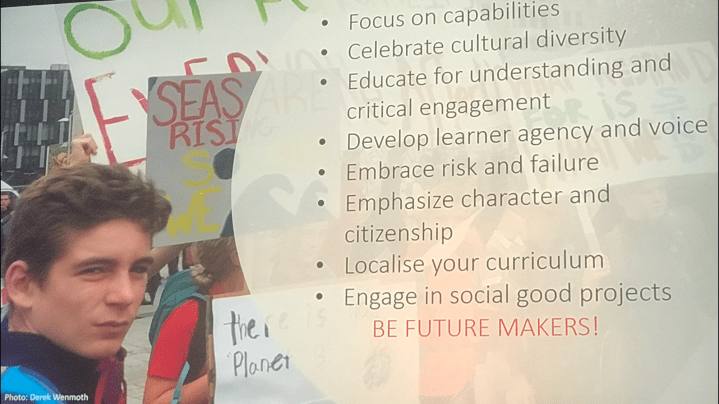 One day, this past week, I was introduced to a group I was speaking to as a “Contrarian Thinker.” Honestly, I wasn’t exactly sure what that was. After doing a little research, however, I found that this was probably a pretty accurate description. Contrarian thinkers are trailblazers. ✔️Check. They are polarizing visionaries who are just as likely to be called crazy before brilliant. ✔️Check. Contrarian thinkers have the foresight to see hidden opportunities and seize them when the right moment presents itself. I would like to think I do this, but I’m not so arrogant to say check on this one.
Never forget, the risks of going against the crowd are greater, but so are the rewards. The rewards of innovating, curiosity, and an imagination gone wild are always worth the effort. An important fact for a contrarian thinker to remember is that no one will be expecting you or your ideas to succeed, which is one of the reasons you will.
Then, last night as I was flipping through the channels (are they still called channels on the tv?) I stopped on Shark Tank long enough to hear Mark Cuban described by one of the other Sharks as a contrarian thinker. So, off I went to learn more about his storied history.
While reading 9 Critical Turning Points That Shaped Mark Cuban’s Extraordinary Career by Drake Baer, I found that Mark Cuban is a contrarian thinker. One of my favorite quotes from Mark Cuban in the article is, “The ‘sprint’ doesn’t have a finish line. There’s never a point where you can say, ‘We’ve made it.'”
 The more I studied this topic, however, I really found that many contrarian thinkers always find an opposing view. I don’t think that is me at all. Nor do I believe that would be very productive. A more productive view would be one of “independent thinker.” My takeaway to share with you is that rather than always being swayed by consensus view, or consistently being a contrarian, we should strive to be independent thinkers. I always strive, and would encourage you to as well, look at different perspectives, and sometimes find a unique angle.
Remember, if you think the same way as everyone else, it is very difficult to outperform them.
The Majestic Leader
 I had the opportunity to spend this week in Palm Springs, California for Aurora Institute’s annual symposium. The theme of this year’s symposium was Shining A Light On The Future Of Learning. Palm Springs is such a beautiful place located in the Coachella Valley. Palm Springs is completely surrounded by mountains; the San Bernardino Mountains to the north, the Santa Rosa Mountains to the south, by the San Jacinto Mountains to the west, and by the Little San Bernardino Mountains to the east.
These mountains are the cause for this post. I was visiting with a friend from the state of Washington about how the mountains were different than other mountains. She described them as being “majestic”. That seemed like an appropriate adjective, but I needed to think a little about just what majestic meant. It is an adjective meaning, having or showing impressive beauty or display great dignity. Also, majestic befits a great ruler and being simply far superior to everyday stuff. I was now fully on board with the mountains surrounding Palm Springs being described as majestic.
Then I got to thinking about majestic people I know. There are those with majestic beauty and those who are majestic leaders – those that display great dignity. I then reflected on what gave them that beauty. For me it is their referent power. Referent power is one of the most potent and majestic sources of power for a leader there is. It is a form of reverence gained from having tremendous interpersonal relationship skills. Referent power has become much more important as we move from command and control organizational environments to more collaborative and flattened hierarchical environments of influence.
Leaders with high referent power influence because of the follower’s admiration, respect, and identification with her or him. Think about this description when looking at the picture I took of the San Jacinto Mountains while I was in Palm Springs shown here:  These majestic mountains are a pretty appropriate metaphor for a majestic leader, don’t you think? I couldn’t let the metaphor end there, however. I then got to thinking about how if we, as leaders, get this influence right, the view is beautiful. This made me think of the awesome picture I got from the top of Mount San Jacinto at 8,516 feet shown here:
 Getting leadership right is such a beautiful and majestic thing for both the influenced and influencer.
Toy Story 4 Leadership
 Don’t laugh, but as I flew across our awesome country yesterday to Palm Springs, California for the 2019 iNACOL (now named the Aurora Institute) Symposium, I was excited to get to watch Toy Story 4. I’m a fan of Toy Story; not just because they are great movies, but also because of the Pixar story and the lessons in the movies. I was certainly not disappointed by the gang of toys getting back together with the addition of new toys. There were so many great connections to the leadership lessons I facilitate in our 3D Leadership program. I even took notes on a napkin.
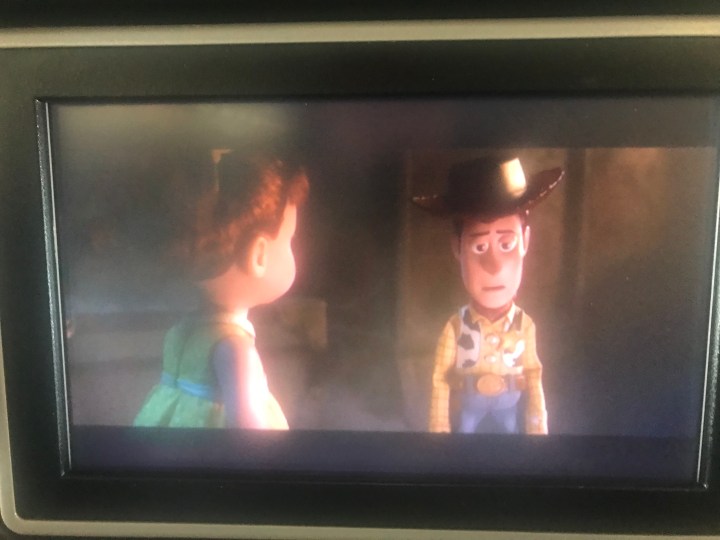 There were six big standout lessons in the movie:
1. From Forky I was reminded that we need to understand our value and the value others bring to our teams and organizations.
It is so important we know and understand our strengths. Then, it is crucial we have people working to their strengths. Too many times we move people and change roles, sometimes in an attempt to promote, without any regard to whether it is the “right” role based on strengths. Remember, you bring value. Forky needed to realize he was a toy even though not in the traditional sense. He brought value to Bonnie. Let’s not forget, she created Forky.
2. Great leaders are not always seen. Woody was helping Bonnie through her first day of school without her even knowing it. Without being seen Woody got her crayons for her and got her the materials to make Forky. He was helping her, being a servant leader, without her knowing it.
It’s easy to think leaders must be front and center and seen. Leaders don’t have to be seen, though. Leaders can do great work from the background. Great leaders gently guide people without them knowing you were there or were leading them.
3. The toys practiced adaptive leadership. Throughout the entire show, strategy was agile and constantly changing. Interestingly, all the toys led from where they were. Several times during the movie I heard toys say, “I have an idea, let’s do this.” The other toys would then team up and carry it out.
4. Buzz Lightyear led from where he was. Buzz had not really been a leader in the other three Toy Story movies, but he had to step up in this one because Woody wasn’t present. Buzz stepped up and filled the leadership void.
5. At one point in the film, Bo Peep exclaimed to Woody, “Look around, nobody’s with you.” We must remember that leadership is influence and if no one is with us when we turn around we are not having an influence.
6. At one point Woody said, “Because it’s the only thing I have to do.” Woody was resisting transition into another role, or in other words, he was resisting change. Know times of transition are not easy. Yet, to grow, there will always be transitions. Change is a good thing. Don’t let the pain of transitions stop them from happening.
 There are so many more lessons in Toy Story 4 to be dissected, but those are my big takeaways for now. If you have watched the film, I would love to hear your takeaways. Let’s keep leading to “infinity and beyond”!
Typical Discourse
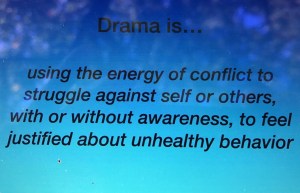 Earlier this week during our National Association of State Boards of Education (NASBE) Board of Directors meeting a comment was made during a discussion about our Public Education Position report about “typical discourse”. The comment was that we did not practice typical discourse any more. This got me thinking about what was “typical discourse”, anyway? I guess I see typical discourse as having vigorous debate about what to do with challenges and opportunities. This vigorous, honest, and transparent debate must involve all stakeholders, different political parties, and the entire political spectrum.
So, we have a complicated challenge on so many fronts. These fronts include education reform, equity issues, workforce, economy, and real human suffering just to name a few. This amounts to desperate need for a vigorous debate and our best thinking. Instead, it seems we have become a society of character assassination. In many cases we have become trivial, oriented toward turf protection, and despicable. This reminds me of what I believe the Ancient Greeks called an “ad hominem” attack. With this attack, the opponent attacks us personally, changes the subject, and uses “virtue signaling”. I blogged about virtue signaling in Leading Without “Virtue Signaling”.
Bottom line: we have strayed from civilized disdain and discourse and safe disagreement. I blogged about these in Safe Disagreement and Civilized Disdain Vs. Political Correctness. We need to find a way to turn discourse back to something substantial. Let’s work together to get to useful dialogue.
Benevolent Leadership
 I am reading a really interesting book, Tigress of Forli, right now about Caterina Riario Sforza. She was a great leader who started her leadership journey at age 10 in an arranged marriage. It caught my attention when the author, Elizabeth Lev, described Caterina as a “benevolent leader”. She was described as making sure the needs of her people and of the greater community were cared for. I then began to think about what it meant to be a benevolent leader or policy maker.
 Being a benevolent leader has nothing to do with being a philanthropist, a humanitarian, or being altruistic. It’s about creating greater opportunities for our communities, states, nations, and the world. It’s really about creating different possibilities in the world. It’s about, as Caterina taught us, developing a sustainable future for the world and everyone living in it. Additionally, benevolent leaders use their leadership influence to address significant societal, human, and environmental needs. Really it is about being innovative for the greater good.
Think about a world where leaders wished well for everyone. I believe it is about being aware of what one’s actions create for everyone. This is what I talk about when complaining about turf and self-interest. I have blogged about this in The Frustrating Truth Of Turf. It is difficult for us, at times, to get past what might look best for us and think about the good of all.
Last evening in our Carolinas session of 3D Leadership we discussed becoming more externally oriented as opposed to internally motivated in order to move from serving to create normal leadership to facilitating fundamental leadership. We concluded this would give us more episodes of excellence. The driving question becomes, “What can we create together?” Also, what if we began to look at what could be expanded, instead of what has to be cut?
The world is a system. I believe we forget this at times. Every decision made either creates or depletes the ability to collaboratively innovate for the betterment of all. How about you? Are you wishing well for all? I’m so glad I had the opportunity to study Caterina Riario Sforza and the example of a benevolent leader.
Think Fast & Answer Quickly
 I am reading the great book The Power Broker by Robert A. Caro. This book is about the leadership and power of Robert Moses. One of the strengths and attributes that people he worked with said he had was his ability to think fast and answer quickly. The context was his ability to quickly make a decision when asked a question or asked how to correct something and articulate the answer.
 Usually, I consider myself a slow processor. I’m the one that when a meeting is ready to end will have a few questions to be answered or comments to be made. In other words, I’m a processor. This, I believe is very different than thinking fast and answering quickly. Actually, after thinking about this deeply I would argue this is a skill set we should develop and hone. Here’s why: it comes down to actively listening. We must work hard at actively listening. This means carefully listening to the very end. This also means resisting the urge to start formulating the answer before the other person is done asking the question. Concentrating on the question, rather than your answer, will result in a more thoughtful answer.
We are better and more powerful leaders when we are able to think on our feet, gather our thoughts quickly and deliver our points convincingly. The best leaders are able to do this. Think about it; we live in an unscripted world. Therefore, we must prepare ourselves to think fast and answer quickly.
Several years ago I was judging 30-40 sheep, cattle, and hog shows around the nation each year. I always said that many show committees asked me to judge because I was consistent (you always knew what I was going to pick to win, whether you liked my type or not) and I was fast. I could place a class of 30 lambs quickly and accurately. Which meant I could get through a show with 300-400 head without it taking forever. I always advised new judges to work quickly so the crowd didn’t have time to pick different favorites than what they had picked.
A couple of things we can do to hone these skills when being asked questions is to listen for trigger words. Trigger words will prompt you to be thinking about the most important parts of the question or point being made. It shows the listener that you heard their question or concern loud and clear and are addressing in directly and head on.
Another thing that I have to continually work on is giving the short answer first. In other words, get to the point and don’t ramble on. Give the quick answer first and let the other party ask clarifying or follow up questions.
In the end it really comes down to being authentic. We need to answer to the best of our ability and from the heart. Say what we really think.


leave a comment