Embracing Our Reflection: How to Heal and Grow from Life’s Broken Mirrors
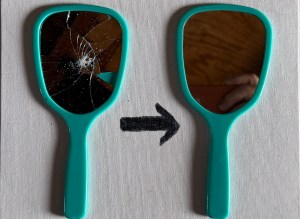
I am a very reflective person and yesterday morning a post I did from June 1st in 2023 came up in the content time capsule. I love, by the way, that WordPress does those blasts from the past for me. The post was entitled Being Reflective. I still love the quote in that post from a participant in one of my workshops about a temporary tattoo she did. She said, “I placed it there (on her neck) because the only way I can see it is in a reflection and this reminds me that to be self aware I need to be reflective.” Being self aware and reflective are both very important for us to be focused leaders.
I’ve been wanting to do a post about the great Architects’ song “Broken Mirror” and that blast from the past from 2023 gave me the inspiration to get it done. The song evokes a sense of longing, introspection, and vulnerability that I have been pondering writing about for a while. The chorus of the song goes like this: “Take me to the place where the heavens are haunted; And I’ll pray to the cross you bear; Tell me, if I gavе you the world would you meet me therе?; Do you see me now?; The lights are out; I’m a broken mirror.” There is a lot to unpack there and the reason why I love great rock artists. Those artistic lines can mean many different things and provide inspiration to many different people.
For me, the reference to heaven expresses a desire to reach a place of emotional or spiritual significance. Heaven, which is a real place for me, symbolizes hope, peace, or understanding. These lines also indicate gestures of empathy or seeking connection with those who are burdened or suffering. This is so important when we, as leaders, focus on others. Asking if giving the world would be enough to meet them highlights a desire for genuine connection beyond material or superficial offerings. It is about us and the people we serve looking into the mirror.
Awe, then the lines, “Do you see me now? The lights are out, I’m a broken mirror” reflect feelings of invisibility, despair, or feeling shattered. A broken mirror can symbolize a fractured sense of self or identity, and the darkness suggests emotional struggles or loneliness. Mirrors are important tools for the focused leader because self knowledge and self reflection are critical for leading ourselves and others. If we become broken mirrors we won’t be effective leading others. To help prevent our breaking, it’s important to nurture self-compassion and resilience.
The first thing we need to do is Practice Self-Kindness by treat ourselves with the same kindness and grace we’d offer those we serve. This means acknowledging our own and others’ feelings without judgment. Relationships are also important here. We need people who listen, understand, and uplift us. And we need to do the same for others. Connection helps reinforce our sense of self.
Even if the mirror gets cracked sometimes, it doesn’t have to shatter completely. With care and support, we can repair and strengthen it.
Reflections of Success: How Mentors Help Mentees Recognize and Leverage Their Strengths

This morning as I was watching the sun come up and how the ocean was serving as a mirror of the sun reflecting its brightness and beauty, I was reminded how important it is for us, as leaders to reflect those we serve strengths back to them. As I worked with a group of mentor teachers this past week, we discussed how being a great mentor and leader involved reflecting strengths back to mentees. Just what does that mean, though?
It means the mentor is aware, recognizes and reinforces the individual qualities, skills, and potential that each mentee possesses. Highlighting these strengths, by reflecting them back, the mentor helps the mentee see their own capabilities more clearly, boosting their confidence and encouraging further growth. This acknowledgment not only validates the mentee’s efforts but also empowers them to leverage their strengths in future challenges, fostering self-awareness and resilience along their development journey.
So, as we reflect on our own personal and professional lives, let’s not forget to turn the mirror around and reflect the strengths of those we serve back to them.
Reflecting: Embracing Our Inner Battles

Those who know me know I am a very reflective person. The great band Melrose Avenue has a great song “Reflections.” This song really resonates with me. It has a dark side but there are so many things we can learn from the lyrics. The song encourages us to recognize how our actions affect ourselves and others, promoting introspection. This song highlights that feelings like regret or denial are natural parts of the human experience, reminding us to be compassionate with ourselves. Facing inner struggles can lead to greater self-understanding and personal development.
The line “I can’t see what I’ve done” really jumped out at me. Many times we are unaware or unable to recognize the impact of our actions, possibly because we are overwhelmed, in denial, or emotionally numbed. It reflects a struggle to understand oneself or take responsibility, highlighting feelings of remorse, regret, or self-doubt. This line captures the difficulty at times of confronting our past or the consequences of our choices, adding depth to the song’s themes of introspection and inner conflict.
Here is a breakdown of a few other lines from the song that resonated with me:
- “Now I’m fighting for the hope of second chances” speaks to our yearning for redemption or a fresh start, hoping to fix past mistakes or circumstances.
- “But I don’t think I’m gonna make it in time” reflects doubt or a sense of urgency, feeling that it might be too late to change or alter the outcome.
- “Do I change my ways? Do I keep them the same?” is an internal conflict we all face at times about whether to pursue transformation or stick with familiar habits.
- “Should I save it for another day?” indicates the hesitation, contemplating delaying decisions or actions to a more suitable time. This reminded me of the times when we ask things like, “Is the timing right?” Or say, “This is not the right time.”
- “All I see when I look at my reflection / Is the animal that lives inside” reveals a darker self-awareness, recognizing primal or instinctual aspects within — perhaps anger, fear, or other raw emotions.
These lyrics can inspire us to be more honest with ourselves, embrace our imperfections, and use our experiences as opportunities for growth.
Being Reflective

Self-awareness requires reflection. I am a very reflective person and believe in providing space for those I serve to do that reflection. Today I was doing professional development for Charlotte County Public Schools at the 2023 Summer Education Summit in Punta Gorda, Florida. In this morning’s session entitled “Self Care for Educators” I did an activity with temporary tattoos. One of the participants made a profound statement about where she placed her tattoo – at the base of her neck (see photo). She said, “I placed it there because the only way I can see it is in a reflection and this reminds me that to be self aware I need to be reflective.” Drop the microphone! 🎤 We then discussed that reflection involves taking a step back and examining one’s thoughts, feelings, and actions in order to gain a deeper understanding of oneself.
Furthermore, reflection can help us identify patterns and habits that may be holding us back or causing us problems. It can also help us recognize our strengths and values, which can guide us in making important decisions and pursuing our goals. Reflection is all about learning. We must curate the actions in our past to move into the future. Are you taking time to reflect?
Happy Birthday Question

I got a great birthday wish last week from the awesome leader and author, Bob Tiede. Here is the message he sent me: “Happy Birthday Byron! When you reflect on your past year what might be the one thing you are most grateful for?” Bob is all about leading with questions. That’s what I love about him and why he is one of my role models from afar. Here was my answer: “Thank you for the birthday wishes, Bob. Also, I love the question. Here are my thoughts: I am grateful for loving relationships and the opportunities that have come my way. Reflecting on the positives always helps me have a mindset of gratitude and contentment.” It was hard to stop thinking about the question, though. Questions are so powerful.
Many of those relationships I was referring to in my answer to Bob’s question were related to those new relationships I have made and old relationships that have been strengthened in the first two years of founding my own company. As I reflect on the past year, I am struck by how lucky I am to have such fantastic clients that really are more like partners. Their feedback and encouragement have kept me motivated and inspired, and I am deeply grateful for their continued patronage. I am also grateful for the lessons learned through challenging experiences. Wow! All this reflection from Bob’s question. There is so much power in the question. What are you grateful for?
The Nuanced Context Of The Great Society
 The Great Society: A New History by Amity Shlaes
My rating: 5 of 5 stars
This is a well written and researched book. The book, for me, was written in such a way that lets the reader determine her/his own views on the subject. I spent a great deal of time pondering and reflecting on the content of the book. Having been a child during the Great Society era, I agree with the fact that the federal government, during this era, redefined its role in the arts, on media (television and radio), and public schools. As, Shlaes taught us, “Washington left no area untouched” (p. 6). In turn, the federal government became intrusive in the 1960s. The lesson learned was that the hypocrisy of how the middle class and the poor were treated began to limit our ability to innovate. One of the biggest lessons we should take from this book and the 1960s and 1970s is our need to find ways to truly evaluate programs, which we still do not have. Any time there are programs initiated by government we need to be able to answer whether the programs were worth and cost and if they achieved what was promised. This made me think of another of Shlaes great books, Coolidge, where we learned of Coolidge’s disdain for using legislation to experiment. In my blog post Remember Freedom Is Yours Until You Give It Up: https://byronernest.blog/2020/01/25/r… I spoke of how Harry Truman always spoke of the nuances of leadership, and the Great Society must be studied, which Shlaes did, in the nuanced context of the relationship of the Vietnam War, poverty, and civil rights.
Finding Happiness Right Where We Are
 I’m starting this post with a driving question: Should we try to find happiness right where we are, rather than being obsessed with where we are going? This sounds really good, and makes for good print, but does anyone actually do it? Or, can it actually be done? I believe I come close, but still have much work to do.
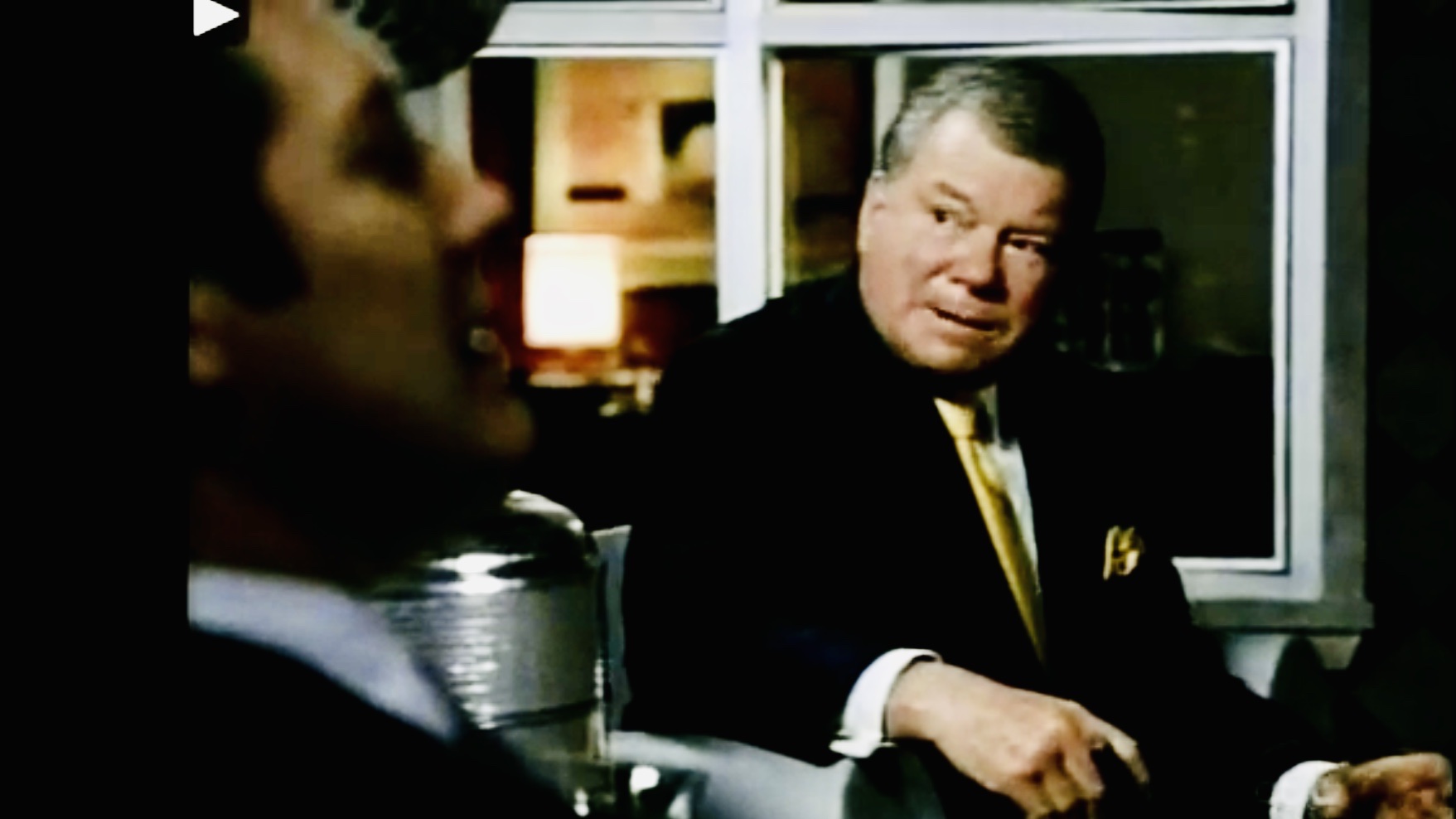
This reflection came at the end of another episode of Boston Legal – Season 3 Episode 23. The balcony scene with Denny Crane and Alan Shore had an interaction at the end where Denny was worried about getting old and losing his edge (which he often does). Alan said, “Yes, but don’t you think the real joy in life lies in the promise of tomorrow? The young simply have more tomorrows stacked up. That’s all.” Replying, Denny said, “Happiness… is right now my friend. On this balcony, right now. You and me.” Even though there is the paradox of Denny living in the moment of happiness right now and being obsessed with continuing to be undefeated in the courtroom and losing his edge with age, I was reminded we need to live more in the happiness of right now. The other thing to note about the conversation between Denny and Alan is the part of young people having more tomorrows stacked up. While generally true, this is not necessarily always the case. We really don’t know how many tomorrows we have – none of us know that. Thus, a strong case for being happy right now!
Many times, if we are honest, we find ourselves chasing after something not because we actually want it, but because we somehow are made to believe we need it. This could be a thing, clothing, new job, promotion, et cetera. This belief comes from our constant comparing of ourselves to others. This is a natural trap to fall into. Easy to say, “Don’t do that!” Almost impossible to not do. We need to constantly be grateful for what we have and remember that someone else’s success is not our failure.
This is why I am so obsessed with the final scene at the end of every episode of Boston Legal. While it is clear that Denny and Alan are not perfect at this happiness in the moment thing, they do, however, end every day with a conversion on the balcony. That conversation always leads to the happiness they have in the moment with their friendship and things they are grateful for. Alan Shore’s final comment in that part of the conversation was, “I love how you reduce everything in life to… you and me.” Maybe it is as simple as reducing things down to the simplest things that bring us happiness.
What if we began to think of happiness as right here, right now? Let’s start being happy first and realizing our some days and best days are right now. Let’s stop looking for answers, what’s next, and getting there and start enjoying here. Our typical happiness model according to Neil Pasricha is actually backward. He argued in 7 Ways To Be Happy Right Now that we operate using the model that great work plus great success brings happiness. The problem, as we all know is, that as soon as we reach that success we are really not that happy because we are already on to what is next. Pasricha continued to posit that we should start the equation with being happy and then great work and big success will follow. I would add “Balcony time with a friend” to Pasricha’s seven ways to be happy.
Here are three other posts I did reflecting on Boston Legal balcony scenes: Is It Fun Being You?; Do You Have An Inexhaustible Ability To Just Live?; and, Are We Best Friends? Let’s make sure we are taking time line Denny and Alan to enjoy and be happy in our “now.” Let’s all put happy at the beginning!


leave a comment