The Allure Of Superficial Rewards

In his 1951 letter to Milton Waldman, included as part of The Silmarillion, J. R. R. Tolkien said, “Reward on earth is more dangerous for men than punishment!” This comment really stood out to me. It also stood out that he made this a part of his sub-creation of Middle-earth. This reflected his perspective on the allure of worldly success and material rewards. In his letter to Waldman, Tolkien was suggesting that the desire for earthly rewards, such as fame, riches, or status, can be more perilous because it can lead us away from true values, morals, and spiritual fulfillment.
While punishment might serve as a deterrent or correction, the pursuit of superficial rewards can deceive and corrupt an our character, fostering greed, pride, and complacency. Tolkien warned, as we can see in some of the characters of The Lord of the Rings, that the temptations of worldly gain can be more insidious and damaging than punishment because they can subtly lead people astray from a meaningful and morally upright life.
Being Vulnerable
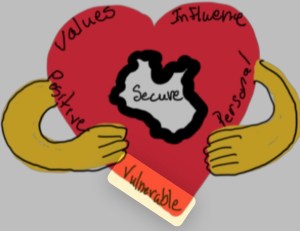
Gandalf’s words at the end of J. R. R. Tolkien’s The Return of the King carry a deep and comforting message. When he said, “Go in peace! I will not say: do not weep; for not all tears are an evil” (p. 155), he was acknowledging to Sam, Merry, and Pippin as they said goodbye to Frodo, that tears and grief are natural responses to loss and change. Tears reflect the love and care we feel for others, or just our emotional state at the time. Gandalf recognized that mourning is part of healing and that crying can be a gift. It’s really an expression of the heart’s depth. His words gently reminded us that sadness has a place in our lives and that through our tears, we honor what we have lost and find a path toward acceptance and peace.
As a believer that vulnerability is one of the most underused and underdeveloped leadership attributes, we must recognize our own and others’ emotions. Crying can be a moment of vulnerability that resonates deeply with others. I have blogged about crying before in Tears Give The Courage To Suffer. Emotional transparency fosters trust and authenticity. In my new book, Mere Leadership, I said, “Vulnerability allows leaders to connect with others on a human level, fostering trust and open communication. By acknowledging their limitations and mistakes, leaders create an environment where followers feel safe to express their own vulnerabilities” (p. 72). This is all about understanding ourselves as well as others.
Gandalf was showing his strong emotional validation by recognizing, understanding, and accepting Sam, Merry, and Pippin’s emotional experience in that moment of saying goodbye to Frodo. We can validate emotions by acknowledging both the feeling someone has and the situation that triggered it.
Frodo and Cincinnatus: Heroes of Humility and Service Beyond Glory
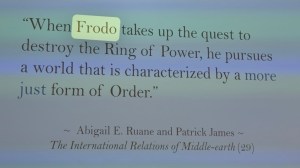
Yesterday when I wrote Leading Like Frodo: Frodo’s Quiet Withdrawal considering Frodo’s completion of the quest and fading from the public’s eye, I couldn’t help but think about Cincinnatus. Cincinnatus did not want to lead for power, but to serve. He always returned to the farm after saving Rome twice. At the conclusion of all his service Cincinnatus just wanted to go back to his farm, where he milked his own cows and branded his own calves. He exemplified civic virtue. Cincinnatus accepted authority only when necessary and relinquished it promptly afterward. His leadership exemplified selfless service to the republic, emphasizing that true heroism involves duty without seeking personal glory.
Frodo Baggins, from J. R. R. Tolkien’s The Lord of the Rings, was a humble hobbit tasked with the enormous responsibility of carrying the One Ring to Mount Doom to destroy it. Frodo was persistent, brave, resilient, and humble. He embodied the virtue of service, willingly bearing a burden for the greater good. Frodo’s journey highlighted themes of sacrifice, perseverance, and humility. Despite the fame and power associated with the Ring, he remained modest and committed to his mission for the sake of others.
Both Frodo and Cincinnatus are archetypes of humble service and sacrifice. Frodo’s journey reflected individual perseverance in the face of great evil, while Cincinnatus’s story underscores civic responsibility and humility in leadership. Neither sought power or recognition; instead, they accepted their burdens out of duty and prioritized the common good. Their stories remind us that genuine heroism often resides in quiet dedication, perseverance through hardship, and humility. Frodo and Cincinnatus had values essential for a just and resilient society.
Leading Like Frodo: Frodo’s Quiet Withdrawal

In my reading of J. R. R. Tolkien’s The Return of the King yesterday, I came across a passage that I have never seen analyzed or discussed by Tolkien scholars. After having been told by the narrator that Frodo had resigned the office of Deputy Mayor at the Free Fair that Midsummer and given up his other civic duties in Hobbiton and the Shire, we are told by the narrator that, “Frodo dropped quietly out of all the doings of the Shire, and Sam was pained to notice how little honour he had in his own country. Few people knew or wanted to know about his deeds and adventures; their admiration and respect were given mostly to Mr. Meriadoc and Mr. Peregrin and (if Sam had known it) to himself. Also in the autumn there appeared a shadow of old troubles” (p. 152). This has always been an interesting subject to me; how people leave position of great responsibility and public respect.
Frodo’s quiet withdrawal from public life and his ultimately leaving his homeland reflected how acts of heroism or significant deeds may go unnoticed or unappreciated by one’s own community. It is also clear that Frodo was not seeking glory. Sam’s feelings of pain about all this stem from the realization that true nobility and worth are not always acknowledged publicly, especially in one’s own country. Instead, admiration tends to be directed toward more visible or socially prominent figures like Meriadoc and Peregrin, and even himself indirectly.
The mention of the “shadow of old troubles” in the autumn suggested that despite their successes, lingering challenges and darker times still cast a pall over the Shire, reminding us that the scars of past struggles and ongoing difficulties remain even after moments of heroism. Overall, the passage emphasized the value of humility, the often quiet nature of true heroism, and the persistence of trouble even after major conflicts have ended.
From Frodo’s experience, we can learn that even those who carry great responsibility may need time and space to heal. Honor isn’t solely about fulfilling external duties but also about recognizing one’s limits and caring for oneself so that one can ultimately contribute meaningfully. This part of The Return of the King made me consider that true integrity involves compassion towards oneself and understanding that sometimes stepping back is necessary for long-term strength and moral clarity.
Keeping Our Oaths

Throughout The Lord of the Rings, J. R. R. Tolkien emphasized the importance of honor, loyalty, and integrity when it comes to keeping one’s oaths. Through Gimli, we see a character that understands oaths, bonds, and promises. I like to call this walking the talk. I’ve written about this before in Walk The Talk! There is an incredible exchange between Gimli and Elrond that goes like this: “Faithless is he that says farewell when the road darkens,” said Gimli. “Maybe,” said Elrond, “but let him not vow to walk in the dark, who has not seen the nightfall.” “Yet sworn word may strengthen quaking heart,” said Gimli. “Or break it,” said Elrond. “Look not too far ahead!” Gimli is vowing to walk the talk.
Gimli’s unwavering commitment to his promises, through his oaths to his companions, illustrates that true bravery involves steadfastness and trustworthiness. Tolkien used Gimli’s character to show that upholding our oaths and promises is essential for maintaining personal integrity and fostering genuine bonds of friendship, trust, and respect. Do we do what we say we are going to do? It doesn’t seem people take this as serious as in the past. We need to get back to honoring our commitments. Always!
For example, I am excited to be going to lunch with a mentor from early in my career next week. What if the day before I get another opportunity and I decide to call my former mentor and cancel? This would not only disappoint him, it would be breaking an oath and be disrespectful. I realize things come up, but we need to do what we say we are going to do. In order to be trusted, we must walk the talk. Breaking a promise, commitment, or oath is a very serious thing and contaminates our relationships; eating away at trust.
Ultimately, Tolkien, through The Lord of the Rings, brilliantly suggested that keeping one’s vows reflects moral strength and contributes to the larger good, reinforcing the idea that honor is a vital virtue in both individual character and collective unity.
Distorted Perceptions of Others

In my reading and studying yesterday of The Two Towers, J. R. R. Tolkien’s second book in The Lord of the Rings, I was intrigued by a conversation between Samwise Gamgee and Faramir. Sam was impressed by Faramir’s generosity and hospitality toward elves. Faramir commented on how times had changed and others did not trust elves. Faramir said, “Men now fear and misdoubt the Elves, and yet know little of them.” This reminded me and made me consider how fear and misunderstanding can distort perceptions of others, especially those who are different or mysterious.
From this, we can learn that often, fear of the unknown leads to mistrust and prejudice, even when the actual intentions or nature of those misunderstood are benign or misunderstood. It emphasizes the importance of seeking knowledge and understanding before forming judgments. In a broader sense, it reminds us to approach unfamiliar situations or people with curiosity rather than suspicion, fostering empathy and reducing conflict rooted in ignorance.
Our Real-Life Story

Fleming Rutledge, author of The Battle for Middle-earth: Tolkien’s Divine Design in The Lord of the Rings, discussed how in The Hobbit and The Lord of the Rings we find that J. R. R. Tolkien made them real-life stories. The Hobbit and The Lord of the Rings are not happily-ever-after stories. They are real-life stories like we live out every day.

Rutledge explained that Tolkien’s stories, as with our lives are told and can be understood through both “surface narratives” and “deep narratives.” Surface narratives are the stories about our everyday lives. These are the stories abound our roles, routines, achievements, and experiences. Deep narratives, on the other hand, involve the underlying beliefs, values, and meanings that shape our identity and choices. They often relate to questions like “Who am I at my core?” “What is my purpose?” or “What do I value most?”
Our deep narratives are often shaped by our actions, choices, and experiences over time. The way we respond to life’s challenges, pursue our passions, and forge our relationships can reinforce or reshape the stories we tell ourselves about who we are and what gives our lives meaning. Just like the characters of The Hobbit and The Lord of the Rings, our deeds and decisions act as the building blocks of our inner narratives, helping us create a sense of purpose and coherence that guides our journey.


leave a comment