The Power of Trust and Autonomy in Leadership
I love Robert A. Heinlein’s writings! I am presently reading The Cat Who Walks Through Walls. This 1985 novel by Heinlein is great so far. As you know, I love fiction novels because the characters make me think about real-life things. The Cat Who Walks Through Walls is already doing that and I am only to chapter five. The protagonist Dr. Richard Ames (his pen name), who narrates the story, said a couple of things that intrigued me:
- “I helped by not offering advice.”
- “My help consisted of mostly staying out of her way.”

Isn’t it so true that sometimes the best thing we can do is not offer any advice? Many times what the other person needs is just to beard heard or have someone list. Or, sometimes the most effective way to support others is by allowing them to find their own solutions rather than stepping in with direct instructions. This approach fosters independence, critical thinking, and confidence among team members. It shows trust in their abilities and encourages them to develop their problem-solving skills, leading to growth and a stronger, more empowered team.
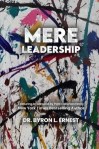
The other comment, “My help consisted of mostly staying out of her way” was another one we can all relate to. How many times have you said to yourself, “I just need them to stay out of the way?” I know I have. This is where, as leaders, we need to be available, but not in the way. In my book, Mere Leadership, I made the point that, “When leaders are available and accessible, we create an open environment where team membersfeel comfortable sharing ideas, concerns, and feedback. This presence fosters trust and collaboration, allowing everyone to contribute to the organization’s success. Being present also helps us better understand the needs of our team, enabling us to provide effective support and guidance” (p. 31). By being available and present we’re able to know how to help or stay out of the way.
Great leaders understand that the best support is many times provided by giving a person space and autonomy rather than intervening or micromanaging. Leaders need to trust an individual’s abilities to handle tasks independently and believe that sometimes, the best way to help is by stepping back and allowing those we serve to find their own solutions. This approach can encourage confidence, self-reliance, and growth, highlighting the importance of giving team members room to learn and succeed on their own.
Have An Opinion
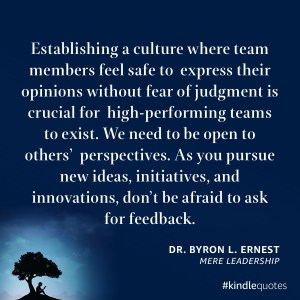
I was inspired to write this post while watching another episode of, House. While I would say we shouldn’t follow all the actions of the protagonist Dr. Gregory House (Hugh Laurie), I was intrigued and agree with the character’s comment of, “If you want to stay on this team, have an opinion.” When he made the comment he was talking to a new team member who just sat through a diagnostic discussion and said nothing. In the context of the scene, I believe the new doctor was both intimidated and not sure of herself. Dr. House’s comment was to make her understand she needs to throw her thoughts out there, even if wrong. The problem in the show’s team, though, is that it is not a psychologically safe place to throw ideas out. If we want everyone to share opinions, we must create the environment where all feel safe to do so. Check out my thoughts on this from my book, Mere Leadership, in the featured image.
Even so, House was emphasizing the importance of active participation and individual voice within the team. He was also suggesting that being a valuable team member involves sharing your thoughts, ideas, and perspectives rather than remaining silent or passive. By encouraging team members to have opinions, we need to promote open communication, innovation, and a sense of ownership among the team, which are essential for teamwork and collective success.
Leading By Knowing Just Where You’ve Been

I wrote about the great band Five Finger Death Punch’s song, “Battle Born,” already in Navigating Life’s Journey: Embracing The Unknown. The other day when spending time in the tractor cab I heard the song and thought about how how the phrase in the song, “I don’t know where I’m going, but I know just where I’ve been (battle born)” relates to a phrase I often use about being the “deer in the headlights.” In my book, Mere Leadership, I said, “Usually, this term is associated with being a bad thing, but I have come to realize that it really is a great thing. To truly gain expertise, become great at leading in a specific area or circumstance, and/or develop empathic concern, which we considered in the previous section, we have had to be the ‘deer in the headlights’” (p. 30).
Getting back to the lyrics, “I don’t know where I’m going, but I know just where I’ve been” reflects a sense of uncertainty about the future combined with a familiarity or perhaps nostalgia for the past. It suggests a feeling of being unsure of the next steps, but having confidence because of our past experiences. Just like having been the deer in the headlights.
We’re reminded to regularly take a moment of pause to allow ourselves to process our experiences and assess situations. Sometimes, taking a fleeting moment to reflect or gather ourselves can lead to better decisions or a clearer understanding inspired by our past experiences.
Leading By Being Adaptable
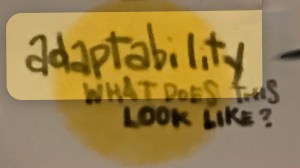
This week when spending time with a first year teacher that I am coaching and mentoring, he commented that one of the big things he has learned in the first quarter of the school year is that being able to adapt is key. I was impressed and told him that is a very important part of teaching in many ways. The day I was there he had to adapt a lesson because an outside stakeholder who was helping with a project was not able to be at the school. My mentee shifted seamlessly to another lesson. I’ve seen seasoned teachers struggle with making these kind of adaptations.
I love that this teacher has realized the importance of being adaptable. It is such an important leadership attribute. In my latest book, Mere Leadership, I wrote, “In today’s rapidly changing world, leaders need to be able to adapt to new situations and challenges” (p. 60). This is hugely important in teaching. Teachers are leaders and need to be adaptable in various ways to effectively support their students and navigate the dynamic classroom environment.
The teacher that is the focus of this post used adaptability to modify lesson plans and content to meet the needs of students, whether due to curriculum changes, student feedback, or unforeseen circumstances such as remote learning requirements. During our discussion of being adaptable we also discussed the need to adjust teaching methods to suit different learning styles, abilities, and interests of students. This includes using diverse instructional strategies like project-based learning, technology integration, or differentiated instruction.
All leaders need to be malleable. I used that term in Mere Leadership saying, “Malleable leaders are open to new ideas and perspectives. This openness fosters innovation and encourages our team members and those we serve to share their thoughts, leading to better problem-solving and decision-making” (p.p. 158-158). This also means growing professionally. We must continuously update our skills and knowledge through professional development to stay current with research and other innovations.
Wowful Leadership: Merely Living Service, Character, and Presence Every Day
I am excited to share this video with you! It’s only seven minutes long, which research tells us is the ideal length of a keynote for listeners to learn the most from the content. I did this keynote at the Science Center on Harvard University’s campus as part of the London Organization of Skills Development 2026 Skills Live event. This video also serves as a pretty good trailer for my new book, Mere Leadership. You can get the book on Kindle, Audible, paperback, or hardcopy by clicking here. Click here to watch the video.


leave a comment