Don’t Let Someday Become Never
On yesterday’s new episode (Season 4 Episode 2, “Switchback”) of the great show, Tracker, Colter Shaw (Justin Hartley) is told by trail expert Becca (Erica Hernandez), “Just don’t let someday become never.” Becca told Colter this after he shared a hiking goal and then said, “Someday.” This was a great reminder that we should take action and pursue our goals or dreams instead of constantly delaying them with the mindset of “someday.”
It’s also a reminder not to keep postponing important things, because if we keep waiting for the perfect moment, or tomorrow, that may never come. Thus, our plans or aspirations might never actually happen. So, let’s stop procrastinating and start making progress now, rather than letting “someday” turn into an indefinite delay or forever when nothing gets done.
Evolving As A Leader
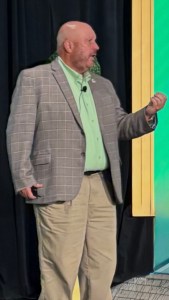
In a professional development I was doing this week a participant made the comment, “We can’t be afraid to evolve.” So true! With all the experiences I have been blessed to have I know I have certainly evolved. I discuss this in my book, Mere Leadership, saying, “Even in my seventh decade, I must continue to learn and evolve. No matter what decade you are in, you must do the same” (p. 157). I also quote C. S. Lewis in my book, saying, “All that is not eternal is eternally out of date” (p. 157). Lewis was reminding us that things that are not timeless or everlasting in nature eventually become obsolete or irrelevant. If we don’t want to become irrelevant, we must evolve. Plus it is just part of becoming wiser.
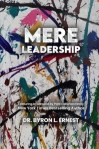
Our personal growth and progress often require change, adaptation, and stepping outside of our comfort zones. Fearing change can hinder development, and instead, we should embrace our own evolution as a natural and necessary part of life. Being open to evolving allows us to learn, improve, and become better versions of ourselves, even if the process feels challenging at times.
Leading By Knowing Just Where You’ve Been

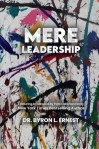
I wrote about the great band Five Finger Death Punch’s song, “Battle Born,” already in Navigating Life’s Journey: Embracing The Unknown. The other day when spending time in the tractor cab I heard the song and thought about how how the phrase in the song, “I don’t know where I’m going, but I know just where I’ve been (battle born)” relates to a phrase I often use about being the “deer in the headlights.” In my book, Mere Leadership, I said, “Usually, this term is associated with being a bad thing, but I have come to realize that it really is a great thing. To truly gain expertise, become great at leading in a specific area or circumstance, and/or develop empathic concern, which we considered in the previous section, we have had to be the ‘deer in the headlights’” (p. 30).
Getting back to the lyrics, “I don’t know where I’m going, but I know just where I’ve been” reflects a sense of uncertainty about the future combined with a familiarity or perhaps nostalgia for the past. It suggests a feeling of being unsure of the next steps, but having confidence because of our past experiences. Just like having been the deer in the headlights.
We’re reminded to regularly take a moment of pause to allow ourselves to process our experiences and assess situations. Sometimes, taking a fleeting moment to reflect or gather ourselves can lead to better decisions or a clearer understanding inspired by our past experiences.
Being Scared Means We Are Paying Attention
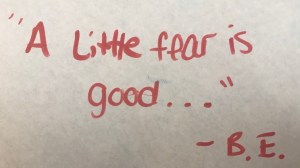
There have been a lot of things written about fear and even more research done on the topic. We all get scared and we all deal with fear in different ways. On Tuesday night while watching the new season debut of NCIS, Special Agent Anthony DiNozzo (Michael Weatherly) made a great comment to Special Agent Timothy McGee (Sean Murray): “Being scared (afraid) doesn’t mean your weak, it means you are paying attention.” Feeling scared or anxious can sometimes heighten our alertness and focus, as our brain perceives a threat and activates the body’s stress response. This heightened state can make us more attentive to certain details in our environment.
This “paying attention” when we are scared in an important psychological response. Our attention becomes laser-focused on the perceived threat. As a result, it’s really hard to concentrate on other stuff. That’s a good thing if there’s an actual threat. Funny how the show NCIS can remind us that fear helps us stay in the present moment and to focus.
Leading By Being Adaptable
This week when spending time with a first year teacher that I am coaching and mentoring, he commented that one of the big things he has learned in the first quarter of the school year is that being able to adapt is key. I was impressed and told him that is a very important part of teaching in many ways. The day I was there he had to adapt a lesson because an outside stakeholder who was helping with a project was not able to be at the school. My mentee shifted seamlessly to another lesson. I’ve seen seasoned teachers struggle with making these kind of adaptations.
I love that this teacher has realized the importance of being adaptable. It is such an important leadership attribute. In my latest book, Mere Leadership, I wrote, “In today’s rapidly changing world, leaders need to be able to adapt to new situations and challenges” (p. 60). This is hugely important in teaching. Teachers are leaders and need to be adaptable in various ways to effectively support their students and navigate the dynamic classroom environment.
The teacher that is the focus of this post used adaptability to modify lesson plans and content to meet the needs of students, whether due to curriculum changes, student feedback, or unforeseen circumstances such as remote learning requirements. During our discussion of being adaptable we also discussed the need to adjust teaching methods to suit different learning styles, abilities, and interests of students. This includes using diverse instructional strategies like project-based learning, technology integration, or differentiated instruction.
All leaders need to be malleable. I used that term in Mere Leadership saying, “Malleable leaders are open to new ideas and perspectives. This openness fosters innovation and encourages our team members and those we serve to share their thoughts, leading to better problem-solving and decision-making” (p.p. 158-158). This also means growing professionally. We must continuously update our skills and knowledge through professional development to stay current with research and other innovations.
Brotherhood and Blame: Exploring Fëanor’s Pride, Impulsiveness, and the Power of Honest Friendship
There are so many incredible themes that J. R. R. Tolkien wrote into The Silmarillion. One such theme is that of friendship. I always say we should never judge someone by their worst moment. Olwë‘s rebuke of Fëanor reflected a deep understanding of true friendship. By saying, “We renounce no friendship. But it may be the part of a friend to rebuke a friend’s folly,” Olwë, the King of the Teleri, was rebuking Fëanor for his reckless behavior and obsession with the Silmarils. Olwë emphasized that genuine friends do not abandon each other in times of mistake or folly.

Fëanor’s intense desire to reclaim and possess the Silmarils (jewel-stones created by Fëanor that contain the light of the Two Trees). These led him to betray his oath and forge alliances with Morgoth, the dark enemy. His obsessive pursuit caused strife among the Elves, led to wars, and resulted in tragedy for many involved.
Olwë’s rebuke reflects a concern about Fëanor’s pride, impulsiveness, and the destructive consequences of his actions. Despite his disapproval, Olwë’s words also reveal a sense of brotherhood and the understanding that, even amidst disagreement, friendship entails honest and loving confrontation. This underscores the theme that true friendship involves guiding one another toward better choices, even if it means risking conflict or discomfort.
Part of caring and supporting is to honestly and kindly point out errors or misguided actions. This act of rebuke is motivated by concern and a desire for the other’s growth, showing that true friendship involves both love and honesty. So, Olwë is implying that even if he disagrees with or disapproves of Fëanor’s choices, he still considers him a friend and believes that sometimes friends must speak difficult truths to help one another.
Finding Fulfillment: The Power of Living with Purpose and Passion
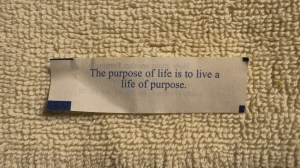
Finding our purpose in life is deeply connected to the idea that meaningful actions and pursuits bring us a sense of fulfillment and peace. J. R. R. Tolkien used the theme of purpose in a lot of his writing. I have blogged about this most recently in Leading With Purpose and Leading With Love, Friendship, Purpose and Conviction. Then in The Silmarillion he had Fëanor say: “For the less even as for the greater there is some deed that he may accomplish but once only; and in that deed his heart shall rest.” The Fëanor quote highlighted the idea that each person has unique, singular deeds. These are usually moments or actions that only that person can perform and which define them and their purpose.
For Fëanor, a character known for his passionate spirit and exceptional craftsmanship, this meant that certain actions or creations are so personal and profound that once they are accomplished, they bring a sense of fulfillment and peace to one’s heart. It emphasized the importance of dedicating oneself fully to those unique moments or deeds that truly resonate with one’s essence, understanding that such significant acts are rare and ultimately bring lasting satisfaction.
When we discover what truly resonates with our inner self, dedicating ourselves fully to those passions or goals gives our lives a sense of direction, significance, and purpose. These purpose-driven moments become rare treasures, leaving a lasting impact on our well-being and happiness. Ultimately, aligning with our purpose helps us experience life’s moments more profoundly, fostering inner contentment and a sense of completeness
Truth and Consequences
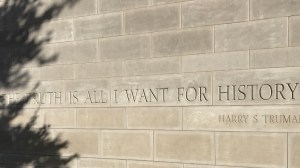
I loved this statement from my reading in The Silmarillion today: “Long was he at work, and slow at first and barren was his labour. But he that sows lies in the end shall not lack of a harvest, and soon he may rest from toil indeed while others reap and sow in his stead” (emphasis added by me). At first I really had to think about what J. R. R. Tolkien was wanting us to reflect on here. It made me wonder how a person that sows lies has a harvest, but while pondering this I realized the sower of lies does reap what they sow. The statement from The Silmarillion reflects on the nature of actions, particularly those rooted in dishonesty or deception.
It suggests that lying or deceit may initially seem insignificant or easy, but ultimately, there are consequences. “He that sows lies” will inevitably face a harvest of those falsehoods. Over time, this can lead to a form of rest or peace for the deceiver, yet this peace is illusory, as others will eventually reap the results of the lies. The passage emphasizes the idea that dishonest actions can produce a harvest, either of trouble or consequences, and underscores the importance of integrity and truthfulness in our dealings.
Never Hold Back A Rising Star

Many times leaders get upset when people leave their organizations for new positions and greater responsibilities. I’ve always wanted to help those I serve get to where they want to go. It’s a fact when we spend time and resources developing our people, we tend to retain them. This is loving our people. But sometimes those people will leave for other positions and we need to be okay with that. I always want those that do move on to be able to say that having been with me for how ever long made it possible for them to get where they wanted to go.
I was reminded of this while watching an episode of Chicago PD recently. I love the character, Sergeant Hank Voight (Jason Beghe), who in the episode I was watching told Detective Antonio Dawson (Jon Seda) that great leaders “Never hold back a rising star.” Voight told him this after Dawson confronted him about signing off on a promotion. Voight told Dawson he had not signed off on the promotion, but had recommended him for the promotion. Voight recognized Dawson was ready for a position of greater authority and responsibility. Voight was lifting up his rising star. Let’s make sure we are developing everyone for what is next in their careers.
The Leader Who Needs To Be A Hero

Yesterday while I was baling hay I heard a great song by Five Finger Death Punch, Nails In The Coffin. I’m sure I had heard the song before because I really like Five Finger Death Punch, but this time, for some reason, all the lyrics were really resonating with me. Interestingly, when the song was over there was a quick interview with a member of the band on Sirius XM Octane. In the interview it was said that the band loved the song because it could be related to almost any circumstance in life. My thought exactly!
The very first lines of the song really jumped out at me: “There has to be a catastrophe; In everything you say and do; It’s like an urge you need to purge; Until it’s bruised through and through; You turn the knife to make things right” Have you ever experienced a leader that always needed there to be some catastrophe or problem to solve? I have experienced this type of leader and sometimes thought they even created disasters so they could solve them. Sometimes we find ourself in the presence of a leader who needs to be the hero. Many times in this presence, others can’t do their best. The challenge is that during a catastrophe we need the best in each of us.
There is actually a name for the type of leader I am describing: Hero Syndrome. Hero Syndrome, also referred to as Hero Complex, refers to the need, usually of an individual, to look for, create, and solve issues to justify their self-worth. Saving the day fuels this leader’s ego and provides control. This can be dysfunctional and hurt others.
Now, don’t think I am saying that leaders should not solve problems. My point here is for us to keep in mind is that we need to make sure we are not serving as captains of crisis, but as leaders of collaboration, risk mitigation, processes, and cohesive systems.


leave a comment