Beowulf: No Ordinary Leader

I am so glad I am reading Beowulf. It is an incredibly inspiring story. Yesterday I was inspired by Beowulf to write, Unveiling Power: Exploring the Themes and Legacy of Beowulf. I am at the point in the poem now where Beowulf has killed Grendel. This made me think of what J. R. R. Tolkien said to friend W. H. Auden about his love for Beowulf:
“The overthrow of Grendel makes a good wonder-tale, because he is too strong and dangerous for any ordinary man to defeat, but it is a victory in which all men can rejoice because he was a monster, hostile to all men and to all humane fellowship and joy.”

I believe Tolkien called Beowulf a wonder-tale because he believed it embodied the qualities of a classic myth or legend that inspired awe and awe-inspiring storytelling. The term “wonder-tale” emphasized its timelessness, the presence of extraordinary deeds, heroic characters, and elements of the supernatural. Tolkien saw it as a foundational story that captured the imagination, celebrated heroism, and conveyed profound themes about good versus evil, honor, and mortality. By referring to it as a wonder-tale, Tolkien acknowledged its status as a remarkable and enduring piece of literary and cultural heritage that continues to inspire wonder and admiration to this day.
Reading Beowulf offers valuable lessons about courage, loyalty, and the importance of reputation. It teaches us that true heroism involves facing our fears and protecting those we care about, even in the face of great danger. Additionally, the poem highlights the significance of honor and integrity, reminding us that our actions define our legacy. Ultimately, Beowulf inspires us to live bravely and uphold noble values, leaving a lasting impact on both ourselves and society.
Unveiling Power: Exploring the Themes and Legacy of Beowulf

I am reading Beowulf right now. This epic Old English poem had a profound effect on J. R. R. Tolkien and his writing. Tolkien translated the poem as well. Beowulf is the story of the legendary hero Beowulf, who comes to the aid of the Danish king Hrothgar to defeat the monstrous Grendel. Demonstrating immense strength and bravery, Beowulf ultimately kills Grendel, his mother, and later faces a formidable dragon in his old age. The poem explores themes of heroism, loyalty, honor, and the transient nature of life, highlighting the values of courage and reputation that define the culture of the warriors. Through its rich language and heroic deeds, Beowulf remains one of the most significant and enduring works of early medieval literature.

As I was reading yesterday, a line jumped out at me. It was said of Beowulf, “And a young prince must be prudent like that, giving freely while his father lives so that afterwards in age when fighting starts steadfast companions will stand by him and hold the line. Behaviour that’s admired is the path to power among people everywhere.” I believe The author of Beowulf, who is unknown, was emphasizing the importance of wise and generous leadership. By giving freely and demonstrating prudence while one’s father is alive, the young prince was building trust and loyalty among his followers. This behavior fostered strong relationships and goodwill, which would prove to be crucial when future conflicts or challenges arise. We are reminded that acting honorably and generously in the present helps secure lasting support and respect, ultimately paving the way for power and stability in the times to come.
The sentence, “Behavior that’s admired is the path to power among people everywhere” really caused reflection. It reinforces that our actions do matter and highlights the idea that individuals who exhibit qualities valued by their community, like integrity, bravery, kindness, and fairness, tend to gain respect and admiration. This respect translates into influence, leadership, and ultimately, power.
In the context of Beowulf, this concept underscores how the heroic virtues of courage, loyalty, and humility earn the admiration of our organizations and communities. This respect, when paired with relationships, will solidify a leader’s authority. When a person consistently acts honorably and demonstrates admirable qualities, others are more likely to follow them willingly, trusting in their strength and moral character.
Genuine influence isn’t rooted solely in fear or coercion but in earning the trust and admiration of others. Over time, such behavior builds a reputation that naturally attracts followers, helping individuals attain and maintain leadership roles without resorting to force or manipulation.
Being Part of a Grand Story
In my study of J. R. R. Tolkien’s The Hobbit, I have been fascinated by Bilbo Baggins’ transformation. Bilbo Baggins is a gentle, humble hobbit. He enjoyed a simple life filled with comfort, good food, and quiet days. However, beneath his unassuming exterior, he possesses a curious and courageous spirit that leads him on an unexpected adventure beyond his cozy home. Throughout The Hobbit, Bilbo evolves from a cautious, reluctant participant into a brave and resourceful hero, discovering strengths and qualities he never knew he had. I already wrote about Bilbo’s development in From Timid to Trusted: Humble Leadership and
Courage and Wisdom Blended in Measure.
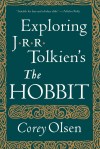
Interestingly, Corey Olsen also focused on Bilbo’s evolution in his great book, Exploring J. R. R. Tolkien’s The Hobbit. He posited that, “At the beginning of the book, the narrator invites us to judge whether Bilbo ‘gained anything in the end.’ In Chapter Five [The Hobbit], we are still far from the end, but we can already begin to see what Bilbo is gaining. Bilbo has passed the turning point in his career. He has ceased to be a passive victim of his adventure, and he has embraced his new life. He has even come to take pleasure in seeing his own life as part of the great, grand stories that he listened to (with obvious pleasure, despite their Tookishness) even when he lived in Bag-End” (p.p. 108-109). Olsen went on to say, “Bilbo has come to see that, though adventures may in truth be “nasty . . . uncomfortable things” that “make you late for dinner,” as he said back in Chapter One [The Hobbit], it can also be rather grand to be a part of one of the great stories” (p. 109). Bilbo had discovered qualities in himself he never knew, reminding us to recognize and develop our own and our team’s potential.

One of my favorite lines in The Hobbit is toward the end of the book when Gandalf told Bilbo, “You are not the hobbit that you were” (The Hobbit, p. 338). While reading the book I was witnessing the changes in Bilbo, but this really drove it home. The “quest” had changed Bilbo, and for the better. Think about how many times this happens to us. When I think back to my time as a principal of a turnaround school, there were times when it was pure hell. But it was also some of the most rewarding and life-changing work I have ever done. I developed friendships I still have today and I am certainly a different and better person for having been on that quest.
Bilbo’s transformation in The Hobbit offers valuable lessons for leaders. Initially, Bilbo is cautious, comfortable, and somewhat hesitant to step beyond his familiar world. But through his journey, he developed qualities like bravery, resourcefulness, perseverance, and adaptability. Those traits, along with embracing challenges, thinking creatively under pressure, and growing through experience, are essential for effective leadership.
Bilbo also learned to lead with humility and kindness. My other favorite line in The Hobbit is, “Already they had come to respect little Bilbo. Now he had become the real leader in their adventure. He had begun to have ideas and plans of his own” (The Hobbit, p. 259). Despite his growth and developing into a leader, Bilbo remained humble and caring, qualities that foster trust and teamwork.
Bilbo’s evolution in The Hobbit can serve as an example to encourage leaders to have courage, be adaptable and flexible, and open to personal growth. Also, we need to always remember to inspire our teams to do the same.
Courage and Wisdom Blended in Measure

Yesterday as part of my study of J. R. R. Tolkien’s The Hobbit, I wrote about Bilbo Baggins becoming recognized as a leader in From Timid to Trusted: Humble Leadership. Toward the end of the book Gandalf told Bilbo, “You are not the hobbit that you were” (The Hobbit, p. 338). I loved this! It is such a great reminder from Tolkien that we are not the same person as we were before completing our most recent quest. For more about quests, read Quest or Adventure. We are ever changing, learning, and growing. Take a moment and reflect about the ways you are a different person today than five years ago.

Thorin told Bilbo, “There is more in you of good than you know, child of the kindly West. Some courage and some wisdom, blended in measure” (The Hobbit, p. 325) This also eludes to growth and change in Bilbo. Thorin believed that Bilbo’s true potential was greater than he understood, and he wanted to inspire confidence in him to face the challenges ahead. This moment underscores themes of self-discovery and recognizing one’s own worth.
“If more of us valued food and cheer and song above hoarded gold, it would be a merrier world.”
~ Thorin, The Hobbit, p. 326
When Thorin said, “There is more in you of good than you know, child of the kindly West. Some courage and some wisdom, blended in measure,” he meant that Bilbo possessed the inner qualities of goodness, bravery, and intelligence.
Additionally, Thorin pointed out that Bilbo may not fully realize his own development. The phrase “blended in measure” suggested an harmonious combination of the qualities of courage and wisdom, balanced well within Bilbo. Thorin was acknowledging that Bilbo had the potential to be brave and wise in equal parts, and that those qualities are combined skillfully within him. It’s a heartfelt encouragement, emphasizing the inner strength and potential that Bilbo carries.
Don’t Be A Courage Crusher

Courageous Cultures: How to Build Teams of Micro-Innovators, Problem Solvers, and Customer Advocates by Karin Hurt
My rating: 5 of 5 stars
A courageous culture becomes a community where individuals are engaged and finding, developing, and using their full potential. I love that “courage crushers” were called out by Hurt and Dye very early. Sadly, I have worked in organizations with these types. These are toxic environments, as you pointed out. Also, I loved the thought of creating a courage oasis.

I have always been big on the point of there needing to be clarity. This became very evident during the pandemic. As Hurt and Dye pointed out, there cannot be curiosity without clarity. It was also discussed that with clarity of goals, processes, and roles and responsibilities comes a safe place.
Finally, I loved all the tips and real examples sprinkled throughout the book. For example, I loved the example of the “magic button” for employees to use to provide feedback and give ideas. If we truly want organizations and communities where everyone is engaged, we must provide safe place where those we serve can be courageous. Everyone needs to read this book, but if you are a “courage crusher” PLEASE read this book!
View all my reviews
Seeing What Others Don’t See
 The best leaders see things that other leaders don’t see. At least I believe this to be true about the leaders I most respect. Recently, I heard it said of George Washington that he was an idealist and saw things as they should be. If we think of idealists as seeing the full potential in others and organizations, I certainly agree. Idealists are visionaries. Think about it, Washington’s vision for our country was visionary because there was not any other country out there to copy off off.
The part that really impresses me about Washington, however, is that he was also a pragmatic leader. He was a practical thinker. When he took over the Virginia Regiment and then the Militia he had to focus on the processes necessary to achieve the vision. Both times he was given groups of undisciplined/unruly men that he had to create the processes of rule, order, and training.
While Washington was that rare leader that possessed idealism and pragmatism, I believe it was his ability to truly inspire and mobilize people that separated him from others. Also, he was able to keep his ambitions in check – most let ambitions for power, position, money, or status wins out over purpose and core values. Washington might be our true shining star role model for this.
As I was studying for this post, I came across a quote credited to French novelist, Marcel Proust: “The real act of discovery consists not in finding new lands, but in seeing with new eyes.” This quote could certainly apply to great visionary leaders and Washington. In doing more research, however, I found this was a paraphrase and not what was actually written in Proust’s novel.
The quote is paraphrased out of Proust’s seven volume novel, Remembrance Of Things Past (1923). The actual phrase is in Chapter 2 of Volume 5, The Prisoner, and is actually referring to art instead of travel. You might disagree, but I believe the actual passage to be more meaningful than the paraphrased version. Here is the actual transcript:
“The only true voyage of discovery, the only fountain of Eternal Youth, would be not to visit strange lands but to possess other eyes, to behold the universe through the eyes of another, of a hundred others, to behold the hundred universes that each of them beholds, that each of them is.”
Proust was an incredibly talented and artful writer. His writing in this novel gives us another way to think about the leadership of Washington. He was seeing our country through another set of eyes, not just using the same paradigms that were known by all at the time. As an artful leader, Washington was able to envision what great things our new universe, a democracy, would behold for each of us.
Today, if we truly want to embrace one-of-a-kind ideas in a world of copycat thinking, we need to see the things that others don’t see.
Naked Leadership
 This past Thursday night, we had an incredible 3D Leadership gathering in Mooresville, North Carolina. This was the first gathering of the third cohort of our North and South Carolina leadership development program. This first time together involves an activity called, “Who Am I As A Leader Today?” The participants are all given their very own Mr. or Mrs. Potato Heads and must creatively put them together to represent who they are that day as a leader. We then circle up and everyone shares. This is always so meaningful and is such a great way to begin building a community. You can find out a lot about someone and yourself when you’ve channeled the inner Mr/Mrs Potato Head.
 I am always inspired by the wild representations that participants come up with and the deep and meaningful descriptions they give. Always lots for me to blog about after these. One of the member’s presentations really jumped out at me, however, when she said she considered leaving her Mrs. Potato Head blank without putting anything on it. She shared she wanted it to represent the nakedness she felt as a new leader and her desire to learn and become clothed with knowledge. She even brought in some Bible teaching, reminding us that Jesus had come into the world a naked and humble leader of all – and, we all come into the world naked and without anything. She had gone ahead and decorated he Mrs. Potato Head because, as she told us, she needed to recognize that she does have leadership skills today, but wants to continue learning.
The entire group, including me, was blown away by this insightful reflection. Of course, I was so moved that I said I thought there was a book to be written – Naked Leadership. Everyone laughed (thank goodness), but the more I have reflected on it the more I like the title, and the metaphor it represents. For one thing, it’s a catchy title. I’ll bet some of you are reading this post just because the word naked is in the title and you needed to know who was naked. When I began to reflect and study the idea of Naked Leadership, however, I found so many important leadership lessons.
They Realized They Were Naked
In Genesis 2, the Bible says of Adam and Eve, “The eyes of both of them were opened…and they realized they were naked.” As leaders we must have our eyes opened and realize we do not know everything. We need an attitude of personal professional growth and a desire to actively listen to others.
The Emperor Has No Clothes
I love the children’s fairytale The Emperor’s New Clothes. This might have application as a leadership fable for learning more today than at any point in history. You know the story… the emperor was very vain and loved new clothes, so some swindlers took advantage of this. They told the emperor they could fashion the most beautiful cloth ever made that could only be seen by someone who was stupid. So, emperor gave them gold, expensive silk and other items to make the cloth. Of course, these were swindlers who did not make anything but steal the items. Let’s skip to the end of the story…the emperor goes out with his new clothes which were allegedly invisible, and, of course, is naked. No one has the courage to tell the emperor he is naked until he comes to a little boy who says, “But he doesn’t have anything on!” It took the innocence of a child to make the emperor realize he had no clothes.
Wouldn’t we be more effective leaders if we were able to recognize our own nakedness without even needing to be told, as our 3D Leadership participant suggested? This would, I believe, open us up to being advised by others to our nakedness as well. The other part of the story that most never go on to talk about is that once the emperor realizes he really is naked, he continues on, naked, because of his desire to not admit being wrong and his extreme vanity.
I don’t know if the Naked Leadership book will ever get written. I hope it does, but in the meantime we all need to recognize our metaphorical nakedness and be open to finding ways for clothing ourselves with the skills of great leadership. How about you; Do you have any ideas for chapters in the Naked Leadership book?
A World Without Heroes Is No Place For Me
 I continue to find inspiration from Gene Simmons. As a fan of KISS from the beginning I still keep up with Gene and Paul Stanley on Twitter. This morning I was reading a Tweet thread from Gene about the song “A World Without Heroes.” This song was on the 1981 KISS album The Elder. I’d actually forgotten about the song, but went and watched the video. Some on the thread liked the song, others not so much. It’s KISS and Gene Simmons singing, so of course I love the song. I was intrigued by the words and proceeded to think about what they were thinking when they wrote the song. Check it out for yourself:
There are a few parts of the lyrics that stand out to me. Here is my take on this great song:
- “You can’t look up to anyone | Without heroes” ~ Think about those you consider to be heroes. Without them we wouldn’t have anyone to look up to. Our heroes and heroines also understand their core values and walk the walk no matter what. Outstanding leadership often inspires heroic acts. We need heroes as role models. I’m sure glad I’ve had heroes and heroines to look up to and model after.
- “Where you don’t know what your after | Or if something’s after you | And you don’t know why you don’t know” The hero steps in when exceptional circumstances dictate. Heroes show us how to transform our lives. Every hero story tells of a journey toward vast personal transformation.
- “In a world without heroes | There’s nothing to be | It’s no place for me” I just can’t even imagine a world without heroes. Many of my heroes and heroines didn’t run into a burning building, go to war with an angry enemy, or win multiple Super Bowls. But they did do great things – many times just compassionate and caring things. They showed me what I wanted to be and who I wanted to be. As the last lines is the song say, “without heroes there’s nothing to be.”
 Heroes and heroines can be everyday people doing extraordinary things, or just being extraordinary. They don’t always do it for publicity, money, or because the score is being kept. They simply are the human being we aspire to be, and can be. What do you want to be? Are you a hero to anyone? A world without heroes is no place for me!
Do You Have An Inexhaustible Ability To Just Live?
 Yesterday I blogged about a scene from an episode of Boston Legal that really caused me to think and reflect. You can read about it in Are We Best Friends. Please allow me to post about another balcony interaction of Denny Crane and Alan Shore at the end of another episode.
After asking Alan Shore what he had had for lunch, and telling him he had a steak sandwich with onion rings, Denny Crane said, “Alan, you know, one thing you sometimes forget is, no matter how hard your day, no matter how hard your choices, how complex your ethical decisions, you always get to choose what you have for lunch.” Alan Shore replied, “Daily, I’m amazed at your inexhaustible ability to just live.” Replying, Denny Crane said, “It’s either that or die.” This hit me like a ton of bricks. I believe I have an inexhaustible ability to just live, but just exactly what is that and can we, as leaders, help develop this in others?
Of course this prompted a study for me. What I found was, nothing. So, how do we develop or continue to have an inexhaustible ability to just live? I was actually reminded of a bible verse (John 10:10) where Jesus tells us we are supposed to have an abundant life. Realizing there is a difference here when using the word abundant, I began to think about what really allows us just to live. It turns out that picking what we want for lunch is a perfect example.
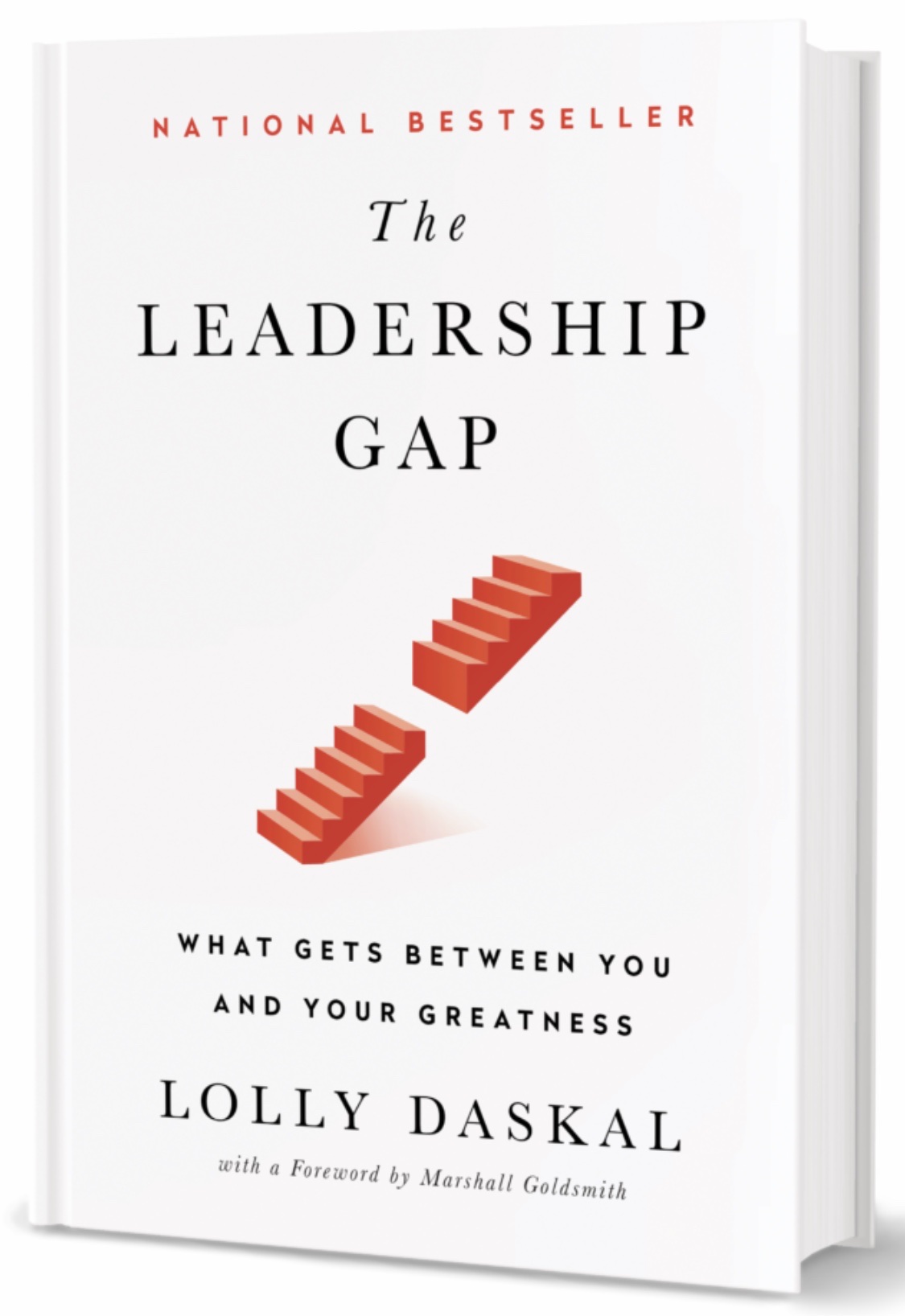 It is about what Lolly Daskal taught in the great book, The Leadership Gap: What Gets Between You And Your Greatness. Daskal posited that focusing on using can, want, and will instead of could, should, and must empowers us to live in terms of our own goals and motivations – just like picking what we want for lunch. Think about it: when asked about lunch, we say, “I want…”
Typically, when we choose what we want for lunch it is very authentic. We, or at least I can speak for myself, have no problem having the courage to proclaim what we want for lunch. Why not live and lead on our own terms in other areas of our life as well? Daskal also taught us to have a kinder dialogue with ourselves and focus on leading from within. Could it be as easy as working toward can, want, and will? I think so!
Finally, I believe an inexhaustible ability to just live means to go after what you want without worrying about what others will think. It means continually reaching out for newer, richer, deeper, life changing experiences. So let’s go push the boundaries of ourselves mentally, spiritually, and intellectually for personal growth and the betterment of the world at large. Also, step back and just enjoy the ride that is the journey of our life.
Do you have an inexhaustible ability to just live?
Stand Your Ground & Be The Example
 Setting an example through your own practice illustrates to others that change is a shared endeavor. True leaders are the pinnacle of what they expect from the people around them. And by setting an example, true leaders encourage their people to aim for that. By walking your talk, you become a person others want to follow. When leaders say one thing, but do another, they erode trust–a critical element of productive leadership.
Great leaders are persistent. Try, try again. Go over, under or around any hurdles to show that obstacles, what I like to call opportunities, don’t define your company or team. This will allow you to create solutions. Don’t dwell on problems; instead be the first to offer solutions and then ask your team for more.
Furthermore, being the first to change can be challenging. As a pioneer, you have to overcome resistance to the status quo. We humans get used to the way things are. Yet those who dare to rock the boat are in a position of tremendous power, and can send ripples of inspiration out to the world. Lead by example because others will become curious. Remember, our actions are much more persuasive than than our words.


1 comment