Keeping Our Oaths

Throughout The Lord of the Rings, J. R. R. Tolkien emphasized the importance of honor, loyalty, and integrity when it comes to keeping one’s oaths. Through Gimli, we see a character that understands oaths, bonds, and promises. I like to call this walking the talk. I’ve written about this before in Walk The Talk! There is an incredible exchange between Gimli and Elrond that goes like this: “Faithless is he that says farewell when the road darkens,” said Gimli. “Maybe,” said Elrond, “but let him not vow to walk in the dark, who has not seen the nightfall.” “Yet sworn word may strengthen quaking heart,” said Gimli. “Or break it,” said Elrond. “Look not too far ahead!” Gimli is vowing to walk the talk.
Gimli’s unwavering commitment to his promises, through his oaths to his companions, illustrates that true bravery involves steadfastness and trustworthiness. Tolkien used Gimli’s character to show that upholding our oaths and promises is essential for maintaining personal integrity and fostering genuine bonds of friendship, trust, and respect. Do we do what we say we are going to do? It doesn’t seem people take this as serious as in the past. We need to get back to honoring our commitments. Always!
For example, I am excited to be going to lunch with a mentor from early in my career next week. What if the day before I get another opportunity and I decide to call my former mentor and cancel? This would not only disappoint him, it would be breaking an oath and be disrespectful. I realize things come up, but we need to do what we say we are going to do. In order to be trusted, we must walk the talk. Breaking a promise, commitment, or oath is a very serious thing and contaminates our relationships; eating away at trust.
Ultimately, Tolkien, through The Lord of the Rings, brilliantly suggested that keeping one’s vows reflects moral strength and contributes to the larger good, reinforcing the idea that honor is a vital virtue in both individual character and collective unity.
Our Real-Life Story

Fleming Rutledge, author of The Battle for Middle-earth: Tolkien’s Divine Design in The Lord of the Rings, discussed how in The Hobbit and The Lord of the Rings we find that J. R. R. Tolkien made them real-life stories. The Hobbit and The Lord of the Rings are not happily-ever-after stories. They are real-life stories like we live out every day.
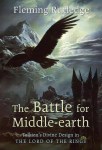
Rutledge explained that Tolkien’s stories, as with our lives are told and can be understood through both “surface narratives” and “deep narratives.” Surface narratives are the stories about our everyday lives. These are the stories abound our roles, routines, achievements, and experiences. Deep narratives, on the other hand, involve the underlying beliefs, values, and meanings that shape our identity and choices. They often relate to questions like “Who am I at my core?” “What is my purpose?” or “What do I value most?”
Our deep narratives are often shaped by our actions, choices, and experiences over time. The way we respond to life’s challenges, pursue our passions, and forge our relationships can reinforce or reshape the stories we tell ourselves about who we are and what gives our lives meaning. Just like the characters of The Hobbit and The Lord of the Rings, our deeds and decisions act as the building blocks of our inner narratives, helping us create a sense of purpose and coherence that guides our journey.
Navigating The Power of Temptation: Lessons on Humility, Self-Awareness, and Self-Control

One of the themes that J. R. R. Tolkien made applicable to us in both The Hobbit and The Lord of the Rings was that power and possessions can take control over us. You can read more about this applicability in Applicability: Tolkien’s View on the Organic Meaning of Stories. One such example for us to learn from is at the beginning of The Fellowship of the Ring (Book 1), when Gandalf told Bilbo Baggins he should give the ring that had the power to make him invisible to Frodo Baggins. “Gandalf stood up. He spoke sternly. ‘You will be a fool if you do, Bilbo,’ he said. ‘You make that clearer with every word you say. It has got far too much hold on you. Let it go! And then you can go yourself, and be free’” (p. 34). Gandalf recognized what the power and possession of the ring was doing to Bilbo.

In this conversation it was like Bilbo became a different person. Bilbo replied, “‘But you won’t get it [the ring]. I won’t give my Precious away, I tell you.’ His hand strayed to the hilt of his small sword” (p. 34). The key word here is “precious.” This is what the evil creature Gollum. Gollum had talked baby talk to the ring calling it “My precious.” Now Bilbo sounded just like him. This was such a stark reminder how we can sometimes fall into the trap of letting power gained and possessions take over and turn us into a different person.
We’ve all seen this happen, or let it happen to us. I know I have. It was good that Gandalf was there to have the difficult conversation with his friend. From Bilbo’s reluctance to give up the Ring and Gollum’s obsession with “precious,” we can learn about the dangerous allure of temptation, particularly power and possessions, can grip even the most unsuspecting or well-meaning individuals.
Bilbo’s initial hesitation highlights how powerful the Ring’s influence is, subtly pulling him into its web and blurring his judgment. Similarly, Gollum’s obsession demonstrates how attachment to such a corrupting object can consume one’s identity and morality.
These scenes in The Fellowship of the Ring remind us to be mindful of attachments or desires that may seem harmless at first but can ultimately lead to loss of self-control and wellbeing. It also speaks to the importance of recognizing the corrupting power of temptation early and choosing the path of humility, self-awareness, and restraint. These leadership attributes are vital both in stories like Tolkien’s and in our own lives.
Tolkien As A Learner

“Those who had asked for more information about hobbits eventually got it, but they had to wait a long time; for the composition of The Lord of the Rings went on at intervals during the years 1936 to 1949, a period in which I had many duties that I did not neglect, and many other interests as a learner and teacher that often absorbed me.” I love this statement by J. R. R. Tolkien in the foreword of the second edition of The Fellowship of the Ring. Tolkien was indicating that those interested in hobbits, and by extension, his broader Middle-earth universe, had to be patient as he took time to develop these stories. This suggests he valued meticulous storytelling and was willing to take the necessary time to craft his world thoroughly.
I am inspired by Tolkien calling himself a learner. Specifically saying, “…interests as a learner” suggests that Tolkien viewed himself as someone who was continually growing and developing, both as a writer and as a person. As a person who considers himself a long-life learner and advocates continuous learning for all, it really resonated with me that he would include that statement in the foreword.
Tolkien’s statement reflects his humility, openness to new ideas, and a recognition that mastery is an ongoing journey rather than a final destination. This attitude indicates that Tolkien valued learning from his experiences, feedback, and the process of creating his stories, which in turn demonstrates his dedication to improvement and a humble respect for the craft of writing.
Being Clueless

Bilbo Baggins was a sort of antihero in J. R. R. Tolkien’s The Hobbit. Bilbo begins the story as a rather naive and reluctant character who grows into his role. Sound familiar? How many of us would say that is how we were? So maybe I should say Bilbo was a reluctant leader instead of an antihero. He grew into being both a leader and hero.
“Now that he has proved himself many times over, the dwarves look back on Bilbo’s cluelessness with fondness” (Corey Olsen, Exploring J. R. R. Tolkien’s The Hobbit, p. 201).
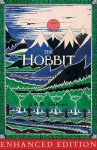
Bilbo’s occasional cluelessness in The Hobbit teaches us several valuable lessons. Bilbo reminded us that everyone has moments of uncertainty or lack of knowledge, and that’s completely okay. It emphasizes the importance of humility and being open to learning, even when we’re faced with unfamiliar situations. Bilbo’s mistakes and missteps during the quest often lead to growth and new opportunities, reminding us that errors are just part of the journey toward success.
Bilbo’s ability to adapt, remain resourceful, and eventually find courage underscores that sometimes, not knowing everything initially can be an important step toward discovering our own strengths. These moments of Bilbo’s cluelessness remind us to be patient with ourselves and others as we navigate life’s quests and adventures.
Why Go A-Roaming?
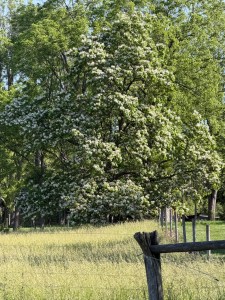
Sometimes we need a little reminder of what is important. At the end of J. R. R. Tolkien’s The Hobbit, Bilbo Baggins’ and Gandalf stop to visit the elves. We they arrive the elves are singing a song. Here is part of it:
The stars are far brighter
Than gems without measure,
The moon is far whiter
Than silver in treasure;
The fire is more shining
On hearth in the gloaming
Than gold won by mining,
So why go a-roaming?
O! Tra-la-la-lally
Come back to the Valley. O!
Where are you going,
So late in returning?
The river is flowing,
The stars are all burning!
O! Whither so laden,
So sad and so dreary?
Here elf and elf-maiden
Now welcome the weary
With Tra-la-la-lally
Come back to the Valley,
Tra-la-la-lally
Fa-la-la-lally
The elves were pointing out that the night around them that particular evening in May contained far more beauty than the hoard of riches ever could. The elves ask a simple question: since the stars, the moon, and the elves’ fire all surpass the shining brightness of riches, then “why go a-roaming?” The elves are highlighting that the forest glade by the river is not only more lasting and permanent than anything in human society, but it is also more lovely and desirable than its greatest marvels.
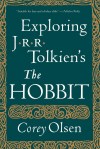
The elves were reminding Bilbo, just as we need this reminder sometimes, that as Corey Olsen pointed out in Exploring J. R. R. Tolkien’s The Hobbit “The things ‘that men trusted’—war, power, strength, wealth—are all ephemeral things and will always fail in the end. The small things—the leaves and grass and silly elf songs—will endure, for they are ever renewed” (p. 290). I love Olsen use of the word “ephemeral” here. I also love the application from Tolkien to our own lives. No, we cannot isolate ourselves from the global society around us and we need to take an active part, but we need to remember the things that are lasting.
The elves’ reflection suggested that true value and fulfillment come from things like natural beauty, warmth, and inner light. Those elements surpass material riches. From this, we can take away the importance of appreciating simple, genuine joys and seeking meaning beyond material wealth. I believe Tolkien was giving us a reminder encouraging us to prioritize experiences, connections, and inner growth over superficial possessions. True brightness comes from within and from the natural world around us. Embracing this perspective can lead to a more enriching and meaningful life.
Courage and Wisdom Blended in Measure

Yesterday as part of my study of J. R. R. Tolkien’s The Hobbit, I wrote about Bilbo Baggins becoming recognized as a leader in From Timid to Trusted: Humble Leadership. Toward the end of the book Gandalf told Bilbo, “You are not the hobbit that you were” (The Hobbit, p. 338). I loved this! It is such a great reminder from Tolkien that we are not the same person as we were before completing our most recent quest. For more about quests, read Quest or Adventure. We are ever changing, learning, and growing. Take a moment and reflect about the ways you are a different person today than five years ago.
Thorin told Bilbo, “There is more in you of good than you know, child of the kindly West. Some courage and some wisdom, blended in measure” (The Hobbit, p. 325) This also eludes to growth and change in Bilbo. Thorin believed that Bilbo’s true potential was greater than he understood, and he wanted to inspire confidence in him to face the challenges ahead. This moment underscores themes of self-discovery and recognizing one’s own worth.
“If more of us valued food and cheer and song above hoarded gold, it would be a merrier world.”
~ Thorin, The Hobbit, p. 326
When Thorin said, “There is more in you of good than you know, child of the kindly West. Some courage and some wisdom, blended in measure,” he meant that Bilbo possessed the inner qualities of goodness, bravery, and intelligence.
Additionally, Thorin pointed out that Bilbo may not fully realize his own development. The phrase “blended in measure” suggested an harmonious combination of the qualities of courage and wisdom, balanced well within Bilbo. Thorin was acknowledging that Bilbo had the potential to be brave and wise in equal parts, and that those qualities are combined skillfully within him. It’s a heartfelt encouragement, emphasizing the inner strength and potential that Bilbo carries.
From Timid to Trusted: Humble Leadership
I am reading J. R. R. Tolkien’s The Hobbit right now and one of my favorite parts of the story is how Bilbo Baggins evolved from a humble hobbit into a brave and resourceful figure who takes on leadership qualities, especially as he led and assisted the dwarves during their quest to save Middle-earth. His growth into a leadership role is a significant part of his character development in the narrative. I love how Tolkien made Bilbo a humble leader.
Bilbo’s humbleness plays a significant role because it reflected his genuine character and growth throughout the story. His humility allowed him to stay grounded despite his unexpected heroism, making him approachable and relatable. It also enabled him to recognize his limitations, seek help when needed, and remain open to new ideas and challenges.
Moreover, his humility fostered trust and camaraderie among the company of dwarves and other characters, which was essential for their collective success. Ultimately, Bilbo’s humbleness highlighted that true leadership and heroism often stem from modesty, kindness, and a willingness to learn.
These qualities inspire others and lead to meaningful personal growth. One of my favorite quotes in the book is, “Already they had come to respect little Bilbo. Now he had become the real leader in their adventure. He had begun to have ideas and plans of his own” (The Hobbit, p. 259). Wouldn’t we all love to have this said of us?
This highlights the importance of humility and perseverance. Bilbo started as a humble hobbit but grew through his experiences. His journey, as created by Tolkien, showed that leadership and confidence can develop in unexpected ways, even in unlikely individuals. I really love that because, remember, I believe everyone is a leader. It also emphasized the power of cleverness, bravery, and taking initiative, as Bilbo’s ideas and plans proved crucial to the success of the adventure.


leave a comment