The Power of Trust and Autonomy in Leadership
I love Robert A. Heinlein’s writings! I am presently reading The Cat Who Walks Through Walls. This 1985 novel by Heinlein is great so far. As you know, I love fiction novels because the characters make me think about real-life things. The Cat Who Walks Through Walls is already doing that and I am only to chapter five. The protagonist Dr. Richard Ames (his pen name), who narrates the story, said a couple of things that intrigued me:
- “I helped by not offering advice.”
- “My help consisted of mostly staying out of her way.”

Isn’t it so true that sometimes the best thing we can do is not offer any advice? Many times what the other person needs is just to beard heard or have someone list. Or, sometimes the most effective way to support others is by allowing them to find their own solutions rather than stepping in with direct instructions. This approach fosters independence, critical thinking, and confidence among team members. It shows trust in their abilities and encourages them to develop their problem-solving skills, leading to growth and a stronger, more empowered team.

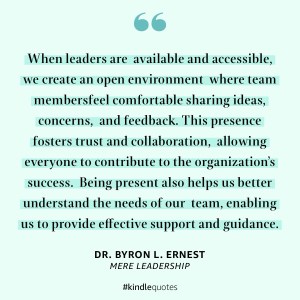
The other comment, “My help consisted of mostly staying out of her way” was another one we can all relate to. How many times have you said to yourself, “I just need them to stay out of the way?” I know I have. This is where, as leaders, we need to be available, but not in the way. In my book, Mere Leadership, I made the point that, “When leaders are available and accessible, we create an open environment where team membersfeel comfortable sharing ideas, concerns, and feedback. This presence fosters trust and collaboration, allowing everyone to contribute to the organization’s success. Being present also helps us better understand the needs of our team, enabling us to provide effective support and guidance” (p. 31). By being available and present we’re able to know how to help or stay out of the way.
Great leaders understand that the best support is many times provided by giving a person space and autonomy rather than intervening or micromanaging. Leaders need to trust an individual’s abilities to handle tasks independently and believe that sometimes, the best way to help is by stepping back and allowing those we serve to find their own solutions. This approach can encourage confidence, self-reliance, and growth, highlighting the importance of giving team members room to learn and succeed on their own.


leave a comment