The Books That Opened My Eyes In The Fourth Quarter of 2020
Well here they are; the collection of blog posts inspired by great authors and great books in the last quarter of 2020. There has been so much great learning from books this year. So many times it might be just a sentence or paragraph that makes me pause and reflect, make me want to study something a little (or a lot deeper), or make me want to read another book. That’s why I always seem to have three to four books started at the same time. I know, that would drive many of you crazy, but it is how my mind works. Everything we read fills our mind with new information. We never know when those new bits of information might come in handy. The more knowledge we have, the better-equipped we are to tackle challenge we may face. You might want to consider allowing yourself some time to read each day. Because of all the distractions available to us now we don’t spend much time on any one thing. When you read a book, if you’re like me, all of your attention is focused on the story, I get lost in the content and the rest of the world just falls away, and you can immerse yourself in every fine detail you’re absorbing.
I’m sure I am going to need to update this post as it is just the 28th and I know of two or three posts I am formulated that are inspired by great books I am reading right now, but I wanted to go ahead and get this out there and will update before the end of the year. I’ve already posted about the posts inspired by books from the first three quarters of the year in these three posts:
The First Quarter Of An Incredible Year Of Reading
Second Quarter 2020 Book Inspired Posts
2020 Third Quarter Book Inspired Posts
Here are the posts inspired by great books for the fourth quarter of 2020:
October, 2020

Take Off The Mask & Cut Out Those Frustrations
Safety Nets Instead of Safety Barriers
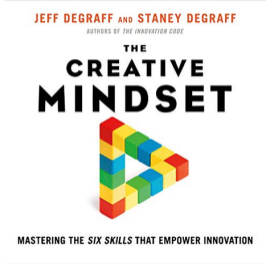
Approaching The World With A Sense Of Childlike Wonder
November, 2020
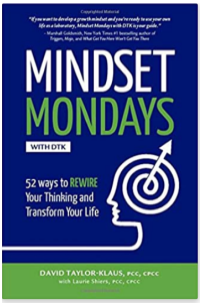
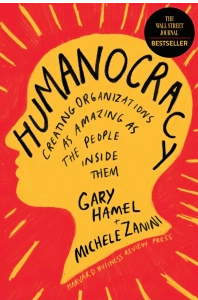

Do Ideas Cause Change Or Does Change Cause Ideas?
December, 2020
Do You Feel Like I Do On Christmas 2020?
The Language To Open Our World
Adding Fiction To The Reading Diet
2020 Third Quarter Book Inspired Posts
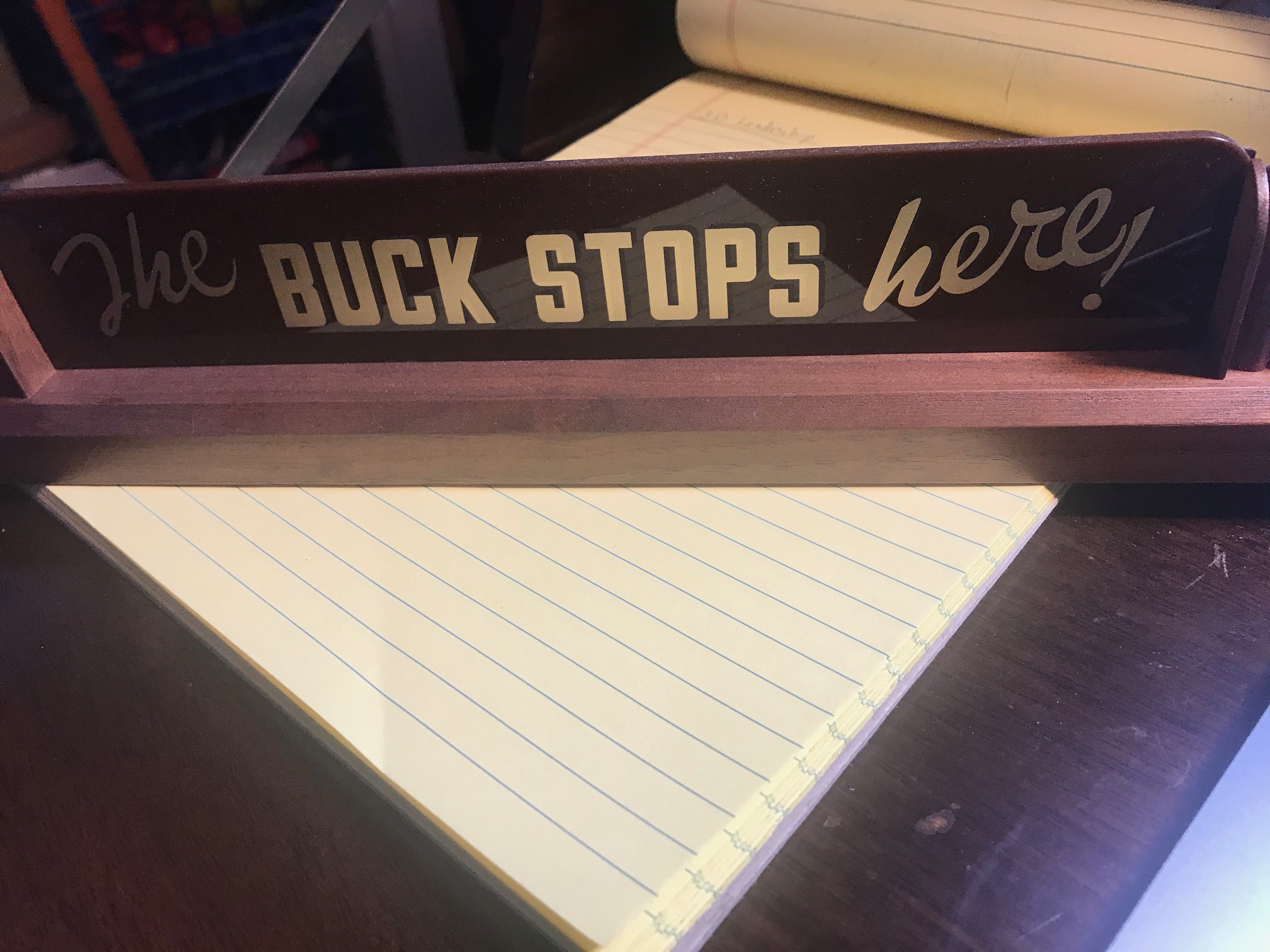
Here is the third of five posts highlighting the books that inspired blog posts throughout the year. These are from the months of July, August, and September. The last post will name my top books of 2020. You can bet that some of these books that inspired posts will be on the top books of 2020 list. President Harry S. Truman said, “Not all readers are leaders, but all leaders are readers.” Reading gives us the opportunity to experience and understand the lives and actions of others, the lessons learned from others, or how someone did something. These opportunities are readily and economically available through reading. We can learn a great deal about someone we might not, and probably won’t, ever meet. In some cases we may be learning from someone who died long before we were born. Being a leader is very complex. Leadership involves technical skill and knowledge, relationship building skills, and skills that we won’t know we need till the situation arises. Thus we need the mental exercise sessions that reading provides. So, as President Harry S. Truman also said, “The Buck Stops Here!” if you want to tap into some of the greatest knowledge from our past, present, and future the buck stops with you starting to develop your reading habit.
July, 2020

What The H@#* Is A Team Player
August, 2020

Become More Human & Less Machine
September, 2020
Explicitly Rethinking Your Leadership
“What Might Have Beens” Are Risky
Don’t Overlook The Brilliance Of Our Students

Impossibility to Possibility Thinking

Gift Yourself Being Present For Your Own Personal Time
Belief Is The Price Of Admission

Seeking Opportunities to Observe & Update Our Worldview
Leaders Crashing & Flying Higher
Building The Cocoon

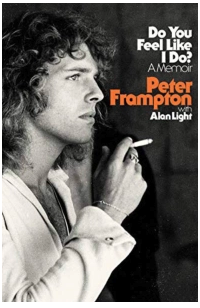
Being the rock and roll band groupie that I am, it will come as no surprise that I am reading Peter Frampton’s book Do You Feel Like I Do? A Memoir. I’m only on page 59, but I can already tell there will be multiple blog posts prompted by this book. For one thing, Peter has written this book with a very conversational voice. As I’m reading it is like he is with me telling the story. Such a talented person. Another thing that has already jumped out at me is the fact that his dad was a teacher – and a great one. I already tweeted this quote from from the book where Peter was telling about his dad teaching David Bowie and him knowing Dave (as he called him) as a schoolmate: “My father’s passion was teaching art. He could see those students who had the eye and the excitement to learn when they walked into his classroom” (p. 24). As an educator I appreciate this compliment of his father and wish for every student to encounter teachers like Peter Frampton’s dad.
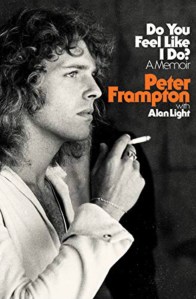
Then came this statement in the book: “Wherever I looked, I was in this cocoon of famous people, people who I admired” (p. 31). As I always say, “Language matters.” The word “cocoon” jumped out at me. Here, Frampton was using a powerful metaphor for describing being with and learning from members of The Rolling Stones, great producers, great engineers, and other music industry influencers. I loved the metaphor because I can actually see them insulating and protecting just as a cocoon does for the larvae.
As a student of rock bands, and wannabe with zero talent, I’m always amazed at how those in the music business can spot talent and then, to use Peter’s metaphor, build a cocoon around them and help them. It’s like group mentoring or a team apprenticeship. This is really the way we should be doing this. Because there were so many great and talented people providing multiple parts of Peter Frampton’s mentorship, blind spots were minimized and the biases of any single mentor were eliminated. A genius model we should be using for our students and ourselves.
Peter Frampton truly had systemic use of diverse mentors and session formats provided for him without there being a formal plan. His mentors saw the talent and then set out to build the cocoon that allowed the development to happen.
I can’t leave this post without one more quote that drives home Frampton’s point about how good the stars of the moment were to him: “I’m asking about touring and what they do and everything, so I’m learning how a successful band works. But just seeing this person who’s a Rolling Stone, who’s now my friend, and he’s friends with my parents and was this regular guy—so okay, I don’t have to be something other than who I am. It was kind of like an apprenticeship. I was learning as I went, and I’m getting these amazing opportunities along the way” (p. 33). You might want to read that quote again; there’s a lot there. I can just imagine him, wide eyed, asking relevant questions, and taking it all in as he forged his path to stardom. Who has been a part of your cocoon? Thank them! Who are you mentoring and building a cocoon around?
The Language To Open Our World

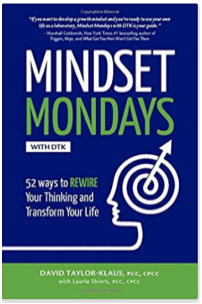
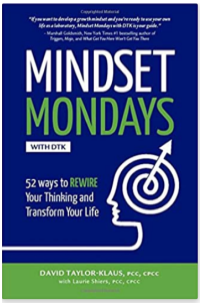
In Chapter 17 of Mindset Mondays with DTK by David Taylor-Klaus (DTK), DTK taught us that our words matter. He used the phrase “work-life balance” that gets used a lot to drive this home. He hates that phrase and he even tried to Google it reversing “work” and “life” and didn’t get anything. To this he said, ” Our culture is so distorted that even Google’s algorithm has it backwards!” (p. 140) I have actually used this topic in leadership development gatherings to discuss whether our work defines us – if it does, should it? Any thoughts?
It’s sad that the norm is for us to put work first when considering balance. This makes me wonder if this is why so many are having trouble coping during these, now 284, days of the Global Pandemic. If we listen to the things we say (myself included), I would have to say “yes.” I’m hardly on any Zoom where someone doesn’t talk about “pandemic fatigue”or “work/life blur” among many other phrases I have heard people say. We need to find the strength to persevere through the next however many days of the pandemic. One way is to think about the words an language we use. DTK quoted Judith Glaser as having said, “words create worlds” (p. 140). He then said, “The way you speak about something is a window into what you thin about it, which informs how you feel, which shapes the actions taken and, therefore, the results that naturally follow. Your words do much more than serve as a mechanism for communication. Your choice of words matters. Words not only communicate what you’re thinking and what you believe, they create your reality” (p. 140). As I always say, “Language matters.”

This goes for what we say to ourselves and others. In education we say things like “You must read for 90 minutes.” Why don’t we say (and I suggest this to teachers all time), “You get to read.”? Words matter!!! Let’s help our kids understand they “get to read” and “get to be educated,” not “have to.” Even today I was reminded of this when I going to the dentist for my six month cleaning and checkup. I kept telling myself, “I get to go to the dentist.” Okay, so it doesn’t always work, but it really did put me in a different mindset. I know this might be seen by some as Pollyanna thinking, but that’s exactly the kind of thinking we need to have. Remember, language matters, both the words we say to others and even more importantly those we say to ourselves.
Telling The Story Of Our History
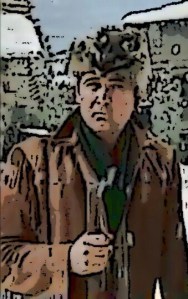
The older I get the more I like watching the reruns of the old shows. I sure hope that doesn’t mean I am getting old, because that is something I have refused over and over to do. One old show I love watching is Daniel Boone. As you know, 🎶 “Daniel Boone was a man, he was a big man.” 🎵 Yesterday morning, the Daniel Boone Christmas episode was being replayed. The episode’s writer, Stephen Lord, parallels the Luke 2 Christmas story in the Bible with storytelling perfection. At the end there is even the reference of a single bright torch to signify the birth of a son which then shifts to the image of a bright star. For a very complete description of the 14th Episode of Season 2, click here.
Watching this reminded me of just how far we have come as a country since the time of Daniel Boone and the experiment that is the United States began. We still have a long way to go, but we’ve come a long way too. While there were characters in this show saying things and acting in a way that ashamed me, they also learned and were changing their attitudes and way they treated others in the end. The episode even had characters asking for forgiveness. I do not agree with, those who want to erase history. We need to keep our history in front of us and teach our kids what every person in our past did, both good and bad. If our children are to have a sense of their own history, we cannot sanitize it. To this end we need high quality and effective civics education.
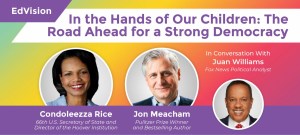
I had the opportunity to be on a webinar recently through ExcelinEd with Former Secretary of State Condoleezza Rice as part of EdPalooza 2020. She is such an incredible leader and any time I have the opportunity to learn from her I take it. She was joined by John Meacham, Pulitzer Prize winner and a New York Times bestselling author and the webinar was expertly moderated by Juan Williams. The topic of conversation was civics education. Here are bullet point quotes of great points I wrote down and tweeted during the webinar:
- “Start them [children] early in ways that let students be involved in our democracy. And, teach our kids to make arguments to defend their opinions.” ~ Condoleezza Rice
- “Teach history through case-study. It allows us to tell the stories and learn.” “You can tell that story…” ~ John Meacham
- “Teach history and civics by simulations and role-playing. Let them engage and live in the history.” ~ Condoleezza Rice
- “Cultural literacy is important. We tend to think in analogies and more and more we do not broadly understand the analogies.” “If you see a student flicker with interest, flood the zone.” ~ John Meacham
- “Somehow we need get the entire story of history told. Let’s not leave anyone out. Jefferson was contradictory, but needs to be taught. It’s very complex.” ~ Condoleezza Rice
- “What are the [historical] examples that can guide us?” “Narrative is our friend; tell the story.” “Our students learn better through case studies and stories.” ~ John Meacham
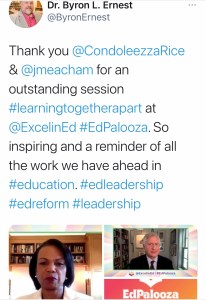
As you can see, this session entitled “In the Hands of Our Children: The Road Ahead for a Strong Democracy” was incredible. It reminded me of my blog post We Voted! that I did as a reflection of going with my son to vote in his first presidential election. Condoleezza Rice once made these positive comments on “the long road to freedom” through a sometimes violent past, crediting “Americans claiming those institutions for themselves and expanding the definition of ‘We the People.'” “That Constitution originally counted my ancestors as three-fifths of a man,” she said. “In 1952 my father had trouble registering to vote in Birmingham, Alabama. And then, in 2005, I stood in the Ben Franklin Room … I took an oath of office to that same Constitution, and it was administered by a Jewish woman Supreme Court Justice. That’s the story of America.” We can’t erase our past, so let’s not try to hide it from our children, but help them to understand it, so they can be a part of making our world a better place for all.
Adding Fiction To The Reading Diet
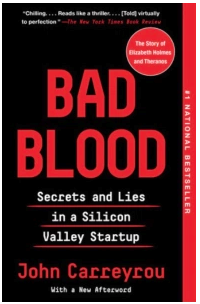
I love to read and I am a bibliophile. It is very typical for me to read between 115-130 books a year. My preferred genre tends to be historical/biographical books. Additionally, I read a great number of leadership books. I love it when someone gives me a personal recommendation of a book that they believe will help me grow. For example when traveling (I know it’s hard to remember what that is) back in January I had some new made friends highly suggest reading Bad Blood: Secrets and Lies in a Silicon Valley Startup by John Carreyrou.
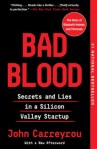
First of all the book was great, but I also learned so much and even found many parallels to other interactions I was having with others in my professional life. That book made me more aware of things going on around me and a better leader. In fact, that book inspired two of my blog posts: Passion At Ambition’s Command and When Purpose & Passion Turn Into Ambition.

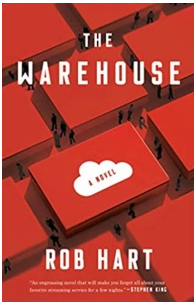
Another recommendation that I finally heeded from someone who I consider a mentor was to read more fiction. So, ok, I only read one fiction novel last year, but that was one more than the year before. Don’t judge! I’m making progress. I do have one picked to start in 2021, too. The one I picked this year was awesome; The Warehouse by Rob Hart. It was an incredible book and I believe I grew professionally and personally as a result of reading it. Here are the resulting blog posts:
- A Clouded Social Critique
- “Remember, Freedom Is Yours Until You Give It Up”
- “It Has Been An Honor To Live This Life”
Why read fiction? Because novelists develop and fully describe the inner life of the characters as imagined. Think about it; take any real person and we cannot know everything. But, a made up character, we can. It’s like a made up case study. That’s what made The Warehouse so thought provoking for me; the competing values, competing obligations, and competing responsibilities.
Some reviews of The Warehouse say it is a peek into the future. Actually, I would argue some of it is already here. More importantly, however, the book gives us a chance to wrestle with ethical complexities. As President Truman so aptly pointed out: leadership is nuanced. With non-fiction it is hard to get the nuances. Sometimes when reading non-fiction I say, “Has the person writing this ever really been in this situation?” Usually, the answer is no. With fiction, the nuances are created and revealed. The reader has to work the complexities and competing pieces out for themselves.
I’ve also read that reading fiction brings about increased social acuity and a sharper ability to comprehend other people’s motivations. Both important traits for a leader to be honing. So, as I consider my “to read” library for next year I will be considering more fiction. How about you?
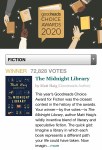
PS: some of you might be wondering what fiction book I’ve already picked to start in 2021. It is The Midnight Library by Matt Haig. This book was named the winner of the fiction genre of the Goodreads Choice Awards 2020.
Pathways To Quality Principals

Yesterday I had the opportunity to be part of a great National Association of State Boards of Education (NASBE) webinar where Susan M. Gates presented findings from research conducted by RAND Corporation. Click this recording link to view the recording of the webinar entitled Using State-Level Policy Levers to Promote Principal Quality. I was honored at the end of Susan’s presentation of the findings to, along with NASBE’s President and CEO Robert Hull, provide some thoughts, observations, and feedback.
First of all, this is such an important topic for state boards and all policymakers to contemplate. Leadership matters. The research suggested, as we might have all guessed, that there is no “one size fits all” policy that will miraculously place quality principals in all schools. Another point that came out in the research was that professional development alone is insufficient. Highly effective pre-service development must also be a part of the pathway to quality principals. As a former principal, I reflected as I was reviewing this report and was thinking about the complexity of being a principal. Ultimately, the principal is a leader of learning, but there are many parts to that. Highly effective teachers and facilitation of learning and leadership define how successful any school is. A school without a strong leader will likely fail the students it serves.
The RAND report gave us four key levers to use as policymakers. Those four levers are:
- Standards
- Licensure
- Program Approval
- Professional Development
Interestingly, four things came to mind as I was reviewing and listening to Susan’s report. Here are my thoughts, observations, and feedback:
- As state board members, we need to take the approval of teacher education and leadership development programs very seriously. In my own state, our department of education does a tremendous job of evaluating and providing us reports for revue prior to approval of programs. We still have an obligation to study these reports and make sure the programs meet the test of equity and excellence. We also need to make sure that any pathway to the principalship is not rewarding the person who can best meet meaningless requirements.
- As I listened, I wondered if there were ways to leverage the attention we are now rightly giving to teacher leadership. Teacher leaders are so important to building the capacity is schools and it seems to me we could better leverage identifying those teachers with the leadership dispositions and develop those skills. Notice I said dispositions, because many teachers are very interested in being teacher leaders but not, at least in the present-tense, being a principal. As a believer that everyone is a leader and that leadership should happen where the data is created, in this case the classroom, it makes sense we would be developing teacher leaders to make decisions that traditionally have been cascaded down to teachers. This real-time development would give teachers practical pre-service development that would be important to effective leading for learning whether a teacher or principal. I would argue that a well developed and highly effective teacher/teacher leader could be the best bet to become a high quality principal. You’ll want to check out Susan’s response to this point in the recording.
- Another point made was the fact that sometimes we need to look at subtraction as well as addition when formulating policy. We deal with this a lot in education where we continue to place mandates without taking anything away. We need to allow for more flexibility. Additionally, how can we more effectively use incentives or information sharing in the place of mandates?
- Finally, there was a suggestion in the report of finding opportunistic ways: “Be opportunistic: link principal initiatives to key state education priorities and build on related initiatives.” By doing this we might find new ways to streamline, provide flexibility, or identify those things that can be removed.
I really appreciate the research and this report. Again, it provides levers for us to consider using as policymakers as we contemplate how to better prepare and provide quality pathways for the development of our critically important principals.
Second Quarter 2020 Book Inspired Posts

This is the second of five posts highlighting my 2020 blog posts that gained inspiration from books I was reading at the time. The first quarter posts were highlighted earlier in the week in The First Quarter Of An Incredible Year of Reading. I really love to read and think I maybe read in a little different way than others. I know leaders who many times I can guess what they are reading because they are copying everything that is in the book or copying the person the book is about. I always say, “Great leaders don’t copy.” I prefer to think of myself in terms of being a portrait that is being painted that will never be completed. Everything I read, every person I come in contact with, every event I experience are strokes of the brush or different colors of paint being added to what I hope is becoming a beautiful portrait of who I am becoming. Another thing I say a lot related to this is, “I’m not done!”

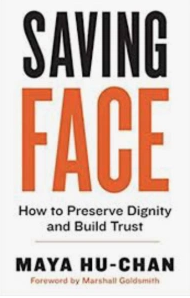
It is curious to me that with global literacy rates as high as 86%, we are shown to be reading less and less. I worry about this because reading catalyzes insight, innovation, empathy, and personal growth and effectiveness. For example one of the books, Saving FACE, by Maya Hu-Chan that I blogged about in FACE Is Social Currency (listed below), has made me a better person. I can honestly say that having the opportunity to read her book, get to personally know Maya, and do some webinars with her has changed my life and enabled me to help in the professional and personal growth of those I serve. Let me tell you, the signed copy of her book she sent me is one of the most valued possessions in my library. Again, I point out: how did this all happen? It started with reading a book. I’m going to keep you all in suspense until the last post of the year when I announce my top books of the year where this one ends up, but let’s just say it’s already on the list. This is one of those cases where being a bibliophile paid off in getting to know and learn from such an incredible leader.
Take a moment and check out just a little of what I learned from some of the books I was reading in the second quarter of 2020. Now, on day 281 of the Global Pandemic that seems so long ago, but all of the books I have read in 2020 have been an important part of the continued journey to get on the other side of this pandemic. Here are my second quarter posts referencing some of the books I was reading at the time:
April, 2020


Whether It’s Spinning Plates or Juggling Balls, We Can’t Afford To Drop Either For Our Kids!
Educating Students To Improve The World
May, 2020

Good Enough: Five Positives For Every Negative
June, 2020


Pretty great set of books from the second quarter of 2020. It’s probably obvious how these books inspired blog posts. Let me know if any of these books have inspired you along the way, and how.
Going Platinum

Last week I had the opportunity to lead a session at our Principal’s Academy. My topic was “Professional Capacity of School Personnel.” Building the capacity of others is a passion area of mine. As a believer in intent-based leadership I love telling the story of creating a leader-leader instead of leader-follower community. I learned this from former United States Navy Captain David Marquet, who also taught me that we should build relationships such to understand how others want to be treated and understand their needs.

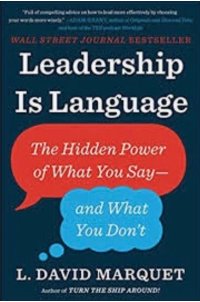
In Leadership Is Language Marquet taught us that we need to change the way we communicate. We need to drop the prehistoric language of command and control and learning the language of creativity, collaboration, and commitment. When building the capacity of our teams, how we communicate matters.

This session I brought in some other content that I was introduced to by my friend Maya Hu-Chan, author of Saving Face. She introduced me to the “Platinum Rule.” The “Platinum Rule” is the brain-child of Dr. Tony Alessandra and goes like this: “Treat others the way they want to be treated.” Brilliant! Ever since being introduced to this I have been sharing with as many as I can.
What a difference. The Platinum Rule accommodates the feelings of others. The focus of relationships shifts from “this is what I want, so I’ll give everyone the same thing” to “let me first understand what they want and then I’ll give it to them.” This brings empathy and compassion to a new level.
This really resonated with the group and they spent time discussing how to implement this into their daily work as a principal and leader of learning. I was so thrilled to get this message in a thank you email today: “Some even shouted out your presentation in their follow-up feedback. When asked “What is the most important thing you will take away from today?” One wrote “Strategies to get into the classroom – a great perspective from one of the presenters, ‘treat teachers the way they want to be treated.'” You never know what will resonate with participants, but I am thrilled that others are now treating others the way they want to be treated. Let’s all go platinum!
If Only We Would Just Ask
Have you ever complained about something? I know. Stupid question, right? We have all complained about something. Many times a complaint is an unspoken request. Additionally, when we don’t ask for what we want we tend to complain about our needs not getting met. I guess as much as we complain, we must not be very good at asking for what we want. I also believe it to be much more complicated than this, however. When we ask for what we want we make ourselves vulnerable to being turned down or judged negatively for our request. Sometimes people don’t ask because they do not believe they really deserve what they are asking for.
Let’s think about this from a case study perspective. Let’s say I like running through the television channels a time or two. Or three. Or four. It seems my wife is not into that as much as I am. Now, my wife could complain about me, or she could ask me to stop doing that. Did you catch that? If only we’d just ask! Remember, many times a complaint is an unspoken request. We also need to make sure we are paying attention to what it is that makes others complain as well. Also, don’t forget, we are generally much better at listening to ourselves than others.
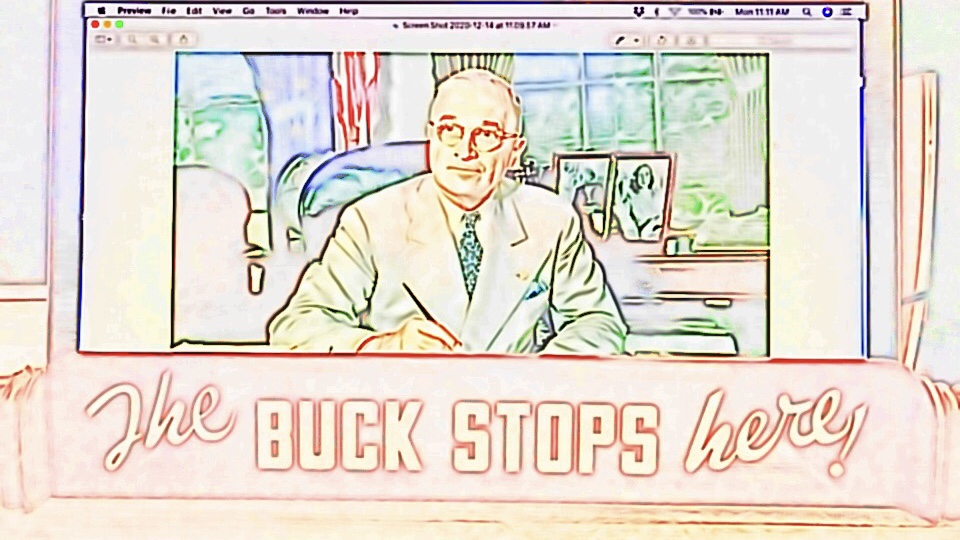
This very subject was the topic of Chapter 16 entitled “Work On Yourself” in Mindset Mondays With DTK by David Taylor-Klaus (DTK). I loved that he quoted one of my favorite presidents when he said, “If leading is the ultimate responsibility, then it makes sense to start by improving yourself, and working on yourself even harder than you work on your business. As Harry Truman said, ‘The buck stops here'” (p. 134). What does this mean? We need to express what DTK calls the “dream behind the complaint.” The buck stopping with us begins with us expressing what we need to have changed or done. Again, if only we’d just ask!


1 comment