From Delegation to Leadership
 “[Henry] Ford’s failure [1927-1944] was not the result of personality or temperament. It was first and foremost the result of his refusal to accept managers and management as necessary, as a necessity based on task and function rather than in “delegation” from the “boss.” ~ Peter Drucker, 2008
This week’s entry in Maciariello (2014) A Year with Peter Drucker offers us examples from three great innovators in our history. These innovators are Wilson Greatbatch, Andy Grove, and Henry Ford. First of all that’s a pretty powerful trio of innovators to learn from. Greatbatch is known for developing the heart pacemaker, and then later developing the lithium iodide battery that allowed the pacemaker to go decades without battery replacement. Thus eliminating many operations for patients needing pacemakers. Of course, we know Andy Grove as one of the founders of Intel Corporation in 1968. Finally, I don’t really think I need to give an introduction to the third side of the triangle, Henry Ford.
In this week’s entry, Andy Grove discussed how in the beginning he was just one step away from everything, and now is many steps away from everything (Maciariello, 2014). He discussed how everything in the beginning was in his head. People in their initial group, while innovating, gravitated to the roles that fit them. The team built itself up and roles that were needed gravitated to appropriate team members (Maciariello, 2014). Then as the organization grew, however, tribes began to form and power struggles began to occur. This is when Grove realized he needed to shift from innovator to executive (Maciariello, 2014). 
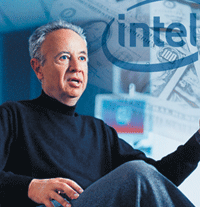 It was interesting for me as I read this story of Andy Grove how much similarity there is to the situations I have experienced in working as a part of a team to turnaround two different schools. In both situations it has been necessary to let the talent gravitate to roles that fit. But now, after a year (that was the same time frame at both schools), it was necessary to take a step back and analyze what everyone was doing. In fact, we had a mini-summit this spring using the essential questions of: What are these people doing?; Are they doing the right things?; and, How do we all support our teachers in doing the right things for our students? That might seem like an easy task, but there are so many parts to making sure a school is operating efficiently and effectively. As an organization grows and develops, there is a tendency to look inward. The organization must recognize, however, that as it changes in size, load, and complexity there is a need for the roles of the people, particularly the leader, in the organization.
Additionally, we all know the story of Henry Ford as the greatest industrial innovator of all time. As the story goes, though, by 1927 the Ford Motor Company was a shambles. Really from 1927-1944, until Henry Ford II took the reigns, the company struggled mightily. In fact, Peter Drucker called it a “controlled experiment in mismanagement” (Maciariello, 2014, p. 198). Henry Ford, according to Maciariello (2014), provides us with a case study in executive mismanagement. Ford tested the hypothesis that as an organization grows it does not need professional leadership. Ford believed an organization should be run by a boss with helpers (Maciariello, 2014), not leaders. In other words, he believed in pushing tasks down to underlings to perform. In today’s lingo I call these the folks that are “email pushers.” Whatever is asked of them, they push the email to someone else to carry out. Really not leadership, or, at least I don’t think so. Ford’s experiment failed and we can all learn from his mistakes. I did a little further studying and Henry Ford II made sure those in the organization had the skills necessary to carry out leading the parts of the organization they were responsible and then Ford II gave them the latitude to lead. 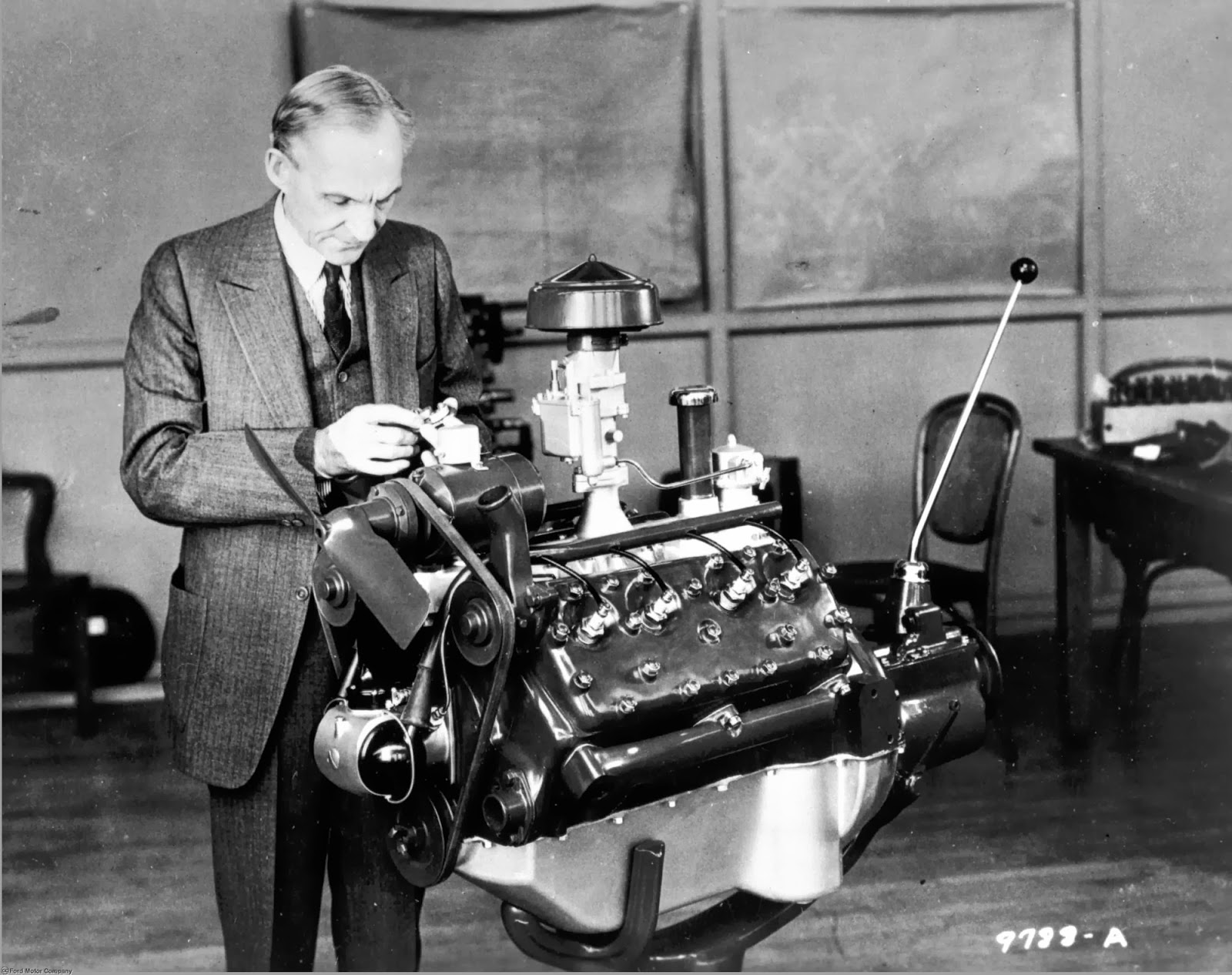
It would do us all good to learn from the lessons of all three of these great innovators turned executives.
Reference
Maciariello, J. A. (2014). A year with Peter Drucker: 52 weeks of coaching for leadership effectiveness. New York, NY: HarperCollins Publishers.
The Reward of Service

“…the reward of service is more service.”
~ Chester I. Barnard
We can learn a lot about how to motivate our team members by thinking about what motivates volunteers to do the work they do for organizations for no pay. They provide services for the reward of the service itself. Satisfaction comes from successfully applying one’s expertise to a worthwhile purpose (Maciariello, 2014).
“The management of people is a marketing job.” ~ Peter Drucker
We need to think about those working in our organization and consider how we would need to serve them if they were volunteers. Volunteers have to get more satisfaction from their work that paid employees, precisely because they don’t get a paycheck (Maciariello, 2014). Volunteers need, above all, challenges. As we know, one of the most important factors in workforce engagement is the employee believing he or she is truly making a difference. Additionally, engaged employees are ones that believe they are being challenged.
Therefore, don’t forget the reward of service. Consider what is truly motivating to the people in your organization. Appeal to the full range of their motivations, not merely to financial remuneration. It has been my experience that the financial compensation is not usually the top factor determining high employee engagement. This is why I always strive to have a “Make it so!” environment for our staff. In this environment staff comes to me with ideas and solutions well thought out and it is my goal to always say, “Make it so!”
Reference
Maciariello, J. A. (2014). A year with Peter Drucker: 52 weeks of coaching for leadership effectiveness. New York, NY: HarperCollins Publishers.
Authenticity 101
“Authentic leadership is the full expression of “me” for the benefit of “we.” ~ Henna Inman
I had the great honor of receiving an advance copy of Henna Inman’s great book, Wired for Authenticity: Seven Practices to Inspire, Adapt, & Lead. What an awesome read. I gave the book five stars on both GoodReads and Amazon. Here is what I wrote as a review: “This is the only book out there that actually gives leaders best practices for being authentic. If I had to retitle the book, it would be: ‘Authenticity 101.’ This is a must read for all who want to be authentic in dreaming big and leading change and innovation.”
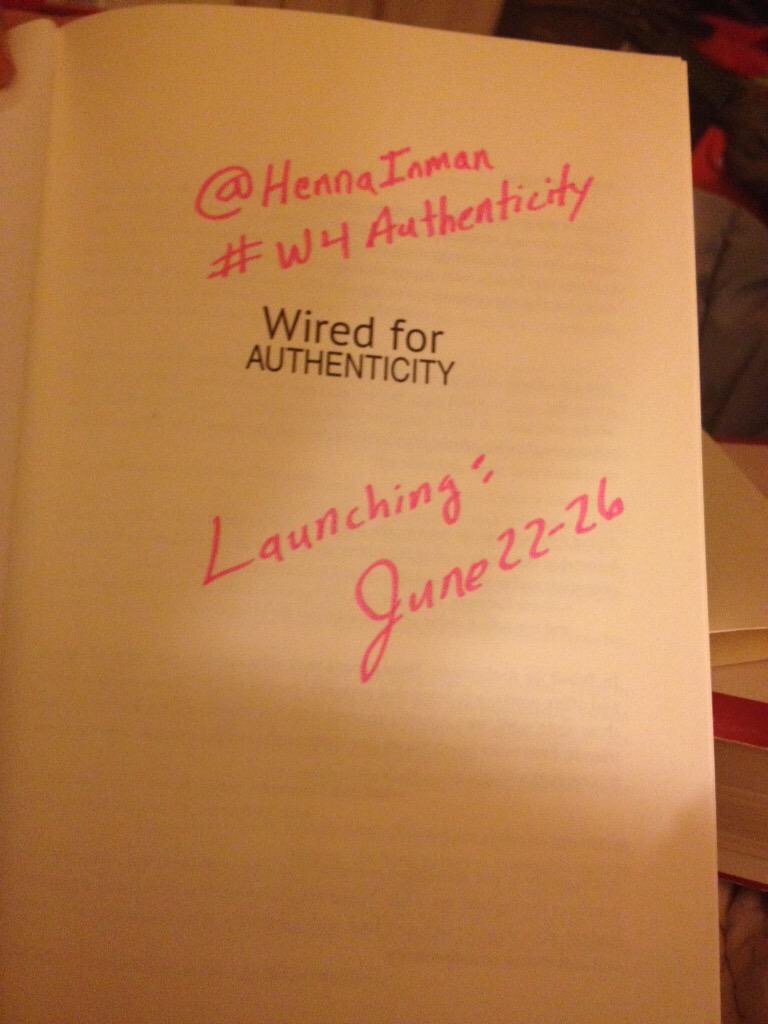
Inman’s Step 1 is to “Find Your ‘why.'” We learn best when we set a goal. Inman suggested writing a goal in the margin of the book that I, as the reader, wanted to be authentic in. I wrote, policy consensus and implementation. In order for us to truly be authentic, we need to lose who we think others believe we ought to be, or what is “good” and become who we really are. Being authentic means we will have our own ideas, core values, and beliefs. Guess what? That’s an incredible thing! Can you imagine how bad our constitution would have been if all the founding fathers would have had group think and all agreed on everything? I, for one, am glad they had disagreements and heated arguments, but in the end reached consensus and implemented a constitution that has stood the test of time. They were truly Leading Audaciously!
“We can choose to create within a high-change, high-uncertainty environment only by being in our authentic selves – not the saboteurs. ~ Henna Inman

“The trouble is when our identity starts to limit us and how we perceive our self-worth.” ~ Henna Inman
We must dare to dream big and lead with audacity. I have blogged about this before using my heroes the Wright Brothers as the example. Click here to read that post. Inman explains that when we dream big, we invite all of our saboteurs in for a feeding frenzy. When we get out of our comfort zones and do the audacious and pursue our big dreams we wake up our saboteurs to show up and try to make us fail. That’s ok. We have to continue our climb for what we believe in and not be intimidated. We must also strive to not be the saboteur and work to build consensus by turning the full expression of all the “me’s” into the good of the “we!”
“Our becoming who we are comes from our intentions and actions, not from concepts or theory.”
~ Henna Inman
Opportunities, Competence, & Commitment
 “Now, what does this mean for you?” ~ Julius Rosenberg of Sears in 1917
Rosenberg asked each of his store managers this question in order to integrate their efforts into the overall mission of Sears. The mission statement for Sears at the time was: “Your job is not selling, it is buying.” Rosenberg believed that his sales managers needed to be making sure that Sears was putting the right products on the shelves, not just being good salesmen (Maciariello, 2014). This mission statement helped those at Sears to “do the right thing.” In other words all of the employees at Sears were able to see the whole of the organization’s mission as one’s personal mission. This also helps all of those in the organization to “do things right” (Maciariello, 2014). This is a very important part of the whole mission statement, vision, and strategic planning process – all in the organization must fully understand his or her role in carrying our the plans and doing the right things. It is also important all parts of the mission statement fit reality.
A well written mission statement, according to Peter Drucker (Maciariello, 2014), can be used to effectively allocate the time, talents, and resources of all the people in an organization. One of the things I picked up from this week’s lesson from Drucker is: “It [mission statement] can be used as a recruiting, appraisal, and retention tool to ensure that those in an organization are focused on doing the right thing (Maciariello, 2014, p. 177)”. We need to spend more time talking and asking questions like Rosenberg’s. In fact, I am going to start asking that question after presenting our mission statement: “Now, what does that mean for you.” I am very excited to have learned this today!
When there is a well-produced mission statement, decisions can be guided toward doing the right thing and consensus. In order for this to work constructive dissent must be encouraged to prevent organizational obsolescence (Maciariello, 2014). Drucker said, “If you can bring dissent and disagreement to a common understanding of what the decision is all about, you create unity in action, and in all things trust. And trust requires that dissent come out in the open, and that it be seen as disagreement (Maciariello, 2014, p. 181)”. We must focus on what is right, not who is right.
Does your mission statement accurately your organization’s competence and commitment?
Reference
Maciariello, J. A. (2014). A year with Peter Drucker: 52 weeks of coaching for leadership effectiveness. New York, NY: HarperCollins Publishers.
Investments in Managerial Ego
 “Nothing so powerfully concentrates a man’s mind on innovation as the knowledge that the present product or service will be abandoned within the foreseeable future.” ~ Peter Drucker
This quote from Peter Drucker is so true. The first key to innovation is the willingness to abandon the old so that you free yourself for the new. Thus, the idea of “investments in managerial ego.” The three sectors of government, social, and business all have difficulty abandoning obsolete products, services, policies, and procedures. The inability to abandon existing programs reduces resources available to both fund and carry out new initiatives necessary to stay competitive and meet the mission and vision of our organizations (Maciariello, 2014). You are probably already thinking of programs, both in the government and social sector, that no longer serve their originally intended purposes.
Robert Anthony, a former Harvard Business School professor and under Secretary of Defense for Robert McNamara during the Kennedy administration, believed all agencies need to “examine its [program] reason for being, its methods of operations, and its costs.” (Maciariello, 2014, p. 171) I would also add the question of whether the team has the capacity to carry out the program. I really experienced this early in my career as an agriculture science teacher and FFA advisor. Both the state FFA and national FFA organizations would add new contests and programs each year, but there was never anything taken away. Well, as you can imagine this put strains on budgets and the ability to get things done well. The positive of this was, however, it taught many of us how to really ask the question of, “What are the things we are going to do well?” I always believed, and I believe they are doing a better job of this today, the FFA organizations should have been asking, “If we add this [program or contest], what are we going to get rid of or take off the teachers’ plates.” I really do try to practice this now as a school leader, but as any of you know who are on the front lines as the “Deer in the Headlights,” this is easier said that done.
Peter Drucker (2014) said we must ask the questions, “If we did not do this already, would we go into it now?” If the answer is no , ‘What do we do now?'” The question has to be asked – and asked seriously. In other words, “If we did not do this already, would we, knowing what we know, go into it now?” If the answer is no, the reaction must be “What do we do now?” I get it though; it is so difficult for any business or organization to abandon a program because the program may represent an investment by the people who introduced it and who nursed it along. Beware of commitment to ego as an excuse for maintaining status quo (Maciariello, 2014). Developing a process of systematic abandonment (Maciariello, 2014), and making it a regular part of the culture of an organization, is one of the most effective ways to eliminate the old and make room for the new.
We must remember that when given the challenge of choosing between two or more competent programs, we must keep the one that makes the more significant contribution to the mission and vision of our organization and to society.
Reference
Maciariello, J. A. (2014). A year with Peter Drucker: 52 weeks of coaching for leadership effectiveness. New York, NY: HarperCollins Publishers.
Memorial Day Reflections
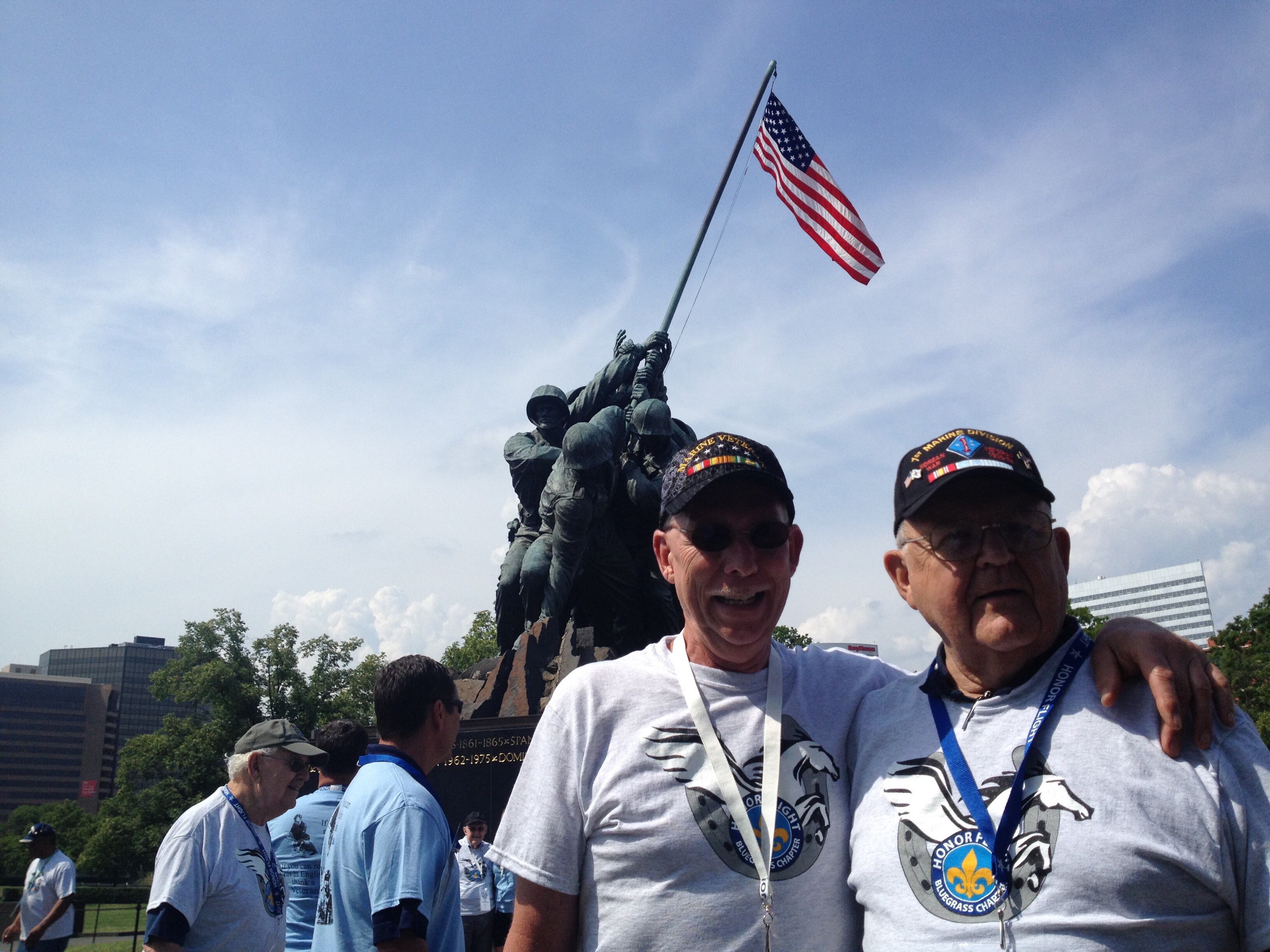 This year’s Memorial Day is different for me. It has more meaning and has a more real context than any time in my life. I am so blessed to have had the opportunity to serve on The Honorable Order of Kentucky Colonel’s Honor Flight on May 16th as a Guardian. That experience changed my life forever. In my family growing up we always celebrated Memorial Day, or “Decoration Day” as my dad called it. That was actually the holiday’s first name. It began in the years immediately following the Civil War, at which time it was observed primarily as a day for “decorating” military graves with flowers and commemorating the fallen Union and Confederate soldiers. By the twentieth century, Memorial Day had been extended to honor all Americans who died in all wars while serving in the U.S. Armed Forces.
I’m often astonished at the lack of honor some display toward our Veterans. For us who sacrifice little—if anything—and yet have no qualms about enjoying the luxury and freedom provided by this country we belie our lack of gratitude with our cavalier attitudes toward those who have served our country. We should hold to the true meaning of this day. Alas, for too many Americans, Memorial Day has come to mean nothing more than another three-day weekend, albeit the one on which the beaches open, signifying the beginning of summer. Unfortunately, the tendency to see the holiday as merely an opportunity to attend a weekend cook-out obscures even the vestiges of what the day was meant to observe: a solemn time, serving both as catharsis for those who fought and survived, and to ensure that those who follow will not forget the sacrifice of those who died that the American Republic and the principles that sustain it, might live. Some examples might help us to understand what this really means.
 These examples were plentiful for those of us taking part in the Honor Flight. Hearing of the sacrifices and seeing the emotions of the veterans on this trip were life changing for me. It was also a life changing experience for the Veterans as well. Allow me to share an excerpt from an email the Veteran I served as a Guardian for sent me yesterday:
“This morning particularly have been reflecting on our trip to DC . For me sharing that experience together produced a bond that seems to transcend the time we’ve known each other. At any rate reflecting today & tomorrow on the sacrifices of our fallen comrades . It seems the meaning of the day has become lost . Much like Christmas we forget it’s the celebration of our Savior’ birth. Finally 2 things: 1. YOU made our honor flight very special; 2. My life is richer having met & got to know you. God sure dealt us a good hand when he put us together. I don’t know what I would have felt if you hadn’t been with me.” ~ Dr, Jerry McCandless, Korean War Veteran
I am humbled at the thought of those who have put themselves in harms way on my/our behalf…people they don’t know. The beauty of the Honor flight is it gives us the chance to really get to know one another. The Honor Flight gave me the opportunity to better understand our nation’s history and appreciate the price paid for our freedom. I encourage all to find some way to serve our Veterans, whether through serving on an Honor Flight, or some other volunteer service. We need to all commit our time, talents, or treasures to our Veterans. Thank you to everyone who has served and those who are serving us through our military and our great country. I am in awe of all our heroes on this Memorial Day!
Nothing Works Forever: Perpetuating the Mission & Values of the Organization!

“Nothing works forever. Our purposes never change – but our methods and tactics must constantly change. It is amazing how quickly a successful organization can deteriorate into mediocrity.” ~ Rick Warren, Pastor and Founder of Saddleback Church in Lake Forest, California.
This week’s lesson in Maciariello’s (2014) A Year With Peter Drucker was based on an interview with one of my hero’s – Rick Warren. Dr. Warren founded Saddleback Church in Lake Forest, Calif., in 1980 with one family. Today, it is an evangelical congregation averaging 30,000 weekly attendees. Peter Drucker and Dr. Warren were friends and this week’s lesson was based on a 2003 interview. They discussed that organization must innovate and change. Organizations also tend to become bureaucratic and need to have conscience activities for maintaining and transmitting its core values (Maciariello, 2014). These principles should be implemented in a way that will perpetuate the mission and values of an organization and provide continuity, while also facilitating change.
The key here is facilitating needed innovative change, but at the same time having continuity. Tough order, huh? Drucker posited that we all need people committed to our vision our our teams, but we also sometimes need radical change (Maciariello, 2014). Drucker also argued that change and continuity are not opposites, but a continuum (Maciariello, 2014). If an organization does not change, it will die of being status-quot. In order to achieve continuity, therefore, an organization must be designed to change. Change and continuity are thus poles rather than opposites. Interestingly, I just spoke on this last week at the American Federation for Children National Education Policy Summit. In our panel I stated that in education and “school choice” that we were in danger of the new beginning to look like the old. In other words as a believer in “school choice,” we must make sure that the choices are not just some of the same old thing in a new wrapper. We must create schools that have the core value of all students can learn, but are differentiators in the way we do that. We need schools that educate better than anyone else and that have an “edge” or “niche” in doing so. In other words, a constant stream of incremental improvements will lead to substantial change and great schools over time. Schools, and all organizations, should therefore seek and reward continuous improvement activities. Continuous improvement must be one of our “BIG” initiatives to be working on in education, and all organizations for that matter.
According to Maciariello (2014) change can occur in two forms: 1.) creating new wealth through innovation; 2.) creating wealth by moving resources from low to high productivity. Competition speeds this process up. This is why I am such a believer in school choice. We cannot predict the future, so it is our job, as leaders, to have the core values in place to allow for changes in products, processes, and services that will continue to meet the needs of our customers in the future.
As an “Energetic Change Agent,” I know that change is risky and creating the future is a lofty goal, but it is much more risky to leave the future to chance. Are your organization’s core values strong enough and believed by all to make it possible plan for change? Are your own core values and change agent abilities such that you will be able to maintain organizational cohesiveness during necessary changes? Isn’t it excited to be creating the new future?
Reference
Maciariello, J. A. (2014). A year with Peter Drucker: 52 weeks of coaching for leadership effectiveness. New York, NY: HarperCollins Publishers.
Improving STEM Education: Connecting School Work to Real Life
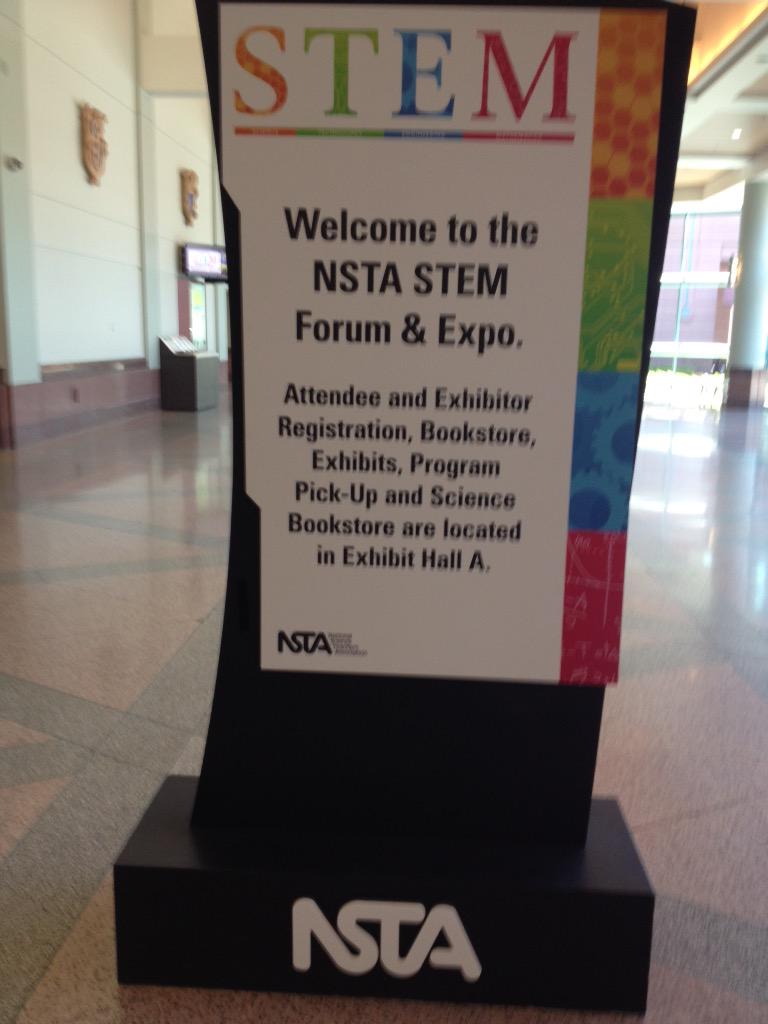 I had the tremendous honor of presenting at the International STEM Forum & Expo yesterday put on by the National Science Teachers Association (NSTA). What an incredible event. It was well-planned, and the sessions were, well, incredible. It was a great reminder to me, now that I am not in the classroom as a teacher, just how important STEM education is to our children. It was also a reminder of how tough a job it is to keep our children motivated in STEM courses and then, ultimately, through higher education if that is what the student chooses. The attendees of the National STEM Forum were reminded of this when Dr. Freeman Hrabowski, President of The University of Maryland, Baltimore County, spoke. He told us that high SAT scores correlated with students who had taken AP & Honors courses, but then ended up being the same students who dropped out or changed majors from STEM related degrees in college. Why? Because of a “fixed mindset” instead of a “growth mindset.” Dr. Hrabowski sited the work of Carol Dweck, author of Mindset: The New Psychology of Success (everyone needs to read this and all of her books). These students are so driven for success and making the top scores that when they get to college they are often disappointed by not being “#1.” Many are still top students, but can’t handle not being the top. Then, as Dr. Hrabowski pointed out, they switch to the humanities. Why? Because the humanities gets the iterative nature of the “growth mindset.” The idea that nothing needs to be perfect on the first try. In STEM courses, we tend to want to give a grade on the first, and only try. As a big believer in mastery grading, I wanted to go up and hug Dr. Hrabowski. He was talking my language!
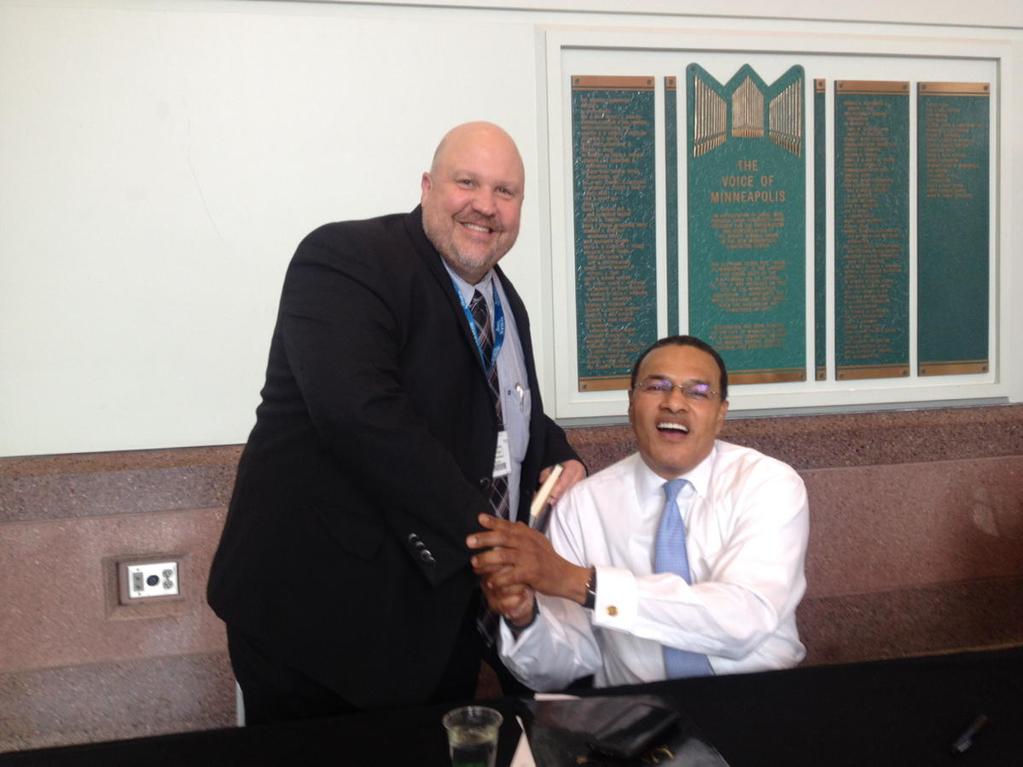
Me Hanging With My Friend, Dr. Freeman Hrabowski
It is curious to me that we have this “fixed mindset” in STEM education, because careers in STEM are not that way at all. Think about all the trial and error, experimentation, and “ah ha!” moments there are. Thus, why what Dr. Hrabowski was saying really reinforced what I had just spoke about prior to his keynote. My presentation title was: “Improving Science Education: Connecting School Work to Real Life.” The presentation was all about teaching in a real world context. I stressed that we must connect the three worlds that a student lives in: school world, real world, virtual world. The presentation was based on research I did based on student academic performance and achievement in Biology based on being taught in the real world relevancy of Agriculture. If students do not make the connection between the school work they are doing and real life, they will fall into the “fixed mindset” trap.”
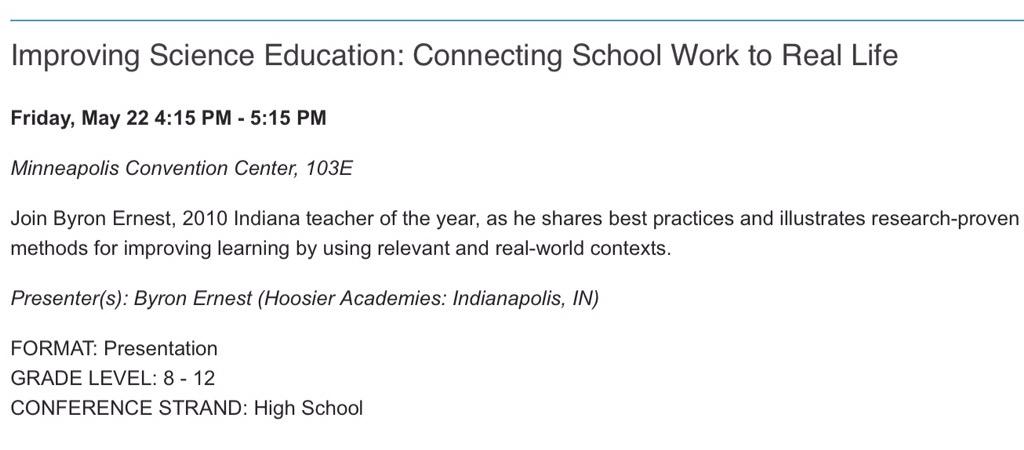
I discussed with attendees how we had partnered with AgReliant Genetics when I was teaching at Lebanon High School to provide opportunities for our students to do real world/real time research. The students were able to do this working with real researchers. This working with adults component is so very important in my opinion. To create the ideal learning environment we must have Students working in teams to experience and explore relevant, real-world problems, questions, issues, and challenges; then creating presentations and products to share what they have learned. Here is a link to my presentation:
Ernest_NSTA_RealAgSTEM_Final_2015
So, as we continue to facilitate learning for our STEM students, and all students, let’s not forget to practice a “growth mindset” and make the connection between school work and real life.
Earned Empowerment is Dangerous
 On Tuesday of this week, at the breakfast session of the American Federation for Children National Education Policy Summit, my new friend Jean-Claude Brizard made a comment during our discussion that really hit me like a ton of bricks. We were talking about building leadership capacity in our teachers and building our leadership benches/pipelines. Jean-Claude said, “Earned empowerment is very dangerous.” I have to say I more than a little taken aback by this statement. As a believer in distributive and shared leadership, I was a believer in the the idea of “earned empowerment.” In fact I have even blogged about it. Click here to read “Walk the Talk” and click here to read “Be Consistent, Not Clever!” Jean-Claude went on to explain what he meant. He believes that if you subscribe to “earned empowerment” that you will only be empowering the top 10% of your team. In other words, those top-performers who “earn” it.
Jean-Claude contends that we need to empower everyone in some way or another. In his words, “we need to empower them whether they want to be or not.” His belief is this empowerment will then develop them as leaders. I must say, after reflecting, this really makes a lot of sense. As a leader who has created a “make it so” environment, why would I not want everyone to be empowered. I guess I really have been practicing empowering everyone, because I want everyone to come to me with well thought through plans and tell me what they intend to do. My goal is to always say, “Make It So!”
This idea of empowering everyone really is interesting. Think about it; if we are able to empower all of our people with projects, responsibilities, and aren’t we really expanding the capacity of our organization. So really, mass empowerment equals capacity building. This in turn means leadership development of our teams. Wow!
There is one catch to this, however, in Turn The Ship Around!: A True Story of Turning Followers Into Leaders by L. David Marquet, he talks about empowerment really being a delegation of authority. Marquet described, however, that delegation alone is not the answer. We must also be committed to increasing the technical knowledge of those on the team. As Marquet said, “When authority is delegated, technical knowledge takes on greater importance at all levels” (Marquet, 2013). He went on to say, “Control without competency is chaos” (Marquet, 2013). I love this quote because it drives home the point that leaders must consistently provide an environment of professional growth that builds the competency of all in our organizations. Therefore, if we are going to empower all of the members of our organization we need to make sure we have trained them and provided them the necessary professional growth opportunities to prepare them for their responsibilities. Pretty exciting stuff!
Another important thing to keep in mind is that there will be differences in abilities of those on our teams. Also, there will be those who do not want to be empowered. There always seem to be a few who just want to be told what to do. This means that we, as leaders, will need to differentiate and individualize how we empower our team members.
This whole idea of the danger of earned empowerment has really got me thinking about those on the team I lead that I have not empowered or need to empower more. Do you have members of your team you need to empower?
Reference
Marquet, L. D. (2013). Turn the ship around!: A true story of turning followers into leaders. New York, NY: Penguin Group.
Our Origins, Legends, & Heroes
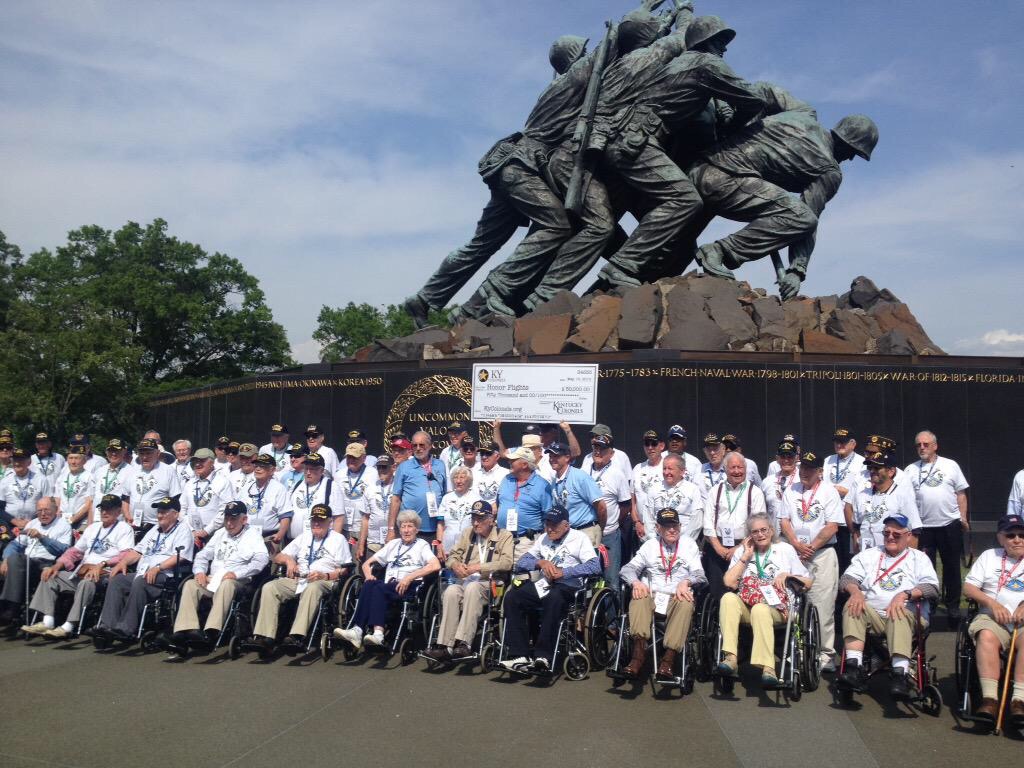
2015 Kentucky Colonel Honor Flight
“Not to know what happened before we were born is to remain perpetually a child. For what is the worth of a human life unless it is woven into the life of our ancestors by the records of history.” ~ Cicero
People living in democratic republics should know not only of its origins but also of the imperfect democratic struggle it spawned. Such appreciation might alleviate the taking of one’s way of life for granted. Americans understand the embodiment of heroic virtue in everyday life, for legends runs deep in American history.
Yesterday I had the privilege of serving our Veterans as a Guardian for our Honorable Order of Kentucky Colonels Honor Flight to Washington DC. This was a very emotional experience and I still, 24 hours later, hardly have the words to describe or reflect on the day. As a Kentucky Colonel, this was something I really wanted to do, but did not know what to expect. Well, let me tell you, it exceeded my expectations. This opportunity to serve provided the best lessons in selflessness and servant leadership one could receive anywhere. The Veterans taking part in the Honor Flight, all of whom were Kentucky Colonels, were transformers in life; they thought not of themselves but of a higher cause – America and global freedom.
“Kentucky Colonels are unwavering in devotion to faith, family, fellowman and country. Passionate about being compassionate. Proud, yet humble. Leaders who are not ashamed to follow. Gentle but strong in will and commitment. The Honorable Order of Kentucky Colonels, as a Brotherhood, reaches out to care for our children, support those in need and preserve our rich heritage.” ~ The Honorable Order of Kentucky Colonels Credo

Water Cannon Salute
Everywhere we went the Veterans were met with mobs of crowds cheering and thanking them for their service. There was even a “Water Cannon” salute at Reagan International Airport for our plane as we landed in Washington D.C. As I watched in amazement, these heroes practiced our Kentucky Colonels Credo of being, “Proud, yet humble.” These Veterans were truly touched by the outpouring of support and cries of, “Thank you for your service!” For me it was the first time of truly being in a role of 100% servant leader. Because I am not a Veteran, I did not matter to anyone yesterday, and should not have. This was incredibly satisfying and humbling. The entire day was about serving the Veterans as a group and the Veteran I was responsible for as a Guardian, Jerry McCandless (more about him later). I have always prided myself in walking the talk as a servant leader, but this provided the opportunity to be 100% servant. I have to tell you, I am a changed man.
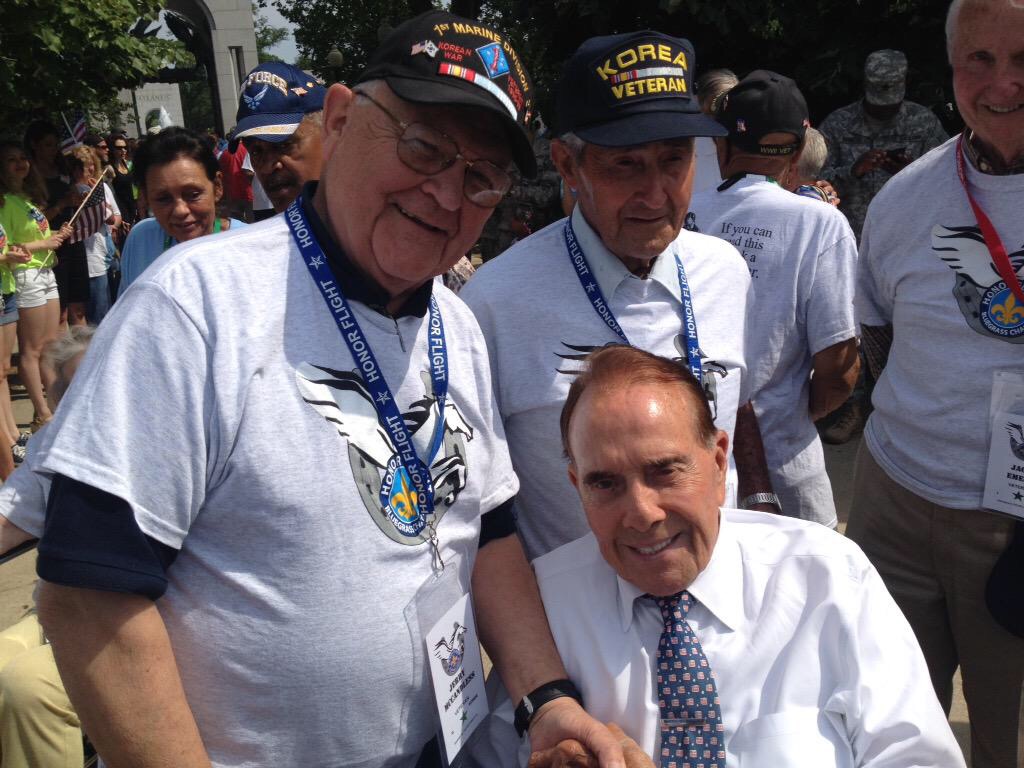
Jerry McCandless With Former US Senator Bob Dole
Amazingly, after returning to the bus someone asked me if I had my picture taken with former U.S. Senator Bob Dole. He comes out and personally greets Veterans from the Honor Flights at the World War II Memorial. Honestly, I had not even thought of getting a picture of me with him. In fact, I don’t even care to have a picture of me with him. I am, however, very proud of the picture I took of Jerry with Bob Dole. Remember, as a servant, I was to have no wants or needs on this trip – and I’m still amazed I had none, except for our Veterans to have the greatest day of their lives. As I said before, this experience really changes you and gives you the chance to fully understand what it means to be a servant leader.
These Honor Flight participants are heroes and legends. Legends serve two purposes: they provide a shared cultural experience for a people, and they symbolize the aims and ideals of that people’s common history, religion, culture, or institutional authority. As a legend, Lucius Quinctius Cincinnatus is a great example. Having stirred the passions of Republican Rome, later citizens of the Roman Empire and eighteenth century America, and men and women of contemporary times, he has been revered throughout history. His life is one of legendary accomplishment and character. Not merely legendary, Cincinnatus is also heroic. While fellow ancient warrior Alexander the Great or fellow Roman leader Julius Caesar are legendary, they do not impart the timeless moral lessons of a hero.
The hero sacrifices himself for something—that’s the morality of it. He gives his life to something larger than himself. In further contrast, the hero symbolizes our ability to control the irrational savage within us, whereas the leader may exploit the savage to gain his ends. One of the many distinctions between the celebrity and the hero…is that one lives only for self while the other acts to redeem society.” ~ Joseph Campbell
George Washington, one of our American heroes, like Cincinnatus, was a man of great accomplishment, but character, not achievement or genius, is also his most honored legacy. Character sets them apart from others. Children in schools all over Italy still recite the Cincinnatus story in the same way children of the United States learn of George Washington and the “cherry tree.” Another great American hero, Patrick Henry asked repeatedly of the role of the citizen in a Republic. He sought much more than a far removed vote in regularly scheduled elections.
Having met the living legend, a British soldier penned the following observations of Washington’s quest to live as Cincinnatus:
“Altogether he made a most noble, respectable appearance, and I really think him the first man in the world. After having had the management and care of the whole Continental army, he has now retired without receiving any pay for his trouble. he knows how to prefer solid happiness in his retirement. I admire him as superior to even the Roman heroes themselves. I am told during the war he was never seen to smile. he had only the good of his country at heart. his greatest pride now is, to be thought the first farmer in America. He is quite a Cincinnatus, and often works with his men himself—— strips off his coat and labors like a common man .”
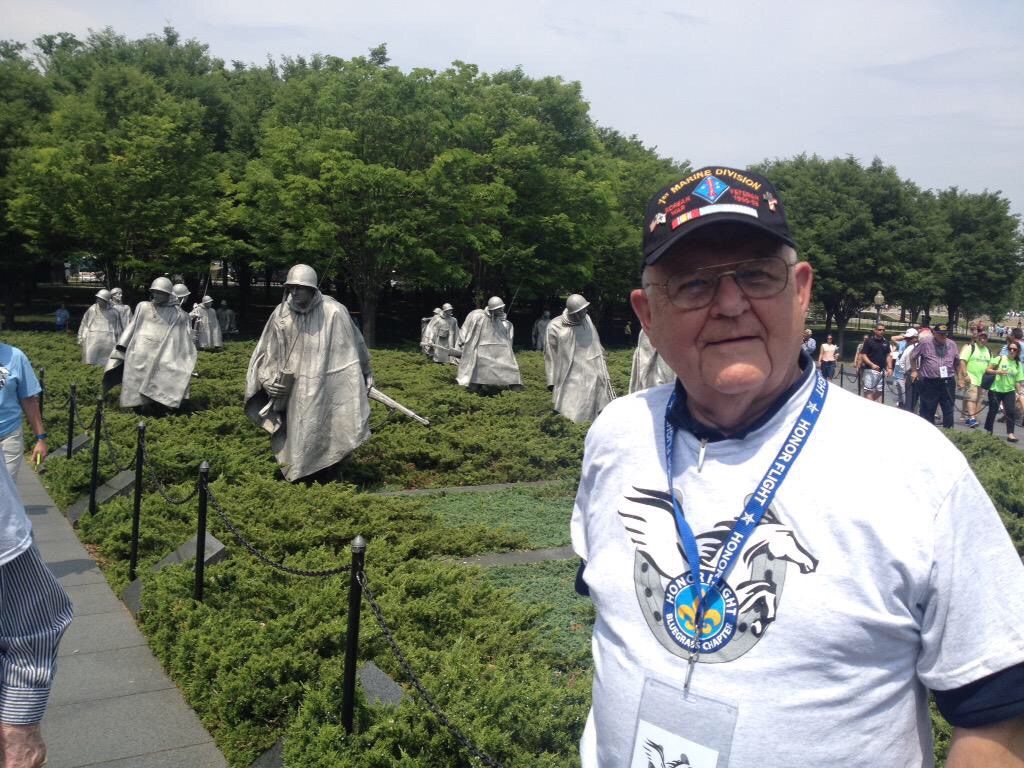
Jerry McCandless At The Korean War Memorial
This was exactly the kind of person I found in the Veterans we served for our Honor Flight. I promised I would tell you about Jerry McCandless. Jerry and I both, as Christians, believe God hand picked us to be together on this flight – God does do that you know! Jerry is a Korean War Veteran and lives on a farm. That agrarian connection got us started on the right foot. I learned so much from Jerry during our whirlwind tour of Washington D.C. I particularly loved watching him interact with young people. He brought history and a sense of patriotism alive and real for all those around him. Jerry truly is a hero who embodies the selflessness and character of George Washington and Cincinnatus. I also still get chills thinking of him telling the story of how, while on active duty in the Marine Corps, he donated $2.00 to the Marine Corps War (Iwo Jima) Memorial. He is very proud to have played a part in our country having that memorial and I believe he should be. There really are heroes who live up to the legends of countries founding heroes and we had the opportunity and honor to serve them yesterday. I would encourage you to seek out opportunities to serve our nation’s heroes!
Reference
Hilliard, M.J. (2001). Cincinnatus and the citizen-servant ideal. Xlibris Corporation.
 Byron's Babbles
leave a comment