Being Perfectly Imperfect
 I am always amazed at the twists and turns our 3D Leadership gathering discussions take. It is amazing because there is always so much learning that takes place. Last week’s gathering which was virtual with individuals from Florida, Georgia, Tennessee, South Carolina, and North Carolina was no exception. I already blogged about one twist in learning we took in Leading Like Yoda. We also spent a great deal of time discussing how leaders are built by learning from their imperfections.
“Leaders are built by learning from their imperfections.” ~ 3D Leadership Participants on April 2, 2020
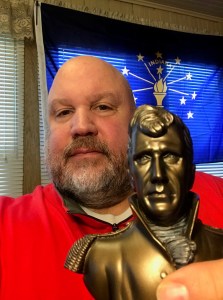
My Andrew Jackson Bronze
The question that prompted the discussion was about whether those leaders that most influenced us were perfect or did they have imperfections? The group immediately started responding with the fact that the leaders were imperfect and that recognizing those imperfections was the ultimate in transparency and authenticity. I even held up my bronze of Andrew Jackson and talked about all the great things he was and did as a leader, but there were so many things he did that were very wrong. He serves as a reminder of how we need to be humble and remember that all humans are imperfect and flawed creatures. I was moved that our discussion led us to talk about how it was those imperfections that attracted us to leaders. Particularly if those Rushmorean leaders were working hard to improve their imperfections.
“The long road to character begins with understanding that all humans are flawed creatures.” ~ David Brooks in The Road to Character
 Today we are even faced with the bigger issue that David Brooks argued in his great book The Road to Character: society has made a shift, from a focus on humility and reservedness to a focus on individual desire. I call this desire “ambition.” Many times ambition begins to rule our purpose. This becomes very dangerous and takes us from a moralistic world view to one of being self-centered. We must check our moral compass, according to Brooks, and strive to become/stay virtuous. The core of what makes a human “human” are displaying the traits of kindness, bravery, honesty, and devotion. Brooks argued that people, and I would argue our children/students, are beginning to obsess over themselves and live only for their own desires.
 One thing that we discussed in our 3D Leadership gathering that Brooks also discussed in The Road to Character was how many of us have shifted our lives to revolve around how we achieve, and no longer why. The effect is profound. Again, we can see well documented cases of this ambition taking over our purpose. I have blogged about a couple of such cases in When Purpose & Passion Turn Into Ambition and Passion At Ambition’s Command. But how do we change this? By embracing the flaws inherent in all of us. One of our participants called us “Perfectly Imperfect.” I loved that, and if we work off of that to learn from and correct or mistakes and failures every day, it would be a great start.
Doing things like being honest about our flaws can help us overcome self-centeredness and embrace deeper social values, like love and connection to others. As Yoda said, “Much to learn you still have.” If we are going to thrive and maybe be that next person on someone else’s personal Mount Rushmore then we must free ourselves from pride. We must embrace the assistance of others admit our own flaws. Through that we will become more authentic and transparent, thus being a better inspiration and role model for others; while being happier, more fulfilled, and worthy.
March Flowers 🌼
 Sometimes we need to look no further than our children for inspiration in times of crisis. This was true this past weekend for me. As I read all of the different statements being put out this week by businesses and organizations, I couldn’t help but think that the simple things we are taught as children should guide every decision: the Golden Rule and what is best for others. Maybe just some good ole empathy and compassion.
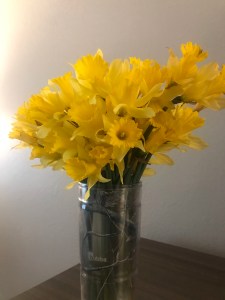
We went down to help move my son home from Murray State University this past weekend. It was tough on him to be leaving a place he has grown to love and all his friends. He was visibly upset. There was definitely mental impact at play in him having to move home because of the coronavirus. Even during this trying time, he took time to pick a clump of March flowers (daffodils) for his mother (pictured here). We’d never heard them called March Flowers. Heath told us it was a Kentucky thing. He explained, “Spring is here, new life is blooming in spite of the coronavirus.” That’s my boy, finding some beauty and positivity during a time of crisis. That was a moment I will savor forever.
As I watch groups and businesses contemplate how to get the most out of their employees at this time of global crises I can’t help but think these so called leaders have missed the point. Right now we should be thinking about how best to care for those we serve, period. And, as someone who doesn’t sit around and pontificate about a virus I know nothing about, the best thing to do is have everyone staying at home. I’m surprised how many people have become experts overnight.
In the case of k-12 education we do need to be concerned for the learning of our children. We also need to provide parents with resources to help their students along with our teachers. We need to be cognizant of the mental impact that the crisis we are living through can have. Schools need to make sure resources for parents are available so they can reinforce social-emotional skills at home and know who to contact if they are concerned about an issue impacting learning online or just in day to day life.
Staying positive is the core ingredient in the recipe of successfully coping in a time of crisis. Now is the time to be proactive in creating small moments of happiness in our days. Positive emotions help us to undo the negative effects of stress.
Influencer, Inspiring, & Impactful
 At yesterday’s Indiana 3D Leadership gathering I was inspired to do some deeper studying, which is usually the case, because of discussion that took place. I usually say the discussion inspired me, but for this post I’m contemplating what to call it. More on why I say that, later in the post. Last night we did an activity that I call Rushmorean Leadership which was then followed up by an activity called extending the influence. The activity calls for teacher leaders to bring pictures to identify four great leaders to put on their own personal Mount Rushmore. Then they bring six additional pictures to extend the influence.
As with everything this Indiana group does, I was blown away. What struck me last night, however, was that one participant talked about the persons on their board as influencers. Then the next referred to the leaders as inspiring and yet another referred to the her chosen leaders as impactful. For some reason I just had to ask the question of the group: What’s the difference, if any, in these descriptors? A great discussion ensued, which then led to me studying deeper this morning.
We all know that leadership is not about a title or a designation. We also know, and I’m glad we discussed this in depth last night that ambition is not a favorable characteristic of great leaders. For ambition will take over purpose. Influencers, we decided, spread passion for work, causes, innovation, or change. Those that inspire evoke a sense of energy. Finally, impact involves getting results. Impact is ultimately the measuring stick of the influence or inspiration.
Influencers cause us to think about things differently. They help us to shape our purpose, passion, and core values. Interestingly several participants had parents on their boards and referred to how they had influenced their lives.
In contrast, those that inspire help us gain motivation. This inspiration may be in the form of receptivity, positivity, or motivation. There is research that links inspiration to motivation. This inspiration causes us to actively engage in environments that lead toward self growth and fulfillment of needs.
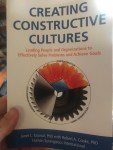 The more I studied and reflected on all this I formed the opinion that most, if not all, of the leaders chosen by the group were influencers who were creating an impact. These individuals were all helping to create constructive cultures, whether in organizations, nations, or globally. In their five star book, Creating Constructive Cultures: Leading People and Organizations to Effectively Solve Problems and Achieve Goals, Janet Szumal and Robert Cooke of Human Synergistics International ask the question: “As a leader, how can you both directly and indirectly influence your organization to ensure that members can independently and interactively solve problems and achieve the organization’s goals more readily and effectively?” I love the question because it has both directly and indirectly. Of the ten leaders each participant brought pictures of, some influenced directly, eg. parents. Others influenced indirectly, eg. Michelle Obama.
One thing is for sure; in all cases the individuals chosen embodied the necessary styles to create constructive cultures. All strove to create the cultural norms necessary for creating constructive cultural styles. See the constructive styles below:
So, I’ve come to the conclusion that influencing, being inspiring, and being impactful are not mutually exclusive. They go hand in hand when being a model of personal growth for us and creating constructive cultures.
Seeing What Others Don’t See
 The best leaders see things that other leaders don’t see. At least I believe this to be true about the leaders I most respect. Recently, I heard it said of George Washington that he was an idealist and saw things as they should be. If we think of idealists as seeing the full potential in others and organizations, I certainly agree. Idealists are visionaries. Think about it, Washington’s vision for our country was visionary because there was not any other country out there to copy off off.
The part that really impresses me about Washington, however, is that he was also a pragmatic leader. He was a practical thinker. When he took over the Virginia Regiment and then the Militia he had to focus on the processes necessary to achieve the vision. Both times he was given groups of undisciplined/unruly men that he had to create the processes of rule, order, and training.
While Washington was that rare leader that possessed idealism and pragmatism, I believe it was his ability to truly inspire and mobilize people that separated him from others. Also, he was able to keep his ambitions in check – most let ambitions for power, position, money, or status wins out over purpose and core values. Washington might be our true shining star role model for this.
As I was studying for this post, I came across a quote credited to French novelist, Marcel Proust: “The real act of discovery consists not in finding new lands, but in seeing with new eyes.” This quote could certainly apply to great visionary leaders and Washington. In doing more research, however, I found this was a paraphrase and not what was actually written in Proust’s novel.
The quote is paraphrased out of Proust’s seven volume novel, Remembrance Of Things Past (1923). The actual phrase is in Chapter 2 of Volume 5, The Prisoner, and is actually referring to art instead of travel. You might disagree, but I believe the actual passage to be more meaningful than the paraphrased version. Here is the actual transcript:
“The only true voyage of discovery, the only fountain of Eternal Youth, would be not to visit strange lands but to possess other eyes, to behold the universe through the eyes of another, of a hundred others, to behold the hundred universes that each of them beholds, that each of them is.”
Proust was an incredibly talented and artful writer. His writing in this novel gives us another way to think about the leadership of Washington. He was seeing our country through another set of eyes, not just using the same paradigms that were known by all at the time. As an artful leader, Washington was able to envision what great things our new universe, a democracy, would behold for each of us.
Today, if we truly want to embrace one-of-a-kind ideas in a world of copycat thinking, we need to see the things that others don’t see.
Declaring Beliefs & Attitudes

John F. Kennedy was President on the day I was born
Trying to make sense out of political trends or political culture is very tricky at best. We see trends over time, but they are not always absolute. I’m not sure there is any longer a “typical American.” There are many indicators that become tendencies, but there are probably more exceptions. The bottom line is that there are many factors that influence Americans when they cast their secret ballot. I’ve been reflecting on this on this 2020 President’s Day.
Family certainly plays a role. Think about the Kennedy’s who were staunch Democrats. Think about the Bush’s who are die hard Republicans. When I look at my own son’s political views, he certainly has not fallen far from the proverbial tree. But, you can look at other families where the children go to the complete other side of political views. One only needs to study President Ronald Reagan’s children. We do know, however, from research that parental beliefs do have great influence on children’s political beliefs.
One thing is for sure, Americans have a great deal of political power. More than most realize. As Joe Biden always says, “All politics are personal.” Therefore, since it is personal and a conversation, then every American has a voice. First of all, and most importantly, everyone needs to vote. Voting is the most fundamental form of civic engagement in a democracy. Voting is an expression of your beliefs and also has consequences based on choices.
Machiavelli taught us to “declare.” I have always practiced this – there is never a mistake where I stand on something. Others just tell others what they want to here. Beliefs are those closely held ideas that support our values and expectations about life and politics. Our attitudes are affected by our personal beliefs and represent the preferences we form based on our life experiences and values.
In a democracy we have an obligation to “declare” these beliefs and attitudes. At the same time, however, it is important to respect those with differing opinions. I did not say agree with, I said respect. I have blogged about this in Civilized Disdain Vs. Political Correctness, What Can We Create Together, and Typical Discourse. Our beliefs and attitudes over time become a set of norms and core values that solidify our political and societal views. This in turn forms how we believe should happen in our society or what the government should do in a particular situation. Remember, your views are important and valued.
Passion At Ambition’s Command
 We teach that having passion is a key to success, particularly when linked with purpose. History, however, teaches us that passion can become destructive. Research in psychology describes this destructive passion as “obsessive passion.” The good passion is “harmonious passion.” My recent reading has given examples of two individuals where obsessive passion drove the individuals to become power hungry.
“His passions were at ambition’s command.” ~ James A. Caro in The Path To Power
 In The Path To Power, Robert A. Caro said that Lyndon B. Johnson‘s passions were at ambition’s command. Johnson was obsessed with power and couldn’t get enough of it. The ambition for power and becoming president took over and clouded any purposeful passion for helping the people of our country. Everything he did and anyone he helped was dependent on what he could get out of it, or what power could be derived. When obsessive passion takes over with ambition calling the shots, the person’s self-worth becomes validated by whatever the ambition is. In the case of Lyndon Johnson that ambition was power.
 Another person I recently studied who let obsessive passion take over was Elizabeth Holmes, Founder and CEO of Theranos. I read about her in Bad Blood: Secrets And Lies In A Silicon Valley Startup by John Carreyrou. She had purpose and passion for a world changing blood testing and analysis machine that only needed a drop or two of blood to run a myriad of tests. Her company wasn’t able to meet performance standards or efficacy. She is still involved in legal actions against her including criminal charges. Her ambition was for success as defined by celebrity, power, and greed instead of purpose for significance. To read more about this check out When Purpose and Passion Turn Into Ambition.
Does Life Imitate Art, Or Art Imitate Life?
 I have been spending some time contemplating Oscar Wilde‘s thoughts on art. I love all kinds of art and consider myself an artist in terms of being creative and imaginative. I am definitely more of an artist than technocrat. I always say there is no bad art. You can refute that if you like, but Wilde and I would have been in agreement that artists should not be interested in seeking approval or creating art for demand. The instant artists, or we artistic leaders, begin to seek others approval we lose our creative juices. Think about what it is like when you are working on something and have to keep getting approval. The idiot needing the approval command and control gratification is stifling your creativity and ability to innovate. I recently wrote about this is in Empowerment Triggers The Approach System.
“…the new work of art is beautiful by being what Art has never been.” ~ Oscar Wilde
If you think about it art really means new. To truly be artistic in whatever we do whether it is leading, teaching, building, et cetera, we must be creative and innovating; we need to practice some individualism. Wilde argued “Art is the most intense mode of individualism that the world has known.” I believe if we approach everything we do as art, we would probably reach our highest potential.
“Life imitates art far more than art imitates life.” ~ Oscar Wilde

James Ensor (Belgian, 1860 – 1949) Christ’s Entry into Brussels in 1889, 1888, Oil on canvas 252.7 × 430.5 cm (99 1/2 × 169 1/2 in.), 87.PA.96 The J. Paul Getty Museum, Los Angeles
If you think about it, leadership and art both bring social encounters to life life. One of my favorite artworks that I believe intersects with leadership is James Ensor‘s painting Christ’s Entry Into Brussels in 1889. The painting, which began expressionism, has Jesus in the middle of a chaotic crowd of very real and very unreal characters. I was first introduced to this painting back in 2012 and then blogged about the inspiration in Rushmorean Servant Leadership. For me it was about Jesus leading from the middle, or amongst us. I do try to lead in that way while being creative. Which still begs the question of whether Wilde was right, does life imitate art or art imitate life?
How Do You Play Leader?
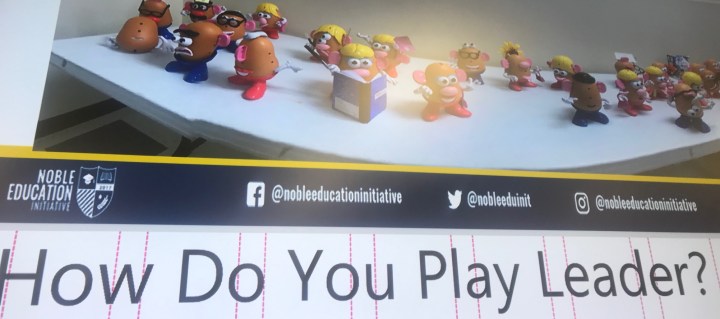


This past weekend at our Indiana 3D Leadership Gathering, we did a toy activity that involved Lite Brites®. Participants made a picture that represented how the Lite Brite® could be used for great leadership. The activity was called “How Do You Play Leader?” The groups did a great job with their pictures. While they were sharing out I wrote down a few notes. Check out what I wrote down here: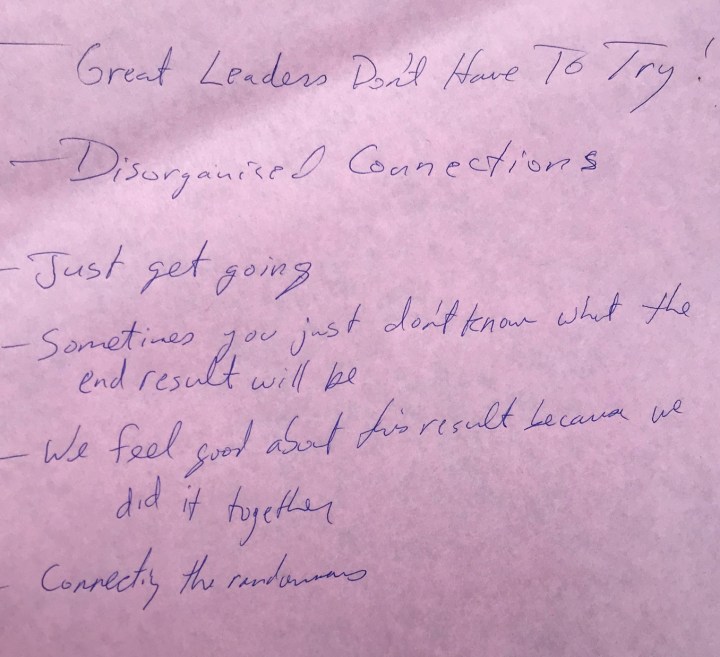
I was particularly struck by the statement that “Great leaders really don’t have to try!” I asked the person to dig a little deeper into that comment. She said that a leader who is authentic and is himself or herself instead of trying to be someone else or copy someone else is much more effective. Great leaders find a system that works for her or him, rather than trying to force oneself into a prescribed notion of a what a leader has to be. If we know ourselves well enough, we can take steps to go about leading effectively. Situations change what we need to do, but should never change who we are. We need to make sure we’re treating all team members as we would want to be treated. We need to be genuinely interested in learning something new every day from our team, and they will follow you. It’s all about relationship building. I blogged about this in Let’s Have Lunch Together!
There was also a deep discussion about how teams are most times brought together by a certain amount of randomness and disorganized connections. Great leadership connects the randomness. Leaders should be the key connectors of team members. Support them them to understand their value in the organization. Leaders need to respect all team members. Respect comes in different forms: respecting time, respecting opinions, respecting diversity, respecting the culture, and more. When we trust and respect our team members and connect with them, they will respond with dedication and enthusiasm. Because of this, our connected team members will see clarity, levels of engagement across the organization, a positive culture and community, and most of all, improvement in communication. Remember, trust builds through connections with people and forms the bedrock of a team. Teams are built on human cooperation. Without relationships, we’ve got no team.
Silence Is Golden
 I love it when one of my favorite Presidents is quoted in books that I am reading. Robert Caro included a quote from former United States Speaker Of The House Sam Rayburn credited to former President Calvin Coolidge is his book The Path To Power. I‘ve already blogged about Sam Rayburn in “Sam, Be A Man.”
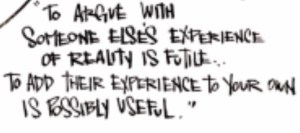
 Rayburn was credited with saying that one of the wisest statements outside of those written in the Bible was when Calvin Coolidge said, “You don’t have to explain something you never said.” This speaks to the wisdom of our 30th President. Coolidge matters and was a role model of great leadership. Sometimes the smartest thing is to say nothing at all.
“You don’t have to explain something you never said.” ~ Calvin Coolidge
This can keep us from ending up negotiating and debating against ourself. Additionally, being silent at the right times can keep there from being misunderstandings. Just because there is silence does not mean we need to talk, especially if we are not completely knowledgeable on the subject being discussed. I’ll bet if you are like me you have had times where you have wished you hadn’t said something – because you ended up having to explain it and then couldn’t.
It is also important to listen to what has already been said. Often, in meetings I say, “Everything has been said, just not by everyone yet.” I’ll bet you’ve been in meetings where everyone keeps saying the same thing or making the same point over and over, too. Robert Caro teaches us that reading biographies of leaders offers us great learning. I am certainly learning a lot from reading his work.
“Sam, Be A Man”
 I have been in the Rayburn House Office Building many times in Washington D.C. I had not, however, really ever given much thought to the great man the building was named after, former Speaker Of The House Sam Rayburn. Robert Caro did a whole chapter plus on Sam Rayburn in the great book I’m reading right now, The Path To Power. I am now researching biographies on Rayburn and I am going to study his life, service, and leadership.
 The part that Caro vividly portrayed is the integrity with which Sam Rayburn lived and led. He wrote the story that Rayburn told of what his dad told him when he left home for college. His dad held his hand and told him four words, “Sam, be a man.” That’s pretty powerful when you think about it. What does it mean to be a man? For Sam Rayburn it was about living and leading with honor and integrity. Rayburn would say, “There are no degrees of honorableness. You either are or you aren’t.” A very powerful two sentences to live by.
“There are no degrees of honorableness. You either are or you aren’t.” ~ Former U.S. Speaker Of The House Sam Rayburn (Texas)
This reminds me of what my good friend, former U.S. Congressman Steve Buyer, used to tell me and my students each year when we visited him in room 2230 of the Rayburn House Office Building: “Your character is your legacy.” That was always so moving. My students would talk about that and try to define it for the rest of our time at the National FFA Washington Leadership Conference, and the trip home. I was so proud, as an Indiana FFA Advisor to take students to this conference every year for so many years and have my students get to meet with such a great leader. It was so impactful for me to read about the man who lived with such honor that the building was named after that housed the office of a man that was such a great leadership role model for myself and my students.
“Your character is your legacy.” ~ Former U.S. Congressman Steve Buyer (Indiana)
Our legacy grows with each new experience. Our leadership is not shaped nor our legacy defined at the end of our career or life, but rather by the moments shared, the decisions made, the actions taken, and even the mistakes made along the journey. It’s about a continual reinvention of ourself with new learning, experience, relationships, and wisdom. We need to be thinking about our personal growth and continual improvement.


1 comment