Success In Aspirational Terms
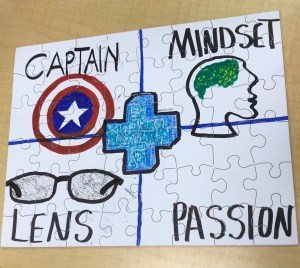 This past week I heard a person say that “success should be measured in aspirational terms.” The more I thought about it, the more I like it. In education I believe we need to think more aspirational in the way we prepare students. In other words looking beyond just credits and a diploma to the outcomes of what a student should be able to do now and be capable of learning to do later.
Let’s use an example that gets used a lot – welding. It is short-sided to think that having a student be in the single pathway of learning to fuse two pieces of metal together is enough. Don’t get me wrong, good careers await the student, but that’s not aspirational enough. This is why I believe in achieving multiple pathways. A student with aspirations for welding should also be studying computer science. Computers have become an indispensable part of welding processes. Computer, and even artificial intelligence, are required for the execution of many welding operations today. We can only imagine this need for knowledge of computer science will increase. Industry is telling us that welders will need knowledge of lasers, computer program, robotics, artificial intelligence, materials engineering, and systems integration to advance.
With the increased demand for highly skilled and technically sound workers, our students will need to shape their careers around multiple areas of expertise. This aspirational approach will enable their lifelong learning and ability to be agile to a ever-increasingly fast changing world.
We need to be deliberately aligning our student’s aspirations and abilities. The scene in the movie “The Martian” where it doesn’t look like it will end well for astronaut Mark Watney he sends this message to be relayed to his parents:
“Tell them I love what I do and I’m really good at it. And that I’m dying for something big and beautiful and greater than me. Tell them I said I can live with that.” ~ Mark Watney, played by Matt Damon, in The Martian (2015)
Try and tell me that’s not aspirational. We all need to find what we love and what we are good at. It’s not either or, and we need to help students find that balance as well. Some would say that aspiration is magical thinking. I don’t believe it is a magic trick to strategize about the future, help students invent themselves and us reinvent ourselves, push upscale, and keep a growth mindset. Without deep thought and planning about measuring success in aspirational terms, it just becomes a vacuous platitude, or “thing,” as I like to say. But taken in the context of enabling the future, career/skill agility, and student outcomes, measuring success in aspirational terms becomes about being prepared for what we don’t know we need to be prepared for.
Leading With Compassionate Solutions
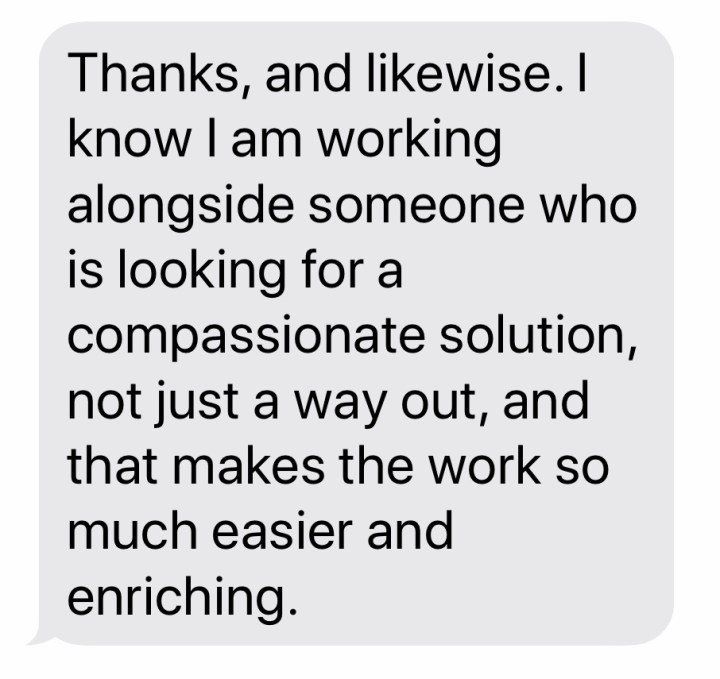 One of the driving forces of exceptional leadership is compassion. I am working through a situation right now that prompted the much appreciated text pictured above from a staff member and thought partner I am working on the situation with. Usually I pride myself on being very creative and innovative, but to be credited for finding a compassionate solution made me feel good and made me reflect on whether I was consistently a compassionate leader.
To be great, leaders must have the necessary empathy to inspire understanding and knowledge in team members. I teach about this in the leadership trainings I do. Empathy begins with taking an understanding from the experience and perception of another. Empathy, however, is just about understanding. Empathy is about opening doors and removing confusion. Compassion is the action step; compassion is about actually doing something.
The compassionate leader can then be creative in solving situations, problems, and opportunities. Looking for compassionate solutions allows the leader to look past “the easy way out” referenced in the text pictured above. This allows the team to look at challenges as opportunities to be dealt with as obstacles, not barriers. Barriers stop completely and obstacles can be removed, gone around, over, or under. I blogged about this in Obstacles Vs. Barriers. Actually, I said to the author of the above text, “Let’s make sure we look at any challenges as obstacles and not barriers. We are not allowing any barriers.” The compassionate leader seeks to understand people, families, and communities; knowing that understanding is the gateway to having the greatest influence as a leader.
Manatee Leadership Lessons

![image1[7322]](https://i0.wp.com/byronernest.blog/wp-content/uploads/2019/12/image17322.jpeg?w=236&h=236&crop=1&ssl=1 "image1[7322]")

Yesterday, I had the opportunity of a lifetime to learn leadership lessons from the West Indian Manatee. Our Central Florida/Tampa 3D Leadership Program participants decided that we would start our gathering at the Tampa Electric Company Manatee Viewing Center. The Big Bend Power Station in Apollo Beach delivers reliable electricity to the community. When the Tampa Bay water temperature reaches 68ºF or colder, the Manatees gather in large numbers in the power station’s discharge canal, where saltwater – taken from Tampa Bay to cool Unit 4 flows, clean and warm, back to the bay. The discharge canal is a state and federally designated Manatee sanctuary that provides critical protection from the cold for these unique, gentle animals. It has also been developed into an incredible education center dedicated to the Manatee, Sting Ray, birds, butterflies, and other wildlife and plant life indigenous to the area. I even got to smell the breath of a Manatee. For the farm kid from Indiana this was an incredible experience.


Prior to arriving for the experience I did a a little studying and learned how the Manatee handle thermoregulation by doing central-place grazing. In other words, they go out into the cold bay water to graze on plant life (they are herbivores) and then come back to the warm water near the power plant to get warmed up. I was also able to study the migratory maps of these amazing mammals.
The objective of participants was to come up with the leadership lessons learned from our Manatee experience. Here is what we came up:
- Must be caring
- Adaptive to change
- Lead by example
- Able to function alone
- Still move forward through the unknown
As you can see there are so many great leadership lessons to be learned from studying and observing these wonderful animals. I have done other blog posts with lessons from animals, such as Pelican Leadership Lessons, Living and Leading Like A Lobster, and Leading Like A Platypus. Using animals as metaphors for great leadership is a great way to learn and teach leadership. Do you have any examples? Share them by replying to my post.
Lessons Of Florida-Opoly
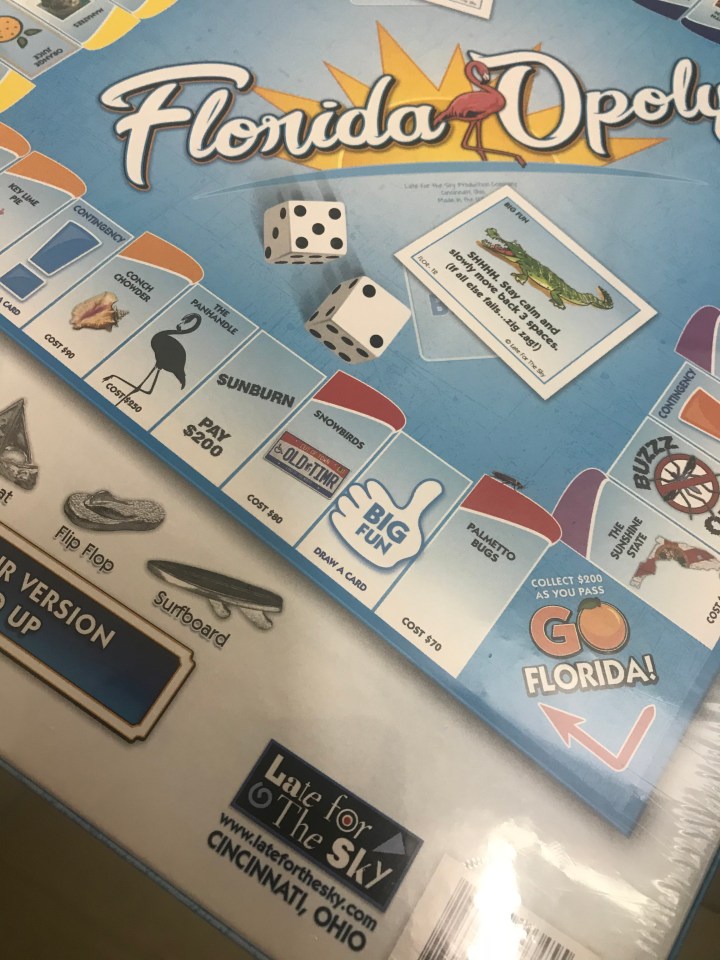 I was so honored to be presented with the newest wave of personalized Monopoly game, Florida-Opoly, last night by the Central Florida/Orlando cohort of 3D Leadership. For the guy that teaches leadership through the metaphors of toys, this was very appropriate and appreciated. When presented the game it was said they picked it as a gift of appreciation because I love to have fun, see the value of playing games, and have strived to learn all I can about Florida while spending time in the area. All true!
By personalizing the Monopoly game to local places, the creator, Late For The Sky, believes it brings more fun to the game through local authenticity. As a believer in local and state autonomy, this custom-opoly board game really struck a cord with me as I opened the box and began to explore all the parts, rules, and possibilities.
Here’s a brief rundown on what I found:
- Palm Trees
- Sunglasses
- Sea Turtles
- Sailboats
- Flip Flops
- Surfboards
- Key Lime Pie
- Alligators
- Orange Juice
- Disney World
- Snowbirds
- Manatees
- Dolphins
- Flamingos
- Hurricanes
- Sunscreen
- Atlantic Ocean
- Gulf of Mexico
- Conch Chowder
- Cuban Sandwiches
Now that’s a game. Players can buy their favorite Florida properties, like beach houses and resorts. But you have to watch out for hurricane warnings, alligators, and run ins with stingrays. Basically, it is a fun way to experience The Sunshine State. Also, it was a reminder of how different Florida is from my home state of Indiana. Now, I could make you a list of 20 cool things in Indiana, but the lesson here is the reminder of the different contexts in which we live.
This game is an important reminder of the complexity of the theory of autonomy. In 1982, President Ronald Reagan proposed returning significant responsibilities to the state and local governments. My other hero, Patrick Henry would have cheered. The challenge with this rhetoric, for as much as I believe in it and believe it should always be contemplated, is that it is not as simple as it sounds. The question that remains still today is what powers should be local and yet not compromise national concerns. I so wish I would have been around for the Federalism and Anti-Federalism discussions with the founders. It’s obvious I would have been an Anti-Federalist, but clearly a balance is where we landed (and needed to land). And, it continues to be a balancing act to this day.
As James Bryce posited in The American Commonwealth, “The wisest statesman is he who holds the balance between liberty and order” (Bryce, 1888, p. 749). Bryce spoke a lot about the balance of state’s rights and federalism in his critique of our democratic system of government. Bryce also warned of “Ill-considered legislation, facility and excess of law-making, and inconstancy and mutability in the laws, form the greatest blemish in the character and genius of our governments” (Bryce, 1888, p. 750). From a state’s rights standpoint, Bryce was concerned with states conducting rash experiments.
Alexis de Tocqueville did a much more sophisticated analysis of the underpinnings of a successful democracy. In Democracy In America (appearing in two volumes in 1835 and 1845), posited that there were two important tracks to our system, one of which were the broad freedoms assured by our national constitution. The other was a complimentary track of secondary liberties at the state and local levels. Tocqueville saw this as being product of human wisdom and choice, not historical necessity. Tocqueville saw the genius in a balance of both national and state/local control. Here we are at the end of 2019 still grappling the question of what the ideal balance is. Maybe that means our system works.
Only I could take the fun game of Florida-Opoly and turn in into such a deep political analysis. But, having spent Monday and Tuesday of this week up in Gary, Indiana to sort out best solutions for a school situation that I, as an Indiana State Board of Education member, have responsibility for, I can tell you the local, state, and federal contexts are at play. Full local autonomy failed our children, but some might argue that state and federal laws and requirements might have played a factor. Again, I believe it is a balancing act.
What I am for sure reminded of by Florida-Opoly is that we need to be aware of our local strengths, weaknesses, and needs. We then need to work within the autonomy we have to make our states and local communities great!
It’s All Superlatives
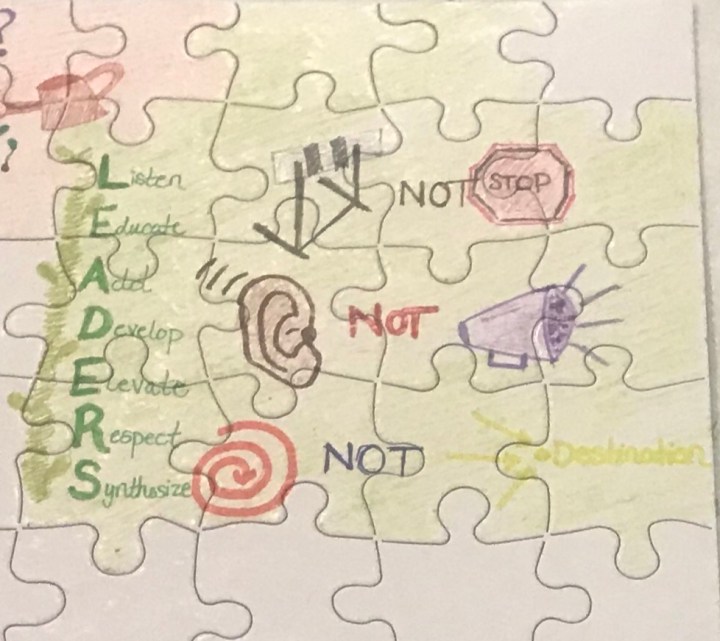 Have you noticed that we talk a lot in superlatives? Almost to the point that the superlatives don’t mean much. Or, we even use them incorrectly by saying something to one individual in a group we are in like, “You’re the best!” We have just told everyone else they are not the best. Using superlatives has become an important part of negotiating and making a case, but have we done this at the expense of good?
Are we beginning to see “good” as anything very good at all? Sometimes it seems that “premium” has become our new “basic.” It’s our starting point, so “good” becomes “less-than.” It is amazing what adding “est” to the end of a word can do. On the user side of superlatives, we can take advantage of the stronger meaning. But, as a leader we have to watch getting hoodwinked. In other words, have we, in many cases, made an objective comparison impossible?
As I understand it, there are web advertising platforms that won’t allow the use of superlatives unless there has been a third party evaluator confirm that something is the “world’s best” or “extremest.” These providers don’t want advertisers making claims that are demonstrably false. The Merriam-Webster Dictionary tells us that superlative means “surpassing all others – supreme.” Leaders need to care about and practice the quality, specificity, and power of our language.
If we use superlatives too much, we wash out the meaning. If we make every commonplace event out to be extraordinary, we actually make everything sound the same. So, we need to be careful that “awesome” continues to mean awe inspiring and “best” keeps its superlative meaning and doesn’t just become “good.”
Contrarian Thinker
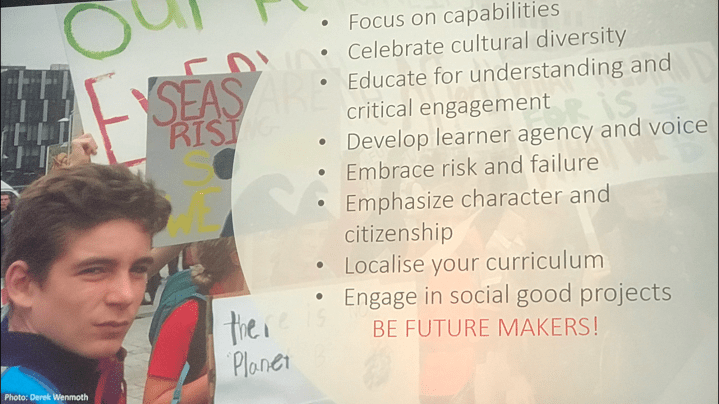 One day, this past week, I was introduced to a group I was speaking to as a “Contrarian Thinker.” Honestly, I wasn’t exactly sure what that was. After doing a little research, however, I found that this was probably a pretty accurate description. Contrarian thinkers are trailblazers. ✔️Check. They are polarizing visionaries who are just as likely to be called crazy before brilliant. ✔️Check. Contrarian thinkers have the foresight to see hidden opportunities and seize them when the right moment presents itself. I would like to think I do this, but I’m not so arrogant to say check on this one.
Never forget, the risks of going against the crowd are greater, but so are the rewards. The rewards of innovating, curiosity, and an imagination gone wild are always worth the effort. An important fact for a contrarian thinker to remember is that no one will be expecting you or your ideas to succeed, which is one of the reasons you will.
Then, last night as I was flipping through the channels (are they still called channels on the tv?) I stopped on Shark Tank long enough to hear Mark Cuban described by one of the other Sharks as a contrarian thinker. So, off I went to learn more about his storied history.
While reading 9 Critical Turning Points That Shaped Mark Cuban’s Extraordinary Career by Drake Baer, I found that Mark Cuban is a contrarian thinker. One of my favorite quotes from Mark Cuban in the article is, “The ‘sprint’ doesn’t have a finish line. There’s never a point where you can say, ‘We’ve made it.'”
 The more I studied this topic, however, I really found that many contrarian thinkers always find an opposing view. I don’t think that is me at all. Nor do I believe that would be very productive. A more productive view would be one of “independent thinker.” My takeaway to share with you is that rather than always being swayed by consensus view, or consistently being a contrarian, we should strive to be independent thinkers. I always strive, and would encourage you to as well, look at different perspectives, and sometimes find a unique angle.
Remember, if you think the same way as everyone else, it is very difficult to outperform them.
The Majestic Leader
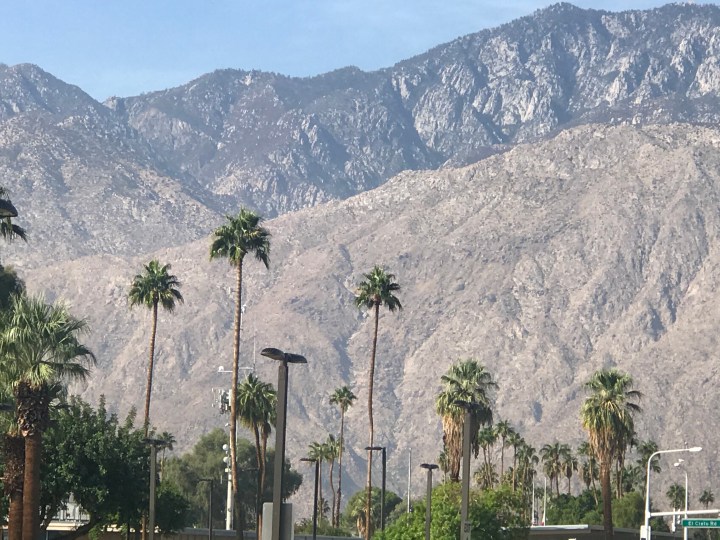 I had the opportunity to spend this week in Palm Springs, California for Aurora Institute’s annual symposium. The theme of this year’s symposium was Shining A Light On The Future Of Learning. Palm Springs is such a beautiful place located in the Coachella Valley. Palm Springs is completely surrounded by mountains; the San Bernardino Mountains to the north, the Santa Rosa Mountains to the south, by the San Jacinto Mountains to the west, and by the Little San Bernardino Mountains to the east.
These mountains are the cause for this post. I was visiting with a friend from the state of Washington about how the mountains were different than other mountains. She described them as being “majestic”. That seemed like an appropriate adjective, but I needed to think a little about just what majestic meant. It is an adjective meaning, having or showing impressive beauty or display great dignity. Also, majestic befits a great ruler and being simply far superior to everyday stuff. I was now fully on board with the mountains surrounding Palm Springs being described as majestic.
Then I got to thinking about majestic people I know. There are those with majestic beauty and those who are majestic leaders – those that display great dignity. I then reflected on what gave them that beauty. For me it is their referent power. Referent power is one of the most potent and majestic sources of power for a leader there is. It is a form of reverence gained from having tremendous interpersonal relationship skills. Referent power has become much more important as we move from command and control organizational environments to more collaborative and flattened hierarchical environments of influence.
Leaders with high referent power influence because of the follower’s admiration, respect, and identification with her or him. Think about this description when looking at the picture I took of the San Jacinto Mountains while I was in Palm Springs shown here: 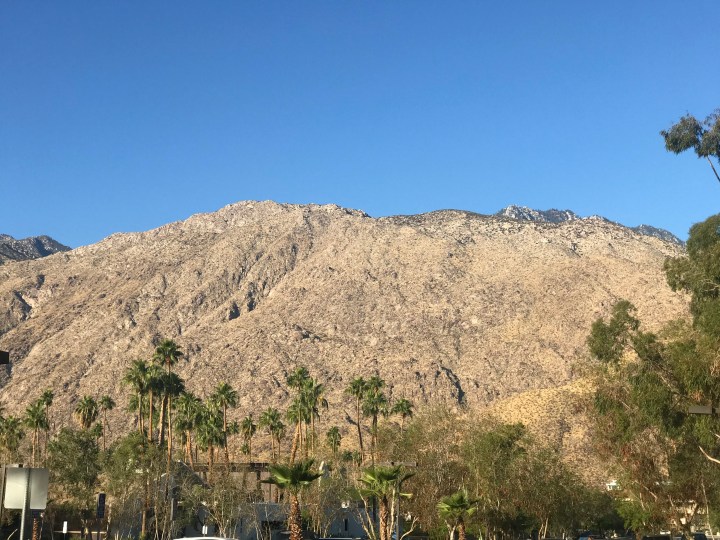 These majestic mountains are a pretty appropriate metaphor for a majestic leader, don’t you think? I couldn’t let the metaphor end there, however. I then got to thinking about how if we, as leaders, get this influence right, the view is beautiful. This made me think of the awesome picture I got from the top of Mount San Jacinto at 8,516 feet shown here:
 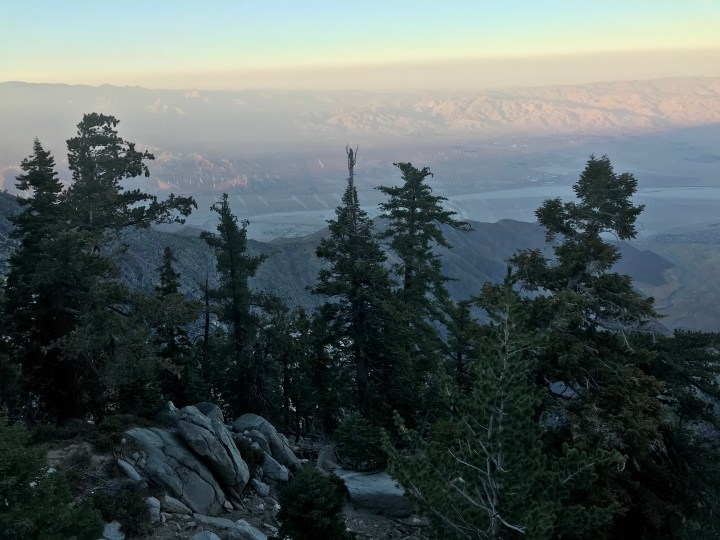 Getting leadership right is such a beautiful and majestic thing for both the influenced and influencer.
Toy Story 4 Leadership
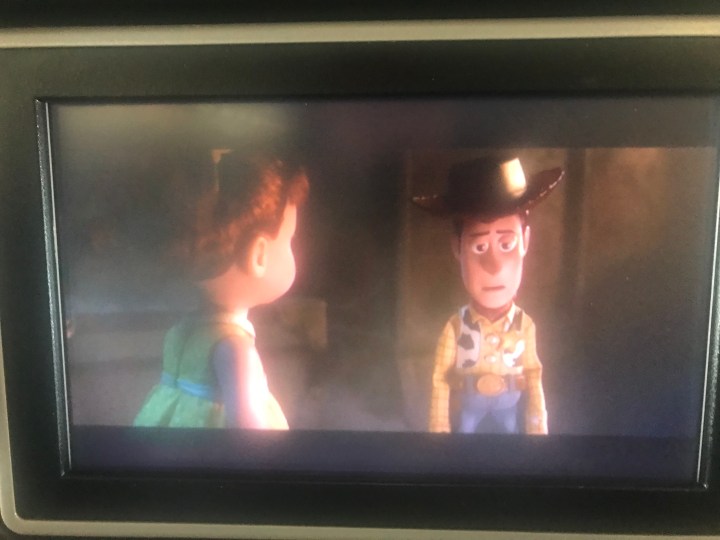
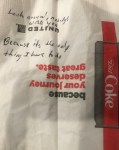
 Don’t laugh, but as I flew across our awesome country yesterday to Palm Springs, California for the 2019 iNACOL (now named the Aurora Institute) Symposium, I was excited to get to watch Toy Story 4. I’m a fan of Toy Story; not just because they are great movies, but also because of the Pixar story and the lessons in the movies. I was certainly not disappointed by the gang of toys getting back together with the addition of new toys. There were so many great connections to the leadership lessons I facilitate in our 3D Leadership program. I even took notes on a napkin.
 There were six big standout lessons in the movie:
1. From Forky I was reminded that we need to understand our value and the value others bring to our teams and organizations.
It is so important we know and understand our strengths. Then, it is crucial we have people working to their strengths. Too many times we move people and change roles, sometimes in an attempt to promote, without any regard to whether it is the “right” role based on strengths. Remember, you bring value. Forky needed to realize he was a toy even though not in the traditional sense. He brought value to Bonnie. Let’s not forget, she created Forky.
2. Great leaders are not always seen. Woody was helping Bonnie through her first day of school without her even knowing it. Without being seen Woody got her crayons for her and got her the materials to make Forky. He was helping her, being a servant leader, without her knowing it.
It’s easy to think leaders must be front and center and seen. Leaders don’t have to be seen, though. Leaders can do great work from the background. Great leaders gently guide people without them knowing you were there or were leading them.
3. The toys practiced adaptive leadership. Throughout the entire show, strategy was agile and constantly changing. Interestingly, all the toys led from where they were. Several times during the movie I heard toys say, “I have an idea, let’s do this.” The other toys would then team up and carry it out.
4. Buzz Lightyear led from where he was. Buzz had not really been a leader in the other three Toy Story movies, but he had to step up in this one because Woody wasn’t present. Buzz stepped up and filled the leadership void.
5. At one point in the film, Bo Peep exclaimed to Woody, “Look around, nobody’s with you.” We must remember that leadership is influence and if no one is with us when we turn around we are not having an influence.
6. At one point Woody said, “Because it’s the only thing I have to do.” Woody was resisting transition into another role, or in other words, he was resisting change. Know times of transition are not easy. Yet, to grow, there will always be transitions. Change is a good thing. Don’t let the pain of transitions stop them from happening.
 There are so many more lessons in Toy Story 4 to be dissected, but those are my big takeaways for now. If you have watched the film, I would love to hear your takeaways. Let’s keep leading to “infinity and beyond”!
The Tigress of Forli
 The Tigress of Forlì: Renaissance Italy’s Most Courageous and Notorious Countess, Caterina Riario Sforza de Medici by Elizabeth Lev
My rating: 5 of 5 stars
This was an incredible and gripping read. Caterina Riario Sforza de’ Medici was, as are all great leaders, controversial. Caterina was bold, brave and a benevolent leader; she was clever and skilled in diplomacy and dynamic on the battlefield. Elizabeth Lev does a masterful and vivid job of bringing to life for the reader the life of this leader who was celebrated and admired, but also reviled and feared. This book caused me to reflect deeply about the dispositions a leader must possess and the ability to adapt (adaptive leadership) that great leaders must develop.
One area that Lev spent time on was the fact that Caterina was a benevolent leader. In other words, making sure the needs of her people and of the greater community were cared for. It’s about, as I wrote about in, Benevolent Leadership, creating greater opportunities for our communities, states, nations, and the world. It’s really about creating different possibilities in the world. It’s about, as Caterina taught us, developing a sustainable future for the world and everyone living in it.
Lev gives us a bird’s eye view into this great leader who won and lost it all. It also prompts reflection into our own leadership actions and maneuvering.
~Dr. Byron L. Ernest
Leadership Dominoes

“Everything affects everything else in one way or another. Whether you are aware of that or not does not change the fact that this is what is happening. That’s why I say a business is a system. This systems perspective reminds us that this is what is going on. And when you see it this way, you can manage your business better. You appreciate, for example, that any action will reverberate throughout the entire company. This causes you to pay more attention to what you do, and learn the right lessons from your experience.” – John Woods
I use the metaphor of dominoes falling all the time and was reminded that everything affects everything last night at our Tampa, Florida area gathering of 3D Leadership. We did an activity carving pumpkins in the theme of “truths that frustrate me”. As a story was being told about how a Curriculum Resource Teacher (CRT) was covering classes that didn’t have a teacher, because of the teacher shortage, she stated that she loved covering the class and teaching. The problem, however, was that she was very frustrated she was not able to support the teachers that she was responsible for coaching. This really made me think about how this was really two rows of dominoes put in play. I did my best to graphically represent it (shown here in the post). The first row of dominoes was put in play when there was a teacher not available for a class. The second row of dominoes was put in play when the CRT covered the class, even though she loved doing that, and she couldn’t work with the teachers on her coaching load.
 Dominoes are actually a learning lesson when it comes to leadership. Up until the time I heard this story originating with a pumpkin carving I had thought of the domino effect in a very linear view. this caused me to think about all the other rows of dominoes that get put into play with just one decision, event, action, or mistake. Regardless of the catalyst that sets the dominoes in motion, it is some type of change. Leaders and organizations need to navigate these changes carefully and be sure the changes, or the people making the changes, aren’t like a bull in a china shop. Sorry for the use of another metaphor. We need to lead with a systemic focus. We need to take into consideration all the interconnected parts of our organizations that could set the domino effect into motion, impacting the success of the change, productivity, effectiveness and lives of those we serve.
Even though all the people and parts of your organization are not dominoes, we would be well served to treat them as such. Our organizations are interconnected systems. Changes in on area have a direct impact on changes in other areas. We need to remember that once dominoes start to topple over, it will take time to get them put back up.


leave a comment