Typical Discourse
 Earlier this week during our National Association of State Boards of Education (NASBE) Board of Directors meeting a comment was made during a discussion about our Public Education Position report about “typical discourse”. The comment was that we did not practice typical discourse any more. This got me thinking about what was “typical discourse”, anyway? I guess I see typical discourse as having vigorous debate about what to do with challenges and opportunities. This vigorous, honest, and transparent debate must involve all stakeholders, different political parties, and the entire political spectrum.
So, we have a complicated challenge on so many fronts. These fronts include education reform, equity issues, workforce, economy, and real human suffering just to name a few. This amounts to desperate need for a vigorous debate and our best thinking. Instead, it seems we have become a society of character assassination. In many cases we have become trivial, oriented toward turf protection, and despicable. This reminds me of what I believe the Ancient Greeks called an “ad hominem” attack. With this attack, the opponent attacks us personally, changes the subject, and uses “virtue signaling”. I blogged about virtue signaling in Leading Without “Virtue Signaling”.
Bottom line: we have strayed from civilized disdain and discourse and safe disagreement. I blogged about these in Safe Disagreement and Civilized Disdain Vs. Political Correctness. We need to find a way to turn discourse back to something substantial. Let’s work together to get to useful dialogue.
Questions?
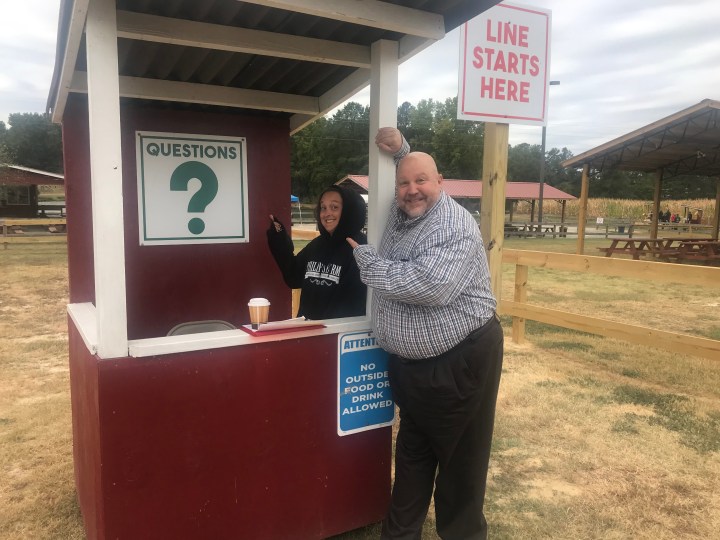 Yesterday at our North Carolina 3D Leadership gathering we went to Phillips Farm pumpkin patch in Carey, North Carolina to get pumpkins for an activity. The activity is not the focus of this post. The focus is on a booth set up at the farm for answering questions. The kiosk literally had a question mark sign on it with the word “questions” (see picture). Everyone in our group was immediately struck by the feeling of being put at ease knowing that we had a person and place specifically designed to answer any and all of our questions. What a simple sign and simple concept!
 The young lady at the kiosk was able to answer all our questions and get us set up to get everyone the chance to pick out their very own pumpkins. She even gave us a Dum Dums sucker, telling us that no question was too dumb to ask. But the part that continued to amaze us was how comfortable that sign made us feel when entering the area. There was no anxiety trying to figure out where to go or what to do.
 We then began to discuss how we should make kiosks in our schools during parent events or back to school events to make families comfortable asking questions. The question mark sign had empowered us to ask questions. It gave a very different feeling than if there would have been a sign that said “information” or just people standing around to answer questions. It was just comfortable – there is no other way to describe it.
This reminded me of the research that has been done in schools on surveys of climate and culture. Research tells us that if we were only able to ask one question on a survey the most important one would be, “How comfortable are you asking questions in your class?” If students are comfortable asking questions the schools is most likely on an upward trajectory. Therefore, we need to make our classrooms comfortable places for inquiry and empower our students to ask lots of questions.
In fact, as leaders, we need to make every environment we facilitate a safe place to ask questions. Think about the last meeting, professional development session, or gathering that you didn’t feel comfortable asking questions. Miserable, wasn’t it? Then, think about the times when no question was a dumb question and there was a free flow of inquiry. Makes us feel very empowered and comfortable, doesn’t it?
So, let’s start staffing “Questions?” kiosk both literally and figuratively, and creating empowerment through comfort in asking questions.
Discovering What Is Uniquely You
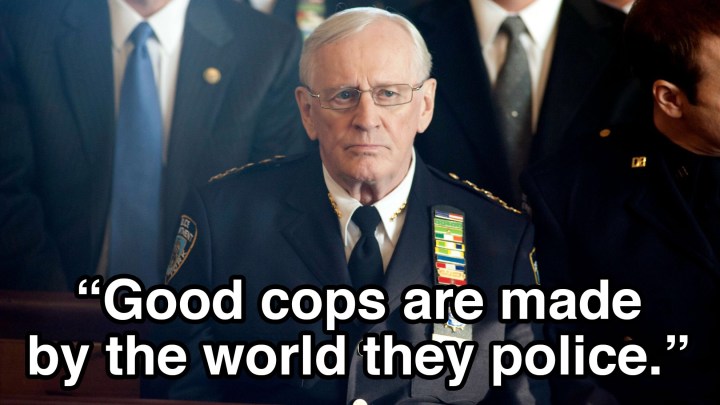 I love the television show Blue Bloods. The show that stars Tom Selleck as Frank Reagan as the New York City Police Commissioner always has scripts that really make me think. In a recent episode, the grandfather and retired Police Commissioner, Henry Reagan told his grandson, Jamie, that “Good cops are made by the world they police.” This really made me think about leaders. We, too, are made by the world we lead in.
We must recognize that there are different parts of our work, community, and our personal lives that affect each other. We, then, by being innovative, constantly learning, and experimenting become and continue to develop into the leader we are at any given moment. At the same time we need to be real, act with authenticity, know your core values, and vision. In other words you need to discover the unique you.
To do this we must harness our passions, interests, purpose, and skills and then make those things that make us uniquely ourselves valuable to others. In order to become uniquely ourselves we must become self-aware. Remember, self-aware is different from self-involved. Self-awareness is means accurately assessing how you show up in the world and what motivates you. Then, a self aware leader cultivates on a daily basis according to strengths and weaknesses.
Change and obstacles should be viewed as opportunities to further develop into the unique you by giving us the chance to be inventive, adaptable, and decisive in the face of adversity. Remember, leadership and learning are not mutually exclusive.
Weakest Moments
 I was finishing the day yesterday watching a news program and one of the persons being interviewed answered a question by saying, “I never judge a person by their weakest moment.” The comment caused me to think about how often we do this. It also caused me to pause and think about when I had done this, and who had maybe done this to me. Or better yet, those who had not done this to me. Think about it: we all have weak moments when we are not at our best.
It also made me reflect on a phrase in the great Alter Bridge song, Before Tomorrow Comes, “Will I be defined by things that could have been?” I’m not one that spends much time looking in the rear view mirror, so to speak, but with all the forks in the road and paths less travelled we come to, you can’t help but reflect at times.
My point here, however, is we need to not judge people on what could have been or, more importantly, at their weakest moments. It is shortsighted and foolish to judge people based solely on the worst or weakest moments in their lives. Would you want someone to base their opinion of you solely on your mistakes? My answer is no, and I am guessing that is your answer as well.
So, instead of judging others at their weakest moments, let’s as Myles Kennedy sings in Before Tomorrow Comes, “Take the hand in need; Before tomorrow comes; you could change everything.” Let’s grab those hands in need.
Is Your “Want To” Big Enough?
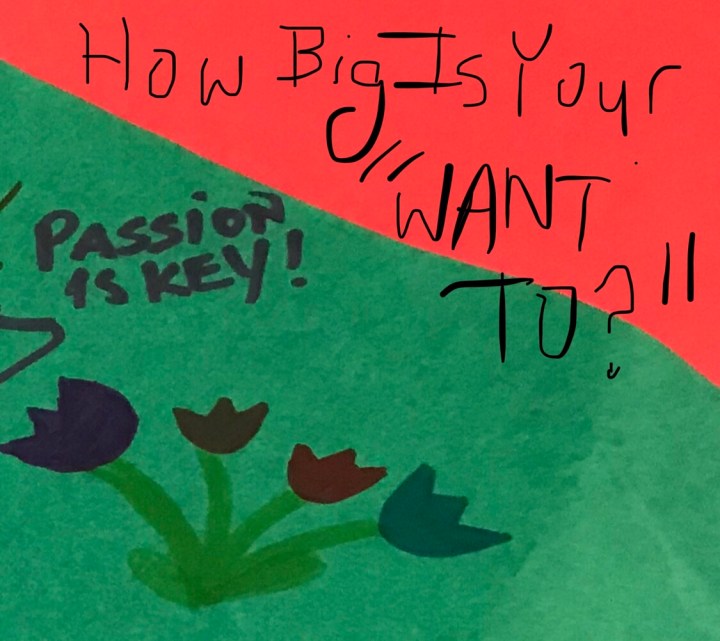 This morning I flipped through the television channel to see what was going on in the world and stopped on a channel with one of my favorite preachers, Joel Olsteen. When I tuned in he was asking the question, “How big is your ‘want to’?” I love this question. Many times our “want to” must get to a certain size for us to make a change or go after a desire.
This went right along with a discussion we had this past week in our 3D Leadership Program about the statement in Nothing More’s song Do You Really Want It?, “Everyone wants to change the world, but one thing is clear, no one wants to change themselves.” How big your “want to” is goes right along with this.
Your “want to” is how bad do you want to accomplish something. It is your “want to” that will be your driving force behind how far you go and how much success you will have with it. Many people like to talk big games, but “talk” and your “want to” are two different things. You have to really want something in life in order to accomplish it, especially if it is a big goal or aspiration. As with all big goals and aspirations there will usually be a lot of obstacles and roadblocks that will pop up along the way.
Other people call it your “purpose”. Some call it your “why”. Your “want to” is what it really is. How bad you want it, or answering the question Nothing More asks, “Do you really want it?” is what it really comes down to. Your “want to” will determine how far you will go to ensure success. The bigness of your “want to” must rise to match the power hidden in the thing you want.
Bottom-line: until your “want to” gets big enough, we will never make the changes, or do the necessary preparation, or other things needed to do the desired action. To achieve great things to change the world, you need a big “want to”. Your big “want to” should inspire and drive you to take the necessary action to achieve it.
Infectious Leadership


In the past week I have been with four groups of school and teacher leaders from three different states doing leadership development facilitation as part of our 3D Leadership Program. As part of this months focus we did a good leader/bad leader activity where each group developed a top 5 good leader trait and top 5 bad leader trait list. Two things that did not hit the lists were charisma and celebrity. It is clear that all want present and technically competent leaders who have a growth mindset and are contagious. This then trickles down to the team.
So what does having a growth mindset mean? To me it means having a transformative and innovative approach with the team. It means letting the team be curious and creative; finding ways to get better. Great leaders let go of certainty and open the door to other points of view. Great leaders also trust their team members and give them more latitude. These same leaders provide appreciation for all new ideas and achievements of employees. They are comfortable trying new things knowing that all will not work. It’s about being curious themselves.
To set the stage and paint the picture for modeling this growth mindset the leader needs to talk in ideals; ideal work, ideal team, ideal outcome. The question I always like to answer as an innovative and curious leader with a growth mindset is: “what does success look like?” One thing is clear from listening to all these leaders: we need to be present, communicate (including effective listening), and have a mindset for growth. Are you infectious?
Manufactured Culture
 Tonight in our Central Florida gathering of 3D Leadership in Orlando, Florida we got into a discussion about “manufactured cultures” vs. “organic cultures”. Clearly, just like with food, organic wins out as best. We always talk about how great it is for things to happen organically, but I had really never thought a lot about how detrimental it was for leadership to try and manufacture culture.
Most team members truly try to be honest and try to make the environment a better place. Leadership, conversely, that is inexperienced or questionable results in bad decisions. These leaders then try to manufacture a culture that is contrary to that of the larger organizational community. This leadership lacks tactical and long term strategic vision. Ultimately, this results in a disconnect of culture/morale. Check out this list of top five good leader traits that would lead to an organic culture and top five bad leader traits developed by the participants tonight that would contribute to a manufactured culture:
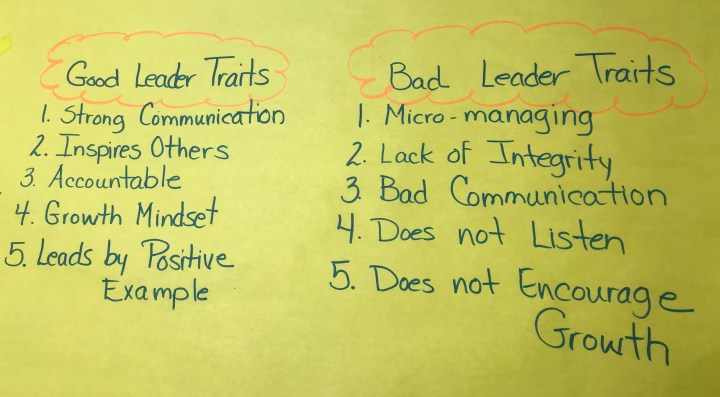
In order to develop a community with an organic culture, leaders need to understand their own limitations and areas for growth and fix them. Additionally, great organizational communities identify the difference between finger pointing and leading. We must also listen to our long term team members, whose insight has been proven over and over.
Great organizational communities with organic cultures listen to their teams and fix issues right away. There is also always honesty about what is going on in the organization. Additionally, organizations sometimes become very cult like which results in a manufactured culture.
How about you? Are you leading in a way that lets your organizational culture develop organically, or are you manufacturing it?
We Hate The Buzz Kill
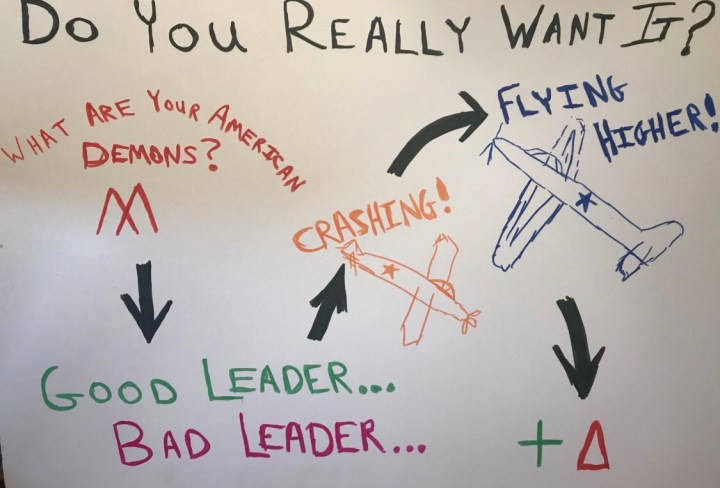
“Everybody wants to change the world…But one thing’s clear…No one ever wants to change themselves…That’s the way things are…All because we hate the buzzkill…Jaded when we need to feel…But we can change it all if you really want it.” ~ Nothing More in the song Do You Really Want It?
Today in our 3D Leadership, session with North and South Carolina participants, we discussed the concept of a buzz kill. This was prompted by a discussion and analysis of the lyrics to the great Nothing More song Do You Really Want It?
Beware of the buzz kill. That person who is in your organization, community, class, school, or government who takes a perfectly good idea, concept, or change and shucks it off as being worthless or not meeting their own values. They do it with their negativity and virtue signaling. The thing about buzz kills is they are usually smart, respected, and rationale people. they appear to be very noble in their actions, but are full of crap at the same time. Their points may make sense, but we do not want to hear them at the time. The goal of the buzz kill is to have you join their misery.
We also need to be aware that we can create the buzz kill for ourselves and those around us. Think about times when you’ve poo poo’d someone else’s, or your own dreams or steps to changing the world. Remember, if you are not experimenting with new ideas, you are probably stuck with old, out of date ones. Notions change all the time, after all. Stick with old ideas, and your thinking will end up obsolete.
We can change it all if we really want it. Ignore the buzz kill!
Preaching From The Office
 Last night we had a great 3D Leadership gatherings in Indianapolis. One of the cool things we did was have a good leader/bad leader discussion. With this we discussed good leadership traits and bad leadership traits. Then by writing good leader traits on the right wing of gliders and bad leader traits on the left wing and throwing them to each other, we developed a top 5 good leader traits and top 5 bad leader traits.
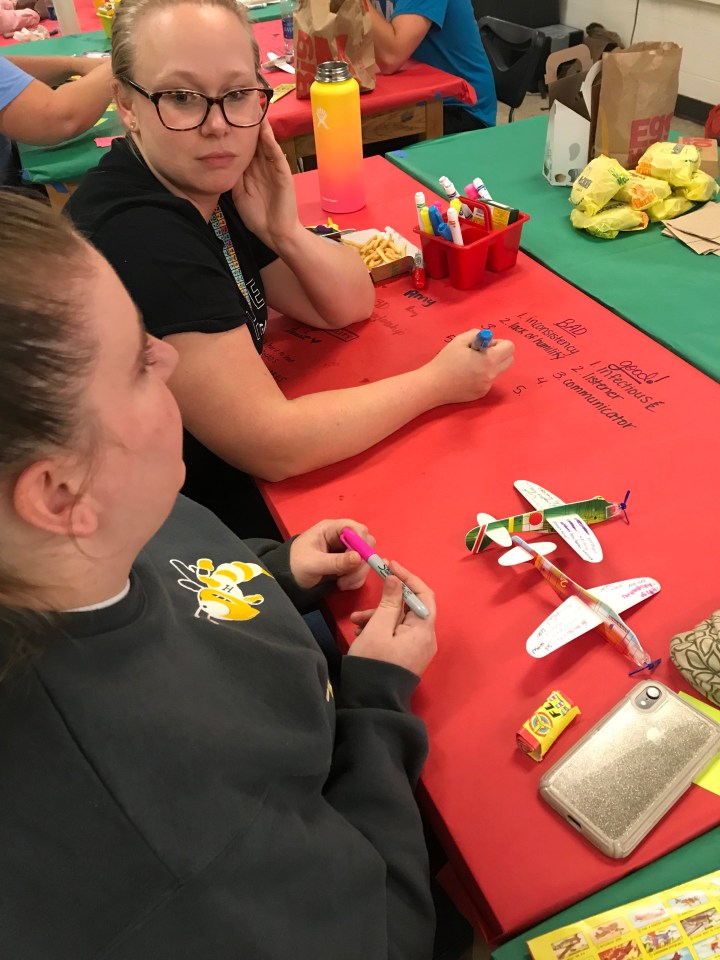 One of the top 5 bad leader traits was “Preaching From The Office”. Bottom-line: the pull to stay in the office can be great. It takes a love of the people and the work to throw oneself into the work, for leaders to leave their offices. The best leaders, according to the teacher leaders I was working with last night, get out of their offices. Here’s why:
- When we get out of our offices we give encouragement to those we serve.
- When we get out of our offices we discover the amazing people in our organizations. This enables us to get to know those we serve.
- When we get out of our offices we collaborate. This allows us to see the organization from all vantage points. Thus we would avoid making decisions in isolation.
- When we get out of our offices we see where the vision has leaked, excellence has slipped, and communication has faltered.
- When we get out of our offices we are able to tweak and make changes with knowledge, clarity, and credibility.
As you can see this bad leader trait has serious implications. The good news is, it is easily fixed. Get out of your office. You will gain insight and those you serve will love having you in the trenches.
Less “Why” and More “How To”
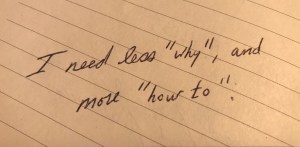 Recently, I was sitting in on some teacher professional development sessions and I looked over at a teacher’s notes and saw that he had written, “I need less ‘why’, and more ‘how to”. This really struck me because I had just interrupted an earlier session to see how many really thought they would be able to jump right in and do the task being trained on – some thought they could, but many wanted to try it and then have someone ready to help them. Having spent most of my career in the classroom I knew it was one thing to have been shown how to do something, and then actually doing it when there were 30+ young scholars staring you in the face was a lot tougher thing.
After seeing this note, I began to think about whether we had become so enamored with always explaining the “why” that we were missing the mark on the “how”. Clearly in these trainings we were for at least one participant. This struck home with me because I believe in my own world I get a lot of “why”, and then there are very few who really understand the “how”. As you will find later in this post, we need both.
I told the teacher after the session that I had seen his note and was interested. He told me it was not being critical, but he needed more time on how to do some of the tasks than so much time on why. I told him this made total sense. Really, the why should be about the vision in a quick statement of the importance and not a dissertation, or what turns into a chance for the presenter to pontificate and gain self gratification. Many times, I have found, this is because the person presenting does not understand how to do the task very well themselves.


Think about it from a school perspective; if I spend an hour telling you how important taking accurate attendance is each period for high school students and why each period will be analyzed and rolled into the daily attendance, but then don’t spend the majority of the time making sure you understand the management program (technology) and how to use it, I have failed you. Also, we would need to make sure you understand the best practices of taking proper attendance at the beginning of the period and then updating for individual circumstances that happen during the period. I believe you get the idea, but it has become to easy and “cool” to just spend time on the “why” because that is the latest buzz phrase – “gotta tell them the why.” I’m cool with that, but make sure I understand “how to” too!
How about you? Do you need less “why”, and more “how to”?


1 comment