“It Has Been An Honor To Live This Life”
 I just finished reading an awesome book: The Warehouse by Rob Hart. I was so blown away by this book that all I have done so far is give it ⭐️⭐️⭐️⭐️⭐️. I will write a review, but really need to think about what I will say to give Hart the justice he deserves. When this book was recommended to me I was reluctant because it is a fiction novel and, as you know, I read non fiction. This book, however, had many great lessons and besides a few twists it could be non fiction. I’m not going to say much more; you can read the book description for yourself. I don’t want to reveal anything that would take away from you enjoying the book as much as I did. All I can say is, you need to read the book. I guarantee you, you will say, “Is this really happening in the world right now?”
 There were things said by characters in the book that jumped out at me. I will be blogging about them. One phrase came from Gibson, the founder and CEO of Cloud, the focus of the entire plot. He said, “It has been an honor to live this life.” Because of his business practices this seemed like an odd comment because I found him to be very much like Machiavelli. While Gibson presents everything he does as putting others first and doing what’s best for the world, he also has rules by fear. He is promoting a very socialist/communist way of life by controlling the collective, but making millions and living a luxurious life for himself, while his employees just get by. He is Machiavellian in that he controls with low wages and the fear of employees losing their jobs.
Also, Gibson uses Machiavelli’s rule of “scorched earth”; completely eliminating any competition or potential competitor. He basically puts every other business out of business. No competition – complete control. So, I’m thinking “How can there be any honor in living that life?”
To be clear, Gibson was providing jobs and places to live, but there is clearly a conflict of whether he is doing this “for others” or “to others to make money.” Therefore the question becomes, “What does it mean to live with honor?”
To me, living with honor means living for a cause greater than yourself. It means really having a purpose; not just becoming CEO and making a bunch of money. In other words, am I making a difference? Really that is only a question we can answer for ourself. For me it comes down to the question of, “Are you contributing to the success and happiness of others?” In the case of Gibson I would say “no.” All he did was contribute to his own ego and bank account.
“If you have integrity, nothing else matters. If you don’t have integrity, nothing else matters.” ~ Former U.S. Senator Alan Simpson
For it to be an honor to live a life I believe there also needs to be honesty and transparency. If that happens the right things will probably be done. We need to be concerned where life is taking us, but we also need to be as concerned, or even more concerned, about how we are getting there. If we truly want to live with honor.
As you can see, this book had a profound impact on me and caused a great deal of reflection. We never know who is watching us or considering as a role model. What do you want them to see. Rather than saying, “It was an honor to live this life.” I would rather someone say of me, “He lived his life with honor.”
If I Were In A Snow Globe
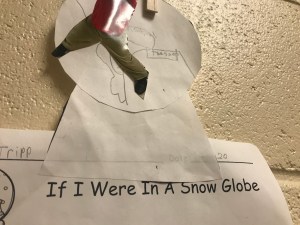 So today as I was visiting with teachers and students at our host school for 3D Leadership, Coweta Charter Academy, in Senoia, Georgia I came across a really cool writing prompt: If I Were In A Snow Globe. It was very interesting to read the student responses. Then I got to thinking, how about I write to the prompt? Here is my essay:
If I Were In A Snow Globe
Here I am in this very beautiful, pristine, and tranquil globe. Everything is perfectly in its place. Of course, my snow globe is a beautiful farm scene with a modest white farm house and three barns. There are snow covered fields and pastures with Jersey dairy cows. When you look inside the barns you see perfectly stacked round bales in a pyramid. You will also see a blue New Holland tractor backed into the barn awaiting its next task.
As much as I am loving being in this snow globe there just is no magic. No excitement. I need someone to shake my snow globe. Won’t you please shake my snow globe? Only then can there be a shift in the experience – some excitement. Snow flying landing on the roofs and on the backs of the cows making an exciting, beautiful, and ever changing experience. I just can’t imagine having to be in this snow globe with out someone shaking it up. For the magic to happen I need shook up. I wish I could get out of this snow globe and shake it. How beautiful it would be!
Lesson Of Shaking It Up
I hope you enjoyed my essay. Here’s the deal: the magic only really happens when we either get shook up, or we shake things up. The shake allows for new possibilities and new beauty. By shaking the snow globe we can create change instead of being a victim of it. So, next time you are getting shook up, take some time to recognize the magic of the shake. Or better yet, give yourself or your organization a transformative shake. How about you share your “If I Were In A Snow Globe” essay?
Naked Leadership
 This past Thursday night, we had an incredible 3D Leadership gathering in Mooresville, North Carolina. This was the first gathering of the third cohort of our North and South Carolina leadership development program. This first time together involves an activity called, “Who Am I As A Leader Today?” The participants are all given their very own Mr. or Mrs. Potato Heads and must creatively put them together to represent who they are that day as a leader. We then circle up and everyone shares. This is always so meaningful and is such a great way to begin building a community. You can find out a lot about someone and yourself when you’ve channeled the inner Mr/Mrs Potato Head.
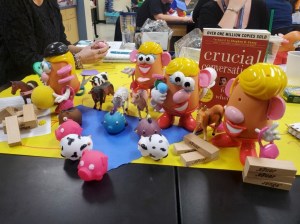 I am always inspired by the wild representations that participants come up with and the deep and meaningful descriptions they give. Always lots for me to blog about after these. One of the member’s presentations really jumped out at me, however, when she said she considered leaving her Mrs. Potato Head blank without putting anything on it. She shared she wanted it to represent the nakedness she felt as a new leader and her desire to learn and become clothed with knowledge. She even brought in some Bible teaching, reminding us that Jesus had come into the world a naked and humble leader of all – and, we all come into the world naked and without anything. She had gone ahead and decorated he Mrs. Potato Head because, as she told us, she needed to recognize that she does have leadership skills today, but wants to continue learning.
The entire group, including me, was blown away by this insightful reflection. Of course, I was so moved that I said I thought there was a book to be written – Naked Leadership. Everyone laughed (thank goodness), but the more I have reflected on it the more I like the title, and the metaphor it represents. For one thing, it’s a catchy title. I’ll bet some of you are reading this post just because the word naked is in the title and you needed to know who was naked. When I began to reflect and study the idea of Naked Leadership, however, I found so many important leadership lessons.
They Realized They Were Naked
In Genesis 2, the Bible says of Adam and Eve, “The eyes of both of them were opened…and they realized they were naked.” As leaders we must have our eyes opened and realize we do not know everything. We need an attitude of personal professional growth and a desire to actively listen to others.
The Emperor Has No Clothes
I love the children’s fairytale The Emperor’s New Clothes. This might have application as a leadership fable for learning more today than at any point in history. You know the story… the emperor was very vain and loved new clothes, so some swindlers took advantage of this. They told the emperor they could fashion the most beautiful cloth ever made that could only be seen by someone who was stupid. So, emperor gave them gold, expensive silk and other items to make the cloth. Of course, these were swindlers who did not make anything but steal the items. Let’s skip to the end of the story…the emperor goes out with his new clothes which were allegedly invisible, and, of course, is naked. No one has the courage to tell the emperor he is naked until he comes to a little boy who says, “But he doesn’t have anything on!” It took the innocence of a child to make the emperor realize he had no clothes.
Wouldn’t we be more effective leaders if we were able to recognize our own nakedness without even needing to be told, as our 3D Leadership participant suggested? This would, I believe, open us up to being advised by others to our nakedness as well. The other part of the story that most never go on to talk about is that once the emperor realizes he really is naked, he continues on, naked, because of his desire to not admit being wrong and his extreme vanity.
I don’t know if the Naked Leadership book will ever get written. I hope it does, but in the meantime we all need to recognize our metaphorical nakedness and be open to finding ways for clothing ourselves with the skills of great leadership. How about you; Do you have any ideas for chapters in the Naked Leadership book?
Living Is Having A Past Full Of Mistakes
 The other day as I was having dinner with a good friend I was talking about some mistakes I had made. He said, “Byron, part of living is having a past full of mistakes.” Wow, how true this is! And, how impactful it was to hear from this. As a person who never worries about failure and tries to learn from every mistake, it was huge to talk this out.
The thing to remember and tell ourselves, however, is that the mistake was not on purpose. We didn’t misunderstand circumstances or miscalculate a situation on purpose. Would we forgive someone else? Sure! So we need to remember to forgive ourselves too, and fail forward. This all doesn’t qualify if the mistake or failure was while taking a risk. That is the nature of risk taking and is necessary.
Then, we just need to do everything we can to fix the mistake. That may mean talking to someone, coming up with a better solution, or letting someone else help out. I always say to others, “There’s nothing you can screw up bad enough that the sun won’t come out tomorrow. And, if it doesn’t, it won’t matter anyway.” Remember, we are human and not infallible.
Finally, we need to take the position that we will be smarter next time. We need to learn from mistakes. Just as others have had amnesia about our past mistakes, we need to have amnesia about others. This is truly having compassion.
Let’s Have Lunch Together!
 Last night we started our third cohort of 3D Leadership in Indiana. Hard to believe we have started our third year. Just seems like yesterday that I began putting the curriculum together for this program. Last night as we were discussing relationship building as a function of leadership, one of our participants, Sarah Medve, shared a story that really touched me and the rest of the group.
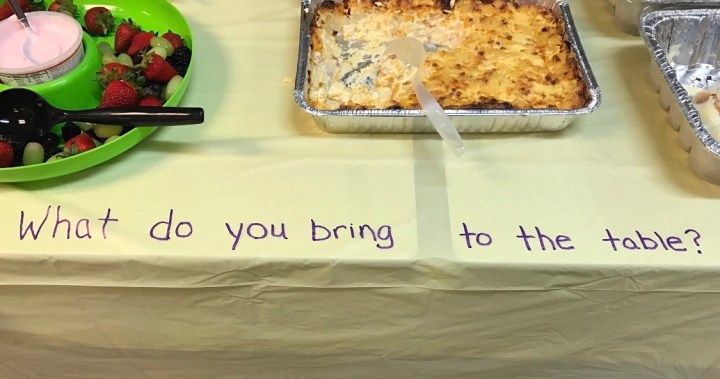
Sarah said she realized that she needed to do a better job of building relationships. Sarah also realized that she was missing out on building work friendships and collaboration because instead of taking time to eat lunch with coworkers she was making copies, grading papers, or any of the many other tasks of the day. This great teacher leader explained she has begun making sure all her tasks are done at other times so she can stop and eat lunch with others. Then Sarah told us she had fun eating lunch with others and did not want to miss it. Wow! This is a big deal!
We all do it, though. Work through lunch or sit alone and check emails. Sharing meals together, however, builds relationships. Eating together provides time to get to know each other and encourage cooperation through informal communication. Eating lunch together also increases productivity because it widens our perspectives. Eating together is a powerful act.
Researchers at Cornell University argued that eating lunch together has a much more positive effect on organizational community than the artificial activities that many organizations use like rope courses and things we call team building activities. These things are sometimes offsite and require a lot of energy. The Cornell study showed that employees (in the case of this study – firefighters) make fun of and do not see any value in them (Kniffin, et al., 2015).
This insightful story from our teacher leader reminded us all of the benefits of commensality. Coworkers that eat lunch together feel more like family and build friendships. So, we need to learn from our teacher leader, Sarah Medve, and make time to eat together with fellow teachers and staff. Why? Because, as Sarah so insightfully told us, it is fun and she feels closer to her coworkers. The rest of us leaders need to think more about providing opportunities for employees to eat together and do away with the manufactured and trite team-building exercises.
 You might be interested to know that after our gathering we all went to Jockamo’s and had dinner together. It was so much fun and we learned a lot about each other. It was nice to put into practice what we were learning in 3D Leadership. I know I left feeling much closer to the group.
REFERENCE
, J. (2015). Eating Together at the Firehouse: How Workplace Commensality Relates to the Performance of Firefighters, Human Performance, 28:4, 281-306,DOI: 10.1080/08959285.2015.1021049
Empowerment Triggers The Approach System
 There has been a great deal written about student agency, student choice, and empowerment. In fact, just yesterday I was working with teachers on how to empower student in such a way to get to a self (student) managed classroom. Student agency and choice refer to learning by doing activities that are meaningful and relevant to learners, driven by their interests, chosen by the student, and often student (self) initiated. As a teacher, I loved giving students a stake in choosing from opportunities provided for them; or many times letting them come up with options. These opportunities might include giving the choice between doing a project, making a presentation, writing a paper, creating a product, or other activities. This ability to choose, or have agency, empowers the students, which leads to greater investment of interest and/or motivation.
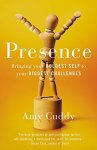 Like I said, I used student agency for years as a teacher and promote it as a major tenant of project based learning. It seems that this is really brain-based. Yesterday, I finished reading the great book Presence: Bringing Your Boldest Self To Your Biggest Challenges by Amy Cuddy. While this was not an education book, the principles of empowerment and powerlessness triggers that apply to our presence as a leader, also apply to the way we engage students.
In the book, Cuddy explained the approach and inhibition systems of the brain. This explanation came from the 2003 study of psychologist Dacher Keltner. The approach system is made up of regions in the brain that promote curiosity, being adventurous, and trying new things. The inhibition system, promotes cautious behavior. Too much of this causes us to see threats where others recognize opportunities. In other words, it stifles us. Think about these two systems both from a leadership standpoint and a student engagement perspective.
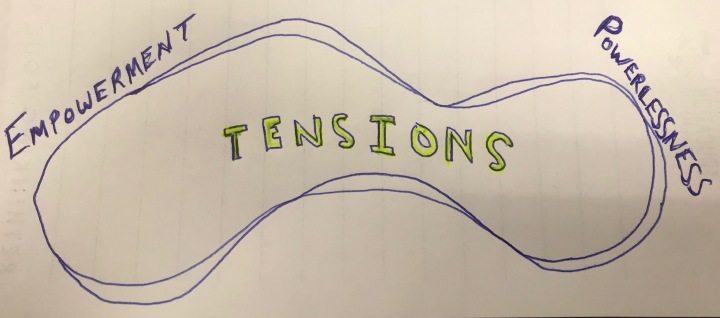
Keltner argued that empowerment triggers the approach system. In other words, if we believe we are empowered we are able to be more curious, adventurous, and willing to try new things. Doesn’t this sound like how we would like our students to be every moment of every day? Conversely, Keltner posited that powerlessness triggers the inhibition system. As was explained earlier, this causes cautiousness. Think about this from a leadership or educational perspective. When we empower others and give them autonomy this triggers our approach system, and contrarily when we take power and agency away and add constraints we trigger inhibition. Remember, power is the ability to change something. Do we not want our students and team members to be in a position to do this?
Bottom-line: the approach system will respond to rewards and opportunities and the inhibition system responds to constraints, threats, and punishments. Really if you think about this it is pretty simple. These two systems in our brain exert powerful influence over our actions, motivations, and emotions. How are you empowering? How are causing powerlessness? It could be as simple as giving student agency removing constraints, or not have having team members go through a bunch of compliance hoops of approval. Let’s keep these triggers in mind as we navigate 2020.
366 Page Best Selling Autobiography
 In the past few days there has been plenty said and written about New Year’s Resolutions. Why do people bother? I even saw (notice I didn’t say “read”) a blog with 15 steps to keeping your resolutions. Really! Why do we put ourselves through that process for failure.
If I was going to have a New Year’s Resolution, however, it would be to appreciate my friends every day and catch more fish. Pretty doable, I believe. And, unlike where we do things like get an accountability partner (which, by the way, just adds stress to someone else’s life) this resolution is fun for your friends. Who wouldn’t want to go to lunch and catch up, or go fishing?
In my morning motivational message, that I tweet and post on LinkedIn (notice it’s not an email I force people to deal with – it’s a choice for someone to go look at it) each day, I said, “Today is the first blank page of a 366 page autobiography. Make it a best seller.” I really believe if we approach every day as a page to a best seller we could write a pretty good book.
 Best selling and Pulitzer Prize author Robert Caro says, “I have to produce every day.” Caro has written massive volumes about Robert Moses, New York City shaper, and President Lyndon B. Johnson. He will tell you these books are not about the men, but about power – getting it, using it, becoming abscessed with it, and abusing it. I have read The Power Broker and it is awesome. I am planning to start the series on Lyndon Johnson this year.
 Many have asked Caro over the years about his work habits, and there have even been interviews. Therefore, even though he was not done with the last volume of his books on Lyndon B. Johnson, he took time to write Working. In this book, which is a great read by the way, he outlines how he goes about doing the work of writing these in-depth books on power. What stuck out to me was when he wrote that he writes 1,000 words per day. Then at the beginning of the next day he reviews and revises the writing of the previous day and writes another 1,000.
See where I’m going here? What a great metaphor on this New Years Day! We need to approach this New Leap Year as a blank pad to write 1,000 words per day for a 366 page best selling autobiography. Each day we can reflect on the previous day, but then get to work on the next 1,000 metaphorical words that are our life. So maybe, just maybe it’s this simple: produce every day.
Best Books Of 2019
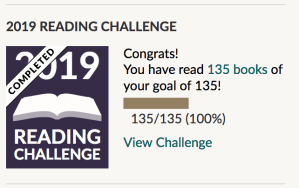 I was asked yesterday what the top five books I read in 2019 were. I had to really think about the question, because I do not read to rank them. In fact when I have a book recommended to me I always ask what am I going to learn from it. Reading for me is a way to open my mind to new ideas or hone skills. I hate it when someone reads a book and then wants to somehow miraculously put everything in place. It just doesn’t work that way. It’s why book reads, and there is research that backs this up, are not effective. As I reflected on the question, however, I decided to go back and see which books I read this year were referenced in my blog posts. This is a partial indication of learning from the books being used in the real-time pondering I am doing.
My Best Books Of 2019
So, here’s what I did first: I went back through my over 100 blog posts from this year and flagged every one which referenced a book I read in 2019. There were 22 posts referencing 20 of the books I read. I have those those posts organized in no particular order by four books at a time. Remember, these 20 books should be considered as part of the Best Books In 2019 that I read. If you read the posts you will find what lesson(s) I learned from the book, and there is a link to the book and the author in each post. Here are the posts:


Collaboration and Get Some Sleep and Self-Awareness


Do Others Like The Vibes You Give Off?
What We Know, And Don’t Quite Know We Know


Leading Without Kitschy Trinkets
Developing & Supporting Our Students: Future Identity Versus No Future Identity


Joyful and Leading With A Touch Of Quirkiness
Benevolent Leadership and The Tigress Of Forli


Do You Have The Inexhaustible Ability To Just Live?
MacGyver Intersectional Leadership
My Top 5 Books Of 2019
I know what you are thinking; I did not answer the original question of what my top five books of 2019 were. Even though I hate doing it, because I have gained so much value from all the books I read, but I won’t let myself of the hook. After a great deal of reflection here they are:


- The Tigress Of Forli: Renaissance Italy’s Most Courageous And Notorious Countess, Caterina Riario Sforza de Medici by Elizabeth Lev
- On Grand Strategy by John Lewis Gaddis
- The Medici Effect: What Elephants and Epidemics Can Tell Us About Innovation by Frans Johansson
- Talk Triggers: The Complete Guide To Creating Customers With Word Of Mouth by Jay Baer and Daniel Lemin
- The Pioneers: The Heroic Story Of The Settlers Who Brought The American Ideal West by David McCullough
As you can see, 2019 was quite the year of reading. I am still working on what my reading goal will be for 2020. Remember, leaders are readers! Happy New Year!
Tending Our Friendships
 I was touched last night to have my son ask if I wanted to watch a couple more episodes of Boston Legal with him. Hey, it was 10:30pm; what else could be better? Plus, love spending time with the boy. We laughed and discussed the political issues of the time of the show. Then there was a cool seen during Season 4, Episode 20 when my son said, “That was a great metaphor.” As you know, I live by metaphor. Having my son recognize a quality metaphor – PRICELESS!
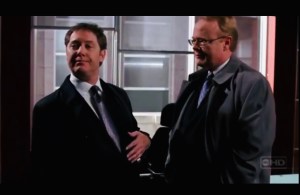 Here’s the scene: Alan Shore said to Jerry Espenson, “I feel as if I haven’t seen much of you over the past year.” Jerry replied, “Well, you’ve been really busy, Alan. So have I. With work. Work has…Hey! That’s the beauty of being friends, isn’t it? Relationships with long shelf lives. You can just stick them on the shelf. I tell you! Alan rebutted, “What?” Then Alan continued, “I have never ever considered myself someone who puts work before friendships. Seems I do.” Jerry then gave us the metaphor saying, “We all do, Alan. Friendships are a little like back yard gardens. We plan to tend to them. We just always seem to put it off till next week.” Friendships are the cornerstones of our lives. Our garden of friends requires careful tending.
We also need to recognize that people change and grow at very different speeds and different ways. Metaphorically, we need to plant, cultivate, prune, water, and fertilize our friendships. To have a relationship, you must plan, cultivate, and tend to it. Relationships left unattended eventually die.
We need to be grateful for our friends and the people who make us happy. For all the faults in the character of Alan Shore in the show, we do see him always trying to be a good friend. He offers advice, checks in on them, maybe shows up in court just to watch and show support, always seeks to reconcile a squabble with a friend quickly, and always goes and apologizes when he says something to a friend that offended him or her. One of the ongoing plots of the show is about friendships and romances of the characters. I blogged about this in Are We Best Friends?
Let’s not forget to tend to our gardens of friendship as we move into a new decade. In fact, I think I’ll make my New Year’s Resolution be: to appreciate my friends every day and catch more fish.
Keep Something On The To-Do List
 “The thing about life is you always need to keep something on the to-do list.” Alan Shore said this to Denny Crane while sitting on the balcony having cigars and Scotch at the end of an episode of Boston Legal. In this age of instant gratification it was a great reminder that we need things to look forward to and to be working toward. It’s important to enjoy working toward our dreams. Having long term items on our to-do lists gives us time to explore.
 The scene in Boston Legal itself holds the lesson of friendship, relationships, and getting to know those we encounter along the way. These people may be peers or mentors, and we need to make the most of our time together.
Additionally, we need to be open to new things and always give ourselves room to change course if necessary. If we are open to new possibilities, we will be rewarded handsomely. Unexpected discoveries are bound to come our way, especially if we keep things on our list we want to do.
Are you working toward a dream on your to-do list? What are you doing every day to help you enjoy working toward that dream?


4 comments