Deep Innovation
 As a self proclaimed energetic change agent, I had a great chance to check my values and views toward innovation while reading the awesome book, Innovation For The Fatigued: How To Build A Culture Of Deep Creativity by Alf Rehn. Rehn argued that we have become “shallow innovators” and need to start practicing “deep innovation.” One problem is we start using the same old rhetoric that makes us think we are “maverick innovators,” being “transformative,” or practicing “disruptive thinking.” We think these buzzwordy titles mean we are innovating, but really we are merely tinkering around the edges and making superficial changes. See why I gave this book ⭐️⭐️⭐️⭐️⭐️?
“Innovation has become a tired buzzword.” ~ Alf Rehn
 According to Rehn, we need to focus on big solutions. In order to have deep innovation we need to start from scratch, or go in an entirely different direction. Real innovation, Rehn posited, looks beyond what we do and know now. One of my big takeaways was that we need to stop directing so much time and talent on incremental change. Many times we take the easy way out and make ourselves feel better, saying we are taking baby steps.
“Innovation history teaches us that human beings are terrible at identifying innovative ideas.” ~ Alf Rehn (p. 54)
Another part of the book that really jumped out at me was the section entitled “The Curse of Expertise” (p. 54). I have always worried about getting caught up listening to so called “experts.” In fact, I have blogged about my dislike of experts many times in Thanks For Not Being An Expert, Decision Making vs Problem Solving – and Why the Difference Matters, and Dig In & Stop Guessing. Rehn explained that many great ideas have been killed before they had a chance to prove themselves by these so called “experts.” Rehn said, “As curious as it sounds, the better we are at something and the more expertise we’ve amassed, the worse we often get” (p. 55). It is not that experts are bad, but we just should not rely on their word as the final word. Experts often forget that their expertise represents a very small part of the world’s total wealth of knowledge. We have a tendency to overestimate what experts know and want to use their opinions carte blanche. I see this happen a lot in policy decisions.
Finally, Rehn advised us to cultivate a culture of innovation. We need a certain amount of trust and an environment where we are able to voice our ideas or opinions without fear of censure or dismissal. This is what Amy Edmondson coined as “Psychological Safety.” If we lack an innovative culture we will only practice “shallow innovation” instead of “deep innovation.” This will then eat away at our organization’s purpose, according to Rehn. The loss of purpose will ruin an organization and affect employees at every pay grade of an organization.
So, let’s create a culture of innovation so we can practice “deep innovation” and change the world!
❤️ Kids Having Ownership!
 This past week I had the honor of doing a day long professional development for teachers from all schools corporations in Elkhart County, Indiana. I am representing Noble Education Initiative carrying out this customized professional development. This was part of an ongoing Project Based Learning partnership created by Horizon Education Alliance to bring business/industry and education together to best educate students. I love doing professional development workshops, particularly when they are on topics that I am passionate about. Project Based Learning (PBL) is one of those topics. It is also energizing to be with a group of educators who are very engaged. Groups like this always remind me and validate what Gallup® finds teachers value in question 12 of the Gallup Q12 Index©: “In the last year, have you had opportunities to learn and grow?” These teachers have been given this opportunity and very much value the opportunity, and are taking advantage of the opportunity to learn and grow.
The group last week was both passionate and engaged. We started the day with what I called “Level Setting.” I had them work in pairs to talk about their PBL experience now that we were half way through the school year. I wanted them to talk about what they had learned, “wow” moments, what they still had questions about, and what they still needed help with. They were to represent this on a tear sheet and put it up on the wall. Here are a few of the tear sheets that were put up:


Did you see the comment “❤️Kids Having Ownership”? That’s what this is all about. The next few paragraphs will dig into that a little deeper.

Aubri Mosness with her students
We then had everyone individually do a gallery walk and pick one thing that stood out to them. This was an awesome discussion when the group came back together. There were questions like, “who wrote… I would like to know more,” or “I had that same experience because…,” or “I am so glad you wrote that because that same thing happened to us, and we are still trying to figure out…” You get the idea. One comment really stood out to me during this discussion; It was by Goshen High School Teacher, Aubri Mosness. She said, “I have felt the transition from me doing most of the work to the students doing most of the work. At first I was a little uncomfortable because I felt like I was doing much, but then I realized how much the students were getting out of it.” I was so excited by this. This is such a revelation in teaching. Great teaching should have the students doing most of the work. She was truly facilitating with a student managed classroom and the students have student agency and choice.
Then, at lunch Ms. Mosness’ students presented to the whole group and business/industry representatives that had joined us, on their project and I led a little Q&A. The students were incredible. During the presentation Ms. Mosness commented, “When I give my students too much, too much information, too much guidance, I am taking away opportunities for learning.” This was a drop the mic opportunity as far as I was concerned. The students all concurred. I then asked the students to give a thumbs up or thumbs down on the following question: “School work should look more like real work?” All six students gave me a thumbs up. Our students deserve to learn in an environment that is facilitated in a real world and relevant context.
 These students were giving first hand testimony affirming the research I did for my book, The Hand In The Back Of The Room: Connecting School Work To Real Life.” In the book I talk about that the hand in the back of the room was mine, and probably yours too, that was raised wanting to know why I needed to learn what I was being taught. In other words school work must be connected to real life. This is why PBL is so great. Using PBL teaching principles will make school work look and feel like real work. In other words, the question from “the hand in the back of the room is answered as to why she needs to learn what she is being taught. When teachers are allowed to make student learning the ultimate test of facilitation of learning, then instruction improves to produce better learning. The results of my research showed improved achievement/performance in science when students are taught in a relevant context. For me that context was agriculture, but there many other real world contexts to be used. This is why the partnerships with business/industry is so important for our students. The challenge to all of us in education is to find ways to make learning visible by connecting school work and real life for the students we serve.
K.O.B.E.
 Today, on this Super Bowl Sunday, ESPN Sunday NFL Countdown ran a great tribute to Kobe Bryant with reflections from pro football players. Click here to watch the video. One of the pro football players made the comment that they had learned so much from Kobe and had never met him or known him personally. Samantha Ponder and Randy Moss made very moving comments following the video. This made me reflect on what had I learned from this NBA great that I never met.
This loss needs to be a reminder to all that there are always people watching and using us as an example. While Kobe had a checkered past with mistakes that left scars on his life, there is still a great deal of positive examples to take from his life. What examples will others remember and take from your life?
Here’s my takeaways from Kobe:
K – Keep fighting and Kill the opposition. He taught us to make the opposition believe they could never play at the level we play.
O – Make your purpose and passion become your Obsession. He taught us to fall in love with the process of what we do.
B – Believe that if others can do something, you can too. When we follow in the footsteps and model our actions and habits after successful people, we can get similar or even better results.
E – Embrace the mantra of MAMBA mentality. Kobe taught us that hard work outweighs talent every time. We were also taught to trust the process. Kobe said, “Without studying, preparation, and practice, your leaving the outcome to fate. I don’t do fate.”
Let’s remember Kobe by not doing fate.
Every Day We Are Making Memories


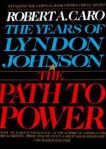 What got me thinking was when Caro wrote about Lyndon reflecting on loving the times when he and his father would travel in the Ford Model T to and from the Statehouse in Austin, Texas. He shared that his father would bring a crust of bread (I am comparing that to bringing a loaf of bread) and a jar of homemade jam. When they got hungry or tired, they would stop and spread some jam on bread and eat. I got a visual of that great dad and lad time when reading this. I’ll bet those were some of the best meals of Lyndon’s life.
This made me remember and reflect back of some great travel times as a young (notice I didn’t say small, because I was never small) boy with my own father. Specifically, I remember our three hour trips south to Louisville, Kentucky for the National Farm Machinery Show. He and I would stop and get a loaf of bread and some cheese. We would always buy bulk cheese and have the person at the deli counter slice it real thin for us. I remember those cheese sandwiches being the best sandwiches I have ever had. I loved spending this time with my dad. We had such great conversations while eating those cheese sandwiches.
I have tried to do things like that with my son and spend quality one on one time with him. We actually talk about what our next dad and lad time will be. Now that he is away at college, that time becomes more and more precious. Hopefully, he will remember those moments with fondness and he will do the same for his children some day. Needless to say, dad and lad, dad and lass, mom and lad, mom and lass time is very special and important. In the case of Lyndon and Sam Johnson this was time that Lyndon was learning about politics. Caro wrote that if kids were playing and asked Lyndon to join in he would never join them if he was talking to his dad at the time.
So, why blog about this? For one it was great to reflect on great past moments with my dad. Secondly, it is a reminder to us all just how important the touch points with our kids are, however seemingly insignificant they are. At the time my dad was buying a loaf of bread and a hunk of cheese it was to save money and because there weren’t the places to stop and get food on the way to Louisville along I-65 that there are now. Amazingly, Louisville, Kentucky seemed like it was on the other side of the world. My, how small of world we have become! Don’t forget, make the most out of every moment you have with your children. These times are precious and are very important to their formative years. Always remember, every day we are making memories.
Obstacles ARE The Path
 I heard a great quote from the late Jane Lotter that really got me thinking this morning: “And may you always remember that obstacles in the path are not obstacles, they ARE the path.” I have blogged about obstacles and barriers before and most recently in Obstacles Vs. Barriers and Overcoming Obstacles. I really liked and was inspired by the Lotter quote because I had not ever really thought of the obstacles as being the path, or even a part of the path. When we begin to look at these obstacles as just part of the path it gives us an entirely new perspective. Leaders who live with a fearless approach and embrace the adventures in daily pursuits, are able to shape-shift and mold ourselves into the leaders we truly desire to be. I actually blogged about shapeshifting in Teacher Leader Shape-Shifter, last summer.
As I was thinking about this, I remembered watching Star Trek Deep Space Nine and there being shapeshifting species, called Changlings, who could adapt their shape to whatever was necessary to the situation. Odo, a shapeshifter, was so cool; he could change from solid to liquid, male to female, or living being to inanimate object. How cool is that? Better yet, how useful could that be? Particularly when thinking about obstacles. So, can we shape-shift to let obstacles just be part of the path? Probably not, but there are things we can do to be a shapeshifting leader.
We can:
- Create an environment where everyone is empowered at the right time.
- We can have empathy, show our emotions, and have compassion. This will let our teams know we are vulnerable and care.
- Develop an atmosphere where everything is a joint effort. Everyone has value in this environment and the project will be looked at from every vantage point.
- Be observant. When we can see and plan for obstacles in advance, they can be viewed more as parts of the path.
- Become more taciturn. Odo, in Star Trek, was considered taciturn. In this sense I believe the character was not snobby, but a very reflective and active listener.
We must develop our capacity to embrace ambiguity and achieve results in unfamiliar environments. As I always say, “I am uncomfortable with being uncomfortable.” As we become a more and more global society, we must continue to develop our personal abilities to understand and appreciate the different values of our global counterparts. When we become adaptive leaders, we are able to select behaviors that are best suited help those we serve on the path of success. We must be able to adapt to the nature and demands of a particular situation.
Are you ready for the path ahead?
A Clouded Social Critique

My rating: 5 of 5 stars
This book is an absolute genius work of art. The story is told from the three main characters points of view. I believe the most innovative part of Hart’s writing in this novel is that one cannot distinguish between who is protagonist or antagonist. And, I was left still pondering this after I had read the last words. Additionally, all characters have internal and external conflicts. Two of the main characters, Paxton and Zinnia, are dynamic in their character development and again we are left wondering where this development will leave them. Gibson is the only, round, or fully developed main character. One finds him in the book for what he is, a person who talks great core values, but is caught up in ambition over purpose. I blogged about this in “It has been an Honor To Live This Life”: https://byronernest.blog/2020/01/23/i… The book gives us different versions of the same truth. This really reads as a social critique on America. The business, Cloud, that the novel is written around really almost becomes a character in and of itself. This book treads the blurred line very closely to what is real, not so far off in the future real, and still out there a ways – or at least so I hope. There are parts of this book that seem so real that they should worry us. I blogged about this in “Remember, Freedom Is Yours Until You Give It Up”: https://byronernest.blog/2020/01/25/r… This is a must read book because of the great literary art that it is, but also because of its thought provoking nature.
“Remember, Freedom Is Yours Until You Give It Up”


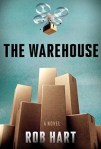 But let’s look deeper into this thought of “…freedom is yours until you give it up.” Freedom means different things to different people. Personally, I have always broken freedom down into two main categories: 1) Freedom To, and 2) Freedom From. To me, everything comes down to those two things. We need to distinguish between what it means to be free from something and to be free to be or do something. For example, freedom to might be described from a political standpoint of having the opportunity to vote for particular ideas, people, or parties which best represent our views. Examples include the right to bear arms or to assemble and speak freely. Or, something as simple as leaving the hotel room I am in right now in Murray, Kentucky and pick anywhere my son and I want to go eat lunch. Freedom from could mean the notion of freedom from environmental hazard or some other preventable hazard. This should not be confused with licentious freedom. To be free, and remain free, we must become responsible human beings.
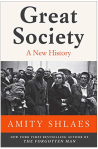 Interestingly, however, “freedom to” and “freedom from” have always been an area of civic and political tension. The preamble of the Universal Declaration of Human Rights states that, “…freedom from fear and want has been proclaimed as the highest aspiration of the common people.” In striving to achieve these goals, we often face resistance from those who are focused on “freedom to,” who see an aspiration towards “freedom from” as a threat to individual liberty. This is being outlined in another great book I am reading right now by one of my favorite authors, Amity Shlaes, in Great Society: A New History. The book told of President Johnson’s commencement speech at the University of Michigan when he said, “The truth is, far from crushing the individual, government at its best liberates him from the enslaving forces of his environment” (Slaes, 20, p. 98). I, for one, do not believe that more government is the answer to any issue.
Johnson’s Great Society, however, is a great case study for the tension of “freedom to” and “freedom from.” Our country’s move toward socialism during that age was marked by our government’s effort to end poverty which drove federal spending to unsustainable heights. “America,” Shlaes wrote, “morphed into a country that could afford nothing.” Harry Truman always spoke of the nuances of leadership, and the Great Society must be studied, which Shlaes did, in the nuanced context of the relationship of the Vietnam War, poverty, and civil rights. It has been debated whether what was being proposed was socialism, but whether one believes that production being controlled or distribution of wealth being controlled is socialism, one thing is clear; the Great Society created a tension of “freedoms to” and freedoms from.” One of the most interesting comments from Shlaes in the book so far (because I’m only on page 124 of 513) is an interpretation of how Senator George Smathers of Florida was thinking: “A law that defined new rights at the national level was taking away from individuals the authority of their own conscience, and substituting a federal, national conscience to overrule them. And who knew whether the federal government’s conscience would always be better? (Shlaes, 2019, p. 116). This is an interesting question to ponder.
If I bring this full circle back to where we began with the fiction novel, The Warehouse where we found that a business named Cloud had basically taken over everything – it controlled the markets, what products people were able to buy, how they lived, et cetera. Certainly, I do not want that any more than I want the government becoming my conscience, controlling markets, or dolling out huge amounts of money for programs that don’t work. Alexander Hamilton believed, as do I, that the people are very capable of governing themselves based on reflection and choice. We also need to stay true to the desire of framers Washington, Jefferson, and Madison who insisted that governments were instituted for the people, not the rulers. So, freedom really is ours until we give it up. We need to be very careful how we balance this tension.
Interestingly, Isaiah Berlin (1909-1997) studied this very issue. Berlin called what I am calling two types of freedom in this post, two concepts of freedom: 1) Negative freedom – freedom from control by others, and 2) Positive freedom – freedom to control oneself. Berlin referred to our two selves: a lower self, which is irrational and impulsive, and a higher self, which is rational and far-sighted. That certainly does describe each and every one of us. Because of the two selves Berlin posited that negative freedom and positive freedom can both be abused. This was and is an issue that continues to be debated. And, it needs continual debating. This debate is the essence of the statement “Freedom is yours until you give it up.” This is why we must have the tough conversations about issues and why we all need to be involved in our local communities, states, and nations. As I said earlier, I believe as Hamilton did, people are very capable of governing themselves. Some individuals might need help understanding their best interests and achieving their full potential, and some would believe that government has a responsibility to help them do so. The question becomes “Who decides what counts as a rich and fulfilling life?”
There are no easy answers to these questions. Berlin never came up with the exact answer, only new questions. This is one of those conundrums that will continue to be debated, but at least we have distinctions like Berlin’s to help us navigate the tension and contemplate the realization that freedom is ours until we give it up.
REFERENCES
Hart, R.W. (2019) The warehouse. New York, NY: Crown Publishing Group.
Shlaes, A. (2019) Great society: a new history. New York, NY: HarperCollins Publishing.
“It Has Been An Honor To Live This Life”
 I just finished reading an awesome book: The Warehouse by Rob Hart. I was so blown away by this book that all I have done so far is give it ⭐️⭐️⭐️⭐️⭐️. I will write a review, but really need to think about what I will say to give Hart the justice he deserves. When this book was recommended to me I was reluctant because it is a fiction novel and, as you know, I read non fiction. This book, however, had many great lessons and besides a few twists it could be non fiction. I’m not going to say much more; you can read the book description for yourself. I don’t want to reveal anything that would take away from you enjoying the book as much as I did. All I can say is, you need to read the book. I guarantee you, you will say, “Is this really happening in the world right now?”
There were things said by characters in the book that jumped out at me. I will be blogging about them. One phrase came from Gibson, the founder and CEO of Cloud, the focus of the entire plot. He said, “It has been an honor to live this life.” Because of his business practices this seemed like an odd comment because I found him to be very much like Machiavelli. While Gibson presents everything he does as putting others first and doing what’s best for the world, he also has rules by fear. He is promoting a very socialist/communist way of life by controlling the collective, but making millions and living a luxurious life for himself, while his employees just get by. He is Machiavellian in that he controls with low wages and the fear of employees losing their jobs.
Also, Gibson uses Machiavelli’s rule of “scorched earth”; completely eliminating any competition or potential competitor. He basically puts every other business out of business. No competition – complete control. So, I’m thinking “How can there be any honor in living that life?”
To be clear, Gibson was providing jobs and places to live, but there is clearly a conflict of whether he is doing this “for others” or “to others to make money.” Therefore the question becomes, “What does it mean to live with honor?”
To me, living with honor means living for a cause greater than yourself. It means really having a purpose; not just becoming CEO and making a bunch of money. In other words, am I making a difference? Really that is only a question we can answer for ourself. For me it comes down to the question of, “Are you contributing to the success and happiness of others?” In the case of Gibson I would say “no.” All he did was contribute to his own ego and bank account.
“If you have integrity, nothing else matters. If you don’t have integrity, nothing else matters.” ~ Former U.S. Senator Alan Simpson
For it to be an honor to live a life I believe there also needs to be honesty and transparency. If that happens the right things will probably be done. We need to be concerned where life is taking us, but we also need to be as concerned, or even more concerned, about how we are getting there. If we truly want to live with honor.
As you can see, this book had a profound impact on me and caused a great deal of reflection. We never know who is watching us or considering as a role model. What do you want them to see. Rather than saying, “It was an honor to live this life.” I would rather someone say of me, “He lived his life with honor.”
If I Were In A Snow Globe
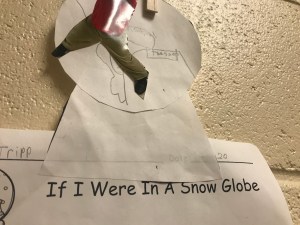 So today as I was visiting with teachers and students at our host school for 3D Leadership, Coweta Charter Academy, in Senoia, Georgia I came across a really cool writing prompt: If I Were In A Snow Globe. It was very interesting to read the student responses. Then I got to thinking, how about I write to the prompt? Here is my essay:
If I Were In A Snow Globe
Here I am in this very beautiful, pristine, and tranquil globe. Everything is perfectly in its place. Of course, my snow globe is a beautiful farm scene with a modest white farm house and three barns. There are snow covered fields and pastures with Jersey dairy cows. When you look inside the barns you see perfectly stacked round bales in a pyramid. You will also see a blue New Holland tractor backed into the barn awaiting its next task.
As much as I am loving being in this snow globe there just is no magic. No excitement. I need someone to shake my snow globe. Won’t you please shake my snow globe? Only then can there be a shift in the experience – some excitement. Snow flying landing on the roofs and on the backs of the cows making an exciting, beautiful, and ever changing experience. I just can’t imagine having to be in this snow globe with out someone shaking it up. For the magic to happen I need shook up. I wish I could get out of this snow globe and shake it. How beautiful it would be!
Lesson Of Shaking It Up
I hope you enjoyed my essay. Here’s the deal: the magic only really happens when we either get shook up, or we shake things up. The shake allows for new possibilities and new beauty. By shaking the snow globe we can create change instead of being a victim of it. So, next time you are getting shook up, take some time to recognize the magic of the shake. Or better yet, give yourself or your organization a transformative shake. How about you share your “If I Were In A Snow Globe” essay?
Naked Leadership
 This past Thursday night, we had an incredible 3D Leadership gathering in Mooresville, North Carolina. This was the first gathering of the third cohort of our North and South Carolina leadership development program. This first time together involves an activity called, “Who Am I As A Leader Today?” The participants are all given their very own Mr. or Mrs. Potato Heads and must creatively put them together to represent who they are that day as a leader. We then circle up and everyone shares. This is always so meaningful and is such a great way to begin building a community. You can find out a lot about someone and yourself when you’ve channeled the inner Mr/Mrs Potato Head.
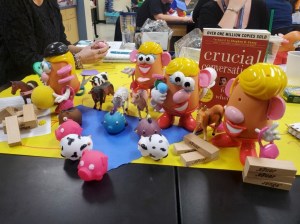 I am always inspired by the wild representations that participants come up with and the deep and meaningful descriptions they give. Always lots for me to blog about after these. One of the member’s presentations really jumped out at me, however, when she said she considered leaving her Mrs. Potato Head blank without putting anything on it. She shared she wanted it to represent the nakedness she felt as a new leader and her desire to learn and become clothed with knowledge. She even brought in some Bible teaching, reminding us that Jesus had come into the world a naked and humble leader of all – and, we all come into the world naked and without anything. She had gone ahead and decorated he Mrs. Potato Head because, as she told us, she needed to recognize that she does have leadership skills today, but wants to continue learning.
The entire group, including me, was blown away by this insightful reflection. Of course, I was so moved that I said I thought there was a book to be written – Naked Leadership. Everyone laughed (thank goodness), but the more I have reflected on it the more I like the title, and the metaphor it represents. For one thing, it’s a catchy title. I’ll bet some of you are reading this post just because the word naked is in the title and you needed to know who was naked. When I began to reflect and study the idea of Naked Leadership, however, I found so many important leadership lessons.
They Realized They Were Naked
In Genesis 2, the Bible says of Adam and Eve, “The eyes of both of them were opened…and they realized they were naked.” As leaders we must have our eyes opened and realize we do not know everything. We need an attitude of personal professional growth and a desire to actively listen to others.
The Emperor Has No Clothes
I love the children’s fairytale The Emperor’s New Clothes. This might have application as a leadership fable for learning more today than at any point in history. You know the story… the emperor was very vain and loved new clothes, so some swindlers took advantage of this. They told the emperor they could fashion the most beautiful cloth ever made that could only be seen by someone who was stupid. So, emperor gave them gold, expensive silk and other items to make the cloth. Of course, these were swindlers who did not make anything but steal the items. Let’s skip to the end of the story…the emperor goes out with his new clothes which were allegedly invisible, and, of course, is naked. No one has the courage to tell the emperor he is naked until he comes to a little boy who says, “But he doesn’t have anything on!” It took the innocence of a child to make the emperor realize he had no clothes.
Wouldn’t we be more effective leaders if we were able to recognize our own nakedness without even needing to be told, as our 3D Leadership participant suggested? This would, I believe, open us up to being advised by others to our nakedness as well. The other part of the story that most never go on to talk about is that once the emperor realizes he really is naked, he continues on, naked, because of his desire to not admit being wrong and his extreme vanity.
I don’t know if the Naked Leadership book will ever get written. I hope it does, but in the meantime we all need to recognize our metaphorical nakedness and be open to finding ways for clothing ourselves with the skills of great leadership. How about you; Do you have any ideas for chapters in the Naked Leadership book?


1 comment