Results & Relationships

You all know how I love books that are split up into 52 distinct chapters/lessons. Well, here in the first week of 2022 I have been blessed with starting a new one, by an author who I greatly respect, have read all his books, and heard him speak several times. That author is Dr. Ken Blanchard. I’m sure you recognize that name. I am on the launch team for Dr. Blanchard’s new book that he wrote with Randy Conley, Simple Truths of Leadership: 52 Ways To Be A Servant Leader and Build Trust, Making Common Sense Common Practice. I was so excited to get an advance copy of the book and to make this the book that I commit to doing one of the lessons each week and writing a blog post about in 2022. The book releases on February 1st. You need to go ahead and get your pre-order done.
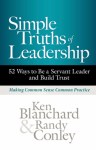
I had to chuckle when I first started reading this book and came across, “When it comes to servant leadership and trust, we both wonder why the principles we see as common sense are so seldom used in common practice” in the introduction of the book. Ken went on to say, “If today’s leaders had a more commonsense approach to leadership, we’d venture to say that 65 to 70 percent of the workforce would not be considered disengaged.” This is such a timely book because a common theme keeps coming up in my leadership development work – we are forgetting the simple things. In fact, I blogged about Simple Things in one of my last posts of 2021 before I’d even started this book. I am super excited to dig in and unpack the learning of this great book. The book is divided into two parts. The first part is on servant leadership and written by Ken Blanchard. Randy Conley wrote the second part on building trust. So, let’s dive right in with lesson #1.
Simple Truth #1 – Servant Leadership is the best way to achieve both great results and great relationships.
We are reminded that we all need to feel connected and have a shared sense of what is valued. “Results” and “people” are not mutually exclusive. Vision and direction are leadership responsibilities, but cannot be a top-down function. As I always say, if you have included everyone on the front end, you don’t have to worry about buy in on the back end, because it will already be there. And, if we are truly servant leaders we will be shoulder to shoulder with those we serve providing personal and professional growth opportunities, actionable feedback, listening, and communication. We can have our cake and eat it too when it comes to results and relationships.
Arguing With A Specialist

The trigger for this post was a quote from Stranger In A Strange Land by Robert A. Heinlein. Here’s the quote: “I learned a long time ago not to argue with specialist. But, history has a long line of specialists.” I have never liked the terms specialist and expert. Those are both relative terms. Both expertise and specialized should be viewed as processes instead of something you can achieve. If we keep doing something long enough, we’re bound to keep improving. Where I get worried is when we quit arguing with the experts and specialists. Actually, I was amazed as I went back through past blog posts how many times I have touched on this subject.
If we shift to a position of expertise and specializing as a process, we keep learning. Our mindset shifts to: I’m here to learn. Most of the people I know and respect who are considered experts and specialists are continuously learning, reading, practicing, trying. Each one of them is striving towards expertise. Anyone who calls themselves an expert is no expert. We need to be very careful of the Dunning-Kruger effect. Overestimating or underestimating our ability can both be disastrous. In one of my top five reads in 2021, Alien Thinking: The Unconventional Path To Breakthrough Ideas, we were reminded to “Approach things not as an expert, but as an explorer.” I’ve always been a critic of so called experts and this was a warning of the problem of acting like an expert. Authors Cyril Bouquet, Jean-Louis Barsoux, and Michael Wade also posited that expert status can serve as blinders keeping us from exploring for the next way of doing what we are doing well now better or differently. I blogged about this in Be An Explorer, Not An Expert.
Let us not forget that expertise and specialization is a never-ending process where we keep striving to be better. Keep questioning and exploring for better ways.
Saying Nothing

I really enjoyed the most recent article by my friend, Maya Hu Chan, “7 Steps to Take Managing to the Next Level,” published in Inc. It caused me to reflect on how important relationships are and how dignity, trust, and respect play into those relationships – and our everyday interactions. Then, this week through some encounters I either witnessed or was a part of, I thought about how sometimes saving face is not saying anything. For example, is anything gained by reminding someone that we were supposed to leave at 11:00 and it is now 11:18 serve any purpose? If you think it does, I won’t argue, but I don’t really think so. My point here is that our emotional equilibrium requires inner strength and a sense of self. We need our protective inner guardrails. For me, a good question to ask is: will what I’m about to say serve any valuable purpose?
Sometimes our comments only serve to humiliate. I am guessing you are like me and have been guilty of embarrassing someone, either willfully or inadvertently. I have learned from Maya and her great book, Saving Face, that we many times accidentally cause another person to lose face due to misunderstanding, lack of information, or because we’re startled or shocked. That’s why, again, as I analyzed some interactions I was witnessing or a part of this past week I was reminded that a tool in our saving face toolbox is to just not say anything. To be clear, I am not saying that’s always the best tool; it is not. But sometimes it is. Situational awareness is key here.
The idea of saving face is so important. Take a few minutes and think of scenarios. For example, you might be in a group where someone asks if you saw the new Spider-Man movie. Do you immediately say that you hated it and it was the worst made movie in history? Or, do you just acknowledge you have seen it and save face for the person raising the question if she loved it? See the difference? You can still express why you didn’t like the movie after the discussion gets going. You haven’t lied, you just didn’t say the first thing that came in your mind. I get it! This is tough! Frank and “straight-shooters,” are often viewed as uncultured, overbearing, and even rude. I have to watch this. Some of you probably do too. It is particularly important to put this in check when dealing with other cultures.
In thinking about the idea of sometimes not saying anything, I believe my three rules for tweets applies here. I believe tweets should be light, bright, and polite. I leave it there for you to ponder.
These 5 Made Me A Better Person In 2021

Every year at this time I do a few blog posts about my top books of the year. To me I would rather hear an individual person’s picks rather than see top picks done by voting. I want to hear what someone learned from reading a book. Or, what inspired them about reading a book. That being said, feel free to reply to this post, about my top fiction author picks for 2021, with your top fiction picks. I am excited about this post because this is the first year I have read enough fiction books to have picks. I have to say I have grown immensely from reading so many fiction books this year. I wrote about the impact the fiction genre is having on me in Adding Fiction To The Reading Diet. I also have learned The Power Of Fictional Lives can have on us. In fact, I might goes as far to say I have grown more from reading fiction this year than non-fiction. So, because of all the fiction I’ve read, I get to do a “Top 5 In 2021.” I am going to cheat a little and do it by authors instead of books. That way I can include more books. I also am doing it by authors because the five incredible authors wrote multiple books that I absolutely loved this year. And, by the way, I blogged multiple times about all the books mentioned here. So, search the book titles in my blog and find out what I have learned and been inspired by from these books. Here we go – my Top 5 Fiction Authors in 2021:
#1. Amor Towles –
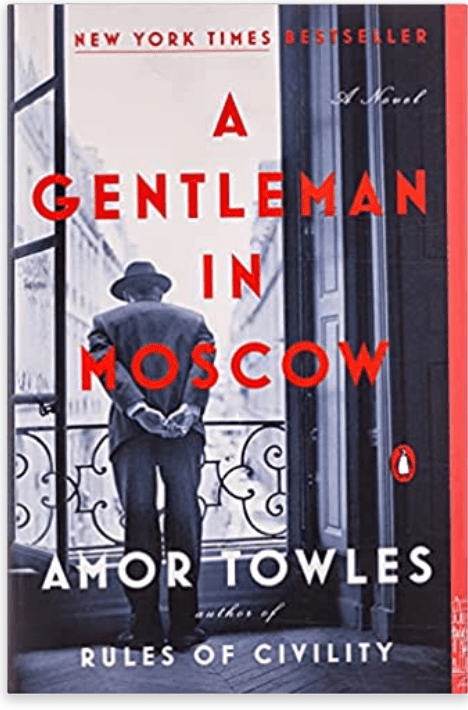
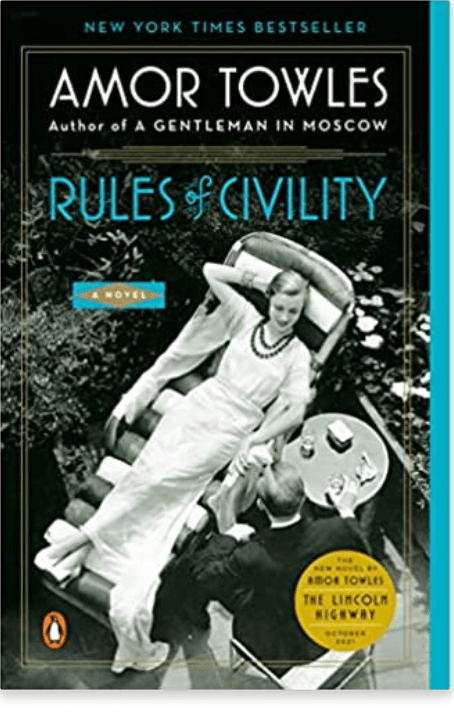
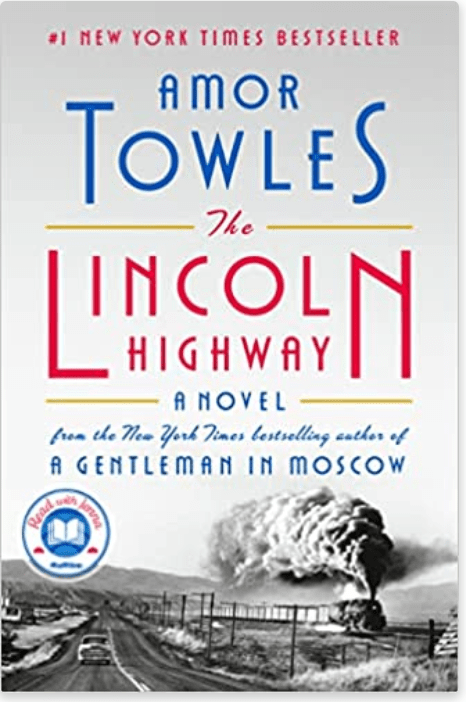
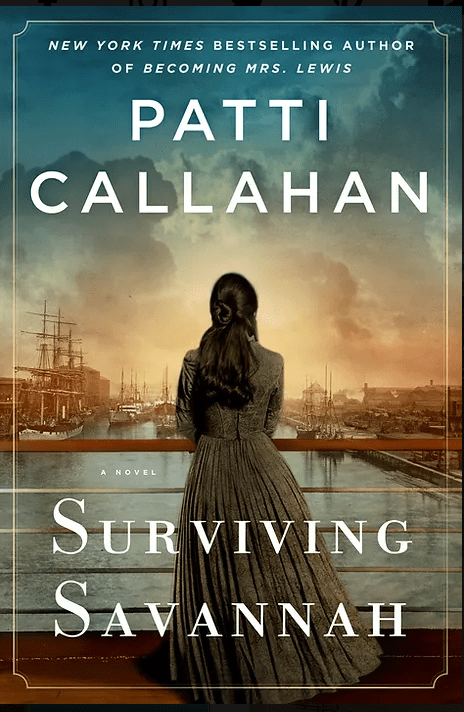
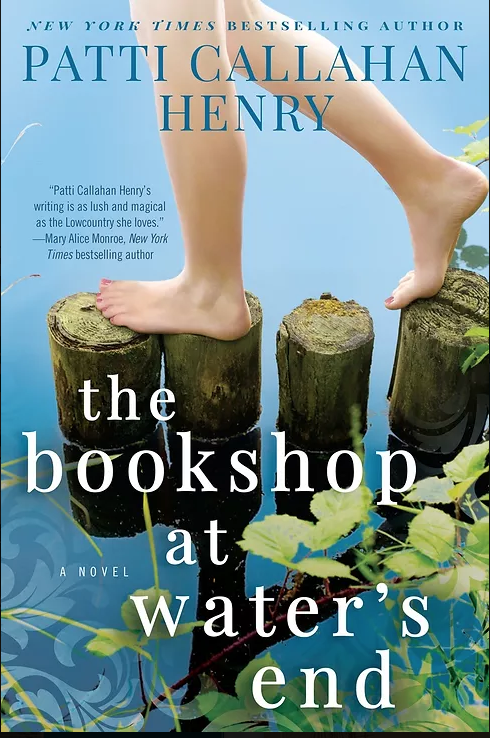
#2. Patti Callahan Henry – I am not really sure what to say here except that I love Patti’s writing. She is an amazing writer. Between her and Amor Towles I have overnight become a big fan of historical fiction.
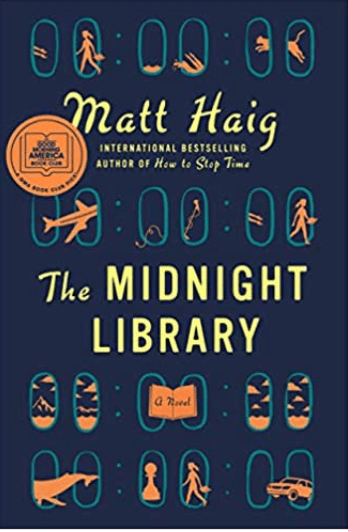
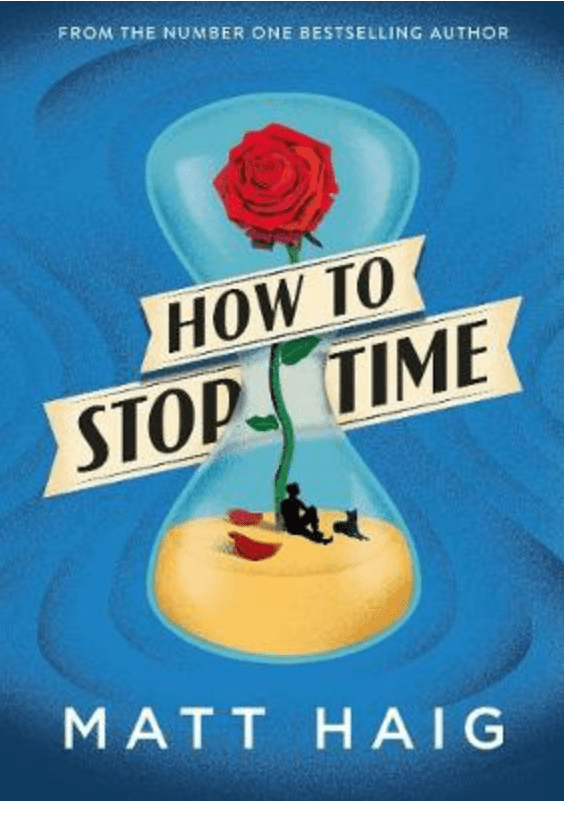
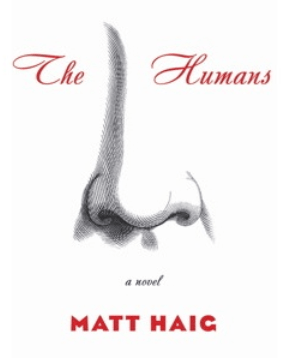
#3. Matt Haig – Matt’s work is amazing. He is the reason I am now hooked on fiction. I also read The Comfort Book by Matt this year and it may just end up on my top 5 of non-fiction.
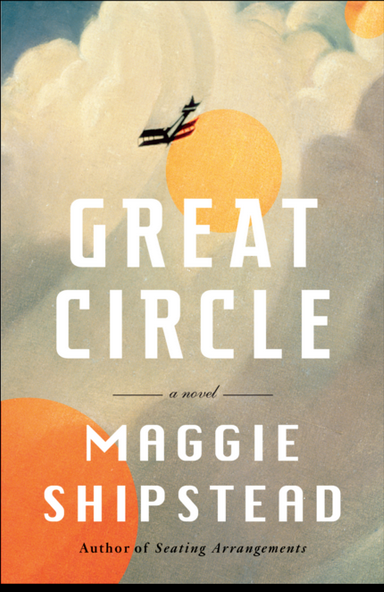
#4. Maggie Shipstead – Maggie has two other books I want to read in 2022: Seating Arrangements & Astonish Me. As I read this book I found myself googling to make sure this was not a true story. I love Maggie’s work.
#5. Suzy Vitello – Amazing, Amazing, Amazing! I want to read more from Suzy in 2022.

See why I needed to go by author and not by books. I want to close by saying a big THANK YOU as we close out 2021 to Amor, Patti, Matt, Maggie, and Suzy for being part of making a me a better person in 2021. Can’t wait to read more from you in 2022. And my big wish for 2022 is to meet each one of you in person in 2022. Happy New Year!
Simple Things

As we run-up to the new year, I offer this post as a culmination of some leadership thoughts from 2021. The beauty of my job is that I get to work with a lot of aspiring leaders who are really intuitive about what it takes to really help people right now. We’re all under intense stress from the pandemic. One thing I have noticed is that the simple things are being overlooked. We must make sure we are doing the common sense things and get back to being human. These are really the intrinsic things such as caring.
Our human capital is the most important part of all organizations and businesses. Amazingly it does not take much! Again, I don’t think we’re doing the simple things; like asking instead of guessing what individuals need or want. It might be as simple as asking the teacher how things are really going and really caring about the answer and wanting to help. This takes knowing people and reinforces what we already know – relationships matter most. This is more than just a transactional relationship. Seeing each other as whole persons is primarily a choice that we can make. These relationships depend on and foster openness and trust. We must work really hard at building trust. We do not have a relationship if you trust me, but I don’t trust you. Don’t forget that our level of trust reflects the degree to which our behavior and the behavior of the other are consistent. Never forget, relationships are the most important determinant of fulfillment and happiness.
By building strong relationships and building trust we are better able to recognize each others’ uniqueness. Our organizations are communities. We must tend our relationships and rally bringing people together. We all need to feel connected again and have a shared sense of what is valued. As we move into 2022 let’s make a renewed commitment to being present and proactive about doing the simple things to provide help.
Our Best & Our Worst

“What makes you best at your job also makes you the worst at your job.” ~ Sergeant Hank Voight (Jason Beghe) to Detective Hailey Upton (Tracy Spiridakos) on Chicago P.D. I love Chicago P.D. and statements like that make me love it more. This statement was after Hailey had gone against Voight’s orders while in search of a murderer who had kidnapped a little girl. Hailey is a lot like Voight in that she is very good at her job and sometimes blurs the lines. But blurring those lines kept the little girl alive. Hailey was particularly passionate about this case because it reminded her of being abused as a child.
The thing I love about Voight as a character is the relationship he develops with those on his Intelligence Unit. Also, how he serves as a father figure. He always knows when to have a conversation, who to have the conversation with, and what to say. He even tells them: “It’s my job to protect you.” I am certainly not condoning all he does on the show, but I can say there are things to learn. He cares, he listens, he wants the entire teams’ input, and he really knows how to spot talent and develop it. I’m not sure I’ve ever experienced a real leader do it this well. I had a principal once during my teaching career who came close and I can tell you it was amazing. I was blessed to have that role model and have always strived to be like him.
Back to Voight’s comment: “What makes you best at your job also makes you the worst at your job.” In this case he was making sure Hailey understood to not let her passion for something take her over completely. Hailey had been so empathetic and compassionate that she was forgetting the boundaries. We must be conscious of what the situation requires rather than what our strengths are. If we are in a group of people focused on the details and the risks, the most valuable perspective we could bring is the opposite perspective. Sometimes we need to bring what is lacking to the table, not more of the same. We need to be flexible and bring a higher perspective.
Another thing you will see if you watch Voight closely is how he picks pairs to go out into certain situations or question people. Voight understands that having the right people isn’t enough. Sometimes you can have the right people yet have the wrong strengths to be effective or make good decisions. Great leaders not only play to their own strengths, but play to the strengths of others. Let’s not forget that every strength or virtue we have is kind of our own personal super power, and like any kind of power, can be distorted or overused.
Wally Notes

Here’s another post inspired by my visit last week to Bronner’s Christmas Wonderland. As I explained in Warm & Fuzzy Leadership, I had the opportunity to learn about the founder, Wally Bronner. One of the things they told about Wally was that he was a first rate relationship builder and really knew those around him. He would also leave what had come to be known as “Wally Notes.” These might be congratulatory, thank you’s, new ideas, or suggestions. One thing was for sure from those being interviewed; “Wally Notes” were meaningful and special. One person speaking was an owner of another business in Frankenmuth, and he explained that he got a “Wally Note” that had a suggestion that ended up helping his business tremendously. Now that’s being a great community friend and leader!
This made me think about the leaders that people cringe when they see their name come up on email or text. Why? Because it will be a berating or one more thing to do. Wally knew his people. And is wasn’t the fake kind of knowing. He really made sure he knew what was going on. When he was working with a new supplier, they said he wanted to talk to everyone in the company; right to the person cleaning the floor at the end of the day. He also spent a lot of time out in the store talking to and getting to know customers. Wally was people centric – he understood that people are the most important part of any community or organization. It is unfortunate that so many leaders view people as throw aways, or pawns. They forget that every individual has their own identity.
Globally, many times we work with individuals or groups who have different cultural norms and behavioral expectations. It can often seem as if we have to choose between what is expected, and therefore effective, and what feels authentic. This is why relationship building is so important. We must really get to know our constituents. To be good leaders, we must influence, inspire and mentor our team members. Nearly half of the people who leave jobs, do so because of a bad boss/leader. Retention not so good? Well…
Let’s take a page out of the Wally Bronner play book. We can grow our influences by caring for our team, community, and organization listening to their thoughts and ideas, and sharing. “Wally Notes” were one way Wally found to effectively share. When was the last time you let those you serve know their value to the organization, shared a suggestion (not in the form of a task in a text), a congratulations, or the importance of their work to the organization?
The View From The Bottom Of The Tree

This is one of those blog posts that has taken me a little time to put together. I could have taken it in so many different directions and there were so many rabbit holes to go down. And, I’ve actually gone down a few of them here. But, the picture (featured in this post) of my niece’s son, Brooks, says it all and makes my point. My mother-in-law gave him a Christmas ornament for his birthday and he immediately got up, went to the Christmas tree and put it on. As I looked at the tree, most of the ornaments were around the bottom of the tree. Why? Because Brooks is two and doesn’t have a very high reach yet. I’ve watched trees being allegedly decorated by children only to have the ornaments moved by the parent, with phrases like “that would go better here,” “there’s too many on that limb,” “we need more at the top,” or “I’ll do that one so it doesn’t break.” What? Are we having a family Christmas memory generating activity or trying to win a decorating contest? And, oh by the way, none of those moves by the parent are informed by research. I googled it – nothing!
When we don’t let the ornaments be put where the child can reach and in her/his mind wants them to go, we are reinforcing the old binary model of one right answer and one wrong answer. Who is to say that the next great decorating craze might not be all the ornaments on the bottom two foot of the tree? Isn’t that the way great things happen? Some creative non-conformist said, “let’s try this instead?” If we want our young scholars to be creative we need to, well, let them be creative! I know, novel idea right? But, think about all the times this does not happen. And, come on, the sun will come up tomorrow if all the ornaments are on one limb. We give tests with questions that only have a right and wrong answer. I get that 4×1 and 2×2 always need to equal four (I think), but what about all the times in life that we have to choose the best out of three or four options?

Here’s another thing. We pesky adults trim the tree and cross the task off the holiday to-do list, but children view the Christmas tree as a modern day living art installation. If you watch children, they will walk by the tree and move an ornament of two. My son used to take ornaments off and then a day later put them back on. I love the iterative nature of this. I get that if you are entering a Christmas tree decorating contest that at some point it needs to be done. Also, I feel very sorry for you being so vain to enter in a Christmas tree decorating contest! But I’ve digressed! Toddlers and young children apparently have very flexible ideas as to what constitutes proper tree decor, and I can’t say I blame them. Think about the person who went wild one day and put cheese on a hamburger – voilà: the cheeseburger is born. Or, my favorite, from my hero, Thomas Edison, “I wonder if we could light the world with a little bulb run by electricity?”
Letting the kids decorate the Christmas tree is an incredible exercise and lesson to us adults in letting go of the fantasies about how the holiday decoration should look and allowing for how they CAN look. It is about living in the here and reality of now. We may not get the Christmas card-inspired tree, but honestly I love a good tree inspired by children. They are an honest reflection of our families. Don’t forget the Christmas tree in A Charlie Brown Christmas.
Warm & Fuzzy Leadership
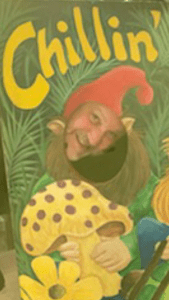
I had the honor of working with educators in Michigan this week. That also gave me the opportunity to visit Frankenmuth, Michigan. Now, if you don’t know about this city, it is truly “Christmas Land.” It is home to the world’s largest (literally, 27 acres) Christmas store: Bronner’s Christmas Wonderland. I had only been to Frankenmuth once before, but this was one of my mom’s favorite places in the world. My dad and her would trek up here once a year. This time I had the opportunity to go to a program about the founder of Bronner’s Christmas Wonderland, Wally Bronner. The program was all about how he got started.

The business started in his parents’ basement as a hobby when Wally was a kid. Here’s what Wally wrote about himself: “My hobby of signs, displays and decorations developed into a full-time business, and I never went to work. Since I never went to work, I don’t have to think of retirement, and I’ll continue the hobby, God-willing, but only on days that end in ‘y’.” I loved this! To me this was a better way to approach life than the old adage of, “Do what you love and you’ll never work a day in your life.” This really made me think about all the great businesses have been started as hobbies, or someone setting out to solve a need as a hobby.
I’m sure I will blog more about Wally, but as I listened to the employees speak of his life and influence there were a few things that stuck out. As a leader, those he led described him not as “charismatic,” but “warm and fuzzy.” I loved this. He was shown in videos meeting Presidents, dignitaries, fellow Frankenmuth business owners, and the employees he served. And yes, he was “warm and fuzzy!” Interestingly most things written about the warm and fuzzy are negative, but I gotta tell you it’s just being good to people. I could just tell from the personal reflections and video that Wally treated everyone right and was the same person with royalty or anyone in his wonderland. In fact there was a clip of Wally stating that one of his most important core values was recognizing every person’s, “…Value, dignity, and importance.” In other words he was a “people person.” And, I for one respect those who are “people persons.”
You know. Those who support their people in such ways build invaluable trust that helps keep employees motivated, engaged, and willing to follow the leader even when things get tough. Leadership implies values. A leader must have values that are life-giving to society. It is the only kind of leadership we need. So many leaders I have encountered are manipulative. You know the ones. The answer or action will always be in her/his best interest, not the other persons’. Not Wally. To him business was all bout serving the needs of others. The Michigan educators actually talked about the need for leaders to really care. So, what did Wally have? He had a purpose that was larger than he was and the balanced personality and skills to put that purpose into action. It was great to chill out in Frankenmuth and learn more about Wally Bronner.
History’s Experiments

One of the great books I am reading right now is The Epigenetics Revolution by Nessa Carey. As an animal science guy, I have been fascinated with epigenetics for a long time. In fact, when I was teaching I had a grant project with Purdue University that included epigenetics. One of the lines in the book that really jumped out at me was, “History creates experiments.” This is so true. The book talked about research using birthweight, growth, and maturity patterns following a famine. Other fascinating research is also cited in the book. I just can’t get past this thought, however, of history creating experiments. That is really what history is.
This is why one of my favorite authors, Robert A. Caro told us that we should be reading biographies in order to learn from others. In many ways, what others have done before us were experiments. In fact my own country of the United States is often referred to as an experiment. It is so important to look at all aspects of our history in order to learn for the future.
Another one of my favorite authors, good friend, and just great person, Dr. Joseph Michelli used how leaders led during the onset of the global pandemic as a way to learn about leading in a crisis. His outstanding book, Stronger Through Adversity: World-Class Leaders Share Pandemic-Tested Lessons On Thriving During The Toughest Challenges is in the running for my top non fiction book of the year. Really, all of his books are about history’s experiments in entrepreneurial leadership. You should check out his work – I love it! His work always reminds me how important it is for us to come together as a global community and be learning from each other.
I wonder how many experiments history has created that we have not taken the time or even thought to do the research on. It’s really about using that outer loop in double loop learning – evaluating the learning, creating and sharing the knowledge, and building capacity. Thanks Nessa, Robert, and Joseph for reminding us that “history creates experiments” and the data set to learn from.


leave a comment