Seagull Management
This week’s Simple Truth #5, The Key To Developing People Is To Catch Them Doing Something Right, in Simple Truths of Leadership: 52 Ways To Be A Servant Leader and Build Trust, Making Common Sense Common Practice by Ken Blanchard and Randy Conley really resonated with me. Last week I had made the comment that right now everyone seems to be looking over their shoulder waiting for someone to catch them doing something wrong, saying something wrong, or making some kind of mistake. My experience with those kind of cultures of fear of making mistakes is that we are going to, you guessed it, make mistakes. So, how do we change this? It is actually pretty easy, shift to “…catching people doing things right and praising them” (Blanchard & Conley, 2022, p. 19). They tell us it really is common sense.
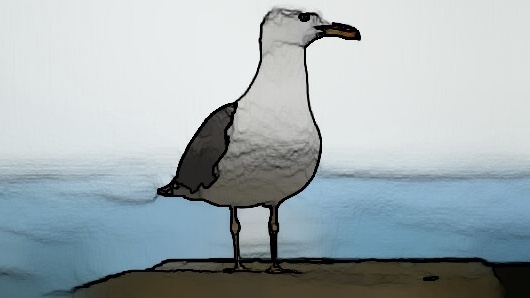
“Seagull management, where managers set goals with people and then disappear until something else goes wrong. Then they fly in, make a lot of noise, dump on everybody, and fly out.”
Blanchard & Conley, 2022. Simple Truths of Leadership. p. 19.
But really, how do you change that? I loved the term Blanchard used to describe how we are missing the mark. He called it “seagull management.” I am sure after many of you read the quote above defining seagull management you were saying, “Yes! I have totally experienced this.” It may be that person that only texts, calls, or emails when something is wrong or it is perceived we’ve made a mistake. I’ll also relate this to society in general right now to the people who only post mistakes or quote people on social media who have misspoke (not really intending to say what they said). Again, my experience has been that when we are in environments like that we tend to make more mistakes.
We are all going to make mistakes. Remember, the only people who don’t are the ones not doing anything (sometimes the seagulls). So, let’s use the common sense practices from Blanchard and Conley and catch people doing great things, praise them and “Make it clear you have confidence in them and support their future success” (p. 19). Key word there is “support.”
Does It Need To Be Said?

Last week I finished reading the great book High Conflict: Why We Get Trapped and How We Get Out by Amanda Ripley. I had the chance to hear Amanda speak at the ExcelinEd 2021 National Summit On Education back in November. She is an incredible speaker and an incredible teacher about conflict. I immediately put her book on my to read list. I highlighted and took a great deal of notes while reading and jotted down ideas for blog posts for reflection. So, watch for more posts like this one. During a leadership workshop I was facilitating this past week, a theme emerged with participants wanting to be heard and wanting to get better at hearing others. This made me think of one of the parts of the book where Gary Friedman (conflict mediator, author, and former trial lawyer), one of the case study subjects of the book, shared that a way he used to come out of high conflict was to ask himself three questions (p. 201):
- Does it need to be said?
- Does it need to be said by me?
- Does it need to be said by me right now?

It was stated that it was surprising how often the answer was “No.” These are simple questions, but very powerful. Ever since I read that first question I have been asking it a lot. And, guess what? The answer is “no” more than “yes.” This has helped me in two ways. First, it keeps me from saying those spur of the moment and reactionary things that come off as being snarky; sparking high conflict. It has also helped me focus more on what others are saying and really understanding them. I also believe there are many people who need to use this protocol of questions before tweeting. I can think of a few right now who need to be asking, “Does it need to be tweeted?” If you follow my rules for tweeting of light, bright, and polite you won’t need to worry about this, however.
Next time your in a meeting, discussion, writing an email, writing a letter, or writing a speech, first ask yourself, “Does it need to be said?”
Don’t Get Caught In The Activity Trap
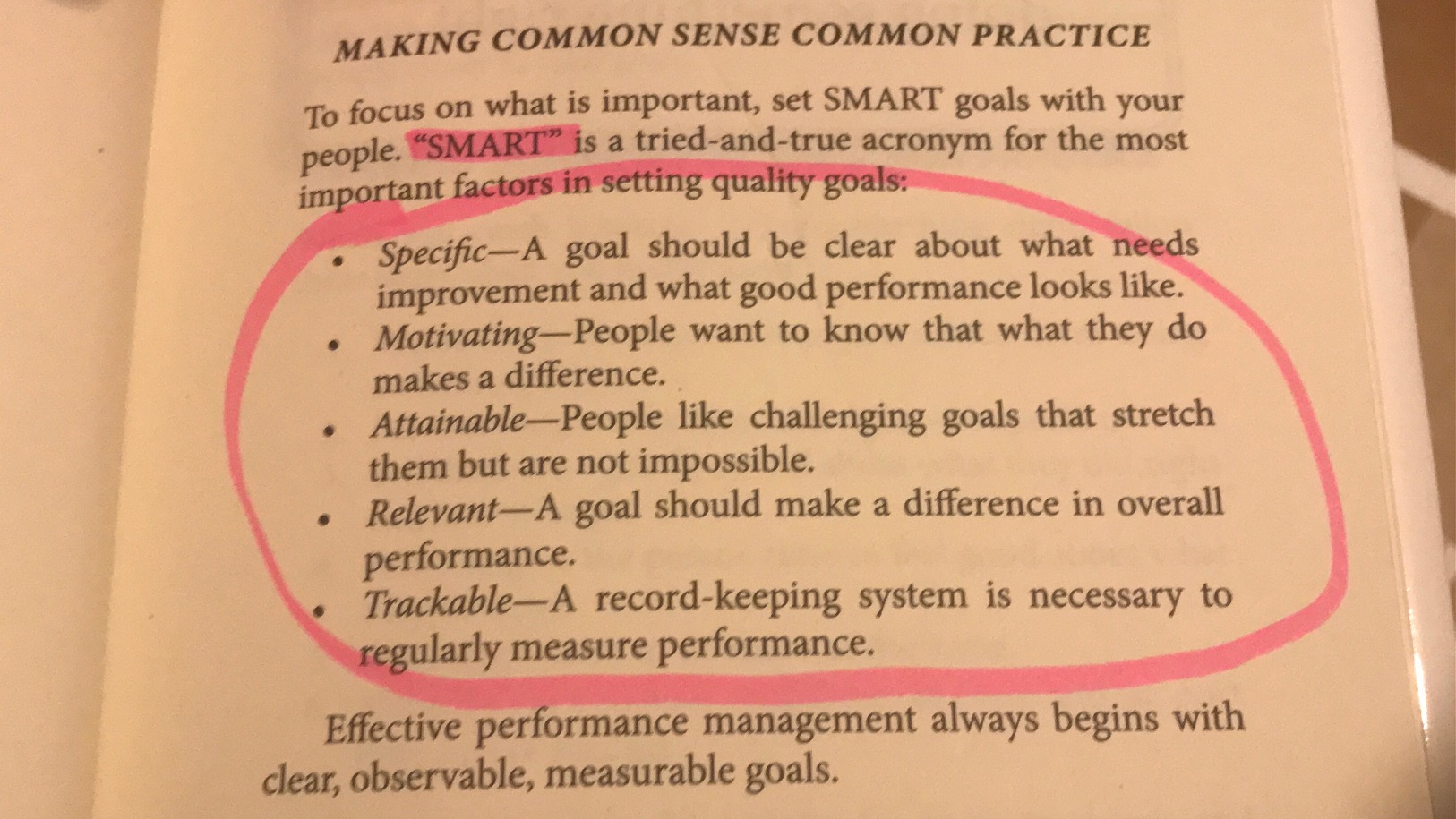
Goals are very important. I don’t think anyone will argue that. Even just starting meetings by reminding everyone the goal to be accomplished is important to keeping us from going down rabbit holes. Having said that, I have always been fascinated to watch how leaders use goals – or not. In Simple Truth #4, All Good Performance Starts With Clear Goals, in Simple Truths of Leadership: 52 Ways To Be A Servant Leader and Build Trust, Making Common Sense Common Practice we are told by Ken Blanchard and Randy Conley that great leaders help those they serve to “…establish observable and measurable goals around their key areas of responsibility” (p. 17). I have witnessed leaders who are all about setting the SMART (see picture) goals, but then do not give the support needed for those they serve to accomplish the goals.
The authors called this out with what they called the “activity trap.” Blanchard and Conley said, “As a result, people tend to get caught in an activity trap where they are busy doing tasks – but not necessarily the right tasks” (p. 17). For some leaders it almost seems like they believe it is an honor to have their people, and even themselves, overloaded with the trivial issues, irritations, requests, and routine activities that eat up our time and resources. If we really want to shape the future, see around the corners, and look into the future we must use our goals and then set the strategy to achieve them. Getting caught up in the activity trap keeps leaders and their organizations from fulfilling their strategic mission.
Remember, activities completed do not necessarily equal desired outputs or worthwhile outcomes. This activity trap also kills innovation. Doing a bunch of activities prescribed by someone else does not mean that we have achieved the desired output or outcome, or set up other dependent activities for success. I believe this is a real problem in the area of education, where I spend a lot of time. Many times teachers are given many prescribed activities that are not really driving student achievement. The moral of this story is that we need to set the right SMART goals for outcomes and then support those we serve to achieve them with them using their own data to make decisions and adjustments.
Having Some Hats To Try On Again

Yesterday in a leadership development workshop I was doing one of our great leaders made the comment that she has some hats to try on again. She made this comment after stating that she wears many metaphorical hats. I asked her to go a little deeper. She told us that she had areas in her school that she used to be very involved, but now was not, but she needed to get back involved to learn about changes that have been made. This was a very profound statement. It got me to thinking about all the websites out there where you can try on different styles of hats virtually. What if we could do that with the areas that we lead? I believe that would be pretty sweet!
If we could try on different roles in our organizations it would give us a more personal perspective on how those varied roles’ function. The more perspective we get on what different teams do, the more thoroughly we’ll be able to think about the ramifications of our decisions, and the better decisions we’ll be able to make. Trying on roles we aren’t familiar with helps acclimate us to a more advanced risk level. What if we could try on hats with no knowledge, no training and no experience, yet be able to perform responsibilities similar to those of our team members we serve who possess all three. Getting used to these other hats, unknown environment, will make it easier for us to make the right decisions. What hats to you need to try on again? This is a practice in adaptability, risk, perspective and teamwork.
A Flip Of The Coin

Friends are both a gift and a responsibility! And, with good friends there is the phenomenon of responsibility not feeling like responsibility. If friends are just two sides of the same coin, then life is just one really long coin flip, to say the least. My experience is that some of the most beautiful moments in my life are moments in which I realize that the flip, the transformation of friendship, is succeeding. While watching an old episode (season 3, episode 51, 1987 – “Jack In The Box”) of MacGyver, I heard MacGyver (Richard Dean Anderson), when speaking of Jack Dalton (Bruce McGill) to Pete Thornton (Dana Elcar), say: “friends are like the two sides of the same coin.” Meaning, friends come with both good and bad. So true! Sometimes we are like Jack Dalton is to MacGyver – high maintenance.
It is quite a beautiful mystery you know – this two sided coin of friendship. Sometimes one side has pain, sorrow, grief, need of favors, and sadness. Sometimes, the other side is peace, joy, gratefulness, wonder, rejoicing, love and so much more. True friends experience both sides of the coin. Just as MacGyver has to help Jack Dalton out of another one of his schemes, we experience both sides of the same coin. We must accept that no friend is perfect and that there will be some ambivalence. We must recognize what each friend brings to the table and what they do not. If we truly value a friendship, we need to tell the friend how we feel. We can’t expect our friends to read our minds! Even expressing that we really like hanging out with them can remind a good friend of how important their friendship is to us.
Serving Instead Of Putting On A Show

So, let’s see here; if we are constantly looking up to make sure our boss is seeing and approving of us or bragging about what we’ve done, we’re probably paying less attention to the people we’re now leading or worse yet, our customers. If your organization follows a traditional hierarchy, which most unfortunately still seem too, attention will naturally shift up — be directed up the hierarchy. Ever been a part of an organization where there always seem to be the favorites, you must make sure those high on the hierarchy are hearing every great thing you do, or having to make sure you’ve bragged on those high on the hierarchy? It’s not a good place to be.
In Simple Truth #3, Servant Leaders Turn The Traditional Pyramid Upside Down, in Simple Truths of Leadership: 52 Ways To Be A Servant Leader and Build Trust, Making Common Sense Common Practice we are told by Ken Blanchard and Randy Conley that great leaders turn the hierarchy over and make those closest to the customer the top of the organizational pyramid. For example, in a school, this would put the teachers at the top of the pyramid. In this model, the principal serves the teachers. Let me tell you from experience, this works. What this ultimately does is place the customer (in my example, the student) at the top of our organizations. This really shifts us to an intent-based leadership model where everyone is a leader. Then, everyone is serving.
Turning Talk Into Reality
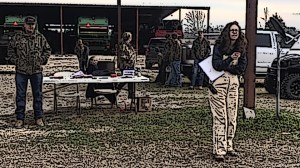
To go from talk to action is a journey. We better support ourselves and others when we understand what the journey to proficient implementation really entails. Yesterday my son and I were in Screven County, Georgia for an annual event with the Screven County FFA. Last June I had told the agriculture teacher and National FFA Ambassador, Nancy Sell, that I wanted to be a part of the event. We walked the talk and made it happen. Once I got clarity about the exact date, what else would be going on at that time, et cetera, et cetera, et cetera; I was able to say, “Yes, I’ll be there.” Then, there was no backing out. If YOU SAY IT, DO IT! As someone commented yesterday, “We turned the talk into reality.”
How many times do we hear people say, “I’ll be there.” Then, they won’t be, and you knew all along they would not be. Or, even worse, “I’ll take care of this and __________will happen.” Then when it doesn’t you get the, “I’m sorry, so and so said we can’t do that” “Or, I didn’t know…” This really is a case of faking it. Or worse yet, lying. Michael Fullan (2001) called this “false clarity.” False clarity occurs when change is interpreted in an oversimplified way; that is, the proposed change has more to it than people perceive or realize” (p. 77). The problem with false clarity is we know less than we think we do. We can relate this to walking the talk or turning talk into change/action. So many times leaders see talking as doing. The real work begins when the talking ends. Successful teams make decisions that impact behaviors and produce visible results.
Bottom-line here is that successful leaders move through talk to action!
Fullan, M. (2001). The meaning of educational change (3rd ed.). New York: Penguin Group.
Can You Get Your Deck Chair Unfolded?

Simple Truth #2 this week in Simple Truths of Leadership: 52 Ways To Be A Servant Leader and Build Trust, Making Common Sense Common Practice by Ken Blanchard and Randy Conley was “Every great organization has a compelling vision.” We spend quite a bit of time on this in the leadership development work I do. So many times this just becomes a task to get done, then laminated and pinned on the wall. Then when someone is coming to visit everyone better have it memorized. Worthless, right? Right! I love the three elements: 1. Purpose; 2. Picture of the future; and 3. Values.
It is then so important to involve all stakeholders in the development and living out of the vision. Basically, we are answering the question: “Where are we going and what is going to get it there?” Thinking of the vision in the three parts suggested in Simple Truths of Leadership gives context and life to the vision. This reminded me of someone once referring me to an interaction between Charlie Brown and Lucy in a Peanuts comic:
“Life, Charlie Brown, is like a deck chair. Like a what? Asks Charlie Brown. Lucy then explains. Have you ever been on a cruise ship? Passengers open up these canvas deck chairs so they can sit in the sun. Some people place their chairs facing the rear of the ship so they can see where they’ve been. Other people face their chairs forward – they want to see where they’re going. On the cruise ship of life, which way is your deck chair facing?”
Charlie Brown replies: “I’ve never been able to get one unfolded.”
Peanuts, Charles M. Schultz
We need to help everyone get their deck chairs unfolded and facing forward to the future.
Who Tells Your Stories?

I sat down to wait a few minutes for my son to get home for a visit yesterday afternoon and flipped on the American Pickers. As usual, Mike Wolfe made a comment that resonated with me. I learn a lot of history watching that show and would love to go on a pick with him sometime. After picking a father-daughter team’s collection, Wolfe said he was inspired to tell his daughter the stories now, so she did not have to wait till later in life, or worse yet, not hear them at all. It is so important that we tell our stories to the younger generation. On the show, this was related to the stories behind things they had in the house or things that had been collected, but could relate to lots of things. I’m reminded of times when our family is together and someone will tell a story and we will say things like, “wow I did not know that,” or “that’s where that came from.” I’m sure you can think of stories like that.
For example, a couple of years ago, while visiting with family at a brunch the morning after a family wedding, we got to talking about the Last Supper painting on my uncle’s dining room wall. Family members did not know that back in the ‘70s my late grandmother had painted one for herself and then decided to paint one for all of her four children. I can remember looking up at that painting as we ate meals at my grandmother’s house. I always loved grandma’s and when she passed away my mom, uncles and aunt gave me grandma’s because I was the only grandchild that was out on my own at the time and had loved it so much. I always check out the paintings when visiting because all five are just a little different. And, my Uncle Earl’s which was the last one she painted is the best of all. It is evident that she was improving as a painter. But I still love the first that I have hanging in my dining room (featured picture of this post). Incidentally, I also have the second, which is the one she painted for my mom (she was the oldest). This is a story I want all my cousins and everyone related to my mom’s side of the family to hear and know. Those Last Supper paintings tell a story, but it is my responsibility as the family member that knows all the intimate details to tell the story.
The cool part about bringing up the Last Supper paintings at family gatherings is the fact that grandma signed and dated them all. So that always makes for a lengthy discussion of what was going on in the world, who was born at that time, et cetera, et cetera. The stories get told. The younger generations hear and learn. I’m reminded of the final song from Hamilton, which I still have not seen in person and want to so badly. The song is Who Lives, Who Dies, Who Tells Your Story. This is the finale song and is actually done by multiple characters. The song has a lot going on in it. Eliza Hamilton has the biggest part as she lived for 50 years after Hamilton’s death. Eliza wants to preserve his legacy and has lots of time, contrasted with Alexander running out of time. Eliza raised money for the Washington Monument, told the stories of American Revolutionary War veterans, and founded the first private orphanage, Graham Windham, in New York City.
If you think about it, the Hamilton broadway play has served an important part in telling the stories. So many more people know history that would be lost without the work of Lin-Manuel Miranda. He told the stories! How about you? Are you telling the stories? If not, who tells your stories?
Curating The Eight

I really hope everyone enjoys my Top 8 List of Non-Fiction Books for 2021. This was really tough because in a year where I read 120 books, grew a lot from that reading, and the fact that all the really great authors deserve credit for providing me much needed growth. I also know it took me about two weeks longer to get this post done compared to past years, but even after I began to narrow it down, I was torn. I’m glad I took the time to go through the exercise because it provided some great personal development time for reviewing and reflecting on all I learned from reading this past year. Then it came down to a stack of books that really offered the right things at the right time for me – I love it when that happens! There were eight books in that stack, so thus, a Top 8. As I write this introduction I am still trying to put the list in order and still really struggling. Really, to me, the order is not important (put them in whatever order you want), but everyone always blow me crap when I don’t put them in order.
Here they are – my top 8 books from 2021 curated for you:
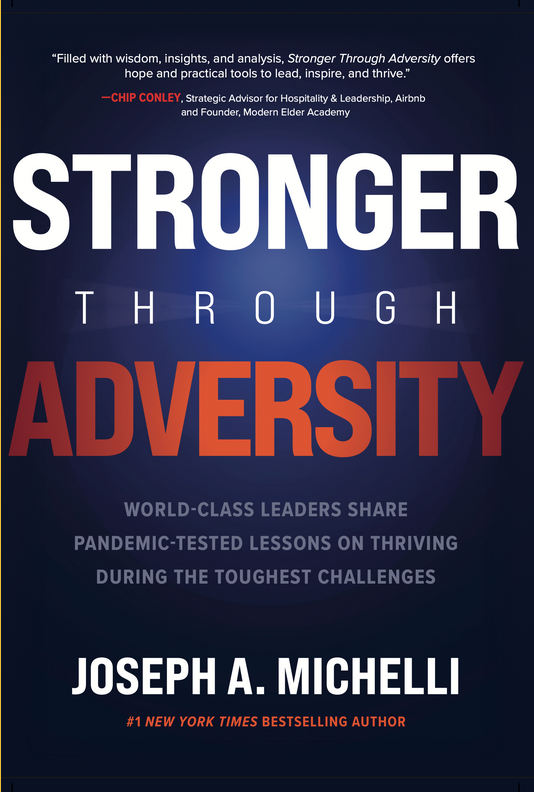
#1. Stronger Through Adversity: World-Class Leaders Share Pandemic-Tested Lessons On Thriving During The Toughest Challenges by Joseph Michelli I’ve read every one of Dr. Michelli’s books, but please don’t ask me to put all of them in ranked order. I was a fan and hooked (pun intended) forever after first reading When Fish Fly. Then in 2021 out comes Stronger Through Adversity which topped all my non-fiction reads for the year and was definitely at the right place at the right time. As many organizations were trying to figure out how to lead in a crisis, here was an incredible resource where the best had been curated for us. This book also helped me get my mind wrapped around creating sessions/programs for developing leaders for crisis management/leadership. I blogged a bunch this year from inspiration gained from this book (search Stronger Through Adversity and you’ll find them all). Dr. Michelli is the absolute best and being able to access the great leaders and then share out the learning so we all can benefit.
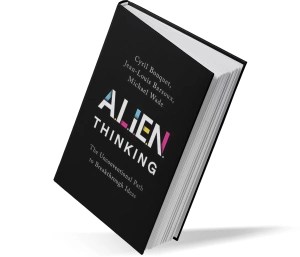
#2. Alien Thinking: The Unconventional Path To Breakthrough Ideas, by Cyril Bouquet, Jean-Louis Barsoux, and Michael Wade As the guy who always comes up with ideas that cause everyone to look at me like I am an alien, I loved this book. This book really helped me to begin to better channel the alien that is in me. Instead of trying to curb alien thinking I learned to better make use of it. I loved the framework they brought forth in the book:
- A – Attention – look with fresh eyes to observe problems that need to be solved, opportunities worth addressing, and solutions that can be dramatically improved or revised
- L – Levitation – step back from the creative process to gain perspective and enrich your understanding
- I – Imagination – recognize hard-to-see patterns and to connect seemingly disparate dots to imagine unorthodox combinations
- E – Experimentation – test ideas quickly and smartly, with the goal of improving – not just proving – your idea
- N – Navigation – deal with potentially hostile environments and adjust to the forces that can make or break your solution
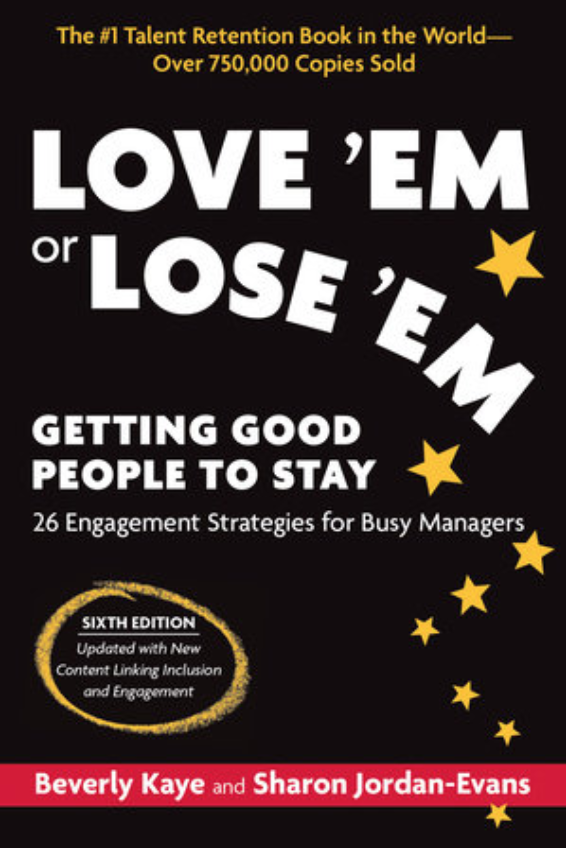
#3. Love ‘Em Or Lose ‘Em (Sixth Edition) by Beverly Kaye and Sharon Jordan-Evans This book profoundly changed me and helped get my mind wrapped around being people-centric and becoming more human. I was very fortunate to be on the launch team for this sixth edition. I am very critical of those individuals and organizations that are not as I call them “people centered.” I love (pun intended) that Kaye and Jordan-Evans taught us that loving those we work with is the correct terminology. This book taught that we need to think about how our people want to work and what inspires and motivates us to do the work. The pandemic has exposed the issue that already existed that everyone’s work situation is a little different and we need to find ways to make sure we are personalizing that experience for each and every one of our people. What really resonated with me was the notion that if we really want to love ’em (those we serve) then mass customization of how we deal with those we serve does not work. As Kaye and Jordan-Evans argued, there is no one policy for the workforce anymore. We need to allow for everyone to be a part of determining what is fair and right for them. As a leader in education, I believe this principle is true for the scholars and families we serve. This book really is about how to love.
One of my favorite quotes from the book says it all: “Approach things not as an expert, but as an explorer.” I love the metaphor of us looking at the world as an alien would see it – without preconceived notions or bias. There are so many things that can stifle even the most alien of thinkers. We are taught that both our strengths and our weaknesses can serve as deterrents to successful creativity and innovation. This book caused a great deal of introspection and reflection.
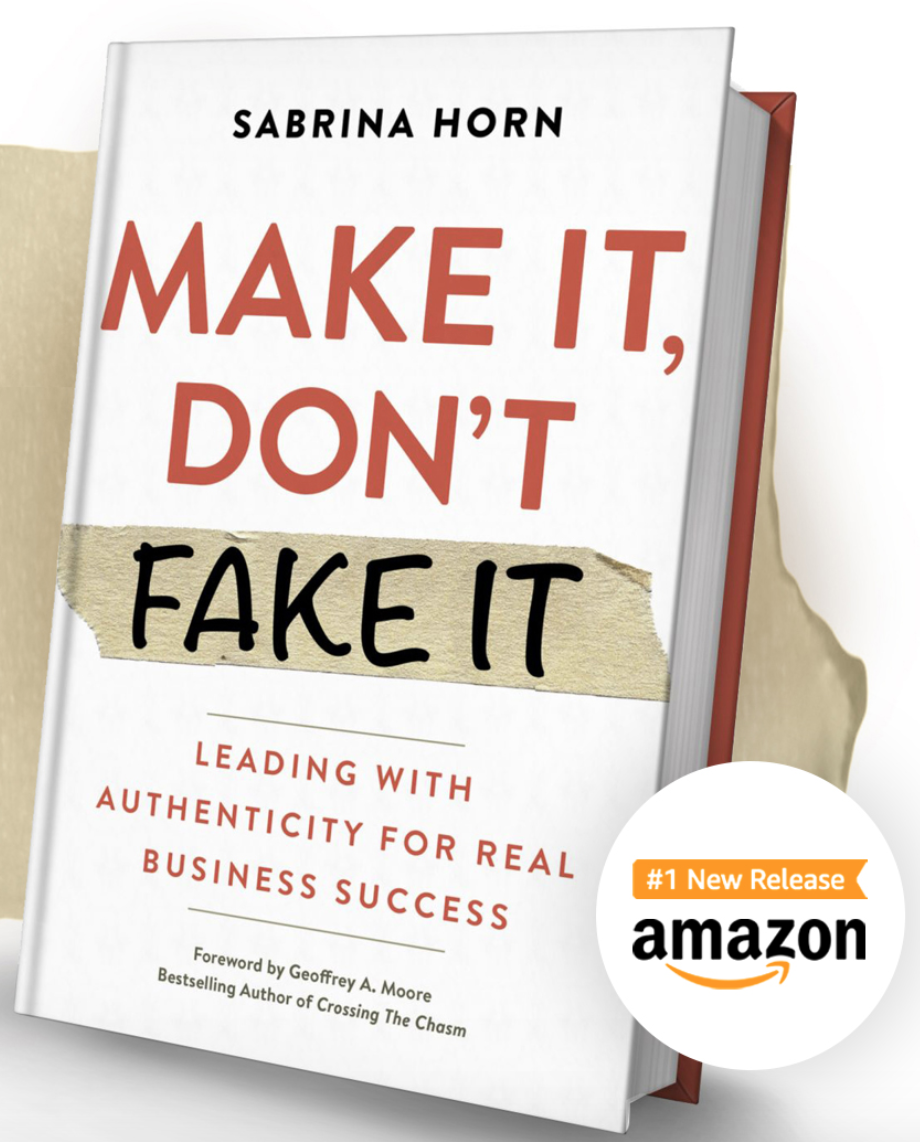
#4. Make It, Don’t Fake It: Leading With Authenticity For Real Business Success by Sabrina Horn I cringe when I hear someone say, “Fake it till you make it.” I am always said that is the stupidest thing you can do. And, I’ll even have people argue with me. Imagine my relief and delight when Sabrina came out with this book that taught us all why “faking it” really is the stupidest thing you can do. In fact in light of the latest verdicts in the Elizabeth Holmes/Theranos case we have even more proof that “faking it” does not work. Great leaders know what they don’t know and understand there are things they don’t know they don’t know. And, sometimes we even know things we don’t know we know. But, learning from and with others, asking questions, and asking for help are hallmarks of an effective and humble leader. Sabrina also taught us that “Intuition is knowledge, and knowledge is intuition.” I am so glad I had the opportunity to read this book, be on the launch team, and learn from the great leader, Sabrina Horn.

#5. Subtract: The Untapped Science Of Less by Leidy Klotz I loved this book! In education we are always talking about how things keep getting added to our plates and nothing ever gets removed. Well, it turns out this happens to everyone and it is how our brains are wired. Who knew? Leidy Klotz! If nothing else this book has caused me to have a new sniff test when wanting to improve, change, or create something – what should be/could be subtracted? Klotz told us that “In our striving to improve our lives, our work, and our society, we overwhelmingly add.” He asked a bunch of questions that I had to answer “yes” to, but he had me dead to rights with these three:
- “Do you spend more time acquiring information – whether through podcasts, websites, or conversation – than you spend distilling what you already know?
- “Do you spend more time writing new content than editing what’s there?
- “Have you started more organizations, initiatives, and activities than you have phased out?
Using research we are shown how being poor and worrying about money takes away our brainpower to devote to other areas of our lives. As an education leader this was very powerful. Also, as I promote reducing the number of standards being taught to a more manageable number of essential skills actually raises the bar for student learning, am reminded of something else Klotz said in the book, “Weeding less useful ideas allows the indispensable ones to flourish.” Bottom-line, I no longer think in terms of adding OR subtracting, I think add AND subtract.

#6. Leadership Unchained: Defy Conventional Wisdom For Breakthrough Performance by Sara Canaday This book is really special. I had the chance to meet Sara year before last. She is such a unique and gifted leader. It is immediately evident when meeting her and reading her work that she “walks the talk.” I was reminded when reading Leadership Unchained that defying conventionality requires allowing for creativity, flexibility, and risk taking. She made a comment saying, “Innovation happens at the intersection of different perspectives.” This made me reflect on one of my own core values of learning forward from different perspectives. Innovative ideas are not just about adding another feature or an
adjacent market. If we want to keep breaking new ground we must make it a priority to seek out the intersection of multiple fields, disciplines, and cultures. She argued we should create our organizations, teams, and mind by seeking out these intersections of multiple fields, disciplines, and cultures. All those different perspectives are far more potent than any incremental extension of what you are already working on using a single perspective. This kind of thinking will lead us to someplace completely different.
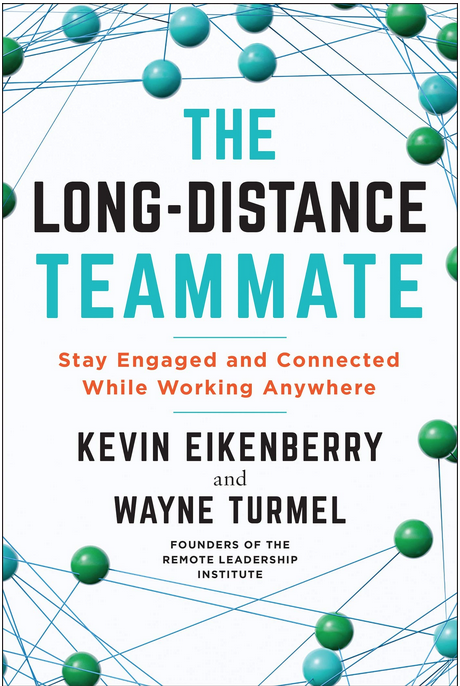
#7. The Long Distance Teammate: Stay Engaged and Connected While Working Anywhere by Kevin Eikenberry and Wayne Turmel My good friend Kevin Eikenberry has this amazing sixth sense for being in the right place at the right time to provide valuable help. This book was released a year ago while we were still in the height of pandemic and beginning to figure out how to figure out how to work and learn from anywhere. This book has so much value for all disciplines. In fact, Kevin did a webinar on the book and content for me for a group of teachers I work with. This is one of those books that I’m glad I read in electronic form because I continually go back to my highlights, search for things I remember reading. This book will be evergreen for a long time as we continue to figure out how to work effectively from anywhere.
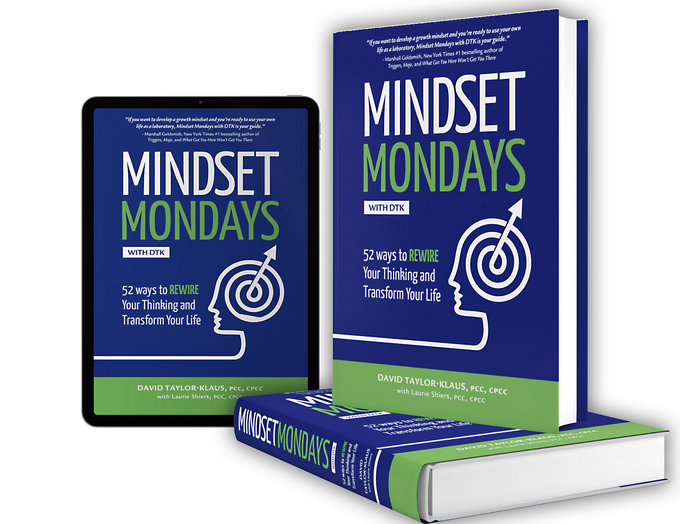
#8. Mindset Mondays with DTK: 52 Ways to REWIRE Your Thinking and Transform Your Life by David Taylor-Klaus (DTK) This was another book in this group of top eight that I was on the launch team for. Also, every year I try to find a book that is written in the 52 weekly lesson format. So, I read this book one lesson a week for a year and did a blog post each week (without fail, I might add). It was incredible, and each week I was forced to reflect, study, and expand my thinking. In this book, DTK asks you the right questions to make you take a deep and introspective look at who you want to be and who you do not want to be.


leave a comment