Building Relationships By Understanding and Appreciating

This past week I’ve had the incredible pleasure of being at the World Dairy Expo in Madison, Wisconsin. As you know we raise Jersey dairy show cows and so that is the place to be the first week of October. There will undoubtedly be posts about things I learned and my thoughts about applying what I learned to education, but for now I want to focus on something we (my wife was able to make the trip with me this year) did while in Wisconsin. One of the things I like to do is visit people I work with in the “real job” part of my life. I always say if I am within three hours of visiting someone I work with, I’m going.
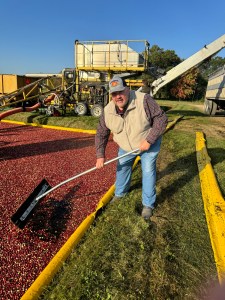
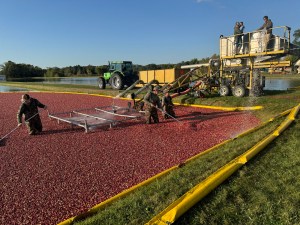
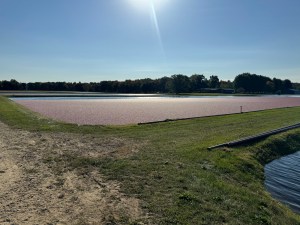
I stayed true to this yesterday. We went up to Tomah, Wisconsin to visit a National FFA Mentor Teacher Ambassador I have the honor of working with in the work I do with the National FFA Organization. We spent the day with Emma Huber who teaches agriculture at Portage Community School District. Emma’s family has a cranberry marsh (farm). Before yesterday, I knew nothing about cranberry production/harvesting. This was the weekend for harvesting the cranberries and my wife and I were able to spend the day taking part in all the operations associated with harvesting cranberries. It was actually quite the family affair, with family members coming from other states to take part. We also learned all about cranberry production. Needless to say, it was a glorious day, I learned A LOT, and we got to know Emma, her husband Josh, Emma’s mom, and the rest of the family and friends.
I love days like yesterday! As a curious learner and person who believes that relationships trump all – yesterday was truly was, as I said earlier, glorious. I have had the opportunity to visit several of the Teacher Ambassadors on their home turf or in their schools. This is important to me and one of my core values, “Listen, Hear, Learn, & strive to be better.” This is part of what I call “loving” those we serve. To be loved we must be understood and appreciated. I blogged about the line, “There is no point in being loved if you are not understood…And once loved and understood to be appreciated.” in The Life Impossible by Matt Haig in Living In Our Own Context.
Visiting those we serve in their home work or personal interest environments can offer substantial value to our relationships. In other words, getting to know them on a personal level. Here are some key benefits:
- Building Trust and Rapport: Meeting people in their own space fosters a deeper connection, showing that we care about them as individuals, not just as colleagues or clients.
- Understanding Context: Home visits provide insight into the circumstances and challenges that our teams or constituents face, enabling us to make more informed decisions and policies. We agriculture teachers understand better than anyone, as ag teachers make regular visits to students as part of their Supervised Agricultural Experience Program. It really is all about building the relationship.
- Gathering Feedback: Engaging directly with those we serve allows for open dialogue and immediate feedback, which can lead to better understanding of needs and expectations.
- Demonstrating Commitment: Our presence in our friends and colleagues’ environments signal that we are committed to supporting them and valuing their input.
- Identifying Opportunities: Being on-site allows us to observe firsthand areas for improvement, innovation, and potential collaboration that might not be visible from a distance.
- Inspiring and Motivating: Seeing how our efforts impact individuals’ lives can reignite our own passion for our work and inspire those we serve.
- Encouraging a Culture of Openness: It sets an example of transparency and approachability, encouraging others in the organization to follow suit.
As a rabid learner and relationship guy, these visits are an important strategy that deepen connections and enhance my effectiveness as a leader. Make no mistake; visiting these ambassadors is a “get to,” not a “have to.” I love it!!!
Leading By Being Accessible
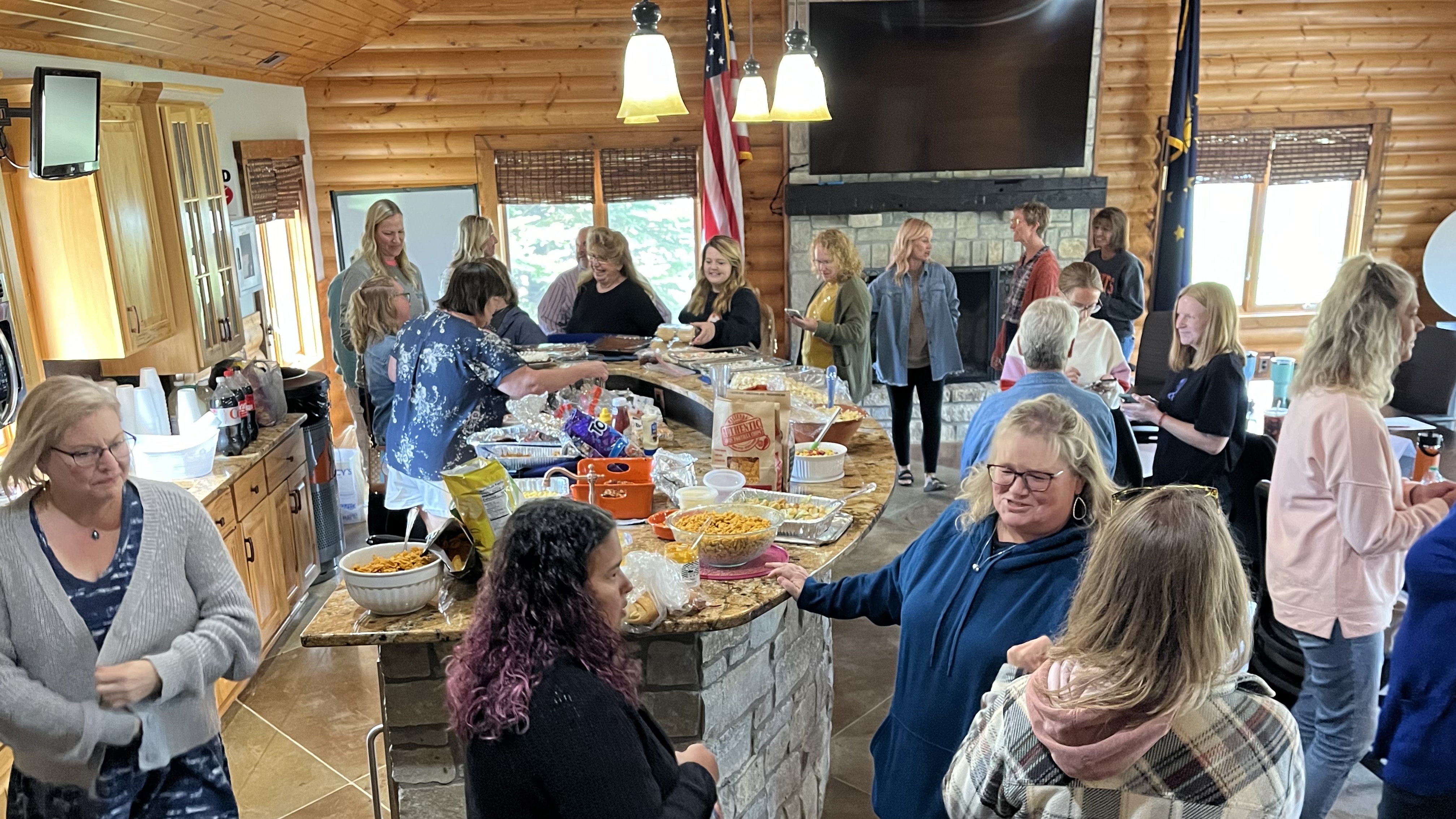
We had an incredible leadership development gathering of THE Leadership Academy Hamilton Heights School Corporation participants this past weekend. Included with this was a “family” reunion of sorts with participants from all four cohorts of the program. Needless to say, it was incredible and affirmed the principle of andragogy (method and practice of teaching adult learners) that adult learners want to learn in a cohort. I also employ heuristic learning practices that pull great vital things out of the learning. One of our incredible up and coming leaders and third year teacher, Audrey Summers, made a point that became the word of the day – AVAILABLE.
Her point was we talk a lot about being present and visible as leaders, but what we really need is leaders who are available and accessible. While being present and visible are crucial for leaders to connect with their teams, being available and accessible plays an even more vital role. She shared how important it had been in her first years of teaching for her department head and entire social studies team to be available to her. When leaders are available and accessible, they create an open environment where team members feel comfortable sharing ideas, concerns, and feedback. This openness fosters trust and collaboration, allowing everyone to contribute to the team’s success. Accessibility also helps leaders understand the needs of their team better, enabling them to provide support and guidance effectively.
It was amazing to learn from Audrey (what I call a reverse mentoring moment) about her views of being present. It so much more than just saying we have an open door policy. Ever noticed that most that say that really do not? It is about really being accessible and available to access us for questions, ideas, and concerns. Think about it. Sometimes all we need is to talk to someone. Leadership access is about creating an environment where communication flows freely and everyone is valued and heard. As leaders, we need to make a habit of making ourselves available and accessible to those we serve to see how they are doing, both professionally and personally. I shared with the group something that happened organically that we called Fireside Chats when I was principal of Emmerich Manual High School. It was one of my favorite parts of the day and made everyone accessible.
We all need to continually work at being accessible and look for those moments where we can encourage our team members to share thoughts, ideas, and learn what they are needing. What are your thoughts on how leaders can enhance their availability and accessibility?
Leading By Example Not Command
Ever worked somewhere where what your leader said, or espoused to, and what they did were not the same? I have and it makes for a pretty dysfunctional organization with a toxic environment. I’m reading a great book right now by Lee Bolman and the late Terrence Deal, Reframing Organizations: Artistry, Choice, and Leadership, 7th Edition. Bolman and Deal suggested that leading by example is more effective than merely giving orders when it comes to fostering team cohesion. “Example not command holds a team together” implies that team members are more likely to be motivated and engaged when they see their leaders embodying the values, work ethic, and behaviors expected of them.
When leaders model the behavior they want to see, it creates a culture of trust and collaboration. Team members feel inspired to emulate these actions rather than feeling compelled to follow commands out of obligation.
Leading a school effectively involves modeling values and behaviors that foster a positive learning environment for both students and staff. Here are some ways this principle can be applied in an education setting:
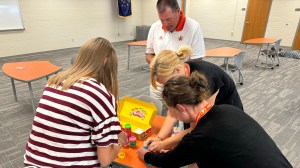
- Setting an Example: School leaders, including principals and administrators, should demonstrate the core values of integrity, respect, and responsibility. For instance by addressing issues openly and fairly, they show students and teachers the importance of honesty and transparency. I experienced an example of this recently when I was facilitating a new teacher academy session and all administrators were there taking part in the activities right along with the new teachers.
- Promoting Collaboration: When leaders actively participate in collaborative efforts, like team meetings or community events, encourages teachers and staff to engage similarly. This can help to break down silos and create a more cohesive school culture.
- Encouraging Continuous Learning: Leaders can foster a growth mindset by seeking professional development opportunities themselves. When teachers see their leaders investing in their own learning, they are more likely to pursue growth in their practices as well.
- Supporting Student Engagement: By being present in classrooms and actively participating in school activities, leaders can demonstrate the importance of student engagement. This encourages teachers to prioritize student involvement in their lessons. This presence is so important and establishes the leader as a leader of learning.
- Fostering Open Communication: Leaders who practice open dialogue and actively solicit feedback create an atmosphere where everyone feels valued and heard. This sets a tone for respectful communication throughout the school community.
- Recognizing Achievements: Highlighting both student and staff accomplishments reinforces the importance of hard work and dedication. Celebrating successes, big and small, motivates everyone to strive for excellence.
- Building Relationships: Taking the time to build strong relationships with both staff and students nurtures a sense of belonging and community. Leaders who are approachable and caring set a standard for interpersonal interactions.
I would love for you to share examples and explore further in other contexts. Please leave your comments.
Crowdsourcing AI Expertise
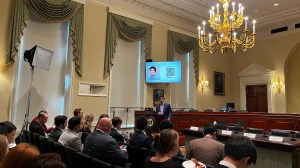
Earlier in the spring of 2024 I had the opportunity to become a member an artificial intelligence (AI) legislative policy sprint with the Federation of American Scientists (FAS). It literally was a sprint as we created all the briefs in about eight weeks. This crowdsourcing of expertise by FAS, as it was described by Daniel Correa, CEO of FAS, was an incredible undertaking on their part. This was truly a bipartisan labor of collaboration bringing together those with experience using AI to create the top ideas for legislation and policy related to AI.
At the time that the FAS put out the call for proposals for the policy sprint I was taking a course in AI in the Saïd Business School at the University of Oxford. I was learning so much and was realizing how far we were behind in the United States in education in terms of utilizing AI for considering the all important questions of how and what students learn. In a project for my Oxford course I wrote:
“First, teaching about artificial intelligence (AI) and teaching with AI are two very different things. In education we are going to have to do both; facilitating learning about the ethical use of AI and using AI in real world/work-based learning, so students understand how to use AI in careers. Therefore, one of the main obstacles that education faces is the need for education to evolve in the face of so many new technological developments making use of AI. Our policies will need to reflect the capabilities AI affords us. Educators must be trained in AI in programs very much like this one I am in now. Skill acquisition will need to be paramount to student seat time. Practicing, memorization, and repetition in many subjects is becoming irrelevant due to AI. AI allows us to shift memorization to understanding. Many are predicting this change in education to take two to six years. In education I believe societal acceptance is the biggest factor determining obstacles and adoption. Many might consider AI a technical challenge, which I recognize there are questions of technological progress, but I believe regulation (and who owns that regulation), economic conditions, plus the societal factor make this, instead, an adaptive challenge.”
Yesterday it was fascinating to listen to my colleagues’ ideas and views on AI in other sectors, including healthcare. One theme that came out throughout the day was that no matter the sector we need proactive prescriptions, not random knee-jerk reactions. This includes being responsive to new sources of risk. In other words, we need to catch threats before they happen. We also need to identify threats before they become public.
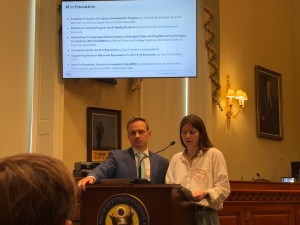
In my sector of education the themes of there not being enough data and the lack of training or guidance for teachers to be successful using and facilitating student use of AI emerged. One thing we need to do is leverage and mine the data we have. One thing is clear; we must be vigilant in helping educators understand AI and how to teach about AI as well as using AI to facilitate learning. I loved Zarek Drozda‘s comment when he said, “Education is a vaccine misinformation.” We must not miss the opportunity to educate our children for dealing with and using AI.
Click on A National Center for AI in Education to read my proposal. You can also click on New Legislative Proposals to Deploy Artificial Intelligence Strategically to see all the FAS Policy Sprint proposals.
Those proposals are broken into four categories:
- AI Innovation, Research and Development, and Entrepreneurship
- AI Trust, Safety, and Privacy
- AI in Education
- AI in Healthcare
I applaud the Federation of American Scientists for doing this innovative crowdsourcing of expertise to bring together great minds for creating policy ideas related to artificial intelligence. It was such an honor to be on the journey with everyone.
Beware Of Externally Imposed Definitions Of Success

The word “success” is thrown around a lot today. When we discuss rethinking education, we discuss student success to the point it has become cliché. This is not do say we should not be considering success, but defining it is another beast entirely. Ten years ago when, as a superintendent, I was leading our schools through the strategic planning process, we adopted a definition of success. We adopted, and I still personally ascribe to the definition of Dr. Felice Kaufmann. She defined success as: “SUCCESS: Knowing what one wants in the world and knowing how to get it.” I love this because success is about each of us understanding what we want, not what is prescribed by someone else. Continuing my thoughts on education here I still believe we must help students find their own passions and interests and align those to values so they can define their own success. Then we facilitate going after that success.

I just finished the incredible book, Red Helicopter, by James Rhee. It really helped me sort out the concept of “success” even further. In the book Rhee explained that if we chase after externally imposed definitions of success, and you may find yourself feeling unfulfilled and disconnected rather than successful. This is genius! This idea of “externally imposed definitions of success” – think about how much we do this to ourselves, to others, and most importantly, our children.
James Rhee was cautioning against following society’s expectations of success without considering one’s own values and goals. He suggested that chasing after external definitions of success may lead to a feeling of emptiness and disconnection, rather than true fulfillment. It emphasizes the importance of staying true to oneself and finding personal fulfillment in one’s achievements. I believe we should consider that success looks different for all of us and it is not something we can graph with a straight line.
No One Is Ordinary
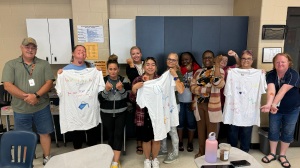
Today I was reminded of the importance in recognizing and valuing the unique strengths and contributions of each individual we serve. I had the honor of working with teachers today for the Charlotte County Public Schools’ Summer Professional Development Summit Conference at Lemon Bay High School in Englewood, Florida. I have had the honor of partnering with Charlotte County Public Schools for several years and absolutely love their teachers. They are always so engaged and very willing to share their expertise. I was reminded of C. S. Lewis’ teaching that, “there are no ordinary people…” The teachers I worked with today are not ordinary, they are extraordinary.
While working through sessions entitled “Self Care for Educators & Creating Healthy Boundaries” and “Let’s Reach Every Student!” it was very evident these teachers want to be the very best for the students they serve. By acknowledging that no one is ordinary, leaders can create a more inclusive and supportive work environment where every team member feels appreciated and empowered to make a difference. Ultimately this leads to greater collaboration, innovation, and success for the organization.
“there are no ordinary people…” ~ C. S. Lewis

Lewis wanted us to remember that every individual has value and significance, regardless of their circumstances or perceived importance. He believed that each person has the potential to make a difference in the world and should be treated with respect and dignity. It’s a reminder to not underestimate the impact that each individual can have on the world around them.
Watercolor Leadership
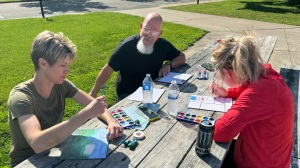
Painting with watercolors can help us reflect on our personal and development. By creating art, we can express our emotions, thoughts, and experiences in a visual form, no matter our talent or level of skill, allowing us to explore and understand ourselves on a deeper level. Today, I used watercolor painting for a professional development retreat with Wabash River Career and Technical Education (WRCTE) teachers. We were at the beautiful Turkey Run State Park in Marshall, Indiana. I told them to find a spot anywhere in the park and paint a picture that represents the great aspects of their year getting students ready for their next steps.
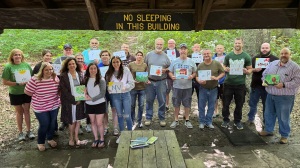
The process of watercolor painting can be meditative and calming, providing a space for self-reflection and introspection. So, by engaging in this creative activity, the teachers gained insights into their own journey of growth and development. When we were sharing out, one of the participants shared he had painted the Turkey Run Inn because it was a challenge that made him reflect on his own journey growing as a teacher this past year. Every teacher’s description of their painting was very inspiring.

Painting with watercolors can be compared to leadership in the sense that both require creativity, vision, and the ability to adapt to changing circumstances. Just as we must carefully choose our colors, brushes, and techniques to create a beautiful masterpiece, a leader must make strategic decisions, inspire others, and navigate challenges to achieve success. Both activities also require patience, practice, and the willingness to learn from mistakes. Overall, painting with watercolors and leadership both involve bringing a unique vision to life through skillful execution and thoughtful guidance.
Let The Work, Work

This past weekend during the “DIY Lasting Leadership” workshop of the Hamilton Heights School Corporation Teacher Leader Academy 3.0 Finale Summit we used the butcher paper on the tables to record leadership thoughts as we built our individualized projects. I always appreciate Hamilton Heights Middle School Principal, Bret Bailey being a part of the Finale with us. As his table participants were working, they discussed how there were steps and “layers” to the project and at times we have to let the “paint dry” and “let the work, work.” I loved this statement and we proceeded to have a discussion about it.

When a leader says “Let the work, work,” they may be emphasizing the importance of trusting in the process and allowing tasks to be completed without unnecessary interference. Also, we sometimes start new initiatives, but don’t let them play out to know if they are successful or not. This was also a reminder to take charge of our own professional development as we navigate the challenges of transitioning from an individual contributor to a leader.

Additionally, sometimes we have to manage the conditions that drive team performance, but other times leadership means “letting the paint dry” and stepping back and allowing team members to do their jobs without micromanaging or getting overly involved. It implies having faith in the abilities of the team and letting them work independently to achieve their goals. “Letting the work, work” also reminds us, as leaders, we must coach colleagues and share feedback in ways that enable them to develop and deliver.
Opportunity To See More Opportunities 
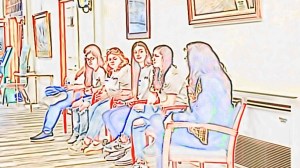
One student said, “This program and the teachers give us the opportunity to see more opportunities!” When I heard this student on the Student Advisory Committee of the Vision Corner Learning Center in Union City, Indiana say this, I wanted to jump up and cheer. Randolph Eastern School Corporation is giving students the opportunity to see more opportunities – is that not what education is all about. It means that when a student is open to new experiences, perspectives, and possibilities, they are more likely to recognize and take advantage of opportunities that come their way. Then, teachers encouraging and creating space for the students to be curious, adaptable, and proactive, enable the students to expand their horizons and make the most out of their educational journey and future career prospects. This all goes hand in hand with and is part of students learning to learn.
We can best provide opportunities for students by creating a positive and inclusive learning environment that encourages curiosity, critical thinking, and creativity. They can incorporate hands-on activities, real-world examples, and group projects to allow students to explore different perspectives and enhance their problem-solving skills. Additionally, teachers can provide mentorship, guidance, and support to help students navigate challenges and seize opportunities for growth and development. Ultimately, fostering a collaborative and engaging educational atmosphere can empower students to maximize their potential and discover new possibilities for success.
Being A Bystander

On Monday, through a collaboration I am doing with Marian University’s Center for Vibrant Schools I was working with the teachers at Trinity Lutheran School. It was a great day of visiting classrooms, coaching, working with teacher leaders, and after-school professional development. As I always say when I am in classrooms I pay most attention to what students are doing. In one class the students engaged me in their activity. The students were working in groups preparing for skits. A student proceeded to ask the teacher if she could ask me to be in the skit. He said yes and the student proceeded to ask me if I would portray Jesus in her group’s skit. I was thrilled and I must say our skit was incredible! Another class was studying the book of Matthew and the teacher had a writing prompt for the students to describe which of the persons in the book of Matthew they could relate to best.
After turning in their short essays the teacher asked them to share out who they had chosen and why they best related to them. One student gave an answer that no one was expecting. He said, “The bystanders because they were there listening and learning.” Pretty insightful for an eighth grader, don’t you think? The teacher and I were both blown away by the insight given by this student. I couldn’t quit thinking about it. The student was right, sometimes we need to take the role of the bystander.
There is definitely a lot to learn from being a bystander. By observing situations from a distance, we can gain valuable insights into how people interact, how conflicts unfold, and how different choices lead to different outcomes. Additionally, in situations where our involvement could escalate a conflict or cause harm, it may be better to observe and not get directly involved. It’s important to assess each situation carefully and consider the potential consequences before deciding whether to take action or stay on the sidelines.
Being a bystander can give us the opportunity to reflect on our own values, beliefs, and biases, and consider how they influence our actions or inaction in certain situations. This can help us develop a better understanding of human behavior and improve our own decision-making skills. Bottom line: sometimes it is best for us to listen, learn, and be a bystander rather than being a major contributor.


1 comment