Teaching Learning Ability

Yesterday in our National Association of State Boards of Education Annual Conference opening session, my friend, Dr. Linda Darling-Hammond made the comment that we need to teach our students learning ability. This enablement of learning is important to Linda and I and we even coauthored an article on opportunity to learn. Click here to read it. I spent some time this morning thinking on teaching learning ability. Teaching our kids learning ability means providing them with the skills and tools to become effective learners. This includes teaching them how to think critically, problem solve, and communicate effectively. It also involves fostering a growth mindset, where they understand that intelligence and abilities can be developed through hard work and effort. Additionally, teaching learning ability involves promoting curiosity, creativity, and a love for learning.
I definitely believe we can teach love for learning. Encouraging a love for learning starts from an early age by creating a positive and engaging learning environment. Providing interesting and relevant content, incorporating hands-on activities, and giving students the opportunity to explore their own interests can help foster a love for learning. Additionally, praising effort and celebrating achievements can also help motivate learners and make the learning experience enjoyable. It’s important to create a supportive and encouraging atmosphere where students feel empowered and excited about learning.
The Restless Learner

Yesterday, I had a person describe me as a “restless learner.“ Of course, this prompted me to think about the question, “Just what is a restless learner?” It turns out there is a definition. Warren Berger in A More Beautiful Question (2014) defined the restless learner as, “a person who can never be comfortable with her/his own expertise in the face of rapid knowledge advancements, research revisions, and obsolescence of facts.” This sums me up pretty well. I want to be a critical thinker who is constantly evaluating what I know and what I need to learn. I am always curious, seeking out knowledge and experiences that expand my understanding of the world.
It’s that constant desire to learn and explore new things. As a restless learners Ian are not satisfied with staying in my comfort zones or sticking to what I already know. Instead, I try to actively seek out opportunities to grow and challenge myself intellectually. I am open-minded, adaptable, and willing to embrace change in order to continue their journey of learning. I’m a proud restless learner, how about you?
Stepping Outside One Experience And Into Another

This morning I continued my reading in God In The Dock by C. S. Lewis. There are so many things Lewis says that I have to think deeply about to get a handle on what he is saying. I love learning that way. This morning’s reading revealed him saying, “In other words, you can step outside one experience only by stepping inside another” (p. 214). On the surface, this comment seems pretty basic, but when reflecting it becomes much deeper. Lewis, in my opinion was emphasizing the importance of gaining new perspectives. He believed that in order to truly understand and appreciate different experiences, we must immerse ourselves in them. We can gain a new perspective or escape from our current experience by immersing ourselves in a different one. By delving into another experience, we can broaden our understanding and potentially overcome the limitations of our own perspective.

According to Lewis, exploring different viewpoints and immersing ourselves in different cultures or ideas, can break us free from our own limited perspectives and gain a broader understanding of the world around us. This can be achieved through reading, learning about different cultures, or even engaging in meaningful conversations with others who hold different views. Lewis encouraged us to be open-minded, curious, and willing to learn from others.
Follow The Argument Wherever It Leads

In God In The Dock, C. S. Lewis reminded us that “Socrates had exhorted men to ‘follow the argument wherever it led them’” (p. 126). Actually, Socrates said, “We must follow the argument wherever, like a wind, it may lead us” (Republic 394d). Socrates argued (pun intended) that one should not be afraid of questioning or challenging ideas and beliefs, even if they seem uncomfortable or go against commonly accepted views. By urging us to follow the argument, Socrates was urging us to explore and engage in intellectual discussions without preconceived biases or limitations. There is power in critical thinking and the pursuit of truth through logical reasoning.

Lewis’ statement is so true: “Each group hears not the best, but the worst, that the other group can say” (p. 127). There is a tendency for groups or individuals to only hear and focus on the negative aspects or criticisms coming from others. He wanted us to recognize this bias and strive to approach discussions and disagreements with an open mind, actively seeking out the best arguments and perspectives from all sides. By doing so, we can foster a more constructive and empathetic dialogue, leading to a better understanding of different viewpoints and ultimately a more inclusive and tolerant society.
Is It Time To Re-Story?

I am a big believer in reflecting on the narratives we are developing with our lives and continually creating a new, more fulfilling and meaningful story for ourselves. To do this we can do what Bruce Feiler called “re-storying” our lives in his great book, The Search: Finding Meaningful Work in a Post-Career World. Sometimes the prompt that allows us to re-story our lives is what Feiler called a “workquake,” which Feiler defined as “a moment of disruption, inflection, or reevaluation that redirects our work in a meaningful way.” Things like taking a new job, going back to school, losing employment, the birth of a child – or, as witnessed in the last few years, even a pandemic can cause a workquake, according to Feiler. In other words, what I call “life happening.”
To re-story our lives means to consciously and intentionally rewrite or reshape the narrative of our personal experiences. It involves examining the stories we have been telling ourselves about our lives, identifying any negative or limiting beliefs that may be holding us back, and then actively working to change those stories into more positive and empowering ones. How about you? Have you had a workquake or life happened in a way it is time to re-story?
Remove The Strings

Creating an environment where individuals feel motivated and capable, leads to better collaboration and overall success. Empowering our team members to take ownership of their work and make decisions, while providing guidance and support in the background is an important role of leadership. An effective leader is able to guide and influence their team without command and control. This can be applied to various situations where the skillful execution of something makes it seem effortless or natural to those observing.
This reminds me of the metaphor “In a good puppet show, you never see the strings.” It means that in a well-executed performance or situation, the behind-the-scenes work or mechanisms are not visible or obvious to the audience. It implies that everything appears seamless and effortless, giving the impression that there is no hidden effort or manipulation involved.
Being An Energetic Change Agent

As an “Energetic Change Agent” I love enabling and creating opportunities for positive change. This does not mean that I don’t occasionally resist or become uncomfortable with change. We all do! A couple of things have happened in the past few months that prompted me thinking about doing this post. Then, this week the experience described in “I Am Mad That I Liked It” brought writing this post back to the top of the list.
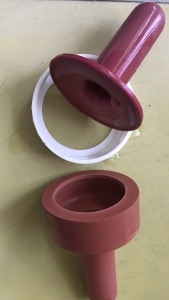
The first change that occurred is related to the bottles we use for baby calves. As you know we raise Jersey dairy show cattle. I’ve been using the same kind of bottle for years – two quart with snap-on calf nipple. Recently, the brand of bottle I use quit making the snap-on and went to a screw-on model. Check out the featured pictures and you’ll get the idea. I was really upset because I thought the snap-on model was easier to use and wash. Keep in mind, when you’re giving 10-12 bottles a day, easier makes a difference. But, after a lot of complaining and resisting it didn’t take long to realize I was wrong. The screw-on tops were easier to put on and easy to clean. Plus, there was a huge improvement in the venting. If you notice the bottle on the left is all dented and suck in. That is what happens with the snap-on bottles and we even had to stop and vent them while giving the bottle. That issue has been completely solved with the screw-on tops. Bottom-line: the screw-top bottles are better. We should have switched to them when they first came available, but no, I was sure I would not like them.

Then, another change happened that freaked me out. My dry-cleaner decided to retire and completely shut down the business. I am really picky about my shirts and like them folded and packaged – when you travel a lot like me it is easier to pack and store shirts (see picture). And believe it or not, they are not wrinkled when I take them out of the package. After much agonizing, I have found a new cleaners that I love. And while I loved my former cleaner, my new service provider has 24 hour drop off and pick-up, which is super convenient, check for missing buttons and replace if needed, and has an app for all communication. The change was good – why was I so resistant?
We are often resistant to change from one product or service to another due to several reasons. One reason is familiarity and comfort with the current product. We may be used to the people, features, functionality, and the overall customer experience. Switching to a new product or service requires us to learn and adapt to something different, which can be time-consuming and frustrating.
Additionally, there is the loyalty and attachment to a certain people, brand, and designs. We may have developed a sense of loyalty towards a particular brand, and switching to a new product or service means ending that loyalty. We might also fear that the new product may not live up to our expectations or provide the same level of satisfaction and benefits as the one we are currently using. This was certainly the case in both of my examples. Cost can also be a factor, but was not in my examples. My resistance to change came from a combination of factors like familiarity, loyalty, fear of the unknown, and laziness of not wanting to research and search for a new cleaners.
There are good reasons to try new products and services that do the same thing as the ones we are currently using:
- Innovation and advancements: New services and products often come with improved features, functionalities, and technology that may enhance our overall experience or make tasks easier and more efficient.
- Better performance: New products may offer superior performance, speed, reliability, or durability compared to older models. This was certainly the case with my calf bottle example.
- Cost-effectiveness: This was not a factor in my examples, but new products and services could be more cost-effective and energy-efficient, require fewer maintenance or repair costs, or offer better value for money.
- Enhanced compatibility, integration, and support: Switching to a new service or product might provide better compatibility with other devices, software, or systems, allowing for a smoother and more seamless experience. I now have an app to manage my dry cleaning.
- Different features and options: Exploring new services and products allows us to explore different features, customization options, or variations that may better suit our needs, preferences, or workflow.
Ultimately, embracing change and being open to new services and products can lead to better experiences, increased efficiency, cost savings, and access to the latest advancements in technology. I am not advocating to change just for the sake of change, but it is crucial to keep an eye out for the benefits that can occur listed above.
The Skill Of Curating A Crowd

I recently read Paris Hilton’s great book, Paris: The Memoir right now. One of the points Paris makes is that being great at parties is not just about hanging out and looking pretty – it’s also about the skill of curating a crowd. While curating a crowd can involve carefully selecting and organizing a group of individuals with similar interests, goals, or values, it can also involve continued curation of small groups once that group is put together. Here are some thoughts on honing the skill of curating a crowd:
- We need to clearly define the purpose: Determine the purpose or objective of curating the group. Are we organizing an event, starting a community, or fostering collaboration? Clearly defining the purpose helps us to curate a group that aligns with our goals.
- Identify your target audience: Understand who you want to attract and engage with. Consider demographics, interests, expertise, and any specific criteria that are relevant your purpose. This will help ensure that the crowd you curate is focused and aligned.
- Create engaging content: Develop content and activities that resonate with your target audience. This could include interesting topics, workshops, discussions, or interactive sessions. Tailoring your offerings to their needs and interests will encourage participation and build a sense of community.
- Foster communication and collaboration: Encourage open dialogue and facilitate connections among the crowd members. Provide platforms or forums where individuals can interact, exchange ideas, learn from one another, and collaborate on projects or initiatives.
- Maintain a positive and inclusive environment: Create a safe and welcoming space where everyone feels valued and respected. Promote inclusivity by actively listening to diverse perspectives and promoting equal participation. Address any conflicts or issues that may arise promptly and fairly.
- Continuously evaluate and improve: Regularly assess the effectiveness of your curation efforts. Seek feedback from participants and make adjustments as needed. Pay attention to the needs and evolving interests of the crowd, and adapt your approach accordingly.
Remember, curating a crowd is about creating an environment where individuals can connect, learn, and thrive together. By focusing on their needs and fostering a sense of belonging, we can create a vibrant and engaged learning community.
The Inner Ring Phenomenon

C.S. Lewis wrote about inner circles in “The Inner Ring.” I would encourage you to read it. In the “The Inner Ring” was the Memorial Lecture he gave at King’s College London, in 1944. In this lecture Lewis explored the desire to belong and be accepted by an exclusive group (inner circle) and how it can affect individuals. Lewis warned, “The circle cannot have from within the charm it had from outside. By the very act of admitting you it has lost its magic. Once the first novelty is worn off the members of this circle will be no more interesting than your old friends. Why should they be? You were not looking for virtue or kindness or loyalty or humor or learning or wit or any of the things that can be really enjoyed. You merely wanted to be “in.” And that is a pleasure that cannot last. As soon as your new associates have been staled to you by
custom, you will be looking for another Ring.” Here, Lewis was suggesting that being part of an exclusive inner circle will lose its allure once we are actually inside it. The charm and allure come from the perception and longing to be a part of that particular group, but once we are on the inside, we may realize that it is not as special as it seemed. In other words, the exclusivity itself may not provide the satisfaction or fulfillment that one might expect.
Lewis used the metaphor of the onion in “The Inner Ring.” He posited that the inner ring is like peeling an onion – once you have succeeded, there is nothing left. I am going to guess you are all like me and have been parts of inner circles. Additionally, I would guess we have all worked in environments with a distinct inner circle we were not a part of. I have worked for two organizations that had/still have distinct inner rings that I was not invited into. Nor, were most of the others really doing the work. It’s toxic to a great collaborative work community. Especially when the top, hierarchically speaking, person is the ring leader (pun intended). This also, as you well know, in our government and law-making circles (again, pun intended).
“Sweet is a legacy, and passing sweet
Lord Byron quoted by C. S. Lewis in “The Inner Ring”
The unexpected death of some old lady.” ~ Lord Byron
While Lewis acknowledges that being part of an inner circle is not inherently bad, there can be negative aspects associated with it. Wanting to get into an inner circle can can lead to being seen as exclusionary. The negative in some situations is that the inner ring can lead to the formation of cliques, or other exclusionary, behavior which can and create feelings of create isolation an and rejection unhealthy sense for those who of are not included. Additionally, seeking validation among the group or self-worth members. solely from Inner rings can also perpetuate an exclusive inequality and favoritism group that is unhealthy and limiting personal growth for those both in and outside the ring. An inner circle can shut out others who may have valuable perspectives and contributions to offer. It’s important to foster inclusivity and recognize that meaningful connections should be formed outside an inner ring.
I close with the recognition that it is in our very nature to desire being in the inner ring. Lewis told us, “…at all periods between infancy and
extreme old age, one of the most dominant elements is the desire to be inside the local Ring and the terror of being left outside.” We just need to remember it is never as satisfying on the inside as it looked from the outside and is terrifying when we realize we are no longer on the inside.
I Am Mad That I Liked It

This week, while in Syracuse, New York, our Harvard Center for Education Policy Research National Center for Rural Education Research Networks team went to eat dinner at the great restaurant Oh My Darling. For dessert we had Beignets – WONDERFUL! Our server told us we would get chocolate and caramel sauces and lemon curd to dip our Beignets in. She also told us that mixing the chocolate and caramel together was wonderful – and it was! When we were done there was one Beignet left and I just couldn’t let it go to waste. So, I tried mixing the lemon curd and caramel together and it was delightful – really, better than the chocolate/caramel combination. I immediately had others at the table try the combination and they concurred. I shared the new combination with our server and she turned up her nose. She said, “There is no way that is better than the chocolate and caramel combo.” Immediately, someone on the team chimed in and backed me up and said, “Yes it is.” The challenge was on!
Our server then proceeded back to the kitchen to have them make her a single Beignet so she could try the new combination of Caramel and Lemon Curd to dip her Beignet in. We were ready to leave but waited with anticipation for our server to get back and report her taste testing results. What happened when she returned is why I am telling this story by writing this post. She returned with a smile on her face and said, “I am mad that I liked it.” This statement really intrigued me. I asked, “What do you mean by that?” Our server then stated, “It means that I am feeling conflicted or frustrated about enjoying something that I expected not to like.” She had found something, on my recommendation that went against her usual preferences or beliefs, but still found herself enjoying it. It was a playful way of expressing surprise or annoyance at her own enjoyment.
The way our server expressed her surprise or frustration at enjoying something unexpected had a profound effect on me. I kept asking everyone in our group, “Have you ever been mad that you liked something?” This is a pretty good prompt and I encourage you to contemplate the question. Of course, I had to do a little research on this and the feelings our server was having is an actual psychological thing. It’s called “dimorphous expressions,” or expressions of emotion that seem at odds with what a person is actually feeling. Interesting, right?
Oriana Aragón, an assistant professor of marketing at Clemson University and Yale Psychology Professor John Bargh studied why we have contradictory expressions. It seems that discovering something new that we like a lot can throw us off our game, causing a mix of emotions. You can probably think of times when this has happened to you. I know I can. I’m thinking of those simple times when someone wants us to try a food we’ve never tried and we say no, just knowing we weren’t going to like it. We might just miss out on something we really enjoy.
For me, this was a reminder to resist being skeptical or resistance to trying something new just because we don’t think it will work or be good. I’m thinking about things that aren’t just food here. It could be a new product idea, new technology to use, new vacation spot, or new idea for delivering content to those we serve. This experience was another huge reminder to use our curiosity and take risks. We won’t know if we don’t try. We won’t know if we aren’t open to others’ opinions, ideas, and experiences. As my favorite quote from an unknown author goes, “To argue with someone else’s experience of reality is futile…To add their experience to yours is possibly useful.” What are you ready to be mad that you like?


leave a comment