Information Not Power
 Just a few days away from the Fourth of July and hit the half way point of A Year With Peter Drucker (2014) by Joseph A. Maciariello. It is fitting that the week 26 lesson from Peter Drucker had to do with centralization, confederation, and decentralization. The British set up the colonies as a centralized or unified government where the autonomy and authority rested mainly at the top with the king or king appointed governors. Then in 1774 the colonies established the Continental Congress (Maciariello, 2014). This same Continental Congress endorsed the Declaration of Independence on July 4, 1776. During the period of time from the Declaration through the end of the Revolutionary War our government was in the form of a confederation. In other words, maximum autonomy was granted to the colonies.
Then in 1787 when the Constitutional Convention met a federal system of government was formed with an executive, a congress, and a judiciary. This was put into play with the ratifying of the Constitution of the United States in 1789. All powers not specifically given to the federal government were given to the states with the passing of the Tenth Amendment. The system of government established by the U.S. Constitution is often designated as federal decentralization (Maciariello, 2014). 
So, what can we learn from this? Drucker believed that a global society where the trend was moving toward knowledge-based organizations would see organizations and governments being held together by information, not power. Drucker believed that top leadership would have to take charge of two key resources: key people and money. Interestingly, this is consistent with another book I am reviewing right now as part of a book launch with Becky Robinson and Weaving Influence. The book is The Disciplined Leader: Keeping the Focus on What Really Matters by John Manning. In the book, which is set up in 52 lessons, he posits that what all great disciplined leaders do is focus on what really matters. What the research showed is the focus must be on people. Great leaders understand that people are the most vital asset in a successful organization. As Manning states: “The Disciplined Leader knows how to Focus on the Vital Few and ignore or delegate The Trivial Many (Manning, 2015, p. 5).” Think about it, the people is where the information is.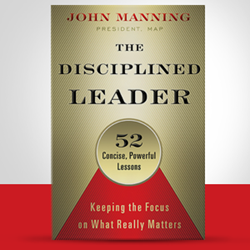
Drucker pointed to Toyota as an example of what many would call operating under decentralization, where the individuals units have rules, but operated independently. Drucker argued this is really a confederation. In a confederation the independent units operate independently, but carry out the overall spirit of the organization as a whole. A unit of confederation is independent, but it operates under loose direction of the parent organization (Maciariello, 2014). The organization that operates with people and information as its most important parts, a confederation, is held together by values, strategy, and information.
If your organization is held together by power and not information, your ability for continuous improvement may be hindered.
References
Maciariello, J. A. (2014). A year with Peter Drucker: 52 weeks of coaching for leadership effectiveness. New York, NY: HarperCollins Publishers.
Manning J. (2015). The disciplined leader: Keeping the focus on what really matters. Oakland, CA: Berrett-Koehler Publishers, Inc.
From Delegation to Leadership
 “[Henry] Ford’s failure [1927-1944] was not the result of personality or temperament. It was first and foremost the result of his refusal to accept managers and management as necessary, as a necessity based on task and function rather than in “delegation” from the “boss.” ~ Peter Drucker, 2008
This week’s entry in Maciariello (2014) A Year with Peter Drucker offers us examples from three great innovators in our history. These innovators are Wilson Greatbatch, Andy Grove, and Henry Ford. First of all that’s a pretty powerful trio of innovators to learn from. Greatbatch is known for developing the heart pacemaker, and then later developing the lithium iodide battery that allowed the pacemaker to go decades without battery replacement. Thus eliminating many operations for patients needing pacemakers. Of course, we know Andy Grove as one of the founders of Intel Corporation in 1968. Finally, I don’t really think I need to give an introduction to the third side of the triangle, Henry Ford.
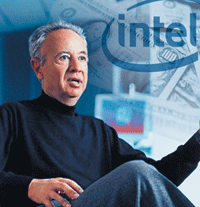
In this week’s entry, Andy Grove discussed how in the beginning he was just one step away from everything, and now is many steps away from everything (Maciariello, 2014). He discussed how everything in the beginning was in his head. People in their initial group, while innovating, gravitated to the roles that fit them. The team built itself up and roles that were needed gravitated to appropriate team members (Maciariello, 2014). Then as the organization grew, however, tribes began to form and power struggles began to occur. This is when Grove realized he needed to shift from innovator to executive (Maciariello, 2014).
 It was interesting for me as I read this story of Andy Grove how much similarity there is to the situations I have experienced in working as a part of a team to turnaround two different schools. In both situations it has been necessary to let the talent gravitate to roles that fit. But now, after a year (that was the same time frame at both schools), it was necessary to take a step back and analyze what everyone was doing. In fact, we had a mini-summit this spring using the essential questions of: What are these people doing?; Are they doing the right things?; and, How do we all support our teachers in doing the right things for our students? That might seem like an easy task, but there are so many parts to making sure a school is operating efficiently and effectively. As an organization grows and develops, there is a tendency to look inward. The organization must recognize, however, that as it changes in size, load, and complexity there is a need for the roles of the people, particularly the leader, in the organization.

Additionally, we all know the story of Henry Ford as the greatest industrial innovator of all time. As the story goes, though, by 1927 the Ford Motor Company was a shambles. Really from 1927-1944, until Henry Ford II took the reigns, the company struggled mightily. In fact, Peter Drucker called it a “controlled experiment in mismanagement” (Maciariello, 2014, p. 198). Henry Ford, according to Maciariello (2014), provides us with a case study in executive mismanagement. Ford tested the hypothesis that as an organization grows it does not need professional leadership. Ford believed an organization should be run by a boss with helpers (Maciariello, 2014), not leaders. In other words, he believed in pushing tasks down to underlings to perform. In today’s lingo I call these the folks that are “email pushers.” Whatever is asked of them, they push the email to someone else to carry out. Really not leadership, or, at least I don’t think so. Ford’s experiment failed and we can all learn from his mistakes. I did a little further studying and Henry Ford II made sure those in the organization had the skills necessary to carry out leading the parts of the organization they were responsible and then Ford II gave them the latitude to lead. 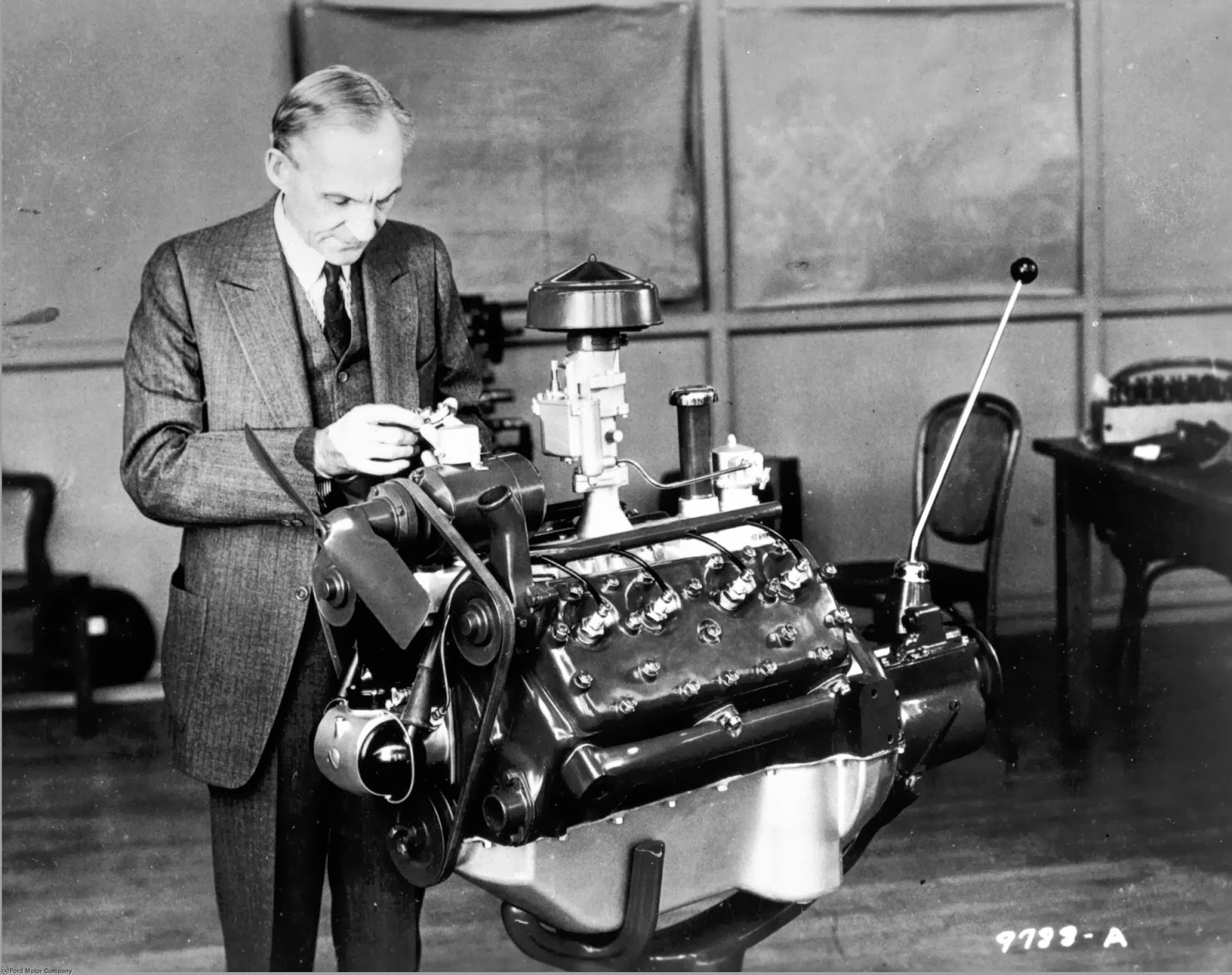
It would do us all good to learn from the lessons of all three of these great innovators turned executives.
Reference
Maciariello, J. A. (2014). A year with Peter Drucker: 52 weeks of coaching for leadership effectiveness. New York, NY: HarperCollins Publishers.
Memorial Day Reflections
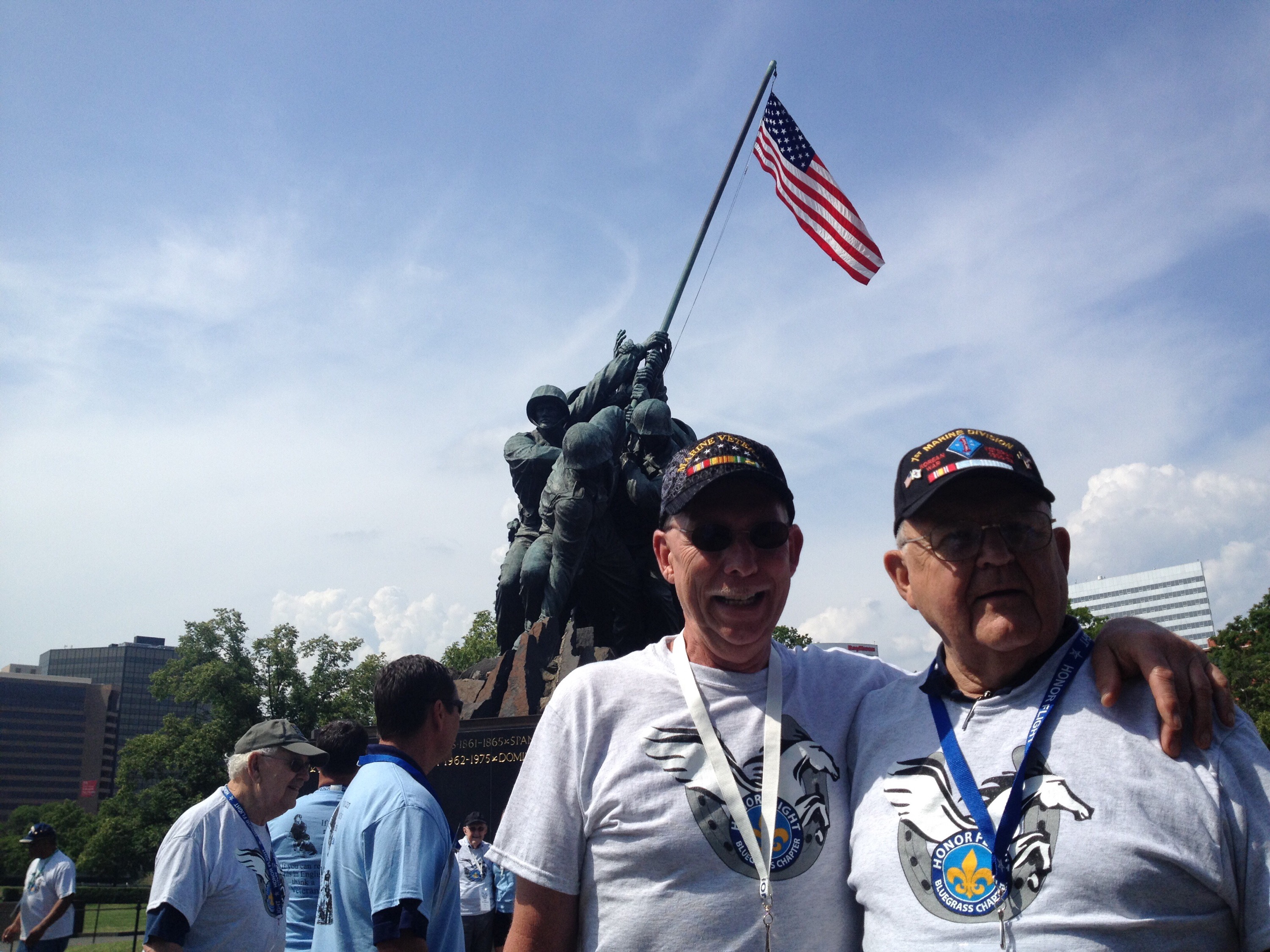 This year’s Memorial Day is different for me. It has more meaning and has a more real context than any time in my life. I am so blessed to have had the opportunity to serve on The Honorable Order of Kentucky Colonel’s Honor Flight on May 16th as a Guardian. That experience changed my life forever. In my family growing up we always celebrated Memorial Day, or “Decoration Day” as my dad called it. That was actually the holiday’s first name. It began in the years immediately following the Civil War, at which time it was observed primarily as a day for “decorating” military graves with flowers and commemorating the fallen Union and Confederate soldiers. By the twentieth century, Memorial Day had been extended to honor all Americans who died in all wars while serving in the U.S. Armed Forces.
I’m often astonished at the lack of honor some display toward our Veterans. For us who sacrifice little—if anything—and yet have no qualms about enjoying the luxury and freedom provided by this country we belie our lack of gratitude with our cavalier attitudes toward those who have served our country. We should hold to the true meaning of this day. Alas, for too many Americans, Memorial Day has come to mean nothing more than another three-day weekend, albeit the one on which the beaches open, signifying the beginning of summer. Unfortunately, the tendency to see the holiday as merely an opportunity to attend a weekend cook-out obscures even the vestiges of what the day was meant to observe: a solemn time, serving both as catharsis for those who fought and survived, and to ensure that those who follow will not forget the sacrifice of those who died that the American Republic and the principles that sustain it, might live. Some examples might help us to understand what this really means.
 These examples were plentiful for those of us taking part in the Honor Flight. Hearing of the sacrifices and seeing the emotions of the veterans on this trip were life changing for me. It was also a life changing experience for the Veterans as well. Allow me to share an excerpt from an email the Veteran I served as a Guardian for sent me yesterday:
“This morning particularly have been reflecting on our trip to DC . For me sharing that experience together produced a bond that seems to transcend the time we’ve known each other. At any rate reflecting today & tomorrow on the sacrifices of our fallen comrades . It seems the meaning of the day has become lost . Much like Christmas we forget it’s the celebration of our Savior’ birth. Finally 2 things: 1. YOU made our honor flight very special; 2. My life is richer having met & got to know you. God sure dealt us a good hand when he put us together. I don’t know what I would have felt if you hadn’t been with me.” ~ Dr, Jerry McCandless, Korean War Veteran
I am humbled at the thought of those who have put themselves in harms way on my/our behalf…people they don’t know. The beauty of the Honor flight is it gives us the chance to really get to know one another. The Honor Flight gave me the opportunity to better understand our nation’s history and appreciate the price paid for our freedom. I encourage all to find some way to serve our Veterans, whether through serving on an Honor Flight, or some other volunteer service. We need to all commit our time, talents, or treasures to our Veterans. Thank you to everyone who has served and those who are serving us through our military and our great country. I am in awe of all our heroes on this Memorial Day!
Nothing Works Forever: Perpetuating the Mission & Values of the Organization!

“Nothing works forever. Our purposes never change – but our methods and tactics must constantly change. It is amazing how quickly a successful organization can deteriorate into mediocrity.” ~ Rick Warren, Pastor and Founder of Saddleback Church in Lake Forest, California.
This week’s lesson in Maciariello’s (2014) A Year With Peter Drucker was based on an interview with one of my hero’s – Rick Warren. Dr. Warren founded Saddleback Church in Lake Forest, Calif., in 1980 with one family. Today, it is an evangelical congregation averaging 30,000 weekly attendees. Peter Drucker and Dr. Warren were friends and this week’s lesson was based on a 2003 interview. They discussed that organization must innovate and change. Organizations also tend to become bureaucratic and need to have conscience activities for maintaining and transmitting its core values (Maciariello, 2014). These principles should be implemented in a way that will perpetuate the mission and values of an organization and provide continuity, while also facilitating change.
The key here is facilitating needed innovative change, but at the same time having continuity. Tough order, huh? Drucker posited that we all need people committed to our vision our our teams, but we also sometimes need radical change (Maciariello, 2014). Drucker also argued that change and continuity are not opposites, but a continuum (Maciariello, 2014). If an organization does not change, it will die of being status-quot. In order to achieve continuity, therefore, an organization must be designed to change. Change and continuity are thus poles rather than opposites. Interestingly, I just spoke on this last week at the American Federation for Children National Education Policy Summit. In our panel I stated that in education and “school choice” that we were in danger of the new beginning to look like the old. In other words as a believer in “school choice,” we must make sure that the choices are not just some of the same old thing in a new wrapper. We must create schools that have the core value of all students can learn, but are differentiators in the way we do that. We need schools that educate better than anyone else and that have an “edge” or “niche” in doing so. In other words, a constant stream of incremental improvements will lead to substantial change and great schools over time. Schools, and all organizations, should therefore seek and reward continuous improvement activities. Continuous improvement must be one of our “BIG” initiatives to be working on in education, and all organizations for that matter.
According to Maciariello (2014) change can occur in two forms: 1.) creating new wealth through innovation; 2.) creating wealth by moving resources from low to high productivity. Competition speeds this process up. This is why I am such a believer in school choice. We cannot predict the future, so it is our job, as leaders, to have the core values in place to allow for changes in products, processes, and services that will continue to meet the needs of our customers in the future.
As an “Energetic Change Agent,” I know that change is risky and creating the future is a lofty goal, but it is much more risky to leave the future to chance. Are your organization’s core values strong enough and believed by all to make it possible plan for change? Are your own core values and change agent abilities such that you will be able to maintain organizational cohesiveness during necessary changes? Isn’t it excited to be creating the new future?
Reference
Maciariello, J. A. (2014). A year with Peter Drucker: 52 weeks of coaching for leadership effectiveness. New York, NY: HarperCollins Publishers.
Our Origins, Legends, & Heroes
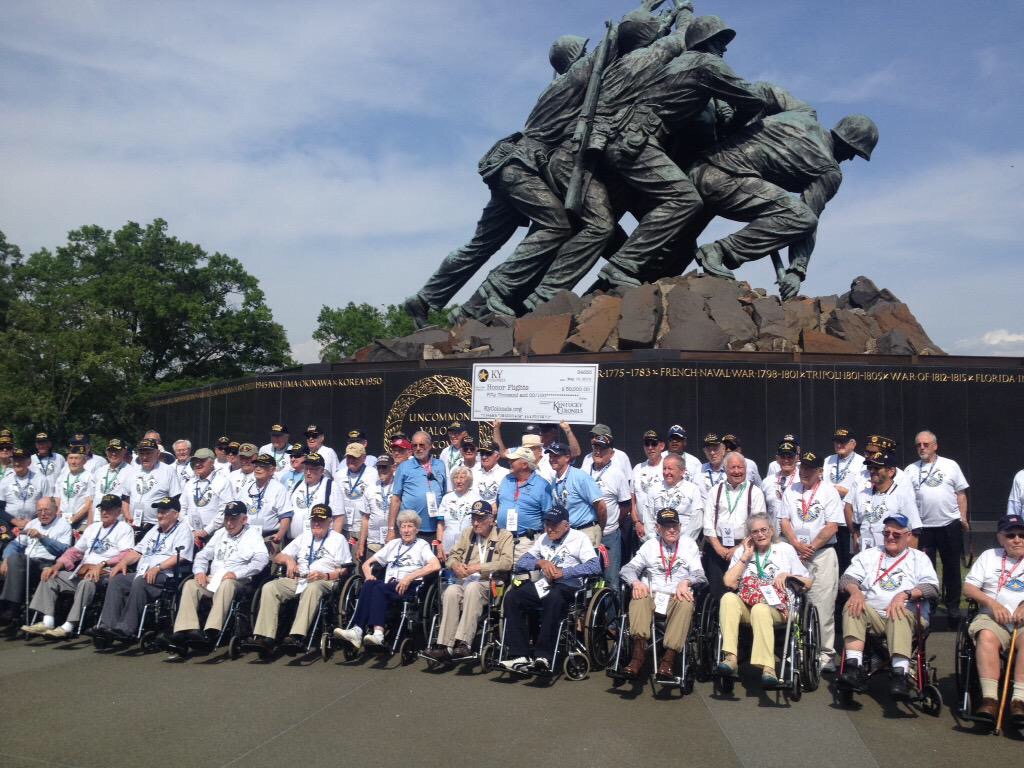
2015 Kentucky Colonel Honor Flight
“Not to know what happened before we were born is to remain perpetually a child. For what is the worth of a human life unless it is woven into the life of our ancestors by the records of history.” ~ Cicero
People living in democratic republics should know not only of its origins but also of the imperfect democratic struggle it spawned. Such appreciation might alleviate the taking of one’s way of life for granted. Americans understand the embodiment of heroic virtue in everyday life, for legends runs deep in American history.
Yesterday I had the privilege of serving our Veterans as a Guardian for our Honorable Order of Kentucky Colonels Honor Flight to Washington DC. This was a very emotional experience and I still, 24 hours later, hardly have the words to describe or reflect on the day. As a Kentucky Colonel, this was something I really wanted to do, but did not know what to expect. Well, let me tell you, it exceeded my expectations. This opportunity to serve provided the best lessons in selflessness and servant leadership one could receive anywhere. The Veterans taking part in the Honor Flight, all of whom were Kentucky Colonels, were transformers in life; they thought not of themselves but of a higher cause – America and global freedom.
“Kentucky Colonels are unwavering in devotion to faith, family, fellowman and country. Passionate about being compassionate. Proud, yet humble. Leaders who are not ashamed to follow. Gentle but strong in will and commitment. The Honorable Order of Kentucky Colonels, as a Brotherhood, reaches out to care for our children, support those in need and preserve our rich heritage.” ~ The Honorable Order of Kentucky Colonels Credo

Water Cannon Salute
Everywhere we went the Veterans were met with mobs of crowds cheering and thanking them for their service. There was even a “Water Cannon” salute at Reagan International Airport for our plane as we landed in Washington D.C. As I watched in amazement, these heroes practiced our Kentucky Colonels Credo of being, “Proud, yet humble.” These Veterans were truly touched by the outpouring of support and cries of, “Thank you for your service!” For me it was the first time of truly being in a role of 100% servant leader. Because I am not a Veteran, I did not matter to anyone yesterday, and should not have. This was incredibly satisfying and humbling. The entire day was about serving the Veterans as a group and the Veteran I was responsible for as a Guardian, Jerry McCandless (more about him later). I have always prided myself in walking the talk as a servant leader, but this provided the opportunity to be 100% servant. I have to tell you, I am a changed man.
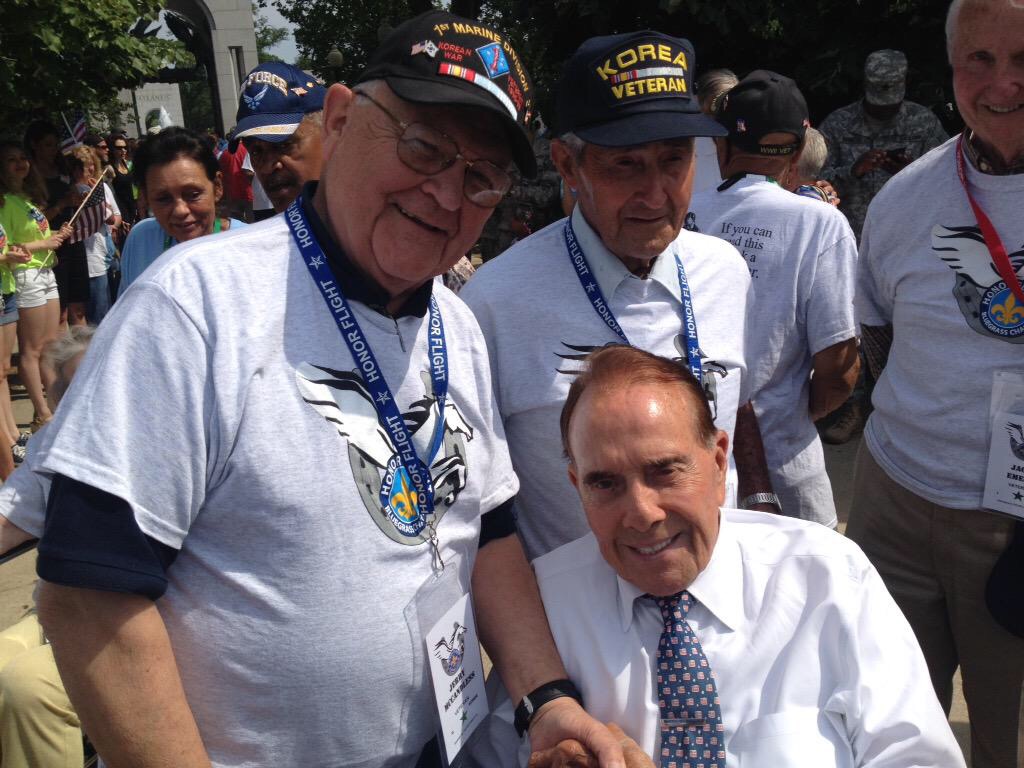
Jerry McCandless With Former US Senator Bob Dole
Amazingly, after returning to the bus someone asked me if I had my picture taken with former U.S. Senator Bob Dole. He comes out and personally greets Veterans from the Honor Flights at the World War II Memorial. Honestly, I had not even thought of getting a picture of me with him. In fact, I don’t even care to have a picture of me with him. I am, however, very proud of the picture I took of Jerry with Bob Dole. Remember, as a servant, I was to have no wants or needs on this trip – and I’m still amazed I had none, except for our Veterans to have the greatest day of their lives. As I said before, this experience really changes you and gives you the chance to fully understand what it means to be a servant leader.
These Honor Flight participants are heroes and legends. Legends serve two purposes: they provide a shared cultural experience for a people, and they symbolize the aims and ideals of that people’s common history, religion, culture, or institutional authority. As a legend, Lucius Quinctius Cincinnatus is a great example. Having stirred the passions of Republican Rome, later citizens of the Roman Empire and eighteenth century America, and men and women of contemporary times, he has been revered throughout history. His life is one of legendary accomplishment and character. Not merely legendary, Cincinnatus is also heroic. While fellow ancient warrior Alexander the Great or fellow Roman leader Julius Caesar are legendary, they do not impart the timeless moral lessons of a hero.
The hero sacrifices himself for something—that’s the morality of it. He gives his life to something larger than himself. In further contrast, the hero symbolizes our ability to control the irrational savage within us, whereas the leader may exploit the savage to gain his ends. One of the many distinctions between the celebrity and the hero…is that one lives only for self while the other acts to redeem society.” ~ Joseph Campbell
George Washington, one of our American heroes, like Cincinnatus, was a man of great accomplishment, but character, not achievement or genius, is also his most honored legacy. Character sets them apart from others. Children in schools all over Italy still recite the Cincinnatus story in the same way children of the United States learn of George Washington and the “cherry tree.” Another great American hero, Patrick Henry asked repeatedly of the role of the citizen in a Republic. He sought much more than a far removed vote in regularly scheduled elections.
Having met the living legend, a British soldier penned the following observations of Washington’s quest to live as Cincinnatus:
“Altogether he made a most noble, respectable appearance, and I really think him the first man in the world. After having had the management and care of the whole Continental army, he has now retired without receiving any pay for his trouble. he knows how to prefer solid happiness in his retirement. I admire him as superior to even the Roman heroes themselves. I am told during the war he was never seen to smile. he had only the good of his country at heart. his greatest pride now is, to be thought the first farmer in America. He is quite a Cincinnatus, and often works with his men himself—— strips off his coat and labors like a common man .”
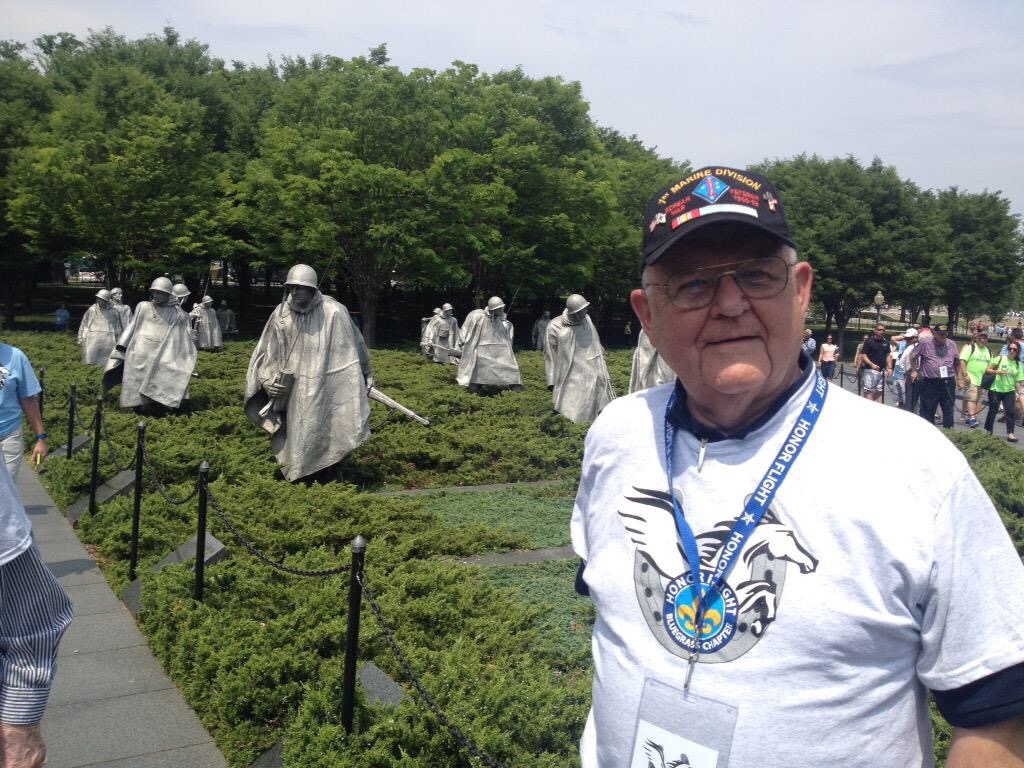
Jerry McCandless At The Korean War Memorial
This was exactly the kind of person I found in the Veterans we served for our Honor Flight. I promised I would tell you about Jerry McCandless. Jerry and I both, as Christians, believe God hand picked us to be together on this flight – God does do that you know! Jerry is a Korean War Veteran and lives on a farm. That agrarian connection got us started on the right foot. I learned so much from Jerry during our whirlwind tour of Washington D.C. I particularly loved watching him interact with young people. He brought history and a sense of patriotism alive and real for all those around him. Jerry truly is a hero who embodies the selflessness and character of George Washington and Cincinnatus. I also still get chills thinking of him telling the story of how, while on active duty in the Marine Corps, he donated $2.00 to the Marine Corps War (Iwo Jima) Memorial. He is very proud to have played a part in our country having that memorial and I believe he should be. There really are heroes who live up to the legends of countries founding heroes and we had the opportunity and honor to serve them yesterday. I would encourage you to seek out opportunities to serve our nation’s heroes!
Reference
Hilliard, M.J. (2001). Cincinnatus and the citizen-servant ideal. Xlibris Corporation.
New World Global Leadership
 “We know this much. The world is not going to be dominated by any one great power. For Americans that’s going to be a very difficult thing to accept. Most of us still see a world – the world of 1960 – in which America was the only great power, and the only functioning economy.” (Peter Drucker in Maciariello, 2014, p. 134) These were the words of Peter Drucker in 2004 and I think he was spot on. In fact, I believe we still don’t fully understand the new world we live in. Drucker also said, “So we Americans will have to learn that it is going to be a very different world in which different values must coexist (Maciariello, 2014, p. 134).” I really believe that sometimes we proceed as if the United States is the world, when in reality we are part of the world.
We are going to have to learn to be effective change agents of a global future. We will need to create our own future, rather than trying to predict the outcome of all these global forces (Maciariello, 2014). Whether the global demands become threats or opportunities will depend on our competence. The forces of a global society cannot be left to market forces or any one sovereign nation. Today’s lesson from Peter Drucker furthers my belief that leaders in education must make a commitment to moving global education forward. Engagement is the key to having teachers lead this movement in global education.
 Global education is not just about economics, it has to be about citizenship and global awareness. Therefore, kids need skills to navigate globally. Furthermore, kids need skills to navigate a shrinking world. The world is getting smaller and kids need the skills to navigate globally. Hanging world flags and doing multi-cultural days with different ethnic foods does NOT make students globally competent. We must begin to use the ABCs of global immersion: Academic Achievement, Bilingualism/Biliteracy, and Cultural Competance. We must create intentional/strategic curricula for global education and competancies, not just a few activities.
The skills and insights students can gain from interacting with people of different nations and cultures is critical as America engages more intensely with an increasingly global marketplace and interdependent world. As an educational leader, I must lead the charge to help the students I serve to have a high quality global education program. A great global education program is multi-faceted, fully job imbedded professional development for the teachers, and has transdisciplinary themes. Finally, I believe all students have the right to deep global competency! How will you help to develop a sense of urgency around global education?
Reference
Maciariello, J. A. (2014). A year with Peter Drucker: 52 weeks of coaching for leadership effectiveness. New York, NY: HarperCollins Publishers.


leave a comment