Finding The Extraordinary You
“While understanding what makes you unique can give you a leadership edge, realizing what’s extraordinary about you is even better—those unique traits that are particularly special to you. Consistently work to emphasize, develop, or leverage these abilities and you’ll eventually carve out a clearer, greater leadership advantage.” ~ John M. Manning
This week’s lesson in The Disciplined Leader (Manning, 2015) reminded me so much of the work of Sally Hogshead’s work in How The World Sees You. She, like Manning, taught us that what makes us unique also gives us an edge. There is something extraordinary about each and every one of us. Hogshead argues we need to be more of who we are. This means using the archetypes that give us the biggest advantage. Manning (2015) posited if you want to change and grow, you need to believe this about yourself.
“Edge starts with self.” ~ Gene Simmons, KISS, in an interview with Jay Leno
Manning (2015) provided some great ways for us to develop our “edge.” Here are a few:
- Examine what you love to do – Greater understanding will give you the ability to align future activities to your passions, resulting in even more satisfaction.
- Determine your best skills – what skills you have that do make you effective and different. Your best skills are whatever you’ve learned to do really well in life.
- Know your true gifts.
Interestingly, we had a discussion about leadership mantras this past week during a Hoosier Academies Focused Leader Academy session. I asked the group if they were going to imitate me to someone else what would you do or say. They overwhelmingly and imidiately said three things: everything is great attitude, when asked how I’m doing I always say, “I couldn’t be any better” or “If I was any better…” and always saying “Make it so” to ideas. Of course, they were able to poke fun with some of my mannerisms, too. But, what we found was this was a pretty accurate way of identifying different leaders’ edge. A big part of my edge is my enthusiasm and positivity. I am attaching a graphic we did during this session.
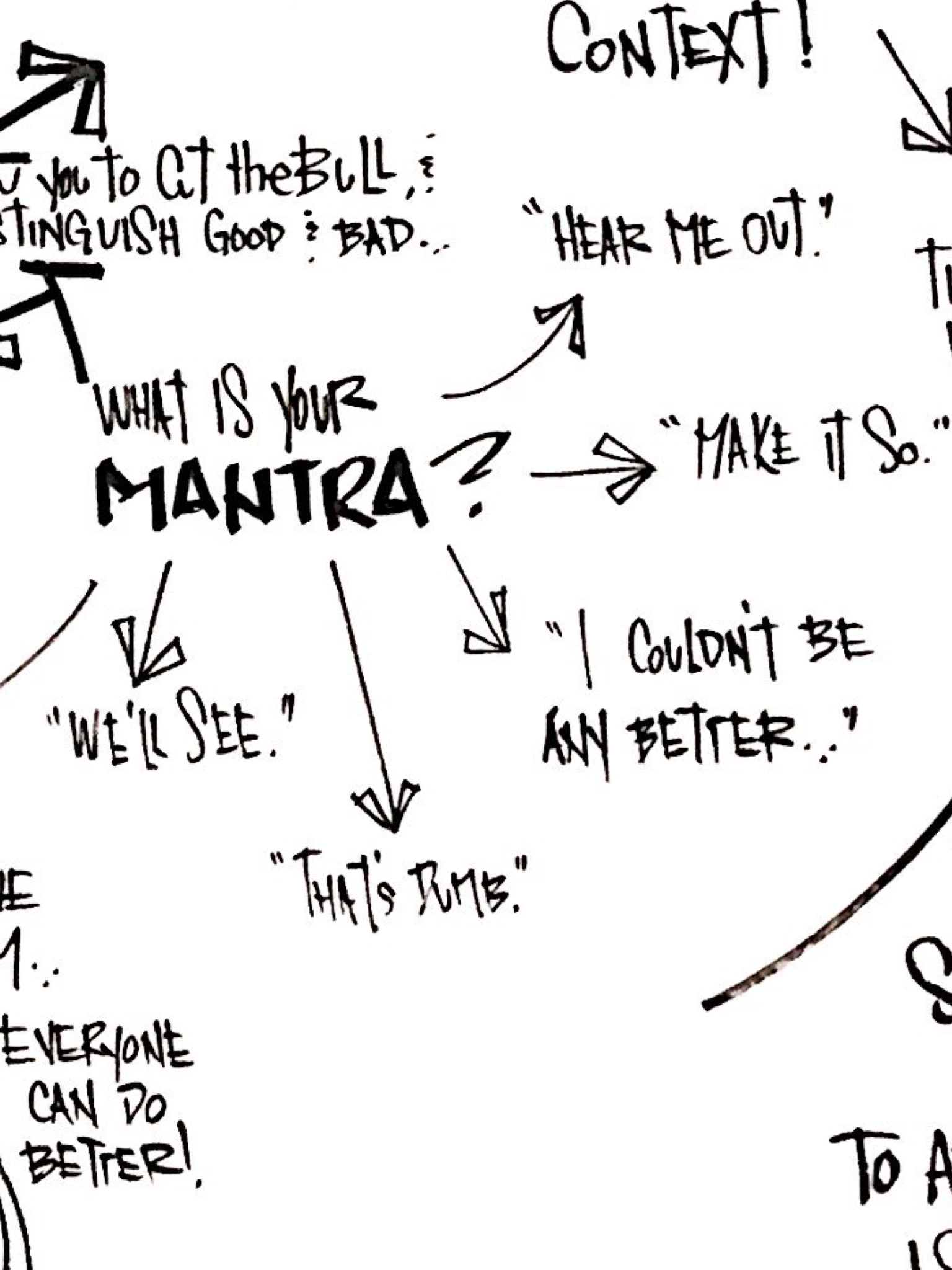
Graphic Facilitation by Mike Fleisch
Manning (2015) reminded us we must stay true to the “real you.” My challenge to you in this post is to identify your edge and then develop your skills by using your gifts and passions. What would those on your team say is your leadership mantra?
Reference
Manning, J. (2015). The disciplined leader: 52 concise, powerful lessons. Oakland, CA: Barrett – Koehler Publishers, Inc.
Values Define Your Unique Leadership Identity
 Leaders know what they value. They also recognize the importance of ethical behavior. The best leaders exhibit both their core values and their ethics in their leadership style and actions. Your leadership ethics and values should be visible because you live them in your actions every single day. People know what to expect if leaders have identified and shared their core values, living the values daily – visibly will create trust. To say one sentiment and to do another will damage trust – possibly forever. As Manning (2015) pointed out in The Disciplined Leader it is not only important for leaders of lead according to their values, but the leaders core values must also align with the values of the organization they work for. Our unique leadership identity is made up of our core values. As a leader, choose the values and the ethics that are most important to you, the values and ethics you believe in and that define your character. Then live them visibly every day at work. Living your values is one of the most powerful tools available to you to help you lead and influence others. Don’t waste your best opportunity.
Bottom line, the role of leadership is to add value to other people and the true measure of leadership is influence, thus a great leader must have the ability to change the attitude or behavior of others. Therefore values must be aligned to key decision making. Organizations must also determined what the core values of that organization will be. We have really been working on this becoming a part of the DNA and culture of the schools I lead. This has to be so much more than just words on a paper. I was so proud this past week when I was meeting with some members of our team to make some decisions and one of them referenced our core value of putting students first. In fact, she said, “You know, this is a pretty easy decision if we truly want to put students first ahead of the adults this decision will affect.” She even pointed to our graphic we are using to represent our vision, mission, and core values. I thought, “Wow, it does not get any better than this! We are truly changing the culture and really using our core values, not just printing them on a page.” We all need to use this example to guide us to use our core values to proactively and consistently guide our personal and organizational decisions.
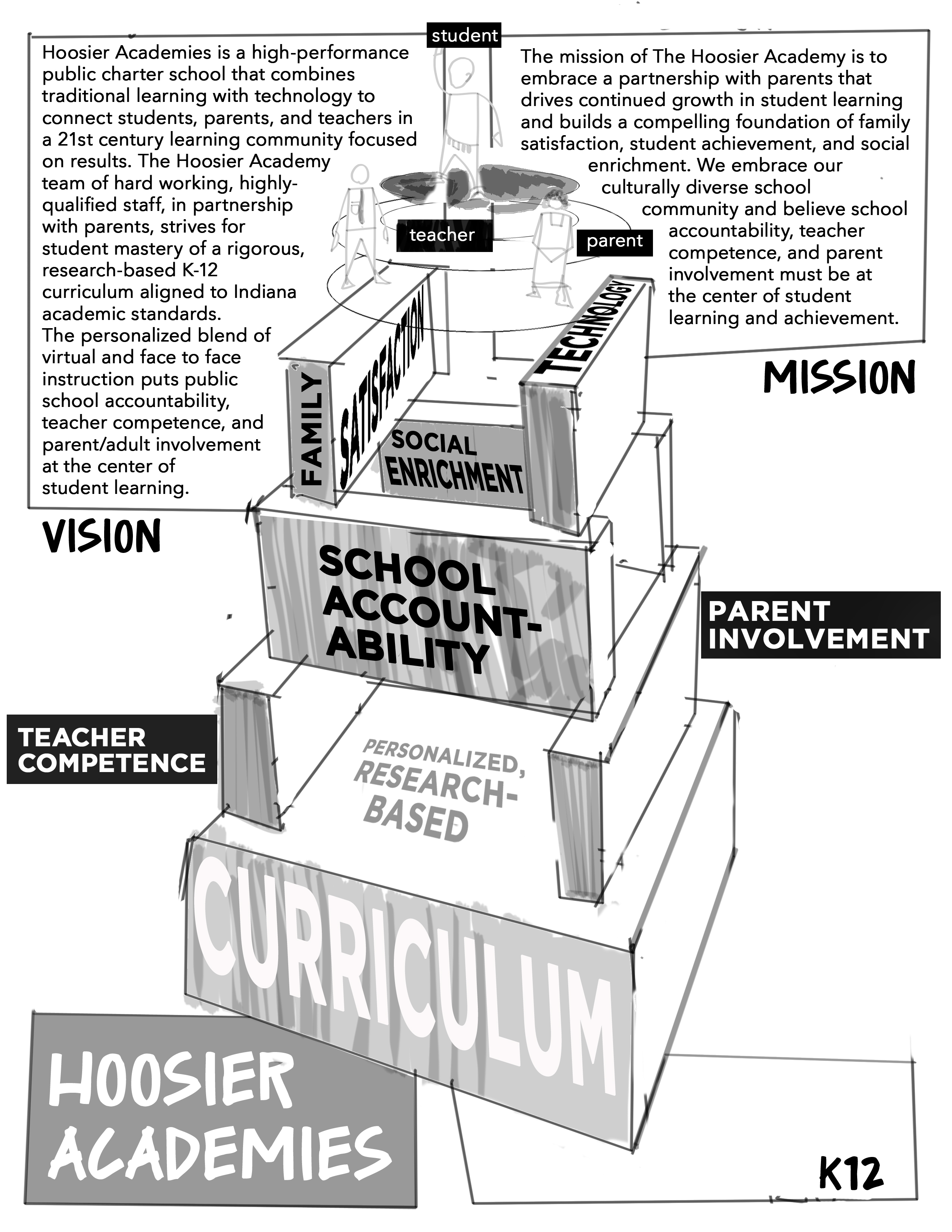
Students Are At The Top of Our Core Value Structure!
- Living the values
- Teaching the values
- Recognizing the values
- Hiring new people based on the values
- Reviewing people based on the values
- Letting people go based on values
In this week’s entry, Manning (2015) also reinforced points 5 & 6. Many CEOs don’t make it because their core values don’t match those of the organization they lead. My goal for the organization I lead is to clearly communicate and integrate our school’s core values with all the processes and operations of our school. This should result in higher employee engagement and making sound decisions based on our #1 core value of putting students first. This also plays into another important leadership point of making sure that all team members understand his or her role in carrying out the vision, mission, or strategic plan of the organization. Understanding, living, and making decisions based on the core values of the organization goes a long way to making this possible.
“Disciplined Leaders regularly reference their values in critical decision making and rely on them when they are stuck between “a rock and a hard place.” They use them to establish specific direction and get confirmation about those choices they’ve made.” ~ John M. Manning
For me, as a leader I must continue to developed my leadership style around my personality and values, and in the end, actions are consistent with what I truly believe. As Goethe said: “Things that matter most must never be at the mercy of things that matter least.”
References
Hyatt, M. (2012). Platform: Get noticed in a noisy world. Nashville, TN: Thomas Nelson.
Manning, J. (2015). The disciplined leader: 52 concise, powerful lessons. Oakland, CA: Barrett – Koehler Publishers, Inc.
Knowing Your Mission & Purpose
A Graphic Representation of Our Organization’s Study of our Mission & Vision. Thanks Mike Fleisch!
We are working on this very process right now in the schools I lead, Hoosier Academies. I have attached some visuals of our work in this area thus far. It is our desire that this process go so much further than just having words. We want our mission and vision to truly represent the shared purpose of all stakeholders in putting students first. By doing so, we can then budget on purpose, structure on purpose, staff on purpose, program on purpose, and strategic plan on purpose. We must know our mission because not everything is in life is worth doing. Without purpose it is hard to discern what is worth doing. In week 45’s lesson in A Year With Peter Drucker (Maciariello, 2014), five reasons for being purpose driven:
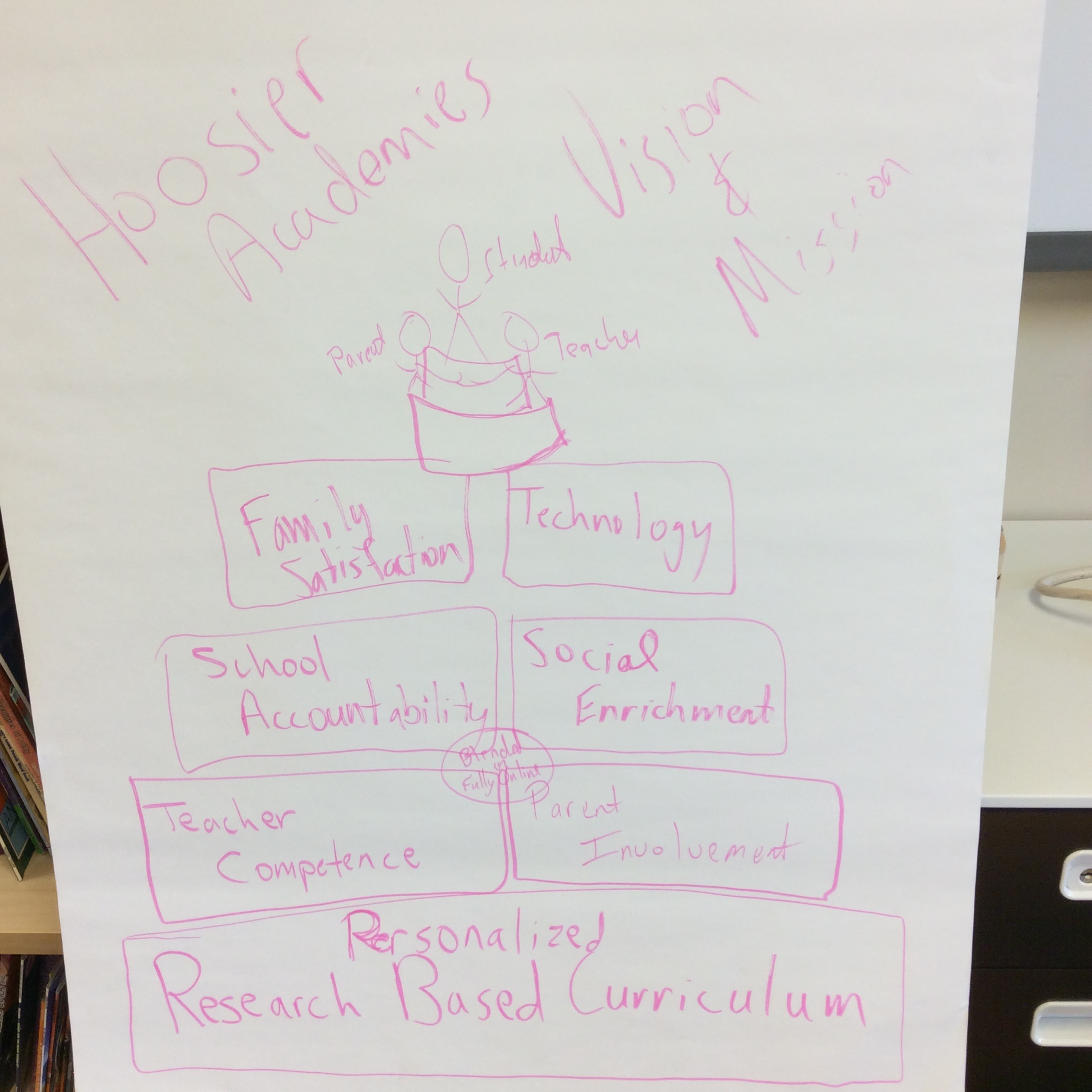
1st Draft of Our Graphic Study of Our Mission & Vision
- Purpose builds morale.
- Purpose reduces conflict in organizations.
- Purpose provides vision.
- Purpose allows concentrating.
- Purpose provides a system of evaluation.
Drucker (Maciariello, 2014) posited that a theory of business needed three parts to be successful. First, there needed to be defined assumptions about the environment of the organization. Second there must be a specific mission. Drucker put this so well, saying, “The assumptions about mission define what an organization considers to be meaningful results – they point to how it envisions itself making a difference in the economy and society at large.” (Maciariello, 2014, p.353) Finally, core competencies define where an organization must excel in order to maintain leadership.
 One of the main reasons we are going through this process right now was driven home by the fact that a mission must be tested against reality. Our schools had not taken a look and really studied it’s mission and vision since the start of the schools. No mission lasts forever. Also, we have to remember what Drucker (2014) taught, “Knowledge is a perishable commodity.” (p. 355) We must not procrastinate if our mission and vision are obsolete or no longer match our purpose. Additionally, we must rethink the assumptions and core competencies on which our mission and vision are based and update the premises on which our organizations are operating. I always have to remind myself and our team to stay focused on the things our organization must do extremely well in order to succeed in carrying out our mission. You will notice in the graphic representation of our mission and vision we chose to use a Jenga theme (I will be doing a post dedicated to the process we are using with our Graphic Facilitator, Mike Fleisch, later). We really think in the case of a school this is such a great way to look at our purpose, vision, and mission using because we have the student at the top, but if any other area fails it brings down the tower and does not allow us to carry out our core value you of putting students first. We must support those areas of required excellence by offering continuing professional development and education.
Reference
Maciariello, J. A. (2014). A year with Peter Drucker: 52 weeks of coaching for leadership effectiveness. New York, NY: HarperCollins Publishers.
It Isn’t Always Right To Be Right
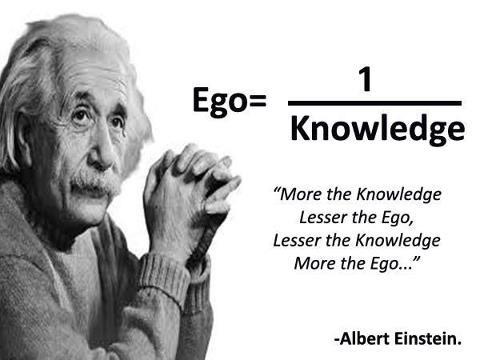
This week’s lesson in The Disciplined Leader (Manning, 2015) dealt with humility. Manning points out that disciplined leaders admit they do not have all the answers. They are able to let go of the ego and ask for and accept help. The lesson here is, according to Manning (2015), you are responsible for how you carry and lead yourself. It’s really pretty simple, talk less and listen more.
“Disciplined Leaders live and die based on the performance of their team. You will find that many of the best business leaders talk about their team and keep them in the spotlight, not talking about themselves. These leaders understand their role is to help their team be successful and give them credit every time credit is due. Through these actions, such leaders earn that crucial respect, build loyalty, and consistently get their desired results.” ~ John M. Manning
Manning (2015) gave us three great points to live by in the book:
- Look beyond you for answers.
- Adopt a teamwork mindset.
- Grow awareness of your verbal and body language.
I am a believer we must share our mistakes as teachable moments. When, as leaders, we showcase our own personal growth, we legitimize the growth and learning of others; by admitting our own imperfections, they make it okay for others to be fallible, too. We also tend to connect with people who share their imperfections. Another way to practice humility is to truly engage with different points of view. Too often leaders are focused on swaying others and “winning” arguments. When people debate in this way, they become so focused on proving the validity of their own views that they miss. As Manning(2015) pointed out, “It isn’t always right to be right.” Ambiguity and uncertainty are par for the course in today’s knowledge society. When leaders humbly admit that they don’t have all the answers, they create space for others to step forward. Finally, we must role model being a “follower.” Inclusive leaders empower others to lead.
“Develop your leadership style like a branded product. You want others to trust that brand and always lean toward it.” ~ John M. Manning
Reference
Manning, J. (2015). The disciplined leader: 52 concise, powerful lessons. Oakland, CA: Barrett – Koehler Publishers, Inc.
Being Prepared For What You Don’t Know You Need To Be Prepared For
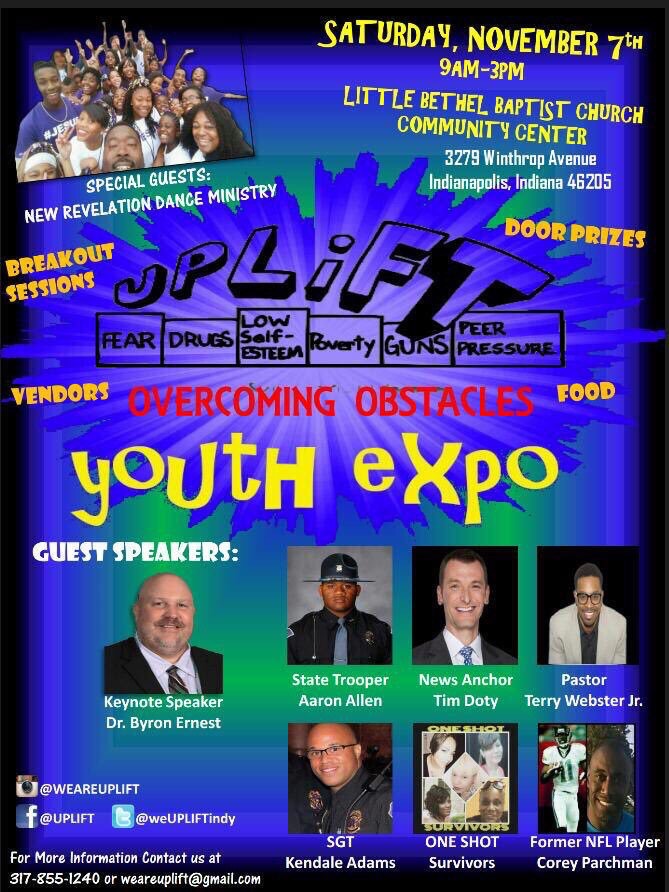
Later today I will be speaking at the Overcoming Obstacles Youth Expo. This expo is being put on by Uplift Indy. I love the title, “Overcoming Obstacles.” That’s really what it is all about. I will be closing out the day and will tie it all together by working with the youth on around the idea of “Being Prepared For What You Don’t Know You Need To Be Prepared For.” Isn’t that what obstacles are? Things we are not prepared for. But really, we have some tools already in our toolbox for being prepared and just need to think through how we get the rest. I can’t wait to spend time with these kids today!
I will post my comments and thoughts from the day when the expo ends today.
Truth: The Key To A Candid Workplace Culture
“The longer I live and participate in the business world, the more I realize telling the truth is almost always the correct choice, painful or not. There are ways to communicate with tact; a harsh reality can be delivered in a constructive way.” ~ John M. Manning
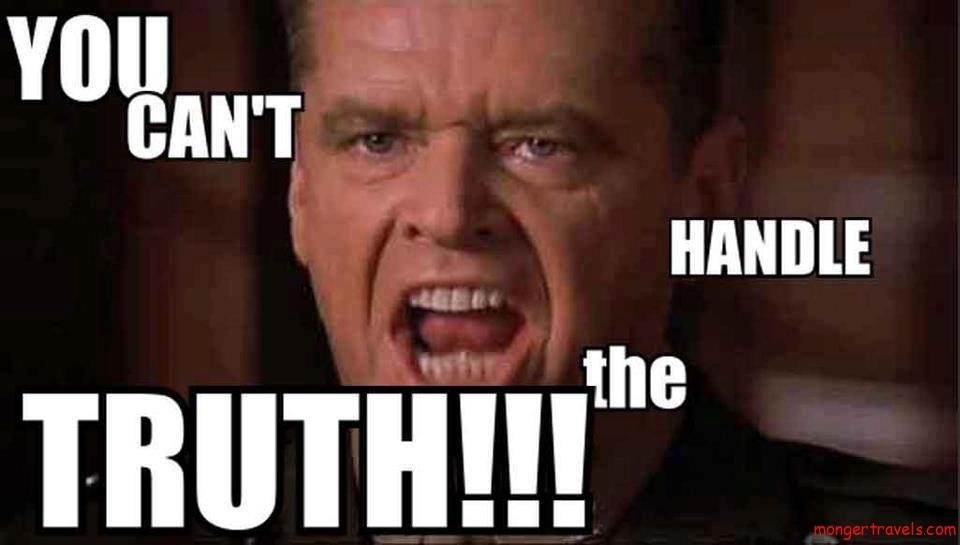
 As I read this week’s entry in The Disciplined Leader (Manning, 2015) I was reminded of the dramatic scene in the great movie A Few Good Men. In the movie’s final court scene where the military lawyer, Kaffee, played by Tom Cruise is trying to draw the arrogant colonel, Jessup, played by Jack Nicholson into admitting that he ordered a Code Red (a sort of vigilante justice within a unit) that was officially not allowed by the military; Kaffee yells at him: “I want the truth!”, and then Jessup yells back “You can’t handle the truth!”, and then proceeds to make the admission and tell the truth, finally. This telling of the truth ultimately builds trust on the team. According to Gary Peterson of Forbes Magazine (Peterson, 2013) there are four key attributes to strong followership. Followership is defined, according to the University of Oregon, as the willingness to cooperate in working towards the accomplishment of the group mission, to demonstrate a high degree of teamwork, and to build cohesion among the group. (University of Oregon, 2013). Here are the four key attributes:
- Trust: Through everyday behavior, “followership” requires that the leader provides evidence that they can be trusted.
- Stability: Leaders with strong “followership” remain calm in the face of panic and give a sense of confidence to those around them.
- Compassion: Strong “followership” leaders have unrelenting passion for people and show empathy when those folks are enduring hard times.
- Hope: “Followership” requires that the leader has unwavering belief that their product/service will not only succeed, but will change lives.
Manning (2015) points out that the truth also sets the stage for a candid workplace culture. This allows it to be a productive and safe place for team members to be engaged and part of a learning organization culture. The truth never hurts us, it is what we do with the truth. I really like the way Manning (2015) describes the truth as giving us the ability to act fast. He posits that truthfulness is a change agent (Manning, 2015). This truthfulness will act as a catalyst for making decisions that mirror our core values, wisdom, self-discipline, and integrity. We must remember to make the truth a part of our core values.
References
“Followership.” Followership. The University of Oregon, 01 Jan. 2013. Web. 15 June 2013.
Manning, J. (2015). The disciplined leader: 52 concise, powerful lessons. Oakland, CA: Barrett – Koehler Publishers, Inc.
Peterson, Gary. “Leadership 310: The Four Principles of ‘Followership'” Forbes. Forbes Magazine, 23 Apr. 2013. Web. 14 June 2013.
Managing Oneself
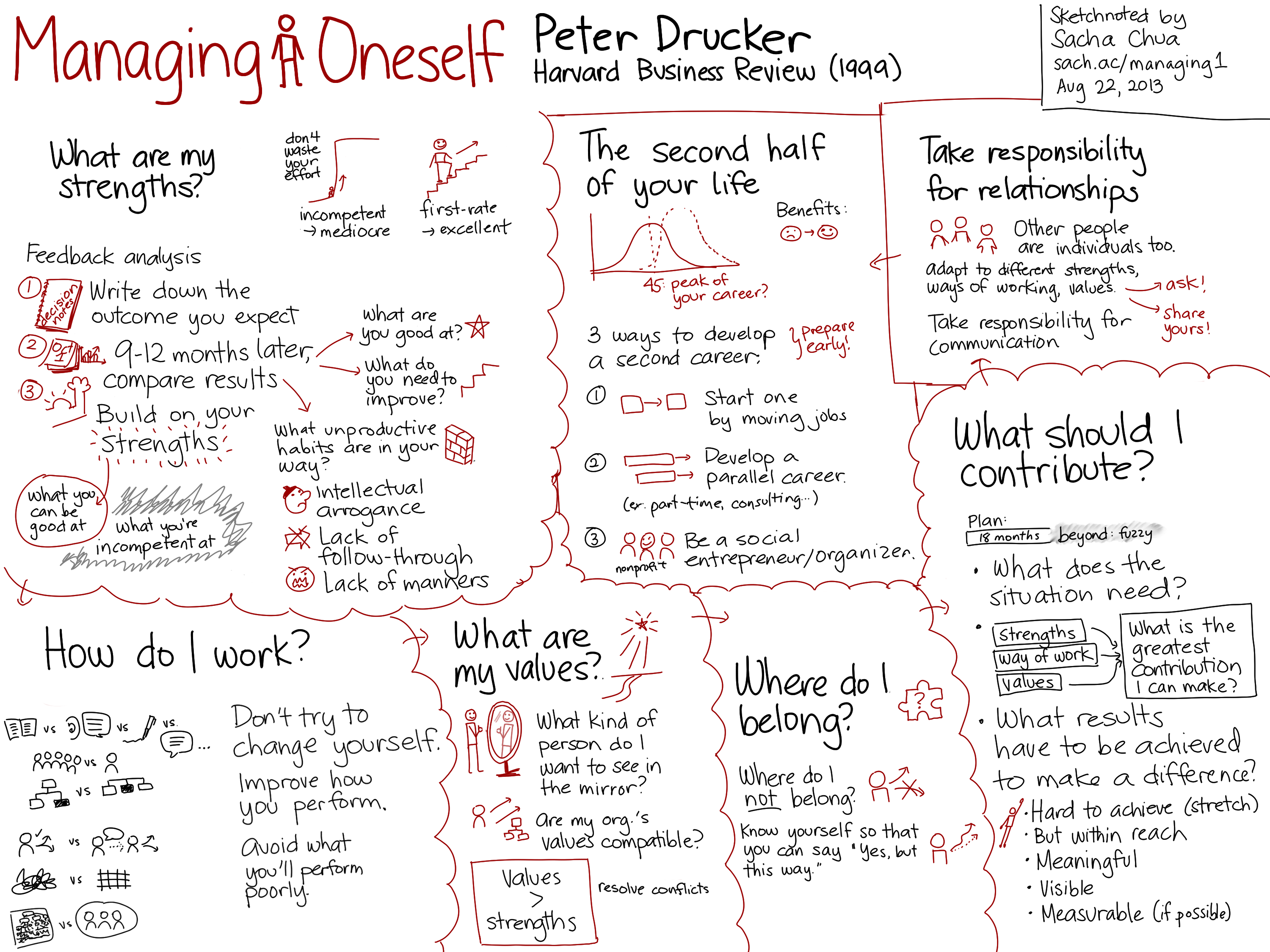 This week’s entry is the last dealing with moving from success to significance in the last half of our life. In this entry Maciariello (2014) explains Drucker’s body of knowledge on “managing oneself.” Managing oneself requires that we understand four things:
- What are we good at – that is, our strengths.
- Managing oneself requires that we understand our values.
- We should understand how we work best – alone or with others as a team.
- Are we good at taking on unstructured tasks, or do we do better when we understand the structure at the outset?
Once we understand our strengths, our values, how we work, and areas in which we are likely to make a contribution, we are ready to manage ourselves in the second half of our lives. In order to reach significance, Drucker believed you could not do more that two or three initiatives; with one probably being the best focus (Maciariello, 2014). 
“Siginificance need not be a 180-degree course change. Instead , do some retrofitting so that you can apply your gifts in ways that allow you to spend more time on things related to what is in your box {your strengths and values}. And to do it in such a way as to reclaim the thrill of that first deal.” ~ Bob Buford
Today, knowledge workers are likely to outlive organizations, and the knowledge worker has mobility. Mobility is widely accepted in the United States, but the idea of outliving organizations is still a tougher pill to swallow. Drucker believed that boredom leads to an underutilization of our talents (Maciariello, 2014). We run the risk of what he called being “mentally finished.” Therefore managing oneself requires us to prepare for the second half of our life.
Reference
Maciariello, J. A. (2014). A year with Peter Drucker: 52 weeks of coaching for leadership effectiveness. New York, NY: HarperCollins Publishers.
Significance Through Social Entrepreneurship
 It is hard to believe there are only 10 lessons left in A Year With Peter Drucker (Maciariello, 2014) after this week’s entry. This means a couple of things: I am about to finish a book that has inspired a great deal of thought and action in me; and, we are only 10 weeks away from closing out 2015. This week’s lesson reminded me of the entrepreneurial spirit that brought about the social civil society we now have in the United States. The Salvation Army, CARE, Alcoholics Anonymous, Red Cross, Girl Scouts, and Lions club were all organized as the result of a service oriented entrepreneur recognizing a social need. In 2011 there were approximately 1.6 million tax-exempt, 501(c)(3) organizations in our great country. This 1.6 million was made up of private charities, private foundations, and religious institutions (Maciariello, 2014). Clearly social innovations is one of the distinguishing characteristics of American society.
 Drucker (Maciariello, 2014) advised us that an opportunity set exists for successful leaders in the second half of life to create significance. If leaders, according to Drucker (Maciariello, 2014), have a develop a narrow focus they can find opportunities for utilizing their gifts in their communities, states, nation, and the world. To do this we need to analyze our own strengths, weaknesses, and core values. Drucker (2014) also spoke of how systematic innovation can be found when he said, “The unexpected – the unexpected success, the unexpected failure, the unexpected outside event; the incongruity – between reality as it actually is and reality as it is assumed to be or as it ‘ought to be’; innovation based on process need; changes in industry structure or market structure that catch everyone unawares. The second set of sources for innovative opportunity involve changes outside the enterprise or industry: demographics (population changes); changes in perception, mood, and meaning; new knowledge, both scientific and nonscientific (p. 333).” When reflecting on the lessons of Peter Drucker I was reminded of how Duke University was founded. Back in the 1920s, James P. Duke wanted to build a medical school and a hospital to provide medical resources, including doctors, to the Carolinas. Today, Duke University provides a place for extraordinary academic learning and research. This is accomplished through undergraduate and graduate schools, research centers and a variety of international programs. In Mr. Duke’s vision, leadership also involved harnessing the power of higher learning for the larger social good to meet the world’s great needs. Duke University is now widely recognized for its pioneering leadership in social entrepreneurship education, having provided essential and important legitimacy for the field by producing and facilitating academic research that has defined, informed, and advanced the field, and having delivered high quality courses to undergraduates and graduate and professional students eager to learn about the field. This is a pretty outstanding example of successful social entrepreneurship if you ask me.
We all need to take some time, especially as we reach halftime, to think about our “opportunity set” and what we need to learn to make a significant commitment, thus, ensuring a probability of success.
Reference
Maciariello, J. A. (2014). A year with Peter Drucker: 52 weeks of coaching for leadership effectiveness. New York, NY: HarperCollins Publishers.
Don’t Worry, Be Happy!
 This week’s entry in The Disciplined Leader (Manning, 2015) is a great one that we all have to diligently work on as leaders taking the responsibility of leading ourselves first in order to effectively lead others. The topic was that of managing our worries. This is one topic that we can all say we have experience with, right? If we are honest, this is something we all struggle with. Instead of mindlessly rushing through life, often stop during the day to ask yourself what really matters to become more aware of your inner world and the chatter in your mind (metacognition). Another very helpful way to calm anxiety and fear is to take the proverbial ‘fly on the wall’ perspective as an observer. When you experience these emotions, imagine stepping back as a third person observer and observing yourself and the situation at a distance. Distancing has proved to be one of the most effective ways to calm our fear. This mindfulness allows us to be very thoughtful in analyzing the situation to either develop a solution or realize no action or worry is necessary because it is out of our control.
“Worry is a toxic emotional condition that can feel like it’s choking us at times, even though most of what we worry about doesn’t ever happen.” ~ John Manning
 Manning (2015) offers three suggestions for leaving your worries behind:
- Understand that worrying is not a solution. I am reminded of one of my favorite TV shows growing up: MacGyver. I’ll let you click on the link I’ve provided to get the details if your not familiar with the show. My takeaway and lesson I learned from watching the show was that MacGyver never let fear take over; he looked for the solution instead of staring at the problem. Then he would take action with his trusty Swiss Army knife and go to work. What a great lesson – if you have never watched an episode get one and let the learning begin.
- Surface your worries. Categorize into what you can control and what you cannot control. I always go one step further and think about what do I need to control and when do I need to worry about controlling it. In other words is it something that is a priority right now.
- Reduce worries. This involves being proactive. Taking control where you can. I use the example here of having a very tight and sound school safety plan. I can’t control what may happen, but with an outstanding plan that every staff member understands, I can eliminate constant worry.
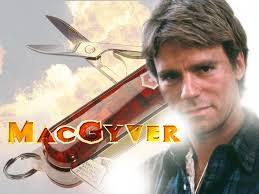 Finally, just be mindful of priorities and use your problem solving skills to diminish your worries so you can be like MacGyver and look for solutions instead of mindlessly staring at the fear.
Reference
Manning, J. (2015). The disciplined leader: 52 concise, powerful lessons. Oakland, CA: Barrett – Koehler Publishers, Inc.
Creating A Vision of Our Greatest Desires
“Take a little control over your career…I am talking about career planning in the sense of: What do I have to learn, what are my strengths, how can I build on them, where do I belong, do I really belong in this company? One must take responsibility of asking oneself these questions from time to time, and acting on the answers…You build on your strengths so they stand you in good stead when you need them.” ~ Peter Drucker
 In this week’s entry in A Year With Peter Drucker (Maciariello, 2014) continues with the theme of going from success to significance. Drucker posited that the knowledge society we now live in creates such an opportunity (Maciariello, 2014). We need to remember, however, that sometime we are not able to fulfill our greatest desires for significance even if we are successful in our present position, job, or career. Remember, success does not necessarily equal significance. In fact, most times it does not. Many times we are so busy working on success, as measured by salary, title, employer, and awards, that we lose the vision of what would make us truly happy.
The question then becomes: “Where do I belong?” We all have cultural interests, but we are reminded that as we enter the second half of our life those interests are driven more by a sense of doing and contributing. This is a great thing, but we need to make sure we plan for this and prepare ourselves (Maciariello, 2014). That may mean studying, taking part in professional development, volunteering in a position to gain experience, or a host of other ways of learning. Drucker broke these new ways of finding significance into to categories (Maciariello, 2014):
- Parallel Career: Taking a position in a church or some other social sector organization using your top skills and talents for the betterment of others.
- Social Entrepreneurs: Using significant financial resources or contacts to make a difference by solving social issues.
 Often it is our duty to do what we are good at even though we would rather do something else. There may come a time when we are mostly free of our obligations and can do what we truly love. I would have to point to my father in-law, Fritz Behrens, as an example of someone who has found significance. In fact we just had a conversation last night about his next steps – I must point out he is in his mid-eighties! He has been on boards that have done significant great things in Anderson, Indiana. He also served the City of Anderson after selling his successful family business. Additionally, he has been of tremendous service to his church. He led the building of a new church, and in my opinion a great church business model would be for him to serve as Chief Financial Officer (CFO) of the church. With his great business sense, unwavering faith, and ability to build relationships he could run (financial and operations) a church of considerable size on a couple of days a week. Plus, he is a a point where he could do it for nothing in terms of salary. Think about that – that’s significance. It is really hard to find a senior minister who is good in all the areas of pastoring a church: oratory skills, outreach, ministering to youth, financial management, and operations management. So, why not go find the greatest pastor with the skills, that in my opinion, matter most: oratory skills and ministering. Then, let a second halfer like my father in-law manage the church with his tremendous skills. I am still amazed that more churches don’t do this.
“Develop a genuine, true, major outside interest. Not a hobby, a genuine interest, which permits you to live in a different world, with different peers whose opinions are meaningful to you.”…”{O}ne needs a true outside interest, not just water-skiing. It not only develops your strengths, it helps to protect you against the inevitable shocks.” ~ Peter Drucker

Heath’s Newest Addition To The Herd Purchased At The 2015 World Dairy Expo
Engage in career planning by clearly identifying your strengths and values. Continue to develop your strengths. Early in life, plan for a second career. Consider volunteer work that may itself provide the transition to a second career or provide enough fulfillment to achieve significance. What will it take in your career to allow you to seriously explore opportunities to move from success to significance, assuming you cannot do so from where you are right now?
Reference
Maciariello, J. A. (2014). A year with Peter Drucker: 52 weeks of coaching for leadership effectiveness. New York, NY: HarperCollins Publishers.


leave a comment