Notes On Servanthood

Yesterday I blogged a post entitled Rushmorean Servant Leadership Today during my study time I came across the notes I have pictured above. These notes were from John C. Maxwell’s The Maxwell Leadership Bible.
“Leaders add value by serving others” (p.814).
“Lead others by serving not bossing them” (p. 814).
“People don’t at first follow worthy causes; they follow worthy leaders who promote worthwhile causes. People buy in to the leader first, then the leader’s vision. Listeners filter every message through the messenger who delivers it. You cannot separate the leader from the cause he promotes” (p.286).
As leaders these are important points for us to reflect and act on!
References
Maxwell, J. C. (2007). The Maxwell leadership Bible. Nashville, TN: Thomas Nelson Publishing, Inc.
Rushmorean Servant Leadership

Christ’s Entry Into Brussels
James Ensor
I was prompted today to write about servant leadership; or really leading from where you are. Really I guess I am combining three important concepts to leadership here, but I believe they are not mutually exclusive. First, I believe leaders must be servants, not title holders. Second, I believe everyone must have the ability to lead from where they are, and finally, I believe we must use Christ’s model and lead from the middle.
Let’s explore my three thoughts. As leaders we lose the right to be selfish. Leadership is about serving others, not wielding power because of a title. Great leaders please others, not themselves. The great leaders I admire add value to others’ lives. We should also, as effective leaders, emulate Christ’s model. Finally, as a servant leader we must remain life-long learners and teachable. As the saying goes, “Leaders are Learners.”
Every day when I walk into school, I remind myself that it is not about me. It is about everyone else that I serve. My goal is to make myself the most dispensable person in the building. Imagine how effective our team will be if every person is empowered and has been given the personal, professional growth to lead, educate, and operationalize everything in our high school.
Additionally, I believe we must lead from where we are. I am a card-carrying believer that every person in our high school is a leader – from the person who empties the trash to the students, the teachers, and right to me. I learn from someone in those groups each and every day. Wheatley (2007) promoted a more unstructured style of leadership, which promotes self-organization. She contended that most leaders use control and imposition rather than a self-organizing process (Wheatley, 2007). I believe the more control is imposed on people and situations the more they are made uncontrollable. Wheatley (2007) considered self-organizing systems to have the capacity to create for themselves the aspects of organizations that we thought authoritarian leaders had to provide. Therefore, it is important for leaders to create a culture where individuals are free and the need to create is met (Wheatley, 1992, 2007).
We really need to move from leader-centered organizations to leadership-centered organizations. There must, in my opinion, be a sharing of leadership responsibilities. Schultz (2011) asserted that by flattening the hierarchy and moving toward a shared leadership model, positive outcomes result from a reciprocal influence between leaders and followers. This is the concept I mentioned as my third concept of Christ’s model of leading from the middle. Schultz (2011) recommended sharing leadership with others. This is really important on two fronts – 1. I want everyone in our organization to be empowered to provide leadership anytime they see a need; and, 2. I want to be leading from within right along side everyone, not out in front where I can’t see what is going on. From the middle I can help pull people along and can also help push. Effective leaders are hands-on and operational giving them the situational awareness necessary to be curious, learn, and take action.
I included the image of my favorite painting in this post – Christ’s Entry Into Brussels, by James Ensor. I was first introduced to this painting when I read Leading Change: Overcoming the Ideology of Comfort and the Tyranny of Custom by James O’Toole (1995). This book is displayed in my office as one of the top five literary influences on my life. In this book O’Toole introduces the idea of values-based leadership that he calls, Rushmorean Leadership. Based off of the leaders chiseled into Mount Rushmore. As O’Toole said: “I prefer to think of the four as the best representatives of a school of values-based leadership dedicated to democratic change” (O’Toole, 1995, p.21). It is important to think about how all four Presidents led: they listened to others, encouraged dissenting opinion, empowered authority to their subordinates, and led by example instead of power, title, manipulation, or coercion.
Now, back to the painting by Ensor. If you enlarge it you will find Christ in the middle where we always find Christ, among us. Look close at the painting and you will find him in the middle of chaos, just like most of us lead in every day. Remember, he led by becoming one of us and teaching us among us. He would not have had to do this, but it was the only way. He led by example, he listens, and he empowers us each and every day to be the best we can be to serve. Take a moment and reflect on your role as a servant leader. Would O’Toole call you Rushmorean? Are you leading from the middle like Christ?
References
O’Toole, J. (1995). Leading change: Overcoming the ideology of comfort and the tyranny of custom. San Fransisco, CA: Jossey-Bass.
Schultz, D. (2011). Sharing leadership. Leadership Excellence, 28(2), 16-17.
Wheatley, M.J. (1992). Leadership and the new science: Learning about organization from an orderly universe. San Francisco, CA: Berrett-Koehler Publishers, Inc.
Wheatley, M.J. (2007). Finding our way: Leadership for an uncertain time. San Francisco, CA: Berrett-Koehler Publishers, Inc.
Rental Car Leadership Lessons

From a business travel standpoint, rental cars are a necessity, but recently I began to realize there are leadership lessons to be learned from these rental cars. I pride myself on staying up on the latest gadgets and technology, but let’s face it, this is no longer an easy task. I cannot even imagine leaving home without my iPad and iPhone, or taking a trip without my Powerbag Charging Backpack to keep the iPad and iPhone charged. These items have transformed our lives.
In that same vane think about how the competition has effected the leadership of the automobile industry. In the past month I have rented four different vehicles; a Chevrolet Camaro, Buick LaCrosse, Chevrolet HHR, and a Ford Escape. Even though I’m a GM guy and partial to Camaro and Buick, there are a few things I really like about the Escape. Such as the tapered cup holders. For a guy who hates travel mugs with lids I walk out of the house with a regular coffee cup. With the Escapes design all of my cups have fit – now that’s pretty cool!
Because I backed into the gate post in front of my house and sideswiped the whole passenger side of my truck I will have the Escape for at least seven more days while they fix my truck. In this time I’ve become attached to some of the features and niceties, such as the touch screen.
The speedometer superimposed into the windshield of a new Chevrolet Camaro isn’t distracting at all, and in fact allows you to know your speed without losing sight of the road. Also, you don’t have to worry about checking your air pressure anymore because your car does it for you.
Now my truck has a lot of nice features, but is amazing how much has advanced since 2009. I have learned to take my car rentals seriously, making sure my latest rental “toy” has everything I want and need.
What I would really like to do is design a truck with all of the favorite designs and features of my favorite rentals. That would be quite the truck don’t you think? But isn’t this exactly how we should build our learning organization teams? Select all the right people with all the latest features and skills so when they come together they make the ideal vehicle for moving our organizations forward.
Transformational leadership requires that we study all the people available, just like I have been studying my rental cars to put all the best features together. Think about this next time your in a rental or admiring the cool stuff someone else’s car has to offer.
Win The Day!

My “Win The Day!” Plaque Made By My Son, Heath
It seems like such a simple phrase, but “Win The Day!” has really become my mantra as a principal of a turnaround academy. I must admit that it was actually my son, Heath, that turned me on to this phrase and the importance of living it. Heath, at age 11, is a huge Oregon Ducks fan. He even has a goal of playing for the Ducks, whose mantra is “Win The Day!” It really has even become a part of the University of Oregon football program. Heath has studied the program and has taught me what it means to them.

Win The Day!
Chip Kelly’s top-ranked Oregon Ducks claim “Win the Day” as their motto. It’s splashed on a Eugene billboard, in the locker room and in giant letters on the players’ entrance to Autzen Stadium. With the Ducks’ offense smoking opponents and Kelly inspiring a gurulike following, “Win the Day” has become a team identity, a fan rallying cry and even a brand. “To me, it means you take care of what you can control, and what we can control is today,” Kelly said. “I think people too often look way down the road — you know, ‘I want to do this, I want to do that, I want to be conference champion, national champion.’ If you don’t take care of Tuesday, that’s not going to happen.”
‘Win the Day” resonates with me, because to accomplish stuff, you have to focus on the day. As a leader, I need all of our team of teachers and staff to hone in like a laser on those things that we have control of and that we can do today. My most treasured item in my office is three foot piece of 2×4 that my son found in the garage and made into a “Win The Day” plaque for me. Heath painted it in Emmerich Manual High School colors. Trust me, I look at it every day. I even have teachers who come into my office and touch it like the Oregon Ducks players do.
Winning the day can mean many things, but to me it means giving all I have every day and making the most out of the things I can control. As a leader, I owe it to all those I serve to “Win The Day!”
Tending The Leadership Fire

Last night as we sat around the fire visiting, my son, Heath, asked a very astute question. He asked: “Dad, why won’t one log burn? It takes several to make a fire.” This was a great question and I explained that fire needs a “critical mass” in order to burn well. Just one log sitting in a stove will not ignite or burn. You must first establish a good draft in the chimney or fire pit and a good bed of red-hot embers to achieve a good burn.
A good Flame means a good Fire – Much of the heat from wood is in the form of the gases we know as “smoke”. If you burn your stove improperly, lots of unburnt smoke will escape up the chimney and cause excess creosote (tar) formation on your chimney and also pollute the great outdoors. A proper fire BURNS this smoke. In general you should always see a flame on your fire. This is a simple gauge of whether you are burning properly. A smokey fire is a dirty and inefficient one!
Leave some space between the wood – Musicians say “it’s not the notes we play that make great music, it’s the spaces between the notes”…same with a fire. Cris-Crossing your wood or placing odd-shaped pieces in the fire help the airflow through your stove or fireplace.
Now think about all the qualities and requirements of a good fire I just included above. Do we not need all the same qualities when tending our leadership fire?
It is nice to sit and watch the fire, watch the flames flicker but soon if you only watch and don’t feed your fire it dies down. You start to feel the chill back in the air. You must get up and put on another log on the fire. As leaders, we must have the situational awareness to make sure our organizational fire is stoked with the right people all burning together as a roaring learning organization.
You need to feel like a roaring fire about getting a sale, about new members and about helping others. That is true leadership. You are cheating yourself if you are not feeding the fire. When you have a good fire going people feel that. They want to join and work with you. They feel the warmth, peace and security.
Discipline is required so the flames within you and the others in your organization never die down to an ember. Be a pro, be a leader and keep the fire growing within yourself and those you lead. Do not let the fire burn down to coals that need a poke to get started again.
Examine yourself. Be honest. Do you have your fire blazing everyday? You need to put logs on your fire to keep it going. Be possessed by your fire. Do the things required to succeed. Work at your situational awareness, work with your team; educate yourself, read each day. You can’t just sit back and watch the fire. It will go out. It has to be fed. One log by itself will not burn with any heat or intensity. Each day you need to put logs on your and your organization’s figurative fire.
Stay focused on your goals. Stay focused on your organization’s goals. Be aware of how you can tend to the goals of those you lead. Think of how it feels to reach those goals.
Keep your leadership fire burning bright!
Tend your organization’s leadership fire!
Learn From The Day!
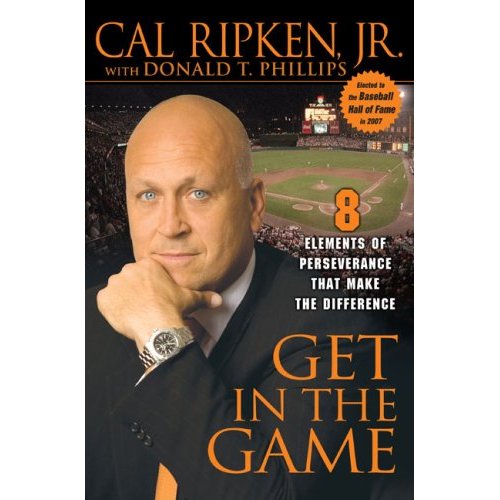 I just finished Cal Ripken, Jr.’s book, Get In The Game: Eight Elements of Perserverence That Make The Difference (2007). It was an incredible book on leadership and learning! There were so many takeaways, but the one that stood out the greatest was Ripken’s (2007) formula for learning – Awareness >; Curiosity >; Learning. This was an incredible formula that he described.
When you are aware of something you get curious. This curiosity leads to learning. We must strive to be aware of those things we don’t know. More importantly, however, we need to be aware of those things around us we need to be curious of. In my case this awareness may be what is happening with the culture of my school, new ways to bridge the learning gap with students, or more effective ways to lead. I am always curious and spend time reading, collaborating with others, and studying to satisfy this curiosity with learning.
I was particularly touched by the phrase that Ripken (2007) quoted from his father, Cal Ripken, Sr., who said: “Get in the game. Do the best you can. Try to make a contribution. LEARN FROM THE DAY. Apply it to tomorrow” (Ripken, 2007, p. 247). My favorite sentence there is, “Learn from the day!” We need to remember to take time and reflect each day on what we have learned.
My challenge to you is to be AWARE, be CURIOUS, and LEARN FROM THE DAY!
Proverbs 29:18
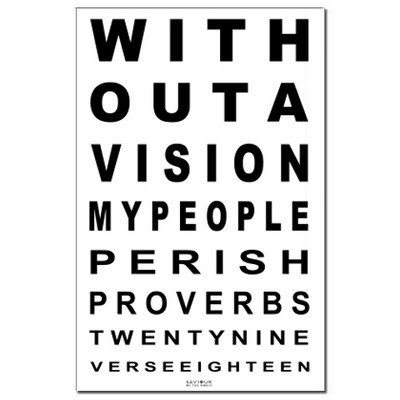 For the second week in a row I am going to reference a Bible verse. I received an email from one of our teachers this week thanking me for the leadership I have been providing. I really appreciated the email, but also appreciated the reminder of what it says in Proverbs 29:18: “where there is no vision, the people perish but blessed is he who keeps the law.” It was great to see this reference in his email.
I love references to Proverbs because I read a chapter a day, as there are 31 chapters. Perfect for a daily reading. I learned this from reading Steven Scott’s The Richest Man Who Ever Lived: King Solomon’s Secrets To Success, Wealth, and Happiness.
This reference was so appreciated because I believe having a vision is so important. More important than the vision is the action. You can plan and visualize all you want, but until you “do” nothing happens. We have a vision for a great school for our students and are working very hard to provide that.
Isaiah 1:18
 As we reach the point of being only about four weeks from the November 6th Presidential election I was reminded of why our system of government works. I just finished Bill O’Reilly’s (2012) new book Killing Kennedy: The End of Camelot which was delivered to my iPad Kindle App on the day it was released. Today during my study time I finished the book and right now I am calling it my top read of the year! That is a big deal considering I have read books like No Higher Honor: A Memoir of My Years in Washington by Condoleeza Rice (2011) and Steve Jobs (2012) by Walter Isaacson.
Amongst all the great stuff O’Reilly (2012) included in this book, one part really moved me; particularly in a Presidential election year. In the book, O’Reilly points to Lyndon B. Johnson’s (LBJ) favorite Bible verse: Isaiah 1:18. This verse exemplifies LBJ’s passion and abilities for building coalitions; or being “collaborative” as I would call it. I have written about collaboration in previous posts such as Putting Learning Organization Theory into Practice andPelican Leadership Lessons.
Isaiah 1:18 says, “Come Now And Let Us Reason Together.” Isn’t that what democracy is supposed to be about? Really, isn’t that what any top performing organization is all about? I think it should be!
John F. Kennedy and LBJ hated each other so LBJ had to work his political magic and coalitions to his advantage. Now, my thoughts on why our system works and we must tolerate, embrace, and try to work with a bipartisan system: LBJ was not really a champion of civil rights because of right and wrong. But, he became a major player of social change related to civil rights in our country for the better. As O’Reilly (2012) stated: “For Johnson civil rights has nothing to do with right or wrong. Taking this stand just makes good political sense.” So, what this tells me is that having issues be political can work.

President Johnson Works With Civil Rights Leaders
So what am I saying? I’m saying I believe in our imperfect system and believe we should strive, as LBJ did, to follow Isaiah 1:18 and “Come Now and Reason Together.” Make no mistake, my points here are not about being Republican or Democrat, but about using our form of government to collaborate and be a Learning Organization!
Am I Done? No!

The Horizon Has No Boundary
Yesterday (September 29, 2012) I had the honor of addressing the graduates of the Northwest Indiana Campus of the University of Phoenix on the beautiful campus of Valparaiso University in Valparaiso, Indiana as their keynote speaker. Earlier in the summer I addressed the University of Phoenix graduates of the Indianapolis campus with a speech I titled “It’s Not All About You!” When asked to serve as the keynote speaker again for another campus I asked what they wanted me to focus on. They told me to give the same speech I had in Indianapolis. I featured that speech in my blog on July 4th. To read the speech click here.
The University of Phoenix has an incredible graduation ceremony which features graduates reflecting on their experience with the university. I was moved by the student speakers yesterday. One, Sherri Green, told about how she had gotten tired of training individuals with degrees to take her jobs. She then told how she started her degree and then was in an accident and had to fight through a long rehabilitation to finish her associates degree. Throughout her speech she kept referring back to a question – “Am I Done?” Then she would say, “No!” She finished her speech with “Am I Done?” “No,” she continued, “I have now started my Bachelor’s Degree!” I was so moved because my speech of “It’s Not All About You!” could easily be retitled “Am I Done? No!” because I spent a great deal of time talking about a very important point – YOU MUST BE READY FOR WHAT YOU DON’T KNOW YOU NEED TO BE READY FOR!
This also goes right along with my new definition of a Lifelong Learner: Education continues an unfinished past into the future. Think about it; this applies to all of us. We all have an unfinished past. As James P. Carse put it in the tremendous book Finite and Infinite Games: A Vision of Life As Play and Possibility (Carse, 1986) one never reaches a horizon. It is not a line; it has no place; it encloses no field; its location is always relative to the view. One can therefore never be close to one’s horizon, though one may certainly have a short range of vision, a narrow horizon.
Those of us who live life as an infinite game see life as theatrical and never ending. We see our death happening while we are living. The finite see it happening at the end of life. “We are never somewhere in relation to the horizon since the horizon moves with our vision” (Carse, 1986). In other words, every move I make is toward the horizon not toward a boundary. As Carse (1986) put it: “Who lives horizontally is never somewhere, but always in passage.” I am hoping you are like me and what to live horizontally, because; I AM NOT DONE!
Reference
Carse, J. P. (1986). Finite and infinite games: A vision of life as play and possibility. New York, NY: The Free Press.
Mind Vs. Brain
 I just finished reading Walter Isaacson’s Einstein. Besides being a great read, I learned so much from reading this book. From an educator’s perspective I found it amazing that Einstein always believed that he had no special talent – he was just as he said, “passionately curious.” This points to the important fact that we have a tremendous obligation to help our students develop and find their curiosity. Einstein posited that the brain was wired and set up as it was, but we all have the ability to develop the mind.
It is important for us to develop and create minds that question. Individuals with intuition and imagination are crucial to our future. The locksmith of the atom and universe also realized that power without wisdom is deadly. The events of the time that Einstein lived was proof of this. Along with developing the free mind and curiosity we must have tolerance and humility. Einstein was a very humble man and we can all learn a lot from his example!


leave a comment