Five Key Ingredients of the Courage Way
Five Key Ingredients of the Courage Way
An excerpt from The Courage Way
By Shelly L. Francis
Leadership is a daily, ongoing practice, a journey toward becoming your best self and inviting others to do the same. And at the heart of this daily practice is courage.
Through more than 120 interviews, I found a pattern of five key ingredients in how leaders have learned to cultivate courage. Three powerful main concepts are true self, trust, and community; the two key practices are paradox and reflection. Here’s a brief overview.
True Self
Our basic premise is that inside of each person is the essential self who continues to grow and yet somehow, deep down, remains constant. Every person has access to this inner source of truth, named in various wisdom traditions as identity and integrity, inner teacher, heart, inner compass, spirit, or soul. Your true self is a source of guidance and strength that helps you find your way through life’s complexities and challenges. When you begin to listen to and trust the truest part of yourself, your choices and relationships flow from that trust, begetting more trust.
Trust
Courage takes trust—in ourselves and in each other. Trustworthy relationships create the conditions for people to flourish and for positive change to arise. Relational trust is based on our perceptions of personal regard, professional respect, competence, and integrity in other people. Coming to understand the attitudes, assumptions, and biases that lead to such perceptions of trust entails honest inner work. Our collection of principles and practices is a time-tested approach for facilitating inner work and cultivating relational trust.
Community
Becoming more self-aware and trustworthy requires both individual introspection and a supportive community. We offer a specialized meaning of community as “solitudes alone together” as well as a “community of inquiry.” Our practices offer models for how to reflect and interact with each other so that new clarity and courage can emerge.
Being receptive to the very idea of needing other people in community takes courage and yet, in turn, creates resilience. Leaders must know how to invite people into and hold them accountable for cocreating trustworthy space so that they can support each other in service of their work together. Achieving effective collaboration requires genuine trustworthy community.
Paradox
We can learn to practice paradox by recognizing that the polarities that come with being human (life and death, love and loss) are “both-ands” rather than “either-ors.” We can learn to let those tensions hold us in ways that stretch our hearts and minds open to new insights and possibilities. With paradox we honor both the voice of the individual and our collective intelligence. We trust both our intellects and the knowledge that comes through our bodies, intuitions, and emotions. Paradox values both speaking and listening. An appreciation of paradox enriches our lives, helping us hold greater complexity. Integrating our inner lives with our work in the world comes from daily practice in holding paradox.
Reflection
Refection cultivates more ways of knowing and learning that complement your mind and emotions, but draw from a deeper place: your intuition, imagination, and innermost being. Reflection is a practice that can be enriched by the mirroring of trust- worthy companions.
When we reflect together, such as by exploring how universal stories of human experience intersect with the personal stories of our lives, it can create relational trust. Guided conversations focused on a poem, a teaching story, a piece of music, or a work of art—drawn from diverse cultures and wisdom traditions—invite us to reflect on the big questions of our lives, allowing each person to explore them in his or her own way. Reflection helps us find the inner ground on which we stand firm, and it helps us find common ground with others.
If we are willing to embrace the challenge of becoming whole, we cannot embrace it all alone—at least, not for long: we need trustworthy relationships to sustain us, tenacious communities of support, if we are to sustain the journey toward an undivided life. Taking an inner journey toward rejoining soul and role requires a rare but real form of community that I call a “circle of trust.” ~ Parker J. Palmer
*************************************************************************************
 About Shelly L. Francis
Shelly L. Francis has been the marketing and communications director at the Center for Courage & Renewal since mid-2012. Before coming to the Center, Shelly directed trade marketing and publicity for multi-media publisher Sounds True, Inc. Her career has spanned international program management, web design, corporate communications, trade journals, and software manuals.
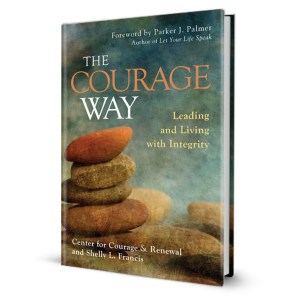
The common thread throughout her career has been bringing to light best-kept secrets — technology, services, resources, ideas — while bringing people together to facilitate collective impact and good work. Her latest book The Courage Way: Leading and Living with Integrity identifies key ingredients needed to cultivate courage in personal and professional aspects of life.
Leadership Lessons From Super Bowl LII
 How about this? Last night the underdog Philadelphia Eagles upset the defending champion New England Patriots, 41-33, to win their first Super Bowl ever. As is our family tradition, we went to our good friend’s home to watch and enjoy the Super Bowl. For this game I really did not have any dog in the fight, but found three things very interesting to reflect on during the game. First, it is such a credit to the Patriots to have been in the position of going for a record 6th Super Bowl title. Think about it, we say all the time it is tougher to stay at the top than to get there. So, kudos to the New England Patriots for that – staying at the top of the game. Secondly, the Philadelphia Eagles had to work from being the underdog. In fact they were the underdog in all post-season games. Not an easy thing to do. Finally, my third area for reflection, and maybe the most important story, is the bench-building work of the Philadelphia Eagles. In other words, to lose a franchise quarterback and have one ready to take over like, Nick Foles, is amazing.
Nick Foles is quite the story when you think about the fact that he was considering walking away from professional football as recently as this past off-season. Then he won the Super Bowl Most Valuable Player award after leading the Eagles past the New England Patriots, 41-33, in Super Bowl LII. There is no doubt that Carson Wentz was in control of the quarterback room prior to his injury, but it is also clear that the backup quarterbacks Nick Foles and Nate Sudfeld were paying attention and learning. Credit Carson Wentz with leading by example in the quarterback room so that when it became Foles’ responsibility to hold the clicker, run the video, dissect the plays and report his insights, Foles was ready.
Additionally, I saw it reported somewhere that John DeFilippo, the Eagles’ quarterback coach, asked Foles to study the offensive plays he liked and choose 25 he thought worked best for him. DeFilippo wanted Foles’ input on plays and the concepts, too. Think about this leadership move by DeFilippo to create an effective package of run-pass option plays that suited Foles’ strengths. Since getting the starting nod in the game at Los Angeles, the Eagles offense has continually morphed into one for Foles rather than for Wentz. I would argue you cannot do this having some intentionality about bench building as an organization. In fact, we see other NFL teams that have done this well; the Dallas Cowboys come to mind. We have also teams not do this well, our Indianapolis Colts this past season when losing Andrew Luck. I am amazed how some teams are able to lose a paramount player and just keep going without missing a beat and others really struggle.
Could it be that it starts in the team room with how the bench is being modeled to, how the bench is being interacted with, and ultimately how the game plan was tweaked, adjusted, and iterated to meet the strengths of the backup? I would argue that it does. Certainly some lessons to be learned here from some reflection on the Super Bowl. What have you been reflecting on since Super Bowl LII?
“No, That’s Not The Problem” ~ Peter Drucker
 Gem #5 entitled, “A Problem Well Defined Is A Problem Half Solved” (quote from Peter Drucker), in 52 Leadership Gems: Practical and Quick Insights For Leading Others by John Parker Stewart was about Peter Drucker’s insistence that problems be defined by root causes, not symptoms. This really got me to thinking about how much we really do this. The point here is we spend a great deal of time dealing with symptoms of the problem as opposed to the actual problem. It is why I am such a believer in looking at outcomes. Sometimes our biggest problem is, we don’t know what the problems are.
 Dr. Drucker also recommended against picking “Elephant Problems.” Elephant problems are ones that are just to big to address. In other words they would just cover too much to really get down to root cause problems. Therefore, elephant problems need to be broken down into smaller parts. I also like the discussion of not just using convenient data. Sometimes we just look at the data that either reinforces our own theories or hypothesis.
To really solve problems we need to first define the problem well and then get to the root cause. Only then can we begin to develop solutions that will be effective. What I have learned is that nearly everyone is usually clear on the task, but not clear on outcomes. Dr. Drucker was tough on those he worked with to continue to search for the real problem. He would continually say, “No, that’s not the problem.”
Failure To Communicate
 We spent a lot of time today discussing communication in our Noble Education Initiative 3D Leadership Program kickoff for our South Carolina and North Carolina schools today.
  Then when I was reading Gem #4 entitled, “The Biggest Hurdle To Effective Communication Is The Assumption That It Has Taken Place” in, 52 Leadership Gems: Practical and Quick Insights For Leading Others by John Parker Stewart. The main point of this gem was to not assume that everyone in the loop has received and understood the message. I really believe it even goes further than this. We also must make sure we understand the Vantage Point of the person we are communicating to.
“Leaders must accept as a constant that when two or more minds attempt to communicate, they are coming from at least two different perspectives.” ~ John Parker Stewart
One of the models I like to teach about to leaders is the Vantage Point Model developed by MG Taylor. Basically, the model looks like a topographical map that takes you from task to philosophy or philosophy to task depending on how you look at it. The lesson here is, though, that it depends on your role as to which Vantage Point you are working from. If we can find a way to communicate and look at all change from all seven Vantage Points we are in a better place to have communicated effectively to all. Here are the Vantage Points:
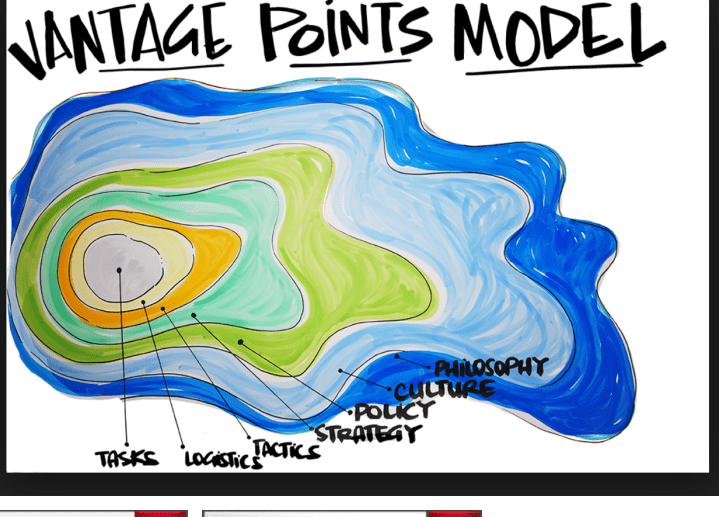
In reality we can never understand the philosophy of an organization or school, in my case, until you are immersed in the tasks that comprise its daily functions. Moreover, our daily tasks can blind people to culture and philosophy, or cause them to accept it too casually. I have found that if organizations can find commonality by using the Vantage Points as a guide it can be become a powerful pathway to effective communication. This model also serves as a guide to answering the “why?”.
Think about all the Vantage Points of those you serve in your next communications.
‘
Action Instead of Intention
 Gem #3 was titled “We Judge Ourselves By Our Intentions. Others Judge Us By Our Actions” in the great book I’m reading this year, 52 Leadership Gems: Practical and Quick Insights For Leading Others by John Parker Stewart. Interestingly, Harry S. Truman talked about this in his book, Where The Buck Stops: The Personal and Private Writings Of Harry S. Truman. He called some of our former Presidents “minor” because these Presidents had very good intentions, but no results. Amazingly, many of these Presidents would have considered their own legacy solid based on intentions. This really speaks to the idea of us,
 Ias leaders, judging ourselves on intentions and not actions. We all (or at least I do) judge our Presidents by what they did, not what they wanted to do.
Lets talk about this. Intentions are wishes or ideas that we mean to carry out. Conversely, an action is something that is done, completed, or performed. Unfortunately, or fortunately, there is a wide gap between thinking the thing and doing the thing. Commitment is what closes the gap between intention and action.
The challenge is that good intentions most generally get verbalized, or voiced publicly. Once intentions are voiced public, they become commitments. Then, if the intention does not turn into action/implementation, credibility is lost. Follow through must happen to increase leadership credibility. If we want to improve our leadership skills, we need to translate more intentions into actions. That’s why doing what we say we will do is especially critical for leaders.
Are your intentions outnumbering your actions?
The Tension Of Spinning The Plates
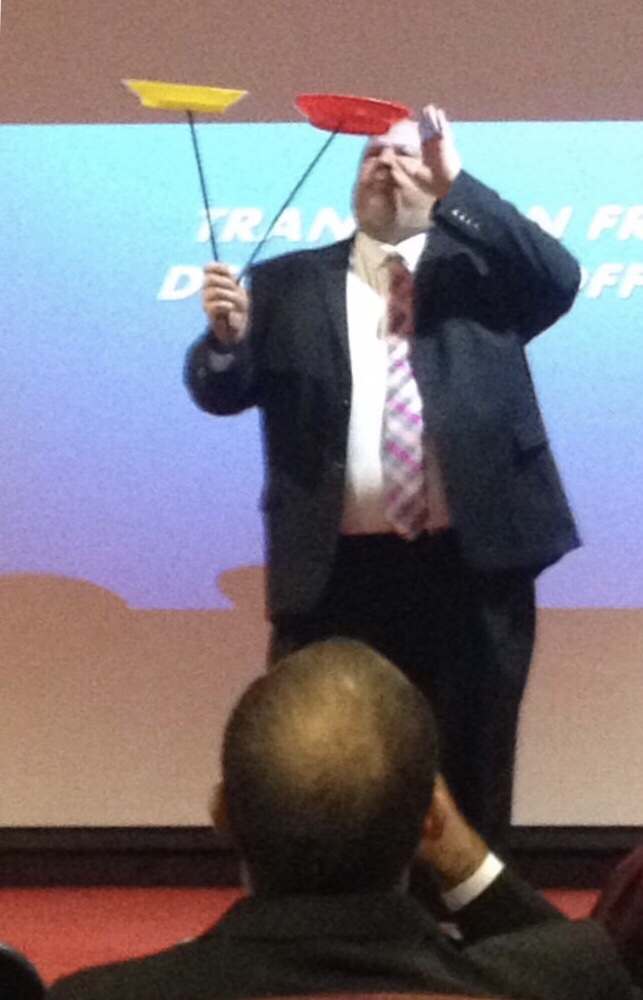
Gem #2 was titled “An Action Deferred Is A Tension Retained” in the great book, 52 Leadership Gems: Practical and Quick Insights For Leading Others by John Parker Stewart. I loved the metaphor he used for this gem of the circus act of spinning plates. In fact I used this same metaphor in my blog post My New Leadership Talent: Spinning Plates! The question really becomes paradoxical as to whether we should be spinning plates, or at the very least how many we should be spinning. The point of Stewart’s gem was that all of the tasks we have cause anxiety (tension) and we need to make sure and prioritize and not procrastinate.
“You are the willing and unwilling recipient of countless actions from work, home, school, and community. It can be overwhelming to process and complete all of these tasks, especially when you procrastinate or don’t prioritize. ~ John Parker Stewart
We all know how the plate spinning act works, right? The performer starts with one plate and once she gets it spinning, adds another, then another. At some point the performer has to back to the first plate and give it a spin to keep it going. Doesn’t this sound familiar in our day to day lives as leaders? The performance typically ends when one of two things happens – the performer runs out of plates, or he takes too much time adding a new plate to the rotation, and another plate slows down enough to wobble out of control and fall off the rod, crashing to the ground in a thousand pieces. Doesn’t this even sound more familiar?
A few things we need to remember. It’s much easier to start something than it is to keep it going. Therefore we need to think about what we start and can we and our team handle it. We have to achieve balance by spreading time across all the spinning plates. This means we need to think strategically about what we should be taking on. Then once started complete the task/project so that it does not become a wobbling plate and fall off the stick.
As a leader we must also keep our eye on all of the plates to avoid catastrophe. We don’t always need to be, and shouldn’t be, the one keeping all the plates spinning, but we do need to be watching to make sure the plates are still spinning. This is where I like to think about what do I have my hands “on” versus what do I have my hands “in”.
It’s a delicate balance, and I must tell you; I’m not very good at it at times. Each plate must spin fast enough but not too fast, and you have to pay enough attention to all but not too much to any particular one. So therefore we must continue to improve our ability to prioritize, enable others, and not procrastinate. How are you at spinning plates?
Share The Success
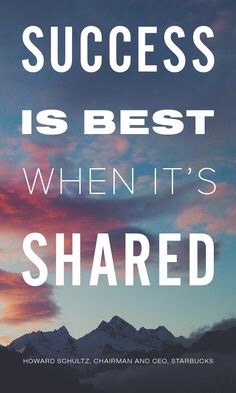 I hope we all realize the way to get things done is not to mind who gets the credit for doing them. In fact, I recently blogged about this in Learning To Appreciate All Who Contribute To The Success while writing about one of my heroes, President Harry S. Truman. This again came up during a Principals training this past week and then again today when I started reading the great book, 52 Leadership Gems: Practical and Quick Insights For Leading Others by John Parker Stewart. I love his books and love the fact it is written with 52 lessons. I am reading one per week and most times these will prompt blog posts like this one. Last year I read, 52 Leadership Lessons: Timeless Stories For The Modern Leader another great book by John Parker Stewart. This book was truly 52 lessons that made me think about my own leadership and how to practice continuous improvement and honing of those skills. This is a book that prompted reflection and thought on my own leadership style and that style’s impact on those I lead.
The first lesson in the book was entitled: “It’s amazing what can be accomplished if you don’t care who gets the credit.” In this chapter, Stewart talked about how the need for personal recognition can become a stumbling block for a team’s success. Let’s face it, we are most fulfilled when we forget ourselves and focus on others.
“Victory is much more meaningful when it comes not from one person, but from the joint achievements of many. The euphoria is lasting when all participants lead with their hearts, winning not just for themselves but for one another.” ~ Howard Schultz
Here are some steps to sharing success:
- Listen
- Establish a clear and shared vision
- Lose your ego
- Share the workload (who is doing what?)
- Show appreciation to your colleagues
- Trust your teammates
- Strategize together
- Mentor your team
- Nurture your team
- Champion and cheerlead your team
Great leaders are able to lead from the back, empowering and motivating their team, which in turn leads to outstanding individual performances, loyalty and hard work. Are you sharing the success?
Status Quo Does Not Need To Be Staffed
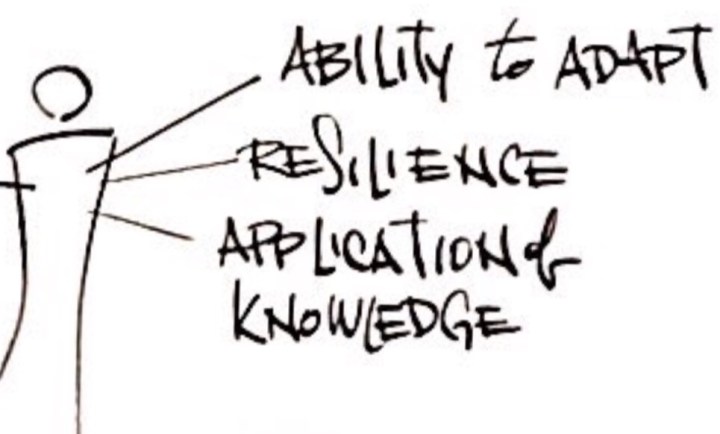 The other day in a meeting a discussion about staffing came up. Those who know me know that I am very much a believer in empowering leaders. Also, remember that I as a believer in David Marquet’s Intent-Based Leadership, I believe everyone is a leader. So, all staff are leaders in my mind and should be treated as such. This discussion revolves around a board I am on, not my day job.
The discussion revolved around just how empowered staff should be. Once again, as a believer in Intent-Based Leadership, I want all staff to be in a position of leadership and saying, “I intend to.” I have always loved saying “Make it so” to employees. The person I was talking to, who agrees with me, made the greatest comment. He said, “Remember, Byron, status quo does not need to be staffed.” This is so true.
The whole issue being discussed was around how much autonomy staff should have and their role in decision making. Needless to say, those wanting status quo do not want staff doing to much, if anything. How sad is that. Great employees with no empowerment. I can’t even get my mind wrapped around the concept. But the idea that “status quo does not need to be staffed” helps frame the situation and is enlightening.
Think about it, if the only goal is status quo, then what is the organization really doing? Not much! I guess if status quo is the objective, then the organization probably does not need any “rock star” employees. I continue to be amazed at the number of leaders who lead with a status quo mentality. That is certainly not me. In fact, you could probably fault me for wanting to be in a constant state of continual improvement and change.
Now, I am not saying we should be in a constant flux of change, but we should always be looking for at least subtle ways to continually improve, or what I call, iterating. We don’t necessarily need to always think disruptive change – even though disruptive change is necessary at times. We need to also think about what tweaks and improvements can be made. This is where having a great staff comes in and is very necessary.
While status quo needs no staff, leading great organizations and creating social change does. If we want to change the world we need great staffs who are prepared to say, “I intend to,” so you can say “Make it so!”
What Difference Has Been Made?
 Yesterday afternoon I had the opportunity to have a discussion during a meeting about outcomes versus outputs. I made the comment that I believed in accountability based on outcomes. The person I was meeting with said he was glad I said outcomes versus saying outputs. If we get stuck just evaluating and making decisions based on outputs we are bound for mediocrity. Great organizations, including schools, are managing to outcomes. In education, I believe we need to lead schools according to outcomes.
What do I mean by this? Let’s use the example of graduation rate. Make no mistake, this is an important output, but it is just that – an output. If we change our thinking to outcomes we look at what students are actually doing (or could be doing) after graduation. To me, this enables us to understand how our schools are serving students and how their lives and circumstances are being changed.
An outcome is the level of performance or achievement that occurred because of the activity or services an organization or school provided. Outcome measures are a more appropriate indicator of effectiveness. Outcomes quantify performance and assess the success of the organization and the processes used. In the high school graduation rate example, some outcomes would be is the student employed, is the student in the military, or is the student attending some post secondary education. Graduation rate, an output, alone does not demonstrate how the life of the student had been impacted. Basically, without outcomes, there is no need for outputs.
Furthermore, outputs are the what. Outcomes are the difference made. In other words, outcomes are the why. Sometimes I worry there is a perception that it is too hard or impossible to measure outcomes and that stops us, as leaders, from collecting key outcomes data. We need to work toward thinking more about outcomes. In the case of schools this will enable us to tell the stories about our students, about who they are, what they want, and what they are achieving.
Finally, if we study outcomes we can answer the question: What difference has been made?
HOW TO LEAD LIKE MADIBA
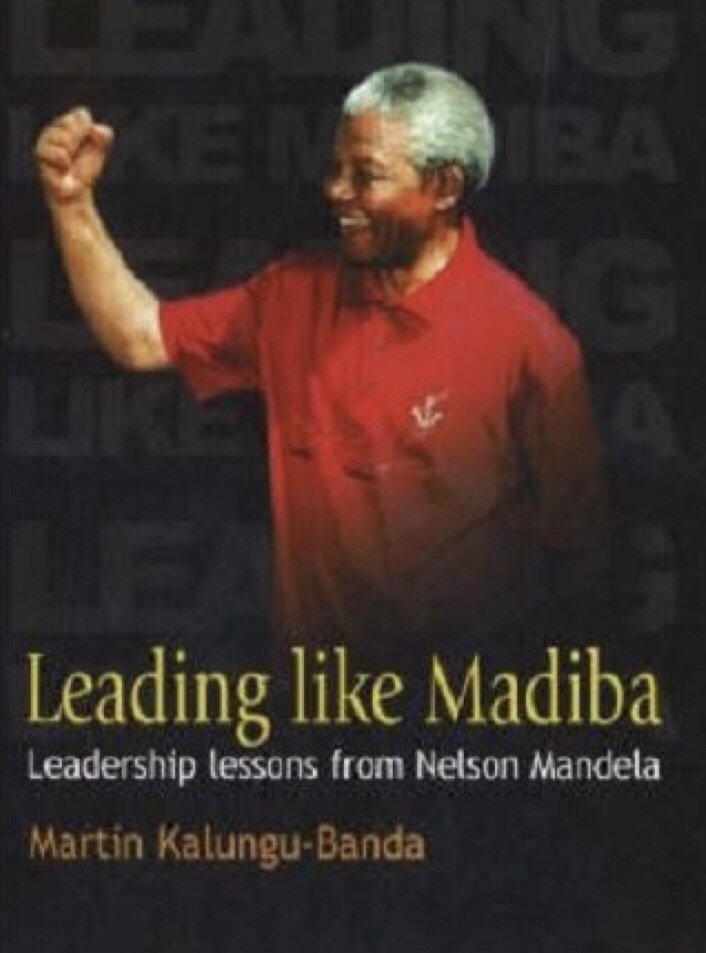
I just finished an awesome book to finish out my 2017 reading challenge. In fact I read 90 books with a goal of 87 for 2017. The great book I just finished was, Leading Like Madiba: Leadership Lessons From Nelson Mandela by Martin Kalungu Banda. Kalungu-Banda taught us in this book that great leaders create trails that we can follow to find our own greatness. This does not mean we become their clones –that would be impossible, and anyway it would mean losing the rich variety of our personalities. But these great people inspire us as role models and their example helps us see what to aim for as we nurture our own style.
At the end of the book Kalungu-Banda gave us ten guidelines for leadership growth that he called: “Madiba path to leadership.” Here they are:
- Cultivate a deep sense of awe for human beings. Leadership is about people, and every single person matters. Mr Mandela, like Mahatma Gandhi and Mother Teresa, did not have a business plan to begin his mission. He just had a deep-seated respect for people.
- Allow yourself to be inspired by the giftedness of other people. In a practical way, show that you recognise that every person has special gifts to use for their own wellbeing as well as for their community or organization.
- Grow your courage. Great leaders have courage. This does not mean absence of fear but learning how to recognise your fears, face the harsh realities of your situation, and nevertheless choose to follow what you consider the right course of action. At first this is not easy to do. Repeated practice will help you build courage as one of your virtues.
- ‘Go and preach the Gospel. Where necessary, use words.’ Lead by example. You should not ask of others what you are not ready to do yourself. Leading by action, you will inspire people more than by simply telling them what needs doing. Your active role will leave a deep and lasting impression on those you are privileged to lead.
- Create your own brand of leadership. A leader’s name and image must be consistently related to a set of values. This is what makes you really effective. When people think of you as a leader, they must immediately think of your principles. These are essential to guide your organisation or community through the various ethical conundrums they will inevitably have to face.
- Practice humility. Great leaders acknowledge their failings. Instead of making people lose faith in you, admitting your mistakes and limitations will draw people to help and work with you. By being able to apologise for your wrongs, you send the message that the search for right thought and action is a common enterprise. It is not owned or controlled by you or any other leader.
- Learn to live with the Madiba paradox. Life is a mix of hope and hopelessness, joy and pain, success and failure, vision and disillusionment. You as a leader have the task of helping others to live successfully with these apparent contradictions.
- Surprise your opponents by believing in them. There will always be people who disagree with your leadership style and what you do. Do not seek to silence, humiliate or vanquish them. Try to understand their point of view and deliberately work at identifying the positive elements there.
- Celebrate life. Activity and achievement of any kind are signs of life that affect life in turn. We work in order to enhance our life. We seek to excel for the same reason, not just to look good. In this spirit, we should celebrate not only individual performance and giftedness but life itself. You as a leader must participate in practices and ceremonies that honour the life of the people you are privileged to serve.
- Know when and how to make yourself replaceable. Great leaders know how to move themselves from centre stage. They know also when it is time to go. They prepare for it and make sure they have a successor who will build on what they have achieved. They enable other people to emerge as potential candidates. This is what sustains the leader’s legacy while guaranteeing a smooth transition.
As you can see, this is an incredible book and should be a part of every leader’s bookshelf. As Kalungu-Banda said, “Inspirational leadership makes all of us dig deep into the innermost parts of our being to find the very best that lies there and make it available to ourselves and others. This, in my view, is what great leadership is all about.” Are you practicing inspirational leadership at the highest level?
 Byron's Babbles
leave a comment