Distorted Perceptions of Others

In my reading and studying yesterday of The Two Towers, J. R. R. Tolkien’s second book in The Lord of the Rings, I was intrigued by a conversation between Samwise Gamgee and Faramir. Sam was impressed by Faramir’s generosity and hospitality toward elves. Faramir commented on how times had changed and others did not trust elves. Faramir said, “Men now fear and misdoubt the Elves, and yet know little of them.” This reminded me and made me consider how fear and misunderstanding can distort perceptions of others, especially those who are different or mysterious.
From this, we can learn that often, fear of the unknown leads to mistrust and prejudice, even when the actual intentions or nature of those misunderstood are benign or misunderstood. It emphasizes the importance of seeking knowledge and understanding before forming judgments. In a broader sense, it reminds us to approach unfamiliar situations or people with curiosity rather than suspicion, fostering empathy and reducing conflict rooted in ignorance.
Ends and Means

In the great book The Battle for Middle-earth: Tolkien’s Divine Design in The Lord of the Rings, Fleming Rutledge pointed out the examples of “ends and means” arguments in J. R. R. Tolkien’s The Lord of the Rings. Speaking about the ends justifying the means, Rutledge said, “The truth of life is that we have very little control over “ends” because of the law of unintended consequences. The only thing that lies within our power is the means to the hoped-for end” (p. 139). This reminds us that while we may have clear goals or desired outcomes (“ends”), we often cannot fully control the results due to unpredictable factors and unforeseen consequences (“the law of unintended consequences”).
Just like in The Lord of the Rings, our actions, though driven by good intentions, can set off chain reactions with unpredictable and often profound consequences. The only aspect genuinely within our control is the way we approach and pursue those goals. Our actions, efforts, and means matter. This all emphasizes the importance of focusing on how we work towards our aims, trusting that ethical and mindful means are crucial because we can’t always guarantee specific outcomes.
Leading Without Grandiosity and Hubris
Yesterday I wrote about hubris in Avoiding The Pitfalls Of Hubris. In that post I spoke of the story of Icarus. Today, I am continuing to think about hubris and am reminded of a scene in J. R. R. Tolkien’s The Fellowship of the Ring where Boromir showed his hubris. In the great book, The Battle for Middle-earth: Tolkien’s Divine Design in The Lord of the Rings, Fleming Rutledge described the scene like this:
“Boromir is not the only one being fought over. Here in this scene, Frodo enters his greatest struggle thus far. He is not facing the Nazgûl; he is not facing the Orcs; he is not facing the Uruk-hai; he is facing only one person, a friend and ally, a valiant warrior of his own fraternity, a man with the same goals and the same Enemy. What he sees in Boromir, however, gives him insight that he did not have before. He sees grandiosity and hubris, the overweening self-importance that proves fatal in any created being. It is not Boromir’s reasoning that alerts Frodo to the danger of his proposal; it is Boromir’s pride. Frodo is thus able to resist when his much larger companion puts forth his seductive arguments” (The Fellowship of the Ring, p. 190).

Avoiding hubris involves cultivating self-awareness and humility. We need to encourage honest opinions from trusted colleagues, friends, or mentors to gain different perspectives on your actions and decisions. The scene with Boromir reminds us that everyone has limitations and that success is often a collective effort, not solely individual prowess.
To fight hubris we also need to stay curious and open-minded. We need to keep learning and be receptive to new ideas and constructive criticism. This helps prevent overconfidence in our current knowledge or abilities. Additionally, we need to reflect on and analyze previous errors to understand how overconfidence or arrogance may have contributed and learn from those experiences.
In The Fellowship of the Ring, Frodo Baggins is surrounded by others with diverse perspectives. We need to engage with people from different backgrounds and viewpoints to challenge our assumptions. By practicing these habits, we can nurture humility, remain grounded, and make wiser, more balanced choices. Thus, helping to avoid the pitfalls of hubris.
Accepting Ambiguity Can Be A Form Of Wisdom

I love this statement by Gimli at the beginning of J. R. R. Tolkien’s The Two Towers: “Maybe there is no right choice.” It reflects a profound theme about the complexity and ambiguity of moral and strategic decisions. It suggests that sometimes, situations are so nuanced that no option is clearly correct or ideal, and choices involve sacrifice, risk, or uncertainty. Growth often comes from navigating these tough choices, and that accepting ambiguity can be a form of wisdom.

I also believe this reflects a perspective that is a valuable and underused approach in teaching and parenting our children as well. Teaching children that sometimes there isn’t a perfect or clearly right answer, but rather the best choice given the situation, helps them develop critical thinking and resilience. We need to encourage our kids to weigh their options, consider the consequences, and accept that uncertainty is a natural part of decision-making. By modeling and guiding them through these ambiguous situations, we foster adaptability, courage, and confidence in their ability to navigate life’s challenges. It’s about helping them understand that making thoughtful decisions amidst uncertainty is a skill worth cultivating.
Gimli’s statement is a good reminder that in difficult circumstances, leaders and individuals may need to accept that perfection isn’t always attainable. It emphasizes the importance of making the best possible decision with the information available, even if it’s inherently imperfect. Gimli’s words highlight the human experience of facing difficult dilemmas where clarity is lacking, encouraging resilience, adaptability, and courage in the face of uncertainty.
Who Will Carry On The Story?

There is a wonderful quote The Fellowship of the Ring from Bilbo talking to Frodo. “Don’t adventures ever have an end? I suppose not. Someone else always has to carry on the story. Well, it can’t be helped.” This reveals a lot that we can take away about the nature of stories, adventures, and life itself. We can learn several meaningful lessons.
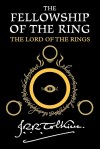
Just as Bilbo recognizes that adventures never truly end because new ones always begin, our lives are continuous stories filled with ongoing challenges, growth, and discovery. No matter how much we accomplish, there’s always more to explore and learn.
Bilbo’s acknowledgment that someone else has to carry on the story highlights the importance of accepting change and trusting that the next person will step up when it’s their turn. It reminds us that life is a collective story where each person plays a part.
The idea that the story continues suggested a sense of responsibility to pass on what we’ve learned, whether through our actions, values, or contributions, so that others can carry the torch forward. This makes me think about our legacy.
Recognizing that adventures and life’s journeys don’t have definitive ends encourages resilience. Even when one chapter closes, another begins, and we have the capacity to face new challenges with hope and courage.
Leading By Remaining Grounded

I love Bilbo Baggins’s poem known as the “Riddle of Strider”: “All that is gold does not glitter, Not all those who wander are lost; The old that is strong does not wither, Deep roots are not reached by the frost. From the ashes a fire shall be woken, A light from the shadows shall spring; Renewed shall be blade that was broken: The crownless again shall be king.” This poem is in J.R.R. Tolkien’s The Fellowship of the Ring. I posted about this poem back in January in Don’t Let the Lack of Glitter Fool You: Uncovering True Value Beyond the Shine. I am rereading The Fellowship of the Ring right now and when I came across the poem again the phrase, “Deep roots are not reached by the frost” really jumped out at me.
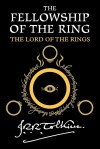
When Bilbo says, “Deep roots are not reached by the frost,” he’s using a metaphor to convey resilience and strength. The idea is that something with deep roots, like a sturdy tree, can withstand harsh conditions, such as frost or storms, because its foundation is strong and well-anchored.
The lesson suggested by Bilbo is that true strength and stability come from inner qualities, core values, or deeply-held beliefs. No matter how challenging external circumstances become, those with ‘deep roots’ can endure and remain grounded.
Leading With Purpose
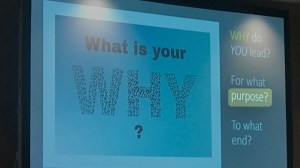
In The Fellowship of the Ring, Bilbo Baggins said, “I have called you all together for a Purpose” in his birthday speech. The narrator of the story went on to tell us, “Something in the way that he said this made an impression.” J. R. R. Tolkien’s making Bilbo’s mention of “Purpose” with a capital ‘P’ reflected a grand, almost cosmic significance. Tolkien was planting an overarching destiny or meaning that Bilbo perceived guiding his life and actions. Conversely, his personal idea of purpose as something diminutive suggested a more humble, intimate understanding of purpose.
From this contrast, we can learn that our sense of purpose can operate on different levels. The grand Purpose can inspire us with a sense of connection to something larger than ourselves, offering a sense of importance and direction. Meanwhile, the diminutive purpose reminds us that meaningfulness can also be found in everyday acts, personal growth, and small contributions. Both perspectives are valuable: embracing the grand Purpose can motivate us towards long-term visions, while appreciating the diminutive purpose keeps us grounded and present.
Reflecting on Bilbo’s perspective encourages us to find balance by honoring larger meanings without neglecting the small, personal purposes that give daily life its richness.
Our Real-Life Story

Fleming Rutledge, author of The Battle for Middle-earth: Tolkien’s Divine Design in The Lord of the Rings, discussed how in The Hobbit and The Lord of the Rings we find that J. R. R. Tolkien made them real-life stories. The Hobbit and The Lord of the Rings are not happily-ever-after stories. They are real-life stories like we live out every day.
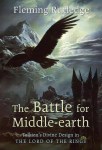
Rutledge explained that Tolkien’s stories, as with our lives are told and can be understood through both “surface narratives” and “deep narratives.” Surface narratives are the stories about our everyday lives. These are the stories abound our roles, routines, achievements, and experiences. Deep narratives, on the other hand, involve the underlying beliefs, values, and meanings that shape our identity and choices. They often relate to questions like “Who am I at my core?” “What is my purpose?” or “What do I value most?”
Our deep narratives are often shaped by our actions, choices, and experiences over time. The way we respond to life’s challenges, pursue our passions, and forge our relationships can reinforce or reshape the stories we tell ourselves about who we are and what gives our lives meaning. Just like the characters of The Hobbit and The Lord of the Rings, our deeds and decisions act as the building blocks of our inner narratives, helping us create a sense of purpose and coherence that guides our journey.
Leading By Putting One Foot In Front Of The Other

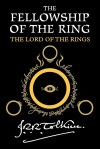
During my rereading and study of The Fellowship of the Ring (The Lord of the Rings, Book 1) by J. R. R. Tolkien I am also reading the great book by Fleming Rutledge, The Battle for Middle-earth: Tolkien’s Divine Design in The Lord of the Rings. Rutledge started with The Hobbit and then works through all the books. I love his work because he is breaking all of Tolkien’s work down and finding the subtleties the way my mind does when I read. He is a whole lot more scholarly about it than me!

This morning in my reading, Rutledge broke down the Greek word Hupomonē from the first chapter of Revelations in the Bible. Hupomonē can be translated to mean “perseverance,” “steadfastness,” “fortitude,” or “patience.” Rutledge asserted that, “It [Hupomonē] is not a glamorous virtue like courage or valor. It sends off no fireworks. Yet it is required of all who would fight the good fight, and there is no one, however lowly, who cannot serve in this way. Bilbo, the rather comical little peace-loving hobbit, is given two or three really heroic moments, but 98 percent of his journey “there and back again” is just putting one foot in front of the other, week after weary week” (p. 60). I spoke about “fortitude” in my new book Mere Leadership asserting that fortitude demands stepping outside of our comfort zone and challenging prevailing beliefs or perceptions. The Hobbit, through Bilbo, reminded us that we don’t get a lot of the big-time heroic moments that often make the news in life. We do, however, do important and significant work every day. Like Bilbo, we put one foot in front of the other.
Leading Without Shortcuts

There is a Swedish proverb that says, “Genvägar är senvägar” that means trying to take a shortcut often makes you late or takes more time instead of saving time. I was reminded of this proverb during my reading of J. R. R. Tolkien’s The Fellowship of the Ring (Book 1). Pippin Took cautioned Frodo Baggins with these words: “Short cuts make long delays.” How very astute. In the context of The Fellowship of the Ring, the shortcut was related to travel and fighting darkness. But we are also tempted by shortcuts when doing projects.

Have you ever done anything that you thought was going to make things easier or save time, but that ended up the opposite? We are wired to take shortcuts. Sometimes we are trying to be more efficient, save time, or just plain being lazy. As Pippin warned, however, shortcuts usually lead to delays or less than desirable results. We need to put in the work or go the distance. As my dad always said, “If it is worth doing, it’s worth doing right.” So, next time we are considering a shortcut let’s take a moment and consider if it will cause delays.


leave a comment