Navigating The Power of Temptation: Lessons on Humility, Self-Awareness, and Self-Control

One of the themes that J. R. R. Tolkien made applicable to us in both The Hobbit and The Lord of the Rings was that power and possessions can take control over us. You can read more about this applicability in Applicability: Tolkien’s View on the Organic Meaning of Stories. One such example for us to learn from is at the beginning of The Fellowship of the Ring (Book 1), when Gandalf told Bilbo Baggins he should give the ring that had the power to make him invisible to Frodo Baggins. “Gandalf stood up. He spoke sternly. ‘You will be a fool if you do, Bilbo,’ he said. ‘You make that clearer with every word you say. It has got far too much hold on you. Let it go! And then you can go yourself, and be free’” (p. 34). Gandalf recognized what the power and possession of the ring was doing to Bilbo.

In this conversation it was like Bilbo became a different person. Bilbo replied, “‘But you won’t get it [the ring]. I won’t give my Precious away, I tell you.’ His hand strayed to the hilt of his small sword” (p. 34). The key word here is “precious.” This is what the evil creature Gollum. Gollum had talked baby talk to the ring calling it “My precious.” Now Bilbo sounded just like him. This was such a stark reminder how we can sometimes fall into the trap of letting power gained and possessions take over and turn us into a different person.
We’ve all seen this happen, or let it happen to us. I know I have. It was good that Gandalf was there to have the difficult conversation with his friend. From Bilbo’s reluctance to give up the Ring and Gollum’s obsession with “precious,” we can learn about the dangerous allure of temptation, particularly power and possessions, can grip even the most unsuspecting or well-meaning individuals.
Bilbo’s initial hesitation highlights how powerful the Ring’s influence is, subtly pulling him into its web and blurring his judgment. Similarly, Gollum’s obsession demonstrates how attachment to such a corrupting object can consume one’s identity and morality.
These scenes in The Fellowship of the Ring remind us to be mindful of attachments or desires that may seem harmless at first but can ultimately lead to loss of self-control and wellbeing. It also speaks to the importance of recognizing the corrupting power of temptation early and choosing the path of humility, self-awareness, and restraint. These leadership attributes are vital both in stories like Tolkien’s and in our own lives.
Tolkien As A Learner

“Those who had asked for more information about hobbits eventually got it, but they had to wait a long time; for the composition of The Lord of the Rings went on at intervals during the years 1936 to 1949, a period in which I had many duties that I did not neglect, and many other interests as a learner and teacher that often absorbed me.” I love this statement by J. R. R. Tolkien in the foreword of the second edition of The Fellowship of the Ring. Tolkien was indicating that those interested in hobbits, and by extension, his broader Middle-earth universe, had to be patient as he took time to develop these stories. This suggests he valued meticulous storytelling and was willing to take the necessary time to craft his world thoroughly.
I am inspired by Tolkien calling himself a learner. Specifically saying, “…interests as a learner” suggests that Tolkien viewed himself as someone who was continually growing and developing, both as a writer and as a person. As a person who considers himself a long-life learner and advocates continuous learning for all, it really resonated with me that he would include that statement in the foreword.
Tolkien’s statement reflects his humility, openness to new ideas, and a recognition that mastery is an ongoing journey rather than a final destination. This attitude indicates that Tolkien valued learning from his experiences, feedback, and the process of creating his stories, which in turn demonstrates his dedication to improvement and a humble respect for the craft of writing.
Applicability: Tolkien’s View on the Organic Meaning of Stories

Studying J. R. R. Tolkien has been very interesting and has caused me to do a great deal of deep thought and research. Tolkien repeatedly said he did not like or appreciate allegory. This really caused me to pause because I always saw his connection to Christianity as allegorical. But as I studied more about it I learned Tolkien was drawing on his own experiences and making his stories applicable, not allegorical. In the foreword of the second edition of The Fellowship of the Ring, Tolkien made it crystal clear for me, saying, “I much prefer history, true or feigned, with its varied applicability to the thought and experience of readers. I think that many confuse ‘applicability’ with ‘allegory’; but the one resides in the freedom of the reader, and the other in the purposed domination of the author.” He was right. I had been confused.
Tolkien’s comment in the foreword highlights a key distinction between ‘applicability’ and ‘allegory’ in literature. When he says that ‘applicability’ resides in the freedom of the reader, he means that readers can take different themes, lessons, or messages from his work and interpret them in ways that resonate personally with their own experiences. If you’ve read any of Tolkien’s work, you know it does just that. This allows for a diverse range of understandings and connections.
Conversely, ‘allegory’ involves the author’s deliberate intention to embed specific meanings or messages that serve a particular purpose or point of view. When an author uses allegory, they are guiding the reader toward a predetermined interpretation, which can sometimes feel like a form of control or “domination” over how the story is understood.
Tolkien went on to say, “An author cannot of course remain wholly unaffected by his experience, but the ways in which a story-germ uses the soil of experience are extremely complex, and attempts to define the process are at best guesses from evidence that is inadequate and ambiguous.” Our experiences matter and are part of our stories.
Tolkien emphasized that his stories are open to interpretation. He wanted us to realize that the meanings are applicable in various ways to different readers. He did not want readers of his works to be constrained by rigid allegorical constrictions that attempt to dictate how they must be understood. This perspective respects our imaginative freedom and the organic way stories can hold different meanings for different people.
Beowulf: No Ordinary Leader

I am so glad I am reading Beowulf. It is an incredibly inspiring story. Yesterday I was inspired by Beowulf to write, Unveiling Power: Exploring the Themes and Legacy of Beowulf. I am at the point in the poem now where Beowulf has killed Grendel. This made me think of what J. R. R. Tolkien said to friend W. H. Auden about his love for Beowulf:
“The overthrow of Grendel makes a good wonder-tale, because he is too strong and dangerous for any ordinary man to defeat, but it is a victory in which all men can rejoice because he was a monster, hostile to all men and to all humane fellowship and joy.”

I believe Tolkien called Beowulf a wonder-tale because he believed it embodied the qualities of a classic myth or legend that inspired awe and awe-inspiring storytelling. The term “wonder-tale” emphasized its timelessness, the presence of extraordinary deeds, heroic characters, and elements of the supernatural. Tolkien saw it as a foundational story that captured the imagination, celebrated heroism, and conveyed profound themes about good versus evil, honor, and mortality. By referring to it as a wonder-tale, Tolkien acknowledged its status as a remarkable and enduring piece of literary and cultural heritage that continues to inspire wonder and admiration to this day.
Reading Beowulf offers valuable lessons about courage, loyalty, and the importance of reputation. It teaches us that true heroism involves facing our fears and protecting those we care about, even in the face of great danger. Additionally, the poem highlights the significance of honor and integrity, reminding us that our actions define our legacy. Ultimately, Beowulf inspires us to live bravely and uphold noble values, leaving a lasting impact on both ourselves and society.
Unveiling Power: Exploring the Themes and Legacy of Beowulf

I am reading Beowulf right now. This epic Old English poem had a profound effect on J. R. R. Tolkien and his writing. Tolkien translated the poem as well. Beowulf is the story of the legendary hero Beowulf, who comes to the aid of the Danish king Hrothgar to defeat the monstrous Grendel. Demonstrating immense strength and bravery, Beowulf ultimately kills Grendel, his mother, and later faces a formidable dragon in his old age. The poem explores themes of heroism, loyalty, honor, and the transient nature of life, highlighting the values of courage and reputation that define the culture of the warriors. Through its rich language and heroic deeds, Beowulf remains one of the most significant and enduring works of early medieval literature.

As I was reading yesterday, a line jumped out at me. It was said of Beowulf, “And a young prince must be prudent like that, giving freely while his father lives so that afterwards in age when fighting starts steadfast companions will stand by him and hold the line. Behaviour that’s admired is the path to power among people everywhere.” I believe The author of Beowulf, who is unknown, was emphasizing the importance of wise and generous leadership. By giving freely and demonstrating prudence while one’s father is alive, the young prince was building trust and loyalty among his followers. This behavior fostered strong relationships and goodwill, which would prove to be crucial when future conflicts or challenges arise. We are reminded that acting honorably and generously in the present helps secure lasting support and respect, ultimately paving the way for power and stability in the times to come.
The sentence, “Behavior that’s admired is the path to power among people everywhere” really caused reflection. It reinforces that our actions do matter and highlights the idea that individuals who exhibit qualities valued by their community, like integrity, bravery, kindness, and fairness, tend to gain respect and admiration. This respect translates into influence, leadership, and ultimately, power.
In the context of Beowulf, this concept underscores how the heroic virtues of courage, loyalty, and humility earn the admiration of our organizations and communities. This respect, when paired with relationships, will solidify a leader’s authority. When a person consistently acts honorably and demonstrates admirable qualities, others are more likely to follow them willingly, trusting in their strength and moral character.
Genuine influence isn’t rooted solely in fear or coercion but in earning the trust and admiration of others. Over time, such behavior builds a reputation that naturally attracts followers, helping individuals attain and maintain leadership roles without resorting to force or manipulation.
Leadership Lessons From My Dad

Yesterday, on Father’s Day, I read an article about the beginnings of Father’s Day as a national holiday. Did you know President Richard Nixon signed the legislation making it a permanent national observance in 1972? I was nine years old in 1972 and at that age where my dad was invincible. As I read I began to reflect on my father and why I am so thankful for the great relationship I had with my dad. My dad was one of those who if you brought home straight A’s and one “A-” he wanted to know why the “A-”and how were we going to make it an “A”.
As tough as that sounds, I needed that tough love and I thrived on it. My dad taught me not to settle. He also taught me about continuous improvement. Dad was teaching me about going from good to great long before Jim Collins made it a best selling book title in 2001. With this toughness, dad also coached me on being a person of integrity and doing what I say I am going to do.
My dad was also a perfectionist. I learned from watching him that perfection does get in the way of progress or completion. Luckily I did not get that part of dad’s DNA. It would take him so long to get something done because he had to make it perfect. My watching him, learning from him, and arguing about getting things done helped me become being comfortable with the messiness of innovation.
As I reflected on this it reminded me of J. R. R. Tolkien being a perfectionist. When getting feedback from the Inklings, he would many times start a manuscript completely over. This made his writing extremely slow and he left many unfinished works when he died. Now, make no mistake, Tolkien was extremely successful and significant. But, just like with my dad, perfection got in the way of progress and completion. I love Tolkien’s take on this in Leaf By Niggle. I wrote about this in Using Tolkien’s Leaf By Niggle As A Guide To Living With Significance.
Our dads are unique human beings. Our dads are not perfect. My dad was not perfect. However, my dad served as an incredible role model that I look to every day. He modeled for me how to be a great dad and I hope my son has learned from my positive qualities and imperfections like I did from my dad.
Power And Its Risks
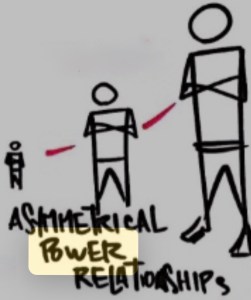
In The War for Middle-earth: J.R.R. Tolkien and C.S. Lewis Confront the Gathering Storm, 1933–1945, author Joseph Loconte said, “It is thus unsurprising that their [C. S. Lewis and J. R. R. Tolkien] stories [The Chronicles of Narnia and The Lord of the Rings] identify the Will to Power as the chief source of the evil in the world that must be resisted. Both The Chronicles of Narnia and The Lord of the Rings vividly depict how characters face temptation that can lead to moral corruption. These stories remind us that power and influence can be seductive, often blinding individuals to their ethical responsibilities.

From an interview, Loconte quoted Niall Ferguson saying, “In both The Chronicles of Narnia and The Lord of the Rings we see exquisite portrayals of temptation, and near fatal corruption.” Ferguson also said, “For the generation of Oxonians we’re talking about, it was obvious that power corrupts, and that absolute power corrupts absolutely.” Ferguson was emphasizing that experiencing power tends to lead to corruption, and when power is absolute, the risk becomes even greater. This teaches us the importance of checks and balances whether in governance, organizations, or personal conduct to prevent the rise of tyranny and moral decline.
Lewis’s and Tolkien’s narratives illustrate that no one is immune to temptation; even heroes can falter if they are not vigilant. It underscores the necessity of humility, self-awareness, and ethical vigilance, especially as one’s influence grows. Understanding these themes encourages us to foster systems that promote accountability, transparency, and ethical standards. It also reminds leaders and individuals alike to remain humble and cautious of the corrupting potential of power.
Leading By Doing What We Can

I recently saw an old episode of “In the Heat of the Night.” In the episode, Althea Tibbs (Anne-Marie Johnson) was speaking to police chief William “Bill” Gillespie (Carroll O’Connor). Althea was referring to her wanting to adopt two children who had lost both of their parents. Chief Gillespie commented how tough the process was going to be. Althea said, “You do what you can. You start where you are.” This is a pretty powerful statement. This really is quite a mantra. It reminds us that it is important to recognize our current situation and resources, rather than waiting for perfect conditions or more abilities.
It encourages taking action with what is available to us right now, rather than feeling overwhelmed or stuck by limitations. It is about making progress from our current position or situation, no matter how small, and understanding that every step forward counts. This all closely related to what I am reading in The War for Middle-earth: J.R.R. Tolkien and C.S. Lewis Confront the Gathering Storm, 1933–1945. Author of this great book, Joseph Loconte wrote in reference to the characters of The Lord of the Rings, “The story is made even more realistic because the quest is undertaken by those who seem least likely to succeed, people all too familiar to us. Thus, the consequence of failure presses upon us at a personal and emotional level” (Loconte, p. 227). When I reflect on this I think about all the quests I’ve undertaken where I probably seemed least likely to succeed, but did anyway. I’ll bet you have stories like that too.
In The Lord of the Rings Elrond said, “This quest may be attempted by the weak with as much hope as the strong.” Elrond went on to say, “Yet such is oft the course of deeds that move the wheels of the world: small hands do them because they must, while the eyes of the great are elsewhere” (Tolkien, p. 262). We must all do what we can and start where we are.
As I relate this to leadership I am reminded that effective leadership involves demonstrating resilience by moving forward despite limitations, inspiring our teams and those we serve to stay proactive and resilient. It also entails embracing continuous learning, recognizing that perfection isn’t necessary from the outset. We need to use every experience as an opportunity to grow and improve.
Prudence in Leadership: Lessons from Aragorn’s Courage and Caution in The Lord of the Rings

In The Gospel According to Tolkien: Visions of the Kingdom in Middle-Earth by Ralph C. Wood, Wood explained how J. R. R. Tolkien brought the original virtue of “prudence” into his stories about Middle-earth. Wood said, “For the ancient Greeks and Romans, by contrast, prudence was the chief of the virtues, the one on which all the others are based.” Wood went on to say, “It [prudence] informs the other virtues because it entails a clear-eyed knowledge of objective truth as well as the ability to act on this knowledge.” The prudent person makes decisions that are appropriate to the particular situation.
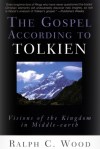
Wood pointed to Aragorn as a great example of a leader with wisdom and prudence in The Lord of the Rings. Aragorn’s measured, thoughtful approach and his ability to balance courage with caution make him a shining example of prudence in leadership within The Lord of the Rings. Aragorn showed discernment in choosing when to lead from the front and when to support others. His leadership during battles and negotiations reflected his ability to assess situations calmly and act appropriately.
Prudence, as a classical virtue, is fundamental to effective leadership because it embodies wisdom, good judgment, and the ability to make thoughtful decisions. In leadership, prudence ensures that leaders consider the long-term consequences of their actions, weigh different options carefully, and act ethically and responsibly. It helps leaders remain calm under pressure, navigate complex situations with discernment, and avoid impulsive or reckless choices that could jeopardize their teams or organizations. Ultimately, prudence fosters trust, stability, and respect, enabling leaders to guide their teams wisely through challenges while maintaining integrity and upholding shared values.
Aragorn consistently demonstrated careful judgment, weighing options and considering long-term consequences before acting. For instance, he thoughtfully planned the approach to confront Sauron’s forces and recognized the importance of unity among diverse peoples.
Being Clueless

Bilbo Baggins was a sort of antihero in J. R. R. Tolkien’s The Hobbit. Bilbo begins the story as a rather naive and reluctant character who grows into his role. Sound familiar? How many of us would say that is how we were? So maybe I should say Bilbo was a reluctant leader instead of an antihero. He grew into being both a leader and hero.
“Now that he has proved himself many times over, the dwarves look back on Bilbo’s cluelessness with fondness” (Corey Olsen, Exploring J. R. R. Tolkien’s The Hobbit, p. 201).

Bilbo’s occasional cluelessness in The Hobbit teaches us several valuable lessons. Bilbo reminded us that everyone has moments of uncertainty or lack of knowledge, and that’s completely okay. It emphasizes the importance of humility and being open to learning, even when we’re faced with unfamiliar situations. Bilbo’s mistakes and missteps during the quest often lead to growth and new opportunities, reminding us that errors are just part of the journey toward success.
Bilbo’s ability to adapt, remain resourceful, and eventually find courage underscores that sometimes, not knowing everything initially can be an important step toward discovering our own strengths. These moments of Bilbo’s cluelessness remind us to be patient with ourselves and others as we navigate life’s quests and adventures.


leave a comment