Own Your Own Expectations
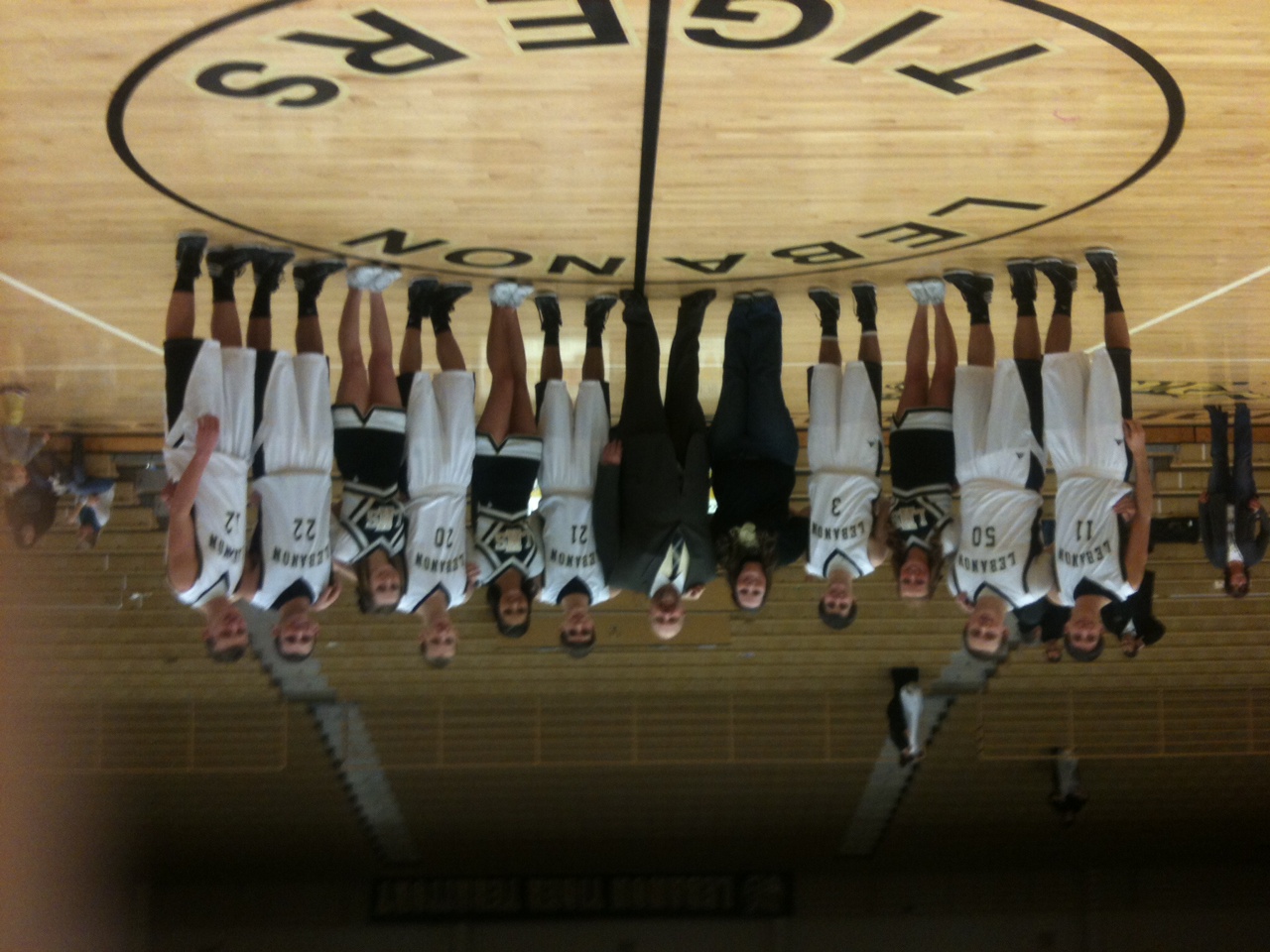
Me & The Seniors
Last night I had the tremendous honor of being named our Lebanon High School Mens Basketball Honorary Coach. This was huge for me because it was the players’ idea and Coach Albert Hendrix agreed. The players are are biggest reason for my being excited about this opportunity. I have all but two in class, and since I am a systems thinker those two are my students too, since they go to Lebanon. Our Tigers are now 16-2, and I have been to all the games but but two (I was out of state for both). I have blogged about my personal mission of using Rigor, Relevance, and Relationships to facilitate high student achievement. Today’s post really goes to the Relationship component. Because of basketball a bond between myself and these students has been forged that is unbelievable. But really all of this is not the theme of this post.
Last fall during a leadership workshop we were conducting for our students one player/student, Ray Solomon, made a comment that has forever changed me and shaped many of my discussions with this team. When asked by the workshop facilitator “What are major distractions to to your being successful?” Ray wrote down “Expectations.” I asked Ray about this because normally we think of high expectations being a key to attaining success. Here’s where the student set the teacher straight; Ray said, “But Mr. Ernest you don’t understand, in basketball everyone has their own idea of what the expectations of the basketball team should be. They want us to all be straight A students, go to the college they went to, win a state championship (even though many making that statement never coached a state championship team, were on one, or even a good basketball player), never get into trouble, and the list goes on and on. Every one of them also wants to tell us exactly what me need to do better, and many times the next piece of advice contradicts the one before. It’s just too much to handle.” This statement from Ray really struck me and caused me to think. I really believe most of this is not coming out of love for the student athletes but out of these people’s own selfish desires to attach themselves in some way to the team. Much of it becomes not providing expectations, but DISTRACTIONS.
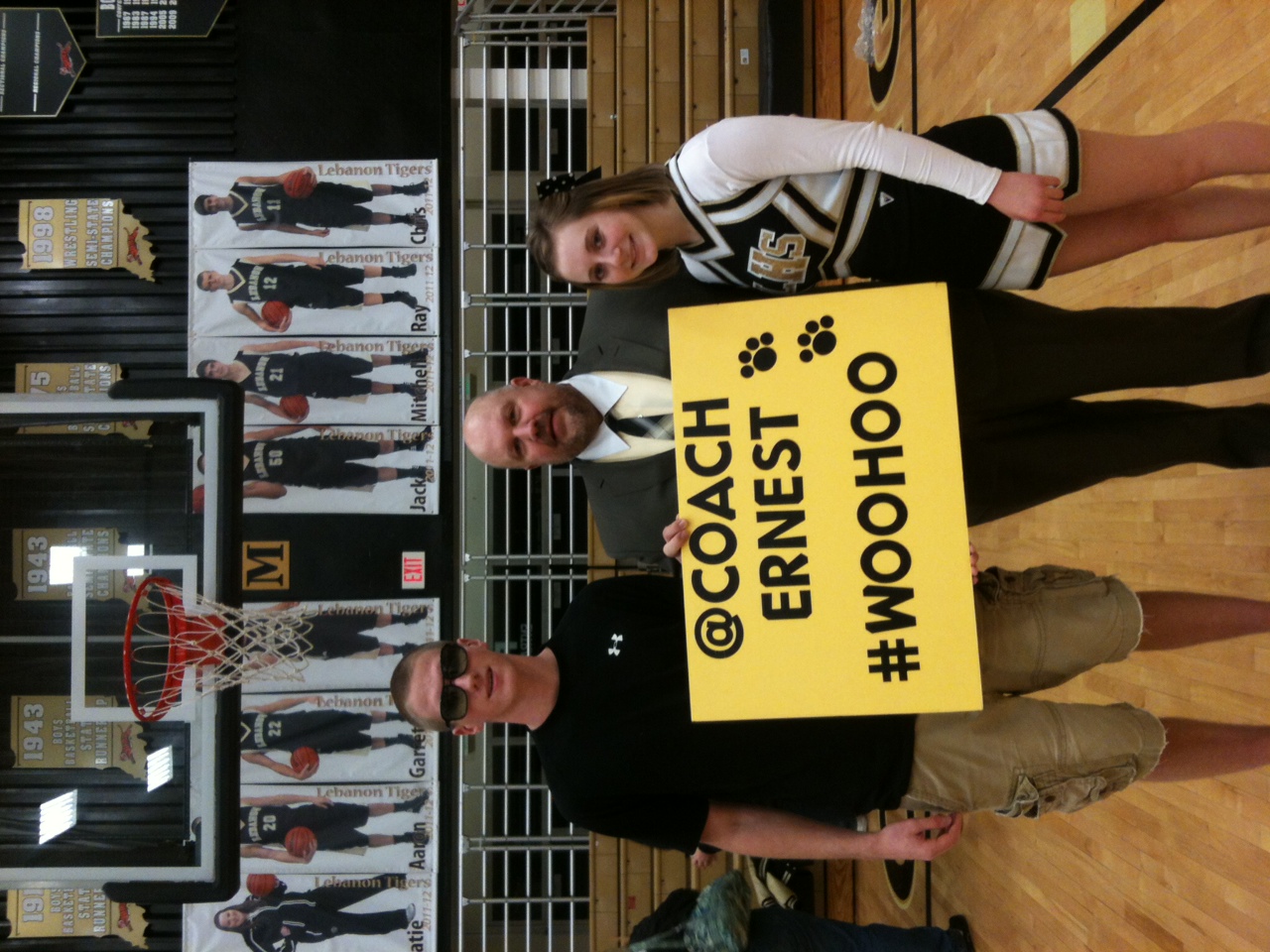
Sign Made by Rob Dukes
Coach Hendrix and I have developed a great relationship as well (in fact he uses my room and SMARTboards for film practice) and we have discussed these distractions. Amazingly, he gets the same thing – many who think they can coach the team better. My thought – even if they can (pretty sure they can’t) they are not the coach, period. Let me assure you after being on the bench with Coach Hendrix last evening there are few better at adjusting to what is happening in the game than him. He is a tremendous game coach. I have always said one of the best things we could do would be to take down all the banners in the gym and not live in the past but live for the here and now. Right now is this teams time. It doesn’t matter what has happened in the past or who came before. What matters is the expectations this team has for themselves right now. It has to become personal.

Ray & I After My Coaching Debut!
My suggestion to Ray and all the other players is quite simply “Own your own expectations!” Don’t worry about everyone else’s expectations. I want them to quite simply make it personal. In fact, I personally tweeted that message to each player yesterday before the game and reinforced it in the locker room during the game. As Coach Hendrix said in his pregame, “you now have the opportunity to do something that very few get to do, it has to become personal, you have to want it more than anyone else, the stretch to a state championship begins right here, right now!” We won last night, by the way!
Last night it was such an incredible honor to be honorary coach for the game. I did everything that a coach would do – locker room pregame, on the floor for warm ups, sat on the bench with the players, halftime locker room adjustments, and post-game talks. What an experience! Words cannot describe the love I have for this team. Everyone of them is a great student, and more importantly, person. I will never forget the experience of the feeling of being asked to be the Honorary Coach. It means so much because it was this team – it was their own EXPECTATION of me. Guess what – I owned that expectation, too!
So for the readers of this post please remember that high expectations are important, but also remember as I tweeted: “No more DISTRACTIONS. Tonight it becomes personal. Don’t worry about everyone else’s expectations. Own your own Expectations!”
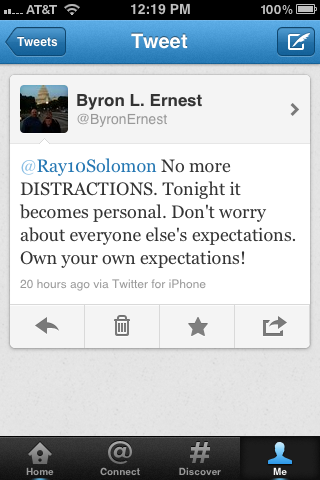
My Tweet to Ray - All the other players got one too!
Frustration
 This past week I defended my research proposal (successfully I might add) as part of my Doctoral journey. At the end I was asked if I had any comments I would like to make about the journey. Well of course I did. For one of my comments I used the term “frustrated.” After saying that I quickly tried to correct, and said “I’m sorry, frustrated is not the correct term, I didn’t mean to sound so negative.” My doctoral committee chair quickly jumped in and said “Byron, it is o.k. to feel frustration – it’s part of the process.”
Let me tell you, as a card carrying “Positive/Possibility Thinker” it frustrated me to think I had been frustrated. So in reflecting I thought, “How can we turn frustration into a positive emotion?” Off to Dictionary.com I went. Here’s what the website had to say: Frustration – The condition that results when an action is thwarted by an external or internal force. The blocking or thwarting of an impulse, purpose, or action (who the heck uses the word thwarted anyway?). Also, it is ironic that one of John Maxwell’s Minute with Maxwell videos was on the work frustration this week as well. Click here to watch his video and hear his thoughts on “frustration”
So here’s what I learned: When I get frustrated I need to use the impulse to evaluate my purpose and create actions that will eliminate the frustration. Really, frustration is a gauge pointing us to the next action necessary to carry out our purpose. Frustration happens to you and it happens to me so let’s harness it’s effects for positive action.
I Am An American
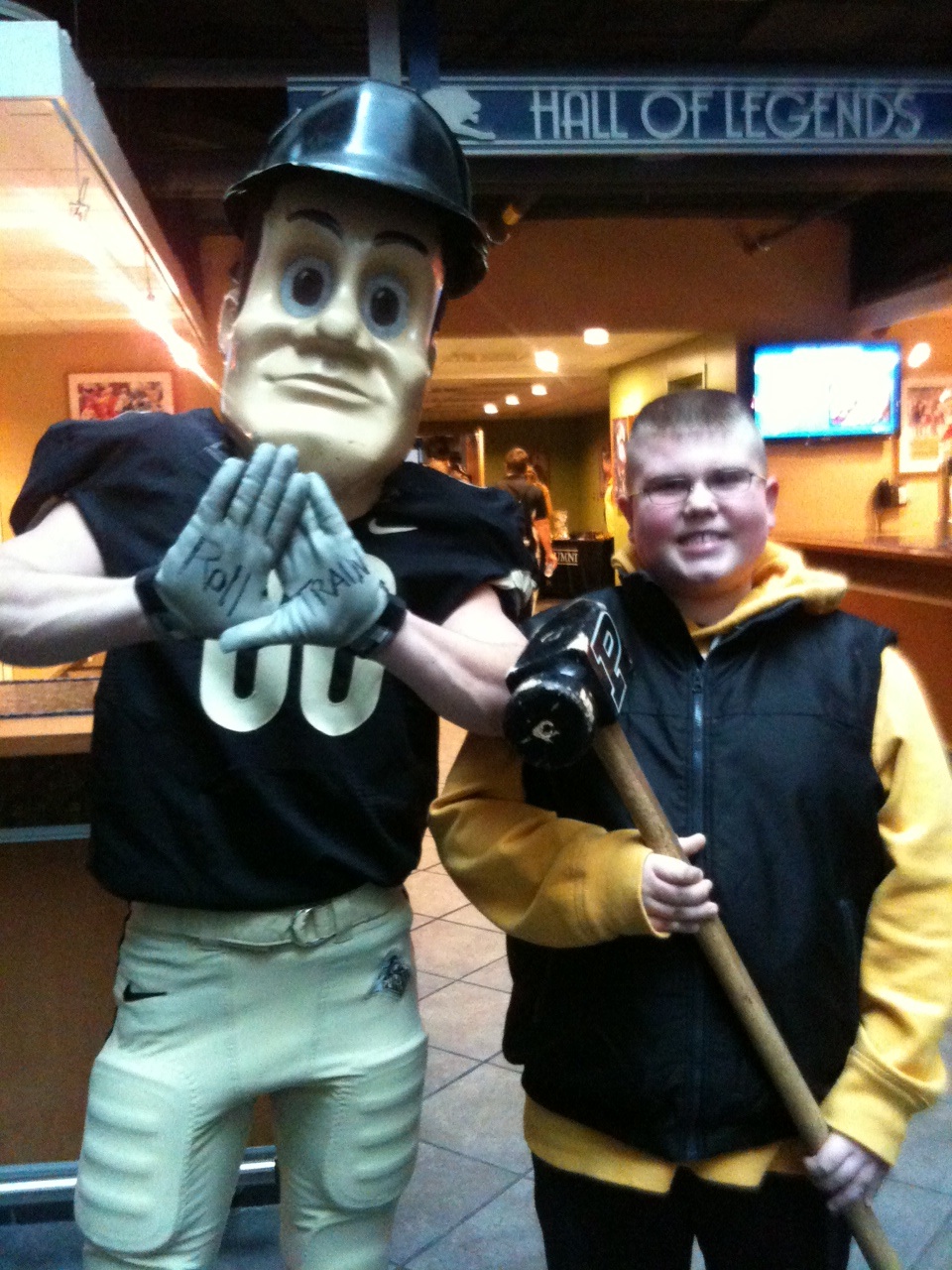
My son, Heath, with Purdue Pete

Showing Our Spirit for the Trip to Detroit
This past week at the Little Caesar’s Pizza Bowl in Detroit, Michigan I was reminded as I am at every home Purdue Football game how proud I am to be an American as well as a Purdue alumnus (my wife, Hope, is also an alumna). We made the trip to Detroit a family trip and were not disappointed as our beloved Boilermakers won by a score of 37-32. It was an exciting game with one of the most interesting fourth quarters of a football game I have ever witnessed (I’ll leave that for another story if you did not see the game). We also had a great time pregame with Purdue Pete and all the other bowl festivities.

I Am An American
My post today, however, deals with what I consider to be one of the most moving pregame shows in the world. The Purdue University “All American Marching Band” does a show leading up to the national anthem that includes a portion called “I Am An American.” For a complete story of this show that was first done in 1966 click here. To the left is a picture of the band’s final formation in Ford Field as “I Am An American” was read. I still get goose-bumps and tears in my eyes every time it is done. Amazingly, I had a Western Michigan University fan tell me they were most looking forward to seeing the Purdue “All American Marching Band” perform. That’s pretty cool!

Traditional "Block P" by the Purdue "All American Marching Band"
I close this post and my last post of 2011 as a Proud American and Boilermaker.  Here are the words for you, see if they give you goose-bumps too:
Values, Dreams, & Priorities

In my reading, studying, and reflecting this year I have been reminded time and time again how our values drive us as leaders. Those same values drive me as an educator as well. I am glad that I chose to read the book The Leadership Challenge by Kouzes and Posner. In their book they gave us the five principles of leadership:
- Model the Way
- Inspire a Shared Vision
- Challenge the Process
- Enable Others to Act
- Encourage the Heart
I am not going to write about all of them, but suffice it to say; you need to read the book!
As an educator and leader I must envision exciting and enabling possibilities. As Kouzes and Posner said, “In some ways, leaders live their lives backward. They see pictures in their mind’s eye of what the results will look like even before they’ve started their project, much as an architect draws a picture or an engineer builds a model. Their clear image of the future pulls them forward.” As a teacher leader it is so true that I must live my life backward.

It is important that we see the end goal of what a great school and educational system looks like. Indiana’s State Superintendent of Public Instruction, Tony Bennett, has been a great modeler of this. As a teacher I must live life backwards, by seeing where the students need to be at the end of a course. So how does one live life backwards effectively? VALUES, PRIORITIES, & DREAMS!
In my opinion one of the biggest mistakes teachers and coaches make is teaching and coaching a person where they want them to be instead of where they are. One of my values in education is realizing that we must allow our students to be bad at something before they can get good at it. Let me tell you a story:
An important philosophy I have is allowing students to be bad at something before they can become good at it. The best example I can think of is Scott Martin,[1] a student who was a terrible public speaker. I use many student presentation activities in my classes, so this young man had plenty of opportunity for improvement. While having Scott as a student, a teacher made a comment to me that he did not have students make presentations because they were so poor at it. I remember saying, “Shame on you! How can students get any better if they are not allowed to try, with us helping them?” We must be willing to stand beside our students and allow them to be bad at a skill while we are teaching them to become proficient. Scott Martin went on to become a gifted speaker. In fact, he emceed the opening ceremony for our new welding shop. He did an outstanding job for the ceremony which had school board members, advisory committee members, business and community leaders, and parents in attendance.
As Kouzes and Posner said, values serve as guides to action. It is important to have our values driving us. As a teacher leader those values are equally important.
Many times when collaborating with other teachers it is easy to let that learning time turn into a gripe session about issues that are about the adults (general frustration) and not the students. It’s easy for me to bring the group back to what’s important by reminding them that what is important is the goal of a first rate learning environment for the students of Lebanon High School. In order to speak up w must know what to speak about. Our values give us that voice. Kouzes and Posner said, “Personal values clarity drives commitment.” So for us to have our priorities in order and dreaming positive dreams we must first know what we value most.
[1] Scott Martin graduated May, 2009. Author has permission to use this story.
Action: Turning Dreams & Thoughts Into Reality
 I heard the words on a song this morning, “Why do we dream, when our thoughts mean nothing?” I really got to thinking about this and it is so true. Think about it, if there is no action our dreams and thoughts really do mean nothing. This really hit home with the two books I read this week – It’s Your Ship: Management Techniques from the Best Damn Ship in the Navy by Captain D. Michael Abrashoff and What to Ask the Person in the Mirror: Critical Questions for Becoming a More Effective Leader and Reaching Your Potential by Robert Steven Kaplan. I learned so much about what both authors call actionable leadership. Captain Abrashoff’s ship the USS Benfold is pictured above.
When coaching and leading those we serve have dreams and we must give them the actionable feedback necessary to enable them to carry out the actions of making the dreams happen. As Kaplan stated, “Is your feedback specific, timely, and actionable?” This question is very important to me as a teacher and department head. As I coach younger teachers on effectiveness I must always remember that the feedback must be constant, not just when I have time and it must be actionable. If someone I am coaching can’t act on the goals, then my coaching has no value.
Another point Kaplan made that was of particular interest was when he said, “Excellent companies view being a great coach as a criterion for promotion to higher managerial levels, as well as an important determiniant of compensation.” I believe that with the implementation of Senate Bill One in Indiana under the leadership of State Superintendent of Public Instruction, Tony Bennett and Governor Mitch Daniels dealing with teacher effectiveness we have also made this a criterion in education. We cannot look at teacher evaluations as a once a year punitive act, but a yearlong coaching opportunity to move all teachers into the category of highly effective.
When we think of using actions to turn dreams and thoughts into reality we must also do what Captain Abrashoff recommended, “Now more than ever, we must stop preparing for past battles and prepare for new ones.” So my final thought for this post is let’s keep dreaming ourselves and encouraging those we lead and c0ach to dream and let’s provide others and seek for ourselves the actionable feedback to make those dreams a reality.
Put Your Thumb Print on Someone
 Winston Churchill once said that he had become a little bit of everyone he had ever come in contact with. How true this is. Today marks the last of our activities we are conducting for our FFA Chapter’s October Anti-Bullying Campaign. If you remember last week I wrote a post “What If We All Wore White T-Shirts.” This week everyone was to take their white t-shirt from last week and decorate it to show their own personality. Let me tell you it has been fun to see everyone’s shirt today.
For my shirt (see picture), I chose to have all of my students (161 to be exact) put their thumb print and signature on my nice white button-down shirt. I wanted this to represent, and for them to understand, that I believe, as did Winston Churchill, that we all become a little bit of everyone we associate with. We can choose for that influence to be negative or positive. By placing their thumb print on my shirt I wanted them to realize what influence each of them has on me and anyone else they come in contact with is as personal as their thumb print.
So please remember that you are putting your thumb print on everyone you come in contact with, teach, mentor, lead, or coach. Make sure that thumb print is one that is helping to lift that individual to a higher level.
What if We all Wore White T-Shirts?
 Last week I wrote about our Anti-Bullying theme of “Accepting and Appreciating Differences” for our month’s campaign to make bullying extinct. Well this week my students had another great idea. Today, all students were asked to wear a plain white t-shirt and jeans to school. We also had many of our staff who wore white shirts and blue dress pants/skirts today in honor of this endeavor. This was to represent how vanilla the world would be if we were all exactly the same.
I am calling the event a success. I do not know official data on the entire school, but my classes had 76.8% participation and I had one class that had 100% participation. Let me tell you it was very interesting to look at the class and have them all look exactly the same. Actually, a little boring. In fact we got into a discussion about how great it is that we are all different.
With his passing, Steve Jobs has been on our minds a lot this week. He certainly was different. In fact there were those who called him one of the crazy one’s. Think back, however, to his advertising slogan for Apple back in 1997 – “Think Different.” In fact in the commercial they showed pictures of Albert Einstein, Bob Dylan, Martin Luther King, Jr., Richard Branson, John Lennon, Buckminster Fuller, Thomas Edison, Muhammad Ali, Ted Turner, Maria Callas, Mahatma Gandhi, Amelia Earhart, Alfred Hitchcock, Martha Graham, Jim Henson, Frank Lloyd Wright and Pablo Picasso.
I don’t know about you all but when I look at that list of names I am sure glad they were exactly what the first three stanzas of the voice-over said, “Here’s to the crazy ones. The misfits. The rebels. The troublemakers. The round pegs in the square holes. The one’s who see things differently. They’re not fond of rules. And they have no respect for status quo.” You can see the whole commercial here.
I am proud we are “Accepting and Appreciating Differences” and I for one want to facilitate learning in such a way that all of our students “think differently.”
Lesson of a Pin Oak
 Last year my son, Heath, received a small Pin Oak tree to plant at home as part of a fourth grade project. We planted the little 18″ sprig and it is now a little over five feet tall (see attached picture). Heath is proud of his Pin Oak tree and and has watered it every day, has kept it staked and even put in tree fertilizer stakes for it. Needless to say, it might be the healthiest tree in Indiana.
I know there have been lots of writing using trees as the analogy, but I couldn’t help sharing my son’s reflection. This weekend he was standing next to his tree and he said, “Dad this tree and I are about the same size. I guess I have done a good job of taking care of it. You told me if I did everything right that it would put down good roots, grow fast, and be strong enough to last for my kids to see someday.” Then he made the profound connection. He said, “I guess that is really what you’ve been doing with me, huh?”
This became one of those “Touchpoints” for learning as Douglas Conant and Mette Norgaard called them in their book Touchpoints: Creating Powerful Leadership Connections in the Smallest of Moments. As Conant and Norgaard (2011) pointed out, these interruptions (or little conversations) can be both planned and unplanned, but give us the opportunity to lead. For these touchpoints to be effective Conant and Norgaard (2011) posited that leaders must “listen, frame, and advance.”
I did the listening, and Heath had framed the learning perfectly. All that was left was to advance. So we talked about how this nurturing did not just apply to father son, but to any time we are able to help someone, whether it be a classmate, teacher, or anyone who needs our expertise to be lifted up. We discussed how he has the chance to be a role-model and how others can learn from his example.
Finally, I learned from Heath that, “the action truly is in the interaction,” as pointed out by Conant and Norgaard (2011). So let’s all make sure we take time to listen so we can make something of our interactions.
Attitude is Like a Cold
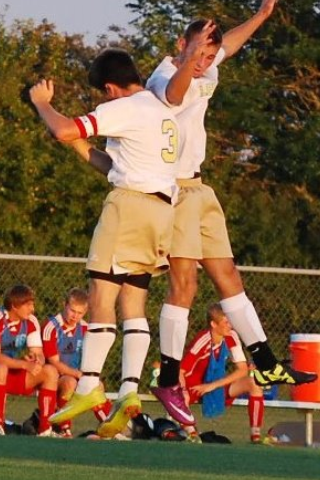 You’ve heard of “Soccer Moms,” now your going to hear from a “Soccer Teacher.” I’ve always recognized that I learn from my students every day and am proud to have formed the positive relationships with my students to have that learning. Last night was no exception. Nine out of the eleven starters on the Lebanon High School Men’s Soccer Team are students of mine and 4 of the other players are also students, so I love to attend our soccer games and believe it is important to support them. Last night was sectional and unfortunately we lost to Westfield 4-0, but that’s not the point of this post.
The point of this post is “Attitude.” During my morning personal leadership/devotion time I read the October 6th entry – “Your Attitude Influences Others” in John Maxwell’s The Maxwell Daily Reader: 365 Days of Insight to Develop the Leader Within You and Influence Those Around You.“ The part that stuck out to me was when Maxwell said, “Leadership is influence. People catch our attitudes just like they catch our colds.”
One of my students, Garrett Breedlove (pictured above with Trey Hendrix), passed his attitude on to his teammates last evening just like a cold. With about two minutes left, down 4-0, Garrett ran across the field with the passion and energy of a beginning of the game play. The crowd was enthused and so were Garrett’s teammates. This took tremendous attitude and character to still be playing as hard down 4-0 with only 2 minutes left as at the beginning of the game. I can only imagine how tough it would be to still play with attitude and passion in a game situation like that.
As a pro-youth athletics person I believe that Garrett and his teammates are learning a tremendous lesson in passing on a contagious attitude. No matter what our circumstance, we must work to have a great attitude – realizing we are passing that attitude – good or bad – on to others with the contagiousness of a cold.
Thanks for the lesson Garrett!
Do You Know What You Don’t Know?
 Do you know what you don’t know? This week I had the opportunity to hear this statement made once as “these guys know what they don’t know and are looking for the people who do know,” and also I myself said this week, “Wow, he does not know what he does not know!” So which category would you want to have said about you? I would much rather have it said that I know what I don’t know as opposed to he does not know what he does not know.
So how do we get to a level of knowing what we don’t know? That is the focus of my post here – to talk about what my beliefs would be on how we get to a level of knowing what we don’t know and why that is important.
First of all I believe it takes studying – I think there are people who really don’t know what they don’t know because they really haven’t taken the time to really study and research the area, project, committee or task force they might be working on or leading. So first and foremost it becomes very important that we do our homework, so to speak, so we know those areas that we have expertise and experience and those areas that we don’t know and what it is about those areas we don’t know so that we can go out and find the people or organizations that do know the answers to make the right decisions.
Then, I think secondly it becomes very important that we throw hierarchies and ego to the wind. I believe there are people who just absolutely cannot handle the fact that they don’t know something and are not willing to do a project right or will even let a project fail because they are not willing to accept that they do not know something and need someone else for their expertise and tactical experience.
Finally, I would share a little of my own faith here and say it’s important to start new projects and even every new day with a short prayer saying, “Lord, help me to know what I don’t know and please put the right people in my life to help me understand those things that I don’t know.” You’ll be surprised at the results!
So these three things are very important to taking a reflective and introspective view of knowing what we don’t know. Do you know what you don’t know?


3 comments