SMART Global Reflections

I love traveling internationally and connecting with people from all over the world. As I fly the last leg of my trip home this evening I am reflecting on how blessed I was to be in Hamburg, Germany 🇩🇪 for the SMART Factory League 2022 Summit. Industry and manufacturing leaders from around the world came together to discuss current issues and promising practices. It was so great to be with Anna Beklemisheva, from Greece 🇬🇷, who is the GIA event manager. The last time I saw Anna in person was in Berlin back in 2018, pre global pandemic. I love working with Anna and will always make myself available to chair and speak at events for her. Every time I am with Anna I learn so much.
It was great to see individuals in person that I had connected with back in 2018. One big difference that we all noted in the discussions from 2018 to 2022 were how people centric the discussions have become. It seems to be a global issue with no industry exempt from having a talent shortage. They were kidding me that in 2018 I kept wanting to talk education and talent with only limited interest. Now in 2022, every speaker and every panel discussion ended up discussing the workforce. And, I loved it when they all agreed that we must be thinking about talent development down into the younger ages/grades of education. This is a passion of mine. We need to be thinking exposure, exploration, and experience much earlier.
It is so critical to have these global interactions and learn from each other. One leader from Poland 🇵🇱 discussed that we are setting ourselves up for failure if we believe that schools and teachers can keep up with changes in technology and other industrial advances to be able to teach effectively. He believes industry needs to step up and provide teachers. I have been advocating for years now that we need to be thinking about do we best put people who have actually done the things they are teaching in front of our scholars. We already do this in many of our career and technical education programs and I believe this is a way to increase our teaching in a relevant context and putting great teachers in front of students every minute of the day. Keep in mind that if we are creative about this a person might only teach one hour a day and be in their industry career the other part of the day. Or it could be someone who has retired from business or industry. This would take some logistical work and partnering between industries and schools, but I believe it could be done.
I am coming home excited that the world is thinking about how we become more people centric. We need to do a better job of talent mapping and development for our young scholars as well as our current employees.
Leading Like Oktoberfest
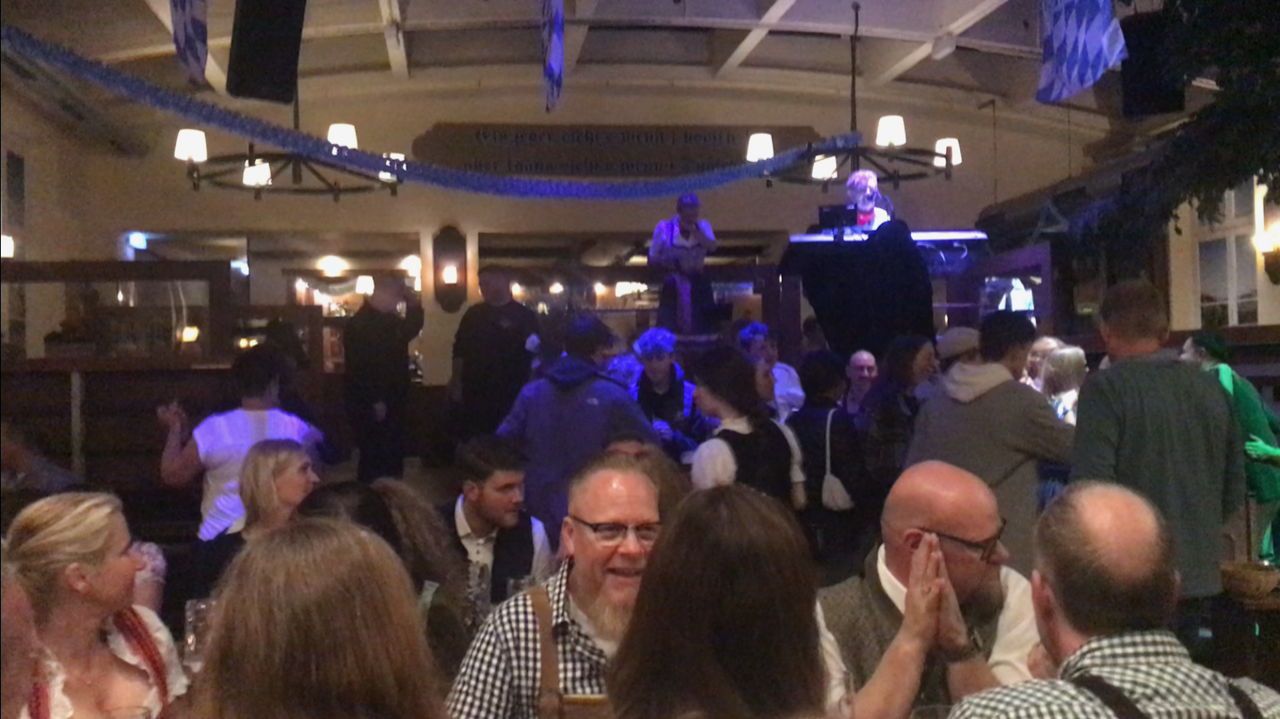
I had the opportunity this week to experience Oktoberfest in Hamburg, Germany. While the official festival is held in Munich, Bavaria, Germany, one of the official breweries from Munich and also located in Hamburg, Die Hofbräu Wirtshäuser, has the entire Oktoberfest experience. Of course, since I was in Hamburg for the SMART Factory League 2022 Summit, I had to take part. In fact I got about 21 of us from the Summit to go one evening. The celebration takes place from late September to the first weekend in October. The Munich Oktoberfest began in 1810 as a wedding party thrown by King Joseph Maximilian of Bavaria to celebrate his marriage to Princess Theresa of Saxony. Over 200 years later King Joseph Maximilian’s party has become a celebration with over 6 million people attending from across the world.
So, what did I learn from Oktoberfest? Oktoberfest is an event that includes music, food and beer. Entrepreneurs and business owners that are hoping to attract customers and clients should remember that putting on a “show” and entertaining and providing your target audience with what they want and need helps. In Die Hofbräu Wirtshäuse many classic sing-alongs such as ‘Sweet Home Alabama’, ‘Sweet Caroline’, or ‘Take me Home, Country Roads’ rotated their way through the set list. But one song played several times while were in attendance is only a single line long, repeated twice and sung in German: ‘Ein Prosit, Ein Prosit der Gemuetlichkeit.’ The song means they are raising a toast (Ein Prosit) to the Gemuetlichkeit, which normally means something like an intimate, cozy feeling. But, what I found around me were people who were experiencing happiness, and tradition to enjoying your beer, and being with friends.
I was lucky to have a true Bavarian with me for my experience. He made sure I had Leberkaessemmel, a Bavarian meat loaf served on a bread roll, Schweinshaxe, a roasted pork knuckle, Münchner Weißwurstand, a white sausage, Schnitzel (thin slice of breaded meat), and Hendl which is a rotisserie chicken. Let’s circle back to Gemütlichkeit (German pronunciation: [ɡəˈmyːtlɪçkaɪt]), which as stated earlier means a situation that induces a cheerful mood, peace of mind, with connotation of belonging and social acceptance, coziness and unhurry. Gemütlichkeit encapsulates a feeling of inclusion and leaving your troubles at the door. What if we could create this environment for all those we serve? The beauty of Oktoberfest is that it is a themed event. By hanging out at Oktoberfest we got to know each other on a deeper level and these relationships carried over into the summit discussions. It’s all about community building. I am glad I had the opportunity to experience the phenomenon of Oktoberfest!
Becoming More Effective Employers

I believe that every person has potential. We also need to make sure we are developing those we serve for what is going to happen. This development needs to happen on the front end and not on the back end like so many organizations do it. We must become more effective employers. Today’s employees need high level development opportunities and high level challenges. We talk a lot about transformation. Here is the correct formula:
_____(fill in the blank)_______ Transformation = People Transformation
Additionally, we need to find out what those we serve want to learn, accomplish or create that would benefit the team. Put them on a challenging project. Help them find a mentor. Have them be a mentor and teach someone else what they know. Invite them to participate in meaningful, tangible learning opportunities. Loving those we serve means we develop on the front end of change, freedom to choose, and paths that look different for each person.
Move And Prove

So much great learning is going on in Hamburg, Germany right now at the SMART Factory League 2022 Summit. It is such an honor to get to both chair, moderate a panel, and speak at this event. One thing is for sure after Day 1 is that we need to have innovative mindsets and understand change management. And, great organizations work on a bold plan! One of the concepts yesterday that jumped out at me was the idea of multi-use of information to get the big picture. In education we are constantly talking about multiple data sources of information, but it is interesting to think about multi-use. Because we cannot wait to know everything, we must move and prove. If we wait to know everything nothing gets done and we lose all agility.
In order to reach infinity and beyond we must move and prove. To do this we need to:
- Assess our current setup – no wish list, but reality
- Define our north star and explain it to everyone (eg. Tesla is not about cars, but about sustainable energy)
- Implement consistently in sprints (small edible bites)
The sprints part of this is important. By doing small pieces of a change at a time we can measure benchmarks and iterate along the way. This is editive manufacturing. We need to Be Open, Be Active, Be Infinite.
A Learning Experience Not A Comparing Experience

As I traveled from the airport in Hamburg, Germany to my hotel for the Smart Factory League 2022 Summit this morning, I caught myself comparing what I was seeing and experiencing to home. It’s impossible not to do that, but I also reminded myself to learn and enjoy more than compare. It is about keeping an open mind because it is a big world out there. We travel and connect globally to learn and to have interesting and beautiful experiences. Comparing is somewhat useless. If we are so satisfied with our own country there would be no need to go learn elsewhere. So at least there has to be curiosity to experience something different.
I am reminded of one of my favorite quotes I use when doing leadership development: “To argue with someone else’s experience of reality is futile. To add their experience to your own is possibly useful.” My wish is that the world could be one big learning organization. We all have different histories and contexts. We need to leverage that. Now that I am at the hotel in Hamburg I am sipping on a cup of coffee made like the Germans make it – strong. Not how I make it at home, but I could not wait to get a cup of coffee here. I guess I’m comparing the coffee here to the coffee at home, but I am enjoying the experience. So, have learning experiences, not a comparing experience.
I Don’t Want We’ll See
This week’s Simple Truth #39: “Don’t Ever Make A Promise You Can’t Keep” in Simple Truths of Leadership: 52 Ways To Be A Servant Leader and Build Trust, Making Common Sense Common Practice, Ken Blanchard and Randy Conley reminded me of how upset, even at a very young age, my son would get when my reaction to some request to do something was, “We’ll see.” He would shoot back, “I don’t want we’ll see!” This resulted in me then saying, “No.” Which was probably going to be the answer anyway, but I was just delaying. Conley told us that, “A promise creates an expectation” (p. 103). This really goes beyond using the word “promise.” Just saying “yes” is really a commitment as well. I loved what Conley said: “Only say it if you have a surefire plan to make something happen” (p. 103). Ever been told that something will happen, only to find out it was not? I have had this happen to me in a couple of pretty significant ways in the last couple of years. Let me tell you, I seriously question that individuals integrity, and certainly do not have any trust left.
Back to my son. I’ve always tried to teach him and be an example for if you say you are going to do something, do it. As I write this post I am sitting in the airport waiting for the first leg of flights to Hamburg, Germany for the SMART Factory League 2022 Summit. Early in the year I was asked to chair the event, lead a panel discussion on talent acquisition, development, and retaining of talent, and creating a talent pipeline that meets employer/industry demand now and in the future. I love working globally, but traveling oversees is always a commitment. Once I created my “surefire plan” I then said “yes” to my friends at GIA Global Group. Then proceeded to secure my plane tickets and we went from “we’ll see” to “will do!” And, now I am doing. I can’t wait to get to Hamburg!
I think of my son saying, “I don’t want we’ll see!” often and what a great lesson this was for both of us. It taught me to go ahead and say “no” immediately, rather than prolonging. Additionally, it gave me a chance to model for my son that when the answer was “yes” we always followed through and did whatever we said we were going to do. Interestingly, one of the top traits of great leaders that comes out in leadership development gatherings I do is “follow through.” Whether we call it a promise, saying yes, or committing to something, we must follow through or trust is very quickly lost. So, next time you say “we’ll see” think about whether you really mean it.
Being Global

My dad taught me from an early age how important it was to think globally. He understood the inherent complexity of international affairs from multiple national perspectives. He understood the economic implications and advantages of trading goods all around the world. My dad taught me that globalization was about contribution. Think about all the different contexts which we must work globally. This is very nuanced work. It’s not just about worldly knowledge and connections; it’s about contribution.
I was reminded of this and have been reflecting on my dad’s teachings as I prepare to leave for Hamburg, Germany next week to chair and speak at the 2022 SMART Factory League Summit. I’m am so excited to have the opportunity to connect, learn with, and learn from top industry and education leadership from around the world. What really got me to thinking about all this was my study of Oktoberfest. I am so excited I will be in Germany for Oktoberfest. I learned that Oktoberfest ends each year on October 3rd, which is German Unity Day that commemorates the reunification of the Federal Republic of Germany (West Germany) with the German Democratic Republic (East Germany) in 1990. Having grown up during the Cold War, this was a big deal. For this to happen there had to be great global leaders that were bridge builders.
As I have the chance to connect with old and new friends from around the world I want to remember to be a bridge builder and a connector of knowledge, resources, best practices, and talent across cultural and political boundaries. In addition I want to be a contributor. I do not take the “global” part of my company name, Leadery Global, lightly. It is my hope and sincere wish to help others continually improve around the world. And, take what I learn from others to make things better at home.
Telling The Full Story

“Leaders erode trust when they spin the truth rather than being transparent in their communication” (p. 101). This from Randy Conley in Simple Truth #38: “Tell The Truth. Always. It’s That Simple.” in Simple Truths of Leadership: 52 Ways To Be A Servant Leader and Build Trust, Making Common Sense Common Practice, Ken Blanchard and Randy Conley. Conley also told us that sometimes leaders don’t tell the full story and reminded us that “…telling half truths is telling half lies” (p. 101). I’ve always believed that transparency translates into highly productive and effective organizations and work communities. Encouraged transparency eliminates confusion and builds trust.
Forbes defined transparency as “the practice of being open and honest with others, no matter how challenging it might be. For both personal and professional relationships to thrive, you need to eliminate the stigma that comes with being straightforward.” Organizations which emphasize community create a sense of belonging and foster transparency while reducing feelings of isolation. I don’t like to talk transparency without talking clarity. There are times when every piece of information cannot be shared, but clarity can be given. Transparency serves efforts to operate with greater clarity.
Aligning Behavior With Speech

“Talking about what you are going to do is easy; actually doing it is what builds trust with others” (p.99). Randy Conley said this in Simple Truth #37: “Your Actions Speak So Loudly I Cannot Hear What You Are Saying” in Simple Truths of Leadership: 52 Ways To Be A Servant Leader and Build Trust, Making Common Sense Common Practice, Ken Blanchard and Randy Conley. Walking the talk is so important. I have a picture in my office of penguins that says “Walk the Talk: Take the initiative and lead the way. You can make a difference.” As Randy also told us: “When your behavior aligns with your speech, you are complete, whole, and acting with integrity” (p. 99). I have blogged about this before in Walk The Talk!
“You can’t build a reputation on what you are going to do.” ~ Henry Ford
When we actually “walk the walk,” we take action and demonstrate what we’re saying by doing the things we talk about. When we take responsibility to come up with solutions to problems, and when we do, we are leading by example. It’s about accountability; a culture of accountability is the best culture to have. It’s about seeing it, owning it, solving it, doing it.
The Entire Arc Of The Experience

It has been said that endings have a disproportionate influence on any narrative. So, why do endings disproportionately influence our memory for an entire experience? Nobel Prize-winning psychologist Daniel Kahneman distinguished between the experiencing self and the remembering self. He concluded that we experience as events and life is happening but we remember based on the ending. Our narratives thus become either successful or unsuccessful.
“All’s well that ends well.”
William Shakespeare
In the way that we think, William Shakespeare was right, “all’s well that ends well.” The problem is this leaves out the “middles.” We must take into account the entire arc of the experience. This means we need to reflect on all the benchmarks in a story or memory. For example if I reflect back on my mom’s stroke with only it ending in her death, I miss reflecting on some of the most incredible moments spent with my mom at the hospital.
As leaders and humans we must be careful of over emphasized endings. Think about the way a fiction novel ends very differently than a biography. We don’t script our endings to any of life’s or our organizations’ happenings. Those stories are messy and have lots of points of interest and context along the storyline continuum. By reflecting on the entire arc of the experience we can learn so much from all the stories we are living. Instead of just the “ends” we need to be highlighting points from the “middles.”
 Byron's Babbles
leave a comment