Connecting Like Paul Revere

I am loving reading the great book The Ride: Paul Revere and the Night That Saved America by Kostya Kennedy right now. It is providing incredible Revolutionary War history, while at the same time providing a view into the human – Paul Revere. I’ve already blogged once inspired by the book in Leading Like Paul Revere. Why was Revere a successful revolutionary leader? Kennedy wrote, “Revere liked talking to people, he liked making his point known. He liked to feel that his words and actions had consequences, and he liked being an agent of change” (pp. 20)1-202). Let’s see here – if leadership is influence, then Revere had that part figured it.
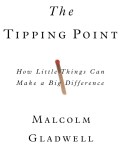
Kennedy references Malcolm Gladwell’s great book, The Tipping Point. Gladwell referred to Revere as being a “connector.” Kennedy explained that, “Of The most compelling of Gladwell’s conclusions—conclusions that he came to in part by drawing parallels to other instances of messages being conveyed by word of mouth—is that Revere succeeded in large part due to his social manner, the ease with which he interacted with other people” (p. 201). I call this being an aware communicator.

Kennedy brought out a great point about Revere, saying, “Revere not only knew many people along his route, Isaac Hall among them, he also had the demeanor to size up and engage a new person, Martin Herrick as an example, and press upon the person the news” (p. 201). Revere’s abilities allowed him to spread crucial information about the British approaching, bridging various communities and ensuring that others were informed and motivated to take action. His extensive network helped facilitate communication among disparate groups, emphasizing how vital interpersonal connections can be in mobilizing collective action and creating social movements.
Gladwell’s reference to Paul Revere as a “connector” illustrated his role in the American Revolution and the social dynamics that contributed to significant historical changes. Connectors are people who have a wide circle of acquaintances and are skilled at linking different social groups together.
Leading By Making Room for Other People’s Ideas

Yesterday, I had the opportunity to spend the morning at Purdue Polytechnic High School here in Indianapolis. We were there as part of the National Association of State Boards of Education’s High School Transformation State Network. There are six states that are part of the network: Washington, Missouri, California, New York, Kentucky, and Indiana. Of course, I was in my element – in classrooms spending time with students. We joined a chemistry class and I could not help myself but to take over a lesson on pH. As a former Ag Science teacher, pH, measuring the free hydrogen ions and hydroxyl ions, is a pretty important concept. Once a teacher always a teacher!
We also had a panel of students speak to us and spend time answering questions and offering advice. One student made a comment that really impressed me. She said, “I have learned to make room for other people’s ideas.” Wow, there was a future leader in the making. There are a lot of adults who have not figured that out.
Making room for other people’s ideas embodies a key principle of great leadership: openness to collaboration and inclusivity. Here’s what it means in the context of effective leadership:
- Valuing Diverse Perspectives: Great leaders understand that diverse viewpoints can lead to better decision-making and innovation. By making room for others’ ideas, we encourage a rich exchange of thoughts, which can enhance creativity and problem-solving.
- Fostering Collaboration: When leaders invite contributions from their team members, we create a collaborative environment. This not only boosts morale but also strengthens team cohesion as everyone feels valued and heard.
- Encouraging Engagement: Making space for others’ ideas promotes engagement and ownership among team members. When individuals see that their opinions matter, they are more likely to invest themselves in the outcomes of their collective efforts.
- Developing Trust: Leaders who are receptive to new ideas build trust within their teams. Team members are more likely to share their thoughts and take risks when they know we respect and consider their input.
- Adapting and Learning: Leaders who embrace others’ ideas demonstrate a willingness to adapt and learn. This flexibility is crucial in dynamic environments where solutions often require input from various sources.
It was great to be reminded yesterday by a young high school leader that making room for other people’s ideas is essential for fostering a positive and productive organizational culture, ultimately leading to greater success.
Leading Like Paul Revere

I am reading the great book The Ride: Paul Revere and the Night That Saved America by Kostya Kennedy right now. Kennedy quoted cognitive scientist Sian Beilock as saying “People choke under pressure because they worry.” This led off a discussion in the book as to why Paul Revere was so successful under the high stress of the ride of his life. This aligns well with the studying of George MacDonald I have been doing lately related to imagination and creativity. Revere had a vision of what was at stake and was able to channel that into decisive action rather than succumbing to pressure.
Sian Beilock’s observation about people choking under pressure highlights how anxiety and overthinking can impair performance, even in individuals who are otherwise skilled or knowledgeable. Revere’s success, and not choking under pressure, relied not only on his bravery but also on his ability to manage fear and stay focused despite the high stakes of his mission. Beilock taught us in, Choke: What the Secrets of the Brain Reveal About Getting It Right When You Have To, that this ability to manage fear and stay focused is an important leadership disposition. She said, “They [people who choke] worry about the situation, its consequences, and what others will think. They worry about what they will lose if they fail to succeed.” Revere did not do this.
In fact, Kennedy pointed to six of Beilock’s eight rules to not chocking that Revere followed. Here they are:
◊ Distract yourself (Revere clearly did, noting his surroundings and the atmosphere of the night)
◊ Don’t slow down (Revere: “I turned my horse very quick”)
◊ Practice under stress (as mentioned)
◊ Don’t dwell (Revere did not)
◊ Focus on the outcome, not the mechanics (Revere was bound for Lexington, no matter what obstacles he encountered)
◊ Focus on the positive (as the hale Revere did, resolutely)
Dr. Beilock suggests strategies to mitigate the negative effects of pressure, such as practice and preparation. When I started reading this book I was interested in the history of Paul Revere and the American Revolution, but have also received a leadership lesson on what made Revere successful under an incredible amount of stress and pressure.
The Gift of Imagination

On Saturday, I wrote about Our Gifts & Force Multipliers. Today, as I think about all of us being gifts I consider George MacDonald’s view on imagination. He believed that everything of us humans must have been of God first. MacDonald said, “We discover at once, for instance, that where a man would make a machine, or a picture, or a book, God makes the man that makes the book, or the picture, or the machine. Would God give us a drama? He makes a Shakespeare.” I love this from from MacDonald’s essay, “The Imagination: Its Function and its Culture,” because it suggests that God created us all as gifts. MacDonald believed God created us in his own image to imagine all the things we do.
“We discover at once, for instance, that where a man would make a machine, or a picture, or a book, God makes the man that makes the book, or the picture, or the machine. Would God give us a drama? He makes a Shakespeare. Or would he construct a drama more immediately his own? He begins with the building of the stage itself, and that stage is a world–a universe of worlds. He makes the actors, and they do not act,–they are their part. He utters them into the visible to work out their life–his drama. When he would have an epic, he sends a thinking hero into his drama, and the epic is the soliloquy of his Hamlet. Instead of writing his lyrics, he sets his birds and his maidens a-singing. All the processes of the ages are God’s science; all the flow of history is his poetry.” “The Imagination: Its Function and its Culture” by George MacDonald first published 1867 in A Dish of Orts
MacDonald asserted “The imagination of man is made in the image of the imagination of God.” He suggested that human creativity and imagination reflect a divine quality. MacDonald believed that just as God is the ultimate creator, humans, being made in His image, possess the capacity for creativity and imaginative thought. We are gifts – every one of us! This idea emphasizes the notion that our ability to envision and create—whether through art, literature, or innovation—is a gift from the divine. MacDonald believed that the act of imagining something new is not merely a human endeavor but also a way to connect with the divine nature of creation.
MacDonald described imagination as the faculty that allows humans to give form to their thoughts, creating images and ideas that can be expressed in various ways. MacDonald suggested that our creative power highlights the significance of imagination in our capacity to create and understand the world around us.
Our Gifts & Force Multipliers
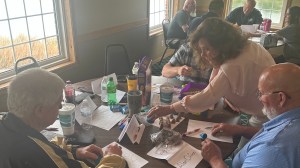
Yesterday, I did an all day professional development gathering for Wabash River Career and Technical Education and we did an activity using kinetic sand beach castle building. The idea was to develop a project-based learning lesson and create a rubric. When sharing out their great innovations, one instructor and owner of Thompson’s College of Cosmetology, Deanna Kindsvatter, referred to the other members of her project team as “gifts.” For example she said things like, “And Ron was a gift because he knew how to…” I don’t think I’ve ever heard teammates referred to like this. We should, however, consider our teammates and those we serve as gifts.
This made me reflect on a concept I think about in leadership a lot – force multiplication. A force multiplier is really a military science term referring to factors or combination of factors that allow personnel or weapons to achieve more than by themselves alone. In Deanna’s case she was highlighting the different positive impacts of the others in her group and amplifying the efforts of the team, leading to enhanced overall performance and success. Thus, she was acknowledging them as force multipliers.
It was so great to hear Deanna acknowledge others as gifts and it made me ponder how do we make sure we create environments for all our gifts to thrive and we ourselves serving as gifts to others. Here are some thoughts on being gifts and creating force multipliers:
- Empower Your Team: We must delegate responsibilities and trust our team members’ gifts. By empowering them, we multiply our effectiveness through their contributions.
- Cultivate Collaboration: We can encourage teamwork and collaboration among our team members and those we serve. When we work together we can achieve more than any individual could alone, creating a multiplying effect.
- Leverage Technology: Utilize tools and technologies that enhance productivity and communication. This can streamline processes and enable or teams to work more efficiently.
- Develop Others: We must invest in the growth and development of our team members. By mentoring and coaching them, we’re equipping them with skills that elevate the entire team’s performance.
- Build a Diverse Team: A diverse team brings different perspectives and ideas, providing a deep set of gifts, which can lead to innovative solutions. This diversity can amplify our team’s overall capability.
- Communicate Vision: Clearly articulate a shared vision and goals. When everyone is aligned and understands the bigger picture, it directs energy and resources more effectively.
- Foster a Positive Culture: Create an inclusive and supportive environment where team members feel valued. A positive culture enhances morale and motivation, leading to greater productivity.
Childlikeness

Reading George MacDonald has become one of my latest micro-studies. As an influencer of both C.S. Lewis and J.R.R. Tolkien, I have to spend some time studying this literary genius. Symbols and metaphors enrich MacDonald’s narratives, allowing us to engage with the characters on a deeper level and reflect on our own lives and spiritual journeys. Each character’s development is often directly tied to their interactions with these symbols, emphasizing the importance of perseverance and belief in the quest for meaning.
In order for us, as adult readers, to fully interact we must become “childlike.” A passage of scripture that influenced MacDonald was Matthew 18:2-6 King James Version:
2 And Jesus called a little child unto him, and set him in the midst of them,
3 And said, Verily I say unto you, Except ye be converted, and become as little children, ye shall not enter into the kingdom of heaven.
4 Whosoever therefore shall humble himself as this little child, the same is greatest in the kingdom of heaven.
5 And whoso shall receive one such little child in my name receiveth me.
As both an educator and person who is often described as childlike, I love those verses. To really learn we must become like little children. Our days of being hyper inquisitive and imaginative. I believe MacDonald was obsessed with this “childlikeness.” He said of the Bible verse quoted above, “‘He that sees the essential in this child, the pure childhood, sees that which is the essence of me,’ grace and truth – in a word, childlikeness. It follows not that the former is perfect as the latter, but it is the same in kind.” MacDonald’s stories are both for the young in age and for the childlike of any age. This childlikeness go for our spiritual truth as well as our approach to art.
In the latest story I am reading, The Golden Key, we find Grandmother, who is wise, ancient in age, but yet looked and acted like a young woman. The protagonists Mossy and Tangle, who we only know by those nicknames, embark, with Grandmother’s guidance on a journey that explores themes of growth, creativity, and the pursuit of deeper meaning in life. The Golden Key itself serves as a symbol of unlocking new realms of understanding, thus embodying timeless wisdom and insight throughout the narrative.
Macdonald reminded us that curiosity and the pursuit of knowledge, not age, lead to spiritual awakening. True growth and wisdom are not necessarily tied to physical age but rather to one’s inner journey.
Finding Balance: Embracing Playfulness While Grounded in Reality

While being light-hearted and free-spirited can be positive traits, there is also value in grounding oneself and embracing the weight of responsibility and emotion. I was reminded of this while reading George MacDonald’s The Light Princess yesterday. This short fairy tale explores the balance between being playful and maintaining a connection to deeper truths and meaningful experiences in life. I loved this conversation between the queen and king: “It is a good thing to be light-hearted, I am sure, whether she be ours or not.” “It is a bad thing to be light-headed,” answered the queen, looking with prophetic soul far into the future.” The conversation continued after a bit more back and forth with, “But it is a bad thing altogether to be light-minded,” retorted the queen, who was beginning to lose her temper.” Because Princess Adela, in the fairy tale, was cursed by her aunt, Makemnoit, to have no gravity, this really got me thinking of both the metaphorical and literal meaning MacDonald had put into the story.
“It is a bad thing to be light-headed” refers to the idea that being carefree or overly whimsical can lead to a lack of seriousness or depth. In the story, the princess was incapable of taking life seriously. The princess cursed with a lack of gravity—both literally and metaphorically—experiences life in a way that makes her seem detached from reality. As I stated in the beginning, we must strike a balance between being light hearted and light headed and being grounded. Fortunately, unlike Princess Adela, we do not have to be in water to find our gravity – both physical and emotional weight.
Look Closely

I heard a great phrase today: “Looks can be deceiving, but not if you look closely.” There is so much to this phrase that made me pause and reflect. Appearances might mislead people into forming incorrect judgments or conclusions about something or someone. By taking the time to examine the details and not just relying on surface impressions, we can uncover the truth. We are reminded of the importance of careful observation and deeper analysis to see beyond superficial appearances.
Assuming Is A Thought Barrier

Yesterday, in a panel discussion it came up that assuming is a thought barrier; meaning that making assumptions can limit your thinking and understanding of another person, organization, or situation. In the context of the discussion the point was that when we assume something without asking questions or seeking further information to understand, we may close ourselves off to new ideas or alternative perspectives, or worse yet not understand other people or their context.
Why not just ask instead of assuming? This seems pretty straightforward forward, but seems a struggle for some. It also becomes a struggle because it is not always a comfortable or convenient environment to ask. For example, I have quit using acronyms when I am speaking or in meetings. Ever been in a meeting or reading something with acronyms that you have no idea what they are? I rest my case.
Remember, we need to ask not guess or assume. In his epic 1961 science fiction novel, Robert A. Heinlein wrote in Stranger In A Strange Land, “Only the wearer knows where the shoe pinches.” We need to remember to ask as the first step to understanding. Conversely, we need to be prepared to authentically answer.
Do Better, and Grow Better, and Be Better
I continue to be impressed with the depth of the themes in George MacDonald’s writing. After becoming so enthralled with The Princess and the Goblin I just had to start The Princess and Curdie. Another grandmother conversation serves as inspiration for today’s post. Grandmother told Curdie, “Remember, then, that whoever does not mean good is always in danger of harm” (p. 23). Curdie was encouraged to remain steadfast in his good intentions and to navigate the complexities of his adventures with a focus on what is right and just.

I really had to ponder the meaning of the interaction above. The statement emphasized the idea that intentions matter deeply was a very important concept being used as a through line throughout the entire story. The grandmother’s wisdom reinforces the notion that while one might face dangers in the pursuit of good, the real threat comes from those who choose evil, ultimately leading to their own downfall.
After this lengthy conversation, Curdie got the point the grandmother was trying to make. He said, voice was gentler even than before. “I was doing the wrong of never wanting or trying to be better” (p. 24). Later, the great grandmother replied, “When people don’t care to be better they must be doing everything wrong” (p. 25). Wow, read that again: “When people don’t care to be better they must be doing everything wrong.” We all need to care about getting better.
The grandmother left Curdie with one other great point during this interaction. She said, “Do better, and grow better, and be better” (p. 25). Macdonald created a drop the mic moment with this. We need to do, grow, and be better.
 Byron's Babbles
leave a comment