Anything & Everything
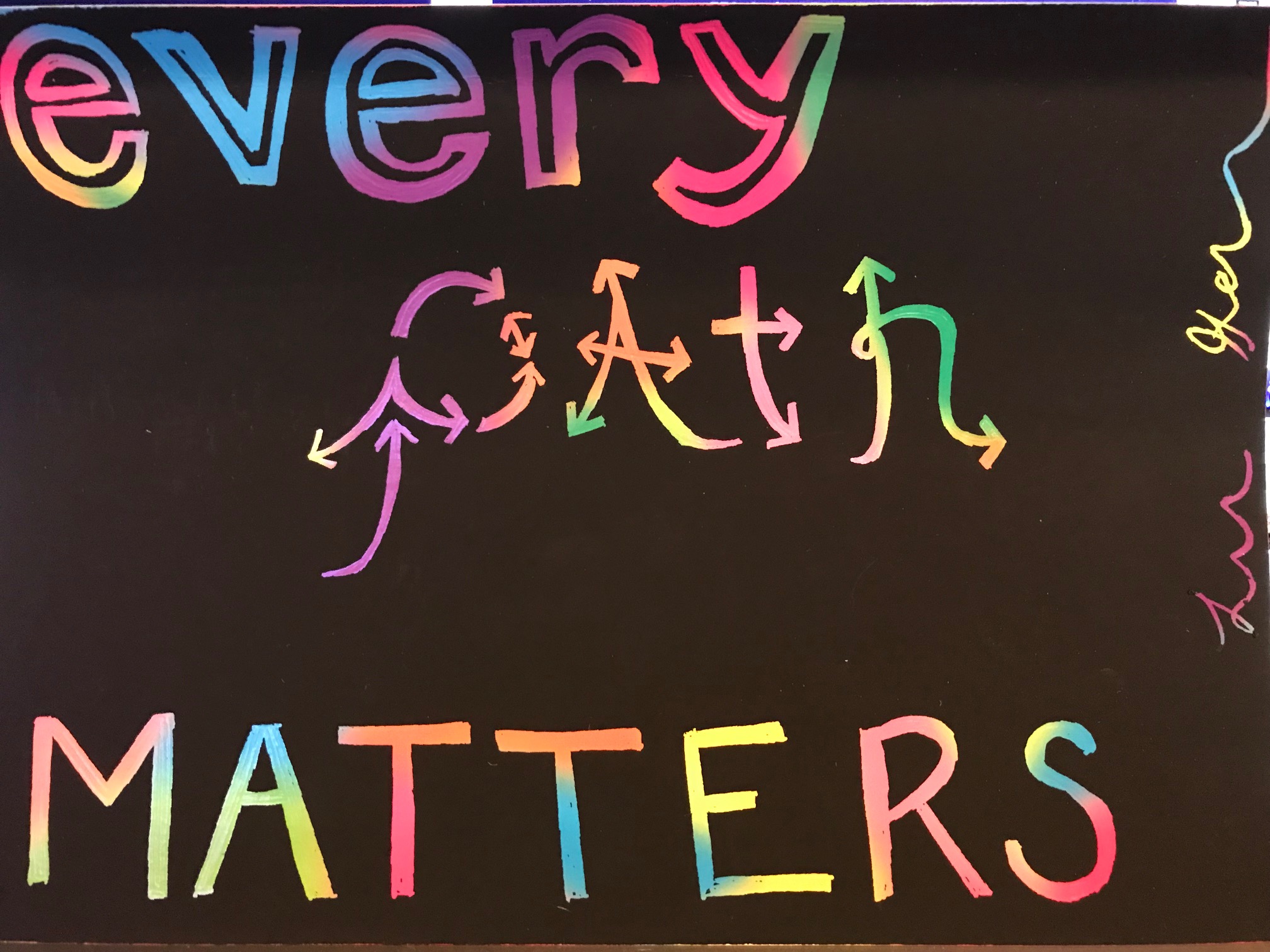
David Allen once said, “You can do anything, but you cannot do everything.” I was reminded of this quote while reading The Bookshop At Water’s End by Patti Callahan Henry. The line in the book that inspired this post was, “There was no ‘either’ ‘or.’ There was ‘anything’ and ‘everything’.” This was in the context of the way two young girls were spending their summer vacation (you really need to read the book!). I loved this because it was not about choosing, it was about doing it all. I totally get where David Allen comes from in saying we cannot do it all, but for young people, especially, shouldn’t it be about experiencing it all. We actually spent time diving in on this in recent leadership development workshops I have been doing on core values by contemplating that a core value of “Every path matters” is much more livable than just saying “students first” as many do. As I teach, for core values to mean anything they must be livable. We must help students understand what possibilities are out there. And, give them a chance to realize those possibilities.
This line, “There was no ‘either’ ‘or.’ There was ‘anything’ and ‘everything'” in this novel reminded me we must be exposing our students to as many paths as possible. Nor, should we be excluding paths, but making sure our students understand where each path can or cannot take them. It must ultimately be their decision. We need to help them determine their interests and talents. We must also help and encourage our students to fall in love with learning. We need to be the people their lives that challenge them and hold them accountable. We need to be the ones who will offer questions and share their experiences. Let’s try to create the environments where our young people like Bonny and Lainey, who in the novel read, swam, and made wishes about their dream lives, don’t have to worry about doing “either” “or,” but can to “anything” and “everything.” Every path matters!
Good Done Right

Most of you know the story of Wendy’s. For those that don’t, click here. I’ve been doing quite a bit of facilitation of learning around core values lately and it has caused me to keep an even closer eye out for those that are walking the talk. I already blogged about DryBar in Core Values Are The Heart & Soul. Then, last night I pulled into the local Wendy’s drive through and was reminded how important it is to have shared core values and have our personal core values match the organizations we are a part of. I’ve always been impressed with this particular Wendy’s location. Everyone always seems so happy and they always get your order right; even down to getting the extra sauce you ordered in the bag. At this Wendy’s you don’t have to check it. For those from Wendy’s reading this, click here for the actual store and location.
Here’s the deal: when I was paying last night, the young man said, “How’s your day?” I said, “Couldn’t be any better. Thanks for asking. How’s your day?” He said, “Mine couldn’t be any better, I love being here!” I was a little blown away, because typically you get the answer, “Well, in one hour 31 minutes and 17 seconds when I get off work it will be a lot better.” But, no, not in this case. The young man liked being there. So I said, “Please tell me why you like being here so much?” I explained that I teach about this stuff and really wanted to know. He explained, “I really enjoy being here. My team is made up of really cool people and we help each other. I’m learning a lot and get to meet great people.” Need I say more about why this Wendy’s always seems to get things right with friendly and helpful team members?
Could it be they are living the Wendy’s core values of “Do the right thing, treat people with respect and give something back.” So many places have core values posted on the wall, but that’s where they live. No one in the organization lives them, especially not the top leadership, in many cases. Let’s take this as a reminder to live out what we value.
What Are You Prepared To Do?

Back on day 170 of the COVID-19 Global Pandemic, August 31, 2020, I committed to a 52 week journey in a new book. Click here to read that first of 52 posts. I had received an advanced copy of Mindset Mondays With DTK: 52 Ways to REWIRE Your Thinking and Transform Your Life. The author, David Taylor-Klaus (DTK), told us that the book was to be savored over time and used every week for a year. As most of you know, I love books that are organized in 52 lessons to use over a years time. That gives me a chance to also do weekly reflection blog posts. This post is the 52nd and final post. Today, on day 538 of the continuing global pandemic, one day shy of a full year later, I complete the 52 week journey of learning. But really it’s not a completion, but a beginning because of being able to live an even better and REWIRED (see photo) life from having read this book and encountered DTK.
Ironically, Chapter 52, entitled Venture Ahead, is very related to some leadership development lessons I have been teaching in the past week. I’ve been using the driving question of “What Are You Prepared To Do?” After discussions of core values, shape shifting, leadership mantras, and legacies, I always show this video clip from The Unstoppables:
I also chuckle at the fact that I have used quotes Václav Havel while facilitating in the last week and DTK has quoted him in this chapter. Here is the quote I’ve been using:
“…it is clearly necessary to invent organizational structures appropriate to the multicultural age. But such efforts are doomed to failure if they do not grow out of something deeper; out of generally held values.”
~ Václav Havel
Here’s the quote from Havel in Chapter 52 used by DTK:
“Vision is not enough. It must be combined with venture. It is not enough to stare up the steps; we must also step up the stairs.”
~ Václav Havel

The 52 lessons of this book have given me structured time to think about the things I believe in and want to leave as a legacy. It has also given me an opportunity to take stock of where I am and next steps. DTK called this “Tak[ing] stock of who you’ve become through the work you’ve done” (p. 354). Now I need to up the metaphorical staircase by taking the first step.
“Who you are is who you choose to be. It’s what you think, and what you do with what you think, and what you give, and what you ask for, and ultimately what you stand for” (p. 355). What are you prepared to do?
What Are You Focusing On?
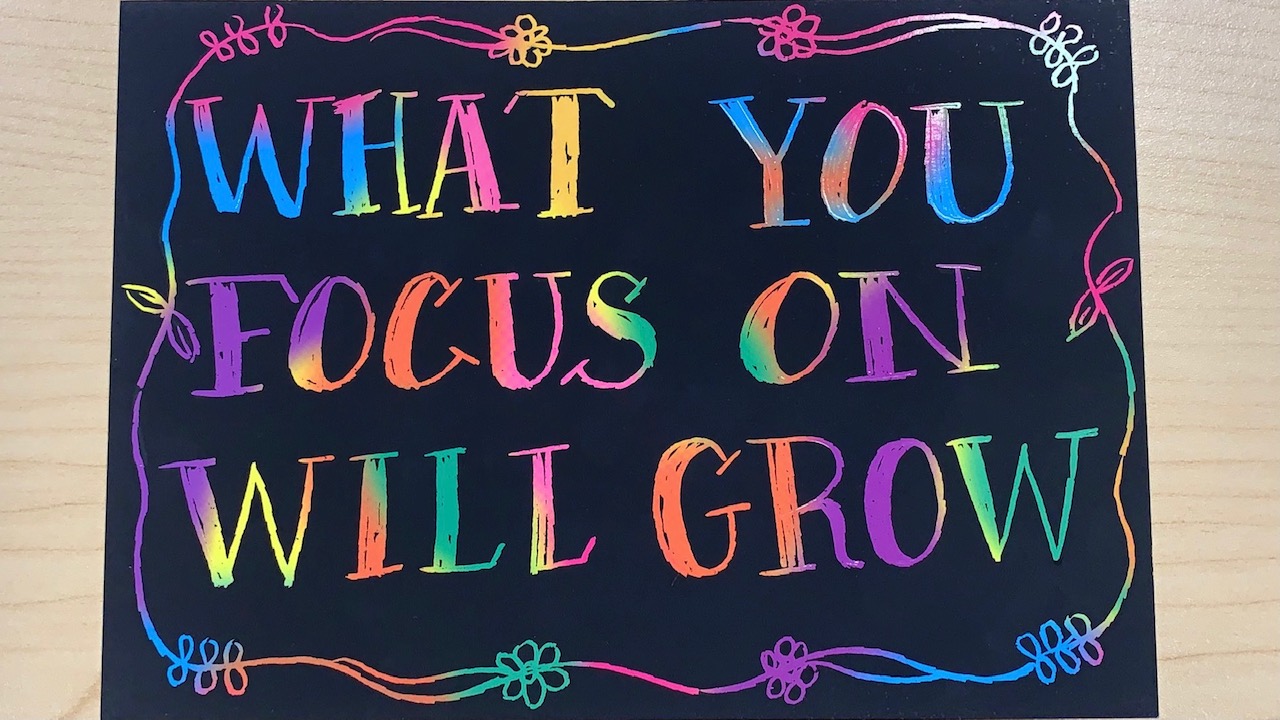
I’ve always said that when we place sincere effort on the attributes we want to see, and can let go of those that no longer serve or support, we have greater chance of success in achieving our desired outcomes. This also applies to those we serve as well. Today in a session during our north Florida 3D Leadership gathering participants were to make a graphic representation of their leadership mantra. Alexis Prieto of Keys Gate Charter School did an incredible job of representing “What You Focus On Will Grow” with her scratch art. I really liked this reminder that we need to consciously focus on those things that work for us. We need to focus on the things that will give us amplified results. When telling about this mantra it gave Alexis the opportunity to tell stories and take note of what she was most proud of.
The metaphor part of Alexis’ leadership mantra is also appealing to me. If we plant the seeds we want to grow and tend them well, the more they grow the less room there is for weeds. Whether in this garden metaphor or in our life and work, what we focus on is what we will grow. What we focus on is what grows more fully in our garden of life. What we focus on thrives, so we need to be sure and focus on the good that we have and the good that we want, because without a doubt, what we focus on is what will grow in our minds and in our lives. Just like anything practiced or done repeatedly, whatever we continue to focus on will become stronger in our minds. Therefore it is in our best interest to choose well the thoughts we choose to entertain.
Being Intentional About Your Relationships
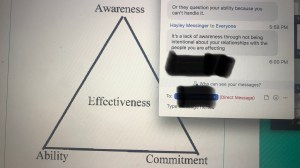
Last night during our 3D Leadership gathering of Georgia, North Carolina, and South Carolina participants we were working through leadership effectiveness. I was using a triangular model with three keys to effectiveness: 1. Awareness; 2. Ability; and 3. Commitment (see featured photo of this post). Without any of the three it is unlikely we can be effective as a leader. We began discussing how relationships and relationship building were important to all three sides of the triangle. Right about then, one of our astute members from North Carolina, Hayley Messenger, posted the following in the chat:
“It’s a lack of awareness through not being intentional about your relationships with the people you are affecting.”
Hayley Messenger
When I saw this I wanted the group to know more. Hayley explained that many times leaders will only build relationships with certain people or end up getting to know some better than others. To truly function at a high level we must be intentional to know the strengths, weaknesses, future goals, et cetera of ALL those we serve. I loved that she used the word “intentional.” The dictionary defines intentional as “done on purpose; deliberate.” This meaning plays a role in what an intentional relationship is. It involves being active instead of passive and making things happen instead of waiting for them to happen to you.
For example, as a leader, if we want to be ready when we have a position open up, we need to have the relationships with all in the organization to know who would have with the ability for, or even have interest in that position. Intentional relationships are not convenient relationships or just building relationships with those we like best. When we enter into an intentional relationship we are proving that we’re in it for the long run. Having effective communities and organizations is about co-existing and becoming acutely aware and intentional about who we share space with.
Bottom line: By being intentional about creating flourishing relationships, we positively transform every social structure on the planet.
Playing Full Out

“If your life were a play, how would the audience react” (p. 348). DTK proposed this thought experiment in Chapter 51 entitled, “Strive for Excellence, of Mindset Mondays with DTK by David Taylor-Klaus (DTK). I really like the way he set this up by saying that he wasn’t suggesting we live our lives by the way we appear to others, but understanding the impact we have on others. When I think about actors in a play, movie, or even television program, they can have an impact on us. The best do. This is no different for us as leaders.

I was reminded yesterday how important the way we act is to the impact we have on others. While working my way through classroom visits in a school I do teacher coaching for I ran into a teacher in the school and he said, “I am so glad you are here. You bring such a positive vibe when you are here to us all.” I gotta say that made my day. Because along with helping teachers be highly effective for the students we serve, I want there to be positivity for all. Therefore, we need to do as DTK suggests, “…play full-out in life” (p. 348). The goal is to go as far as you can with all that you’ve got, and when you fall down, you get back up and keep going.
Excellence to me means bringing out the best in others. When we play full-out we need to bring our A-game to whatever we are doing, it has a noticeable impact on others. It raises the bar for everyone. We also need to bring excellence to the thoughts that we think and the words that we use, making sure they’re positive, supportive, and appreciative (of ourselves and others). Play full out. Don’t hold back.
Another Option Is Waiting To Be Uncovered

You gotta love the show, Monk. For those that have never watched it or don’t remember it, the show is about Adrian Monk, played by Tony Shalhoub, who develops obsessive-compulsive disorder, including being a germaphobe, after his wife was murdered. The condition cost him his job as a prominent homicide detective in the San Francisco Police Department. Because he is so good at what he does, Monk continues to help solve crimes as a consultant with the help of an assistant and his former boss, Leland Stottlemeyer, played by Ted Levine.
In the episode I happened to watch tonight, Willie Nelson was accused of and arrested for murdering his tour manager. Monk kept saying Willie didn’t do it, but the early evidence suggested otherwise. After some damning video evidence came out, Stottlemeyer said it was either “A” or “B” in terms of what actually happened. Monk said, “I believe it’s “C”. Stollemyer replide, “What the hell is “C”?” and Monk replied, “I don’t know yet.” I loved this because so many times when confronted with a decision, most of us default to choosing between “A” and “B” because, at first blush, the world appears binary (eg. Yes or No). Many times the standard “A” or “B” answer just doesn’t fit. Monk had shifted the thinking and conversation from binary affirmation to a learning conversation. We need to embrace and even search out option “C”. It may be the best of “A” and “B” or something completely new and different.
I would like to use the metaphor of a color spectrum here. We can see how immensely varietal the colors are, offering far more nuance than initially meets the eye. In my experience, this means that another option is waiting to be uncovered. Taking time to find the nuances can allow us resist the binary way of looking at choices. Let’s consider nuance and begin to view our choices more like the options available on a color spectrum. Like Monk, we might not know what option “C” is, but we know there is one.
Core Values Are The Heart & Soul

Right now I am sitting in the Orlando International Airport with my flight delayed due to weather, but reflecting on an incredible day of facilitating leadership development for north Florida participants of our 3D Leadership Program. One of the topics of discussion today was core values. During a part of the discussion where we were discussing organizational versus personal and shared versus unshared values, one of our participants, Laura Goynes, interjected that the whole time of the discussion she had been reflecting on her experience working for DryBar while in college. She posited that their core values were easy to share and easy to live. Then she shared them with us and we were all speechless. They were probably the most authentic core values I had ever heard. I was actually pretty excited because Drybar’s core values were in the same vain as the core values I am living for my newly founded company and listed on my website. Here are DryBar’s core values:
The Heart & Soul Of Drybar: Our 10 Core Values & Beliefs
- It’s the experience! The single most important part of the Drybar experience is the way we make people feel. We are committed to making our clients feel like a million bucks.
- It’s not just blowouts! It’s confidence. And happiness. It’s artistry and quality.
- Be yourself! Tattoos, piercings, quirky laugh and all! It’s what makes you special and interesting. As Gaga says, “I’m on the right track baby, I was born this way.”
- Embrace the power of random acts of kindness! Selfless acts of kindness make someone’s moment/day/week. This defines you, you define us.
- Have fun! Laugh, smile, dance! Look beautiful! Life is too short to be someplace lame.
- Always be growing! There is tremendous opportunity ahead for all of us. You commit to helping us grow and we’ll do the same for you.
- Nothing is sexier than honesty and humility! Arrogance and cockiness are gross. Actions speak louder than words. Be sexy.
- Make a difference! Have an opinion, a point of view. Have the courage to stand up and make a difference.
- Pretty is as pretty does! Be a good person. Care about people. You’re only as pretty on the outside as you are on the inside.
- We are family! Drybar was started by family. You are part of our family.
Pretty amazing, right? I was so glad that Laura shared these with us and was so inspired. Laura went on to explain to us the people she worked with loved their jobs, DryBar retained employees, employees always felt heard, and that, as an employee, these were easy values to share. So, really it was a “drop the mic” 🎤 moment and Laura had given us the prompt for a great discussion about the authenticity of core values and not needing to be a bunch of buzz words, hooplah, and corporate gibberish. Think about if we all lived personally to the DryBar core values. The world might just be a better place. This whole discussion made me feel better about my own core values which are:
Core Values
- Integrity above all
- Everyone is a leader
- Listen, Hear, Learn, & strive to be better
- Not just better – Different
- Never cookie cutter
- The glass is half full and we want a bigger glass
We will generally be most comfortable working in a company that has a corporate culture that reflects our own personal values. Core values are the guiding principles that help to define how we should behave personally, in business, and perhaps beyond. What gives your life meaning or what do you want to achieve? If you can articulate those answers, you’ll likely see a pattern that you can boil down into a single concept or list of concepts.
Don’t Join The Circus
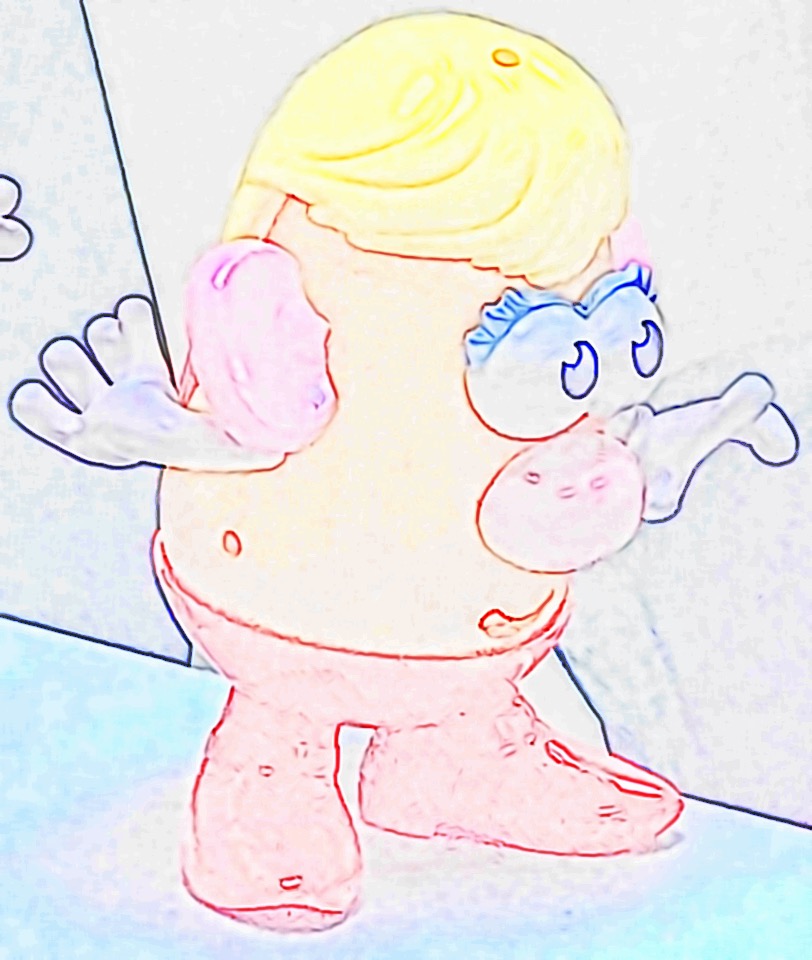
Recently I heard it said that the COVID-19 Global Pandemic has made leaders into contortionists and policy making into a circus contortionist act. I thought about that comment a lot and with all the latest issues that are becoming politicized, I concluded that, yes, that is happening. We need to stop! Leaders should not be contortionists. I’ve not been to a lot of circuses in my day but I do remember one act that still sticks in my mind. A large man folded himself into a small container and was smiling and laughing while he did it. I remember thinking, “How in the world did he do that?” The whole ordeal had to be very uncomfortable! How many leaders have we seen lately that bend over backwards and in odd ways trying to be everything to everyone? We’re also seeing policies being made the same way in many cases. It really becomes like a circus act to form opinions, roles, cultures and communities that are a poor match and are ultimately awkward and far from helpful. Again, being a contortionist is not a good fit (pun intended) for leaders. During times like these, and really any time, we need to be large and in charge and do what is right, not what fits in the container of the day.
This is not to say, however, that we should not be flexible or provided flexibility. First, leaders need to recognize situations in which old behaviors are not working. Next, we need to decide how to approach problems/issues/challenges, including what new behaviors or approaches are feasible, and which will accomplish the community’s goals within the restraints of the situation. When acting on flexibility we need to be creative and take a stance of inquiry. Additionally, we need to have accountability to check our progress. Let’s stick to our core values and not contort.
Success Packs

The wolf is a very social animal. They travel together, eat together, hunt together and play together. They are referred to as a pack. I love the metaphor of leading and building a community like a wolf pack. I also love the idea of needing a success pack that Charlie Gilkey introduced in Start Finishing: How To Go From Idea To Done. Gilkey opined that we need people who can help us make our ideas reality and achieve our goals. We need:
- Experienced and knowledgeable guides to provide us with advice and inspiration.
- Peers to share our ideas and experiences with.
- Supporters who contribute or help us in some way to do the work.
- Those that will be positively affected by our ideas and projects are the beneficiaries.
Wolves understand the concept of teamwork extremely well. They must work together during the hunt to be successful. Each wolf has a role to play. We need supporters in each of the four roles listed above to help us finish and make our great ideas reality. Next time you’ve got a wild idea or something to create, bring your success pack together.
 Byron's Babbles
leave a comment