Leadership Lessons From My Dad

Yesterday, on Father’s Day, I read an article about the beginnings of Father’s Day as a national holiday. Did you know President Richard Nixon signed the legislation making it a permanent national observance in 1972? I was nine years old in 1972 and at that age where my dad was invincible. As I read I began to reflect on my father and why I am so thankful for the great relationship I had with my dad. My dad was one of those who if you brought home straight A’s and one “A-” he wanted to know why the “A-”and how were we going to make it an “A”.
As tough as that sounds, I needed that tough love and I thrived on it. My dad taught me not to settle. He also taught me about continuous improvement. Dad was teaching me about going from good to great long before Jim Collins made it a best selling book title in 2001. With this toughness, dad also coached me on being a person of integrity and doing what I say I am going to do.
My dad was also a perfectionist. I learned from watching him that perfection does get in the way of progress or completion. Luckily I did not get that part of dad’s DNA. It would take him so long to get something done because he had to make it perfect. My watching him, learning from him, and arguing about getting things done helped me become being comfortable with the messiness of innovation.
As I reflected on this it reminded me of J. R. R. Tolkien being a perfectionist. When getting feedback from the Inklings, he would many times start a manuscript completely over. This made his writing extremely slow and he left many unfinished works when he died. Now, make no mistake, Tolkien was extremely successful and significant. But, just like with my dad, perfection got in the way of progress and completion. I love Tolkien’s take on this in Leaf By Niggle. I wrote about this in Using Tolkien’s Leaf By Niggle As A Guide To Living With Significance.
Our dads are unique human beings. Our dads are not perfect. My dad was not perfect. However, my dad served as an incredible role model that I look to every day. He modeled for me how to be a great dad and I hope my son has learned from my positive qualities and imperfections like I did from my dad.
Power And Its Risks
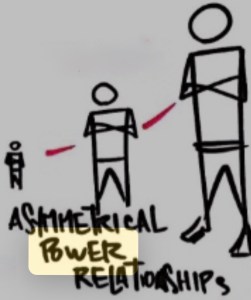
In The War for Middle-earth: J.R.R. Tolkien and C.S. Lewis Confront the Gathering Storm, 1933–1945, author Joseph Loconte said, “It is thus unsurprising that their [C. S. Lewis and J. R. R. Tolkien] stories [The Chronicles of Narnia and The Lord of the Rings] identify the Will to Power as the chief source of the evil in the world that must be resisted. Both The Chronicles of Narnia and The Lord of the Rings vividly depict how characters face temptation that can lead to moral corruption. These stories remind us that power and influence can be seductive, often blinding individuals to their ethical responsibilities.

From an interview, Loconte quoted Niall Ferguson saying, “In both The Chronicles of Narnia and The Lord of the Rings we see exquisite portrayals of temptation, and near fatal corruption.” Ferguson also said, “For the generation of Oxonians we’re talking about, it was obvious that power corrupts, and that absolute power corrupts absolutely.” Ferguson was emphasizing that experiencing power tends to lead to corruption, and when power is absolute, the risk becomes even greater. This teaches us the importance of checks and balances whether in governance, organizations, or personal conduct to prevent the rise of tyranny and moral decline.
Lewis’s and Tolkien’s narratives illustrate that no one is immune to temptation; even heroes can falter if they are not vigilant. It underscores the necessity of humility, self-awareness, and ethical vigilance, especially as one’s influence grows. Understanding these themes encourages us to foster systems that promote accountability, transparency, and ethical standards. It also reminds leaders and individuals alike to remain humble and cautious of the corrupting potential of power.
Leading By Doing What We Can

I recently saw an old episode of “In the Heat of the Night.” In the episode, Althea Tibbs (Anne-Marie Johnson) was speaking to police chief William “Bill” Gillespie (Carroll O’Connor). Althea was referring to her wanting to adopt two children who had lost both of their parents. Chief Gillespie commented how tough the process was going to be. Althea said, “You do what you can. You start where you are.” This is a pretty powerful statement. This really is quite a mantra. It reminds us that it is important to recognize our current situation and resources, rather than waiting for perfect conditions or more abilities.
It encourages taking action with what is available to us right now, rather than feeling overwhelmed or stuck by limitations. It is about making progress from our current position or situation, no matter how small, and understanding that every step forward counts. This all closely related to what I am reading in The War for Middle-earth: J.R.R. Tolkien and C.S. Lewis Confront the Gathering Storm, 1933–1945. Author of this great book, Joseph Loconte wrote in reference to the characters of The Lord of the Rings, “The story is made even more realistic because the quest is undertaken by those who seem least likely to succeed, people all too familiar to us. Thus, the consequence of failure presses upon us at a personal and emotional level” (Loconte, p. 227). When I reflect on this I think about all the quests I’ve undertaken where I probably seemed least likely to succeed, but did anyway. I’ll bet you have stories like that too.
In The Lord of the Rings Elrond said, “This quest may be attempted by the weak with as much hope as the strong.” Elrond went on to say, “Yet such is oft the course of deeds that move the wheels of the world: small hands do them because they must, while the eyes of the great are elsewhere” (Tolkien, p. 262). We must all do what we can and start where we are.
As I relate this to leadership I am reminded that effective leadership involves demonstrating resilience by moving forward despite limitations, inspiring our teams and those we serve to stay proactive and resilient. It also entails embracing continuous learning, recognizing that perfection isn’t necessary from the outset. We need to use every experience as an opportunity to grow and improve.
Immediate Needs Versus Instant Gratification

Yesterday morning I broke my coffee pot. You all know how important my morning coffee is. So, my first thought was, “Well crap, I’ve got to go get one.” Then I grabbed my phone and found I could have a new one exactly like the one I broke between 10:00am and 3:00pm yesterday. The same day! It came at 1:48pm. The same day!

After I had ordered the new coffee pot I got to thinking about a discussion I heard the day before about everyone wanting instant gratification and not being willing to wait. I for one am glad that we have Amazon to get us things we need quickly; even on the same day. Desiring instant gratification is different than getting things quick and efficiently.
The distinction is important because desiring instant gratification plays more to a longing or craving for immediate satisfaction, often driven by emotional impulses. In contrast, getting things quick emphasizes the speed or efficiency of obtaining something, which can be neutral or pragmatic. I needed the coffee pot and had the money to pay for it. The coffee pot was not an impulse or something I needed to save or work for. Recognizing this difference helps us understand motivations. There is an important contrast as to whether we’re driven by impatience and emotional needs or by practical goals. That distinction can be used to guide us toward healthier choices and better self-awareness.
Quickly addressing urgent needs or celebrating small achievements can boost motivation and happiness. However, relying too heavily on instant gratification might lead to impatience, poor decision-making, or neglect of long-term goals. Getting things instantly should be viewed as a tool. This tool of “instancy” should be viewed as useful in moderation and dangerous if overused or used obsessively. It’s about finding a healthy balance and acknowledging the value of immediate needs when appropriate, while also practicing patience and planning for the future.
Leading In Great Plenitude
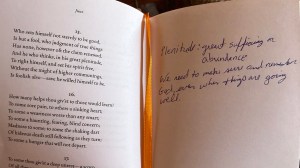
In George MacDonald’s June 15th entry in Diary of an Old Soul, he reminded us that in times of sufficiency or abundance, what he called plenitude in the poem, we need to view our success and plenitude through a lens that balances our professional, personal and spiritual lives. In 1880, here is what MacDonald wrote in that June 15th poem:
“Who sets himself not sternly to be good,
Is but a fool, who judgment of true things
Has none, however oft the claim renewed.
And he who thinks, in his great plenitude,
To right himself, and set his spirit free,
Without the might of higher communings,
Is foolish also – save he willed himself to be.”

To be transparent, I had to look up the word plenitude. I was pretty sure I was getting the base word of plenty right, but wanted to make sure I knew what it meant. I found it to mean “ great sufficiency or abundance.” This poem jumped out at me. In the blank page MacDonald intentionally left for notes, I wrote, “We need to make sure and remember God, even when things are going well.” I was reminded that successful leaders make decisions by thinking through the consequences or considering how decisions will reverberate throughout our professional, personal and spiritual lives. This thinking went along with my post from yesterday entitled, Prudence in Leadership: Lessons from Aragorn’s Courage and Caution in The Lord of the Rings.
Prudence in Leadership: Lessons from Aragorn’s Courage and Caution in The Lord of the Rings

In The Gospel According to Tolkien: Visions of the Kingdom in Middle-Earth by Ralph C. Wood, Wood explained how J. R. R. Tolkien brought the original virtue of “prudence” into his stories about Middle-earth. Wood said, “For the ancient Greeks and Romans, by contrast, prudence was the chief of the virtues, the one on which all the others are based.” Wood went on to say, “It [prudence] informs the other virtues because it entails a clear-eyed knowledge of objective truth as well as the ability to act on this knowledge.” The prudent person makes decisions that are appropriate to the particular situation.

Wood pointed to Aragorn as a great example of a leader with wisdom and prudence in The Lord of the Rings. Aragorn’s measured, thoughtful approach and his ability to balance courage with caution make him a shining example of prudence in leadership within The Lord of the Rings. Aragorn showed discernment in choosing when to lead from the front and when to support others. His leadership during battles and negotiations reflected his ability to assess situations calmly and act appropriately.
Prudence, as a classical virtue, is fundamental to effective leadership because it embodies wisdom, good judgment, and the ability to make thoughtful decisions. In leadership, prudence ensures that leaders consider the long-term consequences of their actions, weigh different options carefully, and act ethically and responsibly. It helps leaders remain calm under pressure, navigate complex situations with discernment, and avoid impulsive or reckless choices that could jeopardize their teams or organizations. Ultimately, prudence fosters trust, stability, and respect, enabling leaders to guide their teams wisely through challenges while maintaining integrity and upholding shared values.
Aragorn consistently demonstrated careful judgment, weighing options and considering long-term consequences before acting. For instance, he thoughtfully planned the approach to confront Sauron’s forces and recognized the importance of unity among diverse peoples.
Great Leaders Listen Without Saying Anything
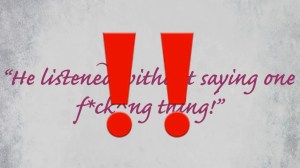
In my new book, Mere Leadership, one of the leadership attributes discussed is being an aware communicator. This past week a friend of mine affirmed how important listening is. He really did not want me to directly quote him when I blogged about it but I told him I was because his comment put the exclamation point on how important listening is. He was speaking about learning leadership; the leadership he learned while he was an army officer, from the great example set by General Raymond Odierno. The bottom line was, General Odierno listened.
In my discussion of being an aware communicator in Mere Leadership, I emphasized the power of active listening as a cornerstone of effective communication. This aligns perfectly with the remark my friend made about General Odierno’s leadership: “He listened without saying one fucking thing!” I loved this comment even though it had a little foul language in it. He said it with such emphasis and conviction. He even said it so loud that everyone in the hotel lobby bar turned and looked. But he was so serious about the power of listening to understand that I must leave his statement here in my post just as he said it.
This was a testament to the transformative strength of truly attentive listening. What I call listening to understand. General Odierno’s approach exemplifies how unwavering presence and openness can foster trust, understanding, and respect within a team, illustrating that sometimes, silence and attentive ear are far more impactful than words.
Embracing Growth: Turning Past Struggles into Strength and Resilience

I am intrigued by the song, “Reward the Scars,” the new single released earlier this year by Korn in collaboration with the Diablo IV: Lord of Hatred video game folks. Now, to be clear, I am not a gamer and know nothing about the game the song is themed after. So, it may just be I can’t really speak to the song, but the lines “Fighting fast and fighting hard; Lose the past and reward the scars” really caused me to pause and think.

The whole song and especially the lines “Fighting fast and fighting hard; Lose the past and reward the scars” scream (literally) a theme of resilience and overcoming struggle. “Fighting fast and fighting hard” speaks to me about facing challenges head-on with intensity and determination. “Lose the past” encourages us to let go of past hurts, regrets, or baggage that might hinder growth.
I love the title of the song and the line “Reward the scars” because for me it signifies that the pain and difficulties endured are marks of experience and strength, which ultimately contribute to personal growth and resilience. When I reflect on difficult times or tough projects I quickly realize how these “scars” caused personal growth and become badges of credentials. The lyrics emphasize for us that confronting difficulties boldly, releasing the weight of the past, and recognizing that adversity can lead to strength and valuable lessons.
Being Clueless

Bilbo Baggins was a sort of antihero in J. R. R. Tolkien’s The Hobbit. Bilbo begins the story as a rather naive and reluctant character who grows into his role. Sound familiar? How many of us would say that is how we were? So maybe I should say Bilbo was a reluctant leader instead of an antihero. He grew into being both a leader and hero.
“Now that he has proved himself many times over, the dwarves look back on Bilbo’s cluelessness with fondness” (Corey Olsen, Exploring J. R. R. Tolkien’s The Hobbit, p. 201).

Bilbo’s occasional cluelessness in The Hobbit teaches us several valuable lessons. Bilbo reminded us that everyone has moments of uncertainty or lack of knowledge, and that’s completely okay. It emphasizes the importance of humility and being open to learning, even when we’re faced with unfamiliar situations. Bilbo’s mistakes and missteps during the quest often lead to growth and new opportunities, reminding us that errors are just part of the journey toward success.
Bilbo’s ability to adapt, remain resourceful, and eventually find courage underscores that sometimes, not knowing everything initially can be an important step toward discovering our own strengths. These moments of Bilbo’s cluelessness remind us to be patient with ourselves and others as we navigate life’s quests and adventures.
Why Go A-Roaming?

Sometimes we need a little reminder of what is important. At the end of J. R. R. Tolkien’s The Hobbit, Bilbo Baggins’ and Gandalf stop to visit the elves. We they arrive the elves are singing a song. Here is part of it:
The stars are far brighter
Than gems without measure,
The moon is far whiter
Than silver in treasure;
The fire is more shining
On hearth in the gloaming
Than gold won by mining,
So why go a-roaming?
O! Tra-la-la-lally
Come back to the Valley. O!
Where are you going,
So late in returning?
The river is flowing,
The stars are all burning!
O! Whither so laden,
So sad and so dreary?
Here elf and elf-maiden
Now welcome the weary
With Tra-la-la-lally
Come back to the Valley,
Tra-la-la-lally
Fa-la-la-lally
The elves were pointing out that the night around them that particular evening in May contained far more beauty than the hoard of riches ever could. The elves ask a simple question: since the stars, the moon, and the elves’ fire all surpass the shining brightness of riches, then “why go a-roaming?” The elves are highlighting that the forest glade by the river is not only more lasting and permanent than anything in human society, but it is also more lovely and desirable than its greatest marvels.

The elves were reminding Bilbo, just as we need this reminder sometimes, that as Corey Olsen pointed out in Exploring J. R. R. Tolkien’s The Hobbit “The things ‘that men trusted’—war, power, strength, wealth—are all ephemeral things and will always fail in the end. The small things—the leaves and grass and silly elf songs—will endure, for they are ever renewed” (p. 290). I love Olsen use of the word “ephemeral” here. I also love the application from Tolkien to our own lives. No, we cannot isolate ourselves from the global society around us and we need to take an active part, but we need to remember the things that are lasting.
The elves’ reflection suggested that true value and fulfillment come from things like natural beauty, warmth, and inner light. Those elements surpass material riches. From this, we can take away the importance of appreciating simple, genuine joys and seeking meaning beyond material wealth. I believe Tolkien was giving us a reminder encouraging us to prioritize experiences, connections, and inner growth over superficial possessions. True brightness comes from within and from the natural world around us. Embracing this perspective can lead to a more enriching and meaningful life.


leave a comment