Significance, Influence, & Leadership
 It has been said that leadership is influence. This is so true, and I was reminded of this today. I had the honor of being part of a book launch and signing at one of our local Barnes and Noble stores today for author, . He wrote the book The Second Decade: Raising Kids to be Happy, Self-Sufficient Adults through Work (2016). I learned of the book through Indiana Speaker of the House, Brian Bosma. He sent me a copy of the book and asked that I read it and think about how this book could be used to influence others in helping to develop and educate our children. I was excited to get the book and, of course, immediately read it. Come on, the Speaker of the House sends you a book and asks you to read it, well, you read it! And…of course, I started tweeting about it. Next thing you know I’m tweeting back and forth with Speaker Bosma and, lo and behold I’m suddenly tweeting with Dr. Helveston. Then, I’m being invited to attend a book signing via twitter. I continue to be amazed by the power of twitter. Well, of course I am going to the book signing – one of my most valued collections is of my author signed books. So, now that I have set the stage let’s get to some content in this post.
It was such an honor to have Speaker Bosma introduce me to Dr. Helveston before the event started. Little did I know I was being introduced by a man, Speaker Bosma, who has had a great deal of influence on me (to read about that, click here) to another man, Dr. Helveston, who would influence me immensely in just the few minutes of visiting and listening to him speak at the event. One of the most powerful things he said to me was, “This research and book is a project I have started really late in my life and career.” With this statement he had me hooked as someone who absolutely knows how to be significant in life. As a believer that there is no such thing as retirement – only significance in the second half, I was certain I had met an icon of being significant, not just successful. This has been a topic of interest of mine for some time now. In fact I have blogged about it in “Significance: Impacting Outside Yourself.”
 As we talked, it was evident that Dr. Helveston wants to continue to have an influence on the world and particularly on our youth. He wants to find influential ways to have the ideas and framework brought forth in his book to really make a difference. Make no mistake, Dr. Helveston is a successful doctor, but I was truly in the presence of an influential and significant person and leader. There were individuals in attendance who were mentioned in the book and I could quickly see the influence this great man had on their lives. This very humble man clearly has had an influence on everyone he has come in contact with and is significant. Leaders, like Dr. Helveston, that strive to be significant seek to create the greatest impact and influence. These are the types of leaders that we value the most; inspired by their courage and resiliency, we seek to emulate them. Here I was in the presence of two such leaders – Dr. Helveston and Speaker Bosma. These are the leaders that can get the most out of very little, are grateful for the opportunity to lead, and always treat others like family. It was very evident from all the stories that every patient of Dr. Helveston became family. Speaker Bosma told the story of how they had met when he became the doctor of his son. Now, years later, there is still a very close relationship between Dr. Helveston and the Bosma family.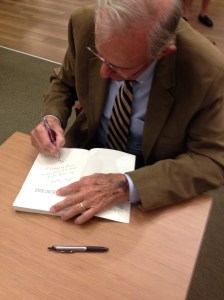
Great leaders are the most memorable, influential, and significant. They go about their day leveraging their distinction by leading in ways that come most naturally to them. This is so true, because I might not even had read the book had there not been a leader in my life that turned me on to reading. Had there not been a Mrs. Wilking in my life I might not have become the leader I have because I would not have had the learning from reading I have been afforded. You can learn of the birth of my love of reading by checking out “Reading Big Red.” Click here to read the post. Significant leaders are those who enjoy sharing their wisdom and secrets of success. Dr. Helveston has certainly done this in his book. Leadership is a process of influencing others. Dr. Helveston is without a doubt influencing others with the framework for developing our children suggested in this book.
The Second Decade: Raising Kids to be Happy, Self-Sufficient Adults through Work (2016) is an incredible book that really makes you think and want to take action. I wrote the following in both my Goodreads and Amazon five start review of the book:
“Everyone who is a parent, teacher, or in a position to influence children either directly or by policy should read this book! In this book, Dr. Helveston recognizes the need for what I will call internships – meaningful work. The five actions developed in this book of:
1. Plan ahead for a quality education pursued with an eye on the future;
2. Learn life lessons and useful skills from the work you perform and the people you meet;
3. Seek advice and inspiration from mentors throughout your life;
4. Recognized that nothing is accomplished without time and effort; and
5. Pursue honest and productive work
are well developed, researched, and referenced so the reading can use the book as a guide. This book can serve as a framework for anyone who believes as I do, that helping parents teach their children to gain academic skills through a quality education and acquire practical skills learned by working is an invaluable component to a lifetime of success. Again, this is the must read book of all who want success for all children.”
 Dr. Helveston posited in the book that there is an important activity that seems to be getting lost amid meaningless structure—holding down a job outside the home, for money. He argued that more than any other activity, work adds meaning to the knowledge learned in books and gives depth to the values instilled at home. I really agree with this and the research would concur. In fact, this is why I believe internships are so important in young people’s lives. This workplace development orientation requires inculcating good character traits within the young person, which will help them to carry out their professional responsibilities throughout the rest of their lives.
The idea of the “inclusive middle class” is one that really jumped out at me in the book. This really drove home why it is important for us to make sure we are carrying out and teaching our children the five actions listed above. Dr. Helveston said:
“But the future offers a two-way street. A position attained is never guaranteed. A person can attain more or accomplish less. Success can be in the form of financial security or with the attainment of other worthwhile goals. In either case, it takes effort to keep and possibly improve one’s place in society.” ~ Dr. Eugene Helveston (2016, p. 25)
Those who understand this will certainly have a leg up in society. We have an obligation to the children of the world to be providing them with the experiences to learn these facts. One way to formalize this would be to ramp up our internship programs both at the post-secondary level and in our high school programs. What better way to give our students the real life experiences necessary to help them be successful, happy, and functional citizens. Dr. Helveston’s book provides a guide and framework for educators, parents, and policymakers to help our children understand what opportunities are available to them and facilitate the journey to become their best selves.
Career Readiness for All?
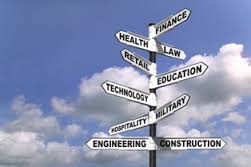 I had the privilege of meeting and hearing from Dr. Nancy Hoffman of Jobs for the Future yesterday at our fourth Panel to Study Alternatives to the ISTEP+ Program Test. Our objective of having Dr. Hoffman was to discuss how we assess career readiness under the Every Student Succeeds Act (ESSA). I really saw a great deal of the value in the information she was presenting to us and wanted to share. Here are some facts she started with:
- The unemployment rate among Hoosiers age 16 to 19 year old is about 15%.
- Missing out on jobs during the late tees can have negative effects throughout a person’s working life.
- A young person who doesn’t get work experience between 16 and 19 is missing a major developmental experience.
- The economy suffers because of the above bullet points.
I was also struck by the idea of disconnected youth: those who are not in school or working – “have lower wages and marriage rates, higher incarceration and unemployment rates, worse health, less job satisfaction, and eve less happiness as adults than people who did not experience youth disconnection. Just as early successes breed optimism, early setbacks plant the seeds of hopelessness.”
“It’s not just about young people: The economy needs prepared young people.” ~ Dr. Nancy Hoffman
- Far too many young people complete a postsecondary degree/credential.
- STEM fields hold promise; employers struggle to find skilled employees.
- High school is not working for far too many young people
- Careers increasingly require postsecondary education and work readiness skills and experience.
- Education workforce, and economic development are inextricably connected.
“In my utopia, all high school students would have a structured work experience – just as 70% of young people do in Switzerland.” ~ Dr. Nancy Hoffman
Indiana is ahead of most states in having a law requiring career readiness activities starting in elementary school. Indiana has a career readiness definition which includes all students. Additionally, Indiana has career exploration courses. We provide Career and Technical Education (CTE) dual enrollment and we have strong CTE results.
Here are some questions that states need to be asking and addressing:
- What is the state’s definition of career readiness?
- Does the state want to focus on all students or exclusively CTE students?
- Are college and career preparation the same or different?
- How should various options be valued and weighed?
Being A Multiplier
 Lesson #7 in 52 Leadership Lessons: Timeless Stories For The Modern Leader by John Parker Stewart was titled “Chains and Ribbons.” It was the story about how circuses used to restrain elephants by putting a chain on their leg attached to a stake at a very young age when the chain and stake would actually restrain them. An adult elephant could easily pull up the stake, but he has been conditioned that he can’t. In other words he had been conditioned to the restraint. This can happen to those we lead too. If we chain our people down, they get used to the restraint and then their innovation, creativity, collaboration, and self-motivation go away.
Employees who don’t self-start, make decisions on their own, give input, get feedback, and grow as people with purpose, eventually suffocate under micro-management and lose the will to contribute meaningfully. Top-down bosses are notorious for killing intrinsic motivation. Then, good employees are turned into order takers. These same employees then tend not to exercise one of the better traits that we want in those we lead – being a self-starter. Great leaders are present and in the moment. They don’t need to talk over others to get their point across.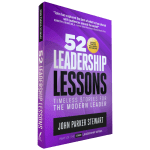
Great leaders care less about flaunting their own IQs and more about fostering a culture of intelligence in their organizations. Under this type of empowering leadership these leaders become “multipliers.” Employees don’t just feel smarter, they become smarter. I believe in shifting the responsibility for thinking from myself to those I lead. As a multiplier I work at taking the time to understand the capabilities of each individual I lead so that I can connect employees with the right people, the right opportunities, and hyper personalize their personal growth. This enables an organization to build a virtuous cycle of attraction, growth, and opportunity.
Are you restraining those you lead? How can you empower your people to collaborate in a culture of excellence that encourages dissent, growth, innovation, and creativity? Go out and be a multiplier by explicitly giving people permission to think, speak, and act with reason.
Indiana Assessment Vision
 Yesterday, we had our third legislative panel meeting studying alternatives to the ISTEP Program Test. This is part of our working toward the assessment plan under the Every Student Succeeds Act (ESSA) for Indiana. One of the things we worked on yesterday was the vision statement of the group. Using suggestions from panel members, the panel legislative staff came up with the following draft statement:
“Indiana looks to design an assessment system that is student-centered and provides meaningful and timely information to educators and parents on both a student’s on-grade proficiency level and growth toward Indiana’s College and Career Ready standards. The assessment needs to be viable, reliable, research-based, and meet the requirements of both state and federal law, while meeting the needs of all students across Indiana.”
Now, being the vision guru I am, I immediately realized it did not meet the 35 words or less rule of thumb. I did, however, quickly underline what I thought were the most important parts of the vision statement that our panel needed to do to meet the needs of our students, families, and schools (I have underlined above). Here are the points:
- student-centered
- meaningful
- timely
- information to educators and parents
- on-grade proficiency level and growth
I suggested we eliminate the last sentence, “The assessment needs to be viable, reliable, research-based, and meet the requirements of both state and federal law, while meeting the needs of all students across Indiana.” because I do not believe it is at all visionary to be valid, reliable, researched based and meeting the letter of the law. We have that obligation to Indiana and the federal government through ESSA. We don’t need a vision for that.
So, my proposed vision statement would be:
“Indiana looks to design an assessment system that is student-centered* and provides meaningful and timely information to educators and parents on both a student’s on-grade proficiency level and growth toward Indiana’s College and Career Ready standards.”
You will notice the * with student-centered. I believe we should have a definition for student-centered following the vision statement. For me, that definition could be:
*A Student-centered assessment system, which includes student performance, academic growth, and multiple measures, sets challenging items and tasks that are intended to encourage deep learning and create a sense of high expectations and mutual accountability.
Then, I believe it is even more important to develop a set of belief statements associated to this process. I took pieces from what individuals submitted as vision statements to make a list of possible belief statements. I really believe that many of what panel members submitted were belief statements, not vision statements. This was a good things because we should have belief statements guiding our work.
Here is the list I came up with:
- New assessment must be implemented with fidelity
- Timely results
- Empowers students, parents, educators, and administrators
- Includes college and career readiness metric
- Meets the needs of all students
- Cost effective
- Accurately assesses students’ learning and growth over time
- Takes less time away from instruction and learning
- Equity for all students in how they take the assessment (technology/modality)
So, put all together, here’s what my draft would look like:
“Indiana looks to design an assessment system that is student-centered* and provides meaningful and timely information to educators and parents on both a student’s on-grade proficiency level and growth toward Indiana’s College and Career Ready standards.”
*A Student-centered assessment system, which includes student performance, academic growth, and multiple measures, sets challenging items and tasks that are intended to encourage deep learning and create a sense of high expectations and mutual accountability.
Indiana’s new assessment system must:
- be implemented with fidelity.
- provide timely results.
- empower students, parents, educators, and administrators.
- include college and career readiness metric.
- meets the needs of all students.
- be cost effective.
- accurately assesses students’ learning and growth over time.
- take less time away from instruction and learning.
- provide equity for all students in how they take the assessment (technology/modality).
Because ESSA requires us to have a summative assessment in grades 3-8 and a high school component our conversation must shift from all the chatter about whether wanting to test or not or whether it is right to test. Really, that is irrelevant. What is important is that we make sure all of our stakeholders understand “why” assessment is happening and exactly how the data will be used. I believe we are on the right track to developing a vision and belief statements that can drive this work. I would love to hear feedback on additional belief statements or edits to make the belief statement suggestions better.
ESSA Opportunity #10: New Community Support for School Successs Grants
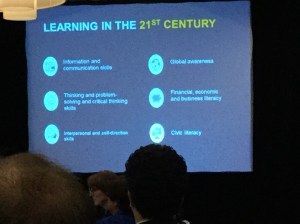 ESSA establishes a new grant program that will enable community partners to play an important role in personalized learning environments.
The program supports the following goals:
- Promise Neighborhoods – significantly improve the academic and developmental outcomes of children living in the most distressed communities of the United States by providing access to a community-based continuum of high-quality services. ESSA defines Promise Neighborhoods strategies as “pipeline services” and utilizes this term to refer to “a continuum of coordinated supports, services, and opportunities for children from birth through entry into and success in postsecondary education, and career attainment.” The goal of Promise Neighborhoods to to do the following:
-
1) high quality early childhood education programs
-
2) high quality school and out of school time programs and strategies
-
3) transitions from elementary school to middle school, from middle school to high school, and from high school into and through postsecondary education and into the workforce
-
4) family and community engagement and support
- 5) postsecondary and workforce readiness
- 6) community based support for students who are either living in the community or who have attended schools serviced by the pipeline
- 7) social, health, nutrition, and mental health services and supports
- 8) crime prevention and rehabilitation programs for youth.
-
- Full Service Community Schools – provide support for schools that improve the coordination and integration, accessibility, and effectiveness of services for children and families, particularly for children attending high-poverty schools.
ESSA Opportunity #8: Title IV, Student Support & Academic Enrichment Grant
 The Every Student Succeeds Act (ESSA) consolidates a number of existing federal grant programs into a new Title IV state block grant that may fund district activities to:
- provide all students with access to a well-rounded education.
- improve school conditions for student learning.
- improve the use of technology to improve academic achievement and digital literacy.
States could use this block grant to create an innovation fund for districts interested in scaling personalized learning strategies. ESSA would reconstitute Title IV, Part A into the Student Support and Academic Enrichment program, and would authorize the new program at $1.6 billion annually through 2020. That authorized amount comes in addition to the authorized $1.1 billion in Title IV, Part B, which funds the 21st Century Community Learning Centers Program. Part A would then require states to spend 20 percent of those funds on “well-rounded educational opportunities,” 20 percent of those funds on “safe and healthy students,” and a portion of the funding on the “effective use of technology.” Part B authorizes $1.1 billion for 21st Century Community Learning Centers that offer after-school academic enrichment programs. Part C includes federal funding for charter schools, which would increase from $253 million in 2015 to $300 million by 2020. Funding is similarly increased for magnet schools, which Part D of Title IV would increase from $92 million in 2015 to nearly $109 million by 2020.
In addition, Part E of Title IV would allow for education innovation. These innovations could include programs like: Promise Neighborhoods, full-service community schools, arts education, Ready to Learn television, and gifted and talented education programs. As you can see there are some tremendous opportunities for our students with ESSA.
ESSA Opportunity #7: Reservation for School Leaders
 This opportunity is one that is near and dear to me. I really believe in job embedded professional growth/development. Under ESSA, states may reserve up to 3% of their Title II, Part A funds to build a workforce of leaders with the skills to help schools transition to personalized learning environments. Priority funding should go to support leaders serving in schools identified for comprehensive support and improvement. As a school leader who has now taken on a high school and now a school system that fits this priority, I can attest to the need for this development of teacher leaders. ESSA also requires that professional development programs should be customized, embedded, and align to statewide professional competencies so leaders can advance along individualized career pathways.
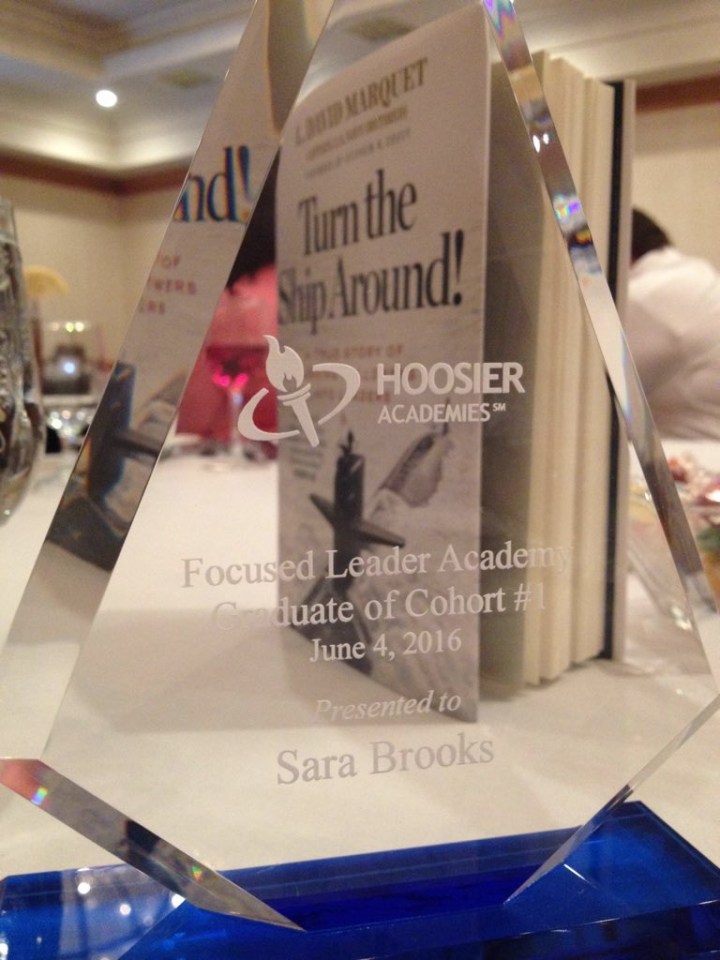
I believe programs like what we have started at Hoosier Academies Network of Schools in our Focused Leader Academy really fit the bill. This is an employee development and engagement program. The idea is that great minds and great motives still matter. Teachers with school leadership aspirations have the opportunity to become part of a cohort which will take part in monthly leadership training and be part of supervised leadership projects of the school. Cohort size is at least 10-15% of teacher leaders per year. The Vision is: Leadership will be born out of those who are affected by it. The Mission is: Leadership will appear anywhere and anytime it is needed. Our Theory of Action is: If we empower our teachers through leadership skill development…Then we will have teacher leaders ready to contribute to the success of Hoosier Academies Network of Schools and be an important part of our talent pipeline. I believe states should endorse and help schools develop programs such as this in order to have approaches required by ESSA that build and strengthen professional learning systems aligned to teachers’ learning needs. This would allow schools to do what I call “hyper-personalizing professional growth.” Click here to see ESSA’s Definition of Professional Learning & Title ll Allowable Uses of Funds.
Also, Learning Forward and National Commission on Teaching and America’s Future have come up with an Agents for Learning competition related to state planning for Title II funds. These competitions are great ways to collaborate for best practices and to get a lot of ideas for how best to use the funding. Click here to get more information on the competition. I, for one, hope they get lots of applications. Teachers are in the best position to contribute recommendations for the best use of federal funding for professional learning, the successful implementation of ESSA, and the improvement of student learning.
Vital Leadership Learnings
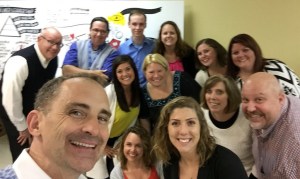 A couple of weeks ago we had the honor of having Will Pemble from MAP Vital Factors Solutions work with our Focused Leader Academy on being disciplined leaders. This day was set up by John Manning, author of The Disciplined Leader (2015). As you know from previous posts, our Focused Leader Academy read the book, that is set up in 52 lessons, and blogged about each lesson. We then had a discussion about what we felt were the vital few leadership focuses we needed more work on for each section of the book and overall. Really, that pre-exercise was an incredible discussion and experience. It was very interesting to hear the individual vital few from the FLA participants and then hear the discussion of narrowing down to the group’s vital few. This allowed for a rich discussion about how individual vital leadership skills affect the vital few of an organization.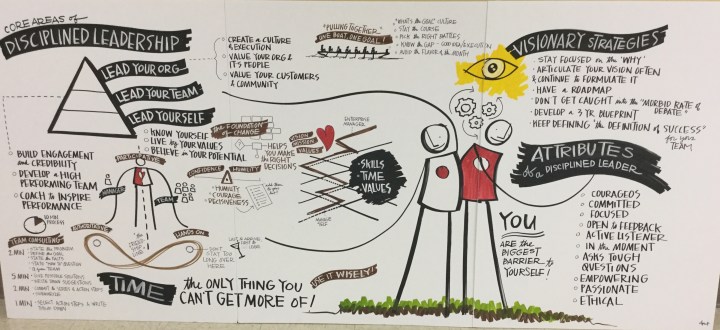

Here are our Focused Leader Academy Vital Few (I have included the lesson number from the book, in case you want to check it out and follow along):
Part 1:
Our top 2 were…. #4 Know Yourself and #13 See Mistakes as Opportunities. Then we were torn between #14 Listen More, Talk Less and #11 Drop Defensiveness.
Part 2:
Our top two were…. #30 Empower Employees and #37 Advocate for Your Team. Then we settled on #31 Give Effective Performance Feedback because we knew what we were getting ready to embark on with redesigning our entire performance evaluation system. We also had #26 Honor Your Commitments high on our list.
Part 3:
Our top three were….#39 Develop a “What’s the Goal?” Culture, #43 Put More Weight on “Why?” and #46 Avoid the Dangerous Gap Between Good Ideas and Execution. We also had a strong feeling for #51 Keep Ethics Strong.
So then we went back and voted to come up with our TOP THREE VITAL FEW…
Part 1: #13 See Mistakes as Opportunities
Part 2: #30 Empower Employees
Part 3: #39 Develop a “What’s the Goal?” Culture
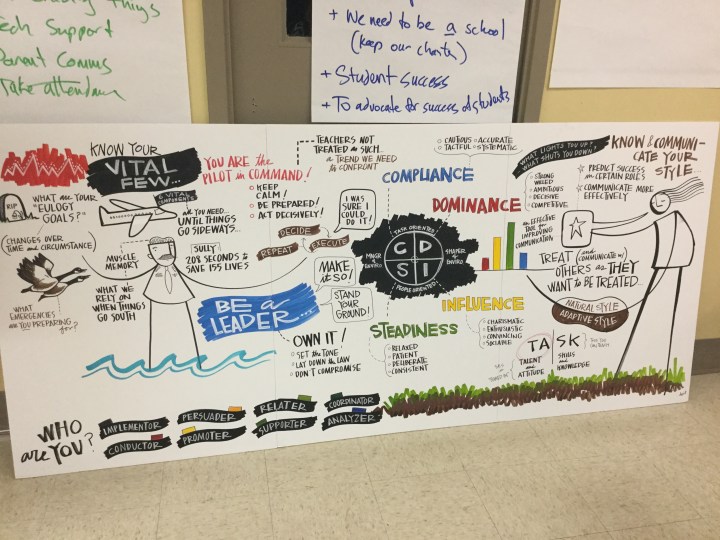 Will Pemble started out our workshop by have us develop a list of all the qualities of a disciplined leader. Here’s our list:
- Runs toward a challenge
- Decisive
- Listener
- Reflective
- Active participant
- Clear values that the leader sticks to
- Loves what he/she does
- Commitment
- Communicator
- Risk-taker
- Willing to be uncomfortable
- Willing to suffer (What’s your suffer score? How much are you willing to suffer for something?)
- Willing to fail… a lot
- Learner
- Accepting
- Courageous
- Focused
- Empowering
- Open to feedback
- Passionate
- Ethical
- In the moment
- Asks the tough questions
Pretty awesome list, huh? Of course, if we could all be great at all those, we would be the most incredible leaders ever. Well, I’ve got some work to do…I don’t know about you. I’m guessing we all have some work to do.
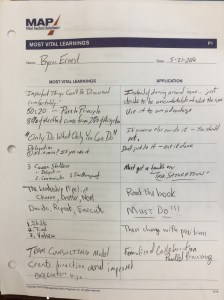 We had a cool sheet that we kept individually during the day that was titled: “Most Vital Learnings.” I really liked having this sheet that had spaces for 10 vital learnings (see photo). In keeping with the vital few mantra of The Disciplined Leader, I have selected my vital few most vital learnings. Here they are:
- “Important things can’t be discussed comfortably.” Instead of dancing around issues, we need to decide to be uncomfortable and hit the issue head on and solve it.
- “Pareto Principle”… 80:20 – 80% of the effect comes from 20% of the system. We need to use this to our advantage. We must focus on the vital few and ignore the trivial many.
- Decide, repeat, execute. Need we say more? This is definitely a vital few.
As you can see, our experience with the book, The Disciplined Leader, and Will’s great facilitation of our workshop was incredible. It was also incredible to be back together with Sita Magnusun doing our graphic facilitation for this program. I first met Sita at my first Harvard University class and have been both blown away by her work and continue to believe in graphic facilitation as a component of effective facilitation of learning. Two of her graphics are posted here.
ESSA Opportunity #6: Elimination of Highly Qualified Teacher
 Every Student Succeeds Act (ESSA) has revised a key element of No Child Left Behind (NCLB) related to teachers. NCLB referred to “highly qualified teachers” 67 separate times. When NCLB was written in 2001 it was an important piece of the legislation that every child should be instructed by a “highly qualified teacher.” The terminology was ambiguous and it put a strain on schools really being able to put effective teachers in every classroom. ESSA solves this problem by deleting any reference to “highly qualified” teachers. Instead, it refers to “effective” teachers.
The law replaces the “highly qualified teacher” requirements with a requirement that states ensure teachers meet the applicable state certification and licensure requirements. ESSA eliminates the NCLB language prohibiting emergency or provisional certification. In fact, ESSA does allow for provisional certification and the waiving of licensing criteria for states and schools receiving Title I funding.
This provides states with an opportunity to design a new strategy for educator quality that aligns to a vision for personalized learning. Specifically, states could align their certification and licensing requirements to reflect new teaching roles and competencies for instruction in personalized learning environments.
ESSA Opportunity #4: Identification of School Improvement Strategies

States can establish their own framework for supporting identified schools that incorporates personalized learning strategies. ESSA has two two required categories for intervention.
Action/intervention is required in at least the following types of schools:
- Comprehensive Support and Improvement Schools: The lowest performing 5 percent of Title I schools and all high schools with graduation rates below 67 percent. Districts have the initial responsibility for improvement activity. If schools don’t improve within four years, states have to intervene.
- Targeted Support and Improvement: Schools where any group of students is consistently underperforming. Schools work with districts on improvement activity. If schools don’t improve, the district has to ensure more rigorous intervention.
The big key here is that the School Improvement Grant (SIG) is eliminated with ESSA. Now in its place is a new provision that allows STATES to set aside 7% of their Title I funds for school improvement activities.
 Byron's Babbles
leave a comment