What’s In Your Culture? Part 2

In prepping for writing the post What’s In Your Culture, I reflected on the 71 highlights I made while reading It’s My Pleasure: The Impact of Extraordinary Talent and a Compelling Culture by Dee Ann Turner. In What’s In Your Culture I said that my big takeaway from the book was the fact that Dee Ann Turner was the product of the culture of excellence she taught us about in the book. Then, I got to thinking that the content of the book was too great to not blog about. Therefore, I have decided to share my top five highlights from my Kindle Edition of It’s My Pleasure: The Impact of Extraordinary Talent and a Compelling Culture.
The culture of an institution, I’ve come to learn, is not just one of the things you manage. It ultimately affects everything that goes on in the institution. You have to understand it, shape it, and talk about it, and you have to lead it. —Lou Gerstner, CEO, IBM (retired)
For me, this drove home the fact that every organization has a culture. The question is whether it is a great culture or toxic culture. The point here is we, as leaders, cannot just leave this to chance. We must lead our organization’s culture to greatness!
“It was an honor to be a “facilitator of opportunity” on behalf of Truett Cathy.” ~ Dee Ann Turner
As leaders we are facilitators of all that happens in the organization. Note, the word here is facilitator, not doer of, commander of, or all knowing of, but facilitator. Facilitators lead people to understand their common objectives and assist them to plan how to achieve these objectives.
“Creating a strong, compelling culture requires intentionality and vision. This creation cannot happen instantly or accidentally. A visionary must imagine the future and then design the path to align the organization with that future.
Culture is the soul of the organization. It is the way we envision, engage and experience others within an organization. Culture defines the values and behaviors that are acceptable and expected. Culture can be an elusive concept to describe, but at Chick-fil-A, we call it living life together.” ~ Dee Ann Turner
Leaders must envision what the culture of the organization can become. The culture of the organization defines the stories that are told by those in the organization. Therefore it is important that clear values and behaviors are defined. This, in turn, defines how the stories of our organizations are told.
“We recognize the tremendous responsibility not only to lead, but also to serve those we lead. In our culture, leaders are the first to arrive and the last to leave. Leaders ensure that everyone else is served first. They give deference to others and do not expect, nor accept, privilege.” ~ Dee Ann Turner
“The Talent we select to be part of our team brings unique abilities, perspectives, ideas, thinking and insights. If we are to maximize their contributions to our business, then we have to steward not just the competencies of the employee, but also their interests and their dreams. In our business, Chick-fil-A Operators hire many team members that are on their way to something else. For some, it is their very first job. For a few others, it may be the first step toward pursuing an opportunity to operate their own restaurant. As the NCAA ad says, however, many will ‘go pro’ at something else.” ~ Dee Ann Turner
The idea of servant leadership was coined in 1970 by Robert Greenleaf. Greenleaf said that “the servant-leader is servant first.” By that he meant that that the desire to serve, the “servant’s heart,” is a fundamental characteristic of a servant-leader. It is not about being servile, it is about wanting to help others. It is about identifying and meeting the needs of colleagues, customers, and communities. This is why I really walk the walk on the idea of what I call hyper-personalizing the personal and professional growth of the teachers (Talent) I serve.
“When the core values of an organization match the purpose and the mission, they inspire that organization’s members to play an integral role in the organization’s success.” ~ Dee Ann Turner
Strong core values can set an organization apart from the others by clarifying its identity and serving as a rallying point for employees. But coming up with strong core values, and then sticking to them, requires real guts. Indeed, an organization considering a core values initiative must first come to terms with what is non-negotiable and then realize that, when properly practiced, adhering to core values is tough, and sometimes inflicts pain. Core values limit an organization’s strategic and operational freedom and guide the behavior of its people.
As you can see, this book is an outstanding resource to all leaders wanting to build the same great culture as Dee Ann Turner has experienced at Chick-fil-A.

What’s In Your Culture?
 I finished a great book yesterday that has easily made it onto the list of greatest books I’ve read. The book was, It’s My Pleasure: The Impact of Extraordinary Talent and a Compelling Culture by Dee Ann Turner. Of course I was tweeting like mad while reading and was excited to have the author liking, favoriting, and replying to my tweets (@ByronErnest). In fact, I was getting lots of Twitter interaction from others on those tweets, too. You’ll notice Dee Ann Turner liked a tweet where I set a new goal for 2016 of having lunch with her at a Chick-fil-A. She liked and replied to the tweet; sure hope she’ll consider it.
 Then, I was real excited yesterday to receive a tweet from Andy Van Weele (@AndyVanWeele). He tweeted the question, “What was your big takeaway?” This is an awesome question because it is not plural, it’s singular. I, of course, tweeted back and told him to stay tuned for this post. As I began to think about this, I considered the 71 highlights I made while reading the book. I reread and studied each one. Then I realized no single one of these great thoughts shared by Dee Ann Turner was my big takeaway. My big
 takeaway was the fact that Dee Ann Turner was the product of the culture of excellence she taught us about in the book. Think about it; lots of people write books about culture and leadership. Here, however, is an author who has lived and become a product of an outstanding culture. In addition, is continuing to provide outstanding leadership to continue that legacy. This book isn’t about turning around or building an organization, it’s about what it’s like to be a product of an incredible culture of “It’s My Pleasure” and wanting to continue and further hone that culture of excellence. It is about it being an honor for Dee Ann Turner to be a “facilitator of opportunity” on behalf of Truett Cathy.
I must admit, I’m a little jealous of Dee Ann’s opportunity to learn and develop under the tutelage of S. Truett Cathy, the author of the phenomenal culture that is Chick-fil-A. As a leader of schools turning around, I spend most of my time on culture building, so I’m just so blown away by the thought of spending over 30 years growing in such a great culture. But, then I get chills thinking about this is the very reason I have accepted the calling to lead the schools I have; to give our students and staff the same culture that Dee Ann Turner grew, developed, and flourished in. Not an easy task, but clearly attainable!
 So, there’s my big takeaway: Dee Ann Turner was the product of the culture of excellence of Chick-fil-A. So, my question to the readers of this post is: “Would you want to be a product of the culture you have created?” Or, an even more compelling question is: “Would you want someone to write a book about the culture you are leading? If you waivered on your answer, or said no, you need to read It’s My Pleasure: The Impact of Extraordinary Talent and a Compelling Culture by Dee Ann Turner. Let’s all become “facilitators of opportunity.”

Transformational Leadership
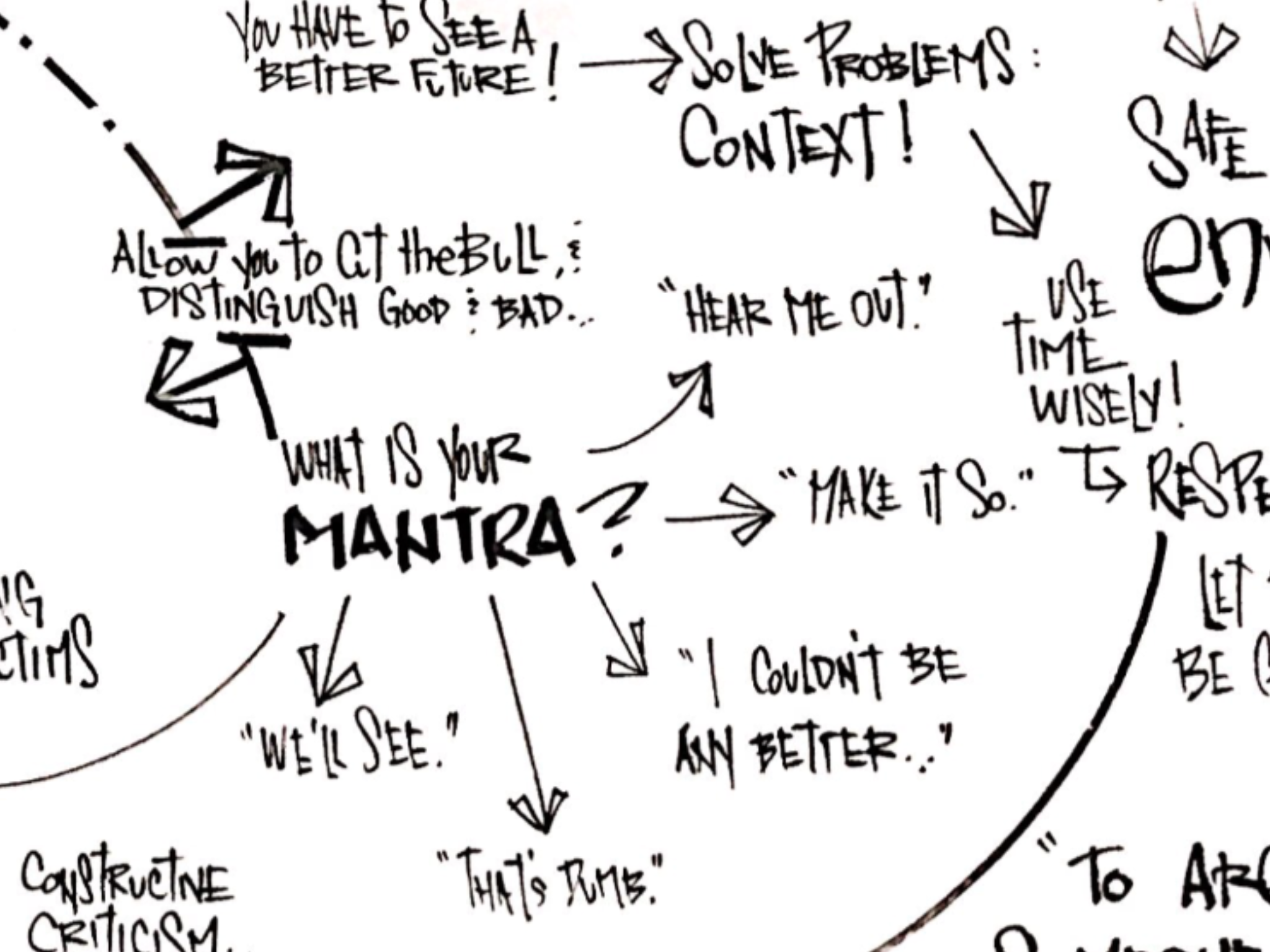 One of my biggest frustrations is working with leaders who have the old leader-follower or command and control mindset. It is really hard to coach these leaders out of this behavior. The disposition is driven by a lack of self confidence, an over-active ego, and lazy leadership. The easiest way to lead is to command and then watch others do the work – then berate them when the job does not meet expectations. The transformational leader empowers team members, and this is not the easy way out. It really comes down to the question of , “What is your mantra?” Mine is “Make it so!” I strive to have team members come with plans for great things they want to do to put students first and then for me to instantly say: “Make it so!”
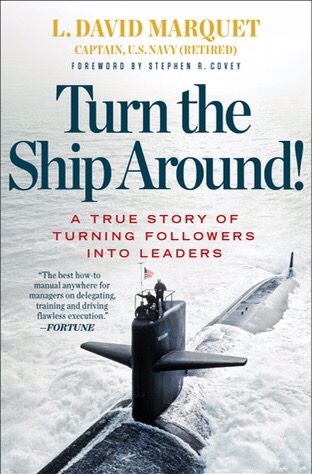 The absolute expert at this is David Marquet, author of Turn the Ship Around. David Marquet was the captain of the USS Santa Fe, a nuclear-powered submarine, and was responsible for more than a hundred sailors, deep in the sea. The bottom line: under Marquet’s transformational leadership, every crew member became a leader and assumed responsibility for everything he did, from clerical tasks to crucial combat decisions. Through his mantra of “I intend to…” where crew members were empowered to come to him and tell him what they intended to do, the crew became fully engaged, contributing their full intellectual capacity every day, and the Santa Fe started winning awards. Ultimately, the USS Santa Fe ended up promoting a highly disproportionate number of officers to submarine command. If that’s not growing your people through empowerment and building your bench, I don’t know what is!
“Leadership should mean giving control rather than taking control and creating leaders rather than forging followers.” ~ David Marquet
 In lesson #30 of The Disciplined Leader, John Manning advices against micromanaging and encourages empowering employees to develop a culture of performance and productivity. I believe we need think micro-knowledge not micromanage. Our team members have a great deal of very specific and tacit knowledge that we need to be a catalyst for developing our team members for action. In other words, help them to “make it so.” I have tried to model this. A recent example is one of our teachers, Jill Landers. Read her story on empowerment in her guest post to my blog by clicking here. Or, check out this video: https://www.youtube.com/watch?v=hIMs3KV2O7Y
Successful empowerment comes down to four important elements:
- Having skilled and trained team members that have the knowledge and ability base to carry out the tasks.
- Present new challenges and opportunities to your team members. It’s important to challenge your employees so they can demonstrate and achieve their full potential.
- Give them flexibility to do things their way. You may want to grab the steering wheel and drive, but let them “make it so.” Or, as David Marquet did, let them come to you and say, “I intend to…”
- Provide hyper-personalized professional growth, but do not babysit.
Truly transformational leaders are able to prevent employees from being excessively reliant on their bosses, cultivating instead a staff that feels empowered and self-guided. Are you up for being transformational?
Don’t Be A Border Collie Leader
Guest Post By Jill Landers

Jill Landers is in her 10th year as an educator with experience in traditional brick and mortar setting, the hybrid classroom, and full time virtual school. She participates in various leadership roles at Hoosier Academy including grade level leader, Teacher Advisory Committee, National Junior Honor Society, and Focused Leader Academy. She co-founded Empowered Teachers of Action and is a National Teacher Ambassador for K12 Schools.

The Far Side by Gary Larson
Dr. Ernest recognized the need to “build the bench from within” at our school, Hoosier Academies, and developed the Focused Leader Academy. It has literally changed the trajectory of my professional career. As part of our role in the leadership academy, Dr. Ernest challenged the each member of the group to choose and develop a project that would benefit our school in some way. It has been great to see the benefits so far, and the year is not over…a new anti-bullying program and policies, national collaboration between virtual schools, graphic facilitation to support learning in the classroom, and more. Dr. Ernest asked us early on in the year what we were thinking of doing for our projects. I wasn’t sure exactly what I wanted to do, but because of our school’s unique needs (and therefore the need for laws/policies to support us), I was very interested in making a positive impact on educational policy in the state of Indiana. He got that look in his eye that meant the wheels were turning, and he said in his classic way, “Let me think about that. I have some ideas.”
It wasn’t long before Dr. Ernest connected me with Tosha Salyers from the Institute for Quality Education, and she and I realized we had a shared vision for meaningfully engaging teachers in educational policy. We decided to create a professional development course for which teachers could earn professional growth points (which go toward renewing their teaching licenses). I named it “Empowered Teachers of Action” (ETA) because it wasn’t just about informing teachers; it was about applying this knowledge so teachers could make a difference in their schools. From the start, I did not want this to be about getting teachers to agree with my personal views. I wanted teachers to have the tools to have informed, productive, and positive dialogue surrounding the issues about which we feel passionate.
I brainstormed topics that I, myself, wished I knew more about. We reached out to speakers who were experts in their fields, and it wasn’t long before teachers around the state – whether in person downtown or sitting online at home – were meeting on Wednesday nights and learning about past, present, and future of education in Indiana. We culminated the project on the 5th Wednesday with a trip to the Indiana State House, hearing from legislators and meeting with Brian Bosma, the Speaker of the House. Empowered Teachers of Action was a success, and we want it to be bigger and better next year and for years to come. Here is a Link to an Empowered Teachers of Action Video I made: https://www.youtube.com/watch?v=hIMs3KV2O7Y
 In his book, The Disciplined Leader, John Manning writes, “There’s nothing mysterious or complex here: When you drive decision making down into the organization and give people the freedom to make good business decisions, it becomes a formidable strategy for inspiring others to achieve goals. It communicates that you trust and respect them, which is exactly what your people need.” As I reflect on what I have accomplished this year, it is because I work with a leader who is not a “border collie.” He trusted and supported me; he opened the gates for me. For the first time in my career, I understand the impact of empowerment, and I look forward to possibilities that await me.
Attracting, Preparing, Developing, Retaining
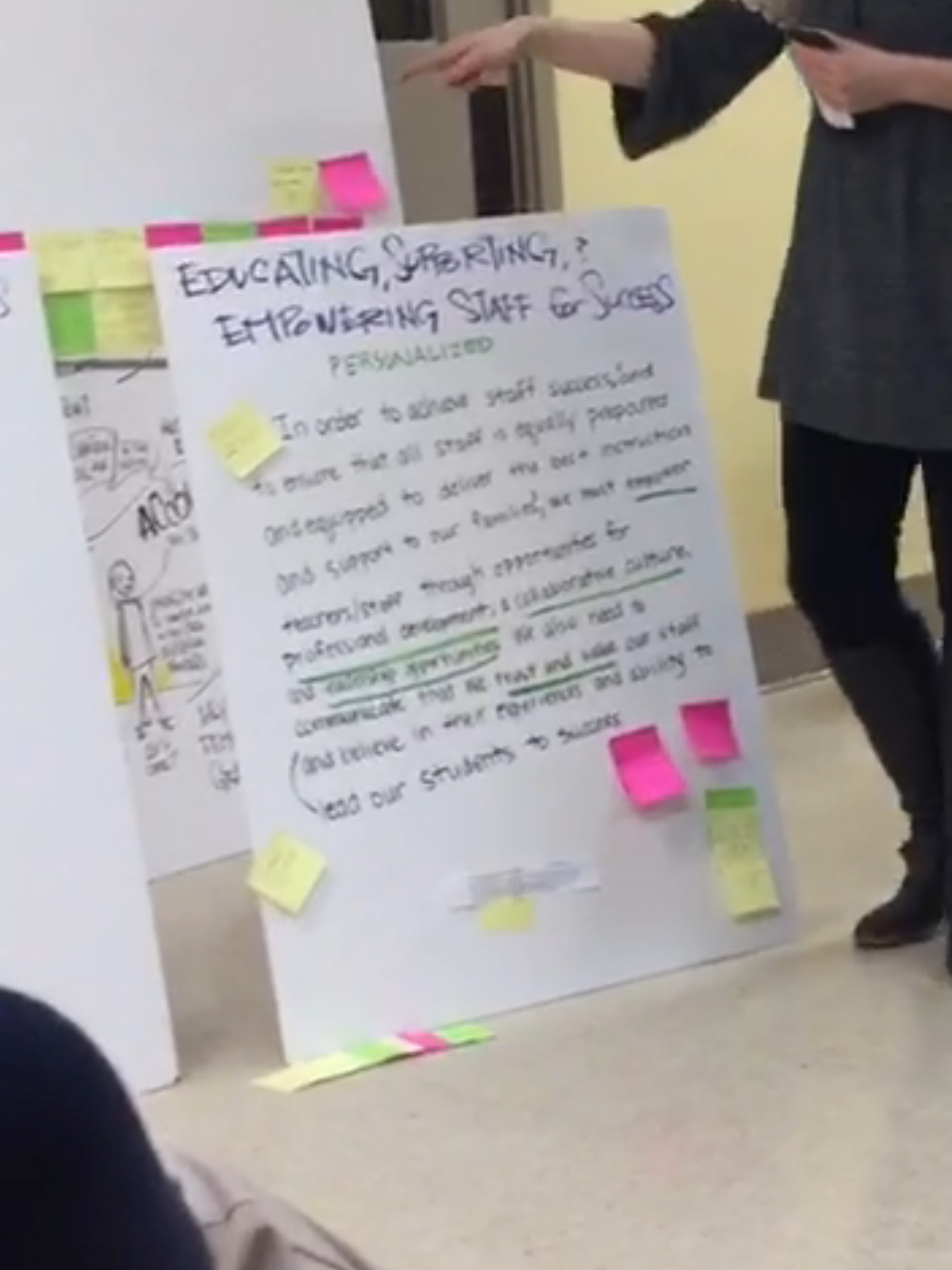
Leadership development and leadership project-based programs provide participants with practical, real world, and in-depth experiences. Well implemented programs provide ongoing mentorship, and targeted training across a range of areas within the organization. The key for success is customizing and personalizing all phases of the professional growth experience. It should truly be personal professional growth. The goal is to recruit and develop leaders for our organizations. With so much micro-knowledge and tacit knowledge needed for an effective school, or most other organizations, we must be building our benches and “raising our own.” As John Manning (2015) pointed out in Lesson 28 in The Disciplined Leader we must be providing growth opportunities and investing in our team members’ future. Never forget, intelligence of an organization is, no surprise here, a product of the intelligence of its members. 
I am writing this post while sitting in the airport in Atlanta. I am heading home from a great meeting of state legislators and state boards of education members held to discuss the new federal education law, Every Student Succeeds Act. One of the things that kept coming up over and over was how imperative it is that schools have robust school leader and teacher leader development programs. It is obvious this is crucial for schools. That is why I am so proud of our Focused Leader Academy. Our Focused Leader Academy is an employee development and engagement program. The idea is that great minds and great motives still matter. Teachers with school leadership aspirations have the opportunity to become part of a cohort which will take part in monthly leadership training and be part of supervised leadership projects of the school. Cohort size is at least 10% of teaching leaders per year. The Vision is: Leadership will be born out of those who are affected by it. The Mission is: Leadership will appear anywhere and anytime it is needed. Our Theory of Action is: If we empower our teachers through leadership skill development…Then we will have teacher leaders ready to contribute to the success of Hoosier Academies and be an important part of our talent pipeline.
In fact we learned this is an important part of our talent management system. If we get it right we will be doing these four things:
- Attracting top talent
- Preparing top talent
- Developing top talent
- Retaining top talent
We need to be intentional about the development of the personal learning agendas of those we serve. In other words, we need to hyper-personalize!
Is your school or organization being intentional in the leadership development of those you serve?
Reference
Manning, J.M. (2015). The disciplined leader: keeping the focus on what really matters. Berrett-Koehler Publishers. Kindle Edition.
We Words for We People

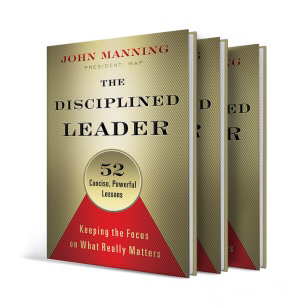
You can tell a lot about a person by paying attention to how many times they use “I” in her average email. John Manning (2015) taught us to, “Make yourself less visible in the ownership of successes by assigning the ownership of the results, accomplishments, and progress to the team, such as ‘Our goals as a team are that we plan to hit $120 million in revenue by year’s end and grow our customer base by 10 percent'” (Kindle location 1489). True leadership isn’t found seeking the spotlight, but seeking to shine the spotlight on others. The best leaders only use “I” when accepting responsibility for failures. Likewise, they are quick to use “we” when referring to successes.
 Leadership isn’t about your rhetoric; it’s about your actions. Leadership might begin with having a vision, but it’s delivering and implementing the vision that will ultimately determine your success as a leader. Remember, without your people there is no platform. Without your team you have nothing to lead. When you place yourself above the people you lead you have failed as a leader.
Reference
Manning, J. (2015). The disciplined leader: 52 concise, powerful lessons. Oakland, CA: Barrett – Koehler Publishers, Inc.
Leadership Heroin

Empowered Teachers for Action with Speaker of the House Brian Bosma
Yesterday was one of those incredible days in the life of a school leader. In the morning I was able to spend time with several teachers from our own school as well as many others from around the state as part of a program developed by one of Hoosier Academies teacher leaders, Jill Landers, in conjunction with Tosha Salyers and the Institute for Quality Education called “Empowered Teachers for Action.” The program included five sessions, four of which were held the previous four Wednesday’s, with the goal of educating teachers on governance, policy, and how to become involved in the legislative process. The program was a total success and culminated yesterday at the Indiana Statehouse with a panel discussion with Indiana Senator Hershman and Indiana Representative Cook, a discussion about how legislation comes about, and finally a discussion with Speaker of the House Brian Bosma. It was AWESOME! I might add this was Jill’s Focused Leadership Project as part of her experience in our Focused Leader Academy (FLA).
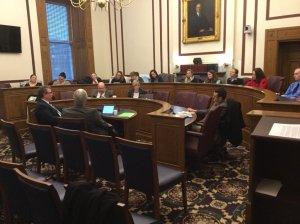
Discussion with Senator Hershman & Representative Tony Cook
As if that were not enough to make the day complete, we were then off to school for an afternoon session with our Focused Leader Academy where they were finishing up the development of our school’s new Vision, Mission, and Core Values. Last week, academy members led a school board retreat session getting board feedback and input. Now, the team was putting the finishing touches on everything. Earlier in the day there had been discussions about what a great experience and journey this has been for our teacher leaders. In fact, I would say our leaders have had an experience of truly building a vision, mission, and core values that very few top level CEOs have ever had. One of our FLA members, Alissa Davis, even said, “You know, I go through other organizations’ mission and vision statements and try to see if I can figure out what they do and stand for, and you know; many of them you can’t.” I have to give credit here to Mike Fleisch, who has been so much more than a graphic facilitator during our journey. He has been a partner, friend, and my jazz partner. We truly have become a jazz improvisation act. I’ll need to blog about this collaboration, but I’ll just say I would not be the leader I am today without the
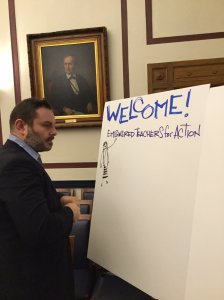
Mike Fleisch
collaborative friendship/partnership, and jazz act, we have developed.
Those that know me won’t be surprised when I say that during our Focused Leader Academy session I get a little, o.k. a lot, excited and animated. How can you not, with a room full of great teacher leaders? Anyway, I had just said earlier in the day that I lived for these days. I was concerned yesterday,however, because there was a snowstorm coming in and I did not want to cancel or quit early (we did not have to). You know how sometimes when weather comes in how great it is when you get part of your day back when something is cancelled or ended early? Let me tell you, I do not ever wish that on these sessions.
During the afternoon session I got all excited when the group finally put the final draft status on the vision and mission and had defined student success (you’ll have to wait for these to be revealed). Then Jill Landers looked over at me and said, “this is your heroin.” Wow, pretty profound, right! Yes, she was correct – leadership and working with our staff is my heroin. Working with our teacher leaders in the area of leadership and professional growth is a drug for me. I get all hopped up just preparing and putting the sessions together. And, at the end of the day, I go through a little withdrawal. We all laughed when Jill made the comment, but she was right. I then shared a story I had heard about why so many rock stars have drug problems – it is because of the rush and high they get being on stage with all the people cheering and then there is not that high when they are not performing and they need something to give them that high. Drugs and alcohol become the medium. Well, let me assure you I do not need the medium in between, but I think we can all understand the situation.
Last night I got to thinking about having a drug addiction-like passion for leadership. Our second President, John Adams, was concerned about this passion for leadership. He posited that leaders become so passionate and addicted to the power of leadership they have the tendency to become tyrannical. He believed that an important task of leaders was both to incite and to control human passion, both in ourselves and those we lead. Make no mistake here, however, it is the passionate leaders we need in the world. It’s the passionate people that take the biggest risks, step up to the plate, and help make the biggest leaps forward within teams, companies, and organizations. People want to follow a passionate leader. Someone who cares about not only the cause for which he or she is working, but also the other people who are involved in the effort. Passion for the projects, for the company and for the people involved are key to successful leadership.
Finally, I guess it comes down to my attitude and mindset that makes working with our future leaders one of my leadership drugs (to continue with the metaphor). I’m driven by curiosity and the motivation to learn about the world around us. As leaders, we need to find ways to connect with the world around us. Curiosity and interest are both key qualities of the best leaders I know. What is your leadership heroin?
The Leader’s Toolbox
 Indiana weather has been absolutely beautiful this weekend. The temperature has been in the 60s and it has been sunny. Perfect weather to get out and get a start on some spring farm jobs that need to be done; even if it is still February. My son, Heath, and I did some high tensile fence repair and maintenance today. As we worked I thought about a blog post I did a few years ago entitled “Mending Fences.” You can read it here, but it dealt with how the maintenance done to keep a high tensile fence in proper repair is like being a leader.
 Today as we were working, Heath made the comment that there were tools specifically made for the fence repair pieces we were using. Specifically, he was talking about the fence pliers/crimps used to splice a broken wire together using sleeves specially formed and gritted to hold the two wires together. As we talked I thought about the imagery of the tools is the toolbox to the tools we have available as leaders.This same metaphor of the leadership toolbox is being used in a book I am reading right now.
I am reading a great book by Robert Gates. The book is A Passion for Leadership: Lessons on Change and Reform from Fifty Years of Public Service. The book just came out in January 2016 and it is amazing. Just as great as one of Gates’s other books, Duty. I would recommend reading both of them. Gates served as secretary of defense under both President George W. Bush and President Barack Obama. He was also an officer in the United States Air Force and worked for the CIA before being appointed director of the agency. A member of the National Security Council staff in four administrations, he served eight presidents of both political parties. He was president of Texas A&M University from 2002 to 2006, is currently chancellor of the College of William & Mary, was named president of the Boy Scouts of America in 2013, and has served on several corporate boards of directors.
 In A Passion for Leadership, Gates discusses how to be a successful leader of change and reform we must empower those we lead. One tool for empowerment is the task force. Task forces provide a way to get people out of their ordinary bureaucratic routine and get them in an environment where they are sharing ideas with people from different parts of an organization and people often in those kinds of settings can come up with great ideas and new approaches. Sometimes I get criticized for being to collaborative and wanting to involve as many stakeholders as possible in coming up with the best solutions possible, but Gates seems to share this same believe with me. At the end of the day there are many decisions where the leader must make the final call, but why not have as many options and ideas on the table as possible. At the end of the day those we lead need to know we will make decisions and we’re not afraid to make tough decisions. But, to make those decisions we need to be knowledgeable as possible in order to make intelligent decisions. The only way to have that knowledge is to do personal study as well as listen to those around us. Finally, we as the leader, drive the change, reform, or turnaround agendas of our organizations. Great leaders decide what are the issues that she is going to expend time and political capital on.
It has also been exciting to read about Gates’s view on the tool of creating a vision. As you 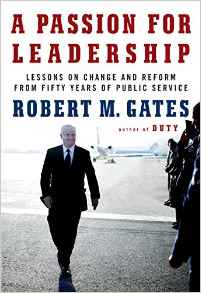 know we have been going through this very process with the school I lead presently. According to Gates, the vision doesn’t spring suddenly or fully developed from the leader’s brain. The person should listen, according to Gates, to a broad range of internal and external stakeholders, especially people who want to be part of a winning team. Leaders should integrate that information with instincts, experience and judgment to increase the likelihood that the vision will be grounded in reality, achievable and inspiring.
Again, it has been exciting to read about all the leadership tools Robert Gates has used during his successful career to change and reform the organizations he has lead, including our nation.
What leadership tools do you need to develop in your leadership toolbox?
Moments of Truth
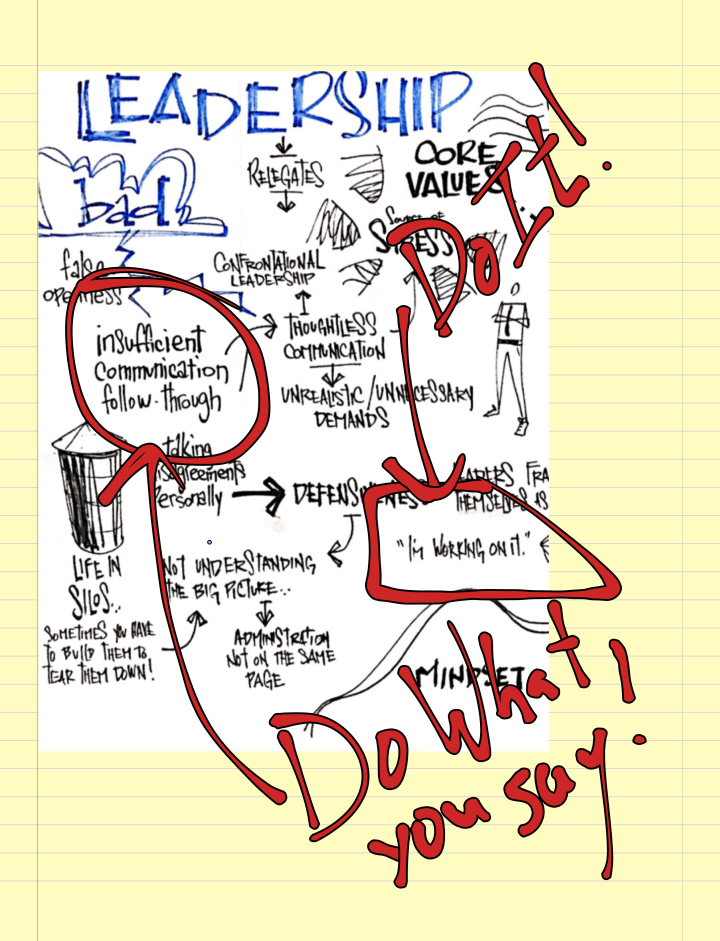 Amazingly, I just blogged about “Walking the Walk” and ” Walking the Talk” just before reading Lesson #26 in The Disciplined Leader (2015) by John Manning entitled “Honor Your Commitments.” Honoring your commitments as a leader is truly a defining mantra. How we handle our commitments and walk the walk define our moments of truth.
“In the end, such leaders build entire reputations, even legacies, around being known as people who always do what they say they are going to do.” ~ John M. Manning
For this post I would like to bullet what I consider to be the great points made by Manning (2015) in this lesson:
- When leaders fail to follow through on commitments big or small, people notice, remember, and care when they’re let down. Such leaders lose the esteem of their employees, and both morale and productivity suffer.
- Remember your direct reports are watching and evaluating your ability to honor commitments, which should keep you on your toes!
- If you tell employees you’ll address their concerns about an issue, keep your word, follow up with them, and meet that obligation. After all, you demand the same level of respect and follow-through whenever you ask that of them.
- The more positive impressions you make, the greater your chances are of winning the trust of those around you.
- Define and communicate. When you say you’re going to do something, don’t just assume you’ll remember your promise or obligation. Write it down, set a deadline, and then define and communicate what that follow-up looks like.
- Don’t overcommit. A lot of leaders often say “yes” because they don’t know how to say “no.” Others overcommit because they’re afraid of how it might appear if they don’t agree to do something.
- Get the help you need. Sometimes an activity can look pretty doable, even easy at first. Once you get into the thick of it, however, it becomes more complicated, taking on a life of its own. It’s important to have the ability to get additional resources if needed.
Great leaders honor commitments and understand that doing so is a high-impact activity.
Reference
Manning, J.M. (2015). The disciplined leader: keeping the focus on what really matters. Berrett-Koehler Publishers. Kindle Edition.
Walk The Walk
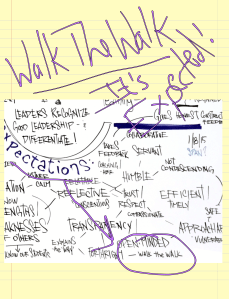 Last evening I was having a conversation with one of our teacher leaders and we were talking about leaders who do not follow through, who are always “checking on it,” “thinking about it,” or are always “working on it.” I also explained I had been in a meeting this past week where a person said, “I’m a visionary – I want nothing to do with execution or implementation!” Are you serious, I thought! The person went on to say, “I hate execution and implementation!” Are you kidding me! That’s the fun part. The world has way to many of these, so called “big thinkers” who have no clue how nor the grit to implement. The world does not need anymore of these people! I say we need more of people who are willing to be the “Deer in the Headlights” and I blogged about it here. The world needs more of my hero, Thomas Edison. He was visionary and innovative, but was also a creator, inventor, and implementation expert. In other words we need more people who can “walk the walk.” In fact we talked about this last fall in one of our Focused Leader Academy sessions.
The teacher leader I was having this discussion with is a great idea generator who also knows how to put a plan in action. We discussed how I really have come to the conclusion that the picture I most adore in my office that has penguins and says “Walk the Talk” is probably incorrect and should say “Walk the Walk.” Think about this: do I really need to talk if I am walking my and the organization I serve core values? Honestly, we, myself included, probably do too much talking and just need to do more walking. People will witness our actions and values and not need to be told about them. In other words, our behavior and day-to-day actions have to match the aspirations we have for those we lead, our colleagues, and organization.
“Innovation is rewarded, execution is worshipped.”
Let me be clear here, however, this does not mean I believe we don’t need thought leaders. We do. But… we need thought leaders that can turn those thoughts into reality. Many times a leader is ineffectual because she knows how to bark out ideas and orders, but is not able to explain, in language that is unique to her field and compelling to her colleagues or customers. This comes down to being able to explain the “why” what the team needs to do matters and how she expects the team to win. It has been said that great leaders think differently and invariably talk differently, as well. I am arguing here that great leaders also need to act differently. And… by act I mean it in the truest sense of the verb – do something about the talk. That is really what those we lead want is someone who gets things done.
In closing, remember this, authentic leaders must share the struggles and risks that we demand of our people. Furthermore, a leader’s actions must consistently reinforce the most important core values we hold up for our companies, organizations or movements. Don’t forget, innovation is rewarded and execution is worshipped. Go implement!


leave a comment