Leaders Are Readers
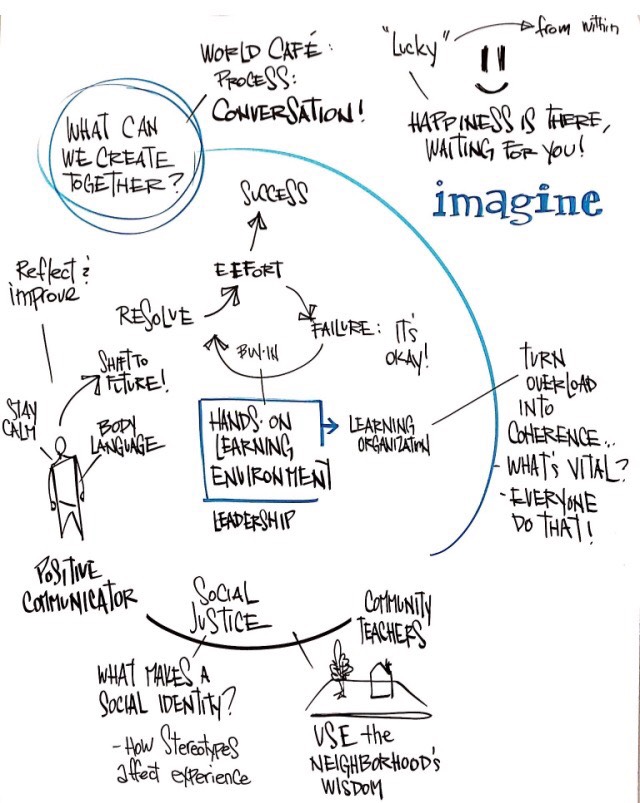
Mike Fleisch Graphic Of Our Leaders Are Readers Session
It goes without saying that “leaders are readers.” This past Saturday during our January Focused Leader Academy (FLA) we did a very cool activity. We all read a book in 45 minutes. I purchased copies of the last 16 books I have read and let our FLA participants pick a book to read and make their own. Here is the protocol we used:
How to Read a Book in 45 minutes
1. Read the introduction, carefully. A good intro will give you the book’s thesis,
clues on the methods and sources, and thumbnail synopses of each chapter.
Work quickly but take good notes. Allow fifteen minutes here.
2. Now turn directly to the conclusion and read that. The conclusion will reinforce
the thesis and have some more quotable material. In your notes write down 1-2
direct quotes suitable for using in a review. Ten minutes.
3. Turn to the table of contents and think about what each chapter likely contains.
Five minutes.
4. Skim 1-2 of what seem to be the key chapters. Look for something clever the
author has done with her or his evidence, memorable phrases, glaring
weaknesses–Fifteen minutes, max.
5. Meet some friends and tell them the interesting things you just learned,
speaking from the author’s point of view (driving it deeper it your memory).

Great Books Our Teachers To Chose From
Here are the books that were available for selection:
Bowling Alone: The Collapse and Revival of American Community by Robert D. Huffer
Don’t Just Do Something, Stand There: Ten Principles for Leading Meetings by Sandra Janoff
The Five Thieves of Happiness by John B. Izzo, Ph.D.
Whistling Vivaldi: How Stereotypes Affect Us and What We Can Do by Claude M. Steele
The Art of Community: Seven Principles for Belonging by Charles Vogl
The World Cafe`: Shaping Our Futures Through Conversations That Matter by Juanito Brown and David Isaacs
Community: The Structure of Belonging by Peter Block
The Art of Action: How Leaders Close the Gaps between Plans, Actions and Results by Stephen Bungay
It’s My Pleasure: The Impact of Extraordinary Talent and a Compelling Culture by Dee Ann Turner
Thank You For Being Late: An Optimist’s Guide to Thriving in the Age of Accelerations by Thomas L. Friedman
Coherence: The Right Drivers in Action for Schools, Districts, and Systems by Michael Fullan
Learning in Action: A Guide to Putting the Learning Organization to Work by David A. Garvin
Killing The Rising Sun: How America Vanquished World War II Japan by Bill O’Reilly
Shoe Dog: A Memoir by the Creator of Nike by Phil Knight
The Day The President Was Shot: The Secret Service, the FBI, a Would-Be Killer, and the Attempted Assassination of Ronald Reagan by Bill O’Reilly
The Hand In The Back of the Room: Connecting School Work to Real Life by Byron L. Ernest
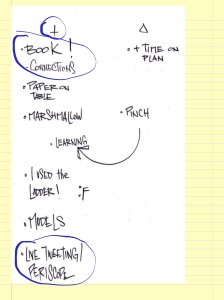
Needless to say, this activity was one of the favorites of participants. Even those who were skeptical really appreciated having the chance to be given a book and go through the protocol. You can see in the graphic of our +s and Δs discussion at the end of the day, that this session was one of the top rated. In fact you will notice in the video that one of those skeptics became a reader while doing this activity.
You will also see a plus on our +/Δ of “Live Tweeting/Periscope.” I live tweeted out the introduction to this activity as well as the report out from all participants using the hashtag #HoosierFLA. We had a large number of people watching live and were receiving several comments during the live tweet. Therefore, I am providing you the link to both videos.
Introduction to our “Leaders Are Readers” session:
https://www.periscope.tv/w/1YqKDAEqlMeGV?t=12s
“Go-Round” report-out from participants’ reading:
https://www.periscope.tv/w/1rmxPrAkbvVGN?t=2s
As you can see, leaders are readers. Are you tending to your own professional growth by reading? Are you supporting the professional growth of those you serve by encouraging reading?


Building S’more Leadership
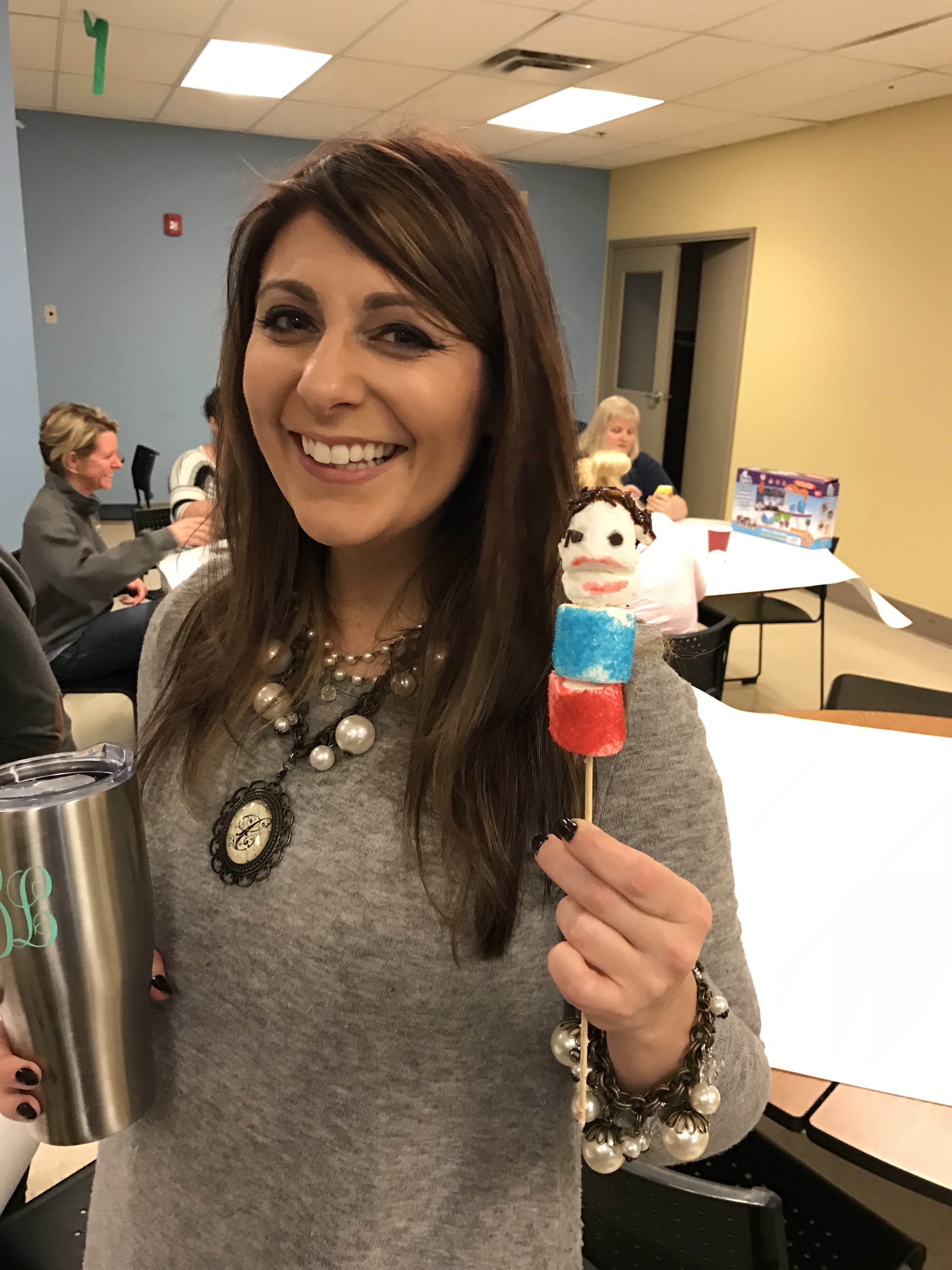 Yesterday our Focused Leader Academy (FLA), aspiring teacher leaders, came into our commons area to find tables coevered in butcher paper with crayons (we’ll cover that in another post) and marshmallow manufacturing machines. Also on the tables were marshmallows, liquid chocolate, liquid caramel, strawberry sauce, chocolate sprinkles, chocolate chips, and sugar sprinkles. The title of our agenda for the day was “Building S’more Leadership.” The through line for the day was, of course, marshmallows.

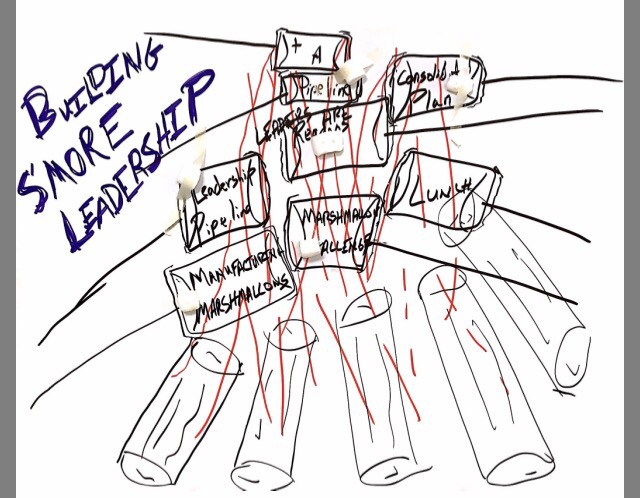
Here Is What The Agenda For Our Day Looked Like
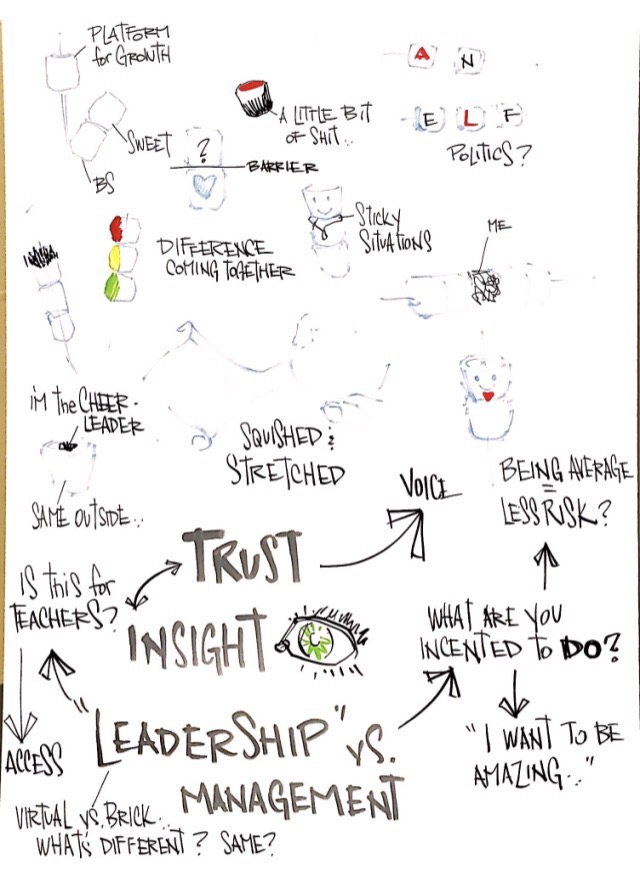
Mike Fleisch Graphic Of Our Discussion
In normal fashion, we circled our chairs and shared out upon completion of the creations. I was struck by the trust and openness we have developed in this community. Here are a couple of their stories that we live tweeted during the sharing:
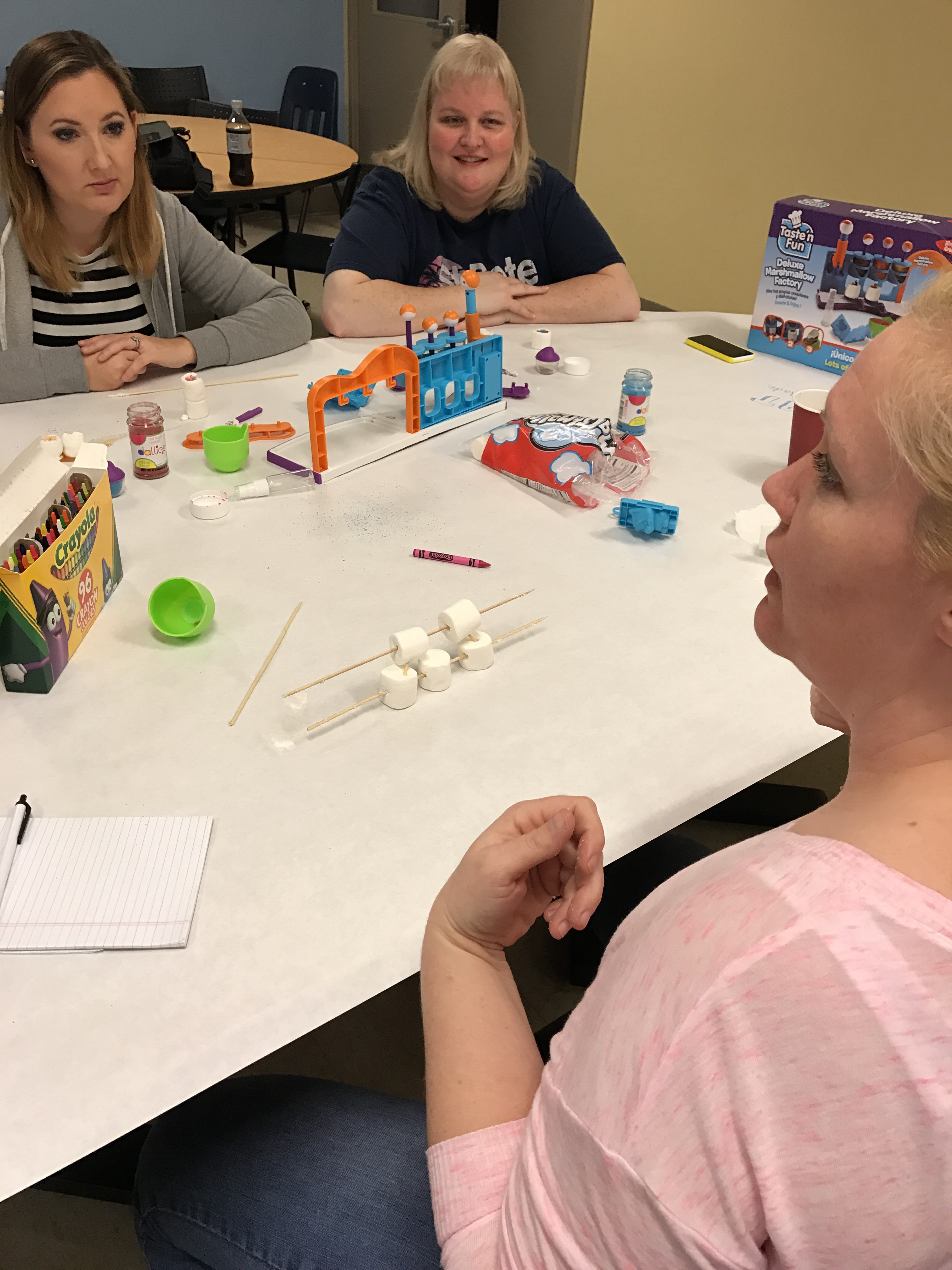
Leading A Community of Experimentation
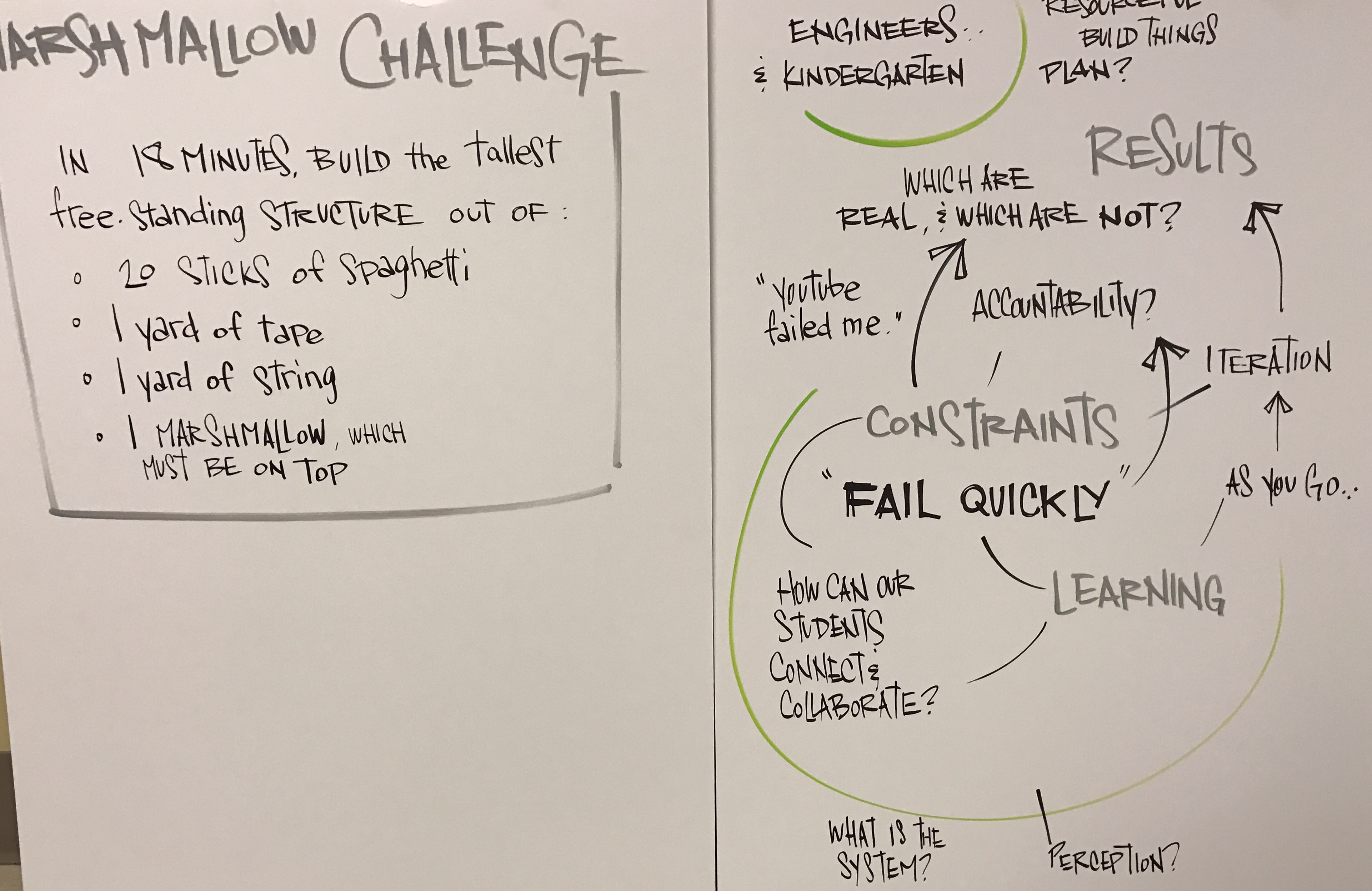
Mike Fleisch Graphic of Our Marshmallow Challenge Discussion
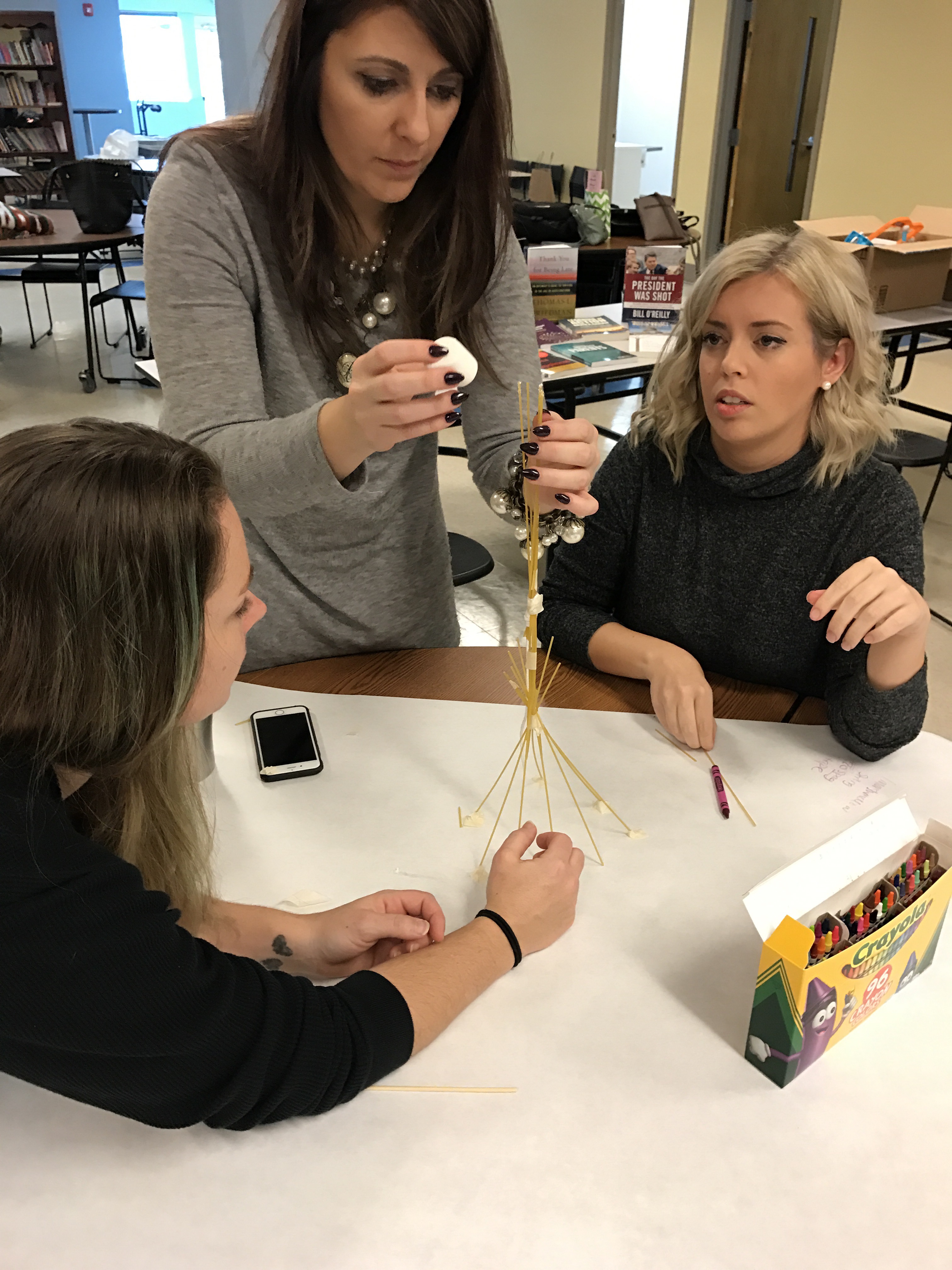 So, here is a generalization of what happened: They spent the first few minutes with someone establishing the leadership role, dominance, or trying really hard to be super collaborative. In a few teams’ cases one emergee as a leader. The next few minutes were devoted to planning. Construction began, usually with less than eight minutes left on the clock. Then, with about a minute to go, someone placed the marshmallow on top of the beautiful tower, and….it collapsed – failure.
 Kindergarteners and engineers do the best on this activity (see graph above). We decided that the kindergarteners win because kids don’t vacillate; they simply try something, and if it doesn’t work, they try again, and again, and again. Think about it… young children love to iterate. They are very curious.
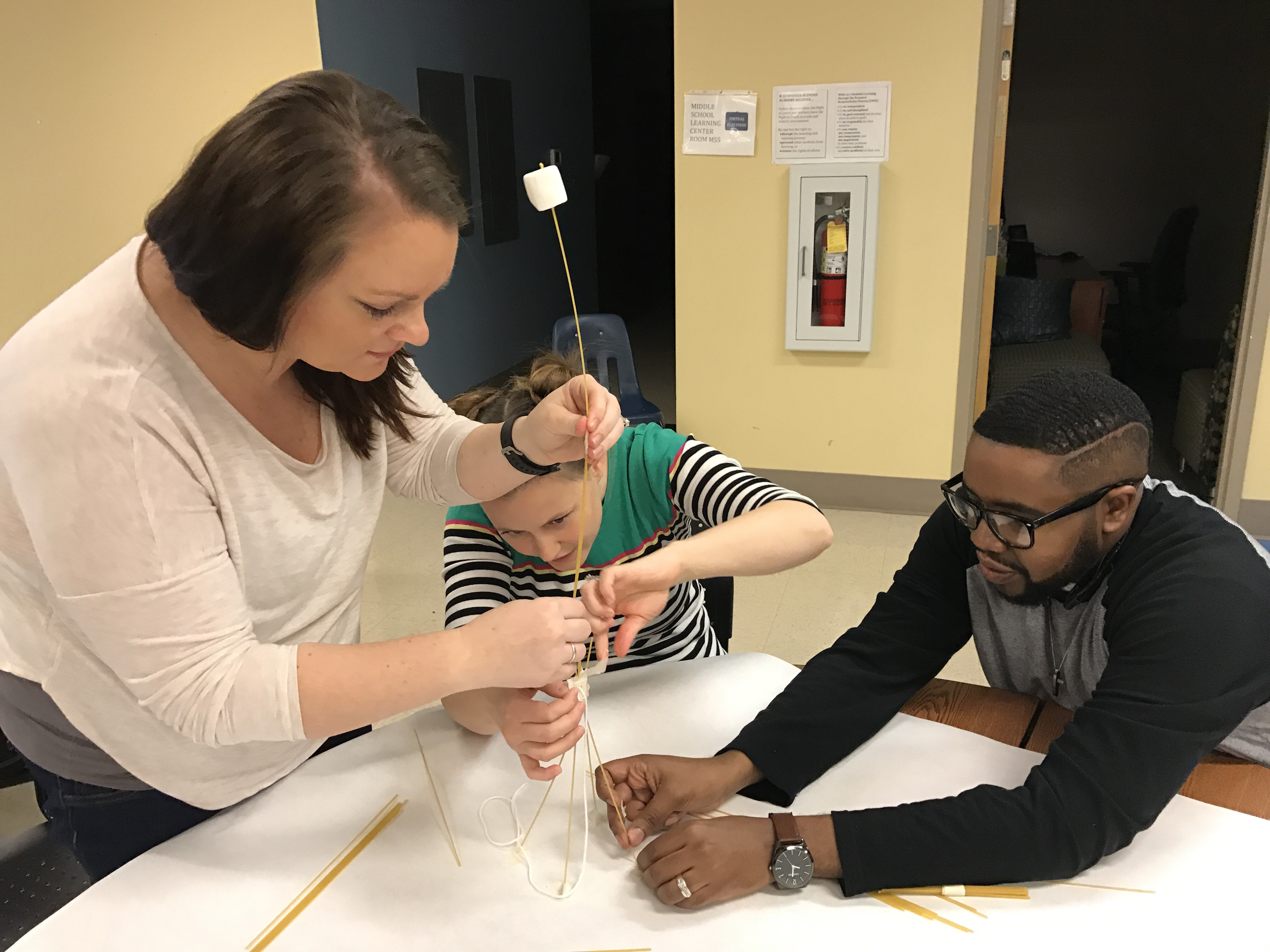 We concluded, in our post-challenge discussion (see picture for our Mike Fleisch graphic of the discussion), that engineers are good a this because they plan, build things, and are resourceful every day. In other words, engineers are quicker to understand how the spaghetti, tape, string, and marshmallow become a system together.
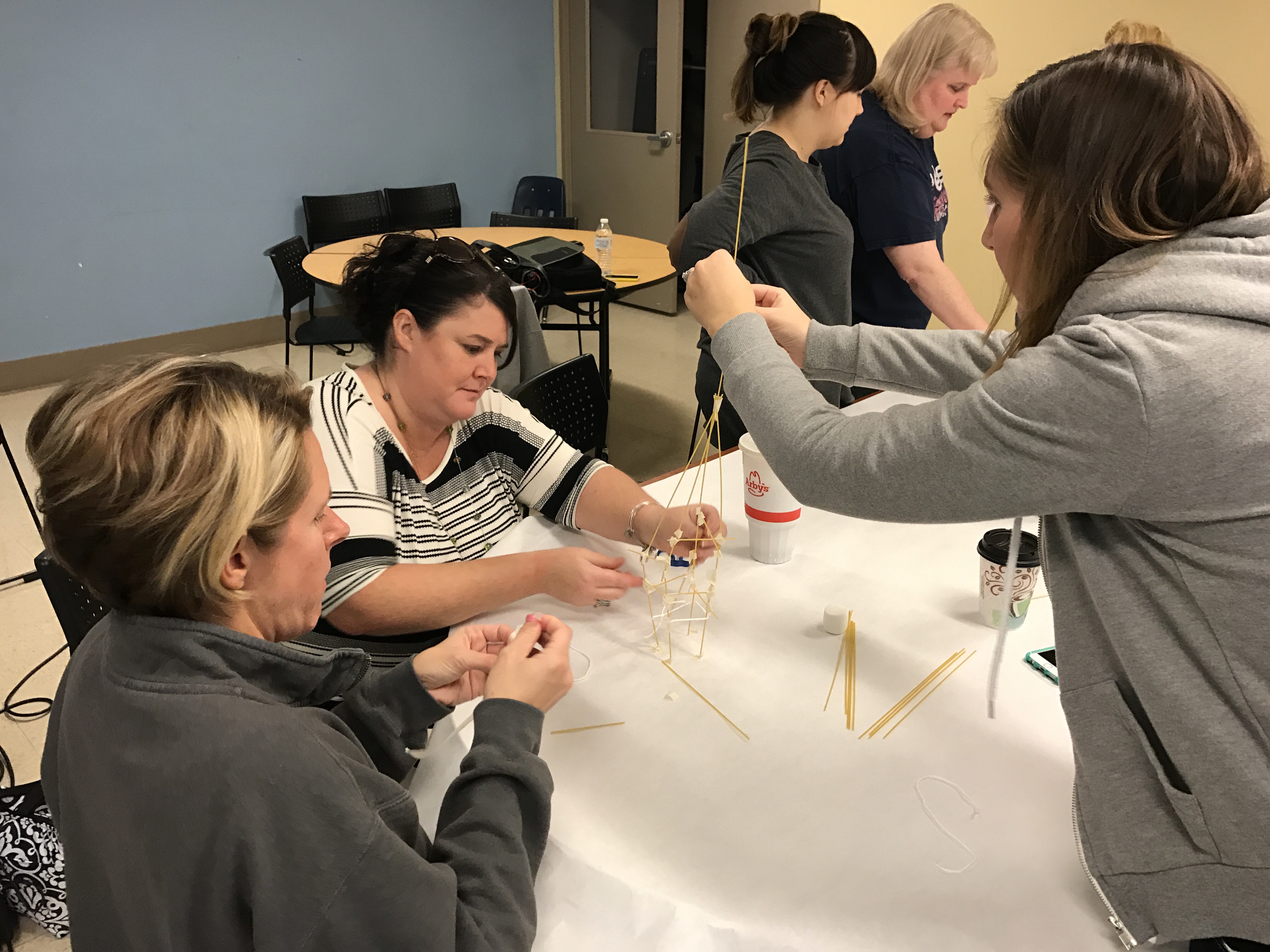 The big takeaway from our teams yesterday, however, was the idea of “failing quickly.” We are all familiar with the phrase “fail fast”, but what does that really mean? And how do you put it into practice? Failing fast isn’t about the big issues, it’s about the little ones. It’s an approach development and creation that embraces lots of little experiments and iterations with the mindset that some will work and grow and others will fail and die. And, that’s okay.
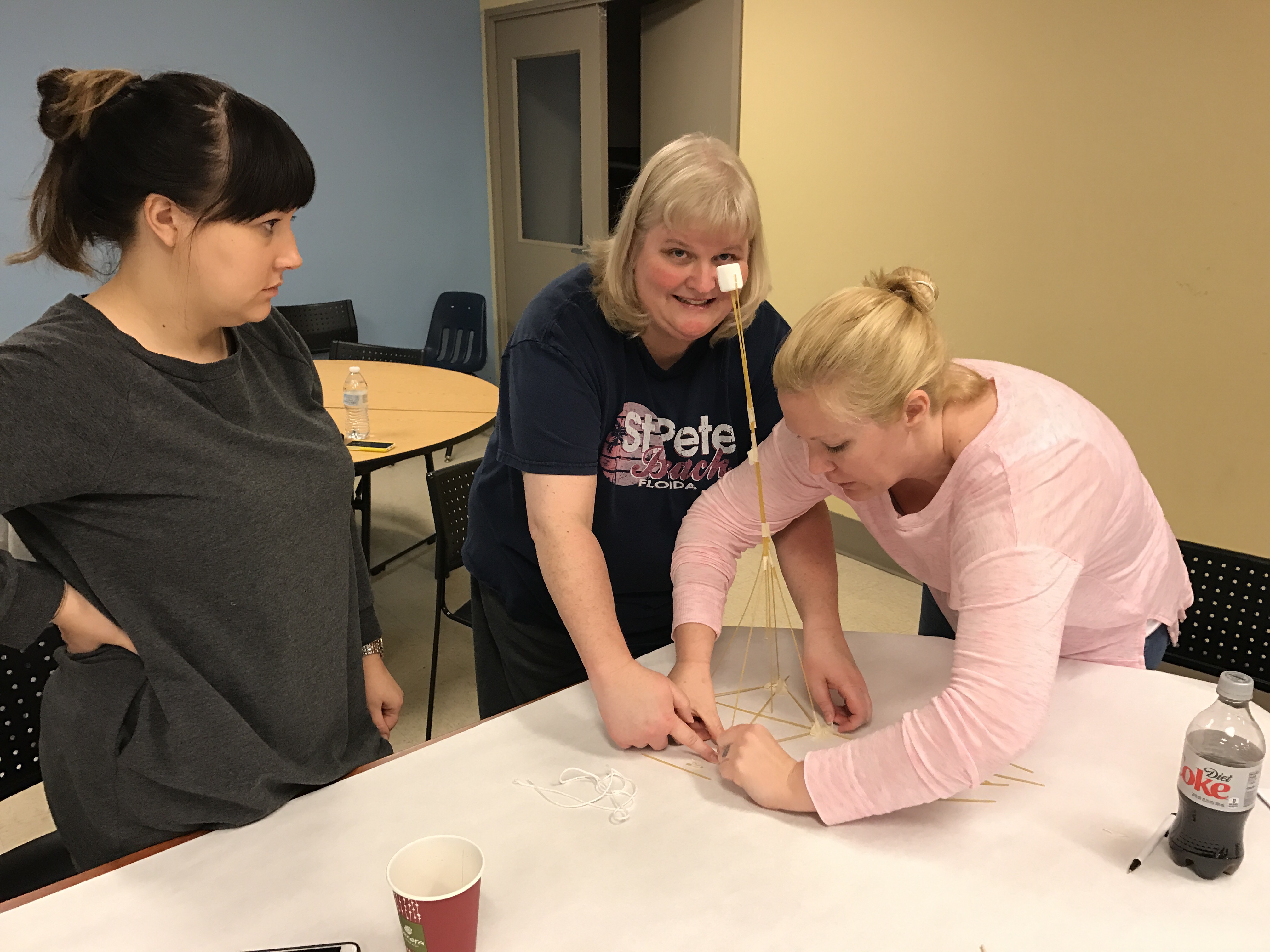 Develop a community of experimentation, be willing to try stuff, do it quickly. But if it’s not working, be willing to fail fast and pivot.
We Have To Norm That…
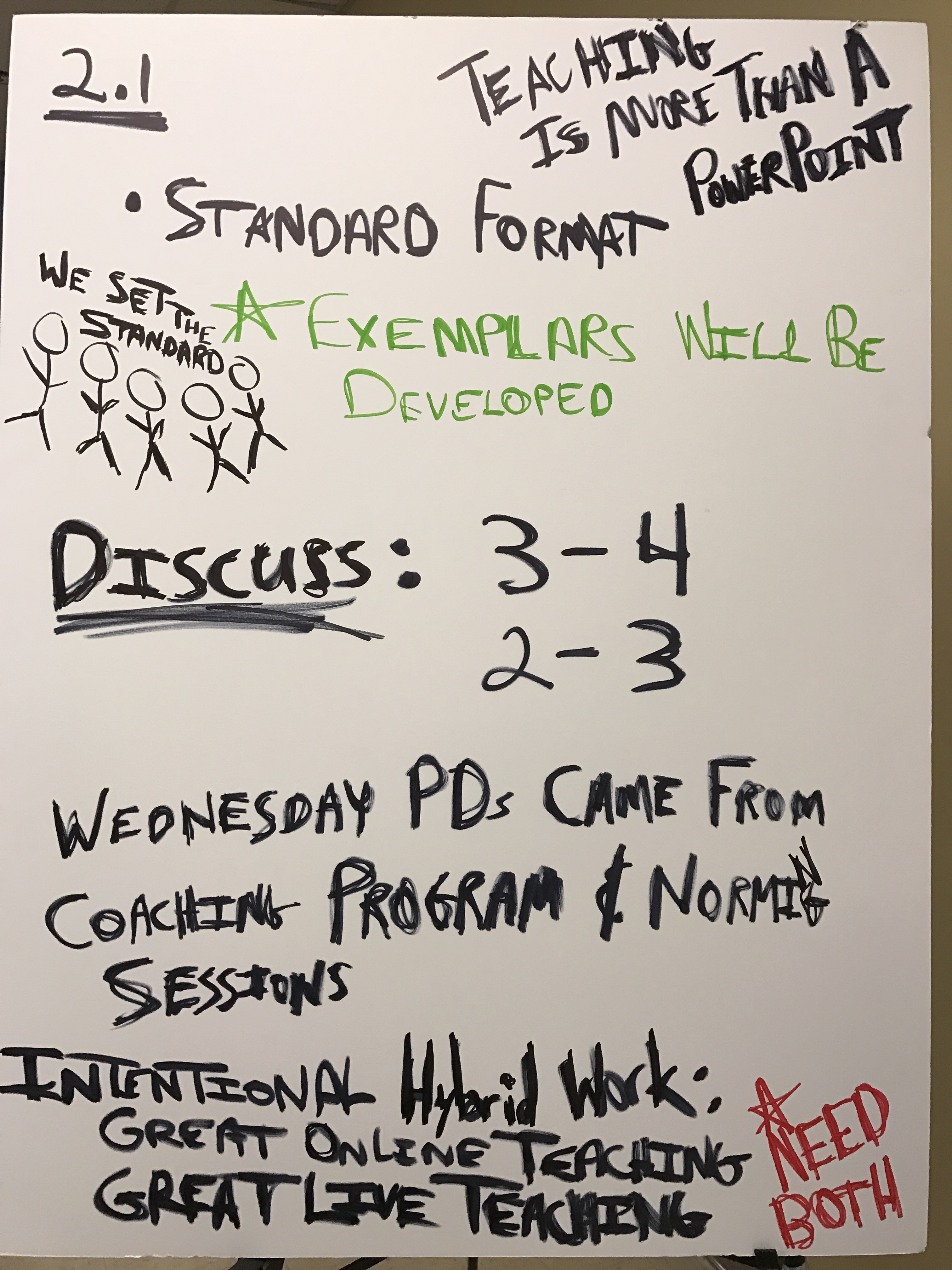
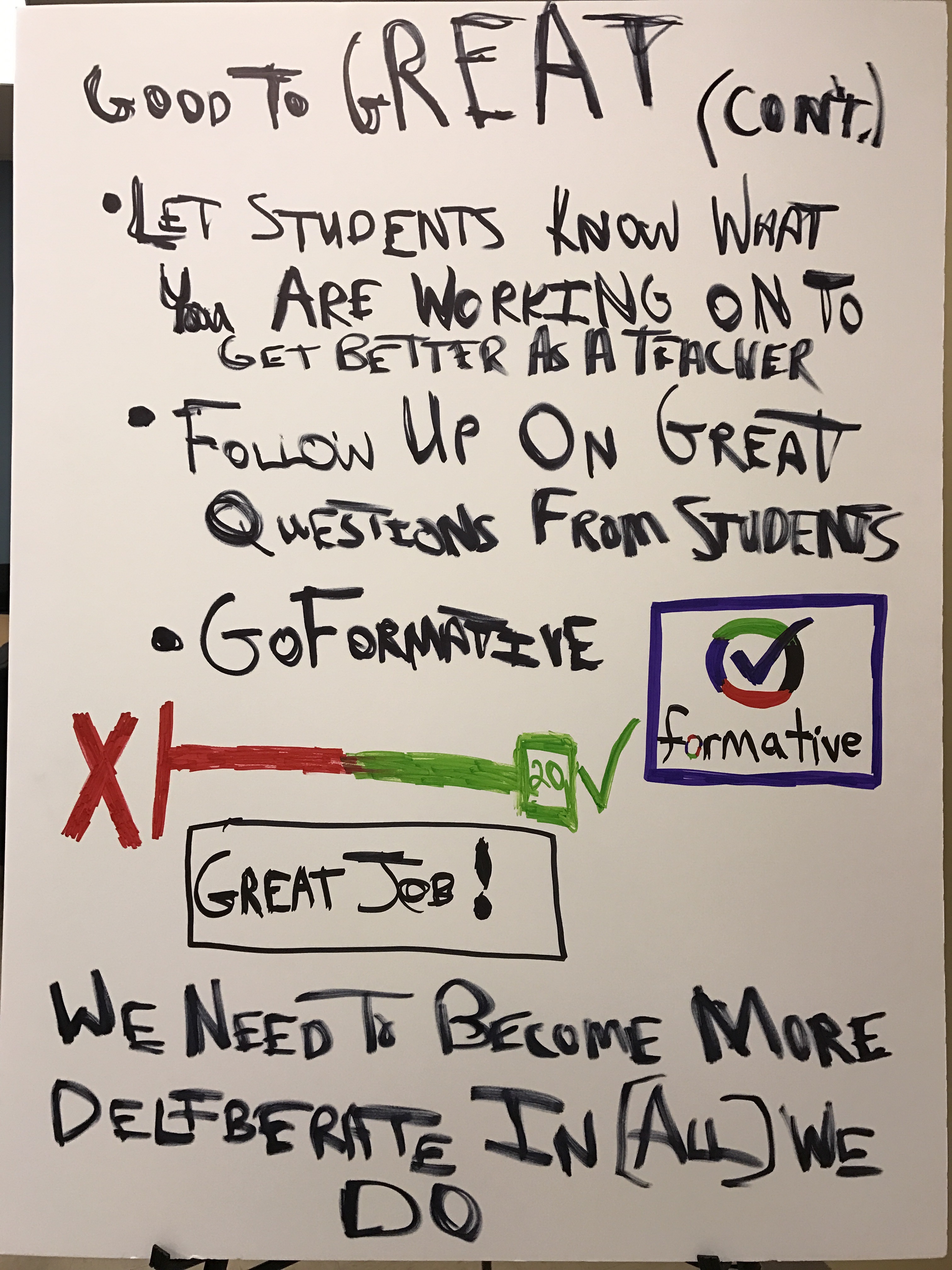
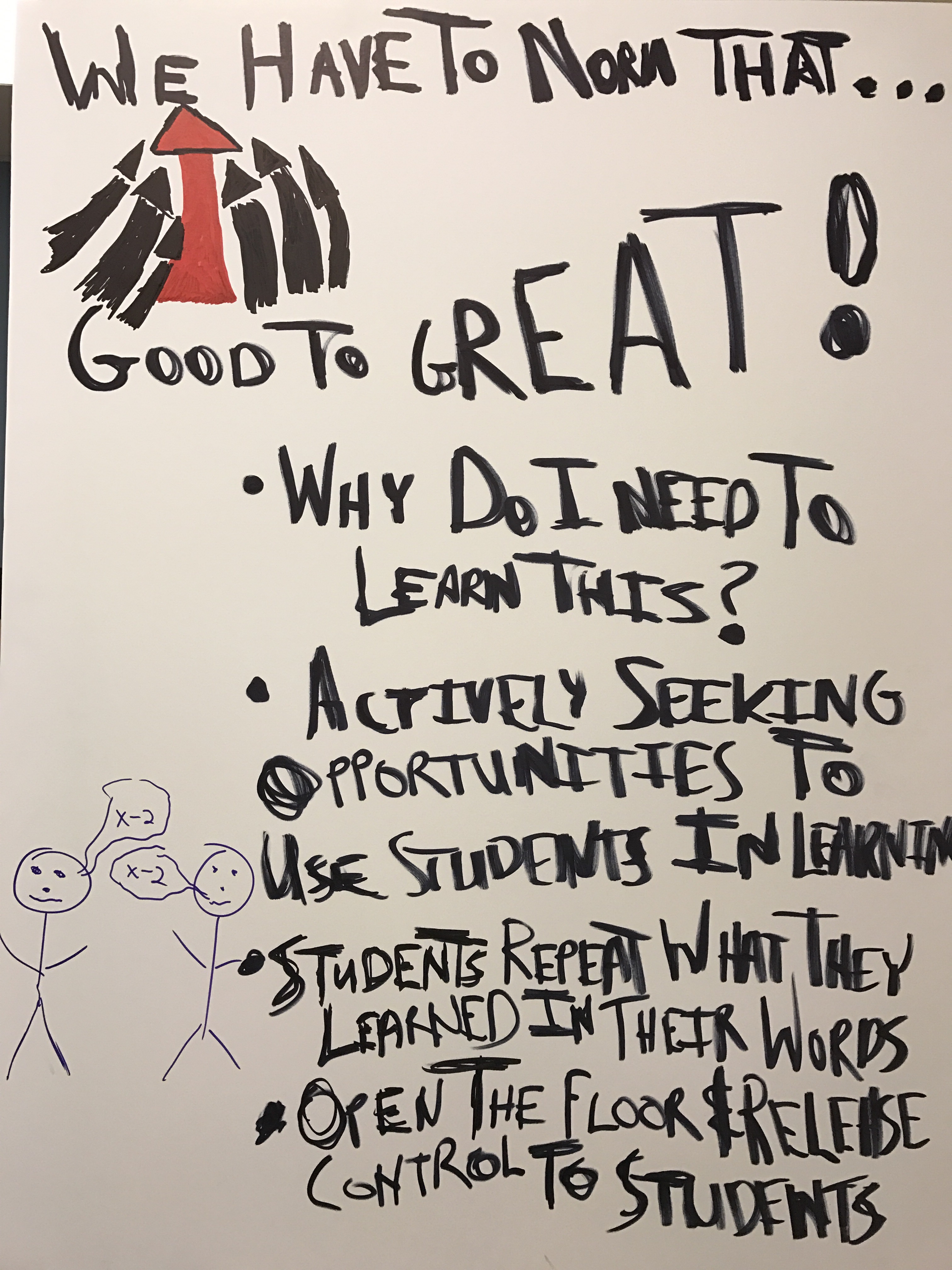
We had a great norming session today for our teacher evaluation team. This has been an important monthly retreat for making sure the team is doing all they can to help our teachers on their journey of continuous improvement. Norming helps us to unpack the nuances of teaching practices that have the greatest potential for improving student achievement.
Our norming sessions prompt teachers and administrators to engage in professional conversations that make the critical link between teaching and the supports that teachers need to improve and hone their skills. This common understanding is the basis for high-quality evaluation systems that can drive professional growth. Our goal is to help all teachers grow throughout their careers.
We believe teachers and administrators need a common language and vision about what constitutes effective practice. Being able to identify and articulate these practices allows administrators to assess teachers and provide them with feedback on their strengths and areas for growth.
Here are our graphic notes I created from our norming session today:

Ain’t that a Kick in the Pants
Isn’t it funny how obvious and oblivious are so close? — Author unknown
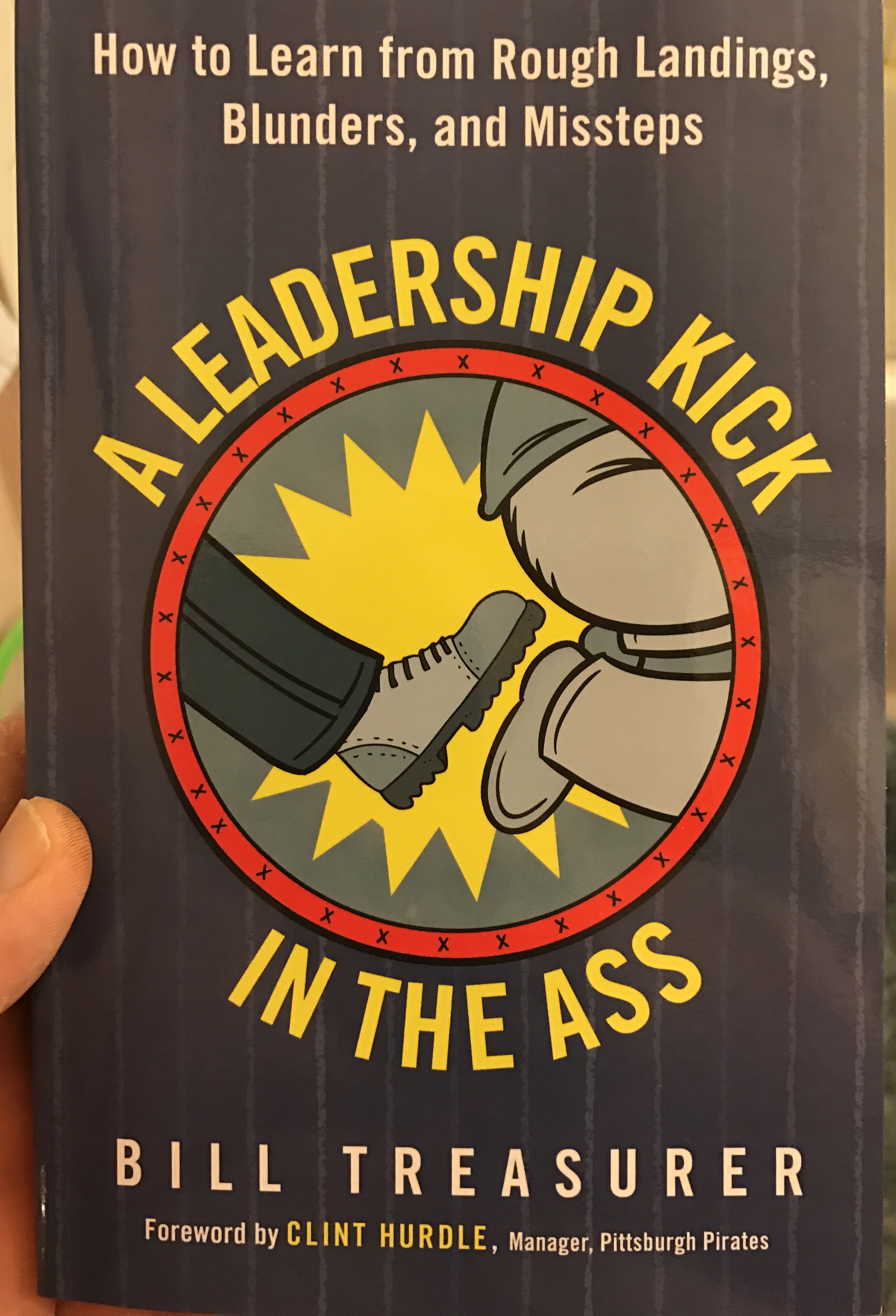
So excited to host this guest post from Bill Treasurer about his great new book A Leadership Kick In The Ass.
Sometimes leaders lose perspective on how they are performing and engaging with members of their team. In these instances, my work with leaders can involve inviting the leader’s direct reports to purposely kick him or her in the keister.
One of the most effective ways of doing this is having the leader go through a 360-degree feedback process, where the people they are leading rate the leader’s style and performance. The raters often include the leader him- or herself, as well as the leader’s boss(es), peers, and direct reports— hence a “360-degree” view.
The feedback uses an anonymous survey consisting of quantitative data and qualitative (open-ended) questions. The idea is that people are likely to give more honest answers if they don’t feel threatened that the leader will retaliate against them for their honesty.
“A leader’s self-perception can be quite biased, so involving the broader perspective of others can be a useful development tool.” ~ Bill Treasurer
While 360-degree surveys aren’t perfect, having administered hundreds of them over the years, I’ve seen them result in positive leadership change. Sometimes dramatically so.
To be sure, it takes courage to subject oneself to a leadership 360. The feedback can be raw and hurtful. In rare instances, raters will use the process as a way to get back at a leader they don’t like. But mostly the feedback is helpful, because it allows the leader to illuminate blind spots that may be blocking his or her effectiveness.
To make this exercise successful, leader have to loosen the grip on their need to be right or perfect and admit that they are the main source of their problems and ineffectiveness. This is the courage of capitulation, disarmament, and surrender. Your old ways have lost, and unless you adopt new ways of leading, you will continue to lose over and over again.
“What makes an ass kicking so painful (and useful) is that it shines a red-hot light on the parts of yourself that are holding you back and legitimately need development, often the aspects of yourself that you’d rather avoid or didn’t even know existed.” ~ Bill Treasurer
Think back to the last time you learned a lesson the hard way. How did you react? Did you make changes to become better and stronger? Or did you entrench yourself in the conviction of your rightness?
The journey to the center of one’s self is the most important voyage you’ll ever take. It’s how you become a whole person, truly knowing the full dimensions of your talents, idiosyncrasies, and deepest desires.
Global Community: Don’t Just Stand There!
 It is said a global citizen is someone who identifies with being part of an emerging world community and whose actions contribute to building this community’s values and practices. We are going to have to learn to be effective change agents of a global future. We will need to create our own future, rather than trying to predict the outcome of all these global forces. Today the forces of global engagement are helping some people identify themselves as global citizens, meaning that they have a sense of belonging to a world community. This growing global identity in large part is made possible by the forces of modern information, communication, and transportation technologies.
“We know this much. The world is not going to be dominated by any one great power. For Americans that’s going to be a very difficult thing to accept. Most of us still see a world – the world of 1960 – in which America was the only great power, and the only functioning economy.” ~ Peter Drucker
Global citizens are also moved by a desire to make a positive contribution through their professional and personal lives. When it comes to being a member of the global community, will you be a leader, challenger, or spectator. Furthermore, we must bring global competency skills into our schools.
- Kids need skills to navigate globally!
- Kids Need To Navigate Shrinking World!
The skills and insights students can gain from interacting with people of different nations and cultures is critical as America engages more intensely with an increasingly global marketplace and interdependent world.
We must all serve as global community leaders and engage in the dialogue, to care about the issues and become a global citizen.
“To the world you may just be one person…but to one person you might just be the world.” ~ Mark Twain
Fail Like A Champion
 Failure and adversity in our lives can help us, not hurt us. It’s extremely important to never lose sight of this truth. The song “My Champion” by Alterbridge delivers an extremely inspiring message to those who might feel as if they aren’t good enough. Click here to check out my video of the song I made while in Nashville, Tennessee with the band. Here is my favorite line from the song that always keeps me going:
“You’ve lost so many times it hurts
But failures made are lessons learned
Cause in the end what you are will be much more
Than you were.” ~ Alterbridge – My Champion
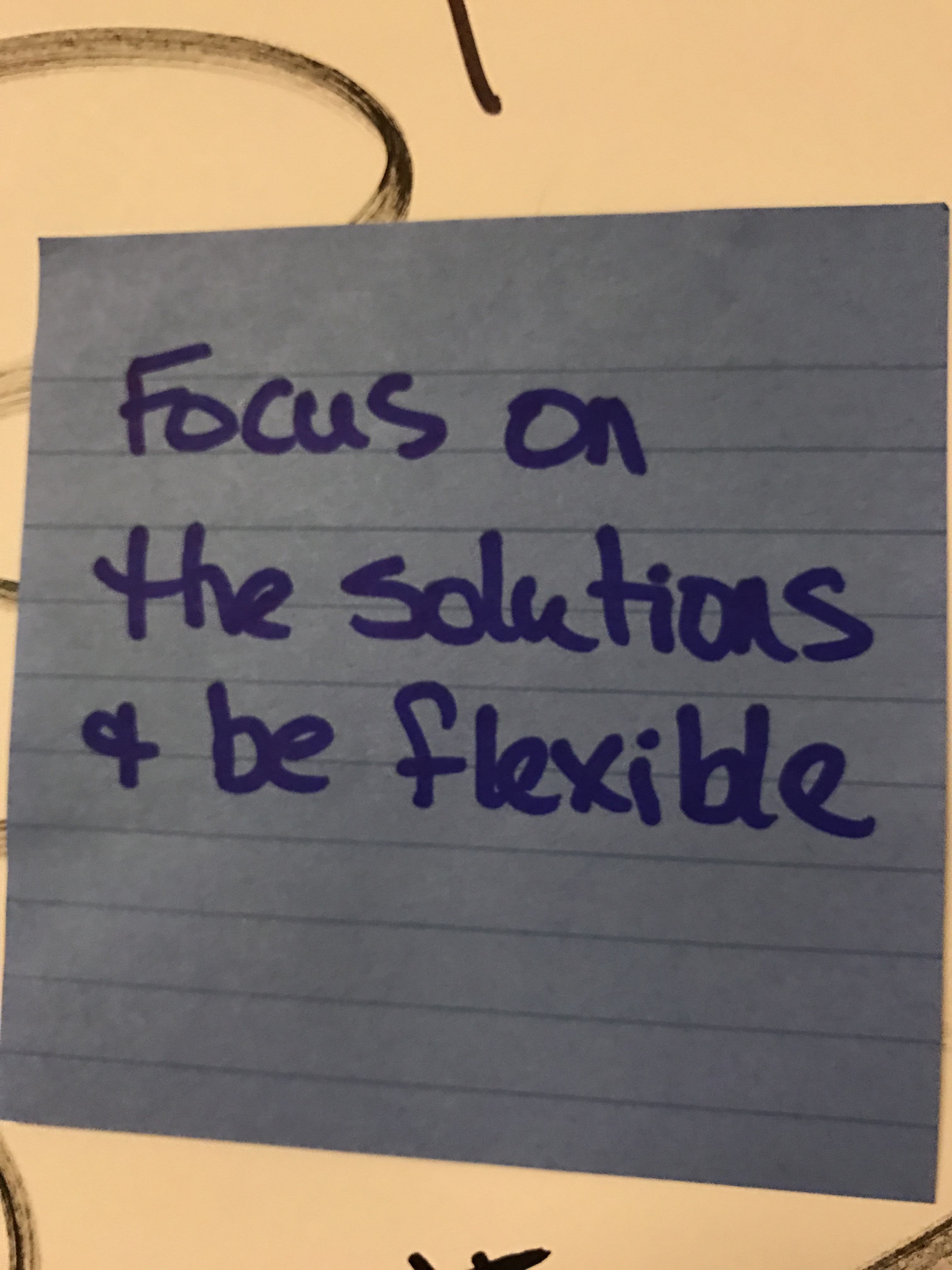
 To turn failure into a gift and grow through the tough times instead of just casually going through them, you must begin to start focusing on ways to actually resolve the situation. I think back to my childhood days of watching the original MacGyver show, and now in the new MacGyver – the character always looks for the solution, not at the problem. Many people let their minds wander toward the negative, which then prompts them to focus on more problems instead of searching for ways to resolve the situation and grow from it.
 Leaders and organizations that are able to get through tremendous setbacks and actually grow because of them are the ones who focus on solutions, not more problems. We can look to my hero, Thomas Edison, for a quick example. His persistence in continually searching for solutions after facing one failure after another is a prime example of the utter importance of focusing on ways to advance.
Looking for the solution is so crucial. Just staring at the problem is futile. Here are a few questions that can help keep us focused on developing solutions and not being focused on the problem/challelenge:
- How can we solve this task?
- How can we address this problem?
- What would be the first step to solve this problem?
- What kind of preparations will be necessary for this task?
Discovery Has No Example
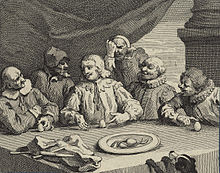 I am super excited to bring you my first Byron’s
 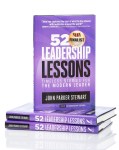 Babbles vlog post. I have been wanting to do this and Lesson #26 in 52 Leadership Lessons: Timeless Stories For The Modern Leader by John Parker Stewart entitled “Blinded By An Egg” gave me the inspiration. This is a story about Christopher Columbus and I hope you are as inspired as I was. Here is the link to my vlog post: Byron’s Babbles: Discovery Has No Example
“Discovery has no example, no easy path to follow. Are you willing to see and follow unknown paths?” ~ John Parker Stewart
The Bear Facts of Leadership
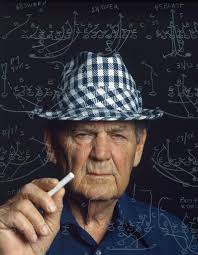 Every winner has a coach, and every coach has a philosophy. Lets take a deeper look inside the philosophy of one of the best. It is appropriate on this weekend before the National College Football Championship game between Alabama and Clemson to reflect on the leadership of Coach Bear Bryant. He had a keen instinct for what needed to be said and done, and a willingness to confront his present reality in order to make progress as a team. Bryant led his Alabama team to six national championships and was elected to the College Football Hall of Fame in 1986. While Bryant drove many people away with his authoritarian coaching style, he had many players who stayed to become champions. Even with this authoritarian style, Bryant made it a point to take responsibility for what his team did on the field. Gene Stallings, who coached under Bryant said this of his leadership style: “His philosophy as far as players were concerned is that if the team was successful they did it, and if for some reason we lost, he took the blame for it.” Bear Bryant found that if he took responsibility for his team, they would respond by doing everything they could to make the team successful.
“I’m just a plow hand from Arkansas, but I have learned how to hold a team together. How to lift some men up, how to calm down others, until finally they’ve got one heartbeat together, a team. There’s just three things I’d ever say: If anything goes bad, – I did it. If anything goes semi-good, then we did it. If anything goes really good, then you did it. That’s all it takes to get people to win football games for you.” ~ Bear Bryant
Lesson #25 entitled “Big Bear, Little Ego” in 52 Leadership Lessons: Timeless Stories For The Modern Leader by John Parker Stewart tells the story of Bear Bryant when he was in the United States Navy and disobeyed an order to abandon ship to save shipmates – teammates. Bryant may have pushed them to extreme limits and beyond what they thought they were capable of, but he got the best out of them. The players understood that. And they knew that Bryant was committed to their success. That’s where the bond came from—they were all in it together. Some leaders claim they don’t care if they’re liked; they just want to be respected. Other leaders are well liked but not really respected. The unusual leader, the really good one, is respected and revered. It takes a unique balance in a person to inspire that kind of loyalty and admiration, but it can be done. Coach Bryant brought his teams together by focusing on a common goal. They worked together, survived together, and ultimately succeeded together. Remember, great leaders do not consider themselves more important than the team, but as a part of the team. Leaders merely have a different set of responsibilities.
“Ready! Down! Break! Hut! Hut! Hut!” Send a spiraling pass to your team!
Power In Our Hands
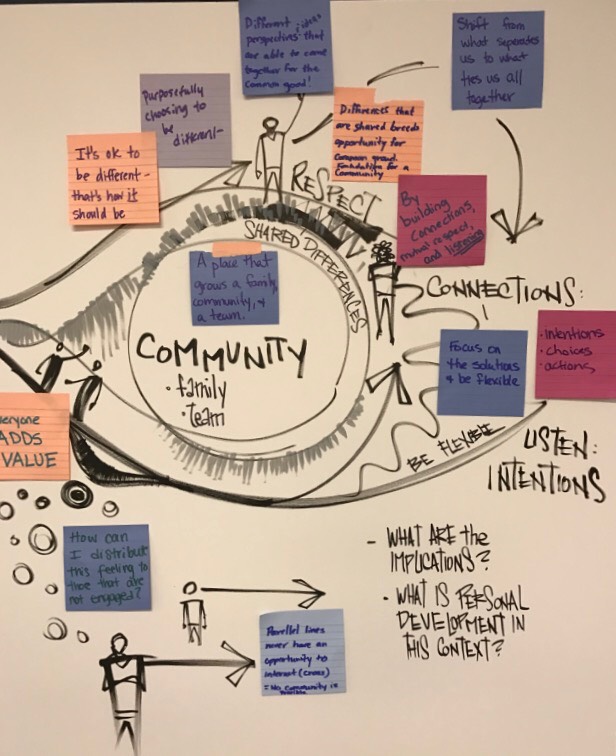 Attention on leaders makes for good copy, and gives us someone to blame when things don’t go right. But, is this shift from our own accountability as a community contributing to this blame game? Peter Block suggested in his book Community: The Structure of Belonging that “People best create that which they own, and cocreation is the bedrock of
  accountability.” Therefore, leaders must become convenors as opposed to service providers. Leadership is convening and held to three tasks:
- Shift the context within which people gather.
- Name the debate through the powerful questions.
- Listen rather than advocate, defend, or provide answers.
As leaders, I have come to realize, we must make the space available and bring the community together for the conversations and developing the future as opposed to answering all the questions and giving all the solutions. Questions open the door to the future and are more powerful than answers in that they demand engagement. The future is created through the exchange of promises between citizens, the people with whom we have to live out the intentions of the change. These exchanges and conversations create a space for learning and for producing knowledge that intersects with the needs and demands of a social movement.
“Our love of problems runs deeper than just the joy of complaint, being right, or escape from responsibility. The core belief from which we operate is that an alternative or better future can be accomplished by more problem solving. We believe that defining, analyzing, and studying problems is the way to make a better world. It is the dominant mindset of western culture.” ~ Peter Block
A shift in thinking and actions of citizens is more vital than a shift in the thinking and action of institutions and formal leaders. Most sustainable improvement in community (you can also insert your organization name here because it is a community) occur when citizens discover their own power to act (intent-based leadership). According to Peter Block “[I]t is when citizens stop waiting for professionals or elected leadership to do something, and decide they can reclaim what they have delegated to others, that things really happen.” This empowerment (intent-based leadership) is present is most stories os lasting community and organizational improvement and change.
“Communities are built from the assets and gifts of their citizens, not from the citizens’ needs or deficiencies.” ~ John McKnight and Jody Kretzmann
It is all about us, as leaders, co-creating a community of possibility with all citizens. Possibility, here, is a declaration of what we create in the world each time we show up. It is a condition, or value, that we want to occur in the world, such as peace, inclusion, relatedness, reconciliation, or insert your own community needs here_______. A possibility is brought into being in the act of declaring. What possibilities is your community declaring and co-creating?


1 comment