If You Cannot Lose, You Cannot Win
 I always have a long list of topics that I want to blog about. With this post I get to one that hit the list on Christmas Day, 2018. My father-in-law had a page of quotes from a magazine and he did a little devotional reading before we sang Happy Birthday to Jesus (a family tradition on my wife’s side). He handed me the copy when he was done and I got to reading the other quotes. One quote really jumped out at me. Better yet, it hit me like a ton of bricks. It is one of those that I needed to read two or three times to really comprehend what it was saying. Here it is:
“If you want to do something where we can’t lose, then we must accept the proposition that we cannot win.” ~ Gene Hill, A Hunter’s Fireside Book, 1972
Read it one more time. This quote really caused me to take pause. It is very true. I we want to do things that we cannot lose at, then we have to accept that we will never win. At the time I was reading this I was really thinking about lots of things in a winning and losing context. Whether it be in the public policy arena, football bowl games, or many other things. It is very frustrating to me that many times people do not want to get behind, support, or associate themselves with new and innovative things until they know they are going to be successful (a win). That to me is playing not to lose, not playing to win. In athletics, one of the worst things you can do is play not to lose. Very rarely will that strategy get the person or team the win. I believe this is true in all other areas as well.
Not being able to take a loss or having fear of losing will keep us from ever making progress. Trying not to lose is not the same thing as trying to win. Trying not to lose is reactionary. It’s prevention. Most of the time it prevents us from winning. Worst of all, it starts with the belief that we should focus on “not losing,” which gives the idea of losing too much power. “Playing to win” begins with the belief that we can and will win. It’s empowering. The belief that we can win and the desire to do so allows us to take initiative, be creative and innovative, to be resourceful, and to take the necessary actions that will better the chances of winning—even if taking those actions comes with a particular risk. We cannot live risk free and have guarantees that everything we do will be a winner.
We’ve all seen athletes, athletic teams, businesses, and political leaders try to play it safe and approach games, life, and administrations from a safe and play not to lose vantage point. What usually happens? At best, nothing! At worst, the loss. If you’re like me you have probably been in the situation where you were really working hard for a win with very little support of others who were afraid you might lose. Then all of the sudden when the win came, lo and behold, everyone was there to take credit. Amazing!
When we are playing not to lose our focus is not on what we could gain, but on protecting what we already have. When playing not to lose energies are channeled into shoring up the status quo, and guarding against what we do not want to happen. So play to win, not to not lose. In the larger game of leadership, playing it safe is the most dangerous game plan of all. Playing to win might just be the greatest of all leadership traits. It requires putting what you already have at risk for the sake of something bigger, something better. Additionally, it requires throwing caution to the wind and having the courage to creative something new and be innovative. This takes a great deal of courage and a trait that I am so glad I have been blessed with: “being comfortable with being uncomfortable.”
So, lets get out there and play to win. Remember, without failure there can be no real progress. I leave you with the great wisdom of Theodore Roosevelt:
“It is not the critic who counts; not the man who points out how the strong man stumbles, or where the doer of deeds could have done them better. The credit belongs to the man who is actually in the arena, whose face is marred by dust and sweat and blood; who strives valiantly; who errs, who comes short again and again, because there is no effort without error and shortcoming; but who does actually strive to do the deeds; who knows great enthusiasms, the great devotions; who spends himself in a worthy cause; who at the best knows in the end the triumph of high achievement, and who at the worst, if he fails, at least fails while daring greatly, so that his place shall never be with those cold and timid souls who neither know victory nor defeat.” ~ Theodore Roosevelt
As Leaders, We Create The Weather
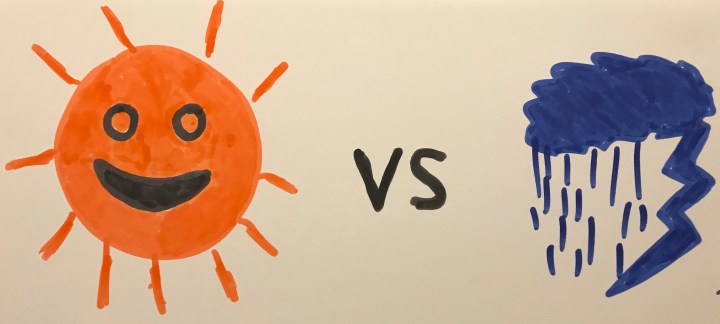 How do you show up? Think about this: do you show up sunny and bright or stormy and cloudy? Bottom line: if you show up as sunshine it will be a shiny happy day for the team. If you show up as a thunderstorm, however, it will be a rough ride. Either way, unlike the weather outside, you have the ability to influence the weather of your organization.
If you don’t believe this think about if you have ever worked with someone who you need to ask others what kind of mood he or she is in before talking to him or her. If you’ve experienced this then you have experienced leaders controlling the weather.
Therefore, we need to be intentional about the weather systems we create. Think about about the extremes: blizzards, hurricanes, extreme heat, or tornadoes. Then think about that sunny day with a calm breeze and moderate temperatures. Which of these weather patterns would you want to be creating?
Your teams and organizations will take their cues from you and whatever weather pattern you are projecting. If your outlook is sunny and bright, the organization is sunny and bright. If your outlook is full of storm clouds, the weather in the organization will be pretty much the same.
Next time you are with your team or people, imagine you are the weather map behind the meteorologist on television and she is about to give the weather report. If you take this moment of being mindful, it will help you to calm any storm fronts and bring sunshine and calm breezes to your organization.
Don’t forget, you are your organization’s meteorologist. As leaders, we create the weather. What kind of impacts do your weather systems have on your organization?
Hailey’s Energy Bus
 Several years ago I read the great book, The Energy Bus, by Jon Gordon. It is an outstanding book written as a fable. The book is written from the perspective of a middle manager (George) who is leading a team heading nowhere. Through a series of events he ends up riding a city bus with a positive motivation guru at the helm and a group of “energy” converts in the seats. After riding the bus for two weeks he has learned 10 lessons.
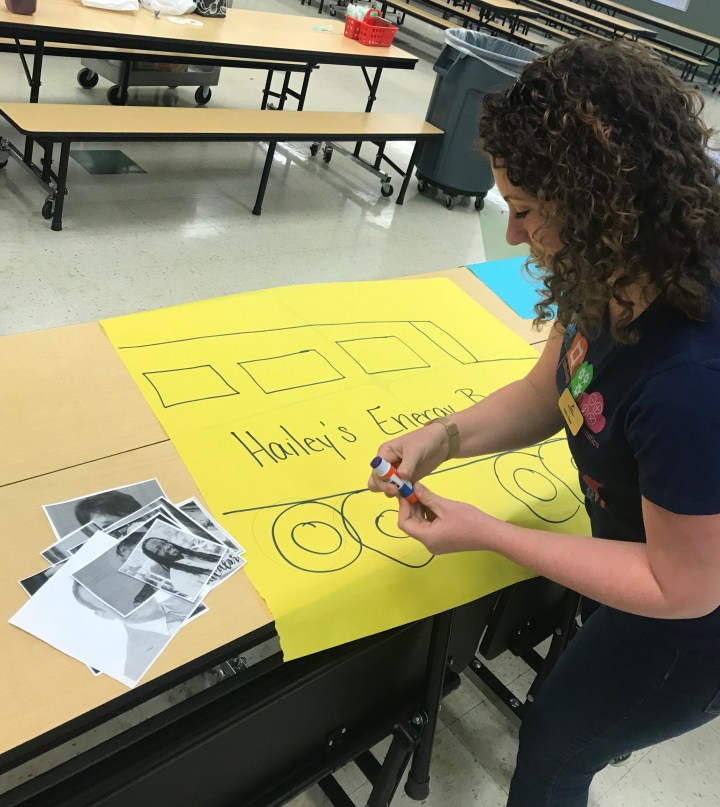
 I was reminded of this book this past Thursday night while working with our Carolinas 3D Leadership participants in Kannapolis, North Carolina. The participants were working on a creative activity of putting 10 of the top influencers of leadership in their lives into a collage. Low and behold as I’m circulating I find Hailey’s Energy Bus. It immediately took me back to The Energy Bus book. Hailey Wade Odum realized that these leaders who influenced her, gave her energy. The energy to be a great teacher leader and K-5 STEM Lab instructor at Cabarrus Charter Academy Elementary School. She even tweeted, “Hop aboard the #Leadership #EnergyBus.” Jon Gordon would have been proud!
This really made me think about the ten lessons in The Energy Bus. They all applied to Hailey’s picks of her top ten influencers. Here’s the ten lessons (rules):
- You’re the driver of your bus.
- Desire, vision, and focus move your bus in the right direction.
- Fuel your ride with positive energy.
- Invite people on your bus and share your vision for the road ahead.
- Don’t waste your energy on those who don’t get on your bus.
- Post a sign that says, “No Energy Vampires Allowed” on your bus.
- Enthusiasm attracts more passengers and energizes them during the ride.
- Love your passengers.
- Drive with purpose.
- Have fun and enjoy the ride.
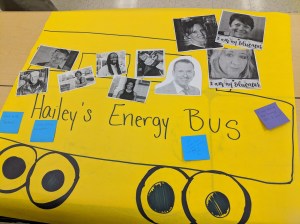 All of these rules I’m sure went into Hailey’s picks of her influencers, but in listening to her report out I believe that rules 2, 3, and 9 were pretty important in the decision. It’s all about personal responsibility. We are each responsible for the direction of our lives. And the direction of our lives is shaped by each day, each thought, and each person we use as a mentor or exemplar. If we are complacent in our lives we let others drive for us. We need to be driving our own energy bus. Have you ever felt out of control? Well, it’s time to take charge and drive your own bus. In my experience, the realization that my efforts now can reap big rewards in the future has always been very empowering.
 The other thing we spent time visiting about is that people are constantly being added to our bus. As our lives evolve and we continue to iterate and reinvent ourselves, some of our influencers will change. Unlike like the real Mount Rushmore that is literally carved in stone, our personal Mount Rushmorean leaders should be molded such to be constantly evolving. Who’s on your ENERGY BUS?
Be You!
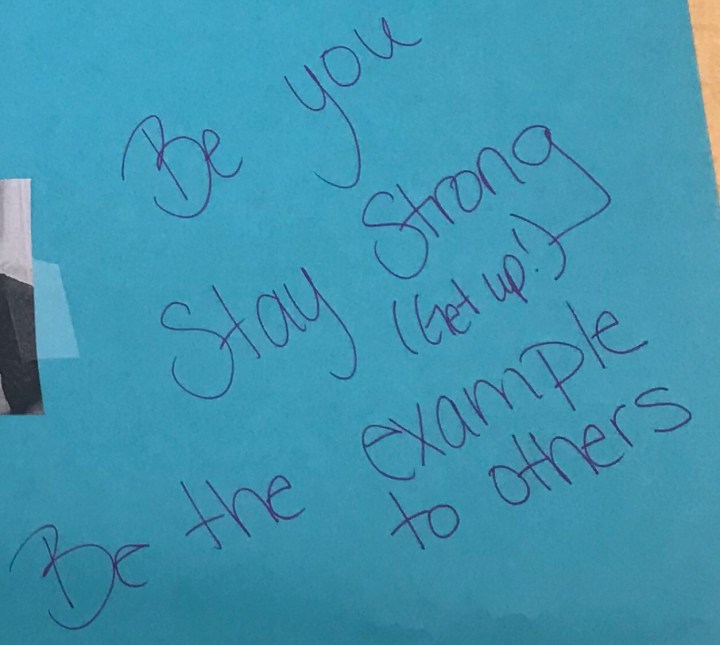 Last night at our Carolinas 3D Leadership gathering I was struck by a phrase that Stephanie Klingler, the Assistant Principal at Cardinal Charter Academy, put on one of the projects we were working on. The project was identifying Mount Rushmorean leaders and the influence other leaders have on us. Her statement was:
“Be You! Stay strong. Get up! Be the example to others.” ~ Stephanie Klingler
Super powerful, don’t you agree? If Leadership is about influence then this is the example we want to be and what we want modeled for us. It’s about being authentic and doing what Machiavelli taught us: to declare. Who we are is how we lead, pure and simple. Being a great leader is really the simple act of being you. It’s about putting your experiences and what you believe into a package that guides how you lead and the example you are. Stephanie’s statement says it all: be you, be strong, be an example, and keep getting up. It is who she is.

Stephanie is on the left with her mobile office for being a leader of learning!
If we want to lead and be a Rushmorean (yes, I made that word up) leader, then we must know ourself. Being ourself means being authentic. It is okay to be you. It’s really the only person we can be. As my friend Sally Hogshead teaches us, you need to be the best you you can be. The fascinating you! The best way to become an effective leader is to find congruence between what you think, say and do. That said, in order to become an effective leader you have to know who you are: your values, your strengths, what you stand for, why you stand for it, and what your ethics are. Then act on them with conviction and without apology. This is what I believe Machiavelli meant when he says we must “declare.”
Are you being YOU?
Durability of Expectations
 In a meeting I was a part of this week we developed a phrase that has caused me to do a lot of thinking: “Durability of expectations.” Our work was in the context of thinking about student success, outcomes, and what the profile of an Indiana high school graduate should look like. I like to combine all of this and talk about student success outcomes. Success looks different for all students and some students have not really had an opportunity to have success modeled for them or even know what success can look like. I have often said that it is ludicrous, in some cases, to ask our students what they want to be or do in life because they have not had the opportunity learn what all is out there. That is why I believe it is so important to make sure we are doing a great job of career exposure, career exploration, and career navigation for all students. We need to career coach our kids.
Success: “Knowing what one wants in the world and knowing how to get it.” ~ Dr. Felice Kaufman
We must make sure we are giving our students the opportunity to innovate, be creative, and take risks. This will help them to persevere, adapt, and develop a growth mindset and begin to understand lifelong learning. We need to help our kids understand what is out there and that getting where they want to go will be a non-linear process in many cases. Most of the career paths those of us in the baby boomer age are characterized of having relative stability. The career paths for today’s students are now times of discovery, restlessness, and exploration. The last I read, boomers will switch jobs 11 times during our lifetime, but millenials and younger will not only switch careers but change entire career trajectories. Therefore, the modern career trajectory isn’t necessarily a climb to a destination, but rather a continuum.
 We will need to offer solutions to our students that help them understand and give them the opportunity to skill, re-skill, and up-skill as they embark on their non-linear career paths. This is why I am such a believer that we must begin to identify the transferable skills our students. These skills, according to employers, hold much more weight than the traditional way of looking at academic records or even work history. Life is not linear, it is more like a Jungle Jim, so we need to make sure we are facilitating learning for our students that gives them the transferable skills to have durable expectations of what they can do. In other words, our students can have a lasting expectation that they have the skills to start and understand how to stay skilled to make the desired career moves that become available. Even if our students take a non-linear path in life, if they have credentials and transferable skills they will have what is needed to provide the on and off ramps to whatever career moves come available. This will give durability to the expectations our students have as they move through life and professional careers.
The old adage that you can’t connect the dots looking forward, you can only connect them looking backwards is true, but we need to give our students the ability to zigzag. By preparing students through career coaching, exploration, work based learning, and transferable skills and credentials we will add durability to the expectations of our students and their parents. We have an obligation to make sure our students are prepared to see and be prepared to seize the opportunities no matter how unconventional or surprising.
What’s In Your Leadership Toy Box?
 A week ago I facilitated one of our 3D Leadership gatherings in Florida. We used a Leadership Toy Box through line and had the participants pick a toy at the beginning and describe what leadership traits the toy possessed and how they could use the toy for great leadership. From that discussion we came up with a great list of leadership traits to focus on:
 Flexible
- Big
- Supportive
- Balanced
- Resourceful
- Wise risk taking
- Celebrate
- Confident
- Results driven
- Perspective
- Approachable
- Resilient
- Humble
- Synergistic

- Listens
- Caring
- Vulnerable
- Encouraging
- Purposeful
- Empathetic
Pretty incredible list, don’t you think? If you aspire to lead, but fill effective leadership roles whose vision will inspire, these are the leadership skills to answer. There are many other leadership traits that could be listed here, but these are certainly traits that, if mastered, would make a pretty effective leader.
The trait that came up the most in all our discussions was flexibility. Flexible leaders are those who can modify their style or approach to leadership in response to uncertain or unpredictable circumstances. Flexible leaders have the ability to change their plans to match the reality of the situation. This flexibility can be helpful when pushing through change. Dr. Ron Heifetz, Harvard University, was the first to define the distinctive theory of adaptive leadership. Adaptive leadership is about mobilizing others to make progress addressing the gap between the way things currently are and the desired state you are striving toward. Additionally, adaptive leadership is a way of reading the situation and understanding what is needed to work with others.
To fully get our minds wrapped around this we need to recognize there are two types of opportunities (challenges): technical and adaptive. With a technical opportunity there is an exact answer that is already known. Adaptive opportunities involve a human component and multiple viewpoints, opinions, attitudes, or diverse set of stakeholders. I believe if a leader takes the 20 items from above and applies them to an adaptive challenge she would be well served and in a position to lead effectively. This is why I am such a believer in creating an open environment for learning about leadership. It enabled the discussions, which started with toys, to get to learning about 20 skills for developing as a leader. What traits/skills would you add to the list?
Leading Like Mr. Incredible
 At our most recent 3D Leadership gathering in Florida we had the participants make name tags because our group size was around 80 individuals. But you know me, I couldn’t just have them make a normal boring name tag with a name, they also had to put the name of the superhero that they would most want to be. Then during some presenting out they had to tell us why. Great activity and way to get to know others! I was blown away, however, by one person, Bradley Warren, Assistant Principal at Waterset Charter School, who put Mr. Incredible AKA Byron on his. I was honored and asked the person why and he said, “You remind me of Mr. Incredible.” I’m pretty sure he was kidding, but… So, I had to do some studying on, you guessed it, Mr. Incredible.
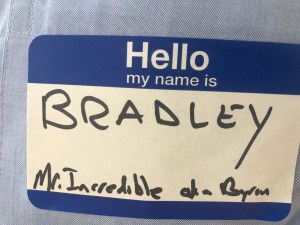 Basically my research revealed that Mr. Incredible started out like any other superhero by saving the world several times. Then I found that he and other superheroes were forced to suppress their superness (yes, I made up that word). During this time it was tough for Mr. Incredible because he was looking for ways to be great and help others. Also, during this time he got married and started a family. Sounds like a lot of us, right? This reminded me that God intended us all to be leaders, fight for what is right, to win, and to defend. I try to live up to this call every day.
The big thing that stands out about Mr. Incredible to me is the fact that for him to realize it was not all about him was that he had to end up with a real family with the real day to day challenges and tribulations we all face. In thinking about it, all of the superheroes are real people with real challenges who lead real lives. It’s easy to be Mr. Incredible, or any other superhero for that matter, when you have super powers. It’s much harder to be a dad and husband, like the real Mr. Incredible, Robert Parr, who works each day and raises kids to adulthood has to do.
“No matter how many times you save the world. It manages to get back in jeopardy again.” ~ Mr. Incredible
We all need a challenge and we all need to do our part to save the world. Whether that is in the world of education, like in my case, or wherever your passion and purpose takes you. We must all choose to lead. We need to all realize we are valuable whether we can leap tall buildings (which we can’t) or not. We can, however, make a huge difference just being who we are.
What great leadership lessons I learned from a simple name tag. Thanks Bradley, for making me evaluate and reflect on whether I am living up to the Mr. Incredible standards. Do you have any Mr. Incredible insights to add?
Cheesecake Talk Triggers
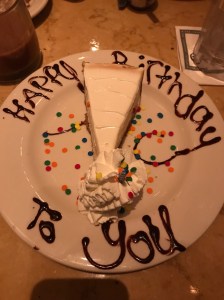 This past week I finished the great book, Talk Triggers: The Complete Guide to Creating Customers With Word of Mouth by Jay Baer and Daniel Lemin. What I learned from the book was that talk triggers are all about sparking conversations between customers and potential customers. They allow people to tell stories about your product or service. I compared this to this to the leadership sessions I do where we use Mr. & Mrs. Potato Heads, toys, or glider planes. Everyone just can’t stop talking about their experience doing those things in our gatherings. Most actually have the Potato Heads sitting on their desks or are using them in some way.
Studies show that a single-word-of-mouth recommendation by a new customer can lead to almost $200 in increased sales. The things that we do need to be:
- Be remarkable (the example in the book was how The Cheesecake Factory has remarkable food choices – in fact over 200 choices)
- Be relevant (the example in the book was how Hilton Double Tree give you a warm cookie when you check in)
- Be reasonable (Five Guys always gives you an extra order of fries)
- Be repeatable
“No differentiator will be loved by 100% of customers; if that were the case, it wouldn’t be different enough to create conversations.” ~ Jay Baer & Daniel Lemin
Talk triggers give customers an experience that sticks in their memories and they want to tell everyone. These talk triggers:
- show empathy.
- show generosity.
- have attitude.
- are emotions-based.
- have speed.
Of course I had to dig a little deeper into the learning. I had never been to The Cheesecake Factory, so I told the family that we were going, and go we did, this past Sunday evening. I was looking for all the talk triggers that make it possible for The Cheesecake Factory to only need to use .2% (you are reading it right – point .2 percent) of their revenue on advertising.
After being seated by friendly staff, we were given the 21 page menu. I have to admit I was a little overwhelmed (in a positive way) at first. If you could not find something on this menu that you like, you are way to picky! To me this was truly remarkable. It took a while for us to decide what we wanted. Here is my video of the 21 page menu with over 200 remarkable choices:
One thing that will cause us to talk is that we had roasted artichoke which reminded us of being in California with our friends eating fresh artichoke. We even taught our waiter how to eat artichokes, by dipping the base of the petals into a great sauce; then pull through teeth to remove soft, pulpy portion of the petals. It was awesome! I then went on to the gumbo and finished with original cheesecake.


It’s not just the volume of items that’s surprising; it is also the apparently random variety of dishes that comprise the menu make it hard to peg what the Cheesecake Factory is. The menu defies any normal definition of what we traditionally think a menu would look like. The menu also circumvents any semblance of restaurant menu item consistency. It’s almost as if the founder of the Cheesecake Factory decided to just put literally anything into the menu, as long as people liked it. It’s almost as if the folks at The Cheesecake Factory decided to just put literally anything into the menu, as long as people liked it. And, in doing a little studying I think that is exactly their plan.
As you can see, there really is something to these talk triggers. Clearly there are businesses who have figured this out. I believe it gives us all something to think about – I believe I had talk triggers when I was teaching in my classroom. What are your talk triggers?
Displaying Leadery
 So, those that know me know I love coming up with new words. I am OK with making new words that end up getting the dreaded red hash-marked line under them (meaning it is misspelled or doesn’t exist). Today at our February Carolinas 3D Leadership gathering in South Carolina, the group came up with a new word: “Leadery”. I was all over it immediately because of my love for creating new words. Why can’t we create new words, anyway? Who is the new word police? What is the process for creating a new word? Well, I did a little studying.
It turns out any of us can create new words. In fact the term for someone who coins a new word is a neologist. If you say you knew this you are lying! Shakespeare is often held up as a master neologist, because at least 500 words (including critic, swagger, lonely and hint) first appear in his works. Experts, however, are not sure whether he personally invented them or was just transcribing things he’d picked up elsewhere. I’m guessing with his creative mind he invented them. From what I could find there are about 1,000 new words added to our language each year.
Back to “leadery”. In this case adding the ery to the end of the noun, leader, makes it an adjective. This is pretty cool because I would compare it to bravery. How many times have you heard that someone displayed great bravery? Or, she conducted herself with bravery? Or, the General led his troops with bravery? Probably a lot, right?
Well now we have a term for the act of practicing great leadership: “leadery”. Think about these potential sentences:
- She showed leadery when taking on the principalship of the failing school.
- It took tremendous leadery to do what was right.
- It took a great deal of leadery to change the culture of the organization.
- If we stay focused on self, others, and the wider world we can lead with leadery.
- She instilled leadery in the team.
There’s a good chance that “leadery” won’t become one of the 1,000 new words for 2019, but it has sure been fun to learn about the development of new words. Why not have a word that compliments “lead” or “leading” the way that “bravery” compliments “brave”?
Final question: Can it be said you are displaying leadery?
“Innovation Happens Between The Ears”
 I heard a great phrase from a retired U.S. Air Force General today. He said, “Innovation happens between the ears.” This quote was in reference to the story of the young Lieutenant George S. Patton developing a plan for making newly invented tanks into an effective tools for war in World War I in 1917. Tanks had not been effective yet because no one had taken the time, nor had the creative genius to figure out how to use the big, slow, machines that got stuck easily. Thus, innovation is not about the gizmo (in this case a tank); innovation is about how the gizmo is used to change the world.
I believe that the tanks mentioned above were just inventions, or worthless gizmos, until Patton got ahold of them and used them to innovate. In doing a little studying I came across the work of Canadian historian Benoit Godin. Godin attributes the differentiation between inventions/creations and innovation to a 1939 definition offered by Austrian economist Joseph Schumpeter. He defined invention as an act of intellectual creativity undertaken without any thought given to its possible economic import, while innovation happens when individuals figure out how to craft inventions into constructive changes in their organizations, personal lives, or to change the world. This is why some believe, while use of the word innovation is at an all time high, actual innovation is on the decline.
It has taken innovation to take many creations, inventions, and failures into complete successes. There is a very thin line between brilliant innovation and absolute failure, and there are many famous examples. Examples that include: penicillin, slinky, Wheaties, plastic, pacemakers, and my favorite, Post-It Notes. The creation of a weak glue when Spencer Silver of 3M was trying create a super strong glue in 1968 was revolutionary. It took till 1980, however for the first Post-Its to be distributed. It took a little while and another 3M employee, Art Fry, for Spencer’s mistake creation to become an innovation that has certainly changed our world. Let’s face it, Post-It notes are everywhere.
In the context of change, innovation does not happen for innovation’s sake, but to find more effective ways of doing things. How about you? Are you creating gizmos and procedures, or innovating to create social change and break the status quo?
 Byron's Babbles
leave a comment