ESSA Opportunity #3: Selection of Accountability Indicators
 Each state must have a statewide accountability system that is based on the challenging state academic standards for reading/language arts and math to improve student academic achievement and school success. States shall:
- Establish ambitious state-designed long-term goals for all students and each subgroup of students in the state for improved:
- Academic achievement as measured by proficiency on the annual assessments
- High school graduation rates including the four-year adjusted cohort graduation rate
and at the state’s discretion the extended-year adjusted cohort graduation rate - Percent of English learners making progress in achieving English language proficiency
The indicators of the system, for all students and separately for each subgroup:
- Academic achievement as measured by proficiency on annual assessments
- Another indicator of academic achievement
- For high schools, a measure of the graduation rate
- Progress of English learners in achieving English language proficiency
- An indicator of school quality and student success such as student engagement, educator engagement, student access to advanced coursework, postsecondary readiness, school climate and safety, or other measure.
I really like this last bullet. I believe it would be interesting to investigate the idea of a school culture grade. Even something like the evaluation that happens with an AdancED visit. As a school leader of schools needing turned around, the culture and operational soundness piece has been an important contributor. I would like to explore the possibility of getting a culture/operations grade. It would also be interesting to think about multiple grades for a school. Parents are used to seeing multiple grades on a grade report and I believe this might bring more meaning to school grades and accountability.
Additionally, states may integrate personalized learning indicators into their accountability system and assign them substantial weight. States may also emphasize growth to proficiency to incentivize success for every student, not just those likely to perform at grade level.
Examples of personalized academic indicators include:
- Rate of growth to proficiency on state assessments for all core subjects
- Mastery of deeper levels of academic competencies
Examples of personalized measures of school quality or student success include:
- College credit earned in high school
- Mastery of social and emotional competencies
- Access to multiple, personalized pathways for mastery of competencies
States must also incorporate test participation in some way in their accountability system. States must count academic factors more heavily. A state must use this system to meaningfully differentiate all public schools in the state based on all indicators for all students and subgroups of students and puts substantial weight on each indicator. The system must differentiate any school in which any subgroup of students is consistently underperforming. Those subgroups are
- Economically disadvantaged students
- Students from major racial and ethnic groups
- Children with disabilities
- English learners
ESSA Opportunity #2: Innovative Assessement Pilot
 ESSA allows for up to seven states initially to apply to collaborate to design, build, and implement innovative, competency based systems of assessments. This is a state pilot, not individual school pilot. I have had schools say they would like to pilot their own summative assessments. This is not an option under ESSA, if not a part of the pilot.
The seven states approved may use these assessments to meet federal accountability requirements. A state may pilot its new assessment system statewide by the end of the demonstration period. The assessment must meet all the high technical quality factors.
Every state must have annual assessments in reading or language arts and math for grades 3-8 and once in high school, as well as science assessments given at least once in each grade span from grades 3-5, 6-9, and 10-12. Assessments may, at the state’s discretion, measure individual student growth. State systems can measure achievement via an annual summative assessment or multiple statewide assessments, the results of which would be required to be combined to produce a summative score.
States may use computer-adaptive assessments. States may measure a student’s academic proficiency above or below grade level and use such scores in the state accountability system.
Leading & Giving In The Community
 In his final and 52nd lesson in The Disciplined Leader, John Manning (2015) talked about giving back. I am a big believer in this as an educational leader. We must take care of our students, families, and communities. Many of our families have needs that must be met for learning to happen and I believe we, as a school, have an obligation to do what we can. Can we take care of everything? No. But we must do our part. We have two wonderful staff members, Carol Sepaniak and Lacy Spears that have started a program to aid Hoosier Academies Network of Schools families.This is in keeping with our Core Value of
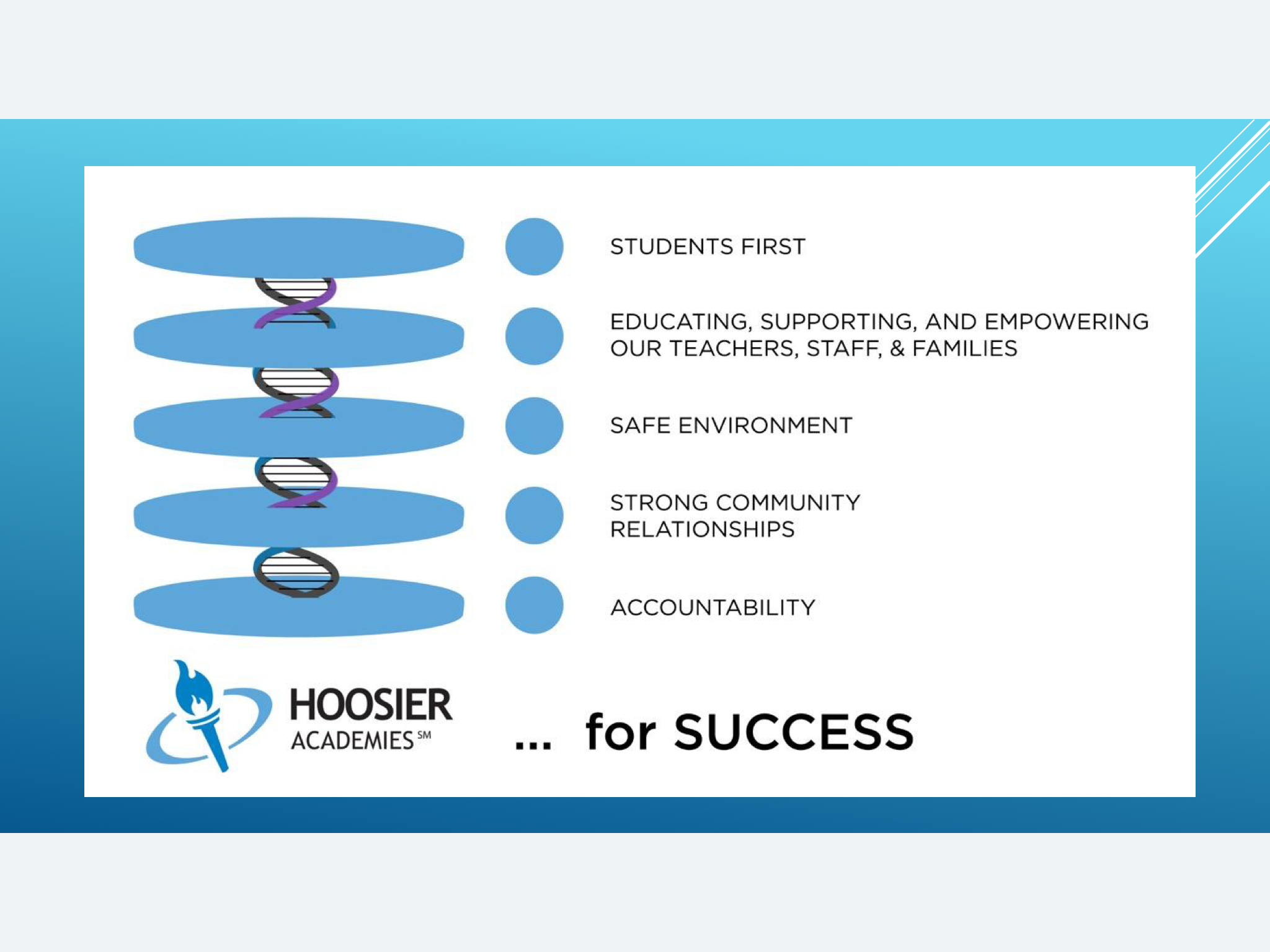
 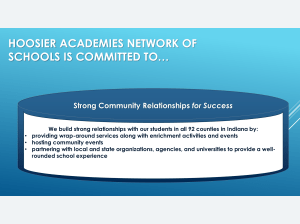 building strong community relationships for success.
“Your responsibility as a leader is to personally demonstrate your commitment through your actions inside and outside your organization.” ~ John Manning
Hoosier Helpings Food Pantry began through a collaboration to sponsor a canned food drive. A contest was created for K-6 and 7-12 Hybrid students to incentivize them to participate. The class that brought in the most cans won a pizza party and the second place winner won a donut party. The canned food drive was promoted to benefit Hoosier Academies’ families through the FAST Outreach Program. The canned food drive was such a success, that steps were taken for Hoosier Academies to open its own food pantry called Hoosier Helpings.
 We decided to visit the Center Grove Care Pantry to observe how another school corporation runs a food pantry. The visit helped us to develop pantry guidelines, check-in procedures, and a food box distribution list. An application was submitted to Hope Pascoe with Gleaners in order to become a school-based pantry. Our application is currently under review. To become a community partner with Gleaners, Lacy Spears and Carol Sepaniak obtained their food handler license through ServSafe. Another requirement is to have cold storage units. A freezer has been donated and we are currently looking to secure a refrigerator. As we are waiting to hear from Gleaners, several events have been held to benefit the Hoosier Helpings Food Pantry.
Events are listed below: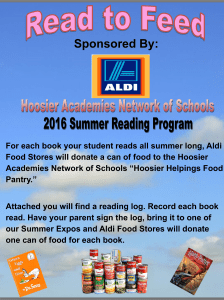
- $25 Starbucks gift card given to the teacher to bring in the most canned food during on site professional development.
- Canned food donation at Bowl to Enroll where staff and families could bring donations to the event.
- Personal Hygiene drive for both students and staff.
- Partnership with Aldi for Summer Reading Program “Read to Feed.” One can of food will be donated to the Hoosier Helpings Food Pantry for every book that is read.
- NJHS and NHS students worked in the pantry organizing shelves, painting freezer and creating signs.
Moral Compass
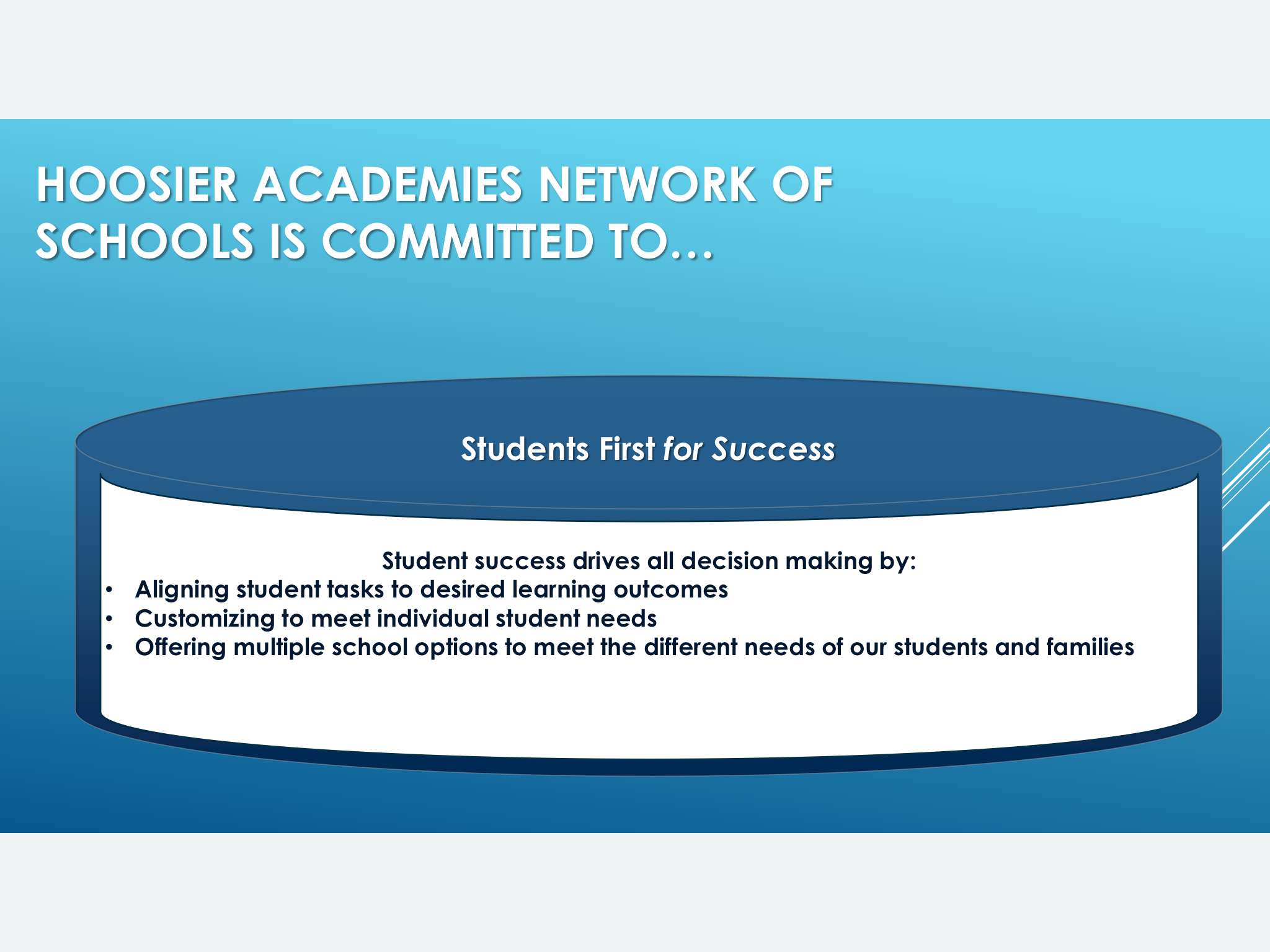
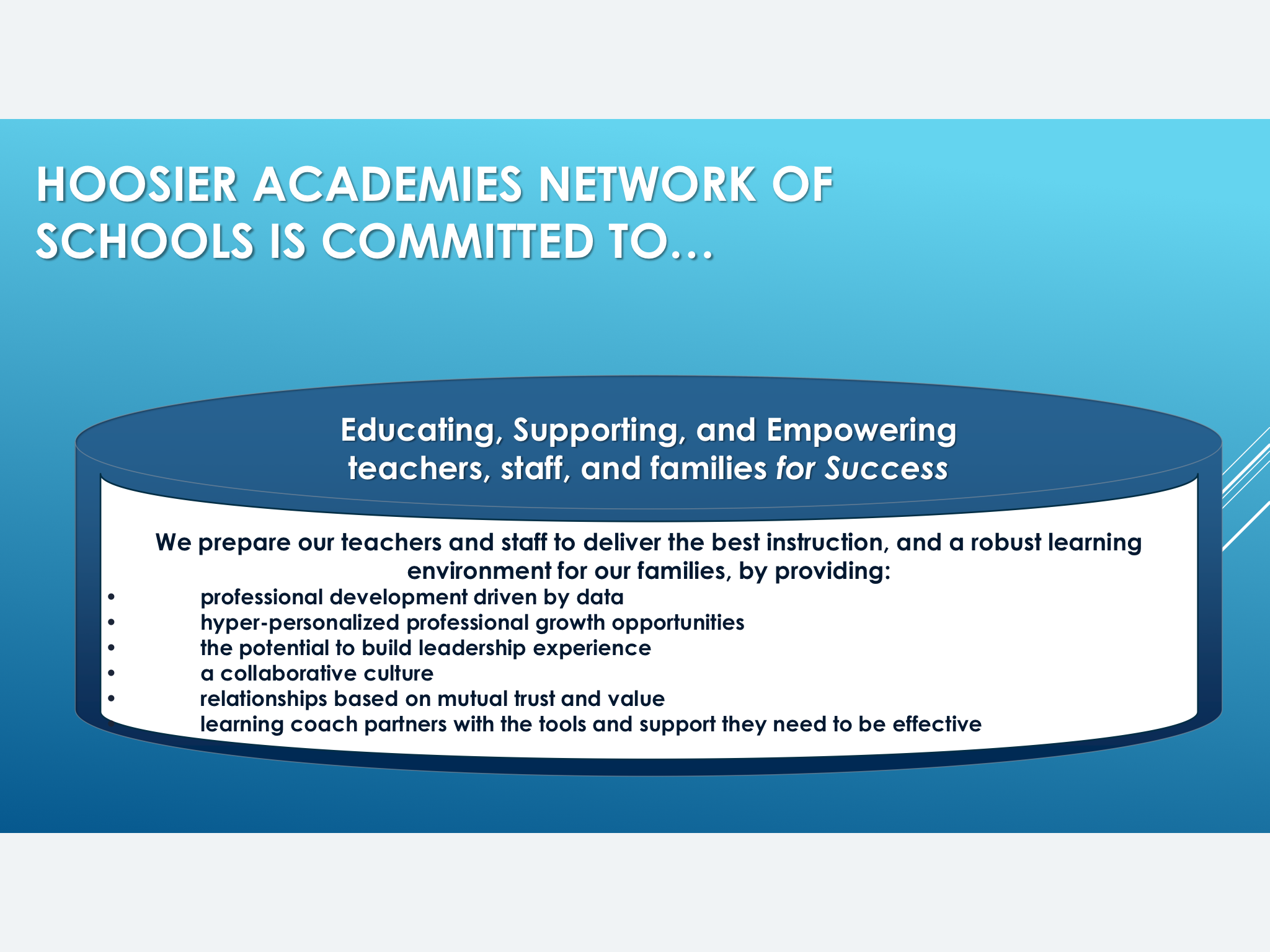
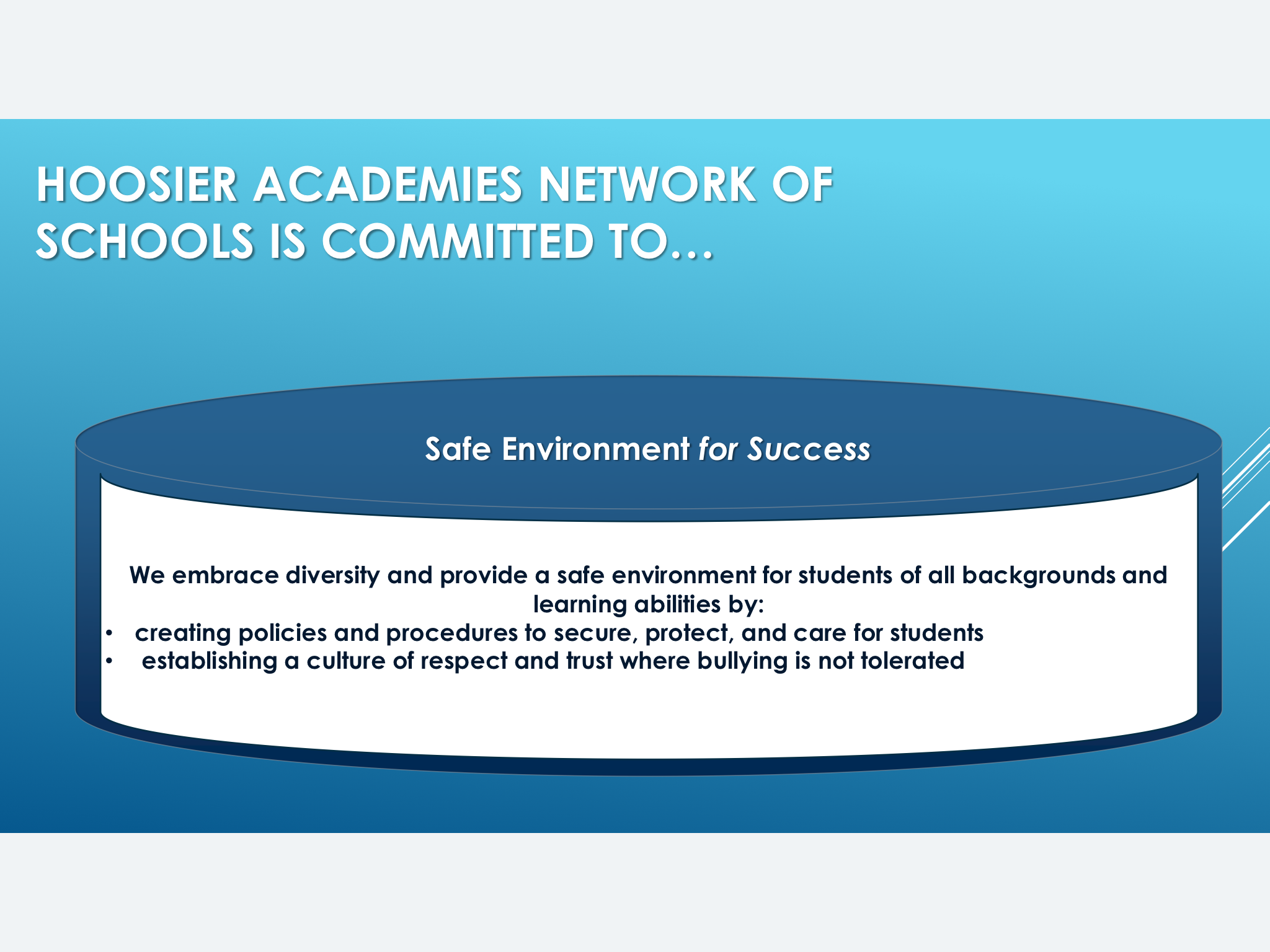
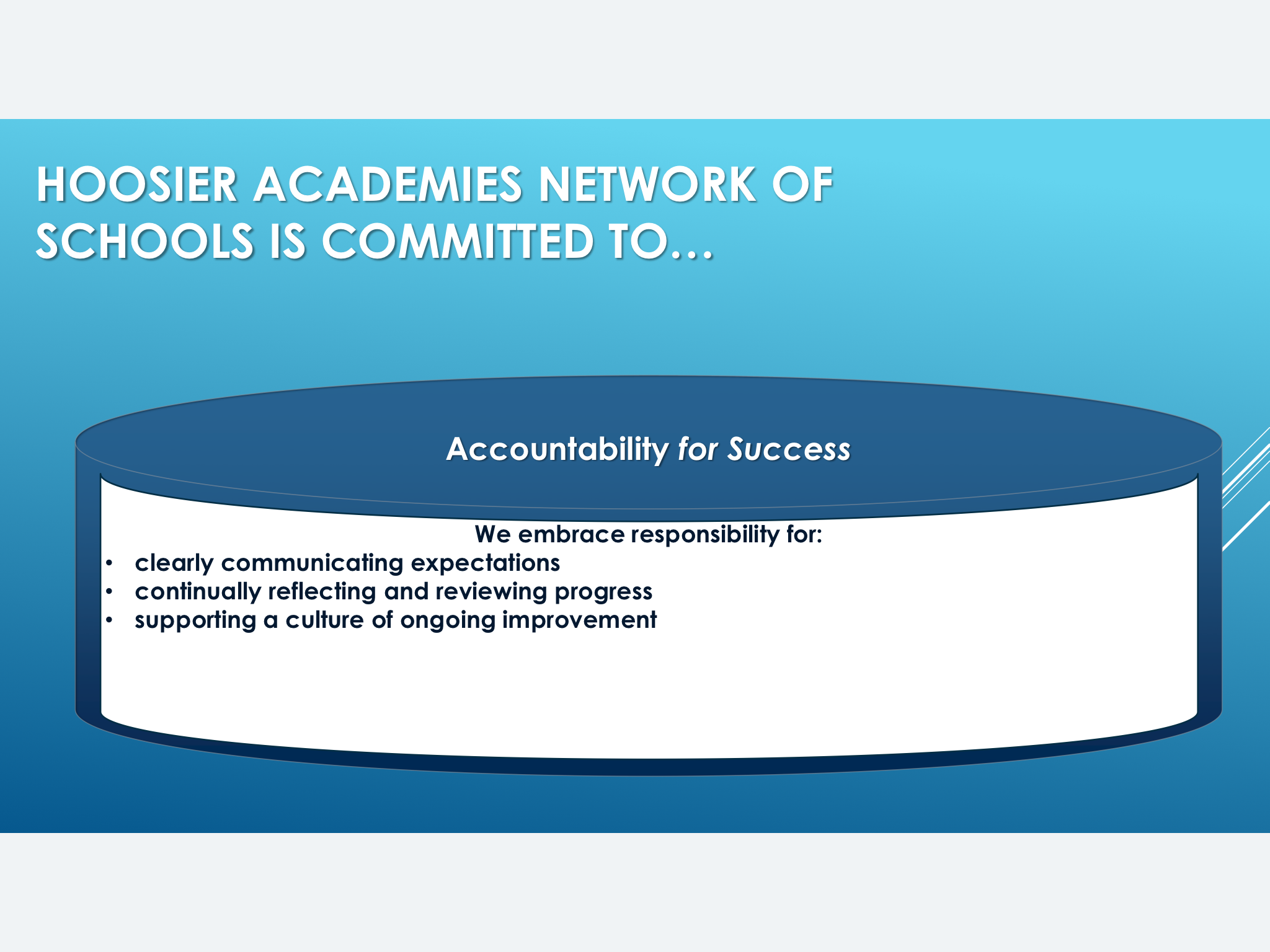
 Lesson #51 in The Disciplined Leader by John Manning (2015) really affirmed our decision to spend the past year with our Focused Leader Academy and, ultimately, all of our stakeholders completely redoing our vision and mission for the Hoosier Academies Network of Schools. We also went on to explicitly develop a set of core values. I was amazed these had not ever been developed for our schools. Those in our organization now understand the importance of these and why the organic development of vision, mission, and core values is crucial for organizational success.
“It is leadership’s responsibility to make sure good ethics are part of the foundation of the company. A good starting point is to use your clearly defined vision, mission, and values to provide direction to the organization.” ~ John Manning
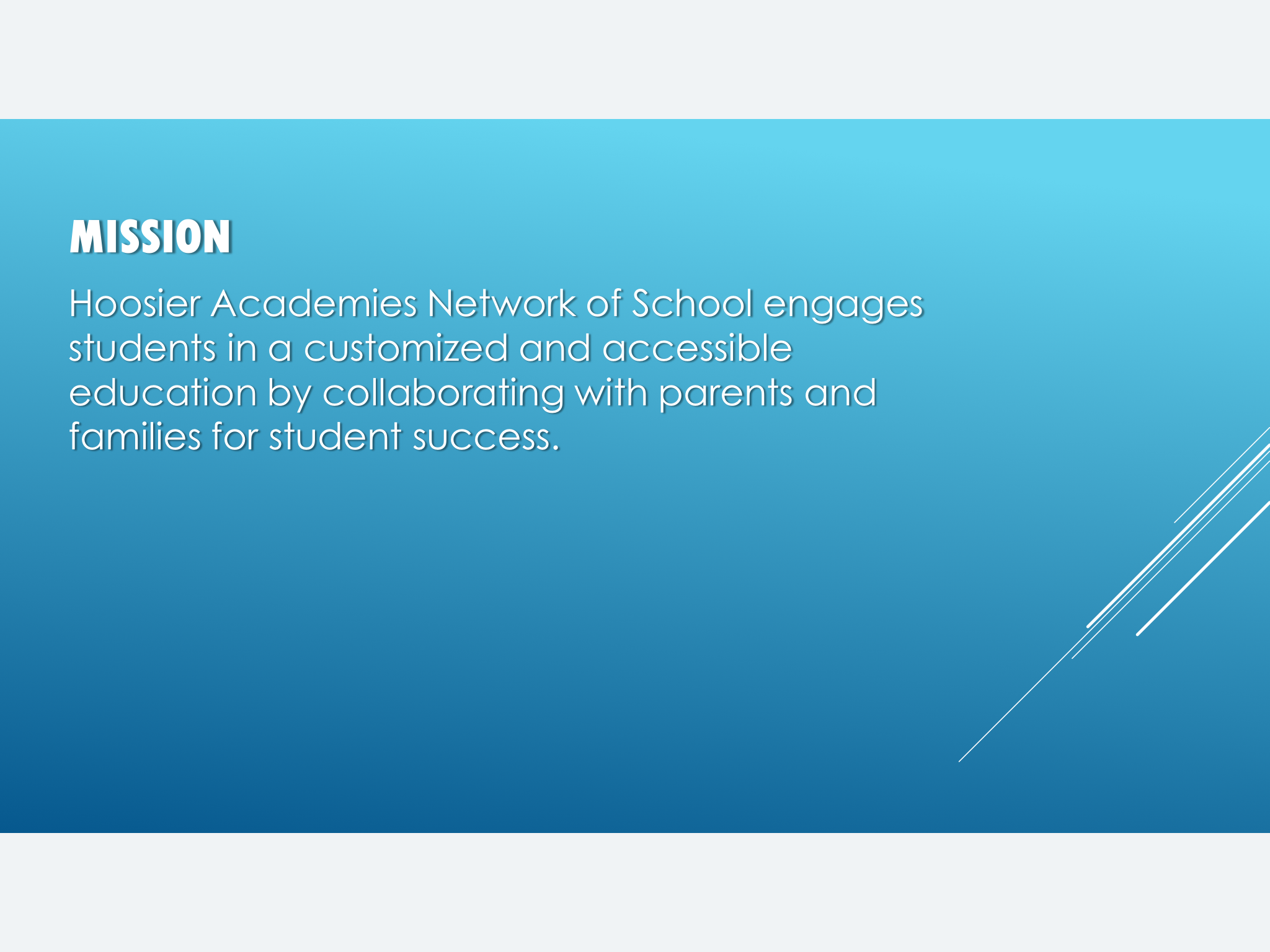
Here is the vision and mission we created:

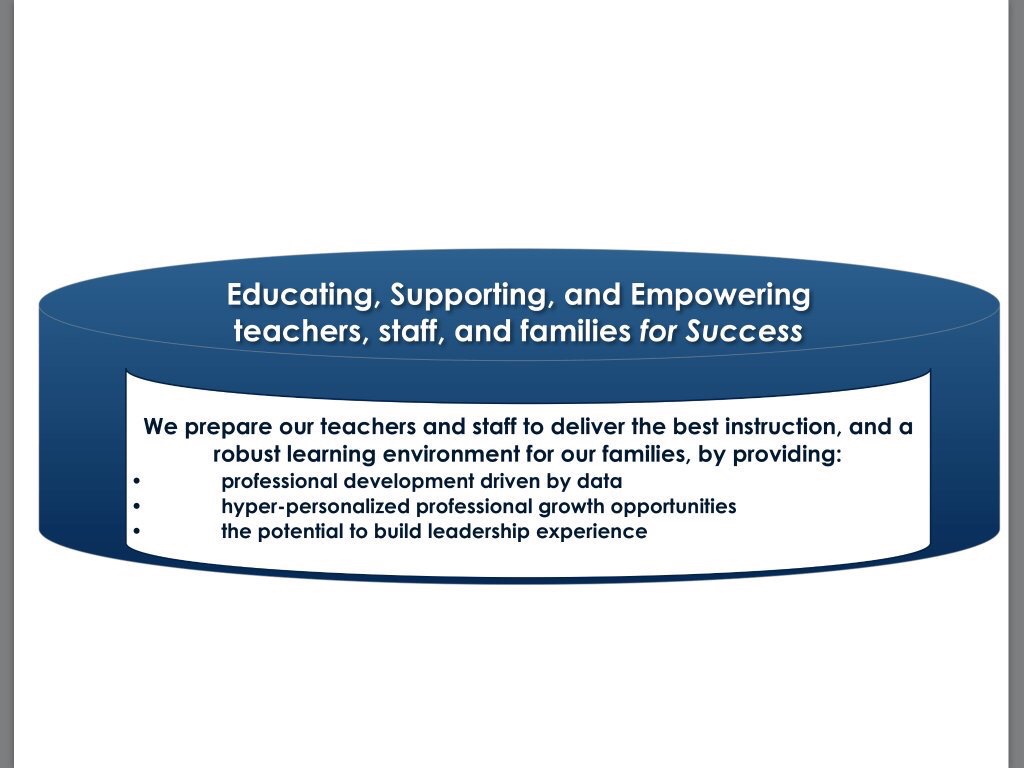
Here are our core values that serve as our moral compass:

Competitive Advantage
 It is no secret that I do not believe in neighborhood assigned schools for all children, especially low-income families. Children deserve and need their parents to have educational choice—not just what others think is good for them. School choice is all about empowering informed parents to make the best choice for the education of their children. With school choice, however, comes responsibility for leaders to not just start schools that look like all the others. As a charter school leader it is important for us to differentiate our school to meet the needs of our families and students.
I was reminded of this last Friday night when we honored our outstanding parents who serve as outstanding learning coaches. I blogged about this in Driving Decision Making. Every student has a story and needs some type of differentiation to make the school experience right for him or her. We must do all we can to make school information widely available so parents can make informed choices. Education is a complex, highly personal endeavor, which means that what happens at the individual level—the level of the teacher and the student—is the most crucial factor in realizing success. In education, I always say we need to work very hard to make policy meet reality. The Every Student Succeeds Act (ESSA), which sends key decisions back to the states, allows us an opportunity to collaboratively bring the state legislature, state boards of education, departments of education, schools, teachers, and families together to do what is best for our children.
In Lesson #50 of The Disciplined Leader John Manning (2015) posited, “Don’t limit competitive information to what’s obvious. Dig deep to understand your competitors’ people, their products, their services, what they do well, and what they don’t. Plug this competitive analysis into your business plan and see how it fits against the backdrop of what’s happening in your industry.” (Manning, 2015, Kindle Locations 2566-2568) This same philosophy holds true for school choice. We must study what other schools are doing and make sure that our own schools are not just doing the same things the same old way, but truly doing things that are making a positive impact on student achievement and performance.
“Leadership needs to drive activities and invest resources to study their competition and use this information to develop a competitive advantage.” ~ John Manning
We need to create transformational disruptions that create innovative opportunities for our teachers, students, and families. Instead of being customers, let’s consider our students and families as end users of what we offer in our schools. What promising approaches could we be bringing into our schools to give us a competitive advantage?
Driving Decision Making
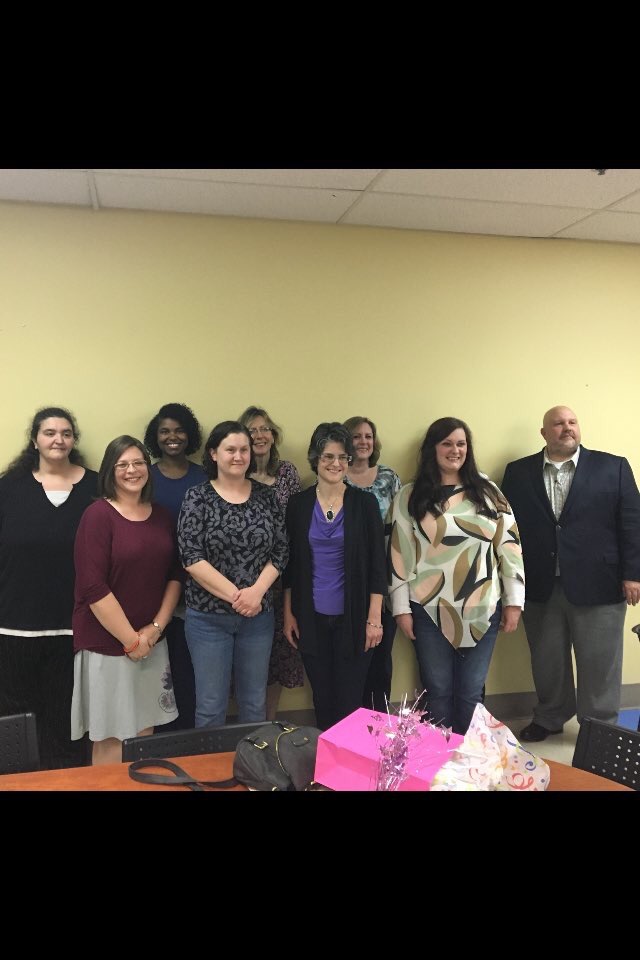 Last night we honored our Outstanding Learning Coaches (parents and family members who work with our students in an online environment) of the Year as nominated by our teachers. It was an honor for me to be there and speak with these great parents and give them a COW (Creator of Wow) Award in addition to the Outstanding Learning Coach Award. I told these parents that with our new vision of “Success for Every Student in Indiana” that we must continue to improve our family engagement. Learning Coaches are a crucial component to the family engagement at Hoosier Academies Network of Schools. I am so proud of the work that our Community Engagement Coordinator, Rachael Borrelli does to engage our families and support our Learning Coaches. She and the teachers are to be commended for implementing this Outstanding Learning Coach awards program.
As I listened to the tear jerking, literally, stories of why these families want their children in our school, I realized we must continue to improve living out our vision, mission, and core values. Every student has a story and a context. These stories are why school choice is so important and parents must have the ability and right to send their children to the school that is the best fit for the context in which they live. This all fit with Lesson #49 of The Disciplined Leader by John Manning (2015). In this lesson Manning (2015) taught us that we must keep customers in the cross hairs of decision making. I blogged about whether we should consider students and parents as customers or whether society is the customer of schools in Leaders Listen, but regardless we need to listen to our families and engage their needs.
If we keep the interest of our families in mind and engage them in the process of educating their sons and daughters it is powerful in improving the achievement and performance of children. As Manning stated, “It is leadership’s responsibility to be an advocate for customers, so focus on them whenever you conduct any business planning.” (Manning, 2015, Kindle Location 2535) As leaders we must always make sure that those we serve are being considered in the decision making process. We will obviously never be able to please everyone, but we must be able to connected the dots between our customer’s needs and our core values for carrying out the vision and mission of the organization.

“You should also engage and align your employees to follow your lead when they’re making decisions, too. When those two strategies come together, you’ve got a winning formula for building customer loyalty.” ~ John Manning
It was so great to connect with a group of parents and students last night and it was even greater to witness our teachers interacting with those parents, families, and students. With our newly created vision, mission and core values I am confident we are continuing to improve our family engagement and decision making prowess. What does your organization need to do to improvement using customers in the decision making process?
ESSA Opportunity #1: Assessments
 I am beginning a series of ten posts detailing opportunities I see us having with the Every Student Succeeds Act (ESSA). This post deals with new opportunities afforded by ESSA for Assessments. ESSA continues the No Child Left Behind (NCLB) schedule of federally required statewide assessments. ESSA still requires annual statewide assessments in reading and math in 3rd–8thgrade and once in high school; science assessments once each in elementary, middle, and high school. Those assessments must be aligned with state standards and provide information on whether a student is performing at grade level. ESSA allows computer-adaptive tests as well. These computer-adaptive models could be used to measure a student’s academic proficiency above or below grade level to determine a student’s actual performance level.
It is also important to keep in mind that no more than 1 percent of all students in the state can take an alternate assessments for students with the most significant cognitive disabilities. There is still the requirement of 95% participation in state testing. States or localities may create their own laws on assessment participation, and districts are required to notify parents about those, but the 95% participation requirement must be met.
There are some options already being used in some states for the high school level. An option for states or districts to use a nationally-recognized assessment (e.g. SAT or ACT) at the high school level in place of the state test. These assessments may measure individual student growth. Any assessment that is used must be aligned to the state standards, provide results that can be used for accountability, and meet all the technical requirements that apply to statewide tests. They also have to be peer reviewed. Under ESSA, any district-selected assessments must be approved by the state.
In addition, summative assessments can be administered through multiple statewide interim assessments that , when combined, produce an annual summative score are allowed under ESSA. Also allowable under ESSA are assessments that are partially delivered through portfolios, projects, or extended performance tasks.
Finally, ESSA encourages and gives states the opportunity to audit their assessments to look at over-testing. As you can see, ESSA gives new flexibility in assessment design. The new law allows for use of nationally recognized high school assessments and innovative assessment flexibility. Now it is up to the states to collaborate and come up with solutions that are best for the students.
ESSA: What Stays The Same?
 I will continue my series of blog posts concerning the Every Student Succeeds Act (ESSA) here with a post about what stays the same under ESSA. I previously blogged about our fascination with ESSA in Why Is ESSA So Fascinating? Because of the many years of state’s frustrations over what were considered by many to be a heavy and prescriptive federal role in education policy, I believe we are all looking for innovative and effective ways that could have lasting impact on schools’ priorities and ultimately a positive impact on our children’s lives. All of the talk of new flexibiity promised under the ESSA, I believe we are all excited to get started on getting everyone in our states together to collaborate and innovate. The United States Department of Education, however, is still in the initial phases of rule-making and figuring out what the USDE’s role will be to regulate under ESSA, a process which is looking like will take several months. The law doesn’t go into full effect until the 2017-18 school year, but certainly it is time to get started.
Therefore, I would like to take the opportunity a few of the things, as I see ESSA, that stay the same. These things are worth studying because we now have the opportunity to tweak and continue to innovate. Indiana is in a great position under ESSA because many of the things called for under the new act we are already doing. We now can take the opportunity for continuous improvement. We have the opportunity to further hone our vision for education in Indiana and engage our communities in the conversation. Before we get into what remains the same under ESSA let’s take a look at what the wishes of the law are (adapted from an International Association for k-12 Online Learning [iNACOL] webinar):
- High expectations and tranparency
- Required action for underperformance
- State autonomy
- Local control
- Program consolidation
- Room for innovation
Here is what remains the same. We, the states, are still responsible to:
- adopt challenging state academic standards. Remember, these do not need to be common core and the Secretary of Education has no authority to tell the states what those standards will be.
- test students annually in math and reading in grades 3-8 and once in high school; and science in grade span. There many who keep talking about how the requirement to test is gone and this is simply not true. By forming our ESSA/ISTEP+ Task Force, however, the Indiana Legislature provided great leadership in having us take this opportunity to study and improve our state testing.
- publicly report scores based on race, income, ethnicity, disability, and English learners.
- identify schools for improvement including the bottom performing 5%.
- distribute Title I, Title II, and Title III formula grants.
In future posts I will be outlining the new opportunities we under ESSA. Every one of those opportunities is fascinating on its own, but we will all need to find ways to collaborate so that all components of ESSA can be knitted together for doing what’s best for the students we serve.
Why is ESSA so Fascinating?
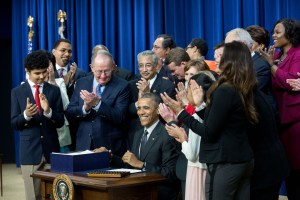 I am so proud to be our Indiana State Board of Education’s representative to the task force, formed under HEA 1395, and charged with studying the new Every Student Succeeds Act (ESSA) and our ISTEP+ summative high stakes Indiana test. Ever since the bill was signed into law on December 10, 2015 by President Barack Obama, I have been fascinated with the possibilities that lie ahead for our children. I have the opportunity to speak about my views and thoughts on ESSA and most recently spoke at the District 9 Meeting of the Indiana Association of School Principals and led off discussing my own and the nation’s fascination with ESSA. But why? Why am I and so many others so fascinated with ESSA?
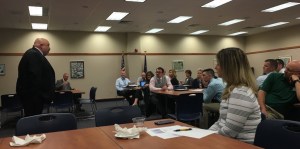
Speaking to District 9 Principals of the Indiana Association of School Principals
I believe there are a three big reasons for this fascination:
- The historic nature of this law that started back with President Lyndon B. Johnson, was revisited in the President George W. Bush era, and now with ESSA being signed into law by our current President Barack Obama. President Obama told us that when ESSA goes into full effect with the 2017-18 school year, we will be maintaining Lyndon B. Johnson’s civil rights legacy of the Elementary and Secondary Education Act (ESEA), which turned 50 last year. The Elementary and Secondary Education Act of 1965 (ESEA) was originally passed as part of the Lyndon B. Johnson administration’s War on Poverty campaign. The original goal of the law, which remains today, was to improve educational equity for students from lower-income families by providing federal funds to school districts serving poor students. Since its initial passage, ESEA has been reauthorized seven times, most recently in January 2002 as the No Child Left Behind Act (NCLB). Each reauthorization brought changes to the program, but its central goal remains: improving the educational opportunities and outcomes for children from lower-income families.
- It was also historic and fascinating that ESSA passed by a huge bipartisan margin after eight years of debate. ESSA passed by a vote of 359 to 64 in the U.S. House of Representatives and a vote of 85 to 12 in the U.S. Senate. President Obama acknowledged No Child Left Behind (NCLB) law and the work of President George W. Bush, but also said the NCLB “often forced schools and school districts into cookie-cutter reforms that didn’t always produce the kinds of results that we wanted to see.” He went on to say that ESSA “creates real partnerships between the states, which will have new flexibility to tailor their improvement plans, and the federal government, which will have the oversight to make sure that the plans are sound.” I believe this opportunity for collaboration between states, including state legislatures, state boards of education, communities, families, schools, and all other external and internal stakeholders, and the federal governments fascinates us and has us dreaming of the possibilities.
- Finally, I believe we are fascinated with the opportunity to invent unexpected solutions. Innovation is a major pillar of fascination. Senator Lamar Alexander, Republican – Tennessee, and a key architect of ESSA said it best when he stated “What I believe is that when we take the handcuffs off, we’ll unleash a whole flood of innovation and ingenuity classroom by classroom, state by state, that will benefit children.” Ingenuity and innovation – now that is fascinating and we in Indiana and every other state need to take full advantage of the opportunities that ESSA provides for our students.
With this fascination comes responsibility. As I stated earlier, we have the opportunity to invent unexpected solutions – in other words, INNOVATE. Many talk about the POWER going back to the states under ESSA and even as a card carrying fan of my hero, Patrick Henry (who was an advocate of individual and state’s rights), I would rather say “RESPONSIBILITY back to the states.” Power guides action, so we have the responsibility in Indiana to guide the action and bring all internal and external stakeholders together for a true collaboration to develop innovate for great solutions for the children of Indiana and our Nation.
Leading Learning
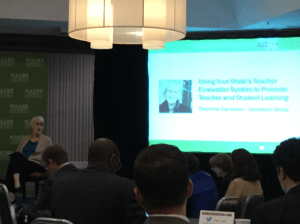
Charlotte Danielson Speaking to NASBE Members on April 4, 2016
This past week I had the opportunity to take another deep dive into the new Every Student Succeeds Act during the Legislative Conference of the National Association of State Boards of Education (NASBE). It was also great to not only listen to Charlotte Danielson of the Danielson Group, but I was also able to have a lengthy personal conversation with her about innovation in education, teacher evaluation, and teacher leadership. The thing that impresses me most about Charlotte is that she is always thinking continual improvement and innovation. She made a few comments that are appropriate as we consider leading learning. Let’s face it, students learning is the ultimate goal we need to be achieving in education. The phrases that Charlotte said that resonated with me were, “Learning is done by the learner,” and “Teaching is cognitive work.” As we lead learning I believe it is very important that we keep these two thoughts in mind.
The goal must be to shift the thinking on the student and how the instructional environment supports student thinking. Teaching is a constant work of improvement – a career that involves learning and rethinking our approaches daily. It’s a very interesting concept if we reconsider that we’re always developing our practice. If we are to be successful we must start with the student as the focus and lead the learning from there. The student must always be at the center – this is always critical to success in leading learning.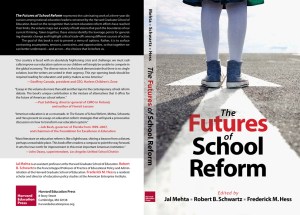
In my studies at Harvard University around leading learning, I have had some key takeaways that came from the idea that, “Learning might be best described as the process by which information becomes knowledge” (City, Elmore, & Lynch, 2012, Chapter 6, p. 153). This when put together with the thought that, “Knowledge…is information plus meaning, where meaning is acquired through experience or education” (Chapter 6, p. 153) frames a fertile environment for innovation in education. It allows us to take education outside the walls of the traditional schoolhouse. It allows school to be any modality where some combination of information, knowledge, and learning flows from some portal to the learner (City et al, Chapter 6, 2012). As a leader of learning I want to continue to use the lens of education as learning instead of school as a physical place of learning. (City et al, Chapter 6, 2012). These key takeaways came from studies of the book The Futures of School Reform (2012) edited by Mehta, Schwartz, and Hess.
As a state board of education member and someone that works in education leadership and policy development, I want to continue to make sure and educate fellow policymakers on the learning core and make sure we are leading learning and not just leading school as usual. I want to continue to improve leading learning from a policy side to help others understand how to make policy meet reality.
 Byron's Babbles
leave a comment