The Good News Is

In A Tale Of Two Cities Charles Dickens wrote “It was the best of times, it was the worst of times, it was the age of wisdom, it was the age of foolishness, it was the epoch of belief, it was the epoch of incredulity, it was the season of Light, it was the season of Darkness, it was the spring of hope, it was the winter of despair, we had everything before us, we had nothing before us, we were all going direct to heaven, we were all going direct the other way – in short, the period was so far like the present period, that some of its noisiest authorities insisted on its being received, for good or for evil, in the superlative degree of comparison only.” It’s like Dickens was writing about the past 365 days of the COVID-19 Global Pandemic. Read it again and I believe you’ll agree it is a pretty good description of what we’ve been through.
365 days ago today, March 10, 2020, I realized while enjoying an Indiana Pacers game with some great friends from the Purdue University Krannert School of Management that we were headed for the worst of times. I made the comment toward the end of the game, “What happens if someone in the arena has the coronavirus? Or, what happens if someone on one of these teams has coronavirus?” I guess it was one of those “Where were you?” moments. Well, we found out the very next day. Rudy Gobert, of the Utah Jazz, was diagnosed with the virus on March 11, and the NBA suspended its season following play that night. Also, it was March 11, 2020 that the World Health Organization officially declared the COVID-19 Global Pandemic. Thus began the worst of times.

This morning I read Chapter 20 in Joseph Michelli’s great book (one of the silver linings of the pandemic that you all should read) Stronger Through Adversity. The title of the chapter, “Run Toward The Future,” is such a perfect descriptor for how I, and those I look to as examples and mentors, have been trying to approach this crisis. The book is a great guide on how to continue running toward the future, no matter what field you are in. It was evident from that moment at the Pacers game a year ago that life was never going to be the same. I quickly came to the realization that I was going to have to adapt, learn, grow, and get uncomfortable in order to survive. I was kind of asking myself if I had the wisdom and belief to somehow make this the best of times. I love how Dr. Michelli put it, “Some leaders only ran from danger, while others also ran toward the future” (p. 248). After a few days of getting my bearings, I consciously made the decision to use every day of the pandemic to become a better me. I can honestly say I have grown personally and professionally in the past 365 days in ways that would have never been possible under pre-pandemic circumstances.
Additionally, I made a commitment to be a beacon of hope and positivity for others. Every professional development event, meeting, or gathering I always start with something related to what day of the pandemic it is. It has actually kind of become my trade mark. For me it became and continues to be about looking for the silver linings and helping others find the silver linings. I continue to ask the questions of:
- What’s the opportunity after the opportunity? (think about that a little and it will make sense)
- What have we stopped doing during the pandemic that needs to be stopped permanently?
- What have we started doing that needs to continue?
For example, I’m a pretty good in person facilitator and speaker, but I’ve got to tell you I was apprehensive about going virtual. But overnight, literally, going virtual with presentations was what I did. Now, the opportunity after the opportunity is programs developed to be either in person or virtual, whichever the client wants. And, we stopped traveling for short, less than a day, events in luau of doing them virtually- that needs to continue. Not to mention I have improved my listening skills, ability to remember names, ability to read non-verbal queues, and make sure every voice is heard. My point is the last 365 days have enabled me to improve my craft. For a while in the spring I was doing three and four webinars a day, as we were providing free in-service for teachers. As I was helping teachers learn remote learning best practices, I was becoming a better facilitator. Those days were grueling, but as I look back they were very rewarding. Teachers tell us all the time that was some of the best development they’ve ever had and wish we could go back to offering that much development. Hear that opportunity?
Even though it has been the worst of times, there have been many moments of the best of times. And, we have certainly seen wisdom, foolishness, and belief during the past 365 days. Let’s go back to Stronger Through Adversity, where Dr. Michelli quoted James McElvain, PhD, Chief of Police for the Vancouver, Washington, Police Department, as saying, “Being a leader means you are in the forever business…” (p. 255). On day 365, and who knows how many more days of the pandemic are ahead, we need to be asking ourselves, “How are you running to the future as a leader of a forever business?”
The Gap Between Intent & Impact

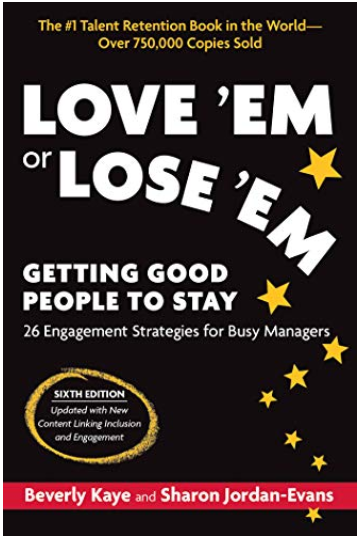
I love it when what I have been reading in one book informs what I have been reading in another, thus causing me to pause, reflect, and collect my thoughts. One of the passages that really resonated with me from Beverly Kaye and Sharon Jordan-Evans in the sixth edition of Love ‘Em Or Lose ‘Em was recognizing “the gap between intent and impact.” Many times I view this as are you really doing (impact) what you say you are (intent)? Thus the tale of the two gaps: some just talk with no intention of acting, which brings no impact and others talk the intent and just don’t do the right things for the impact to happen. What I’ve found is, the leaders who bring real impact walk the walk. They just “do” without having to tell you about it. This in turn brings up another gap discussed by Beverly and Sharon: “The gap between espoused values and practiced values.” Make no mistake, these two gaps are very real in organizations and I am going to guess you have experienced them. What resonated with me was the notion that if we really want to love ’em (those we serve) then mass customization of how we deal with those we serve does not work. There is no one policy for the workforce anymore. We need to allow for everyone to be a part of determining what is fair and right for them.
I believe we even need to use this mindset when working with students in our educational environments. I remember as a high school principal thinking how ridiculous it was to have students who were in many cases the bread winner of the family, maybe raising a child of their own at home, or caring for the younger siblings while mom or dad were at work have to ask for a pass to go to the rest room. I know, there has to be accountability, but I believe in having high standards and helping students develop their own thoughts on what is right for them. What I have found is, is that the majority of students will rise to a high standards and want that kind of accountability. I wanted our school to treat the students like adults – because in many cases they had become adults. It is our job to help them determine what is fair and right for them. In the end, won’t this help them understand and learn to do this when they are are in the workforce and leading others?
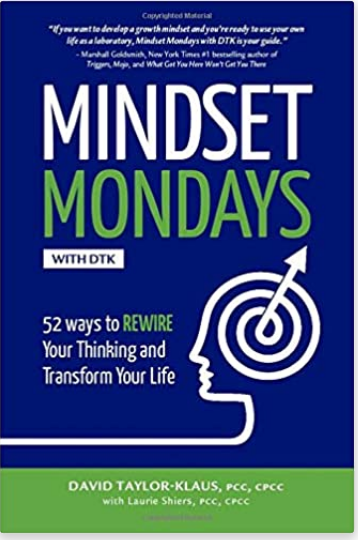
Furthermore, in this week’s Mindset Mondays with DTK lesson in Chapter 27 entitled “Love What You Do,” David Taylor-Klaus (DTK) told us “Paying attention to my impact has always helped me build my practice in a way that trying to fill the roster has not.” He went on to say, “It’s so easy to focus on getting through the list, yet when you choose to focus on what you can love, it’s amazing how much easier your checklist becomes.” Therefore it is much more important for us to be doing what we love as opposed to checking tasks off a checklist. Most importantly, finding what we love is not just important to us it is crucial to us creating an impact for those we serve. This is really essence of of Beverly and Sharon’s “loving ’em.” Are we removing the gap between intent (espoused) and impact (practiced)? Do you know what your love is? More importantly, do you know the love(s) of those you serve? If you don’t, Beverly and Sharon told us to, “Ask so you don’t have to guess.”
Explore And Heighten On President’s Day
Interestingly, the holiday we celebrate today is officially Washington’s Birthday, not President’s Day. In 1971 when Congress passed the Uniform Monday Holiday Law, Washington’s Birthday (February 22) was moved to the third Monday in February. This put the holiday in between Abraham Lincoln’s birthday (February 12) and Washington’s. It also gave us another three day weekend – the intent of the Uniform Monday Holiday Bill. There was a push to change the name from Washington’s Birthday to President’s Day, but that did not pass – we just all call it President’s Day.
As I take a moment to reflect on this day, I remind myself of advice I give to others: study humans, not heroes. I believe this is important in teaching history and civics as well. While we have the advantage of hindsight when studying the past, always remember those who lived it, did not. One of my favorite authors, David McCullough, put it this way, “Nor was there ever anything like the past. Nobody lived in the past, if you stop to think about it. Jefferson, Adams, Washington—they didn’t walk around saying, ‘Isn’t this fascinating, living in the past?’ They lived in the present just as we do. The difference was it was their present, not ours. And just as we don’t know how things are going to turn out for us, they didn’t either. It’s very easy to stand on the mountaintop as an historian or biographer and find fault with people for why they did this or didn’t do that, because we’re not involved in it, we’re not inside it, we’re not confronting what we don’t know—as everyone who preceded us always was” (McCullough, February 15, 2005, in Phoenix, Arizona, at a Hillsdale College National Leadership Seminar on the topic, “American History and America’s Future.”). We need to remember that history was not created in a vacuum and could have gone a bunch of different ways.
As we reflect on our Founders and past Presidents we need to remember they were human beings, just like us, with flaws, sins, and both terrible and good qualities. We’ve had leaders do some terrible things and we need to study those things and call them out to make sure and not repeat them. We also need to learn, grow, and continue to improve and get better. In the world of improvisation there are the five syllables “explore and heighten.” This is where we usher in our imagination, where ideas are born, where our power finds its source, and where we discover what’s waiting for us. I believe this to be the genius of our American community. We know everything can and should be improved upon. So, on this day of reflection, let’s renew our resolve recognizing our errors of the past and continued improvement for making the world a better place for ALL.
Natural Curiosity

Curiosity. Everyone is born with it; it’s innate and natural to every child. But somewhere along the way, many lose their sense of how to use curiosity to expand their minds. I would even argue that there are things we do in education that cause our young people to lose or give up on their curiosity. When we reach school age, answers become more important than curious thought. Today, I had a person in a meeting describe me as being open to my natural curiosity. I’ve got to admit, I took it as a compliment to be described as curious. I am a very curious person and try to be curious every day.
Curiosity helps us to discover new ideas and open up new avenues and possibilities. Additionally, curiosity brings excitement into our lives. So, how do we stay open to our natural curiosity? We need to make time for curiosity. Part of that time needs to be for play. This gives us the opportunity to explore. Curious people can always find something interesting to explore. Being curious can help us be less judgmental. Curious people as focused on exploring options rather than just trying to be right and have someone else be wrong.
We also need to ask lots of questions. We need to channel our innate child-like curiosity and do more asking of what, why, who, when, where, and how to get at the big-time secrets of the world. Those that are curious are not afraid of questions and being wrong. Finally, the curious never stop learning.
Leading The Michelli Way
I am a huge believer in intersectional learning. This is the learning that can be accomplished from the commonalities and complexities of different industries, businesses, and organizations. I have always been a fan of Dr. Joseph Michelli’s work and books. He has knocked it out of the park with his latest book, Stronger Through Adversity: World-Class Leaders Share Pandemic-Tested Lessons On Thriving During The Toughest Challenges. This book is the encyclopedia of intersectional learning. I am only about 25% through the book, but have learned and reflected on so many things. I have read all of his books, and I have to attribute many of the ideas I have implemented over the years started from the learning I have done from his books.
My goal with this post is to pay it forward and invite all of you to learn from Dr. Michelli. If you are one who likes to learn from others and then apply that learning to your own context, then his work is for you. He has studied and chronicled, in-depth, the many companies he has worked with, improved, consulted, and learned from. Let me just give you one example from the book. Let’s begin with this quote:
“a responsibility alongside other hospitality brands to ensure all travelers who decide to book an all-inclusive getaway will feel confident that they’ll have a safe, comfortable, and memorable experience. Each and every resort or hotel brand needs to stay true to its unique value proposition in the market, yet abide by a common denominator of strict hygiene and safety protocols. Health and safety have always been top priorities among travelers, and now they are key determining factors in a consumer’s decisions to travel.”
Carolyne Doyon, President and CEO of North America and the Caribbean at Club Med
I don’t care what industry you are involved in, the learning here applies. Take the words “hotel or resort,” “traveler,” “travel,” or “hospitality” and change them to those that apply to your organization and the statement applies. When I think of both my policy making and leadership roles in education this statement really applies.
I talk about the value proposition that Doyon speaks of in my leadership training all the time. As a believer in school choice, I believe every school must have a unique value proposition. In other words, why should families choose your school to attend? No doubt, the pandemic has even created new, what I call, competitive advantages.
We have had to contemplate bringing students back and opening schools, keeping students and teachers safe, how to do virtual education or some combination of virtual and in person education effectively, and how to still hold ourselves accountable for the learning and outcomes ALL students we serve deserve.
Dr. Michelli’s book is so timely because we are still working on all this. I was just in a briefing today on the Biden administration’s priorities in education and these items are being contemplated. We need to use the learning from all sectors to help us learn and navigate our course. Stronger Through Adversity gives us the actions of many great leaders. I wish we could have a summit of all the leaders to create action plans for all of us. Maybe he’ll let me pick a couple of leaders and invite me to do one of his podcasts with him. I can dream, can’t I?
As I said at the beginning, this post is intended to serve as my paying it forward for you to check out this great book and the learning that can be gained from Dr. Michelli’s work. Check it out!
Somebody Did It For Me
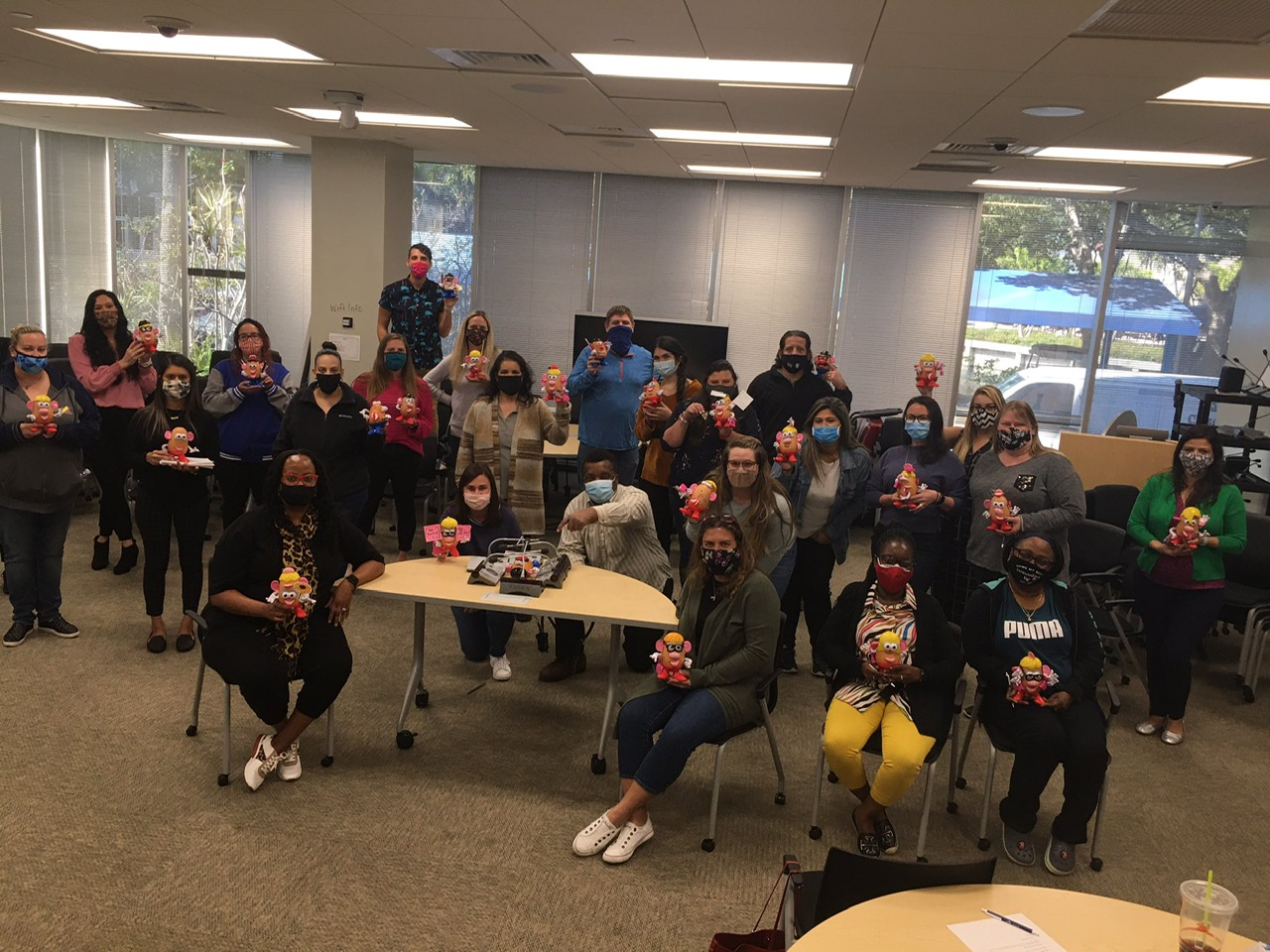
Leaders motivate us to go places that we would never otherwise go. They are needed both to change organizations and to produce results. In any organizational climate, good leadership is perhaps the most important competitive advantage an organization can have. Amazingly, followers of leaders are just as powerfully driven to follow as leaders are to lead. Great leaders have a way of supporting others to grow and become more productive. Great leadership means putting people in the right place at the right time and then letting them thrive there.

Yesterday, during our south Florida gathering of 3D Leadership participants, we did an activity that I love to do called “Who Am I As A Leader Now?” We use Mr. and Mrs. Potato Heads to do this and participants build their Potato Head to represent themselves, at that moment, as a leader. It becomes such a powerful reflective time. Then, we gathered in a big circle and shared out. All of the share-outs were so meaningful, but one phrase really caught my attention that a participant ended with, represented by a Potato Head arm placed backward, “Somebody did it for me.” This really struck me because it is so true. Everyone has a “somebody did it for me” story. And this fit so nicely with the work we were going to do later around John Maxwell’s 5 Levels of Leadership. Helping others develop into all they can be are those “People Development” and “Pinnacle” levels of great leadership.

It’s always inspiring to be in a room of educators because developing young women and men into all they can be is what we do. We get to provide that “somebody did it for me” story for many. But, let’s not forget that as leaders we have an obligation to be finding ways to provide those “somebody did it for me” stories for those in our organizational communities. It really comes down to being a servant leader. As I listened to all the stories and reasons for the Potato Head designs I was in awe of all the collective expertise in the room. This group of leaders truly wanted to be the best at serving others. Now, as I write this post I am reflecting on those in my life that have been that “somebody that did it for me” person. There have been a lot, and I would even say this group of south Florida educators “did it for me” yesterday. All of this reflection made me go back and reflect on a blog post I did back in 2013 where I reflected on those who had been a servant leader to me along the way and, in some cases, throughout my entire life. Check out my post, Matthew 20:26 on Being A Servant Leader to learn more about my journey and those who have “been there” along the way.
As we try to make some sense in this pandemic stricken world, I, and I believe all the other participants, needed to hear the stories of others – how they got where they are and how they are dealing with all things related to the global pandemic. We really developed a bonded sense of we are in this together, and while we all may be separated by only a few miles, or hundreds of miles we can all be kindred spirits and part of something bigger than ourselves to into great leaders providing “somebody did it for me” moments.
How about you? Who has provided those “somebody did it for me” moments in your life? And, who are you providing “somebody did it for me” moments for?
Irrational Exuberance
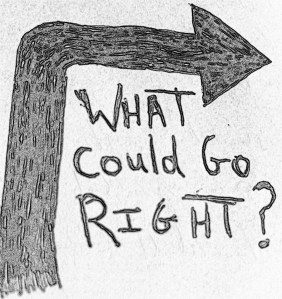
As an artistic leader versus being a technocrat, I have always been that one focusing on how great things were going to be; how great that lesson I just planned would go, how that next webinar would go, how many gazillion people would want to be part of a new leadership program, or how much everyone would love that latest workshop activity I just planned. Sometimes, because of this focus, I am viewed as not being detail oriented enough, or not being realistic enough. Some of that might be true, but as David Taylor-Klaus (DTK) pointed out Chapter 21 of Mindset Mondays with DTK entitled “What Could Go Right?”, nothing can ruin an organization quicker than not planning for success.
I’ve actually seen and experienced this with new schools that weren’t prepared for the large number of students who enrolled. It is tricky to not be prepared for great things. Without thinking through what could go right, we won’t be ready to handle great things when they happen.
“Stop being afraid of what could go wrong, and focus on what could go right.”
~ Unknown
DTK pointed out that companies buckled under the pressure of not being able to handle what Alan Greenspan called, “irrational exuberance,” during the dot-com era. Bottom-line: we must focus on what could go right. I like the quote above because while we need to have operational awareness of challenges and obstacles, we must not fear them. What are the next things that will go right for you?
Living Lifeopoly

In Chapter 19 entitled “Mistakes Don’t Matter” in the book Mindset Mondays With DTK by David Taylor-Klaus (DTK), he used the metaphor of life being a little like a game of Monopoly. Well, I couldn’t resist created my own game called Lifeopoly. And, yes, Lifeopoly has a red hash line underneath it. I love creating new words. I even drew a prototype box for the game shown here as the featured image of this post. Let me know what you think. This chapter was all about mistakes and our mindset in dealing with those mistakes. DTK described it this way, and I have inserted a blank for you to put whatever area you’ve considered yourself a failure in: “The wounded version of myself was making this one significant failure mean that I would always be a failure at ___________________” (p. 151). As a person who can make hundreds of mistakes per day, I have developed a mindset of considering what I can/have learn(ed) from these mistakes. Failing at something once does not we we are always going to fail at it. Never forget, we have to be bad at something to get good at it.


I loved the Happy New Year card that DTK described getting from a friend that said, “This year, may every mistake be a new one” (p.152). I thought this was very appropriate given this is the first week of 2021. I am also reading the great book The Midnight Library: A Novel by Matt Haig right now. I’m not going to divulge too much here because you need to read the book, but there are three great passages in the book that caused me to reflect on making sure we grow from mistakes and life’s events. Additionally we need to not get so uptight and view some things as moves on our Lifeopoly journey. Our time and energy is best spent being the best “me” we can be, and as an educator I’m reminded we need to make sure our students have as many experiences possible and help them understand how to grow and learn from the mistakes and experience life offers. Here are those passages from The Midnight Library I believe will cause you to do some reflection about life decisions and mistakes:
“‘Because, Nora, sometimes the only way to learn is to live.'” ~ Mrs. Elm to Nora
The Midnight Library, p. 67
“Everyone’s lives could have ended up an infinite number of ways.” ~ Nora thinking to herself
The Midnight Library, p. 54
“‘If you aim to be something you are not, you will always fail. Aim to be you. Aim to look and act and think like you. Aim to be the truest version of you. Embrace that you-ness. Endorse it. Love it. Work hard at it. And don’t give a second thought when people mock it or ridicule it. Most gossip is envy in disguise. Keep your head down. Keep your stamina. Keep swimming…'” ~ Mrs. Elm to Nora
The Midnight Library, p. 93
How about you? Are you embracing your you-ness?
Learning From KISStory

As they have since the band began it’s journey when I was 10 years old, the greatest rock band ever, KISS, continues to influence my life. I attended the KISS 2020 Goodbye New Year’s Eve concert held in the United Arab Emirates last week at Atlantis, The Palm and have been processing it in my mind ever since. Live music was silent and as of the the day of the show, on New Year’s Eve, KISS had not been on stage in 296 days. I even used it as the theme/throughline for a professional development program I did yesterday for teachers entitled “Student-Student Interaction.” KISS, in conjunction with Landmarks Live, is the ultimate example of fan-fan and band-fan interaction. I took three pages of notes during the three hour event put together by KISS. There were leadership lessons from KISS on how to deal with COVID-19 lessons; how to engage a huge global audience virtually; how to engage in person and virtual fans individually; how to bring together an international team; how to change what working as a team looks like during a pandemic; how to keep over 400 team members safe (they had no COVID cases) and have them working in-sync; and, triple the physical size of the show.

Director of the show, Daniel E. Catullo, put it this way: “We are attempting to pull off the biggest show of 2020 at the height of the pandemic.” Let me tell you what, they did! I remember when I saw the first announcement of this back in November, I said, “Leave it to KISS to figure out how to make big things happen during a pandemic, and do it safely.” They spent extensive time explaining how they dealt with COVID protocols during the first part of the three hour event. Everyone should watch that introduction documentary – they did it right, they did it well, and are a model as to how, in my opinion, we should be doing it. I said out loud during the event, “why are we not doing it this way in our schools. This is the right way to do it!” They had contact tracing protocols using colored bands identifying work groups, bracelets that kept track of every person coming within two meters of each other, daily testing, strict mask wearing, et cetera, et cetera. And, let me repeat what I said earlier, the day of the concert they were reporting no COVID cases. Well done!
“It’s KISS! Anything worth doing is worth overdoing as far as they’re concerned. I hope this inspires other’s to want to do shows.” ~ Robert Long, Production Designer


The shows Production Designer, Robert Long said it best, “It’s KISS! Anything worth doing is worth overdoing as far as they’re concerned. I hope this inspires others to want to do shows.” With all the gimmicks, stunts, and theatrics that we are used to with KISS times 1000, they lived up to Long’s expectations of overdoing it. Setting world records for things like tallest flame thrown in a concert to over 1.5 million dollars in pyrotechnics, the show was over the top. After opening with “Detroit Rock City” and “Shout It Out Loud” we heard from Paul Stanley for the first time when he said, “Hello Dubai! Hello World!” He was drawing all of us at home in. Then after “Deuce” he drew all of us at home in the rest of the way saying, “If you’re here that’s cool. If you’re at home, we’re talking to ya. You count!…This is your show!” And, let me tell you it felt like they were singing every song, shooting off every firework, and making every gesture just for me. I reminded teachers yesterday how important it was whether teaching students in person or virtually that we make each one feel like we are speaking to them personally. I appreciated how Gene Simmons would point to and look right into one of the more that 50 cameras being used for the show and speak just to me. In fact we had a little fun yesterday during my professional development with Gene’s best practice. Every time someone spoke, reported out from small group discussions, or addressed someone virtually (we had a group in person with me, a group that was virtual, and some individuals who were virtual), we would point and look directly into the camera or Owl to draw everyone in.
“If you’re here that’s cool. If you’re at home, we’re talking to ya. You count!…This is your show!” ~ Paul Stanley

Using best practices, that we in education need to emulate, KISS did a phenomenal job of acknowledging those fortunate enough to be on the individual room balconies of the hotel while intentionally involving and engaging all of us around the world at home screaming, yelling, playing air guitar, and singing along. This was one of the most spectacular rock shows in history. What they achieved is what we need to work hard to achieve in anything we have to do virtually or in a blend of virtual and in person right now: recreate the visceral energy of being live. KISS pulled this off brilliantly and, as Paul Stanley described it: “Bombastically!” with the KISS 2020 Goodbye New Year’s Eve concert. As KISS’ music manager, Doc McGee said, “Why, because people need it.” We’ll bring it to the people. We have to have a tipping point, and I think this is the tipping point.” Let’s all strive to be like KISS and be a tipping point for all great things as we continue to do all the things we need to do to keep life going during the rest of the pandemic. Happy New Year!
Learning Together Apart
As I walked back to the house from the barn this morning I noticed the unmistakable sound of fresh snow squeaking and crunching under my boots with every step. For anyone who has ever lived in a climate with snow, this sound is immediately recognizable. These sounds reminded me that in the midst of a pandemic, we have watched the transformation from winter, to spring, to summer, to fall, and now, back to winter. But other transformations are upon us everywhere without such clear cut and defined definition. These other transformations are of a global perspective and are personal, health related, economic, political, and economic. When you add all this together it is very complex change.
All those areas listed above are constantly evolving, but as we know a single virus has taken over how the game is played right now. Think about it, change has come in much the same way you draw a card in a board game – “You are now in the middle of a pandemic; go back 10 spaces.” Or something like that. Change is here, and has been here. There are changes in my house, in my body, in my family, in my community, culture, economy, and in the whole wide world of ecological systems. In some ways things are falling apart, but maybe that has to happen to put things back together.
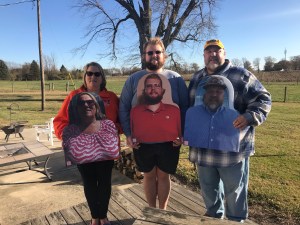
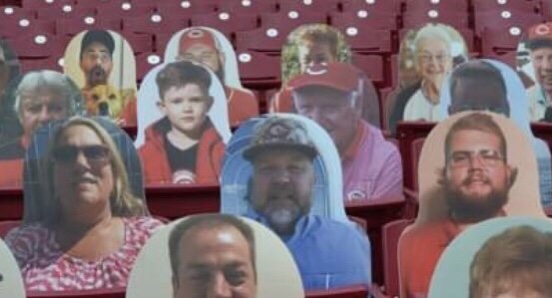
I guess it is only appropriate that one of my last posts of the year, on New Year’s Eve, would be entitled with the hashtag I coined back in March as we began our, now 294 day, journey together dealing with the global pandemic – #LearningTogetherApart. As a person who believes so deeply in the power of community, it is about “showing up.” Just like when Major League Baseball gave us the opportunity to show up, albeit in the form of cutouts. Nevertheless, in our case, my family was in attendance for every Cincinnati Reds game in Great American Ballpark in Section 136, Row P, Seats 6-8.

You might say this is a trivial example in the face of a pandemic, but I would argue it’s the perfect example of being invited to be a part of a community. Being invited is fundamental to showing up and be part of a community. By being invited by the Reds and the Reds Community Fund we were able to, as a family, show up to help the Reds Community Fund continue the creation of programming that connects underserved children with baseball and softball, and connecting baseball with the community.
So, in the case of my field of education where right now via Zoom we are expected to give our students a sense of “home” when some children have never experienced or have any perceived notion of what “home” is, I must continue to show up and support environments for learning together apart. The issue just described is very complex with no one direct solution as some might naïvely think. Education, religion, poverty, economics, technology, generational cultures, and community are all woven together as part of this issue. No single directive will solve this. I hope to take the opportunity each and every day to shift the tone.
Even though things are confusing, terrifying, infuriating, heartbreaking, and completely out of control right now, we all need to keep showing up. We must continue “learning together apart.” We still do not know what all will be required, but whatever it is we must, with all we can offer, be there, learning, in integrity and generosity.


1 comment