Leading With A Constant Presence

In his memoirs, General Ulysses S. Grant told us that Civil War General William Tecumseh Sherman’s constant presence is what made his troops so successful even with troops that had no previous battle experience or even been shot at. His army was largely made of volunteers and not professional solders like himself. So he drilled, trained and led right along side them to develop them into a formidable fighting force. Notice I said develop. In doing more studying on this I found that he developed his men through challenge, and by remaining available nearby as their coach. He was using what we today would call scenario and case study facilitation.
I loved learning about this from General Grant’s own words. Additionally I found more information about General Sherman in Fierce Patriot: The Tangled Lives of William Tecumseh Sherman, by Robert O’Connell. O’Connell said, “…the variety of missions they would undertake precluded turning them into any one thing. So he became a guiding hand, presenting them with a series of challenges and basically letting them figure out how to meet them. Yet he never lost contact; he was always among them, completely approachable.” Here is the man that would perfect the “scorched earth” tactic being described as “completely approachable.” I love it!
In 1862, Sherman was modeling acting as a guide or coach to support the problem solving activities of those he served, rather than giving commands and answers. That was truly radical for the time and I have encountered or worked for very few who truly practice this. In fact during my career I have had one principal and one superintendent that I would put in the great category related to the topics being discussed here. General Sherman believed in giving respect, autonomy, and the chance to grow to all he served. Sherman said, “Every soldier of my command comes into my presence as easy as the highest officer…. They see me daily, nightly, hourly.” Wow, a constant presence – let’s all keep working on that!
Mixed Humanity
There is no ideal person or leader. Each of us has a soul, emotions, a destiny, feelings, personality, and style. We are actually very powerful algorithmic and data-fed machines. As biological humans we need to take time to think, create, and develop our mixed humanity. In Volume Two of the Autobiography of Mark Twain, Twain discussed “observing mixed humanity.” Twain observed how different each and every one of us is. Next time you are in a group take a moment and just observe each person and their interactions – it’s amazing.
This mix of humanity is such a powerful thing. Those leaders that I put in the great column learned their traits from previous leaders who modeled for them. We then continue to pass along their wisdom to the next aspiring generation of leaders, entry-level employee, apprentice, or intern. Make no mistake, someone is observing us and our role in humanity. If we humble ourselves and work by pulling each other across the finish line together, then I believe our significance will multiply tenfold.
Circumstances

It’s interesting to read about circumstances. Most that write on this subject talk about how we have unlimited ways to change our circumstances. I was inspired today by the late *General Ulysses S. Grant when in his autobiography, called Personal Memoirs of U. S. Grant, he wrote, “Circumstances always did shape my course different than my plans.” General Grant said this when speaking about how he had not planned to go to West Point or be a career service member, but circumstances shaped his life differently than he planned. Life isn’t supposed to be something we just “make it through”. Life is about progression and advancement. Our life is a journey.
Life is what we make it, so we need to make it an adventure. We so many times view circumstances as bad things to be overcome. Maybe we’ve been looking at that the wrong way. Maybe we should be paying attention to how our circumstances are shaping our plans in a way we never could have imagined. Taking that path less traveled because our circumstances are shaping our course in a certain way might just lead to greater things – like being a general who helps shape the course of history, or President of the United States. Where are circumstances taking you?
*I know your thinking that Grant was our President and I called him General. That is because I learned from Mark Twain’s autobiography (Twain and Grant were friends and Twain encouraged Grant to write his memoirs and helped him get them published) that Grant wanted to die a General and Congress reinstated him minutes before his death.
Love In Action

Today officially marks the start of the 26th week of the year. We are at the halfway point. It also means I am halfway through the great book Simple Truths of Leadership: 52 Ways To Be A Servant Leader and Build Trust, Making Common Sense Common Practice, Ken Blanchard and Randy Conley. I am reading the book one simple truth at a time and writing a reflective post each week. This week’s post reflects on Simple Truth #26: “Great Leaders SERVE.” In this simple truth the elements of the SERVE model from The Secret: What Great Leaders Know and Do, by Ken Blanchard and Mark Miller were introduced. Two things jumped out at me. First, the idea of “reinventing continuously,” and second, the statement at the end of the simple truth: “…servant leadership is love in action” (p. 69). Let’s look at reinventing continuously.
As a person who loves learning and experiencing new things, I believe In the idea that what we know today will probably not make us successful even in the near future. We must be constantly reinventing ourselves. This does not mean we are giving up or changing core values, but means we are iterating. In fact, iteration, might be a better way to look at this than reinventing. By its very nature iteration is about learning and progressing to the next level – what great leaders do. For every new iteration, feedback must occur so that the next iteration is better and moving in the right direction.
Besides the personal reinvention there are two other parts to the Blanchard and Miller model of reinventing continuously: reinventing systems and processes and structural reinvention. Now more than ever, there is rapid and continual change all around us. Just think of the supply-chain for one. There is a great need to develop an iterative mentality and create a culture of learning. Therefore, if we want to practice “love in action,” we must not wait or hope that those we serve will somehow learn all of the needed skills that make them great. We must deliberately lead and model the reinvention/iteration process for all.
The Moments That Change Our Lives

What are your life-changing moments? I think about life-changing moments a lot. These can be very small things to very big-time events. As I think about those moments that changed my life, I realized that they also changed my perspective. As my son enters his senior year in college we are experiencing the life-change of our developing an adult father-son relationship. This has caused me to reflect on changes that happened when I was younger, and made me feel like I was leaving my younger self behind. I was moving into adulthood, never to return. My son is moving into adulthood never to return to the “little man” as I always called him. The incredible Nothing More song, Fadein/Fadeout states it like this: “Son, I have watched you fade in; You will watch me fade out; I have watched you fade in; You will watch me fade out; When the grip leaves my hand; I know you won’t let me down.” I want to create as many moments possible with my son as he continues to fade-in.
We all had the chance to go to Matt Winn’s Steakhouse this weekend and our server, Brandon, who was awesome, got us to discussing life-changing events when he told us the biscuits would “change your life.” They did, by the way! What are those life-changing moments in our lives which reveal something powerful and influence our perspectives as we mature? We went on to discuss that the lobster tail “brought new meaning to life,” and the honey pie “is the answer to life.” I know these were goofy little quips to be coming up with, but they struck a deeper conversation about the fact that all the things we do in life change our life in some way. I even reflected on the times my mom and I use to spend lying on the ground looking up and clouds and imagining the shapes they made. Did this help shape the creative person I am today?
What are your life-changing moments? We all have those blips on our life’s metaphorical screen that shape our lives. We also need to consider the blips we are creating on others’ screens. Let’s make sure the life-changing events we bring to others are like the biscuits, lobster tail, and honey pie.
Your Unique Reason
I believe each and every one of us has a purpose. We each have a unique reason for being here on planet Earth. We are not here to only stroke our own egos and be interested in our superficial selves and obsess over what we want, what we have and what other people think of us. I learned a long time ago that others don’t think of us as often as we sometimes think they do and are usually so self-consumed with themselves that most of their time is spent thinking about themselves instead of us. This was the subject of Simple Truth #25, “It’s Not About You” of Simple Truths of Leadership: 52 Ways To Be A Servant Leader and Build Trust, Making Common Sense Common Practice, Ken Blanchardand Randy Conley. In today’s world, it’s easy to get off track or focus on the wrong things, leading to dissatisfaction and not taking good care of those we serve.
Great leaders bring out the best in others. Those we serve need to hear that we believe in them. Once those we serve recognize that we genuinely want to see them do well and are committed to helping them, they will begin to believe they can accomplish their purpose in the organization. By realizing it is not about us, we can bring out the best in others.
Happy Accidents

I am just about half way through Volume Two of the Autobiography of Mark Twain. As I already stated in Acquired Skills it is an is an incredibly fascinating and tough read all at the same time. To be sure, the beloved humorist keeps the reader laughing as he discusses for an entire chapter about the fly being the only species that humans cannot devise a way to exterminate. When you think about the fly, that is true. But Twain also make us think with his anecdotes. One such anecdote is his discussion of accidents. Twain reminded us “There are no accidents, all things have a deep and calculated purpose; sometimes the methods employed by Providence seem strange and incongruous, but we have only to be patient and wait for the result: then we recognize that no others would have answered the purpose, and we are rebuked and humbled.” Twain calls these “happy accidents” in his autobiography. Some might call these luck, but really they are, as he defines them, accidents. Twain even defines accidents as being an event that happens at no fault or premeditated thought or action of someone else.
“There are those who imagine that the unlucky accidents of lifelife’s “experiences”are in some way useful to us. I wish I could find out how. I never know one of them to happen twice. They always change off and swap around and catch you on your inexperienced side.“
Mark Twain
When I began to think about it I could come up with accidents that have happened in my life that led to some incredible opportunities. I’ll bet you can too. Twain told the story of being in New Orleans and wanting to learn to be a steam boat pilot. He asked a captain who told him “no,” but then the captain developed pain in his body that kept him from being able to pilot. Long story short, he sat in the pilot’s house and supervise Twain piloting the boat for him. Thus, Twain became an apprentice, learned to pilot the steam ship, and became a steam boat pilot. Sure seems like a happy accident to me. In fact, that whole adventure started out with Twain accidentally finding $50 in the street! The great humorist and author taught us, “Name the greatest of all inventors. Accident.” Bob Ross taught us, “we don’t make mistakes, we just have happy accidents.” Happy accidents can give us a chance to improve or go down a new path. They are a chance to create something we didn’t even imagine before. Happy accidents can give us the opportunity to learn, a chance to grow, and a chance for you to look at new perspectives. They can turn something average into a happier thing.
Getting A Helper’s High

“People who feel good about the work they do are always looking for ways to contribute to the success of your organization.” When I read this tonight in Simple Truth #24, “People Who Produce Good Results Feel Good About Themselves” of Simple Truths of Leadership: 52 Ways To Be A Servant Leader and Build Trust, Making Common Sense Common Practice, Ken Blanchardand Randy Conley I thought to myself, “Drop the mic!” Then at about that same moment I got this text from a client I had just facilitated an important event for tonight: “That was really neat and very special tonight. Thanks for all of your intentional work and planning to make such an awesome event!” That really made me feel good. I had produced the results they wanted.
I think they call this a “helper’s high.” As a person who considers himself a helper this is awesome. The brain released those feel-good chemicals called endorphins. I also felt gratitude which makes me want to do even better work for the organization, proving Blanchard’s and Conley’s points. We human beings have a basic need to know that we contribute, create value and can make a difference and effect change in our environment.
The Gift Of Feedback

You all know how the children’s fairytale The Emperor’s New Clothes ends…the emperor goes out with his new clothes which were allegedly invisible, and, of course, is naked. No one has the courage to tell the emperor he is naked until he comes to a little boy who says, “But he doesn’t have anything on!” It took the innocence of a child to make the emperor realize he had no clothes. In Simple Truth #23, “Servant Leaders Love Feedback” of Simple Truths of Leadership: 52 Ways To Be A Servant Leader and Build Trust, Making Common Sense Common Practice, Ken Blanchard and Randy Conley told us the feedback is a gift and that servant leaders love feedback.
“Feedback is the breakfast of champions.”
~ Rick Tate
It’s curious to me that a lot of development and coaching centers around getting better at giving feedback to others, but we rarely focus on how to attract, receive, and use actionable feedback about ourselves; even though it’s in our own best interest to do so. The top performing people I know always ask for feedback. Getting actionable feedback is a skill, and the top performers excel because they are continually honing that skill. Feedback is data and when we have more data, we’re better positioned to respond to the world around us. In a culture where leaders ask for feedback there are broad practical and interpersonal benefits, including relationship building and employee engagement.
Learning From Action Not Abstraction
As a person who has lived six decades now, the world feels like a more perilous place. I don’t really think the modern world is any more dangerous than it was fifty or sixty years ago. I do, however, believe we are in a much more risk averse world today. I think a lot about whether this risk aversion is inhibiting children’s development of autonomy, competence, confidence, and resilience. Growing up on a farm I had many opportunities to test observations, to experiment and tinker, to fail and bounce back. Nothing was treated like a major risk, and I was not prevented from learning how to judge the truly dangerous, from the simply unfamiliar. Please know I am not in any way suggesting putting our children in harms way. I just worry we we are ensconcing children in a life of abstraction rather than action. I guess the old agriculture teacher in me will always believe in “learning by doing.” “Doing” always comes with some inherent risk. Riding a bike carries the inherent risk of falling off. Thank goodness we have not made it illegal to ride a bike.
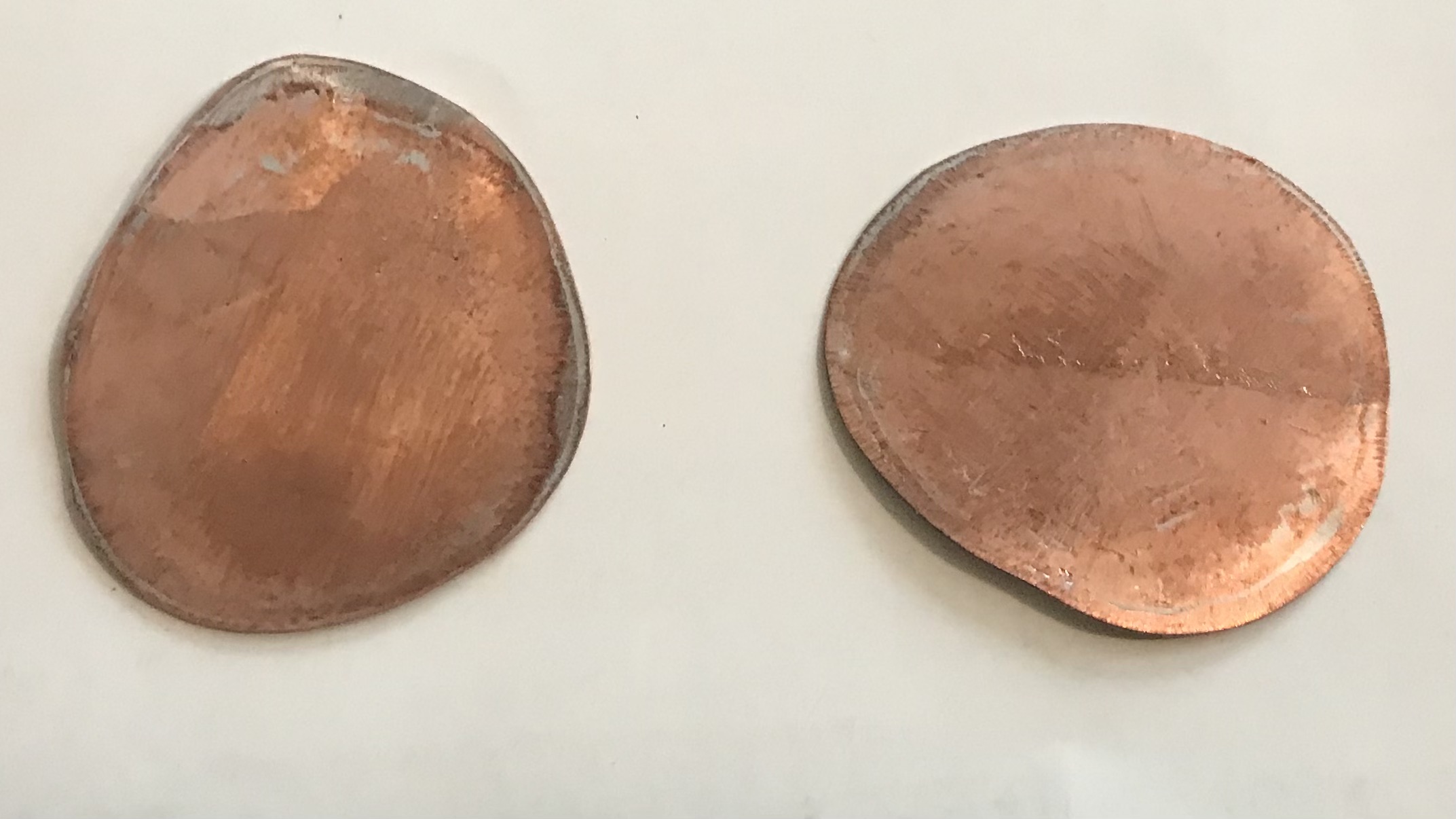
Case in point; yesterday my son was telling about things he had done as a kid growing up on our farm and his girlfriend was amazed. She asked if I knew he was doing all that. Well, yes and no. Was he doing anything bad? No! Case in point: having been in North Carolina during the recent gas shortage, I saw firsthand all the stupid ways some people were hoarding gas. I can guarantee you my son understands why you don’t put gas in a trash bag lined trash can with no lid. Enough said! And, yes I did see that done. Somehow, last evening, the subject of putting pennies on a railroad track came up. My son’s girlfriend had never heard of doing that. What? She then went on to talk about having some of those pennies you get flattened in a machine at vacation destinations. What? That’s no souvenir. I’m not going to say whether we did or did not smash pennies on a railroad track last night, but those would be a souvenir she would never forget making. Besides just plain being fun, we need to let children grapple with a little bit of healthy risk. Doing so can help teach motor skills, develop confidence, and get our young scholars acquainted with the use of tools and some of the basic principles of science. Let’s add some action to all the abstraction.


leave a comment