Drumming Up Relationships
 As a teacher my personal mission statement was, “I strive to use rigor, relevance and relationships to be a steward of high student achievement.” This past weekend I was reminded just how important this really is. My son, Heath, and I took a Dad & Lad trip to New Orleans to watch Drew Brees and the New Orleans Saints beat the Carolina Panthers in the first round of the NFL Playoffs.
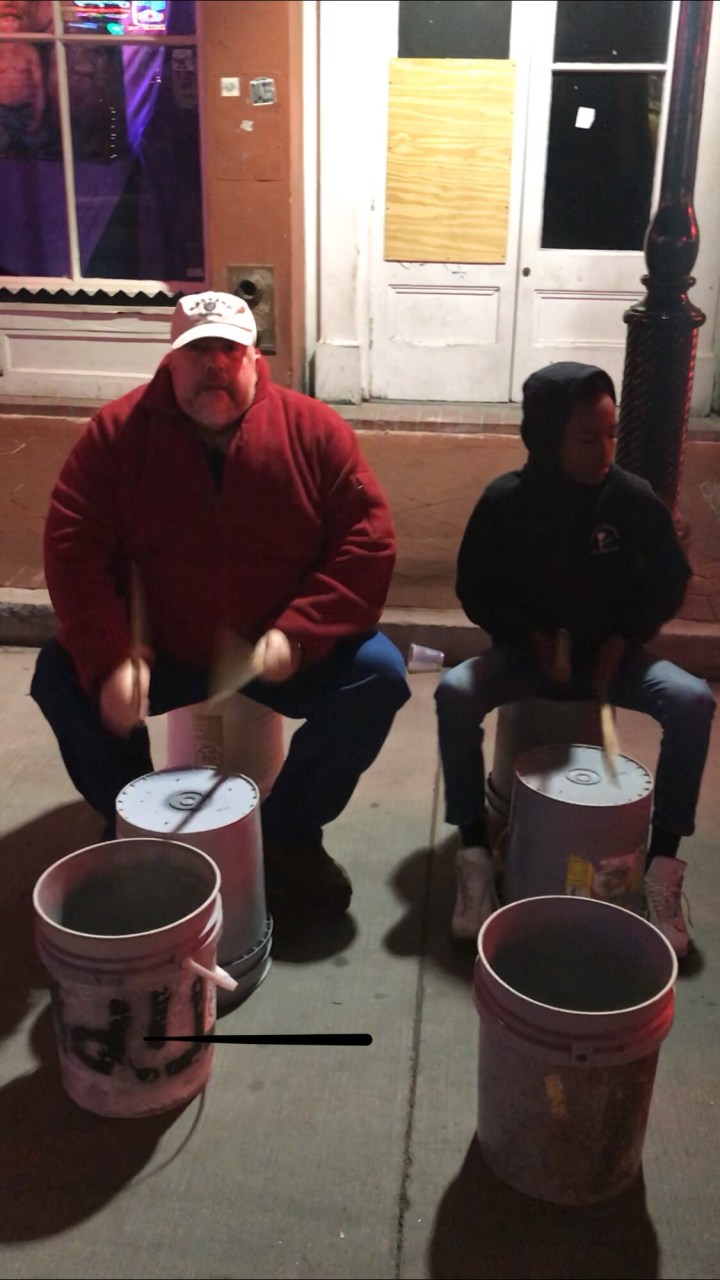
 During our exploring in the French Quarter we came across some boys playing the drums (five gallon buckets) for tips. For those who know me, it won’t surprise you that I decided to ask them if I could sit down and play the drums with them and get to know them. During my reading of The World That Made New Orleans: From Spanish Silver To Congo Square by Ned Sublette I learned that drum playing is a major part of New Orleans history and culture. In fact a drum according to New Orleans culture is anything that can create sound that carries. Well, as a farm kid I have been using five gallon buckets all my life.
The boys and I negotiated an appropriate tip to let me join in for a few minutes. It was awesome! We had a great time and I learned a lot from visiting with them. Click here to watch a video of my experience: https://youtu.be/5ly3v3YvuE4
I learned each one of the boys is his own independent contractor, so I needed to tip each one individually. They came together, however to make better music together as a trio than each could make alone. Additionally, I learned that part of the money earned was used for family needs (food, et cetera) and part for a savings account. Wow, I was impressed – these boys were contributing to caring for family and learning entrepreneurial skills.
“A child’s play is not simply a reproduction of what he has experienced, but a CREATIVE REWORKING of the impressions he has acquired.”~Vygotsky
We also talked about the fact that I had been a teacher. One of the boys said, “You’re pretty cool, I’ve never had a teacher like you that would come out and sit down and drum with me.” This statement really had a huge impact on me. In reflection, I thought about just how important it is that every student deserves having someone pull up a bucket and get shoulder to shoulder with him and learn about him. In fact, I tweeted the following: “Hey @drewbrees! I understand why you love @VisitNewOrleans! I love these kids. As a former principal of an urban turnaround school I understand you have to sit shoulder to shoulder w/the kids and love them and participate with them building relationships. Go @Saints #WhoDatNation.” Bottom line: We need to be right alongside children playing and reworking with them!
 As we were walking away my son commented, “Dad, that is why your students love you, because you want to get to know them and know what makes them tick.” So glad I was able to model that for him. No matter what we do, teaching or leadership – Relationships Matter!
Truly pulling up next to students and building relationships posits that teachers who have knowledge about their students will be better able to teach them. Teaching through relationships is more than that, however. Ultimately, it describes the complex social environment in which students and teachers converse, share experiences, and participate in activities that, together, make for engaged learning. Relationship building means getting to know our students’ learning styles and each students’ knowledge, abilities, and potential. Most importantly, it also means getting to know their interests, personality, and background. For me, just like sitting shoulder to shoulder with the boys playing the drums, this body of knowledge opens up the possibilities of growth and dramatic learning opportunities.
The framework for the research that led to the writing of my book, The Hand In The Back Of The Room came from Vygotski. Vygotsky’s theory promoted a learning environment consisting of contexts where the student plays an active role in the learning. Vygotsky believed there were cognitive connections between students and the sociocultural context in which they live through shared experiences. According to Vygotsky, there should be collaboration between the teacher and student, which in turn would facilitate the construction of meaning for the students. According to Vygotsky, the roles of teacher and student need to be shifted, as teacher collaborates more with his or her students, meaning construction is facilitated for the student. Learning therefore becomes a reciprocal experience for the students and teacher.
Relationships are the cornerstone for student learning.
Educator Reflections On This NCLB Anniversary Day
 It all started in 1965 when President Lyndon B. Johnson, as part of The Great Society program, created The Elementary and Secondary Education Act (ESEA). ESEA created a clear role for the federal government in K-12 policy, offering more than $1 billion a year in aid under its first statutory section, known as Title I, to districts to help cover the cost of educating disadvantaged students. At the bill signing in Johnson City Texas, President Johnson said, “As a son of a tenant farmer, I know that education is the only valid passport from poverty.” Then on January 8, 2002 President George W. Bush signed into law No Child Left Behind (NCLB). This bill was born out of concern that the American education system was not competitive in a global economy.
NCLB increased the federal role in holding schools responsible for the academic progress of all students. Even though over the years there has been controversy over the effects of NCLB, I believe it is important to note the desire of progress for all students. As a believer that all students can learn and all students deserve a great school regardless of zip code, I would argue that NCLB helped us make strides in the right direction. It put a special focus on ensuring that states and schools improved the performance of certain groups of students, such as English-language learners, students in special education, and poor and minority children, whose achievement, on average, trailed their peers. NCLB really creates the environment for focusing on eliminating the achievement gap. NCLB put us on the trajectory to begin to focus on student outcomes instead of inputs or outputs. These outcomes enable us to tell the stories about our students, about who they are, what they want, and what they are achieving.
As a teacher during the passage and majority of the tenure of NCLB I appreciated the critical view of teaching and requirement of “highly qualified” teachers. I believe this was a precursor to teaching being a more highly regarded profession and teachers being treated like professionals. We still have a long way to go, but with ESSA we now have the opportunity to further the development of teacher leaders to build more capacity for distributed leadership. On this anniversary of NCLB we need to celebrate advancement of disaggregating data and recognizing areas for improvement and our continued commitment, as a country, to address long-standing gaps and ensure students are well-prepared for their post-secondary endeavors.
What Difference Has Been Made?
 Yesterday afternoon I had the opportunity to have a discussion during a meeting about outcomes versus outputs. I made the comment that I believed in accountability based on outcomes. The person I was meeting with said he was glad I said outcomes versus saying outputs. If we get stuck just evaluating and making decisions based on outputs we are bound for mediocrity. Great organizations, including schools, are managing to outcomes. In education, I believe we need to lead schools according to outcomes.
What do I mean by this? Let’s use the example of graduation rate. Make no mistake, this is an important output, but it is just that – an output. If we change our thinking to outcomes we look at what students are actually doing (or could be doing) after graduation. To me, this enables us to understand how our schools are serving students and how their lives and circumstances are being changed.
An outcome is the level of performance or achievement that occurred because of the activity or services an organization or school provided. Outcome measures are a more appropriate indicator of effectiveness. Outcomes quantify performance and assess the success of the organization and the processes used. In the high school graduation rate example, some outcomes would be is the student employed, is the student in the military, or is the student attending some post secondary education. Graduation rate, an output, alone does not demonstrate how the life of the student had been impacted. Basically, without outcomes, there is no need for outputs.
Furthermore, outputs are the what. Outcomes are the difference made. In other words, outcomes are the why. Sometimes I worry there is a perception that it is too hard or impossible to measure outcomes and that stops us, as leaders, from collecting key outcomes data. We need to work toward thinking more about outcomes. In the case of schools this will enable us to tell the stories about our students, about who they are, what they want, and what they are achieving.
Finally, if we study outcomes we can answer the question: What difference has been made?
Racing Toward Success!
 This weekend we went on what I am sure to be the first of many college visits with our son, Heath. We went to Murray State University in Murray, Kentucky home of the Racers 🏇. Picking a postsecondary path is not an easy thing to do. While chairing our state’s Graduation Pathways Panel over the past several months this has become glaringly obvious. Everyone, as you can imagine has their own idea of what success is. I still ascribe to the definition of Dr. Felice Kaufmann. She defines success as:
“SUCCESS: Knowing what one wants in the world and knowing how to get it.” ~ Dr. Felice Kaufmann
Dr. Kaufmann was a teacher and counselor of gifted children, grades K-12, a professor at Auburn University and the Universities of New Orleans and Kentucky and served on the Boards of the National Association for Gifted Children and The Association for the Gifted. I believe that while her work was with gifted children, the principles apply to all. Furthermore, I believe all children are gifted in some way. This is why it is just as important for us to make education relevant and form relationships with our scholars as it is to make education rigorous. Success looks different for all of us and it is not something we can graph with a straight line.
“The best piece of wisdom I have learned from studying gifted adults for 30 years is that achievement for achievement’s sake does not necessarily provide a lasting and meaningful structure for living one’s life. While achievement is important, in the long run success means being able to identify and understand one’s real needs and finding ways to meet those needs in a constructive and personally meaningful way -whether it’s finding a cure for cancer or influencing and being deeply loved by family and friends. E.M. Forster said it best and most succinctly: Only connect.” ~ Dr. Felice Kaufmann
 As we were visiting Murray State University this past weekend I really began thinking about this. It is our job, as Heath’s parents, and his school’s job to help him identify and understand his real needs and support him in finding ways to meet those needs in a constructive and personally meaningful way. Not an easy task. In thinking about this I was reminded of thoughts from Howard Gardner at a recent Project Zero gathering at Harvard Iniversity: we need to move away from thinking “How smart are you?” To “How are you smart?” To me this means we need to take into account how our students learn and what he or she really wants to be learning about and doing.

Heath With Racer 1
The mascot of Murray State University is the “Racers” – a thoroughbred race horse. Actually we had the chance to meet Racer 1, the current mascot this past weekend up close and personal. It is such an awesome mascot. Thoroughbreds are known for their agility, speed, and spirit. In fact Murray State’s motto refers to the thoroughbred:
 Having raised and raced thoroughbreds for a time in the past I can so relate to this. Every racer had a mind of it’s own and every one had different talents – distance, sprinter, likes mud, likes to be challenged, wants to come from behind, needs to take the lead, high spirited, easily distracted (needs blinders), et cetera. Sound familiar? Heath still likes playing in the mud! Our challenge as educators and parents is to, like the role of a jockey, rein and channel a constant flow of ideas. The art is to know how much rein to give and when to give it.
I was so impressed with Murray State’s student centered focus. And, you guessed it, even ended up tweeting about it with Murray State University President, Dr. Bob Davies. We had a great Agriculture School Ambassador, MacKenzie Jones, from the Hutson School Of Agriculture who spent time with Heath and have him a personal tour of the university and university farms. He was so impressed with how personal the education was tailored and the close relationships between professors and students. MacKenzie drove home the fact that it is not just about getting a degree; it is about getting a true education through hands-on experiences and the faculty understanding the students’ needs and what makes him smart. She explained that a tudents in the Hutson School of Agriculture receive a “large university” education in a small school setting.

 It was great to visit a university that is truly student focused, giving students the personal attention they need, but also providing them with current and breaking agricultural technology to take their education to a level that will make them highly competitive in the job market.
And…by the way, we spent time with the football team. The racers defeated Tennessee Tech 31-21. Go racers! 🏇

The Leadership Symphony
 Well, I have come to the end of another book. Actually this is the completion of my 84th book this year. My goal is 87. It has actually taken me a year to complete this book as it is divided in 52 distinct lessons. I have tweeted about many of them. I will do a post about the book as a whole and include the posts, but for now want to post thoughts on the 52nd lesson. In lesson #52 entitled “What Makes A Symphony” in 52 Leadership Lessons: Timeless Stories For The Modern Leader by John Parker Stewart he tells us how the conductor brings individual musicians together to form the playing of the symphony.
“A symphony consists of polished performances from many sections that become a unified whole. If not played together it is merely a cacophony of disconnected sounds.” ~ John Parker Stewart
This chapter really resonated with me as a believe in shared, intent-based, leadership. Everyone is a leader and has a part. But, there still must be a leader who is conveying the shared vision and making sure the musicians, in the case of a symphony, have the necessary professional development to do their part.
 This point was driven home this morning in the last general session of the annual conference of the National Association of State Boards of Education (NASBE). The keynote was delivered by Dr. Pedro Noguera. He is the Distinguished Professor of Education at the Graduate School of Education and Information Studies at UCLA. His research focuses on the way in which schools are influenced by social and economic conditions, as well as by demographic trends in local, regional, and global contexts. In his keynote, Dr. Noguera gave five strategies for successful school leadership:
- Shared leadership
- Concerted effort to obtain buy-in around the strategy
- A coherent strategy focused on student needs
- Differentiated professional development
- Follow through, examining the evidence, sticking with it
“Only a clearly communicated perspective, directed by a wise and capable leader, results in a magnificent performance. ~ John Parker Stewart
The big takeaways for me and relations to this 52nd lesson were the idea of shared  leadership, coherent strategy, and differentiation. As I said earlier, every person in an organization is a leader. As in a symphony, every person has an important part no matter their job or instrument. Additionally, in a symphony everyone needs to be playing from the same musical score, or strategic plan. And, finally, since everyone one plays different instruments or has different jobs or is playing/working at a different level of proficiency, the development must be differentiated.
 The bottom line is that shared leadership an drive change. If, as a leader, we are the conductor, we must bring everyone together sharing the leadership of a coherent strategy. We know, for example, in schools we must invest in teacher leadership by developing leadership pipelines. This involves cultivating structures, processes, and mindsets for shared leadership. We must also prioritize and enhance instructional leadership skills. What are the priorities of your industry or organization?
I Have Paid For An Education With My Mistakes
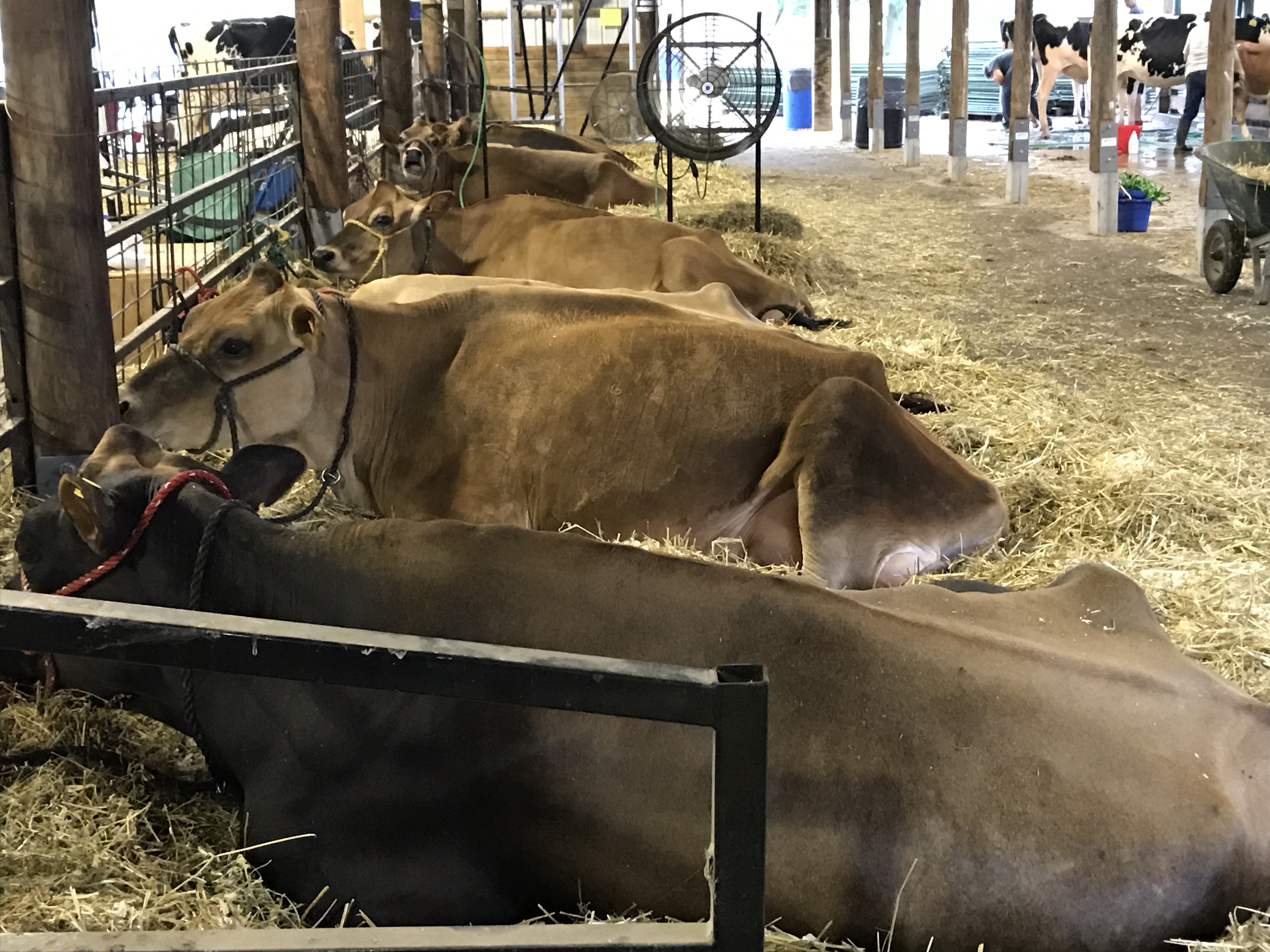 This past week was one of my favorite weeks of the year. I spent the week at the Boone County Fair (Lebanon, Indiana) showing Jersey dairy cows with my son. This is incredible dad and lad time. The county fair is the time of year when I get to see friends and visit with former students. It is great to catch up. One visit I look forward to every year is with Andy Clark, a Lebanon graduate I had in many classes and one of my favorites and great ones. This year, like clock work, Andy showed up with his wife and kids and we sat at our dairy stalls and talked for a couple of hours. I blogged about last year’s visit in “Matching School Work To Real Work.” Click here to read that post.
During our conversation this year I was struck by his comment of “I Have Paid For An Education With My Mistakes.” This is the true mindset of a lifelong learner and someone who has a growth mindset. Andy supplies chopped hay and straw to Fair Oaks Dairy in northern Indiana as part of his farming operation. We talked a lot about how he learns, researches, experiments, and iterates to make his operation successful, efficient, and profitable. I could not be prouder of what Andy has accomplished and the great leader he has become.
Andy really gets what it means to be continually learning and to work toward continual improvement. He is an example of what we must be making sure we prepare our students to be ready for. As we work in Indiana to create worthwhile graduation pathways we must make sure we are providing the correct avenues for students, like Andy, who are going straight into he workforce with careers. Research shows that students are nervous about making any mistakes — but with a little encouragement by teachers, they begin to take risks, and growth by leaps and bounds. On the other hand, other students who were so anxious about making mistakes they would not take any risks at all, and the research showed their anxiety slowed the process of their learning.
Mistakes play a powerful role in learning, as well as the huge influence that the teacher’s attitude and feedback play on a child’s perspective on mistakes. We need to help students become comfortable with mistakes and help them learn how to grow from them. This is difficult to do for some because despite the fact that making mistakes seems to be a part of who we are, mistakes are still not readily accepted. We act like they didn’t happen. We blame someone else. We feel embarrassed. But this isn’t how mistakes should be viewed — especially in schools. I would assert that Andy should be an example for adults, too.
I would argue whether you are a grown adult or are a school age child and you don’t make any mistakes, then you aren’t really learning anything new. School, especially, is the one place that’s all about learning. It’s the one place where mistakes should be not only accepted, but expected.
Why should mistakes be an expected part of learning? If students, who then become our workforce, entrepreneurs, and future leaders, don’t learn early on how to handle them on their own, if they are regularly rescued by well-meaning teachers and parents, then they won’t develop the skills needed to tackle difficult things or bounce back from setbacks. Skills like perseverance and gumption.
Despite the rhetoric around mistakes being necessary for learning, I believe it is rare that you truly see mistakes embraced and celebrated as learning opportunities. We must learn from individuals like Andy that learning from mistakes is an important part of being successful. In most schools, “success” is defined as getting high marks on tests, with results (and minimal or no mistakes) mattering more than the process of learning or the process of getting to the answer. And when the results aren’t good? Students feel embarrassed or shamed. We need to change this.
We must create environments in our schools, businesses, and organizations where everyone see mistakes not as impenetrable roadblocks, but rather as a natural part of the learning process. Have you received an education from your mistakes?
Kaleidoscopic Adventure
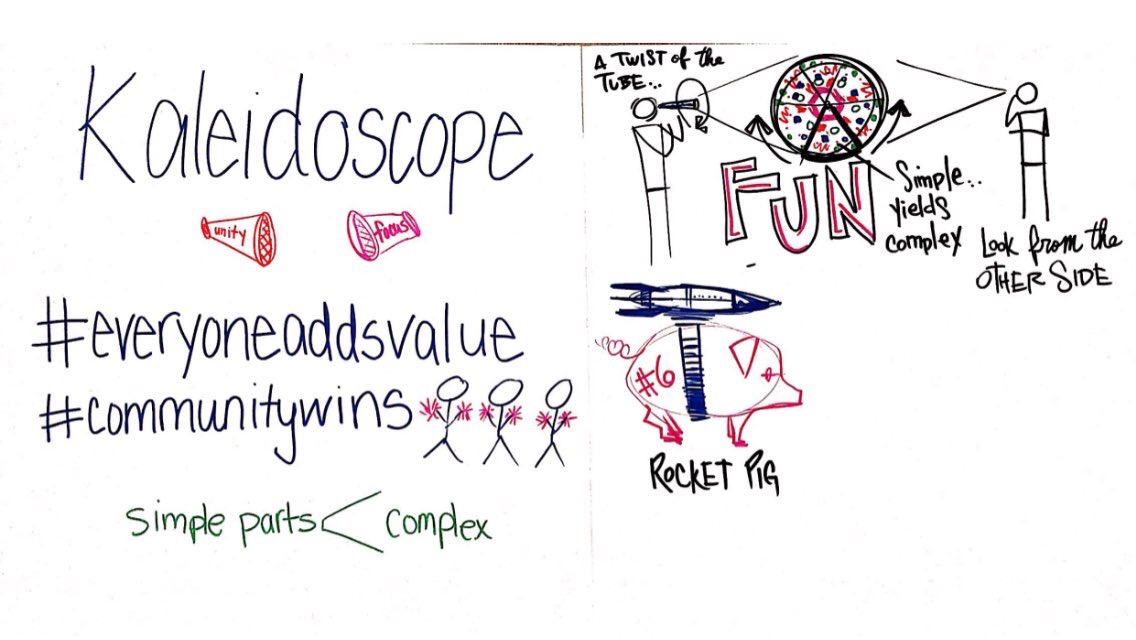 Yesterday, we had our annual Focused Leader Academy (FLA) Summit where Cohort #2 graduated. Our Focused Leader Academy (FLA) at Hoosier Academies Network of Schools provides leadership skills the ability that are flexible and relevant no matter the situation and time. We want to inspire with valuable and effective methods for assisting our teacher leaders in discovering what they need to become focused and disciplined leaders. Over one hundred were in attendance because Cohort #1 and our newly selected Cohort #3 were there too. Additionally, we have each FLA member’s significant other in attendance as well. I dubbed the theme of the day to be: “Kaleidoscopic Adventure
.” We have used toys as through-lines all year and I thought it only too appropriate to use a kaleidoscope for the finale. Of course I gave everyone their very own kaleidoscope. We started with an activity of looking through the kaleidoscope and the thinking about what words they would use to compare the view through the kaleidoscope to their personal leadership journey. Ann Semon set up a text poll for us. Here are the results: 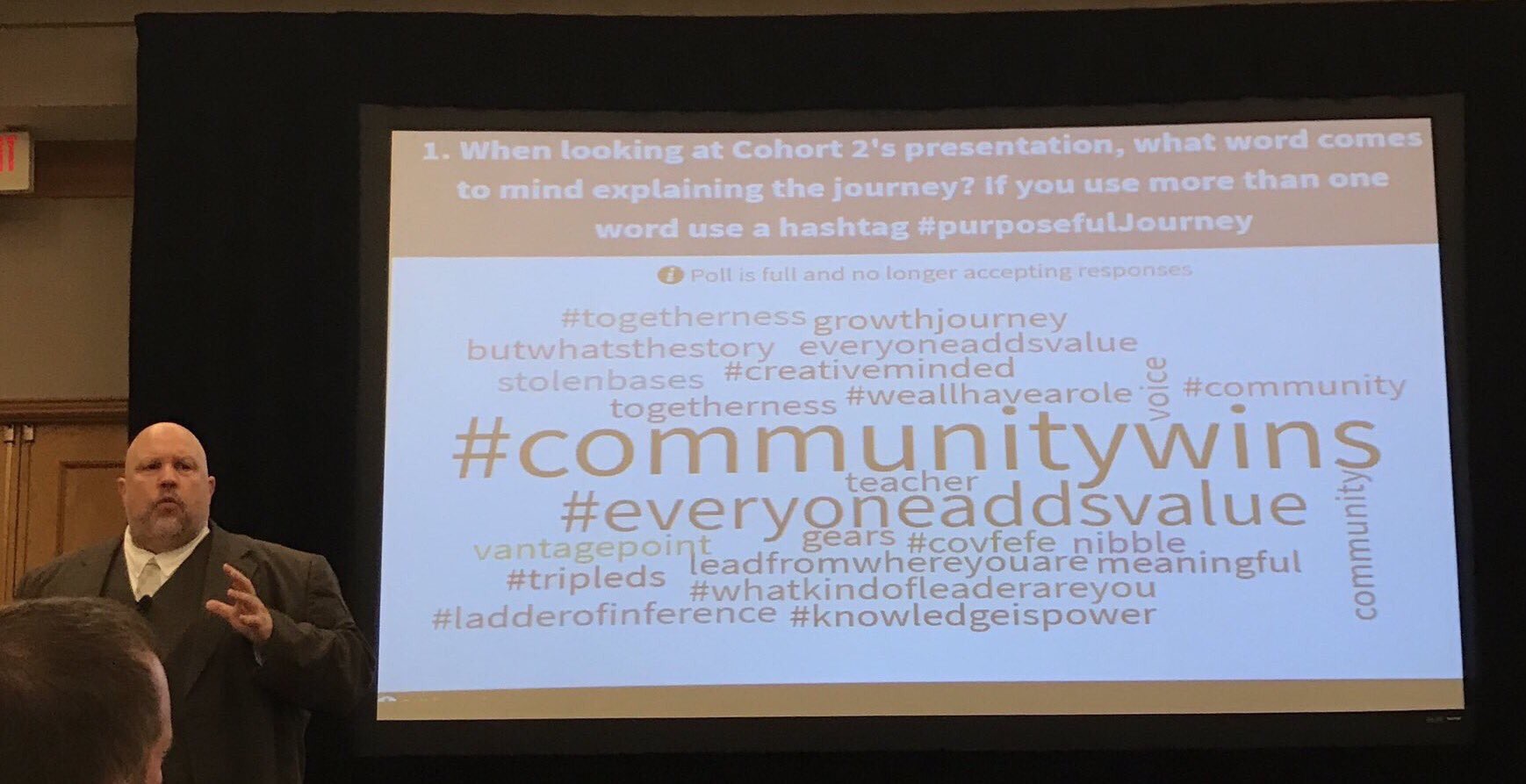
Our adventure has been like that of a Kaleidoscope – colorful glass pieces or prisms in the end of a Kaleidoscope, the core characters don’t change, but can be moved around to fit the needs and personal development of team members in order to deliver great experience.
Additionally, we can use the same Kaleidoscopic through-line to describe the complexity of a school – enchantment, mercy, grace, trust, generosity, ease, truth, alliance, learning, and passion.
Our schools are like giant kaleidoscopes:
- Schools are always moving, ever changing, and made up of simple parts that have highly complex results.
- They are beautiful because of the “dynamic complexity” that takes place every minute.
- Even with the same common elements – hallways, desks, students, schedules – no two are exactly alike and they are beautiful because of their uniqueness.
- When you look at them from the outside, they are relatively simple. When you view them on the inside, they are amazingly complicated.
- Kaleidoscopes are fun and meant to be shared!
Then sometimes I think we need an inside-out kaleidoscope—a de-fragmenter— this might be useful for looking at a fractured order through a lens of unity. 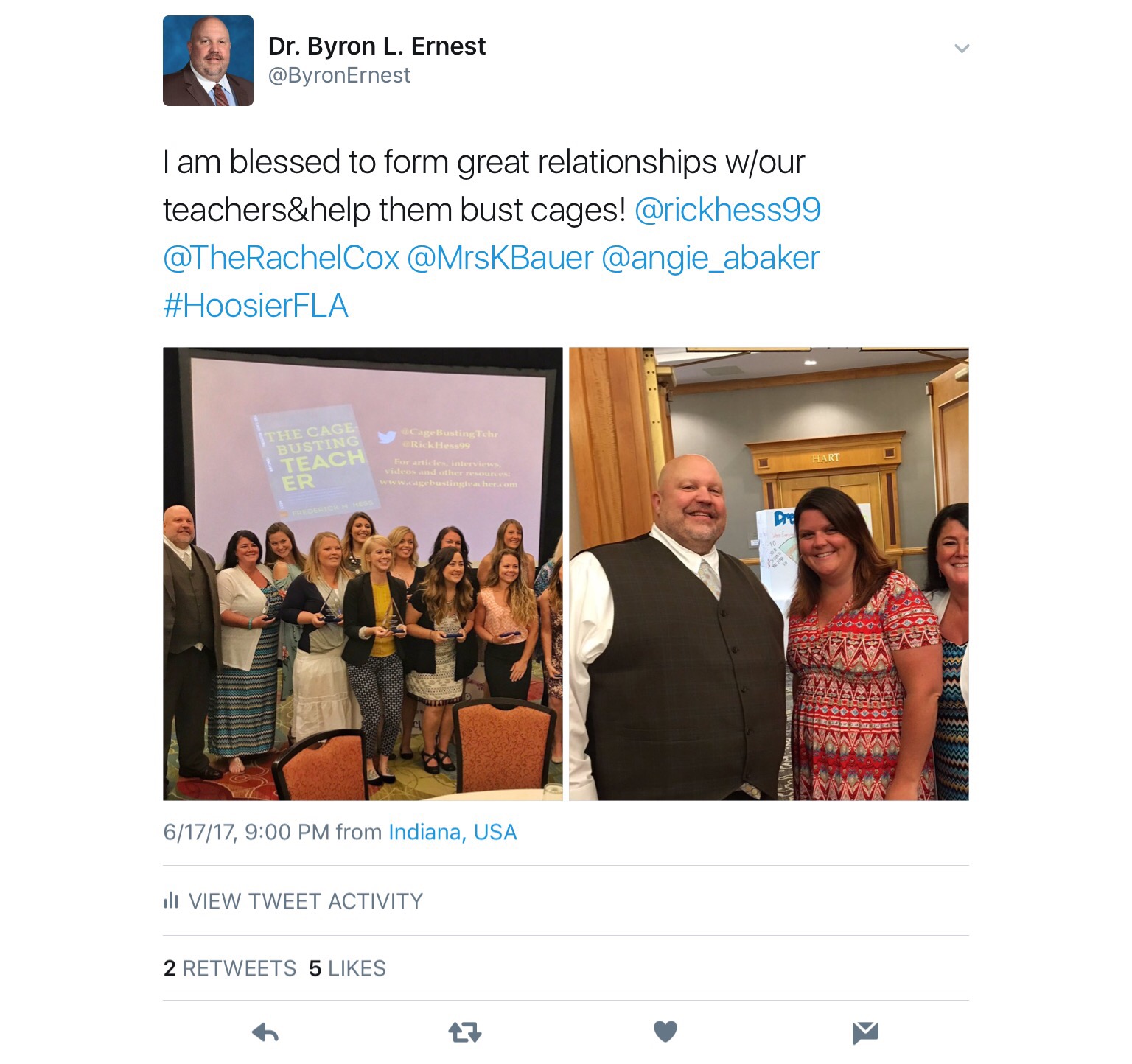
For me personally, yesterday represented a spin of the Kaleidoscope. A new Cohort of beautiful pieces come into FLA, and the view gets even more complex and beautiful. Yesterday I tweeted that I was blessed to be able to form great relationships with our teachers. I mean that, and it is very important to me.
School leaders need personalized care. Remember, I believe everyone is a leader. Therefore, everyone in the school needs personalized care. When I personalize the care, I come away knowing my leaders better, sensing their concerns about the school, education, and about their own lives. I believe in the fundamental strategy of personally training individual leaders, particularly teacher leaders, to be the key for a strong, healthy school with effective leading of learning and family engagement. Many times we rationalize that the teacher leaders are too busy with their jobs and families to spend time with us. But the truth is, we are allowing ourselves to be swamped with the immediate and losing our priorities.
Great Leadership: Offering Up Something Better Than The Status Quo
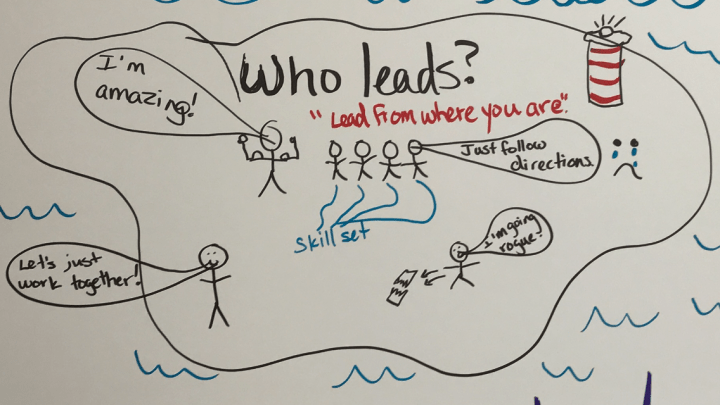 As a school leader it is my most important role to find the right solutions that are best for students. People will then buy into solutions that are developed collaboratively. I believe the staff will buy in if we offer up something that is better than the status quo.
In order to move the staff, a community of continual learning where everyone is a leader must be developed. The following are guidelines that need to be followed for effective adult learning and motivation to take place:
- Learning needs to be frequent and sustained over time
- There must be connected and coherent learning sessions
- Opportunities for teachers and staff to practice and reflect on new learning must be afforded
- Opportunities must be available to tap into expertise or prior knowledge
- Clear and reasonable objectives must be provided
- Adults need challenging tasks
- Respect of the risks involved in new learning need to be recognized; in other words, it is o.k. to fail.
- Choice and flexibility is important to adults
- Collaboration
- Regular coaching and feedback are provided
- Focus everything on academic content
- Letting staff problem solve will motivate them to learn
I believe two things will really help here:
- The notion of empathy – of really listening to your staff and understanding their views and what they need.
- The idea that innovation lives as much within the way you define problems as the way you generate solutions
Additionally, I believe in an intent-based leadership style where everyone is considered a leader. With this style of leadership, authority is shifted to where the information/data is generated. In other words, teachers would be empowered to act on both data and new thinking. But… for this empowerment to work there must be the professional development necessary to make sure that teachers have the skills necessary to utilize this empowerment.
These skills are two-fold:
- Technical Competency
- Organizational Clarity
We must feed our leaders by:
- Committing to leadership development
- Making it a priority to give professional growth time to developing leaders
Finally, it is crucial to treat all teachers as leaders!
This all really will produce a happier, healthier, and more engaged staff.
Letting My Lite Shine
 A couple of weeks ago at one of our Focused Leader Academy (FLA) retreats I was asked by participants to do a session about how to balance the amount of personal information that should be mixed with our professional lives. This can be particularly tricky in education. Of course I said sure, but I had no idea how challenging of a topic I had taken on. As I began to study I realized that there was not much out there on the topic except for people who thought you should reveal everything and those who thought you should reveal nothing. I wasn’t sure I agreed with either of those theories.
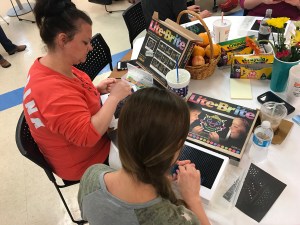 Therefore, me being me, I decided to develop my own program from scratch with all my own thoughts for getting the discussion started. I really like to use a through line and some type of building or creating to get the process started. After quite a bit of thinking I decided to use Lite Brite® as the through line and creation activity. I purchased one of the flat screen LED Lite Brites® for all the participants. Hopefully you can all remember the Lite Brite® toy and have had the opportunity to create a picture on one.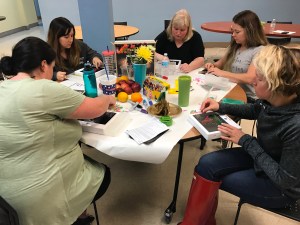
Mavin Glass introduced Lite Brite® in 1967. It was an electric alternative to painting. To me this was a genius toy to use for this topic. The black paper acts as a filter. Just as we have to filter out what we message/reveal at times. The filter element makes the picture worth a thousand words. The black paper which blocks a portion of the light acts as Lite Brite’s® filter. Without the black paper, the pegs poked in would blend in, leaving and indistinct message. It is not about letting all light out, but what light is limited. This is like asking the question: What is relevant and what is unimportant?
As leaders we must choose delivery design and place our pegs in a way people will understand our message. We have to design how much light to let through and design the picture in such a way it tells our leadership story. Remember, simplicity is not stupidity; instead it causes a better understanding. Lite Brite® is such a simple toy, but gives us such a great example of developing a balance of how much light to shed and how much of our true colors to reveal. The Lite Brite® bulb symbolizes our message – our thoughts, words, beliefs and ideas that we want others to know. The pegs then symbolize our points. Just as the pegs are colorful and beautiful, so are the differences that we bring into the world.
“It is simplicity that makes the uneducated more effective than the educated when addressing popular audiences.” ~ Aristotle
To begin our discussion I had the FLA participants take their Lite Brites® and make a picture by either using templates provided or a picture created by them. Here is a picture of all of their Lite Brite® creations: 
The participants then needed to describe why they did the picture they did and reveal something about themselves and their own leadership journey. This prompted an amazing discussion. I have included the graphic recording by Sita Magnuson here: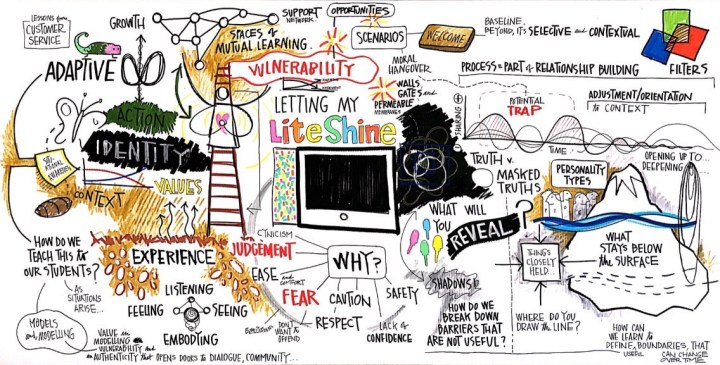
What Will You Reveal?
Your message won’t be bright if there is no light, but will chaos if all light is revealed. As a leader we need to take complex issues and deliver them in an understanding manner. We need to be adaptive leaders and make adjustments/orientations according to context. There is value in vulnerability and authenticity. This opens the door to dialogue and community. We decided in our discussion that knowing decreases judging. We need to experience feeling, listening, seeing, and embodying. We must decide what we will reveal and break down the barriers that are not useful. How will you let your Lite shine?
Leadership Story Reflections
 This is the final post of a four post series reflection on this past weekend’s retreat of our Focused Leader Academy (FLA). The first in the series was Feeding Leadership. Click here to read the second in the series, Leadership Breakfast Story. Yesterday, I posted the third in the series, Telling Your Leadership Story. If you read those posts you will realize what and incredible journey this past weekend was. To give a quick recap; we started Friday night by learning fro an Executive Chef how to tell a story with a meal. Then Saturday morning Mike Fleisch and I modeled this by cooking breakfast for the group and telling the story of our journey together. The highlight of the weekend, though, was when our FLA members were turned loose to plan, organize, and execute a breakfast to tell of their journey as teacher leaders and about the school. This was a total success and this post is about the reflection session of the FLA members afterward.
For this reflection we used a technique call the “Fish Bowl.” To do this, a circle of chairs is made in the number of participants minus the number of groups used to complete the activity. In this case here were three groups, so three chairs were placed in the middle (see picture in this post of setup). One person from each group then sits in the middle and are the only ones that can talk. If you have something to say after the original three have had a chance to speak, then you can get up and tap the person from your group and take their seat in the middle. This can go on for as long as someone has something to say. It is also a best practice to have prompts to help get the discussion going. Here are the prompts we used: The graphic recording of this session, included below, from Mike Fleisch does a great job of reflecting the richness of the discussion, but I wanted to point out a few of the highlights. One of the comments that really struck me and that I had not thought about was that the planning, organizing, and executing of the story through a meal was a great 360° evaluation. 360° feedback has been around for some time now. In case you haven’t gone through the process, here’s how it works. Your boss, your direct reports, and your peers give you feedback on what are your strengths and weaknesses (or “developmental needs” or “opportunities”). Therefore, you get feedback from everyone around you who knows you well — hence, you’re hearing it from 360° around you. When it’s done well, 360° programs allow all your team members to improve in key areas that might be limiting their upward career path or actually causing major conflict within a team.
This discussion was around the fact that they were all able to see their own personalities come out and the personalities of those on their team. Additionally, the ways in which each individual changed in conditions of shared urgency. One participant said, “I feel like I left out the organization step and rushed too much.” Another participant admitted to thinking, “If you all would just shut up, I will lead you!” There was a great deal of self reflection going on during this part of the discussion. I realized just how effective this activity was as a 360° tool – much better than a survey done by someone else in my opinion.
Another point that came out was when someone said, “Sometimes it is hard to think about giving up another Saturday, but I for sure do not want to miss these retreats.” Obviously, that was music to my ears, but it is an important concept that is worth mentioning. We should always have at the forefront of anything we plan the idea that we want to design it in such a way that no one will want to miss it. In other words a participant should feel as if there is too much great stuff going on and content being learned to miss. Here is the graphic recording of the rest of the discussion: As you can see this was a tremendous experience for all of our teacher leaders. I come away from each of these weekends inspired and rejuvenated. There is so much energy in these young leaders and we must continue to take the time to give them the development experiences they deserve. What experiences are you providing for your up and coming leaders?
 Byron's Babbles
2 comments