Network Society
 This week’s lesson from Peter Drucker (Maciariello, 2014) dealt with how many organizations in our society are becoming network organizations. A networked organization is one that operates within a system of interdependent organizations for the purpose of achieving objectives that are agreeable to partner organizations. Many schools, including my own, have a number of partner organizations, whether outsourced services or community partners. This lesson really gave me an opportunity to think about the behaviors necessary to make a network successful:
- Trust
- Shared Values
- Integrity
- Commitment
- Goal Alignment
- Continuous Communication
- Conflict Resolution Processes
In the partnership of a network there can be no command and control (Maciariello, 2014). The questions must be, “What are the objectives?; “What are our values?”; and, “What are our ways of doing things?” Networked organizations are demanding to lead, and rely on developing and maintaining strong personal relationships among the partnering organizations. A network is somewhat like a team, except the network builds the team out of a wide variety of organizations.
Reference
Maciariello, J. A. (2014). A year with Peter Drucker: 52 weeks of coaching for leadership effectiveness. New York, NY: HarperCollins Publishers.
Civilized Disdain Vs. Political Correctness

“The difference between civilized disdain and political correctness is that the former allows one to feel disdain for a person’s or group’s views or beliefs while maintaining respect for the human beings that hold them.” ~ Carlo Strenger
Happy Fourth of July to you all! By 5:00 a.m. this morning my son and I will be on Lake Michigan fishing on the DreamWeaver III; a 35 foot Viking. We are in the Scottville/Ludington, Michigan area visiting our good friend Kevin Eikenberry and his family for their annual Fourth of July party. As I reflect on this important day in our nation’s history, our forefathers did not set us up for success by practicing political correctness. They were successful by having very heated ideological debate, reaching consensus, and then implementing. Indiana House Speaker, Brian Bosma reminded me of this when I asked him what success on the State Board of Education would look like. He said, “It’s all about working together to find consensus and then carrying out implementation.”
I have been reading the great book by Carlo Strenger, The Fear of Insignificance: Searching for Meaning in the Twenty-First Century. Strenger argued the ideology of political correctness failed because it was a “profoundly inauthentic prescription: it is humanly impossible to genuinely respect beliefs no matter how irrational, immoral, or absurd (Strenger, 2011).” The resulting culture was emotionally frozen and often did not lead to fruitful discussion between worldviews in general, and between secularism and religion in particular. The ideology of political correctness stated that the only civilized way of coexistence was to respect other peoples’ beliefs, just because they are held by someone. The hope behind this ideology was that if we would just be nice and respectful to each other, we would somehow be able to coexist in the same polity.
The resulting culture of us all wanting to be “politically correct” led to us being emotionally frozen and often did not lead to fruitful discussion between worldviews in general, and between secularism and religion in particular. Strenger advocated for “civilized disdain, an alternative to political correctness that is more authentic and more attuned to what we really feel toward worldviews that we do not approve of on moral or intellectual grounds. (Strenger, 2011).” The difference between civilized disdain and political correctness is that the former allows one to feel disdain for a person’s or group’s views or beliefs while maintaining respect for the human beings that hold them. I am so glad I read Strenger’s book. Interestingly, I do not have all of the same beliefs, but I do believe we could consensus build and problem- solve together. Also, I do appreciate his look at the world and our interactions as a global society, or homo globalis, as he calls it.
 “Civilized disdain has turned out to be surprisingly productive in creating human bonds of lasting value. The mental discipline required for civilized disdain may be crucial for the type of world citizenship that will allow fruitful cooperation across ideological divides.” ~ Carlo Strenger
As I was studying this I was thinking about the signers of the Declaration of Independence and those who ultimately became the framers and founders of this great country, I love and call home. Shortly after the American revolution our founding fathers completed the Articles of Confederation. They then realized that the documents were inadequate to the task of unifying a diverse group of newly independent colonies. A debate thus ensued, between the Federalist side, led by Alexander Hamilton and James Madison, and the AntiFederalists, led by Thomas Jefferson and Patrick Henry, over exactly how much power and authority to give Congress and the other central branches of the new government. Hamilton argued that a strong central government would be essential to the nation’s survival and prosperity, while his opponents insisted that most of the nation’s power should rest within the state and local governments. By 1787, a sort of compromise was worked out that resulted in our Constitution and its first set of amendments, the Bill of Rights. I have said this before and will say it again: I am glad there was the disagreement and debate over state’s rights. I firmly believe that had there not been the federalist and antifederalist debate, there would not have been the quality final product – our Constituion and Bill of Rights.
So, on this day of celebration of the United States Declaration of Independence, let us consider civilized disdain, where we allow each other to feel disdain for a person’s or group’s views or beliefs while maintaining respect for the human beings that hold them. Then, we need to take those difference and through compromise and consensus-building form them into a “best” solution. Finally, and most importantly, we must then implement.
Happy Fourth of July and God Bless America.
Reference
Strenger, C. (2011). The fear of insignificance: Searching for meaning in the twenty-first century. New York, NY: St. Martin’s Press, LLC.
Information Not Power
 Just a few days away from the Fourth of July and hit the half way point of A Year With Peter Drucker (2014) by Joseph A. Maciariello. It is fitting that the week 26 lesson from Peter Drucker had to do with centralization, confederation, and decentralization. The British set up the colonies as a centralized or unified government where the autonomy and authority rested mainly at the top with the king or king appointed governors. Then in 1774 the colonies established the Continental Congress (Maciariello, 2014). This same Continental Congress endorsed the Declaration of Independence on July 4, 1776. During the period of time from the Declaration through the end of the Revolutionary War our government was in the form of a confederation. In other words, maximum autonomy was granted to the colonies.
Then in 1787 when the Constitutional Convention met a federal system of government was formed with an executive, a congress, and a judiciary. This was put into play with the ratifying of the Constitution of the United States in 1789. All powers not specifically given to the federal government were given to the states with the passing of the Tenth Amendment. The system of government established by the U.S. Constitution is often designated as federal decentralization (Maciariello, 2014). 
So, what can we learn from this? Drucker believed that a global society where the trend was moving toward knowledge-based organizations would see organizations and governments being held together by information, not power. Drucker believed that top leadership would have to take charge of two key resources: key people and money. Interestingly, this is consistent with another book I am reviewing right now as part of a book launch with Becky Robinson and Weaving Influence. The book is The Disciplined Leader: Keeping the Focus on What Really Matters by John Manning. In the book, which is set up in 52 lessons, he posits that what all great disciplined leaders do is focus on what really matters. What the research showed is the focus must be on people. Great leaders understand that people are the most vital asset in a successful organization. As Manning states: “The Disciplined Leader knows how to Focus on the Vital Few and ignore or delegate The Trivial Many (Manning, 2015, p. 5).” Think about it, the people is where the information is.
Drucker pointed to Toyota as an example of what many would call operating under decentralization, where the individuals units have rules, but operated independently. Drucker argued this is really a confederation. In a confederation the independent units operate independently, but carry out the overall spirit of the organization as a whole. A unit of confederation is independent, but it operates under loose direction of the parent organization (Maciariello, 2014). The organization that operates with people and information as its most important parts, a confederation, is held together by values, strategy, and information.
If your organization is held together by power and not information, your ability for continuous improvement may be hindered.
References
Maciariello, J. A. (2014). A year with Peter Drucker: 52 weeks of coaching for leadership effectiveness. New York, NY: HarperCollins Publishers.
Manning J. (2015). The disciplined leader: Keeping the focus on what really matters. Oakland, CA: Berrett-Koehler Publishers, Inc.
Nervous As Kittens
 As I was reading during my personal professional growth time this morning, I read a comment by Richard Branson in his great book The Virgin Way: Everything I Know About Leadership where he said he was nervous as kittens. After reading this I thought about our six newborn kittens we have in the barn right now. What a fitting phrase “Nervous As Kittens” is, because they are just that – nervous. It must be noted that I love cats. I believe what is attractive to me is the fact that they are not pack animals, like dogs. Cats are perfectly content to play by themselves or with other cats.
One thing I learned growing up on a farm that valued having an abundance of cats is the mother cats role. Mothers are key to having happy, secure kittens. Well socialized cats are more likely to have well socialized kittens. We always work very hard at spending time with our cats so they are socialized to people. Kittens often mirror their mothers’ calm or fearful attitude toward people or other animals; this is a normal part of their socialization. In other words, we play a vital role in the development of kittens. By petting, talking to and playing with our new kittens, we can help them develop good people skills. Then I read some startling research: kittens who are gently handled 15-40 minutes per day during their first seven weeks are more likely to develop larger brains. That really got me thinking about the connection to leadership, which was what I was reading about in the first place.
So, I compared what I learned and reflected on with kittens to that of leading people in an organization. What I thought about was modeling and exemplars.
Modeling and Exemplars
Kittens learn many important lessons from their mothers. They learn from their mothers by observing. Research shows that kittens taken from their mothers at weaning are much slower to develop. As leaders, we need to learn from this and model for those in our organization the proper behaviors. Make no mistake, I am not saying I do this well. If being honest we would probably all say we need to be much better at this. I certainly do!
I am a big believer in using exemplars in education and learning. Sometimes people want to argue with me and say that the student will just do the assignment exactly like the exemplar. Well, duh, that is exactly what I want them to do. It amazes me how people will resist this with students, but in real world, real work we are given templates and exemplars all the time. In fact we would not think of beginning many projects without them. That is why I believe they are even more important for our students.
How many times have you said, “Let’s not reinvent the wheel.” What you were really saying is we need a model or exemplar. Certainly nothing wrong with that! Next time we reflect on those we lead and the students some of us educate, let’s not forget the lessons of the nervous kittens and make sure we are providing the modeling and exemplars we have learned to be so very important from the mother cat.
From Delegation to Leadership
 “[Henry] Ford’s failure [1927-1944] was not the result of personality or temperament. It was first and foremost the result of his refusal to accept managers and management as necessary, as a necessity based on task and function rather than in “delegation” from the “boss.” ~ Peter Drucker, 2008
This week’s entry in Maciariello (2014) A Year with Peter Drucker offers us examples from three great innovators in our history. These innovators are Wilson Greatbatch, Andy Grove, and Henry Ford. First of all that’s a pretty powerful trio of innovators to learn from. Greatbatch is known for developing the heart pacemaker, and then later developing the lithium iodide battery that allowed the pacemaker to go decades without battery replacement. Thus eliminating many operations for patients needing pacemakers. Of course, we know Andy Grove as one of the founders of Intel Corporation in 1968. Finally, I don’t really think I need to give an introduction to the third side of the triangle, Henry Ford.
In this week’s entry, Andy Grove discussed how in the beginning he was just one step away from everything, and now is many steps away from everything (Maciariello, 2014). He discussed how everything in the beginning was in his head. People in their initial group, while innovating, gravitated to the roles that fit them. The team built itself up and roles that were needed gravitated to appropriate team members (Maciariello, 2014). Then as the organization grew, however, tribes began to form and power struggles began to occur. This is when Grove realized he needed to shift from innovator to executive (Maciariello, 2014).
 It was interesting for me as I read this story of Andy Grove how much similarity there is to the situations I have experienced in working as a part of a team to turnaround two different schools. In both situations it has been necessary to let the talent gravitate to roles that fit. But now, after a year (that was the same time frame at both schools), it was necessary to take a step back and analyze what everyone was doing. In fact, we had a mini-summit this spring using the essential questions of: What are these people doing?; Are they doing the right things?; and, How do we all support our teachers in doing the right things for our students? That might seem like an easy task, but there are so many parts to making sure a school is operating efficiently and effectively. As an organization grows and develops, there is a tendency to look inward. The organization must recognize, however, that as it changes in size, load, and complexity there is a need for the roles of the people, particularly the leader, in the organization.
Additionally, we all know the story of Henry Ford as the greatest industrial innovator of all time. As the story goes, though, by 1927 the Ford Motor Company was a shambles. Really from 1927-1944, until Henry Ford II took the reigns, the company struggled mightily. In fact, Peter Drucker called it a “controlled experiment in mismanagement” (Maciariello, 2014, p. 198). Henry Ford, according to Maciariello (2014), provides us with a case study in executive mismanagement. Ford tested the hypothesis that as an organization grows it does not need professional leadership. Ford believed an organization should be run by a boss with helpers (Maciariello, 2014), not leaders. In other words, he believed in pushing tasks down to underlings to perform. In today’s lingo I call these the folks that are “email pushers.” Whatever is asked of them, they push the email to someone else to carry out. Really not leadership, or, at least I don’t think so. Ford’s experiment failed and we can all learn from his mistakes. I did a little further studying and Henry Ford II made sure those in the organization had the skills necessary to carry out leading the parts of the organization they were responsible and then Ford II gave them the latitude to lead. 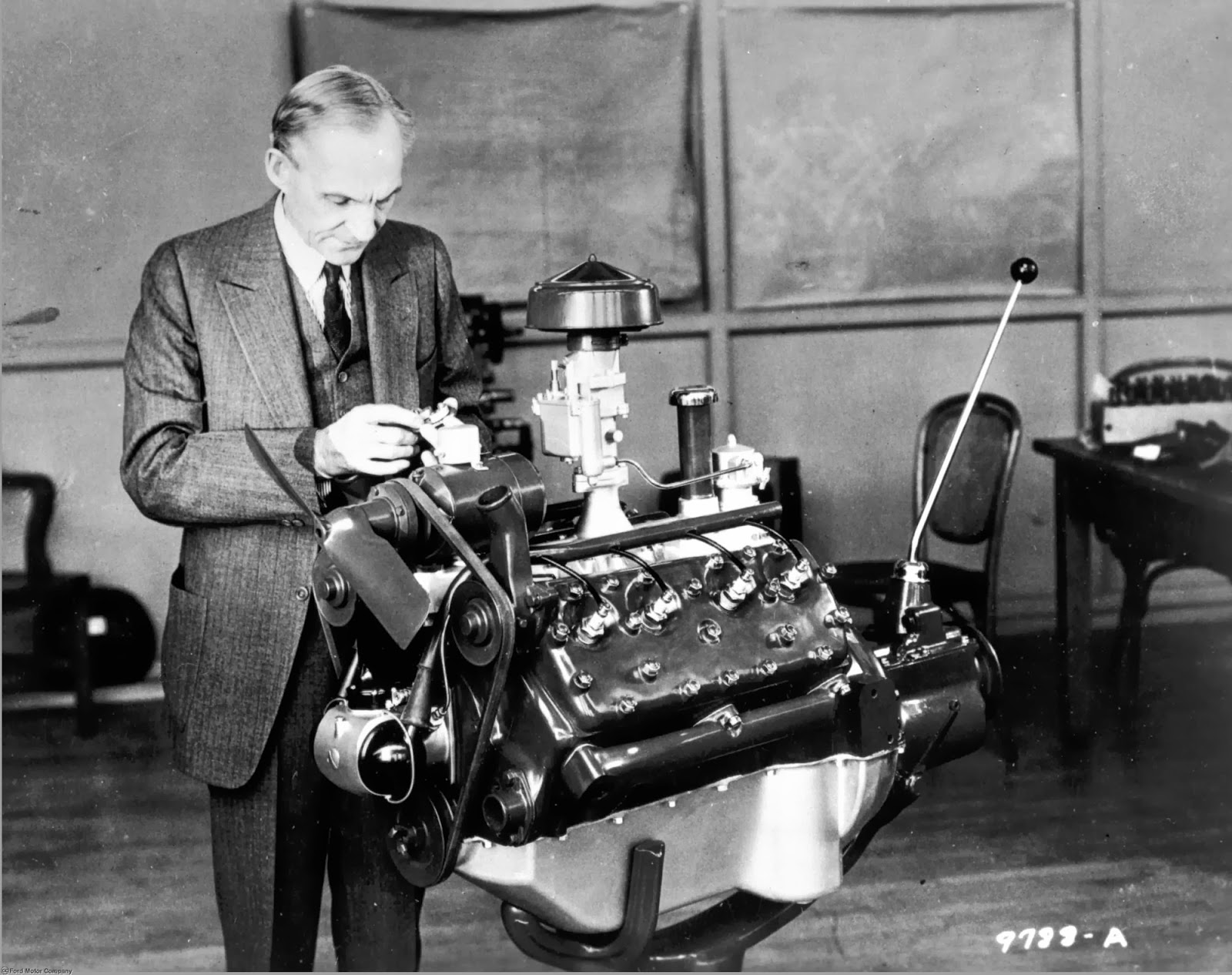
It would do us all good to learn from the lessons of all three of these great innovators turned executives.
Reference
Maciariello, J. A. (2014). A year with Peter Drucker: 52 weeks of coaching for leadership effectiveness. New York, NY: HarperCollins Publishers.
Authenticity 101
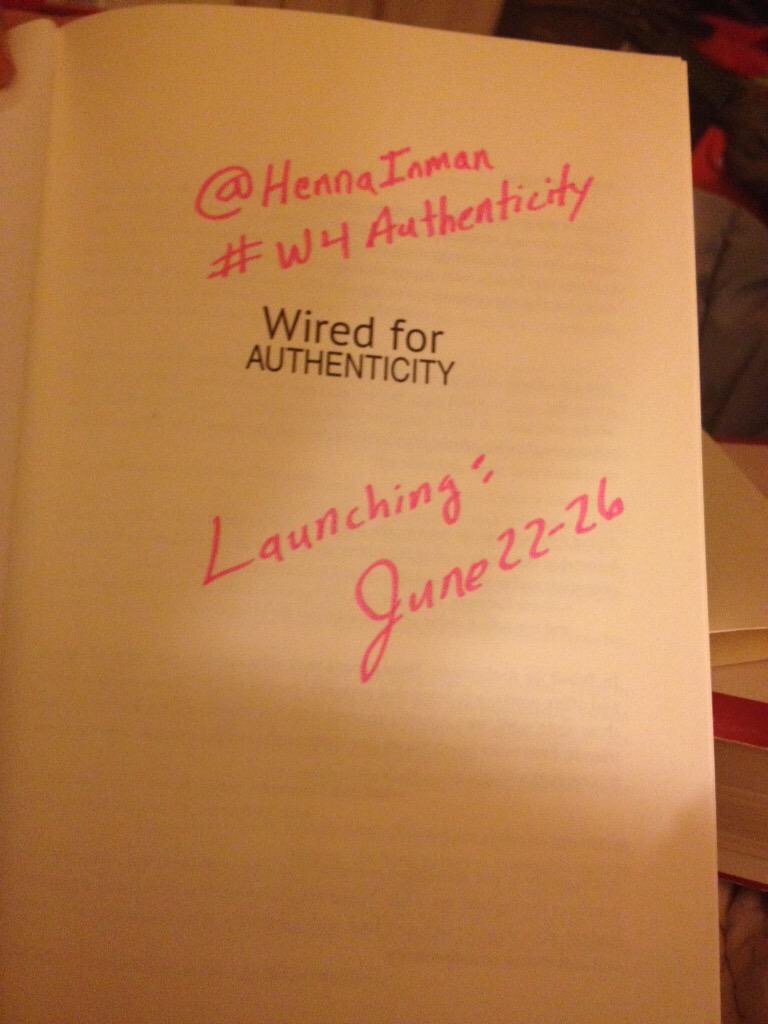
“Authentic leadership is the full expression of “me” for the benefit of “we.” ~ Henna Inman
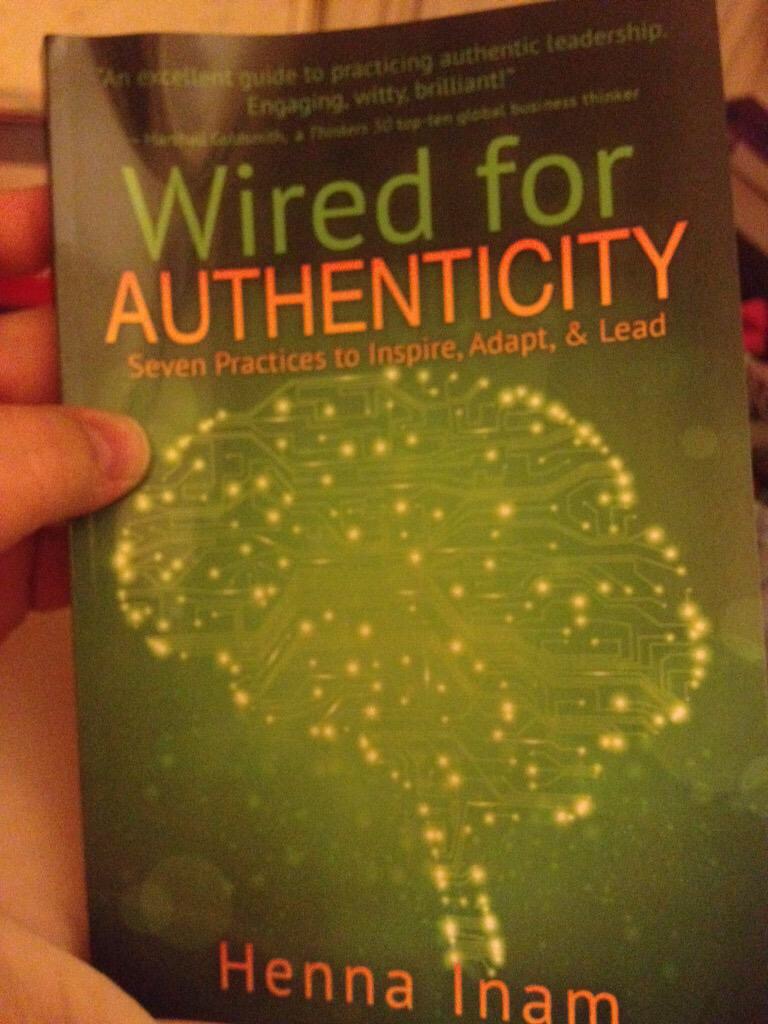
I had the great honor of receiving an advance copy of Henna Inman’s great book, Wired for Authenticity: Seven Practices to Inspire, Adapt, & Lead. What an awesome read. I gave the book five stars on both GoodReads and Amazon. Here is what I wrote as a review: “This is the only book out there that actually gives leaders best practices for being authentic. If I had to retitle the book, it would be: ‘Authenticity 101.’ This is a must read for all who want to be authentic in dreaming big and leading change and innovation.”
Inman’s Step 1 is to “Find Your ‘why.'” We learn best when we set a goal. Inman suggested writing a goal in the margin of the book that I, as the reader, wanted to be authentic in. I wrote, policy consensus and implementation. In order for us to truly be authentic, we need to lose who we think others believe we ought to be, or what is “good” and become who we really are. Being authentic means we will have our own ideas, core values, and beliefs. Guess what? That’s an incredible thing! Can you imagine how bad our constitution would have been if all the founding fathers would have had group think and all agreed on everything? I, for one, am glad they had disagreements and heated arguments, but in the end reached consensus and implemented a constitution that has stood the test of time. They were truly Leading Audaciously!
“We can choose to create within a high-change, high-uncertainty environment only by being in our authentic selves – not the saboteurs. ~ Henna Inman

“The trouble is when our identity starts to limit us and how we perceive our self-worth.” ~ Henna Inman
We must dare to dream big and lead with audacity. I have blogged about this before using my heroes the Wright Brothers as the example. Click here to read that post. Inman explains that when we dream big, we invite all of our saboteurs in for a feeding frenzy. When we get out of our comfort zones and do the audacious and pursue our big dreams we wake up our saboteurs to show up and try to make us fail. That’s ok. We have to continue our climb for what we believe in and not be intimidated. We must also strive to not be the saboteur and work to build consensus by turning the full expression of all the “me’s” into the good of the “we!”
“Our becoming who we are comes from our intentions and actions, not from concepts or theory.”
~ Henna Inman
Opportunities, Competence, & Commitment
 “Now, what does this mean for you?” ~ Julius Rosenberg of Sears in 1917
Rosenberg asked each of his store managers this question in order to integrate their efforts into the overall mission of Sears. The mission statement for Sears at the time was: “Your job is not selling, it is buying.” Rosenberg believed that his sales managers needed to be making sure that Sears was putting the right products on the shelves, not just being good salesmen (Maciariello, 2014). This mission statement helped those at Sears to “do the right thing.” In other words all of the employees at Sears were able to see the whole of the organization’s mission as one’s personal mission. This also helps all of those in the organization to “do things right” (Maciariello, 2014). This is a very important part of the whole mission statement, vision, and strategic planning process – all in the organization must fully understand his or her role in carrying our the plans and doing the right things. It is also important all parts of the mission statement fit reality.
A well written mission statement, according to Peter Drucker (Maciariello, 2014), can be used to effectively allocate the time, talents, and resources of all the people in an organization. One of the things I picked up from this week’s lesson from Drucker is: “It [mission statement] can be used as a recruiting, appraisal, and retention tool to ensure that those in an organization are focused on doing the right thing (Maciariello, 2014, p. 177)”. We need to spend more time talking and asking questions like Rosenberg’s. In fact, I am going to start asking that question after presenting our mission statement: “Now, what does that mean for you.” I am very excited to have learned this today!
When there is a well-produced mission statement, decisions can be guided toward doing the right thing and consensus. In order for this to work constructive dissent must be encouraged to prevent organizational obsolescence (Maciariello, 2014). Drucker said, “If you can bring dissent and disagreement to a common understanding of what the decision is all about, you create unity in action, and in all things trust. And trust requires that dissent come out in the open, and that it be seen as disagreement (Maciariello, 2014, p. 181)”. We must focus on what is right, not who is right.
Does your mission statement accurately your organization’s competence and commitment?
Reference
Maciariello, J. A. (2014). A year with Peter Drucker: 52 weeks of coaching for leadership effectiveness. New York, NY: HarperCollins Publishers.
Investments in Managerial Ego
 “Nothing so powerfully concentrates a man’s mind on innovation as the knowledge that the present product or service will be abandoned within the foreseeable future.” ~ Peter Drucker
This quote from Peter Drucker is so true. The first key to innovation is the willingness to abandon the old so that you free yourself for the new. Thus, the idea of “investments in managerial ego.” The three sectors of government, social, and business all have difficulty abandoning obsolete products, services, policies, and procedures. The inability to abandon existing programs reduces resources available to both fund and carry out new initiatives necessary to stay competitive and meet the mission and vision of our organizations (Maciariello, 2014). You are probably already thinking of programs, both in the government and social sector, that no longer serve their originally intended purposes.
Robert Anthony, a former Harvard Business School professor and under Secretary of Defense for Robert McNamara during the Kennedy administration, believed all agencies need to “examine its [program] reason for being, its methods of operations, and its costs.” (Maciariello, 2014, p. 171) I would also add the question of whether the team has the capacity to carry out the program. I really experienced this early in my career as an agriculture science teacher and FFA advisor. Both the state FFA and national FFA organizations would add new contests and programs each year, but there was never anything taken away. Well, as you can imagine this put strains on budgets and the ability to get things done well. The positive of this was, however, it taught many of us how to really ask the question of, “What are the things we are going to do well?” I always believed, and I believe they are doing a better job of this today, the FFA organizations should have been asking, “If we add this [program or contest], what are we going to get rid of or take off the teachers’ plates.” I really do try to practice this now as a school leader, but as any of you know who are on the front lines as the “Deer in the Headlights,” this is easier said that done.
Peter Drucker (2014) said we must ask the questions, “If we did not do this already, would we go into it now?” If the answer is no , ‘What do we do now?'” The question has to be asked – and asked seriously. In other words, “If we did not do this already, would we, knowing what we know, go into it now?” If the answer is no, the reaction must be “What do we do now?” I get it though; it is so difficult for any business or organization to abandon a program because the program may represent an investment by the people who introduced it and who nursed it along. Beware of commitment to ego as an excuse for maintaining status quo (Maciariello, 2014). Developing a process of systematic abandonment (Maciariello, 2014), and making it a regular part of the culture of an organization, is one of the most effective ways to eliminate the old and make room for the new.
We must remember that when given the challenge of choosing between two or more competent programs, we must keep the one that makes the more significant contribution to the mission and vision of our organization and to society.
Reference
Maciariello, J. A. (2014). A year with Peter Drucker: 52 weeks of coaching for leadership effectiveness. New York, NY: HarperCollins Publishers.
Memorial Day Reflections
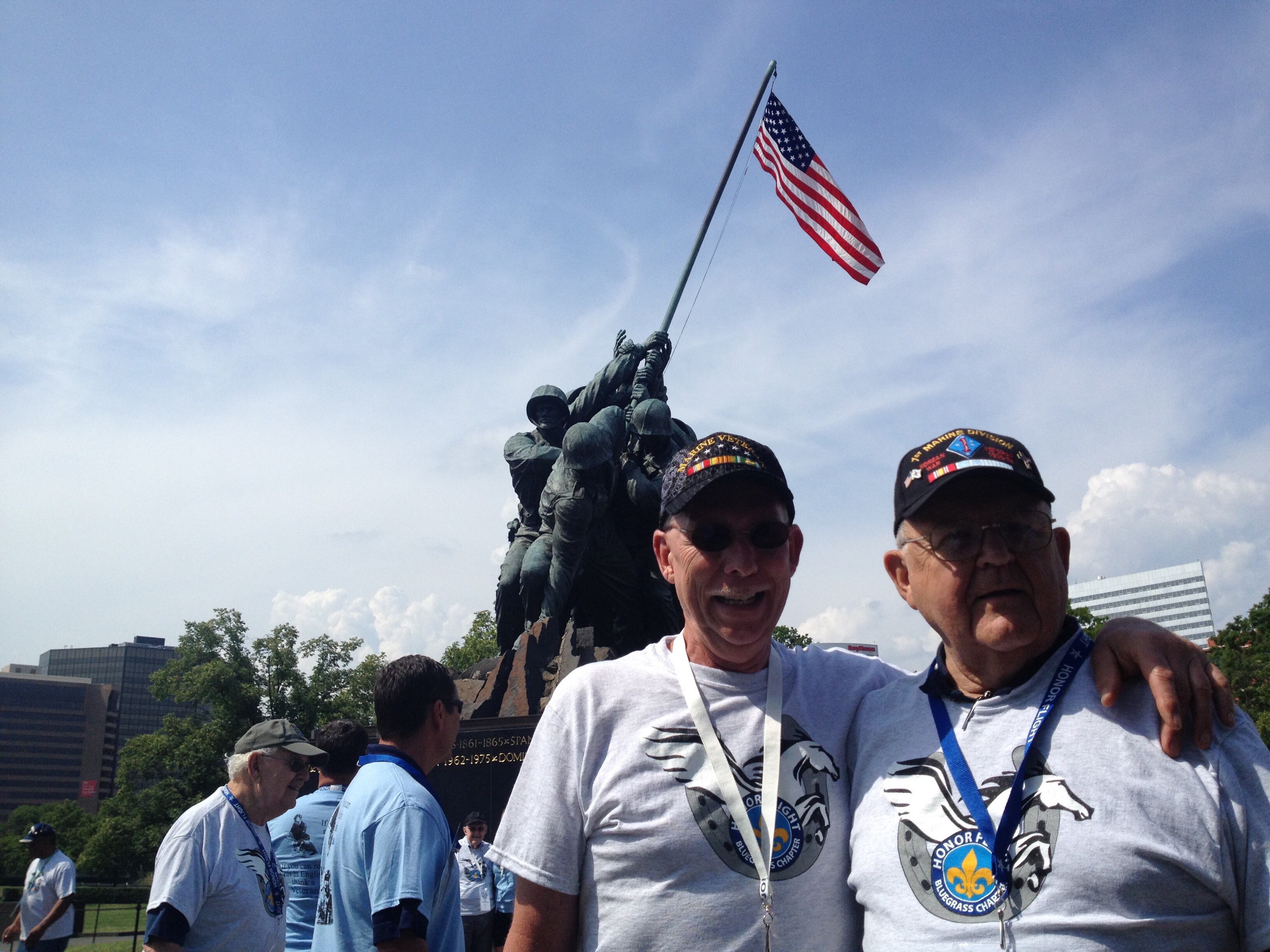 This year’s Memorial Day is different for me. It has more meaning and has a more real context than any time in my life. I am so blessed to have had the opportunity to serve on The Honorable Order of Kentucky Colonel’s Honor Flight on May 16th as a Guardian. That experience changed my life forever. In my family growing up we always celebrated Memorial Day, or “Decoration Day” as my dad called it. That was actually the holiday’s first name. It began in the years immediately following the Civil War, at which time it was observed primarily as a day for “decorating” military graves with flowers and commemorating the fallen Union and Confederate soldiers. By the twentieth century, Memorial Day had been extended to honor all Americans who died in all wars while serving in the U.S. Armed Forces.
I’m often astonished at the lack of honor some display toward our Veterans. For us who sacrifice little—if anything—and yet have no qualms about enjoying the luxury and freedom provided by this country we belie our lack of gratitude with our cavalier attitudes toward those who have served our country. We should hold to the true meaning of this day. Alas, for too many Americans, Memorial Day has come to mean nothing more than another three-day weekend, albeit the one on which the beaches open, signifying the beginning of summer. Unfortunately, the tendency to see the holiday as merely an opportunity to attend a weekend cook-out obscures even the vestiges of what the day was meant to observe: a solemn time, serving both as catharsis for those who fought and survived, and to ensure that those who follow will not forget the sacrifice of those who died that the American Republic and the principles that sustain it, might live. Some examples might help us to understand what this really means.
 These examples were plentiful for those of us taking part in the Honor Flight. Hearing of the sacrifices and seeing the emotions of the veterans on this trip were life changing for me. It was also a life changing experience for the Veterans as well. Allow me to share an excerpt from an email the Veteran I served as a Guardian for sent me yesterday:
“This morning particularly have been reflecting on our trip to DC . For me sharing that experience together produced a bond that seems to transcend the time we’ve known each other. At any rate reflecting today & tomorrow on the sacrifices of our fallen comrades . It seems the meaning of the day has become lost . Much like Christmas we forget it’s the celebration of our Savior’ birth. Finally 2 things: 1. YOU made our honor flight very special; 2. My life is richer having met & got to know you. God sure dealt us a good hand when he put us together. I don’t know what I would have felt if you hadn’t been with me.” ~ Dr, Jerry McCandless, Korean War Veteran
I am humbled at the thought of those who have put themselves in harms way on my/our behalf…people they don’t know. The beauty of the Honor flight is it gives us the chance to really get to know one another. The Honor Flight gave me the opportunity to better understand our nation’s history and appreciate the price paid for our freedom. I encourage all to find some way to serve our Veterans, whether through serving on an Honor Flight, or some other volunteer service. We need to all commit our time, talents, or treasures to our Veterans. Thank you to everyone who has served and those who are serving us through our military and our great country. I am in awe of all our heroes on this Memorial Day!
Nothing Works Forever: Perpetuating the Mission & Values of the Organization!

“Nothing works forever. Our purposes never change – but our methods and tactics must constantly change. It is amazing how quickly a successful organization can deteriorate into mediocrity.” ~ Rick Warren, Pastor and Founder of Saddleback Church in Lake Forest, California.
This week’s lesson in Maciariello’s (2014) A Year With Peter Drucker was based on an interview with one of my hero’s – Rick Warren. Dr. Warren founded Saddleback Church in Lake Forest, Calif., in 1980 with one family. Today, it is an evangelical congregation averaging 30,000 weekly attendees. Peter Drucker and Dr. Warren were friends and this week’s lesson was based on a 2003 interview. They discussed that organization must innovate and change. Organizations also tend to become bureaucratic and need to have conscience activities for maintaining and transmitting its core values (Maciariello, 2014). These principles should be implemented in a way that will perpetuate the mission and values of an organization and provide continuity, while also facilitating change.
The key here is facilitating needed innovative change, but at the same time having continuity. Tough order, huh? Drucker posited that we all need people committed to our vision our our teams, but we also sometimes need radical change (Maciariello, 2014). Drucker also argued that change and continuity are not opposites, but a continuum (Maciariello, 2014). If an organization does not change, it will die of being status-quot. In order to achieve continuity, therefore, an organization must be designed to change. Change and continuity are thus poles rather than opposites. Interestingly, I just spoke on this last week at the American Federation for Children National Education Policy Summit. In our panel I stated that in education and “school choice” that we were in danger of the new beginning to look like the old. In other words as a believer in “school choice,” we must make sure that the choices are not just some of the same old thing in a new wrapper. We must create schools that have the core value of all students can learn, but are differentiators in the way we do that. We need schools that educate better than anyone else and that have an “edge” or “niche” in doing so. In other words, a constant stream of incremental improvements will lead to substantial change and great schools over time. Schools, and all organizations, should therefore seek and reward continuous improvement activities. Continuous improvement must be one of our “BIG” initiatives to be working on in education, and all organizations for that matter.
According to Maciariello (2014) change can occur in two forms: 1.) creating new wealth through innovation; 2.) creating wealth by moving resources from low to high productivity. Competition speeds this process up. This is why I am such a believer in school choice. We cannot predict the future, so it is our job, as leaders, to have the core values in place to allow for changes in products, processes, and services that will continue to meet the needs of our customers in the future.
As an “Energetic Change Agent,” I know that change is risky and creating the future is a lofty goal, but it is much more risky to leave the future to chance. Are your organization’s core values strong enough and believed by all to make it possible plan for change? Are your own core values and change agent abilities such that you will be able to maintain organizational cohesiveness during necessary changes? Isn’t it excited to be creating the new future?
Reference
Maciariello, J. A. (2014). A year with Peter Drucker: 52 weeks of coaching for leadership effectiveness. New York, NY: HarperCollins Publishers.


leave a comment