Learning 4.0
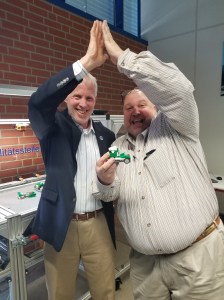 Yesterday I had an incredible experience at the Benteler Education and Training Center in Paderborn Germany. We had the opportunity to learn Smart Manufacturing first hand by working in the Benteler Industry 4.0 Learning Factory. This factory was built by the students and used to teach Industry 4.0 smart manufacturing practices and techniques. This learning factory also affords students the opportunity to use equipment and use 4.0 practices. There are three choices of products to build in the learning factory: speed boat, semi tractor; or sports car. The cool part was that all of the parts for the products except for the the grill ornament (made by 3D printer) were Lego™. I had the honor of working with Representative Bob Behning on this project.
The line starts with the selection of which product and what color the product will be built. For this part of the factory SMART glasses are used in order to give the student the opportunity to use and navigate this 4.0 technology. I am really glad I had the opportunity to do this. We had been hearing about SMART glasses and having the opportunity to actually use them on the production line was awesome. Then after the selection of the color and product the line gave us a tray of parts to get started.
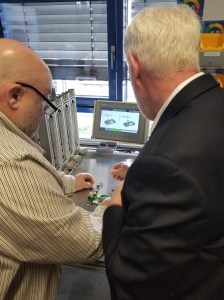 After assembling the frame of our truck it was then moved down the assembly line and the RFID chip (I could relate to this because it is like the RFID tags we use for data and identification of our dairy cows) read what product we were building and gave us the next set of instructions digitally. As we waved our hand over the screen the proper bin for the next part would light up and then the screen told us where to put the parts. Even though we were doing some human labor on this it was evident to see all the skilled labor that was needed to program the line to give us the right parts on time during the assembly. Finally, we installed the Benteler emblem made in the 3D Printer to the grill of the truck.
One of the coolest things was at the end of the assembly line when our completed truck went into the sensors to tell us if we had made it correctly. We either got a green light or a red light. The green light meant we had it perfect, the red meant we had a flaw. Sadly, we got a read light. We went back and studied, but could not find the issue. We found there was an error and we were not given the instruction or part to put some covers on the clearance lights on the front of the truck. But, how cool is that to have sensors that could tell us if the product was perfect. Here is a picture of our final product:
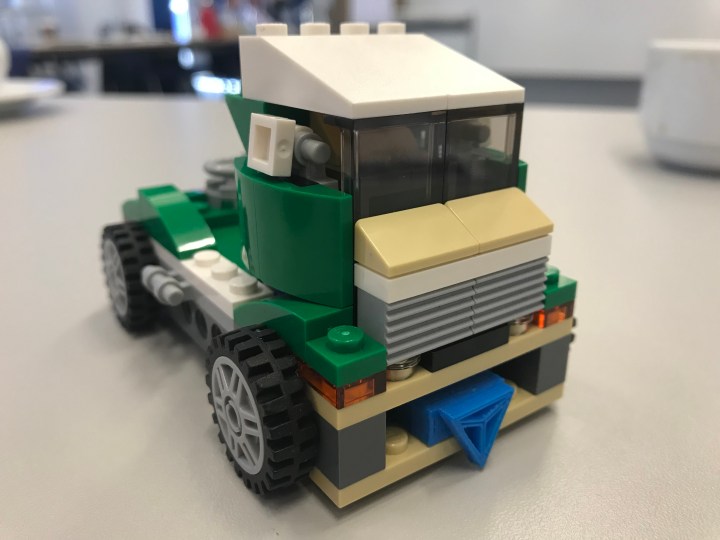 I am so glad I had this experience. It also really drove home the fact that, as the research tells us, as adults we like to learn like our young students. We want the education to be relevant and we want to be engaged in the process. Let me tell you, Representative Behning and I were very engaged. We were excited as the truck came together and went down the line. Then we were screaming when the truck did not pass inspection. We were ultimately proud of our product. Bottom-line – This Industry 4.0 Learning Factory made school work into real work. We were using real life digital tools to make a real product in real time. How much more engaging can you get?
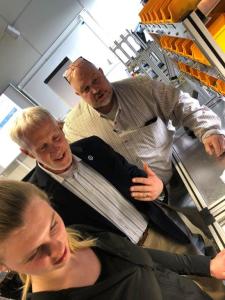 The factories of the future will be very different from the workplaces of today – in 2016 alone nearly 200,000 robots were deployed in automotive factories and a further 85,000 were installed in factories making electrical and electronic goods, so automation will liberate people from the drudgery of production lines. Now with Artificial Intelligence (AI), the robots will be able to interact with the human. These “cobots” will take robotics to a new level. This past week we have also learned that at work or at home, the Internet of Things (IoT) will completely change the way in which most of us carry out our basic daily tasks, eliminating the drudgery of shopping, banking and even cooking.
I am so glad I have had the opportunity to learn about Industry 4.0 this past week. One thing is for sure: this will completely change the dynamics of manufacturing and will mean that we will be able to make products that are tailored exactly to our wishes in every way we could want. The very same technology is already being used to produce motor vehicles and even to “print” buildings, so the possibilities are almost endless! We need to make a commitment to making sure we have our students ready for this workforce. That means we must start and continue to have the conversations between all sectors about how to do what is best for our students. This involves bringing business/industry, k-12 education, higher education, education advocate organizations, business/industry organizations, state officials, families, and students together to partner how to make this happen. I appreciate all the work that organizations like Horizon Education Alliance are already doing to make the conversations happen – thus why we are learning in Germany and Switzerland. It is the right thing to do for our scholars!
From Best Practice To Next Practice
 Today was the final day of the 2nd Annual Global Smart Manufacturing Summit in Berlin, Germany. I really valued the time to get to know business and industry leaders from around the world. I was reminded of what my good friend Kevin Eikenberry and I used to talk about a lot – when we look at the differences between different industries (eg. manufacturing vs. education), we see about 90-95% of our issues being the same and about 5-10% different. What I mean here is that many of the challenges and roads to improvement are the same. Think about it, we all have responsibility in finance, HR, facilities, and customers. If we break that down further, we all have one of the same groups within the customer category – employees. Now, I get it; our employees are our competitive advantage, but employees are still a customer to be taken care of at the highest level.
Organizational Commitment
The first session this morning was about initiatives and organizational commitment. As a believer in learning organizations, I was really enamored by the discussion of organizational commitment. This thinking really fits with a lot of the Gallup® research I have been studying around employee engagement. When we discuss organizational commitment, we are talking about the bond employees experience with their organization. Broadly speaking, we know employees who are committed to their organization generally feel a connection with their organization, feel that they fit in, and believe they understand the goals of their organization.
 Next Practice
One of the session titles this morning was “From Best Practice To Next Practice.” I really appreciated this session because we talk a lot in education about “best practices,” but really it is about making the right choice and implementing the next practice. Good or bad, I tend to be the one looking for the next practices. Really, that is what this entire discussion was about for the global leaders here: what are the next practices.
Convergence
Then, it comes down to convergence. How do we take several sources of independent data and bring them together to develop strong conclusions? In education we call this using “multiple data points.” I don’t think we do the best job of bringing all the data points together. For example, this week I was reading and article about teacher pay and how it was decreasing. I question if we have been properly converging HR, financial planning, and student data in a way that would inform what we have been paying our teachers in Indiana. I’ll let you grapple with my comment here, but you get the point.
Problems
One of the comments that I loved most today was, “We shouldn’t be talking about the problems of today, but the problems of tomorrow.” This is so true! This means in education we need to be looking several years out as to what business and industry needs. We also need to think about what our execution model will be for making sure our students have the skills necessary to meet the needs of the workforce. A few phrases/questions coming from the global manufacturing leaders that jumped out at me were:
- What data is coming from where?
- How do you use your data?
- Appropriate levels of (you fill in the blank here)
- Move from reactive to predictive and preventative
Outcomes
All of this discussion has made me an hinkeven bigger believer in us (both Indiana and the United States) needing to move to a strictly outcomes based school accountability system. We could then, truly in partnership with business/industry and higher education, determine what transferable skills students need and have coming out of high school. Then we can match those transferable skills to outcomes that the students needs to accomplish. Here are some examples and outcomes:
- industry certifications
- 4 year degrees
- Associate degrees
- Trade school
- Joining the military
- Meaningful employment
At a time when our state has 75,000 jobs per year going unfilled because there are not skilled workers to take those jobs, we need to be thinking about the outcomes for our students. Thus the skills gap of only 42% having any kind of post-secondary preparedness versus the 75% needed.
If we are going to have our students ready for the workforce we will need to:
- Teach students in a real world and relevant context
- Enable, encourage, and stimulate students to be curious
- Teach students how to fail and that it is o.k. to fail
- Engage students in career exploration activities at a young age
- Determine the transferable skills needed to have students ready for today’s jobs
- Teach students to be disruptors
- Provide pre-apprenticeship, apprenticeship, and work based learning internships
Business and Industry engagement in education programs not only prepares students with the skills they need for careers, but it also contributes to the development of clearly developed career pathways that lead students to careers after graduation.
What Does Industry 4.0 Mean?
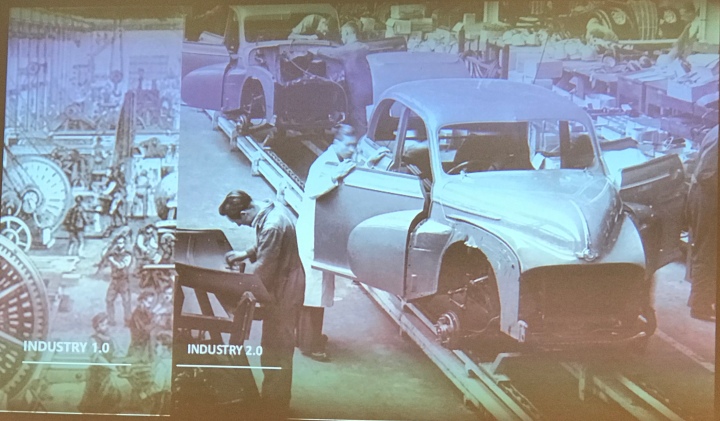 Today, I had the honor of being in attendance at the 2nd Annual Global Smart Manufacturing Summit in Berlin, Germany. One of the topics we grappled with was of what does Industry 4.0 mean? Ron Zahavi, Chief Strategist for IoT Standards and Consortia, Microsoft Corporation did a great job of walking us through some history.
Industry 1.0
This is the first industrial revolution:
- Technology such as wheels and engines replaced artisans
- Child labor laws had to be introduced to prevent abuse
Industry 2.0
- Assembly lines allowed workers to be turned into consumers
Industry 3.0
- Lean Processes improved the quality of products
- Advent of computer use
- Robots reduced mistakes and improved productivity and safety, but began replacing people
Industry 4.0
- Big data and analytics
- Autonomous robots
- Simulation
- Horizontal and vertical system integration
- The industrial Internet of Things (IoT)
- Cybersecurity
- Additive Manufacturing/Advanced Manufacturing
- Augmented Reality
Interestingly, in all these cases technology and mechanization are involved, but in the revolutions of Industry 1.0, 2.0, and 3.0, I wonder if we forgot how important people are. We must remember as we navigate Industry 4.0 that people are more important that the devices and technology.
In my world of educating young scholars and creating education policy, we have a responsibility to make sure as we move to Industry 4.0 to put people at the forefront. We do not want to make the same human mistakes with 4.0 that we made with the first three revolutions.
I really believe more than ever that we must make sure that we create space for industry to do as much of the training of our students as possible. Industry is in a good position to do this. What we have to do, though, is identify the transferable skills students need and institutionalize those skills in the framework of the internship learning being done in partnership with industry. This is crucial because of the mobility of our students.
We must be educating our students on the new things being done with Industry 4.0, but must also be educating them on the benefits. In other words, answering the question: How does this make life easier? Not just always pointing to financial improvement and the bottom line. We must begin to develop a workforce made up of the right quantity and right quality of workers. The skills we are preparing students with must match the needs of the workplace.
Industry 4.0 will require new skill sets, and manufacturers will need to attract the right talent. This may involve partnering with k-12 schools to train students. Existing training programs may need to be expanded to include new technologies that are introduced to the marketplace. Manufacturers also need to recruit for Industry 4.0, which may differ from how they have done it in the past. Both business and industry and education will need to stop all focus being on qualifications determined by degrees and certificates, companies should recruit for capabilities to succeed. These capabilities will include specialized skills.
For us to compete during Industry 4.0, it will require us to conduct constant iteration and be flexible. It’s not about buying software or purchasing a curriculum and then watching it all play out. To compete in Industry 4.0, the education sector and manufacturers must be flexible and agile in the face of change, and, most importantly, partner together.
Learning to Do, Doing to Learn!
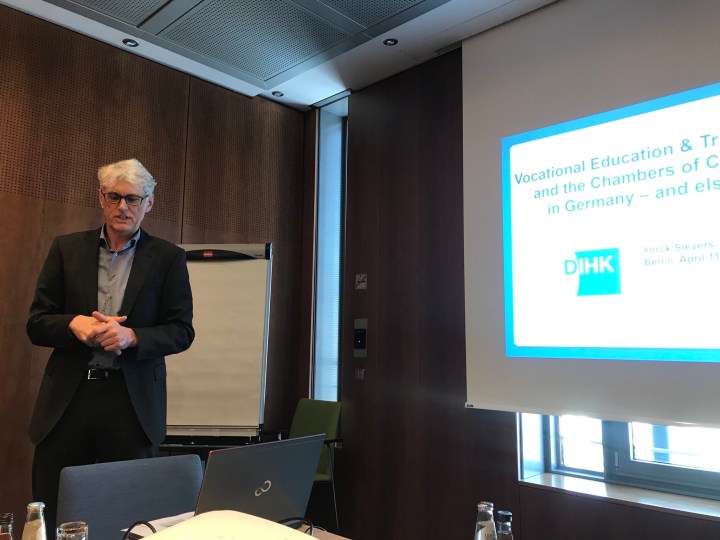 Today, while in Berlin, Germany, I was reminded that what I always say, “Once an Agriculture Science teacher and Career and Technical Education (CTE) Director, always a CTE guy. As I visited with Yorck Sievers of The Association of German Chambers of Commerce and Industry, I was reminded just how engrained the FFA motto of, “Learning to Do, Doing to Learn, Earning to Live, Living to Serve” is to making a positive difference in the lives of students by developing their potential for premier leadership, personal growth and career success through agricultural education. This is also engrained in my core values of how to educate young scholars. The Association of German Chambers of Commerce and Industry (Deutscher Industrie- und Handelskammertag, DIHK) is the central organisation for 79 Chambers of Commerce and Industry, CCI (Industrie- und Handelskammern, IHKs) in Germany. All German companies registered in Germany, with the exception of handicraft businesses, the free professions and farms, are required by law to join a chamber.
The FFA motto gives members 12 short words to live by as they experience the opportunities in the organization. Learning to Do, Doing to Learn, Earning to Live, Living to Serve. Learning by doing is also a cornerstone of the German education system. Whether someone wants to become a carpenter or a hotel concierge, she has probably gone though what is known as the dual education system. This system combines time spent in the classroom with work at a company. During our education research trip with Horizon Education Alliance, we learned about how Germany’s vocational education system pairs hands-on learning with classroom learning to give young people a leg up in the workforce. Most students graduate not only with a degree, but also with job experience and a deep knowledge of their trade. This vocational training offers a high degree of job security. The professional certifications issued to students at the end of their programs are well respected within their fields, and more than half of apprentices stay on as full-time employees at the businesses where they trained. They even get paid during their studies.
Check out a few slides from our meeting with Sievers:
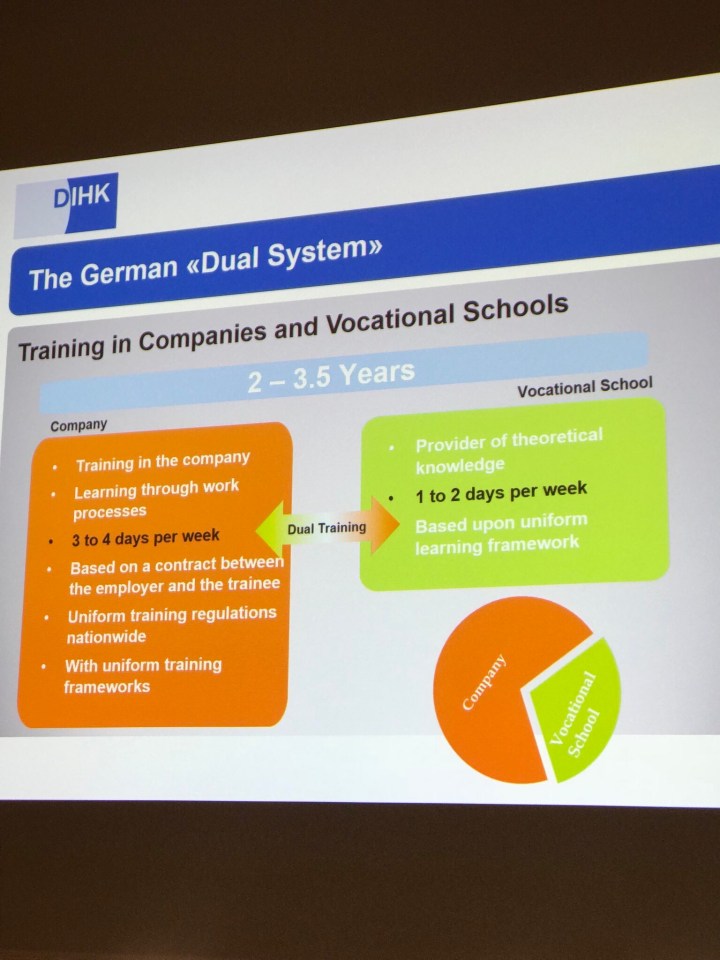
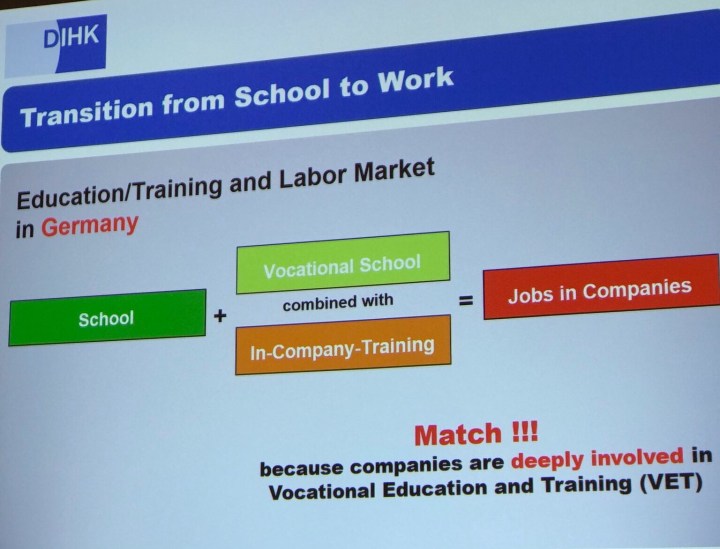
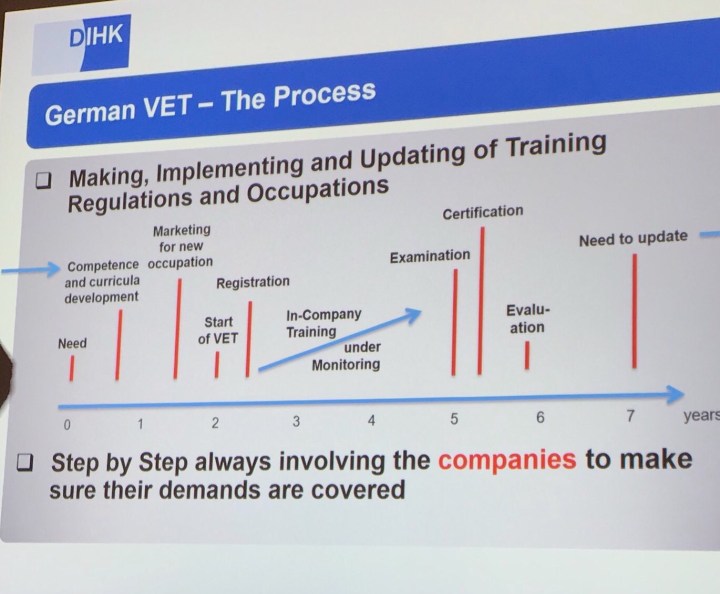
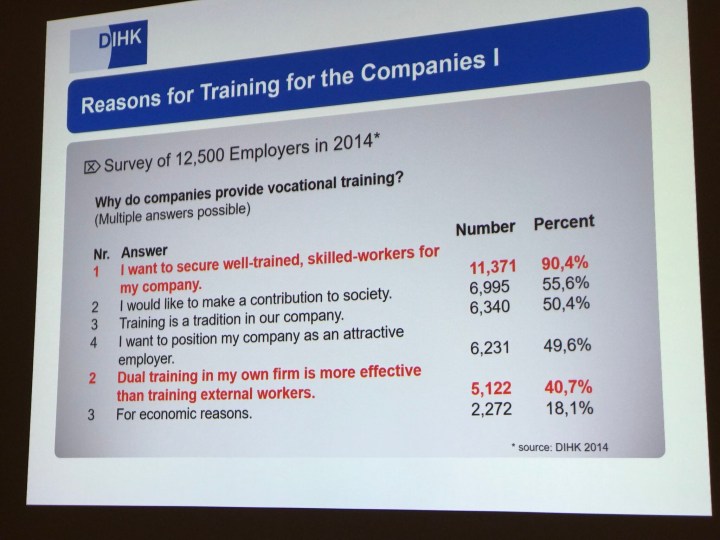 During this time with Sievers we also learned that schools follow the companies and not the other way around. This training model is all about the future of the company, but the companies are not left alone. The companies need support. This is competency based education. The Chambers in Germany provide:
- Organization
- Registration
- Examination
- Certifications on a national level
In this German model there are courses that cover more than 350 different occupations that are approved by the businesses and federal bodies overseeing the program. In Germany, they are truly walking the talk by facilitating students for “Learning to Do, Doing to Learn, Earning to Live, Living to Serve.”
What Do You Think?
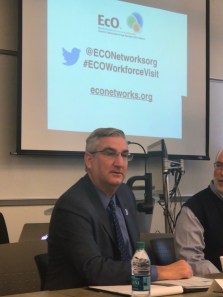
Governor Eric Holcomb
I had the opportunity to meet with an impressive group of community leaders this past Friday. As we continue to work through the guidance and implementation of our new Indiana Graduation Pathways, of which I chaired the panel that created this policy, we are working very hard to learn from the groups in the state that have been doing this work already and successfully. The Community Education Coalition and Economic Opportunities through Education (EcO) Network in southeast Indiana is one such group that brings educators, manufacturing leaders, workforce, and community-based organizations together to coordinate and align educational program offerings for students to successfully connect with well-paying manufacturing occupations.
Last year, the Indiana State Board of Education was charged with establishing graduation pathways per HEA 1003. The goal was to create an educated and talented workforce able not just to meet the needs of business and higher education, but also have students able to succeed in all post-secondary endeavors. To account for the rapidly changing, global economy, every K-12 student needs to be given the tools to succeed in some form of quality post-secondary education and training, including an industry recognized certificate program, an associate’s degree program, or a bachelor’s degree program. Every student should graduate from high school with 1) a broad awareness of and engagement with individual career interests and associated career options, 2) a strong foundation of academic and technical skills, and 3) demonstrable employability skills that lead directly to meaningful opportunities for post-secondary education, training, and gainful employment. During the process of our panel convenings we did a lot of asking, “What do you think?” Now, thanks to the Community Education Coalition we are able to continue to ask “what do you think?” as we work through making sure schools are able to put the pathways in place for students. We are so grateful that they put the event together last week that included Governor Eric Holcomb, State Legislators and Policy Makers, business and industry leaders, higher education leaders, K-12 school leaders, and most importantly students. There was a lot of question asking and learning going on.
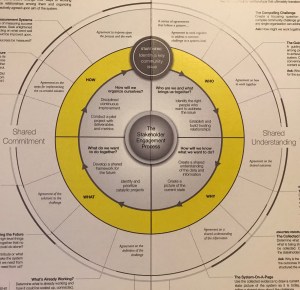 The partners and facilitators of the Community Education Coalition and EcO initiatives have learned to make inquiry a habit of mind, thereby initiating a long-term commitment to continual improvement and growth. This coalition has developed an outstanding process that uses the questions of “who?, why?, what?, and how?” in order to identify key community issues. You can bet the four words of, “What do you think? are asked in this process. Essential to the success of this process was collaboration with colleagues across different disciplines for clarifying their questions and for understanding and analyzing the data they collected. For example, data like: high school graduation rate, education attainment growth, STEM enrollment growth rate, GDP per capita, employment growth, and average annual wages are used as outcomes to measure success.
 This data is then able to be used by stakeholders to answer the questions of “who?, why?, what?, and how?” and the question of: What do you think? We are reminded of how important these four words are in Gem #7 entitled “Four Magic Words: ‘What do you think’” in 52 Leadership Gems: Practical and Quick Insights For Leading Others by John Parker Stewart. In this lesson Stewart reminds us that leaders often fall into the trap of assuming they have the right answer. I am also reminded of the teaching of one of my heroes in community work, Peter Block, who believes that effective leaders are not problem solvers, but conveners of communities of people to solve issues.
“Using these four inclusive words [What do you think?] is evidence of an effective and healthy leader who actively listens to the input of the members of the team.” ~ John Parker Stewart
All research is messy and recursive; and it has been my experience that collaborative inquiry is more so because no one knows the end. You are not starting with answers, but with questions. Throughout the process, partners reflect on what is being observed and found out. The stakeholders may change direction, ask new questions, challenge the inconsistencies they discover, seek new perspectives, and fill gaps in their information. During our gathering on Friday we were reminded over and over that the process of connecting the stakeholders is more important than looking at programs. It would be very hard to replicate programs in all parts of the state, but it would not be hard to replicate the process of deciding what programs are needed and developing programs specific to each area. It is all about bringing collaboration to scale.
To do this we must remember to ask the pertinent questions, listen, and ask “what do you think?”
Creating Places of Innocence
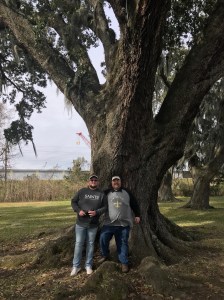
My Son, Heath, And I On a Dad and Lad Adventure
Yesterday in a meeting of North & South Carolina principals, the comment was made that we need to create places where innocence is fostered for our children. This really got me thinking about how we do this both with our own children and the students we serve in our schools. The notion of innocence refers to children’s simplicity, their lack of knowledge, and their purity not yet spoiled by mundane affairs. Such innocence is taken as the promise of a renewal of the world by the children. One of the most delightful things about children is their sense of innocence and wonder, yet helping them maintain that sense of wonder can be challenging in our sophisticated, hurried society.
This rapid and early gain of knowledge by our children is quite the paradox. We all know that knowledge is powerful, but when children learn the wrong things too early it can really be detrimental. Vast amounts of knowledge and information is readily available to our children, and we, as parents, want our children to have this knowledge because we believe it will help them grow and compete. However, this same knowledge can ruin their innocence.
Here are a few things I believe can help us in the creation of places of innocence:
Have fun. Build time into your schedule to allow for silliness, downtime, and play.
Leverage nature and the scenery around us. Children are instinctively attuned to the wonders of nature. We do not have to prompt students to enjoy playing in the mud, seeing the beauty of flowers, watching kittens play. I love the idea I heard one time of planting a family tree and then having family time at each season change to note changes in the tree. My family has a Pin Oak tree that my son brought home from school when he was in the 4th grade that we use for this. In fact, I blogged about this tree in Lesson Of A Pin Oak.
Reading together. This is so important and can even be done with high-school age students. For example, I have chosen to read the same books my son has to read for school. For example, I just read Tough As They Come by Travis Mills because my son was reading it for a class. Wow, what great conversations this spurred for he and I. All I can say is, “try it.”
Use technology wisely and discreetly. Children should not be burdened with information that is too adult in nature. They have neither the cognitive nor social-emotional skills to process this information.
Family events. Or, family events where the children bring a friend. We do a lot of family activities and my son and I do Dad and Lad events/trips. The beauty of these is that we control our own content.
This is way too complex an issue to solve with a blog post, but I believe we all need to be reflecting on creating places of innocence. Most importantly we need to be mindful of what our children are being exposed to and give them more age appropriate choices. If you have thoughts on this important and complicated issue, please comment/respond to this post.
Educator Reflections On This NCLB Anniversary Day
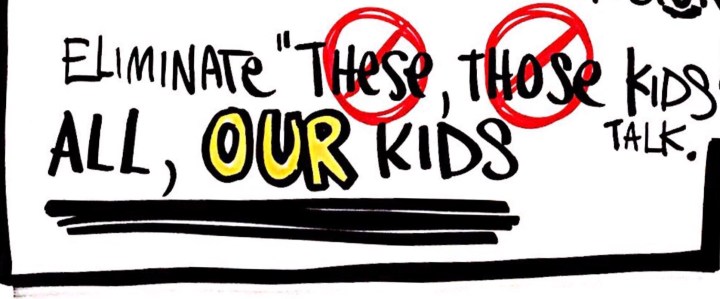 It all started in 1965 when President Lyndon B. Johnson, as part of The Great Society program, created The Elementary and Secondary Education Act (ESEA). ESEA created a clear role for the federal government in K-12 policy, offering more than $1 billion a year in aid under its first statutory section, known as Title I, to districts to help cover the cost of educating disadvantaged students. At the bill signing in Johnson City Texas, President Johnson said, “As a son of a tenant farmer, I know that education is the only valid passport from poverty.” Then on January 8, 2002 President George W. Bush signed into law No Child Left Behind (NCLB). This bill was born out of concern that the American education system was not competitive in a global economy.
NCLB increased the federal role in holding schools responsible for the academic progress of all students. Even though over the years there has been controversy over the effects of NCLB, I believe it is important to note the desire of progress for all students. As a believer that all students can learn and all students deserve a great school regardless of zip code, I would argue that NCLB helped us make strides in the right direction. It put a special focus on ensuring that states and schools improved the performance of certain groups of students, such as English-language learners, students in special education, and poor and minority children, whose achievement, on average, trailed their peers. NCLB really creates the environment for focusing on eliminating the achievement gap. NCLB put us on the trajectory to begin to focus on student outcomes instead of inputs or outputs. These outcomes enable us to tell the stories about our students, about who they are, what they want, and what they are achieving.
As a teacher during the passage and majority of the tenure of NCLB I appreciated the critical view of teaching and requirement of “highly qualified” teachers. I believe this was a precursor to teaching being a more highly regarded profession and teachers being treated like professionals. We still have a long way to go, but with ESSA we now have the opportunity to further the development of teacher leaders to build more capacity for distributed leadership. On this anniversary of NCLB we need to celebrate advancement of disaggregating data and recognizing areas for improvement and our continued commitment, as a country, to address long-standing gaps and ensure students are well-prepared for their post-secondary endeavors.
What Difference Has Been Made?
 Yesterday afternoon I had the opportunity to have a discussion during a meeting about outcomes versus outputs. I made the comment that I believed in accountability based on outcomes. The person I was meeting with said he was glad I said outcomes versus saying outputs. If we get stuck just evaluating and making decisions based on outputs we are bound for mediocrity. Great organizations, including schools, are managing to outcomes. In education, I believe we need to lead schools according to outcomes.
What do I mean by this? Let’s use the example of graduation rate. Make no mistake, this is an important output, but it is just that – an output. If we change our thinking to outcomes we look at what students are actually doing (or could be doing) after graduation. To me, this enables us to understand how our schools are serving students and how their lives and circumstances are being changed.
An outcome is the level of performance or achievement that occurred because of the activity or services an organization or school provided. Outcome measures are a more appropriate indicator of effectiveness. Outcomes quantify performance and assess the success of the organization and the processes used. In the high school graduation rate example, some outcomes would be is the student employed, is the student in the military, or is the student attending some post secondary education. Graduation rate, an output, alone does not demonstrate how the life of the student had been impacted. Basically, without outcomes, there is no need for outputs.
Furthermore, outputs are the what. Outcomes are the difference made. In other words, outcomes are the why. Sometimes I worry there is a perception that it is too hard or impossible to measure outcomes and that stops us, as leaders, from collecting key outcomes data. We need to work toward thinking more about outcomes. In the case of schools this will enable us to tell the stories about our students, about who they are, what they want, and what they are achieving.
Finally, if we study outcomes we can answer the question: What difference has been made?
Leading Like Yeast
 During my personal growth time this morning I was reading more in the great book, Leading Like Madiba: Leadership Lessons From Nelson Mandela by Martin Kalungu Banda. In the passages I was reading this morning Kalungu-Banda used the metaphor of leaders being like yeast saying, “Inspirational leaders are like yeast that permeates ordinary flour and water, making them rise into a good dough. This is a lot of what leadership is about: imperceptibly raising others to realise their own greatness and the esteem they deserve. A lot of the effect is gained simply by listening to people with respect.” Is that not awesome and so true!
“Inspirational leaders are like yeast that permeates ordinary flour and water, making them rise into a good dough. This is a lot of what leadership is about: imperceptibly raising others to realise their own greatness and the esteem they deserve. A lot of the effect is gained simply by listening to people with respect.” ~ Martin Kalungu Banda
This got me to thinking about the yeast we feed in our dairy herd. Yeast is a simple single-cell fungus. That is why I love Kalungu-Banda’s metaphor. As leaders, we are all pretty simple human beings but by creating the right environment we can do great things. The yeast that we usually mean in the context of food and livestock feed is the species named Saccharomyces cerevisiae. Saccharomyces cerevisiae has been used by man for millennia to produce alcoholic beverages, including beer and most spirits, and to enable bread to rise during the baking process.
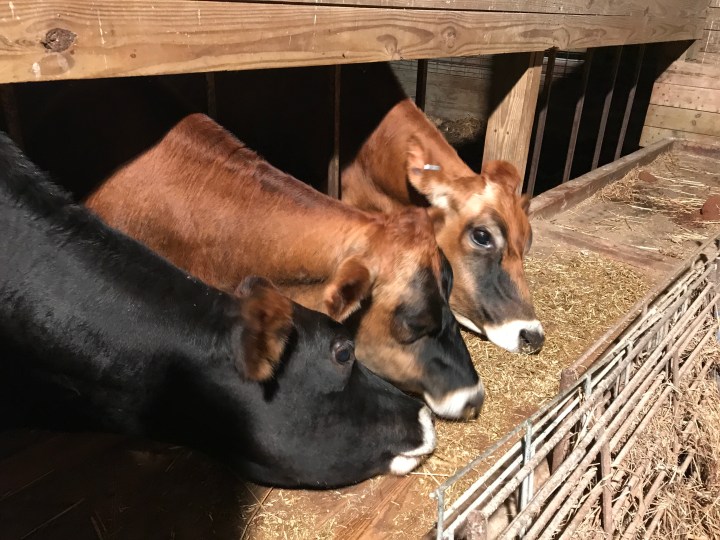 During the early 1980’s when I went to Purdue University and was getting my Animal Science Degree, we were just beginning to research the use of yeast in ruminant (cattle are a ruminant – meaning four compartment stomach) feeds. The research being done was on the effect of yeast culture on ruminant production and rumen microbial metabolism. Effects on production were always small, which led to many questioning their statistical validity. The reported effects on rumen metabolism often seemed unrelated: Stabling pH, improved fibre digestion, lower lactate concentrations, altered fermentation product proportions in favour of propionic acid, lower methane emission, increased concentrations of cellulolytic bacteria, increased concentrations of cellulolytic bacteria, lower soluble sugar concentrations, decreased ammonia concentrations, all by the supplementation of a few grams of yeast to a cow with a rumen volume of 100-150 liters. Thus, if yeast could maintain a more stable, neutral pH, ruminal micro-organisms would be healthier: healthier ruminal micro-organisms lead to a more productive animal. Remember, this is all with only a few grams of yeast.
Therefore, I would add to Kalungu-Banda’s use of yeast as a metaphor and say that by just doing the right small things can create an environment where people can grow and flourish. When studying the effectiveness of yeast culture we needed to understand yeast’s mode of action at the molecular and cellular level. Sound like leadership?
Leaders develop their team members. They serve as the yeast by helping the team members gain new skills to help the team increase its ability to reach the organization’s goals. One important skill the leader teaches the team is leadership. Just like yeast, we need to be doing the little things that might seem like much, but will have big effects on those we serve and our organization. Are you leading yeast?
Learning By Serving & Making The World A Better Place
 If we want our young scholars to be more successful in the classroom and ultimately in life, then we need to be deliberate in giving them civic experience and experience with community service. Let’s not just tell them to hit the books and study more. Don’t get me wrong; that’s important, too. Instead, let’s help them to head out into the community to help others. Let’s help them come up with projects and work along side them as coaches and mentors.
We need to facilitate our students volunteering their time to make the community and world a better place. I was reminded of this tonight when out shopping for four families in need for a project I am working on. At the completion of shopping I was beginning to stress over wrapping and organizing all the gifts in a presentable way for the school I am working with. Anyone who has ever seen my wrapping knows why I was stressed. Wrapping gifts is one of the many skills and talents I do not have!
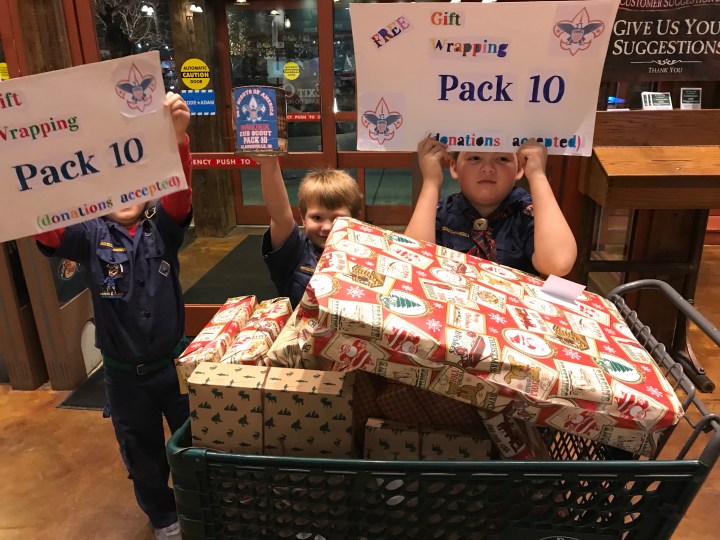
Anyway, on my way out of the last store I was approached at the door by some enterprising Cub Scouts. The boys said, “Sir, we would like to wrap any gifts you have.” Well, my prayers were answered. I proceeded to their table and said, “Can you wrap all this, plus what’s in my truck?” The boys and their moms said, “Sure!” I was sold! Of course, as they got started, I went out and got all the other gifts.
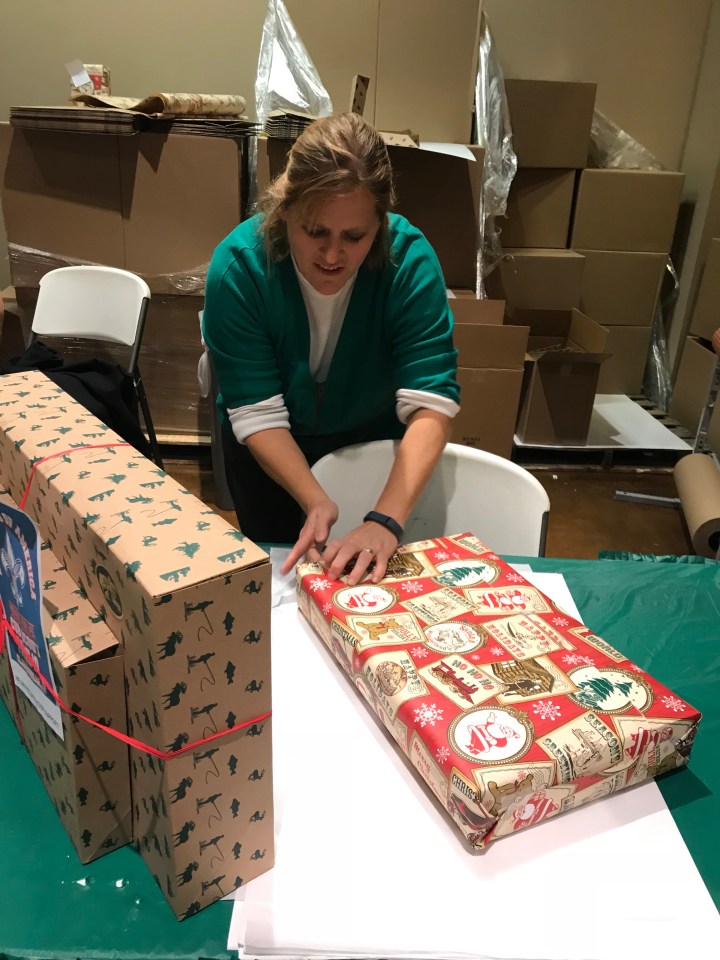 They organized all the gifts by the initials of the students I was buying for and even wrapped each child’s gifts in different paper. They obviously could tell that being organized is something I need help with. I had so much fun visiting and working with them as the wrapping was being done. I even had the opportunity to discuss our project for helping families in need and the fact that there are children that do not have all the advantages that these young men have. The young men were very attentive and we had a great conversation about helping others.
As the job was being completed I asked J.P., the Scout who seemed to be leading the charge, “We have wrapped 11 boxes; what do you think that is worth for a donation?” He talked to the other boys and then thought for a minute and said, “$6.00 per box.” J.P.’s mom exclaimed, “Oh J.P.! That is way to much!” Well, I started them down this road so I said, “J.P., if that is where you value it at, that’s what I’ll do.” I Then gave him the $66.00. J.P. and the other Scouts proceeded to tell me all the projects they were doing and how the money would be used.
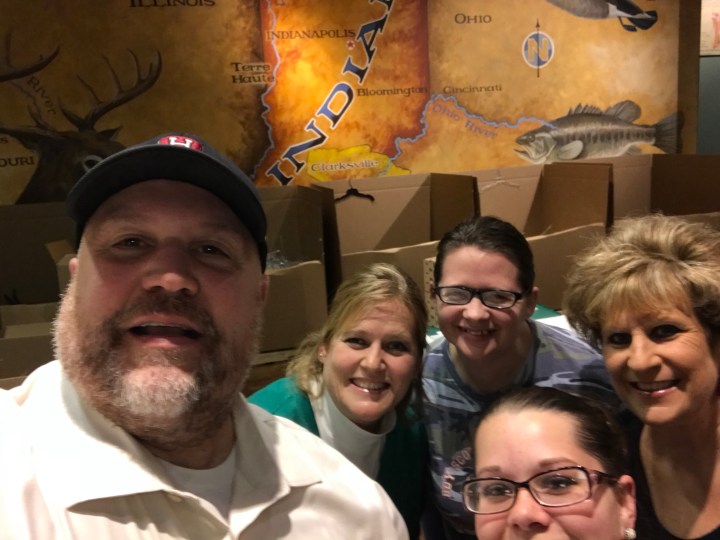 I have to tell you I was impressed with these young men. Here’s the deal. While completing community service projects, students develop real world 🌎 skills that will help them succeed in elementary school, middle school, high school and beyond. This gives our young scholars relevant practice in:
• Leadership
• Problem-solving
• Collaboration with others
• Time management
• Communication
Most importantly, students develop a richer perspective of the world they live in. Additionally, this experience helps young people develop a richer perspective of the world they live in. This is why I am so proud that the Graduation Pathways our Indiana State Board Of Education just passed has a community service component for students. We cannot just leave this to chance. All young scholars need the opportunity to learn the lessons these Cub Scouts were learning tonight.
 Byron's Babbles
2 comments