Elegant Currency

Successful leaders identify by asking questions, the critical needs and issues of those they serve. The greatest leaders that I’ve experienced are highly creative on currencies and concessions. Currencies are tangible or intangible resources that our team members value. When assessing the potential value of a currency, keep in mind that currencies tend to have value in proportion to how well they satisfy the needs of the other party. In other words, what you value highest, may not be of value to me at all. If “prime currency” is money, then there is also the need to provide for “elegant currency.”
Again, “elegant currency” is a concept used to describe something that may be of importance to a person, however, it has no value for someone else. In negotiating a job offer, for example, a person can give the elegant currency to someone else at no cost or loss on their side. This can be a great tool when there is no room to budge on a salary. Don’t forget this is also an important part of retaining top talent as well. For example, I offer my time each year to work with the Indiana House of Representative’s interns. Those that are interested in education and education policy can take advantage of the experiences I’ve had and become a part of my network. The leadership of the internship program are developing this network in other areas besides education, and it really has become an elegant currency for some of the interns to expand their knowledge at no cost to a very limited budget.

I was reminded of just how important elegant currencies are when reading in the sixth edition of Love ‘Em Or Lose ‘Em by Beverly Kaye and Sharon Jordan-Evans. We all possess Elegant Currencies. Think about the many elegant currencies held by the people you work with that you are totally unaware of and how incredibly powerful it would be if we all shared and connected in more meaningful and helpful ways with one another. What elegant currency might you have, or could offer, that could just be the deciding factor of retaining one of your rock star team members?
In your career it is important to understand what may be elegant currency for the people you work with and what is elegant currency for you. We must all go to the trouble of learning what the elegant currencies we personally need, those needed of all in our organization, and any individuals we might be recruiting. Are there those you might recruit or a deal you might close through an “elegant currency transaction”?
What If?

I love it when authors come out with new and revised editions of their books. I am reading Love ‘Em Or Lose ‘Em by Beverly Kaye and Sharon Jordan-Evans for the sixth time right now. I’m reading the new and revised sixth edition that will be released on March 2nd. TIP: if you want it now and just can’t wait, you can get the sixth edition in audiobook version from Audible here. This new edition has content linking inclusion and engagement. This edition is awesome and I need the new content and the sixth time reading for a refresher.
One of the things that Beverly and Sharon pointed out is that we need to embrace or be embraced as that employee that questions things. They used the example of my heroes, the Wright Brothers. They questioned the notion of whether humans were meant to fly. Our authors encourage us to respond to these notions with “What if?” instead of “No!”. “What if” can enable desired outcomes while remaining discovery driven.
I propose the single greatest obstacle impeding the transition from a “what is” or “no” attitude to a “what if” driven community is allowing ourselves to fall into the trap of either/or thinking. The best leaders I’ve experienced realize there’s rarely a good reason to only look at one good option or pit one option against another. Great leaders can weigh out the best of multiple good options. The best news for your teams is that “What if?” doesn’t require special skills or abilities, just the desire to question of what presently is exists is as good as it can be.
So next time you find yourself preparing to say “no,” why not respond with “What if?” Be a creator, not a copier!
Focusing On Our Why

This week’s Mindset Mondays with DTK lesson in Chapter 25 was entitled “Discover Your Why.” David Taylor-Klaus (DTK) was pointing out how important it is to find our “why.” When finding our “why” DTK taught us that “It’s something you have to sit still and ponder until it becomes clear to you” (p. 188). This made me think back to when I was a kid and I would take a magnifying glass on a sunny day and focus the sunlight on a piece of paper, burn a hole in it, and catch it on fire. The magnifying glass is the metaphor for our “why”; focusing our energy like my magnifying glass focusing the sun’s energy.
The power of our “why” is similar to the energy of sunlight focused through a magnifying glass. The Diffused sunlight provides warmth and energy for plant photosynthesis, but when its energy is concentrated—as through a magnifying glass—that same light can set fire to paper. Focus that energy even more, as with a laser beam, and it has the power to cut through steel. As DTK said, “That [our “why”] awareness is brilliant energy available to you to create something new, something next, something more” (p. 190). Our “why” means something as powerful to our lives as my magnifying glass and laser beam metaphors.
Explore And Heighten On President’s Day

Interestingly, the holiday we celebrate today is officially Washington’s Birthday, not President’s Day. In 1971 when Congress passed the Uniform Monday Holiday Law, Washington’s Birthday (February 22) was moved to the third Monday in February. This put the holiday in between Abraham Lincoln’s birthday (February 12) and Washington’s. It also gave us another three day weekend – the intent of the Uniform Monday Holiday Bill. There was a push to change the name from Washington’s Birthday to President’s Day, but that did not pass – we just all call it President’s Day.
As I take a moment to reflect on this day, I remind myself of advice I give to others: study humans, not heroes. I believe this is important in teaching history and civics as well. While we have the advantage of hindsight when studying the past, always remember those who lived it, did not. One of my favorite authors, David McCullough, put it this way, “Nor was there ever anything like the past. Nobody lived in the past, if you stop to think about it. Jefferson, Adams, Washington—they didn’t walk around saying, ‘Isn’t this fascinating, living in the past?’ They lived in the present just as we do. The difference was it was their present, not ours. And just as we don’t know how things are going to turn out for us, they didn’t either. It’s very easy to stand on the mountaintop as an historian or biographer and find fault with people for why they did this or didn’t do that, because we’re not involved in it, we’re not inside it, we’re not confronting what we don’t know—as everyone who preceded us always was” (McCullough, February 15, 2005, in Phoenix, Arizona, at a Hillsdale College National Leadership Seminar on the topic, “American History and America’s Future.”). We need to remember that history was not created in a vacuum and could have gone a bunch of different ways.
As we reflect on our Founders and past Presidents we need to remember they were human beings, just like us, with flaws, sins, and both terrible and good qualities. We’ve had leaders do some terrible things and we need to study those things and call them out to make sure and not repeat them. We also need to learn, grow, and continue to improve and get better. In the world of improvisation there are the five syllables “explore and heighten.” This is where we usher in our imagination, where ideas are born, where our power finds its source, and where we discover what’s waiting for us. I believe this to be the genius of our American community. We know everything can and should be improved upon. So, on this day of reflection, let’s renew our resolve recognizing our errors of the past and continued improvement for making the world a better place for ALL.
Leading Like Valentine’s Day

Because Valentine’s Day is on Sunday this year, I hope you are spending a Happy Valentine’s Day with those you care most for. And, I hope that tomorrow you will continue to lead like Valentine’s Day with those you work with. The American clergyman, and personal effectiveness writer and speaker, Norman Vincent Peale, considered a burning conviction and contagious enthusiasm to be the most critical factors in successful living and leadership. You, no doubt, probably have someone on this Valentine’s Day you have that kind of passion for. How about in your professional life? Do you have a cause, a passion, or a why that makes you contagious with enthusiasm? Do you have a burning conviction for those you serve?
“Your enthusiasm will be infectious, stimulating and attractive to others. They will love you for it. They will go for you and with you.”
~ Norman Vincent Peale
Valentine’s Day makes us think of love. What comes with the thought of love? Passion and desire. Great leaders have passion. Passion for the work they do. They love leading a team to success. Great leaders also have great desire. They desire to lead a successful organization. So be contagious with your enthusiasm and burn with conviction.
Lastly, don’t do like some do in the romantic realm of Valentine’s Day and only show your love one day a year with flowers or a box of chocolate. That’s not what love is. Love is treating people well every single day of the year. Find ways to treat your people well, with respect, and show them your appreciation. Treating people well will inspire them to new heights. Happy Valentine’s Day!
Accessing Our Own Ignorance

Many times our own knowledge, or love for our own knowledge gets in the way of our ability to grow and learn. We must always remember that we may need to know what others know in order to solve our own problems. I am reading an advance copy of the second revised and expanded edition of Humble Inquiry: The Gentle Art Of Asking Instead Of Telling by Edgar H. Schein and Peter A. Schein. The book reminded me that when we want to influence others we need to “access our own ignorance.” It helps to come to the conversation with a genuine desire to learn; a belief that the other person has information we need in order to be successful. This gives us the potential for new knowledge to emerge that just might enhance our decisions.
If we can open ourselves to learning from others, we can collaborate to help each other. When we access our ignorance we come to conversations both confident about what we know, and humble about what we don’t know. To me, accessing our own ignorance is like becoming a sponge and soaking up all the knowledge and wisdom from those around us. In order to learn through collaboration we must acknowledge that we all need each other to accomplish our goals.
Natural Curiosity

Curiosity. Everyone is born with it; it’s innate and natural to every child. But somewhere along the way, many lose their sense of how to use curiosity to expand their minds. I would even argue that there are things we do in education that cause our young people to lose or give up on their curiosity. When we reach school age, answers become more important than curious thought. Today, I had a person in a meeting describe me as being open to my natural curiosity. I’ve got to admit, I took it as a compliment to be described as curious. I am a very curious person and try to be curious every day.
Curiosity helps us to discover new ideas and open up new avenues and possibilities. Additionally, curiosity brings excitement into our lives. So, how do we stay open to our natural curiosity? We need to make time for curiosity. Part of that time needs to be for play. This gives us the opportunity to explore. Curious people can always find something interesting to explore. Being curious can help us be less judgmental. Curious people as focused on exploring options rather than just trying to be right and have someone else be wrong.
We also need to ask lots of questions. We need to channel our innate child-like curiosity and do more asking of what, why, who, when, where, and how to get at the big-time secrets of the world. Those that are curious are not afraid of questions and being wrong. Finally, the curious never stop learning.
Declaring
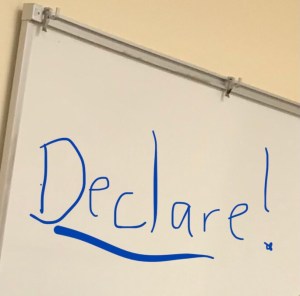
This week in Chapter 24 of Mindset Mondays With DTK, David Taylor-Klaus taught us that the only way to avoid criticism was to do, say, and be nothing. Since that won’t work for me and I hope it won’t work for those of you reading this post, let’s explore this a little. We learned from DTK in this chapter that Winston Churchill had a deep confidence in his own vision. We must have a strong point of view in order to avoid being nothing.
Again, the only way to avoid any criticism is to do, say, or be nothing. I recognize that I can be polarizing at times, but the one thing that everyone knows is where I stand on issues. Agree or disagree, you don’t have to wonder where I stand. Machiavelli told us to “declare.” I do not prescribe much of Machiavelli’s teaching, but I do believe in “declaring.” In other words, a strong and informed point of view, belief, or set of core values. Keep in mind, however, declaring a strong point of view does not mean that those beliefs can’t evolve and change. We need to be constantly evolving, learning, and growing.
DTK said, “…if we choose to share a perspective that will offend no one, it will also touch no one” (p. 183). Criticism can be painful, but if we take an attitude of learning from it we can turn it into a gift. What do you need to declare and turn into a strong point of view?
Lift Every Voice

Happy Super Bowl Sunday. As I settled in for Super Bowl LV. I loved this statement by Bruce Arians, Head Coach of the Tampa Bay Buccaneers, when being interviewed by Bill Cowher for the Super Bowl Today Show: “If you are going to make me better, I am going to listen to you.” Having just gotten home this morning from facilitating a bunch of leadership development this past week and weekend, I was reflecting on how much time we had spent discussing that people will follow you because they want to (relationship) and people will follow you because you get results (production). Coach Arians was making this comment in response to continued praise for giving minority coaches opportunities. Additionally, the Buccaneers are the first NFL team to have two female coaches on staff in a Super Bowl. He reflected on his own experience being overlooked that made him want to help others get recognized. The Tampa Bay Buccaneers are the only team in the NFL with all Black coordinators.

In a great story by ESPN Staff Writer, Jenna Laine (she has awesome journalistic talent, by the way), Coach Arians said “A player is gonna ask the coach, ‘How are you gonna make me better?'” “He doesn’t really care if the answer comes from a male or female, Black, white, brown, yellow, who — just ‘help me be better,’ Arians said. “The best teachers I had were all different races, all different ethnic groups, male and female. If you can teach, you can coach.” It impressed me that Arians deflected a little of the praise saying, “That was not by design. Those are the best coaches I know.” Here’s the deal, great leaders recognize potential and then act on that by providing opportunities. It’s the most important thing we do as leaders.
Another thing Coach Arians said to Laine that really stuck with me was “To hear voices in a staff meeting that aren’t the same, don’t look alike, but they all have input — you get better output.” This is so true! It’s why in education we need to continue to work extremely hard in diversifying our teaching staffs. As we continue to work for excellence and equity, we must continue to tap the shoulders of ALL with potential – that’s what great leaders do.
Informed Procrastination

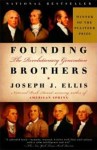
Yet another phrase used by Joseph J. Ellis in Founding Brothers: The Revolutionary Generation has caused me to ponder and think about the merits of what he called “enlightened procrastination.” He used this phrase to describe how our second President, John Adams, kept our infant country from going to war with France by not revealing a series of insults from the French government until time and diplomacy could resolve the issues. It worked for President Adams in this scenario and I am pondering about the merits of this as a leadership tool. I am going to guess that many of you are already saying, “You’re crazy!” Hear me out and feel free to comment.
If you have ever responded too quickly to an email, phone call, face to face, or now, Zoom interaction when you were upset and then regretted it this could be a place to use procrastination as a leadership tool. Take time to ponder and think. This will give you a chance to respond as opposed to reacting. I have people I work with regularly kid me about always waiting till the end of a meeting or conversation to ask a question or make a comment – just when they think it is about to end. This is because I’m a slow processor. I actually continue to work at honing this as a positive skill. It allows me to hear all sides and again, process.
Another thing is, we don’t have to solve every issue. Providing time for others to weigh in or solve themselves can be both healthy and many times bring about a better solution. I’m now thinking it should be called “informed procrastination.” Informed procrastination can help us, as leaders, make better decisions. Taking the time to ponder on answers to problems you are striving to find a solution for can help us better understand different perspectives and angles. To be clear, I am not suggesting we all become procrastinators. I am suggesting, however, that when we are informed, we can use it as a leadership tool.


1 comment