No One Bothered To Explain
“No one bothered to explain anything to her so she was not comfortable asking any questions.” Y.T. said this while working a job in the great novel (where the term “metaverse” was coined), Snow Crash, by Neal Stephenson. For some reason this statement really jumped out at me. I think it hit me so hard because it is true – if we’ve not been given any explanation, the “why,” or made to feel like we need to be in the “know,” we probably won’t be comfortable asking questions. This is true in work and organizational settings as well as in educational settings. Explanation forms a bridge between telling and revealing knowledge involving narration and description.
Using explanation, we make meaning of content, processes, and procedures. In other words, complex things should be simplified. Explanations also give us clarity. When there’s clarity, it’s easier to communicate and move forward as a team. Y.T.’s comment in Snow Crash reminded me that the short amount of time it takes to explain and shed some light on the “why,”especially when introducing a new initiative, provides the clarity, unity, and motivation necessary for a productive and fully-engaged culture.
Then, yesterday while facilitating a leadership development gathering, I was reminded that the comfort that Y.T. was looking for to ask questions was also dependent on the relationships built with others in the organization and team. We know that students whose teachers have built relationships with have higher levels of engagement and achievement. Why? The students are more comfortable asking questions.
Do you have, or have you ever had, a boss you weren’t comfortable asking questions of? Awful, right? This could show a lack of relationship. I had a teacher tell me a couple of weeks ago that she wished her principal knew her better. I reminded her that this was a two way street and she needed to help build that relationship. As a former principal I pointed out that her principal had an entire building of people to build relationships with. But, the bottom-line is that it is a leaders responsibility to build relationships and open the lines of communication.
As leaders we need to make sure we are comfortable asking questions like: How’s life?; Are you clear about your role and responsibilities?; What would you like to learn about?; or, What do you think would improve…? Think about how liberating being asked these questions could be. Only liberating, however, if you really mean them and want to truly act on them.
Owning Up To Our Mistakes

Leaders are not responsible for always being right. However, one of my early mentors always taught me to see problems as opportunities. As he would say, “We’ve got an opportunity.” I never heard him say problem, obstacle, or challenge. And framed as opportunities they always became just that – opportunities for growth and success. Any great leader will share that they have made many mistakes along the way. Those same leaders will teach that it was the collective insight from bad decisions that taught them invaluable lessons. My mentor taught me to see opportunities in everything and anticipate the unexpected more quickly.
Randy Conley also taught us great leaders admit their mistakes in Simple Truth #42, “True Servant Leaders Admit Their Mistakes” in Simple Truths of Leadership: 52 Ways To Be A Servant Leader and Build Trust, Making Common Sense Common Practice, Ken Blanchard and Randy Conley, As Randy said, “In reality, admitting mistakes is one of the most powerful ways a leader can build trust. When your team sees you own up to your behavior, they see a leader who is genuine, honest, and authentic” (p. 109). The best leaders I’ve been exposed to are/were transparent with themselves and others, admitting when they were wrong so those of us looking on could also benefit from their learnings.
Our Values Drive Our Decisions

I loved this week’s Simple Truth #41: “Trust is always trending. Doing the right thing never goes out of style.” in Simple Truths of Leadership: 52 Ways To Be A Servant Leader and Build Trust, Making Common Sense Common Practice, Ken Blanchard and Randy Conley, As a believer that Core Values Are The Heart and Soul, this Simple Truth really resonated with me. It also reminded me of something Peter Drucker once said: “The proof of the sincerity and seriousness of management is uncompromising emphasis on integrity of character. This, above all, has to be symbolized in management’s ‘people’ decisions. For it is character which leadership is exercised; it is character that sets the example and is imitated. Character is not something one can fool people about. The people with whom a person works, and especially subordinates, know in a few weeks whether he or she has integrity or not. They may forgive a person a great deal: incompetence, ignorance, insecurity, or bad manners. But they will not forgive lack of integrity in that person. Nor will they forgive higher management for choosing him.” This is still true today and always will be.
Randy Conley said it best, “When you’re tempted to jump on the latest trending #leadershipfad, consider staying consistent with the one thing that’s always trending: trust.” We will generally be most comfortable working in a company that has a corporate culture that reflects our own personal values. Core values are the guiding principles that help to define how we should behave personally, in business, and perhaps beyond.
How Do We DeBottleneck?

I am now to the next-to-last topic I put on a list that I wanted to blog about following the SMART Factory League 2022 Summit in Hamburg, Germany. During one of the sessions a speaker posed the question, “How do we debottleneck?” I have actually blogged about bottlenecks before in The Leadership Bottleneck! At first I was going to say that the post I did back in 2015 was done in a different context, but as I went back through it I realized it was still very evergreen today.
I love metaphors and the idea of a bottleneck is a metaphor referring to how the speed of pouring a liquid changes when it enters the narrow neck of a bottle. Bottlenecks usually determine the capacity of a process. Bottlenecks develop simply because in any process – be it a manufacturing line or business process – different activities take different amounts of time, or various stages have an uneven capacity, to unequal numbers of resources.
Bottlenecks also occur because of batch processing. Machines and workers are sometimes only available at limited times during the day or week. Therefore, to increase efficiency, the raw materials are organized in batches so that the time windows are utilized fully. It’s pretty obvious how this batching causes bottlenecks in manufacturing, but then I got to thinking about how we batch in education and how that causes bottlenecks. Last week I had the chance to facilitate a session rolling out Aspen Institute’s latest framework for education, Opportunity to Learn, Responsibility to Lead, and we go into a discussion of what the future of school should look like. Now, looking back on that discussion we were really talking about debottlenecking in many instances.
In education, the term bottleneck is used in both describing the pedagogical issue of barriers to the students’ understanding of content in the process of learning. Bottleneck is also used to describe times when a student enters a phase of progression where academic performance and competition come into play. Both of these bottlenecks are compounded because of how we presently “batch” our students into grades and groupings. This inherently causes bottlenecks. This is why we need to consider looking to a more competency based model. The more we can personalize and become student centric we can eliminate batching bottlenecks.
Bottlenecks can cause both the student and the institution to incur increased educational costs, waste time, and delay completion of dual credits, certifications, and work based learning opportunities. So, just like the manufacturing industry must debottleneck, we need to consider the ways to debottleneck education.
The Multi-Use Of Information
There are many people with titles. Few of us would say that their title makes them a leader. I believe everyone is a leader. Several nouns are often used like judgment, persuasiveness, trust, and more to point to the many qualities necessary in a good leader. Easily forgotten, however, is the quality of being creatively informed. Common to the best leaders is one distinguishing factor – the ability to use information creatively in raising questions. It is this ability to raise relevant, provocative, insightful, and often path-finding questions that separates true leaders from those who may just be occupying a leadership position.
When I was in Hamburg, Germany last week, top industry leaders were discussing the multi-use of information. Having and gathering the information that reveals trends, patterns, tendencies, opportunities, weaknesses, strengths, and more is stuff of leadership when it is combined with creative efforts to raise the proper questions. To be a learning organization we need to be thinking of how to link data together to tell a full story. This reminds me of the concept of information leadership which describes leading the development and using information resources and infrastructures in organizations, and for influencing and making decisions about the use, organization and management of information resources and information infrastructures. It’s about finding the ways the all points of data influence each other.
Markets, technology, and necessary skills needed change so fast that industry and education must be using all information available in making changes. We may not like the changes or even understand them, but they are coming. Connectivity across the whole organization is the cornerstone of digital transformation. Therefore we need to be using information in multiple ways. We need to be connecting information and eliminate analog shadows.
Your Personal Museum
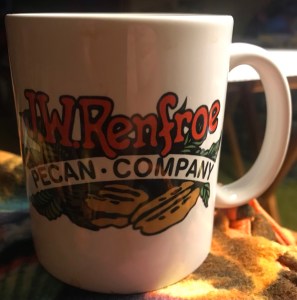
Every step along the way in life I have considered as building memories – those moments that end up in our personal museum. Everything we do and everyone we associate with is an opportunity to create these museum archives. I think this is why I value my coffee cup collection (that I use a different one out of every day, by the way) of cups from the places I go. This morning I am using the cup from J.W. Renfroe Pecan Company in Pensacola, Florida. Today’s cup curates the museum memories from this past spring’s trip to Florida with my son. He asked me to fly down and join the group. Lots of memories surface: bow-fishing, talks on the beach, cooking huge amounts of fresh gulf seafood together, et cetera, et cetera. Best selling author John Strelecky inspired this post with a tweet that I loved: “In the end, we don’t remember all of our life, we remember moments. Life is about the moments that will be in your personal museum! Don’t wait for them, it’s time to create them!” I have a friend that every time he would see my son and I together, when he was younger, my friend would say, “Out building memories, I see.” And, yes we certainly were!
I’m sure you can take a trip down memory lane to your childhood or just a few weeks ago to remember those fond moments with your family, friends, or others in your community network. Even if we can’t quite remember everything from the past, there are those moments that stick with us no matter how old we get. Having experiences and making memories is something that will last far longer than the day on which they happen. What moments are you curating in your personal museum? More importantly what memories are you helping create for the personal museums of your children, friends, and others you serve?
Treating Each Person Situationally

Last week at the SMART Factory League 2022 Summit in Hamburg, Germany, one of our speakers said that flexibility is not efficient. He said this to remind us that we need to be flexible, but sometimes we avoid it because it is not efficient. We discussed this in the context of employees as well. Loving our employees looks different for each employee. Today’s employees want high level challenges and the ability to have choices in the paths they take. Our people we serve need agency and the ability to be core players in their future.
This highlights the fact that leadership is not one-size-fits all. Everyone cannot be treated exactly the same. As Randy Conley pointed out in Simple Truth #40: “There’s Nothing So Unequal As The Equal Treatment Of Unequals (Anonymous)” in Simple Truths of Leadership: 52 Ways To Be A Servant Leader and Build Trust, Making Common Sense Common Practice, Ken Blanchard and Randy Conley, “Of course, certain rules, policies, and legalities require everyone to be treated the same – but when it comes to the matter of leading individuals, you need to treat each person situationally” (p. 105). One example might be the need for a flexible schedule. Giving those we serve the latitude to approach objectives in their own ways can enable them to unleash their creativity. Any creative person can tell you that inspiration strikes at the strangest times.
If we are situational in our leadership, it means embracing change and new challenges. It also means using them as opportunities to create new and improved systems and processes; it’s not just being able to change, but also being willing to, and maybe even excited about it. This is really about personalization, which will make us more effective employers. It means we need to create environments where those we serve can stay open and creative, always keep their skill set up to date, and learn how to balance personal needs with the needs of co-workers and the organization overall.
Stakeholder Alignment
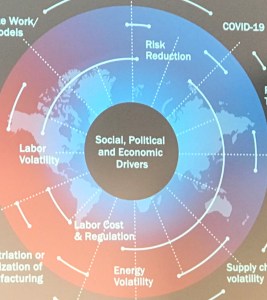
We are seeing a dramatic amplification that an individual voice can have within a business, organization, educational entity, or local, state, or federal government – bringing with it perspectives on not only what is right for those individuals and the organization or community, but increasingly, what is right for society at large. Thus we need stakeholders to be well informed and stakeholder alignment. In other words, all sections of stakeholders must optimize together.
Last week when I was in Germany with business and education leaders I discussed that modern organizations will need to transform to be ever more in tune to and responsive to the needs of both internal and external constituencies. I even got more specific and talked about this in terms of talent recruitment, acquisition, development, and retention. There needs to be internal talent community as well as an external one. We have reached a time when personalization must occur for those both being served by the organization and those carrying out the work of the organization. In the case of stakeholder alignment for talent (not ‘human resources’ to be exploited) we need to find ways to remain agile in gaining and teaching new skills necessary, create a cycle of learning, improvement and engagement for people, create culture in a world of remote working, and many other individual and societal issues.
Stakeholder alignment means every role has the opportunity to be transformed into a more strategic function. One company shared last week that through artificial intelligence (AI) the production data generated areas of development needed for development. Brilliant! Alignment of our internal and external ecosystems are crucial for success today. We must continue to use the tools available to create an interconnected awareness of our situation as it relates to all stakeholders.
Generation Metaverse
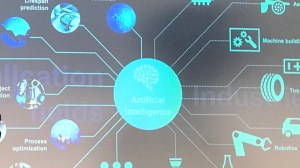
I love learning and I have to say that last week almost put me in overload. It was so great to be back in person, chair, and speak for the SMART Factory League 2022 Summit. Hanging out with really smart and innovative industry leaders from around the world is, well, intoxicating! It is incredible to learn about both new things I’ve never heard of or things I’ve been exposed to, but don’t know much about. One such, related to the latter is the metaverse and generation metaverse. We learned that dollars are going to be shared between live and digital. It is gong to be a blending. the metaverse is virtual-reality space in which users can interact with a computer-generated environment and other users.
The metaverse is virtual-reality space in which users can interact with a computer-generated environment and other users. Gen Z, millennials, and Gen X consumers expect to spend between four and five hours a day in the metaverse in the next five years. The metaverse mainly involves gaming right now, but will include immersive shopping, followed by telehealth appointments, education, travel, and socializing in virtual reality (VR) or using augmented reality (AR) will be the most interesting metaverse activities for consumers in the next five years
Moving away from two-dimensional laptops and smartphones to the three-dimensional immersive world of glasses and goggles is one that I hadn’t spent a lot of time thinking about, but has tremendous possibility. We can move from screens to landscapes, layers, and objects.
Local Is Everywhere

The global pandemic has served as a catalyst to e-commerce (a 39% increase happened last year) and local delivery being here to stay. It is now common practice to build shopping carts into local business websites. This enables us to significantly expand the number of neighbors we get to serve with care, compassion, and a commitment to making these very good times. This past week at the SMART Factory League 2022 Summit, Joachim Hensch reminded us that “local is everywhere.” To further make the point he reminded us that “Coca Cola is everywhere.” Think about it; because of geolocalization, we can connect in ways never possible before. All we have to do is type in, “___________ near me.” Or, I can order whatever I need, to be delivered wherever I need it. Think about all these ways we have to be everywhere:
- In-person (is now kind of old school)
- Curbside pickup and messaging
- Home delivery messaging
- Text messaging
- Direct Messaging
- Live Chat 💬
- Email 📧
- Review responses
- Review requests
- Phone 📱
- On-hold phone messaging
- Virtual meetings
- Website forms
- Surveying
- Social media platforms
- Post-transactional landing page messaging
- Call-to-action texting 💬
If we are truly going to operate in a “local is everywhere” mindset then we also need to think “glocalization.” A glocalized product or service is one that is developed and distributed globally but is also adjusted to accommodate the user or consumer in a local market. Cars, for example, need to meet certain regulatory standards or have the steering wheel placed in the correct side for that country. Also, more importantly, cultural adaptations need to be made. In other words, a global product or service, something everyone needs and can get use out of, may be tailored to conform to local laws, customs, or consumer preferences.
Finally, we need to adopt the core value of everything we do being meant to connect people and increase the quality of life in ALL local communities. Our governments need to protect economic and human diversity and we need to do community building by making our towns and cities really fine places to live with accessible goods and services for everybody.
 Byron's Babbles
leave a comment