Instant Relevance
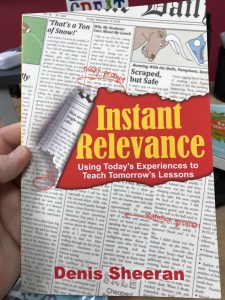 Instant Relevance: Using Today’s Experiences to Teach Tomorrow’s Lessons by Denis Sheeran
My rating: 5 of 5 stars
The first thing that struck me about this book was Denis’ use of Thinking Questions at the end of every chapter to guide the reader through the learning. As we know, questions open the door to the future and are more powerful than answers in that they demand engagement. I couldn’t help but be engaged as I read this book. As a believer in the fact that context and relevance matters, this book hits the mark.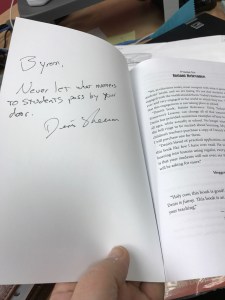
Denis shows you how he brings his life into the classroom. Whether we like it or not, our students want to get to know us – and why not? Or, why would we not want to form that relationship? As Denis said, “We have no choice but to make learning more relevant to our students, or they will learn without us.” If you want to make school work relevant and learn along with your students, you need to read this book.
~Dr. Byron L. Ernest
Emoji: To Use or Not to Use?
 So, here is the fifth of six guest posts from our Focused Leader Academy teacher leaders. If you take a look at the parts of a good blog post we created I believe you will see that Brenda Culbertson and Amanda Case have connected with readers by finding a great hook, have included visuals, and told a story that you, as the reader, can use. Take a minute and check our their view on Emojis.

Mike Fleisch Graph
Emoji: To Use or Not to Use?
Let’s eat, Grandma.
Let’s eat Grandma!

Just like punctuation, Emojis can change the meaning of a sentence. The meaning can be changed for the better or the worse. There is a strong benefit and hindrance to using emojis in written language. The hindrance is that emojis can be misinterpreted and the benefit is that emojis can aid in the tone of the intended message.
Hindrance
Emojis can be misinterpreted when something as simple as 😉 is used. This can be a symbol of an inside joke or a flirtation. The problem is the person on the receiving may take it the opposite way you wanted them to…creating a “pinch”. Should you have used the emoji in the first place?
Benefit
The most evident benefit is that the symbol can add to the tone of your message so that the receiver reads the message as you meant. For example, in a message that seems flat, a smiley face can add a tone of happiness. Can the emoji add an emphasis to your tone?
Emojis are here to stay regardless of whether you think they are a benefit or hindrance in your communication. You need to ask yourself, does the emoji help or hurt my message?
Brenda and Amanda
Emoji Exploji
 So pumped to be bringing you the fourth of six guest posts from teacher leader participants in our Focused Leader Academy. These posts are a result of a session on blogging. No powerpoints or lists of to-dos, just co-creation of a blog post by pairs of our teacher leaders. They even created the stickers pictured at the beginning of the posts with an Emoji maker. Remember, our essential question always is “What can we create together?” Enjoy this post from Kris Phillips and Berry Wells:
Emoji Exploji
Before, you had to worry about students dropping an “F bomb”. Just wait until you get an “Emoji Exploji” in your classroom! For better or for worse, emojis have exploded in our culture. Now we must choose to embrace or reject them. 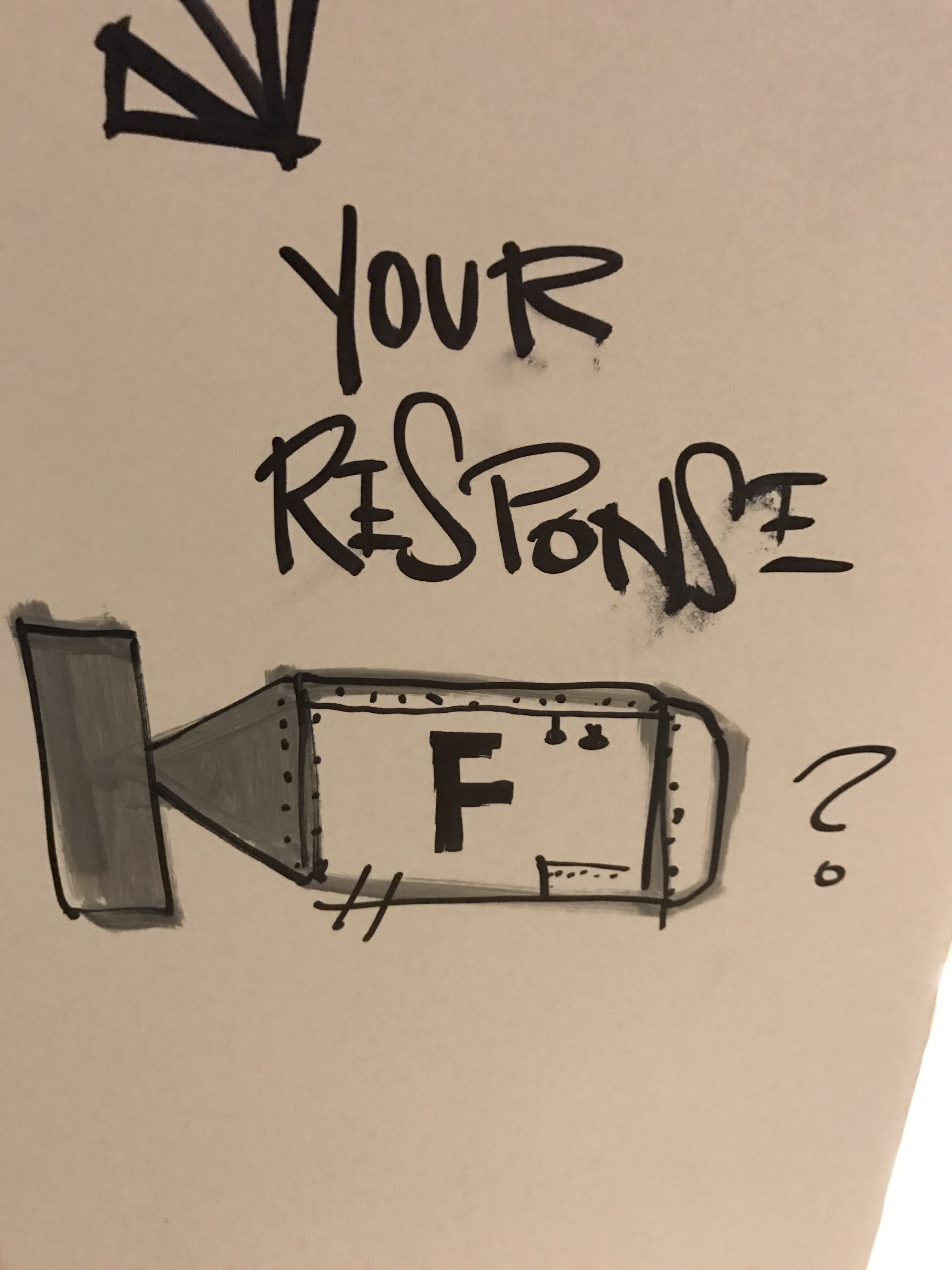
😀What are the benefits of emojis in the classroom?
• Engage students
• Popular
• Expressive
• Fast & Fun
• Easy pulse check
😕What are the drawbacks of emojis in the classroom?
• Overused
• Can be distracting
• Discourages language use
• Can be misinterpreted
• Can be inappropriate
• Can be offensive
Regardless of your personal opinion, emojis are a form of communication, and they are here to stay. The question is will you embrace society’s infatuation with this trend, or will you reject the idiocracy of the emoji exploji? The choice is yours. 😜
Top 7 Benefits of Emojis in the Classroom
 Here is the third of six guest posts submitted by our teacher leaders as part of our Focused Leader Academy this past weekend. Jena Davis and Liz Breeden decided to take the angle of how to use Emojis in the classroom. Blogging certainly takes some individuals outside of their comfort zone, including Jena and Liz. But, by working together and doing a fast creation using the “through line” of Emojis that we had been working with all day, they were able to author a great post. Here is Jena and Liz’s creation:

Smiley face! Frowny face! Heart! Emojis are everywhere. Do they help or hinder in the classroom? Used correctly, emojis can be beneficial in education. Emojis offer another method of communication between students and teachers.
1. Communication feeling or emotion: emojis can communicate feelings or emotions of students to teachers. Students who may not know the words to associate with their feelings may be able to communicate those feelings through the use of an emoji instead.
2. Visual: emojis are a graphic and visual representation of thoughts and feelings. Students are often visual learners and drawn to such representations.
3. Engaging: emojis are a way for students to engage with one another, or even with the teacher, in the classroom. Students can share thoughts and feelings with one another.
4. Check for Understanding: teachers can use an emoji to check for understanding or a student’s feeling or attitude about a particular topic.
5. Quick and Easy: emojis are a quick check and easy to use for both students and teachers.
6. Variety: there are a variety of emojis to choose from when making a selection. Students may be able to find and communicate something for which they don’t have the vocabulary to communicate.
7. Icebreaker: emojis can be used to ease the awkwardness of an uncomfortable moment or message.
How can YOU use emojis to communicate with YOUR students in a positive way?
How Do You Emoji?
 This is the second of six great guest blog posts from the teacher leaders in our Focused Leader Academy. These guest posts are a result of a session yesterday on blogging as a leadership tool. We had been using the “through line” (a theme or idea that runs from the beginning to the end of one of our design sprints that has a connecting theme or plot) of Emojis, so it made sense to have the prompt of: Emojis: Benefit or Hindrance? Participants paired up and proceeded to write a blog post kowing I would be posting it as a guest post.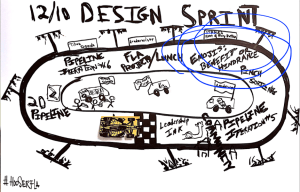

Graphic by Mike Fleisch
Enjoy Kristen and Lisa’s post:
Pick up your phone and take a look at the last emoji you used. What is it and what could it mean? My last emoji was 😬 in a tweet that reads “Don’t let perfection get in the way of a good blog 😬.”
An emoji can be beneficial or can be a hindrance. Here are our top 5 pluses and deltas of using an emoji:
- Supportive/Inspirational-Whether it be 😘 or a 👍 these simple gestures can provide support to a friend in need.
- Clarifying- An emoji can quickly add to and create the tone of the conversation.
- Telling-Did you know that Siri reads emoji’s as exactly what they are? Take for example when your teenage daughter says to Siri “Call Caleb.” And Siri responds with “Calling Caleb fire, beating heart, face blowing kiss.” 🔥, 💕, 😘. That real life situation was very telling for my husband when he overheard our teenage daughter calling her boyfriend.
- Misinterpreted-Could your emoji actually be a pinch to your reader? Have you ever gotten an unexplained winky face? 😜
- Unprofessional/inappropriate-There is a time and a place for an emoji and its probably not in the work place.
So choose your emojis wisely. ☺
Teacher Evaluation Norming: “What Can We Create Together?”
 When creating the ideal school community for meaningful teacher evaluation we must clearly define the expectations for effective teaching at our schools. We must also effectively communicate the criteria that will be used to evaluate teacher performance. Personally, I believe the most important aspect of teacher evaluation is to ensure professional growth for our teachers in order to move them toward being highly effective. Our school has become a part of the Indiana Teacher Appraisal and Support System (INTASS) and I love how Dr. Sandi Cole, Director of Center on Education and Lifelong Learning puts it: “Teacher evaluation must be something done for teachers, not to them.” This statement has become a core value of our work of overhauling our entire teacher evaluation process. The INTASS process rests on four basic elements of a quality evaluation plan: a) Clear, frequent, and transparent communication among a wide base of stakeholders; b) Professional practice measures that are mutually agreed upon by stakeholders; c) Multiple measures of student learning outcomes, and d) Fully aligned post-evaluation processes, including job-embedded professional growth and support for all educators.
Another crucial part of this process is the norming of evaluators. We have chosen to have a monthly retreat of our evaluation team to ensure that evaluators have an accurate and aligned perception of classroom practice and student growth. This norming process also guarantees assigned evaluation ratings that are accurate reflections of teacher effectiveness. During norming, evaluators align or “calibrate” their scoring so that every member of the team applies the rubric consistently across teachers, and of the team of evaluators scores consistently with one another (inter-rater reliability). Having similar scoring and uniform expectations of teacher effectiveness is critical if you want to make meaningful comparisons among teachers.
I have also found the norming to be a good time for our administrative staff to engage in professional development for the purpose supporting effective leading of learning. A healthy team culture—and ultimately the school’s performance—rely on the team’s ability to encourage individual improvement in constructive ways. Through our norming process, administrative team members are learning and practicing the skills and dispositions necessary to mentor, coach, and evaluate colleagues. Our norming process has enabled the team to practice a model of shared leadership. By having regular norming retreats, team members are able to refine their collaboration skills and dispositions to ensure the team’s ability to act according to its shared purpose of enabling and empowering all of our teachers to be highly effective.
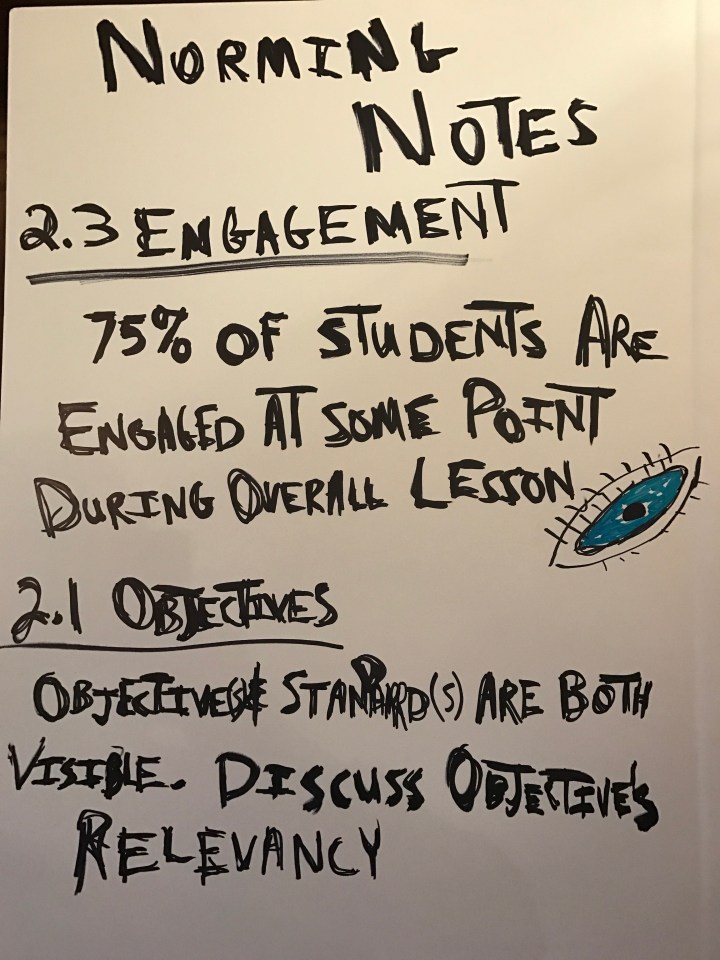
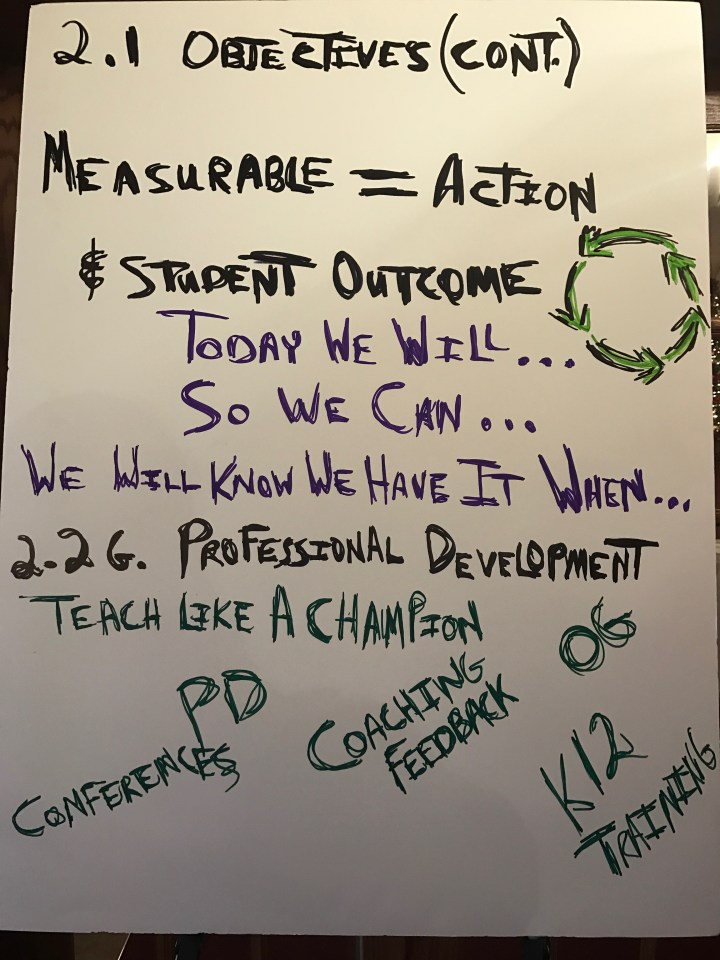
At this past week’s norming retreat I was struck by the amount of learning and professional growth that also went on with the administrative team of evaluators. There were discussions of how to more effectively use technology, sharing of best practices witnessed such as for checking for mastery, and new ways of engaging students; just to name a few. We even discussed the use of Emojis for engaging students. I couldn’t help but draw my own Emoji (shared in the picture above) as I graphically facilitated the norming retreat. We also were able to identify areas where we need to provide professional development learning opportunities for our teachers. I believe my role as a leader is not necessarily to always be a better role model or to drive change; my role is to create structures and experiences that bring our community of staff members together to identify and solve their own issues and drive improvement. Holding these norming retreats has enabled this structure of experiences for our administrative staff.
This norming process has become an important piece of being able for our school community to answer the question of “What can we create together?” I believe we are creating a community of continual improvement and one where our teachers are valued as professionals and given the feedback and resources to be the very best. I am attaching images of our notes from our latest norming retreat so you can see what went on:


Community Is The Culture
 This past week I had the opportunity with Mike Fleisch to do a design sprint (what others would call a workshop) on our school’s Focused Leader Academy. During our design sprint we built models together of what a community would look like where there is a serious commitment to developing leaders. I told the design sprint participants that I now described what we were doing as community building, not culture building. Culture emerges from the past values we develop together. I would rather us live in the context of the world we live in now and, more importantly, how do we want the world to be. With this worldview in mind, we wanted the group think about what a community of people in a school could create together.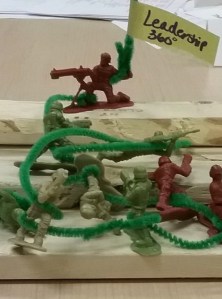
Daniel Goleman said “Executives who can effectively focus on others emerge as natural leaders regardless of organizational or social rank.” These leaders are the ones who find common ground, whose opinions carry the most weight, and with whom other people want to work.They emerge as natural leaders regardless of organizational or social rank. As leaders we need focus on others, which is the foundation of empathy and of an ability to build social relationships.
As a leader I believe it is important for me to be available to stakeholders so that I have the opportunity to meet others, engage in conversation, and share thoughts, ideas and concerns, and to build community and a sense of belonging. It has been my experience that those I serve have lots of wisdom, the ability to make connections, and to help come up with solutions. 
Peter Block said “We will never eliminate our need for great leaders and people on the stage; we just cannot afford to put all our experience and future in their hands.” To be a transformative leader we must create communities (a community can be our organization, school, or business too) that produce deeper relatedness across boundaries. Additionally we need to create new conversations that focus on the gifts and capacities of others.
“Leaders are held to three tasks: to shift the context within which people gather, name the debate through powerful questions, and listen rather than advocate, defend, or provide answers.” ~ Peter Block
I have now begun to talk in terms of community instead of culture. We need to begin to think of all the contexts we operate within are communities. Community then grows out of the possibilities of those in our communities. It is those citizens that build our communities. I have learned that the culture is the set of shared values that emerges from the history of experience and the story that is produced out of that. It is the past that gives us our identity and corrals our behavior in order to preserve that identity. Context is the way we see the world. Peter Block taught us to see the world, not remember the world. 
So, as we continue to improve the communities in which we live, work, and lead we need to continually ask the question “What can we create together?” This emerges from the social space we create when we are together.
I Count You Twice!
 Today is Thanksgiving – a joyous and festive kickoff to the holiday season. Many of us have a lot to be thankful for, including family and friends, and I’m especially thankful that I’m able to serve as a leader making significant strides in education. I also very thankful for all those I work with, serve, or have associations with. I am particularly thankful for all teachers who put in on the line every day for our sons and daughters. Please know that when I count my blessings I count you twice!
During this holiday season, take time to reflect on what you are thankful for. While we have many improvements to make in our educational community, and always will, we have many things to be thankful for.
Education options are more flexible than ever. Not too many years ago, proximity and zip code was a crucial part of education. If you didn’t live near a school, you were unlikely to have any access to it. The ability to have choices had made all the difference for huge numbers of our children and adults.
Today, we are more connected to k-12 and postsecondary education than ever before. There are evening classes, online options for both secondary and traditional college programs, and certificate programs for people who want to learn a specific set of skills or continue their professional growth.
As I reflect this morning on my education, both past and present, I am thankful that I was taught to think critically, solve problems creatively, analyze and be open to the world around us, and most importantly how to learn. I believe it is important for us to remember that it is during our education we learn our sense of community. Within a school setting, a child quickly learns the importance of teamwork and cooperation. A school requires a joint effort to be safe and clean. That’s when our children learn first-hand that everyone can make a difference and everyone’s efforts are important.
I am also thankful schools don’t just teach our children academic curriculum. Schools are also helping our children develop into respectful global citizens. It is at school that our children are presented with life lessons they may not have learned at home.providing our children with lessons in acceptance. Our children are learning that not everyone speaks the same language, wears the same types of clothes, or eats the same types of foods at lunches. And that’s all okay. Our children are learning to take time to truly understand others and embrace who they are.
While our education system certainly has room for improvement across multiple factors, I believe we need to be thankful for all the great things happening in education.
Your Life’s Journey Is Your Education
 The Education of Henry Adams by Henry Adams
My rating: 4 of 5 stars
This book really caused me to do a great deal of reflection about education and my own education in particular. As a believer in lifelong learning, Adams assured me that investing in learning at any point in life is a sound investment. His teachings also made me reflect on the fact that living life is an education in and of itself. We need to make sure we are using the context in which we live and all the experiences to learn at the highest level. How do we do this? I believe we can learn from Adams that it is ok that we are ignorant at every new turn in life and that we need to begin learning from everyone and every experience we have. If I were to sum up the book in one statement it would be, “Your life’s journey is your education.”
In this book, Henry Adams is not talking about himself as much as he is of the education and the context in which he lived provided an education. Adams serves as the narrator in this book. At the writing he is in his late sixties and refers to himself in the third person. This is an interesting way to read an autobiography that I am not sure I like, but I got used to it. Sometimes his referring to himself in third person made it made it hard to follow, but in the context of making living life our education this was probably the right way to do it. In his “Preface,” he introduces the metaphor of a manikin, which represents Henry Adams. The various garments draped across the manikin represent his education. It was this metaphor and how all events proved learning that I formed the opinion that Adams believed in lifelong learning. He continually refers to his ignorance, which told me he was of a growth mindset long before the development of the “growth mindset” theory.
Adams tells his readers that any young man seeking education should expect no more from his teacher than the mastery of his tools. Leaning on the scientific approach that he develops in the education, he suggests that the student is merely a mass of energy. The education he seeks is a way to economize that energy. The training by the instructor is a manner of clearing obstacles from the path of the student. My take on Adams’ position is that a person’s life in its entirety is our education.
Adams wrote, “Probably no child, born in the year, held better cards than he.” Adams also told us that the world he lived was rapidly changing – as it does for all of us. It is a world of contrasts. It was this contrast that Adams used throughout the book to discuss his education. In the book Adams states that as yet he knows nothing. Even after graduating from Harvard, he did not believe his education had begun. My sense is he believed in learning by doing and being the person in the arena. Here are some of my favorite quotes from the book:
– The Ego has … become a manikin on which the toilet of education is to be draped in order to show the fit or misfit of the clothes. The object of study is the garment, not the figure.
– Nothing in education is so astonishing as the amount of ignorance it accumulates in the form of inert facts.
– The object of education for that mind should be the teaching itself how to react with vigor and economy. No doubt the world at large will always lag so far behind the active mind as to make a soft cushion of inertia to drop upon, as it did for Henry Adams; but education should try to lessen the obstacles, diminish the friction, invigorate the energy, and should train minds to react, not at haphazard, but by choice, on the lines of force that attract their world.
And… my favorite of all the quotes: “Man does not concern himself with understanding how discoveries can be used. He will let the discovery show him how.” I really believe this reinforces my theory that Adams believed that our life’s journey is our education. How would you write the autobiography of your education? What do you need to be doing in your context to have it read how you would like it to? This book will cause you to reflect.
~ Dr. Byron L. Ernest
I Get To Read!
 I realize that, ideally, a fondness for books starts at home, but reading can become a habit through opportunities to read self-chosen books at school. Consumed by the urgency to raise students’ reading scores, some policy makers and school officials have forgotten that children learn to read by reading. I support “balanced literacy” instruction, which includes independent reading. All students should be given access to books they want to read throughout their schooling, and I dream of the day all pre-readers would have an adult who would read aloud to them everyday. Through independent reading children gain a wealth of background knowledge about many different things, come to understand story and non-fiction structures, absorb the essentials of English grammar, and continuously expand their vocabularies. Many also remember visually how to spell words.
Interestingly, it is the adult/child relationship to reading that prompted this post. This past week my son needed to pick a book to read for his sophomore English class. Yep, you heard me right, he got to choose. First of all, I was excited by that! In my view students should get to choose what they read. If you want to hear my story of how I got turned on to being the rabid reader I am today click here to read “Reading Big Red.” Short of the long story – I hated reading until I got to pick my first book (not till middle school mind you). Now I read 70-80 books a year. So, I’m sure you can see why I was excited for Heath to get to pick a book he wanted to read – just typing here I just can’t see why people don’t get this concept – picking your own book makes it about the reader (student centered). Research has shown that letting children choose their own books could in fact make them better readers. When you think back to your own classroom experience, being assigned one book to read as a class was often a dreadful experience. Teachers would assign students to read a some classic and, instead of being enamored with this classic tale, students were often less than thrilled. That was me and has also been my son Heath’s experience, too.
 Back to the story – Heath came home all excited (think about this; he’s coming home from school excited!) about the book he had picked: Tough As They Come by Travis Mills. Heath proceeded to tell me all about the book and Travis Mills. Travis is a retired United States Army Staff Sergeant and what he calls a recalibrated warrior. He is now a motivational speaker, actor, author and an advocate for veterans and amputees. In his book, Tough as They Come, Travis shares his journey of serving our country. Despite losing portions of both arms and legs from an IED while on active duty in Afghanistan, Travis continues to overcome life’s challenges, breaking physical barriers and defying odds. Travis lives by his motto: “Never give up. Never quit.”
Think about what just happened here:
- My son chose a book
- My son wanted to read a book (Not to sound like Donald Trump, but this is HUGE!)
- My son had researched about a book and the author
- My son was going to get a role model and mentor, Travis Mills, through the power of reading
I thought this was the coolest day ever. I read to Heath when he was younger every night and then rubbed his back till he went to sleep (He would not want me to tell that, but these were some of the greatest moments as a dad), but now he was explaining a book he wanted to read to me. And… as if it could not get any better… Heath proceeded to say, “Let’s both download this book and read it together Dad. I think you’ll really like it.” I ask you you, “How does it get any better than that?” My sophomore in high school son wants to read a book with his dad! Well it does get better – Heath has agreed to write a guest blog post about the book for me! Watch for it soon.
Here’s the deal: giving students a choice has been linked with scholastic achievement. Some researchers believe that when students (especially boys) are free to choose what they want to read, they will read for pleasure. Reading for pleasure has been linked with scholastic achievement in school. Furthermore, students will read for pleasure and enjoy reading. When children can freely choose what they want to read, they will be reading for pleasure, not because there is an assignment due. A choice allows children to be enthusiastic about what they are reading, and in turn they will be engaged.
I realize there are books and other literary pieces we need to have our children reading, but I believe we need to give students control of their own reading. Allow them to make their own choices and they will explore more genres. Expose your students to books they love and you will see that they will not only read for pleasure, but enjoy what they are reading. I have always said we need to change the mindset from, “I have to read.” to “I get to read!” We can do this and student choice is one piece of it.
Think about this as a conversation starter and relationship builder with your children and students: “So, what are you reading right now?”


leave a comment