Pathways To Quality Principals

Yesterday I had the opportunity to be part of a great National Association of State Boards of Education (NASBE) webinar where Susan M. Gates presented findings from research conducted by RAND Corporation. Click this recording link to view the recording of the webinar entitled Using State-Level Policy Levers to Promote Principal Quality. I was honored at the end of Susan’s presentation of the findings to, along with NASBE’s President and CEO Robert Hull, provide some thoughts, observations, and feedback.
First of all, this is such an important topic for state boards and all policymakers to contemplate. Leadership matters. The research suggested, as we might have all guessed, that there is no “one size fits all” policy that will miraculously place quality principals in all schools. Another point that came out in the research was that professional development alone is insufficient. Highly effective pre-service development must also be a part of the pathway to quality principals. As a former principal, I reflected as I was reviewing this report and was thinking about the complexity of being a principal. Ultimately, the principal is a leader of learning, but there are many parts to that. Highly effective teachers and facilitation of learning and leadership define how successful any school is. A school without a strong leader will likely fail the students it serves.
The RAND report gave us four key levers to use as policymakers. Those four levers are:
- Standards
- Licensure
- Program Approval
- Professional Development
Interestingly, four things came to mind as I was reviewing and listening to Susan’s report. Here are my thoughts, observations, and feedback:
- As state board members, we need to take the approval of teacher education and leadership development programs very seriously. In my own state, our department of education does a tremendous job of evaluating and providing us reports for revue prior to approval of programs. We still have an obligation to study these reports and make sure the programs meet the test of equity and excellence. We also need to make sure that any pathway to the principalship is not rewarding the person who can best meet meaningless requirements.
- As I listened, I wondered if there were ways to leverage the attention we are now rightly giving to teacher leadership. Teacher leaders are so important to building the capacity is schools and it seems to me we could better leverage identifying those teachers with the leadership dispositions and develop those skills. Notice I said dispositions, because many teachers are very interested in being teacher leaders but not, at least in the present-tense, being a principal. As a believer that everyone is a leader and that leadership should happen where the data is created, in this case the classroom, it makes sense we would be developing teacher leaders to make decisions that traditionally have been cascaded down to teachers. This real-time development would give teachers practical pre-service development that would be important to effective leading for learning whether a teacher or principal. I would argue that a well developed and highly effective teacher/teacher leader could be the best bet to become a high quality principal. You’ll want to check out Susan’s response to this point in the recording.
- Another point made was the fact that sometimes we need to look at subtraction as well as addition when formulating policy. We deal with this a lot in education where we continue to place mandates without taking anything away. We need to allow for more flexibility. Additionally, how can we more effectively use incentives or information sharing in the place of mandates?
- Finally, there was a suggestion in the report of finding opportunistic ways: “Be opportunistic: link principal initiatives to key state education priorities and build on related initiatives.” By doing this we might find new ways to streamline, provide flexibility, or identify those things that can be removed.
I really appreciate the research and this report. Again, it provides levers for us to consider using as policymakers as we contemplate how to better prepare and provide quality pathways for the development of our critically important principals.
Second Quarter 2020 Book Inspired Posts

This is the second of five posts highlighting my 2020 blog posts that gained inspiration from books I was reading at the time. The first quarter posts were highlighted earlier in the week in The First Quarter Of An Incredible Year of Reading. I really love to read and think I maybe read in a little different way than others. I know leaders who many times I can guess what they are reading because they are copying everything that is in the book or copying the person the book is about. I always say, “Great leaders don’t copy.” I prefer to think of myself in terms of being a portrait that is being painted that will never be completed. Everything I read, every person I come in contact with, every event I experience are strokes of the brush or different colors of paint being added to what I hope is becoming a beautiful portrait of who I am becoming. Another thing I say a lot related to this is, “I’m not done!”

It is curious to me that with global literacy rates as high as 86%, we are shown to be reading less and less. I worry about this because reading catalyzes insight, innovation, empathy, and personal growth and effectiveness. For example one of the books, Saving FACE, by Maya Hu-Chan that I blogged about in FACE Is Social Currency (listed below), has made me a better person. I can honestly say that having the opportunity to read her book, get to personally know Maya, and do some webinars with her has changed my life and enabled me to help in the professional and personal growth of those I serve. Let me tell you, the signed copy of her book she sent me is one of the most valued possessions in my library. Again, I point out: how did this all happen? It started with reading a book. I’m going to keep you all in suspense until the last post of the year when I announce my top books of the year where this one ends up, but let’s just say it’s already on the list. This is one of those cases where being a bibliophile paid off in getting to know and learn from such an incredible leader.
Take a moment and check out just a little of what I learned from some of the books I was reading in the second quarter of 2020. Now, on day 281 of the Global Pandemic that seems so long ago, but all of the books I have read in 2020 have been an important part of the continued journey to get on the other side of this pandemic. Here are my second quarter posts referencing some of the books I was reading at the time:
April, 2020


Whether It’s Spinning Plates or Juggling Balls, We Can’t Afford To Drop Either For Our Kids!
Educating Students To Improve The World
May, 2020

Good Enough: Five Positives For Every Negative
June, 2020


Pretty great set of books from the second quarter of 2020. It’s probably obvious how these books inspired blog posts. Let me know if any of these books have inspired you along the way, and how.
Going Platinum

Last week I had the opportunity to lead a session at our Principal’s Academy. My topic was “Professional Capacity of School Personnel.” Building the capacity of others is a passion area of mine. As a believer in intent-based leadership I love telling the story of creating a leader-leader instead of leader-follower community. I learned this from former United States Navy Captain David Marquet, who also taught me that we should build relationships such to understand how others want to be treated and understand their needs.

In Leadership Is Language Marquet taught us that we need to change the way we communicate. We need to drop the prehistoric language of command and control and learning the language of creativity, collaboration, and commitment. When building the capacity of our teams, how we communicate matters.

This session I brought in some other content that I was introduced to by my friend Maya Hu-Chan, author of Saving Face. She introduced me to the “Platinum Rule.” The “Platinum Rule” is the brain-child of Dr. Tony Alessandra and goes like this: “Treat others the way they want to be treated.” Brilliant! Ever since being introduced to this I have been sharing with as many as I can.
What a difference. The Platinum Rule accommodates the feelings of others. The focus of relationships shifts from “this is what I want, so I’ll give everyone the same thing” to “let me first understand what they want and then I’ll give it to them.” This brings empathy and compassion to a new level.
This really resonated with the group and they spent time discussing how to implement this into their daily work as a principal and leader of learning. I was so thrilled to get this message in a thank you email today: “Some even shouted out your presentation in their follow-up feedback. When asked “What is the most important thing you will take away from today?” One wrote “Strategies to get into the classroom – a great perspective from one of the presenters, ‘treat teachers the way they want to be treated.'” You never know what will resonate with participants, but I am thrilled that others are now treating others the way they want to be treated. Let’s all go platinum!
The First Quarter Of An Incredible Year of Reading

As I begin to reflect on 2020, even on Day 279 of the Global Pandemic, I must say it has been an incredible year of reading. As of today I have finished 115 books and must say that these books have caused a great reflection and further research. I have learned so much from the books I have read and have written many blog posts inspired by the learning. Each year, and this year is no exception, I always get asked what my favorite book I read was, my top books of the year, or which books I would recommend. This is really tough because no one will ever let me off the hook with me saying, “All of them!”
Last year I did a post Best Books of 2019 to answer the question of my favorite books from the year. This year I am going to do it a little differently. I am going to do five posts over the last days of 2020 highlighting all the posts that were inspired by books that I read in 2020, and then a final post of the year naming my top five. Hopefully, this will make it easy for you to take a look at the inspirations and learning provided by a few of the books I have read this year. So, here we go for the first quarter of 2020:
January, 2020
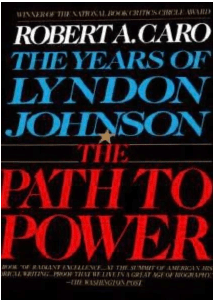


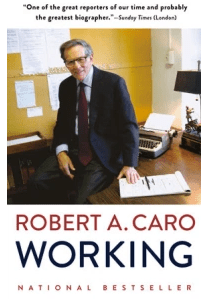
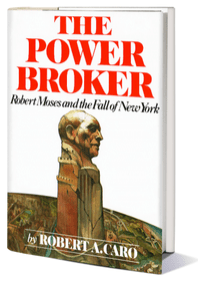

Every Day We Are Making Memories
“Remember, Freedom Is Yours Until You Give It Up”
“It Has Been An Honor To Live This Life”
When Purpose & Passion Turn Into Ambition
Empowerment Triggers The Approach System
366 Page Best Selling Autobiography
February, 2020



Arguing The Value Of Our Experiences Is Futile
A Time To Fish & A Time To Mend Nets
March, 2020


Influencer, Inspiring, & Impactful
The Nuanced Context Of The Great Society
Reflective Culture Gut Checks: A Five Star Review
Some pretty great inspiration from the first three months of 2020, wouldn’t you say? I’ll get the second quarter compiled and posted soon.
If Only We Would Just Ask
Have you ever complained about something? I know. Stupid question, right? We have all complained about something. Many times a complaint is an unspoken request. Additionally, when we don’t ask for what we want we tend to complain about our needs not getting met. I guess as much as we complain, we must not be very good at asking for what we want. I also believe it to be much more complicated than this, however. When we ask for what we want we make ourselves vulnerable to being turned down or judged negatively for our request. Sometimes people don’t ask because they do not believe they really deserve what they are asking for.
Let’s think about this from a case study perspective. Let’s say I like running through the television channels a time or two. Or three. Or four. It seems my wife is not into that as much as I am. Now, my wife could complain about me, or she could ask me to stop doing that. Did you catch that? If only we’d just ask! Remember, many times a complaint is an unspoken request. We also need to make sure we are paying attention to what it is that makes others complain as well. Also, don’t forget, we are generally much better at listening to ourselves than others.

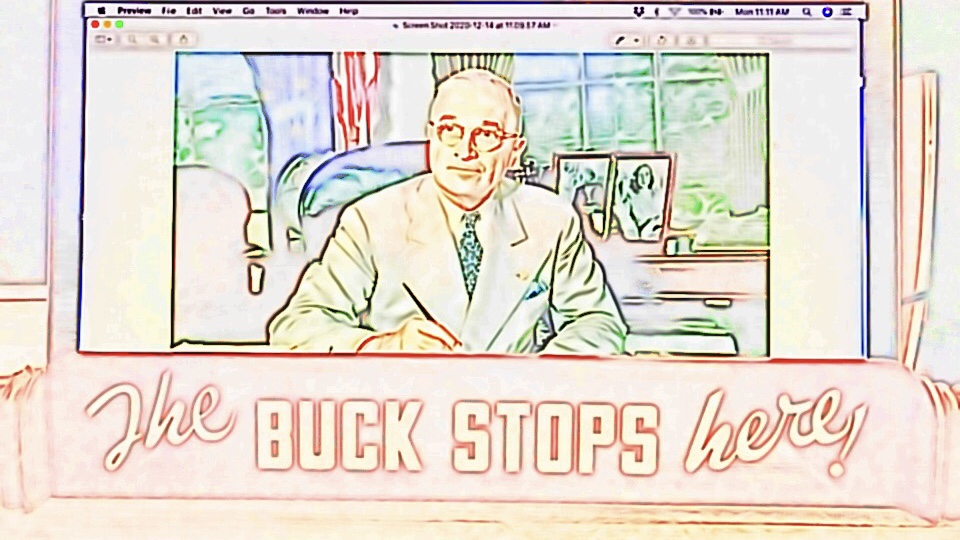
This very subject was the topic of Chapter 16 entitled “Work On Yourself” in Mindset Mondays With DTK by David Taylor-Klaus (DTK). I loved that he quoted one of my favorite presidents when he said, “If leading is the ultimate responsibility, then it makes sense to start by improving yourself, and working on yourself even harder than you work on your business. As Harry Truman said, ‘The buck stops here'” (p. 134). What does this mean? We need to express what DTK calls the “dream behind the complaint.” The buck stopping with us begins with us expressing what we need to have changed or done. Again, if only we’d just ask!
Make Your Changes Out Loud

We know that a best practice for editing written work is listening out loud. Hearing our written work offers a new perspective to help us catch grammatical errors, poor sentence structure, plot holes, or pacing issues that your eyes skip over when you read. Because our minds will automatically make corrections when looking at something, listening provides another perspective for us to review our written work. In fact, there are apps for this. These apps allow you to edit documents while exercising, taking a run, or in my, case milking cows.
Last night when working with teacher leaders from Florida, Georgia, and Tennessee we were discussing how to adapt boldly and one of the participants said that we need to “make your changes out loud.” This was a ‘click the mic moment’ (the Zoom equivalent of ‘drop the mic’). This comment was genius. If we make our changes or intended changes out loud we can get feedback from others to make the proposed change better and give others a chance to understand the changes before they happen.
Let’s go back to using writing as the analogy here. Whether we are working on a blog, novel, or business document it’s critical that each paragraph is well written and tells the complete story necessary in that block of verse to get our point(s) across. Reading audibly as opposed to only in our head, changes our perspective on the text and provides deeper meaning. By employing making your changes out loud you will inspire others to greater engagement, ownership, and action to create positive change. So, I challenge you to listen to make your changes out loud, make sure others are listening and providing feedback, and listen to yourself as you speak or read your own words of change.
Leading From The Optimal Height

The Brown Pelican is one of my favorite birds. In fact I have blogged about them before in Pelican Leadership Lessons. The Brown Pelican will target and dive for food from heights of 60-65 feet. They have also learned that a steep dive angle, between 60 and 90 degrees, reduces aiming errors caused by water surface refraction. In doing some research I found that Brown Pelicans “learn” this behavior because adults are better marksmen than young birds.
This lesson and example from the Pelican reminded me that I must get myself to the optimal height to see the detail needed, but yet still get the big picture. This really becomes a question of strategic insight. An insight is the combination of two or more pieces of information or data in a unique way that leads to the creation of new value. Strategic thinking, then, is the ability to generate insights that lead to competitive advantage.
One of the leadership lessons I have learned over time is how we need to step into the balcony, as leaders, and watch the dance above all the chaos and noise. But, like the Brown Pelican, we must find the optimal height for seeing our targets and diving in to support our teams.
A Great Unknown

David Taylor-Klaus (DTK) used the smoothing of a rock under a waterfall over a period of time as the metaphor in Chapter 15, Define Yourself, in Mindset Mondays with DTK. He wrote, “Just as it is in nature, there’s no escaping the fact that your human experiences shape who you are.” He went on to say, “Yet you neither become nor are defined by the events that impact you.” DTK’s metaphor made me think of the beach and ocean. Beaches are constantly changing. Tides and weather can alter beaches every day, bringing new materials and taking away others.

Even though a beach is constantly changing (just like us) every beach has a beach profile. A beach profile describes the landscape of the beach, both above the water and below it. We, like the beach, all have a profile that the events of our lives do not have to define. While ever rolling in a constant rhythm of ebb and flow, each wave, day, and week is different. No matter the changes, the beach is always beautiful – just like us.
We never know what we are going to encounter. Just like the beach has new weather and tidal patterns in its future, we have an unfamiliar element, perhaps a great unknown. But, it’s only by encountering the unknown that we can learn, grow, and experience adventure.
The Possibilities Are Endless

I just had to do a followup post on my sandcastle post from this morning, Build Great Things Anyway. I have continued to think about how sandcastles have endless possibilities. Kids don’t go out with a set plan, architectural drawing, or blueprint; they just create. Scale isn’t even worried about in most cases. This thought reminded me of Peter Block teaching me that, as a leader or community member, when creating and ideating you don’t want to move to quickly to scaling. This can kill great ideas. The sandcastle teacher I encountered never tells kids that something can’t go somewhere she wants to put it, he can’t make it look that way. That’s why sandcastles are so beautiful.
Many times the process is more important than the product. This is very true when making sandcastles. We make the awesome structures in and out of sand with the understanding that when the tide comes in, or if it rains overnight, or even if left, the castle will wash away, or erode away in the wind, and the sand will again become part of the beach. Kids, even at a young age, get that it is about the process and activity of building the sandcastle.
I wonder if we should take a cue from the kids on the beach. In a world that requires us to work as a community to solve complex issues, develop new ideas, and be creative we need to be cognizant of the process. If we want everyone to be engaged we need to remember the process of building sandcastles on the beach.
Build Great Things Anyway

I had a chance meeting of a professional sandcastle builder and teacher of sandcastle making this week. First of all, I did not know there was such a thing. Secondly, I didn’t do much sandcastle building in my childhood, so I was fascinated to discuss the art of sandcastle building. Really, I hadn’t thought much about the fact there are different kinds of sand. Bottom-line: lots of new things going through my mind.
There are three main rules for sandcastle building:
- Always use wet (sloppy) sand (no such thing as too much water)
- Always form shapes using a pyramid – larger at the base – thinner at the top
- When all the formed sand is completed work from the top to the bottom
Other pieces of advice were to build on a big mound. This enables sand to fall down and away from the sandcastle as you are carving. And, it makes it up higher and easier to work on. Besides buckets of sand and water, the tools are pretty basic. You use simple tools (like a straw, a pencil, and a metal cutting device) to chisel it starting from the top.
The rule that was stressed over and over was working from the top down. If you work from the bottom up, the pieces from the top will tumble down onto the bottom, thus flawing your previous work. This is a lot like leadership in an organization. If the leader is a tyrannical monster all the trash falls down on the people doing the work getting marred and ruined. Thus, the flatter the organization the better, or at least the leader needs to already be chiseled and refined so all the chaff and sand isn’t ruining those below. But remember, if there are no “those below” in an organization, no worries.
I love that there are people helping kids learn to build sandcastles. When children play and create in the outer world, simultaneously they also create and learn in the inner world. We adults know change is coming when we build sandcastles but we encourage kids to build something great anyway. In our schools and classrooms, this is a valuable lesson. It’s also an important lesson for leaders to remember. Change comes, colleagues come and go, new research is discovered with the ebb and flow of the waves ever coming and going, and the tide is ever shifting. Build great things anyway.
 Byron's Babbles
leave a comment