Until Every Child Is Well

I was struck this week while at Harvard University by the story of Boston Children’s Hospital’s vision/mission: Until Every Child Is Well. Really, I guess it would be more of an anthem, as Sally Hogshead would call it. What an anthem it is, though! Think about how simple and abstract “Until Every Child Is Well” is. In my studies this week I was reminded how important it is to make sure that our vision, or anthem, is broad enough to enable us to change as the world changes. What a simple, yet powerful statement Boston Children’s Hospital has made. Who could argue with, “Until Every Child Is Well?”
If we were to write it the way Joseph Michelli taught me, using the word “Wowful,” it would be “Wowful Child Wellness.” Regardless, both statements allow for cutting edge theories of action and strategery. I was also reminded this week of the 1942 Harvard MBA graduate, John Fisher, who was the CEO of Muncie, Indiana company Ball Corporation (you probably know them for Ball Jars). He worked for the company starting in 1941 and was CEO from 1970 to 1981. After World War II the glass jar business was booming, but later Fisher purchased and developed an aerospace business. Everyone thought he was crazy, but it led to the development of the plastic water bottle. I’ll bet you would agree that was a pretty savvy move. When asked about the shift from glass at a Harvard reunion, he stated that their vision had nothing to do with just glass, it was, “we want to be the best container company.” Again, simple, broad, abstract, and agnostic. John Fisher had learned well from his Harvard MBA. He learned you must exploit your present capabilities, but you must at the same time explore. We must learn about the future quicker than anyone else.

So, since my personal wow statement is “Delivering Wowful Educational Leadership” and my anthem is “Energetic Change Agent,” I set out reflect on what these two statements should be for my school; given my learning this week. Remember the goal is to be simple, broad, abstract, and agnostic. Let’s define agnostic. The dictionary defines agnostic as: a person who holds the view that any ultimate reality is unknown and probably unknowable; broadly one who is not committed to believing in anything being for sure. Think about that for removing all barriers of thinking things will stay status quo or need to be done the same way.
Here’s what I came up with:
Delivering Wowful Learning
Until Every Child Graduates
I would welcome your feedback on these two statements. It would be great to here how you would change them. These statements allow us to change as the world changes to do what the Indiana State Constitution says in Section 8 where it states: Section 1. Knowledge and learning, general diffused throughout a community, being essential to the preservation of a free government; it should be the duty of the General Assembly to encourage, by all suitable means, moral, intellectual scientific, and agricultural improvement; and provide, by law, for a general and uniform system of Common Schools, wherein tuition shall without charge, and equally open to all. It is important to pay particular attention to the statement, “by all suitable means.” We have a constitutional obligation to make our delivery of knowledge and learning to our students distinct and effective. I love the statement, “by all suitable means.” That is simple, broad, and abstract.
Schools have growing alternatives for delivering education. Choices range from presentations and discussions in the classroom to online, blended, and hybrid courses. As facilitators of learning, teachers will increasingly turn the process of teaching and learning into a partnership, with students and teachers constantly learning from each other. Self- learning will be seen as a bonus— and encouraged. Also, think about the online world where the greatest minds are just a click away and readily available. This open access has tremendous possibilities for many of our US underserved populations as well as third world countries. Pretty exciting, don’t you think?
I encourage you to take some time and think about your school or organization vision, mission, and anthem. Does it allow you to be nimble and change as the world changes? Remember: Leaders need to be consistently inconsistent. We have to constantly explore who we are and what we do!
Am I Mr. Spock Or Not?

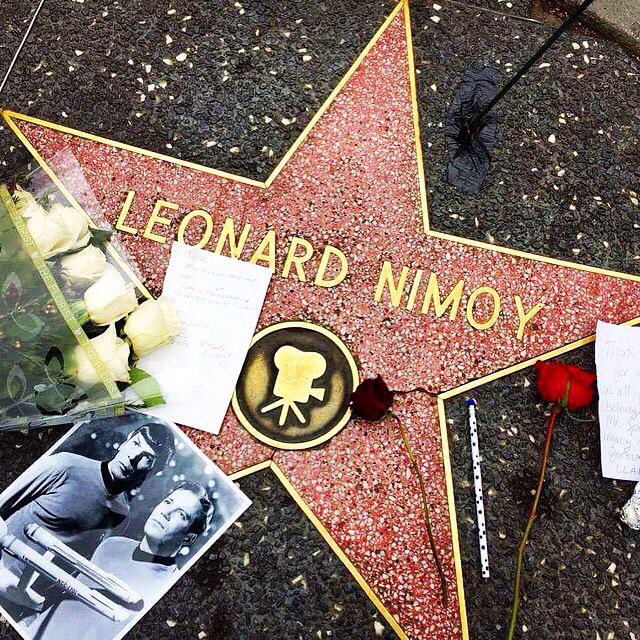
“I think it’s my adventure, my trip, my journey, and I guess my attitude is, let the chips fall where they may.” ~Leonard Nimoy
I love this quote from Leonard Nimoy, who we all know better as Mr. Spock from Star Trek. It was not always easy being more Mr. Spock than Leonard Nimoy. In fact he wrote two great books about it: the first book was titled “I Am Not Spock.” Then about twenty years later he wrote a second memoir, titled “I Am Spock.” The first book was published in 1977 and the second in 1995. I have to admit I loved watching Star Trek. I wouldn’t say I was a member of “Trekdom,” but I did love the idea of going where no one has gone before. So, on the day after the death of Leonard Nimoy, I would like to celebrate his life and honor him by reflecting on the idea of: does our career define us? Was Nimoy defined by the character of Mr. Spock?


Nimoy was very proud to be connected with Star Trek. He believed the show dealt with morality and philosophical questions in a way many of us aspire to in our everyday lives. Remember, the solutions were always logical and morally the right thing to do! Oh, to be able to do that every time as a leader. In his first book, he wrote, “In Spock, I finally found the best of both worlds: to be widely accepted in public approval and yet be able to continue to play the insulated alien through the Vulcan character.” Nimoy believed the show gave him a constant guideline for a dignified approach as a human being.
Nimoy had always enjoyed playing the character but was also using the book to talk about other aspects of his life. The book features dialogue between the thesp and Spock and touched on a self-proclaimed identity crisis because he became so associated with his character. In his second autobiography, “I Am Spock” (1995), he embraced that association. So, I guess, it is ok for our career to define us. I guess I would ask, How can it not?
“I’ve learned that making a ‘living’ is not the same thing as making a ‘life.’” ~Maya Angelou
I agree with this great quote, but that also means it is important for us to develop our life’s work in a way that is meaningful. “I realized that what I did as a job wasn’t what mattered. What mattered was the fact that I was happy, that my purpose went a lot deeper than sitting behind a desk, with my head in my hands wondering what the hell I was doing and why.” This is a great quote from Paula Lawes and to me speaks to the opposite of what she was really saying. We all have days when we put our face in our hands and wonder what we are doing. When I do that, however, I have the solace that I am making a difference of trying to lead a school to greatness to serve all students in the state of Indiana. And, as a believer that all students can learn and deserve a great school, my career does define me.

Just so, we can learn from Nimoy there is power in your career. It defines you, whether you want it to or not. But for every one of me, it seems like there are dozens of others who are quick to brand people as failures if they aren’t rich or work at a prestigious company. This is not the type of defining I am referring to. I’m talking about doing something that reinforces your personal values, mission, and vision. In other words, are you using whatever your life’s work is to make a difference? Sadly or gladly, people will always judge you based on your career. Your career does define you.
Don’t forget, however, there are many parts to our live’s definition. We play so many roles in our lives- teacher, school leader, CEO, parent, partner, child- and it is the incorporation of each of them that strikes that balance. Putting too much weight into any one of those roles causes a crisis of identity that will not help us in our career or our lives. Don’t forget you are more than your career and so much more than just one job title will allow. I believe this is what tug between Leonard Nimoy and Mr. Spock can teach us. As we remember a great life today, we say thank you, Mr. Nimoy.
Targeting & Focusing Your Efforts
Think about creating tomorrow by focusing on the “right results” and “changes in trends” rather than on just the current trends affecting your organization. An important question to ask is, “What are the right results for your organization?” Maciariello (2014) posited in Week 8’s lesson that knowing your mission or purpose is essential in choosing from among all available opportunities those that have the highest probability of producing the right results.
I compare this “focusing” to that of sunlight through a magnifying glass to start paper or grass on fire. Peter Drucker said, “Concentrate on the smallest number of activities that will focus on the greatest productivity.” (Maciariello, 2014, p. 62) I have found this to be so true in turning schools around. This is one of the most important lessons I have learned from my postdoctoral professional development at Harvard University. We talk about having too many resources. I know that sounds really weird coming from an educational leader. Too many resources? Yes, if you have not asked yourself, “What am I (or our school or organization) willing to give up?” We should abandon, or not start at all, programs where even great success is unlikely to make a significant difference.

Maciariello (2014) argued that economic results require that staff efforts be concentrated upon the few activities that are capable of producing significant business results. This would be true for schools as well. Knowing who we serve and what makes us distinct allows us to concentrate our resources on a few major opportunities. This also means being prepared to eliminate past programs and best practices that are no longer productive or getting the results needed to move our organizations to the next level. “If leaders are unable to slough off yesterday, to abandon yesterday, they simply will not be able to create tomorrow.” (Maciariello, 2014, p. 63) Without targeting and focusing on the right things we will not be able to exploit our resources strategically for success.

Just like a flashlight focused on an object in the darkness, we must target ourselves on the areas where a little success will have the greatest impact. Don’t forget the key question here: What are the “right results” for our school or organization?
Reference
Maciariello, J. A. (2014). A year with Peter Drucker: 52 weeks of coaching for leadership effectiveness. New York, NY: HarperCollins Publishers.
Manipulation of Reality

“The problem is that 25 years after Photoshop launched, we’d much prefer manipulations of reality to reality itself.” This statement by Caitlin Dewey of The Washington Post in a very well written article entitled “How 25 years of Photoshop changed the way we see reality” really got me to thinking about whether this was true in all parts of our lives, not just photos and appearance. This great article was about a set of unretouched Beyoncé photos that appeared on a fan site called Beyoncé World on Wednesday morning. Within an hour the pictures were taken down, but fans were angry not that Beyoncé had been Photoshopped to breathtaking beauty, but that someone had shown her without manipulation.

So, have we really come to a time that we do prefer manipulation to reality? If so, what implications are there for leaders? The more I reflected the more I realized there are similarities between leading and manipulation. Both imply action and involve influencing people to do things. Furthermore, both ultimately benefit the person who is either doing the leading or the manipulation. Manipulation is what happens when we influence someone to do something and only we benefit from their actions. Think about it; there is really only one person that benefits from the Photoshopped pictures of Beyoncé – her. Leadership, in contrast, works to ensure that both parties benefit. For a relationship to be sustainable you need to be getting at least as much as you are giving from relationships (both personal and professional). While sounding selfish, I would argue that a relationship where one party gives without receiving much in return only breeds resentment over time. Again, this is what happens with manipulation.
As Dewey also stated in her article, “It’s worth remembering… that perfection and reality are not the same thing.” As leaders we must always make sure we are not creating distorted realities for our organizations and those we serve.
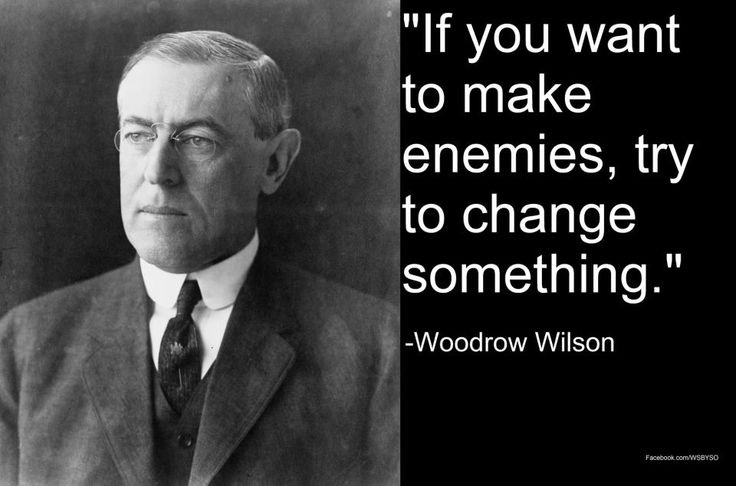
President’s Day With Woodrow Wilson
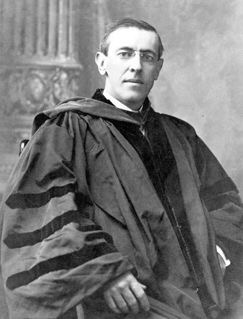 On this President’s Day I want to reflect on a president who I have always been very intrigued with. Our 28th President was a successful academic who took a different path to the White House than Presidents before and after. Woodrow Wilson attended college at what is now Princeton University, studied law at the University of Virginia, and earned a Ph.D. from Johns Hopkins University. Wilson is our only President to have a doctorate. He later taught at Princeton, and became president of the university in 1902. As a scholar he was the leading political scientist of his day. As an academic president, he transformed Princeton into a leading university. Wilson was President of Princeton from 1902-1910.
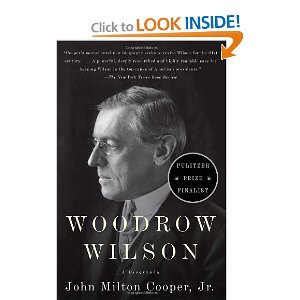
John Milton Cooper Jr. described Wilson this way in his book Woodrow Wilson: A Biography: “Boldness and thinking big marked Wilson all his life, and those qualities helped make him the only president who rose to the top in two professions entirely removed from public affairs.” Woodrow Wilson’s experience as a transformational leader at Princeton is what I believe prepared him for political office. He was “a dynamic reformer” as Governor of New Jersey from 1910-1912. As President of the United States he led the country into and through World War I.
Leaders like Woodrow Wilson advance the cause because they see what others do not and are willing to move toward that vision. As Wilson said, “I would rather fail in a cause that would ultimately succeed, than succeed in a cause that would ultimately fail.” Such work calls for boldness. Wilson also said, “Do not follow people who stand still.” As we come to the end of President’s Day, let’s think about these questions: Are you moving to transform your organization or cause social change? Where do you need to be more bold?
Praying for Chicks!
 If you are reading this, you may have thought I was going to be writing about women. Well, you are wrong, but at least I know my hook worked to get you to read this. So, please continue!
Actually, I am writing about a disappointment I had in church this morning. During the prayer request time a young girl stated that her family had just got a bunch of baby chicks to raise and that one was not doing very well. Some in the church giggled and our preacher really did not even acknowledge the little girl. In other words, just brushing it off. The preacher even made it seem awkward and as if he did not know what to say. Needless to say, I was very disappointed and appalled at the missing of a great opportunity to teach a young person about prayer. Let me tell you, as a farm boy, I have done my share of praying for animals of all ages and kinds (sometimes that they would not hurt me).
So what do I think the preacher should have done? Well, take the opportunity to thank the youngster for the prayer request and talk to the congregation about how every prayer is important, particularly to the person making it. Also, make it very clear, there is never a time that God responds to our prayers with this thought: “I just don’t get it.” God has been the “Deer In The Headlights!” Remember a very important part of the New Testament story – God came to earth as a human, lived among us, and was then killed by us. God, a human? Stunning truth. But he remembers. “We don’t have a priest who is out of touch with our reality. He’s been through weakness and testing, experienced it all—all but the sin.” (Hebrews 4:15 MSG) How cool is that!
He has “Street Creds!” God knows how you feel and what you need.
And, this is big time, “he knows what you need before you ask him.” (Mt. 6:8) You don’t have to be perfect in your prayer request. God doesn’t need our counsel or advice. “Before they call I will answer, while they are yet speaking I will hear.” (Isa. 65:24) And, you don’t need others’ approval as to whether a prayer request is important or not. If it is important to you, it is important to God.
This young girl needs to realize that prayer changes things because God changes things. Prayer makes a difference because God is determined to make a difference. Prayer matters because each of us matters to God. I pray constantly during the day. I even pray for things like parking spaces and for meetings to go well. I do not believe there are any stupid prayers. I know there are those that do, but I just don’t believe in a God that would laugh at or make fun of my prayer requests or think them beneath him. I’ve just had too many times of pulling into a full parking lot after saying a little prayer and having a front row, primo parking place open up. I’ve also had too many big favors happen from God that I did not even know to pray for. It’s interesting to me that I really pray for the small stuff and God takes care of the really big stuff that I can’t even imagine.
So, is praying for the health of a baby chick important enough for prayer? YES! There isn’t anything of too little importance for you to ask God! Don’t forget what God said, “I know the thoughts I think towards you…thoughts of peace and not of evil to give you a future and a hope…call upon me and pray to me and I will listen to you.” (Jer. 29:11) Remember, he gets it. He has “been there, done that” for all of us!
Leading In Two Time Dimensions
 “A manager must, so to speak, keep his nose to the grindstone while lifting his eyes to the hill – quite an acrobatic feat” (Maciarello, 2014, p. 53) This quote by Peter Drucker in week seven’s lesson (Maciarello, 2014) really hit home to me as a school turnaround leader. Anyone who works with me or has been around me much knows that this leading is two time dimensions: balancing short-term results with long-term results, is one of the toughest parts of the leadership experience. In takeover and turnaround schools they really don’t give you much time to turn it around – and they shouldn’t. Our kids are too valuable. That being said, however, I have always said it is a real balancing act. What we need to do right now to get the transformational results needed short term are not always sustainable for the long term. I really am leading in two different time dimensions. These two time dimensions, short-term and long-term results, need to be used in concert when planning school transformation. Having led a team that took a school off the “F” list in just two years, I can honestly say this harmonization of long and short-term results was one of the pain points that kept me awake at night.
I guess it is why I have become such a student of strategic planning. This two dimensional leadership is really the essence of strategic planning – making resource allocation today that will affect the future (Maciarello, 2014). It requires deliberately allocating resources to projects that are directed toward securing the future of your organization. Yet, in my case, short-term results are necessary to take a school off the “F” list this year. So, short-term results are necessary, and this necessity may require making trade-offs between short-term and long-term results. You can read a couple of my posts on strategic planning by clicking on Strategy in Action and Top 50 Strategy in Action Indicators.
These trade-offs really cause there to be a need for two different missions, but the two missions must be compatible. There are always trade-offs between actions that serve the present and those that further long-term performance. The missions in these two time dimensions may be different but they must be compatible (Maciarello, 2014). A strategic plan and mission statement must reflect results in the short term as well as results in the long term. In my case, as a turnaround school leader, I must fix the problems of the past but the real job is to commit the organization’s resources to opportunities in the future. Sacrificing either dimension threatens the survival of the organization. The old medical proverb applies here, “It doesn’t help you much if the old woman, the sick woman, knows the surgery tomorrow would save her life, if she dies during the night.” But, it doesn’t help you very much either if she survives the night, and the doctor’s are not prepared for her life saving surgery tomorrow. Thus, the struggle of leading in two time dimensions continues.
 “Yesterday’s actions and decisions, no matter how courageous or wise they may have been, inevitably become today’s problems, crises, and stupidities.” ~ Peter Drucker
This quote by Drucker says it all. As leaders it is our job to help our teams commit today’s resources to the future. Two questions that Maciarello (2014, p. 55) posed are very good reflection points for my role as a turnaround leader:
1. Does your organization focus most of its time and effort on problems related to past decisions?
2. How can you free up some of your time and resources to focus on opportunities that serve the future of our unit?
What we do today really matters. We must keep our short-term and long-term strategies in balance. We must fix the problems of the past, but we must also commit the resources, strategically, to the opportunities of the future.
“Never start with tomorrow to reach eternity. Eternity is not being reached by small steps.” ~ John Donne

Reference
Maciariello, J. A. (2014). A year with Peter Drucker: 52 weeks of coaching for leadership effectiveness. New York, NY: HarperCollins Publishers.
Unwavering Steadfastness & Loyalty

Leaders must be strong, don’t they? Also, leaders must demonstrate they are decisive, resolute, and have all the answers. Right?
Wrong? Leaders should strive for clarity, not necessarily certainty. It is extremely hard to operate today with 100% certainty all the time. Therefore, we should strive for clarity. I have blogged about this before. Click here to read my previous post, “Lead With Clarity, Not Certainty.”
Back to the earlier comments I led off with. Leaders should be allowed to change their minds and should not be afraid to consult others for help answering questions. If the team is developed correctly, leaders should be getting input from everyone. Many times the term “unwavering” is used to describe the decisiveness of a leader. I would rather use this term to describe the leaders unwavering loyalty and steadfastness to those she leads and the organization she serves.
Steadfastness is a disposition of choice to embrace and pursue a worthy goal or objective, despite obstacles. This steadfastness should not be confused with obstinance or not making changes when it is clear a change in direction is needed or necessary. Steadfastness is also a mark of moral maturity and courage. When challenged or facing obstacles and leadership storms we must use our counsels of wisdom.

Great leaders will step outside of their comfort zones. By exercising their flexibility, the leaders becomes stronger. He recognizes the rewards of the risk. Finally, steadfastness allows great leaders to act calmly in the face of disruption or catastrophe. The unwavering leader is resolved to see things through.
It behooves us, then, as leaders, to work at having the physical, mental, and emotional stamina to be an unwavering leader for those we serve.
Important, Not Urgent!
 Peter Drucker was the master of focusing his time on the important, not the urgent. He led a focused life doing what he felt he was called to do. Drucker knew how to work on the truly important issues and abandon all the rest (Maciariello, 2014). We have our own purpose in life that should include balance between work and pleasure. But there will always be a decision to make between the important and the urgent.
In advising leaders, Drucker believed in focusing on their processes of leadership, organization and management, including the development of people, building community, and planning for succession (Maciariello, 2014). A pretty good list of focal points if you ask me. Keeping this in mind it is important to remember: You are responsible for allocating your life.

In this week’s lesson I learned of Harry Hopkins, one of President Franklin Roosevelt’s top advisers during World War II. Because he was dying of stomach cancer toward the end of his service, he was forced learn how to do the important and not the urgent. He was able to cut out everything but truly important and vital matters. Churchill called him “Lord Heart of the Matter” and believed he accomplished more than anyone else in wartime Washington. I have added the book The Hopkins Touch: Harry Hopkins and the Forging of the Alliance to Defeat Hitler by David L. Roll to my bookshelf to read this year.
Drucker believed effective leaders do not start out with the question, “What do I want to accomplish?” They start out with the question, “What needs to be done?” He believed, “If there is any one secret of effectiveness, it is concentration.” We must learn in the midst of multiple demands, to give priority, and the necessary amount of time and focus, to the important rather than to the urgent (Maciariello, 2014).
Maciariello (2014) suggested forming a habit of pausing to distinguish the difference between the important and the urgent demands on your time. In order to determine the decisions and work that is important, you must answer the question, “What do I want to be remembered for?” The answer that you come up with will give your life focus and purpose.
I’ll leave you with a question to reflect on: How Have You Allocated Your Life?
Reference
Maciariello, J. A. (2014). A year with Peter Drucker: 52 weeks of coaching for leadership effectiveness. New York, NY: HarperCollins Publishers.
Flat White Starbucks Experience
 “While not every leadership team can reward employees with stock options or health-care benefits for part-time employees, every business leader can treat those individuals with enough daily care and concern to inspire passion and creativity in their work.” This quote comes from Joseph Michelli’s great book The Starbucks Experience: 5 Principles for Turning Ordinary Into Extraordinary. I have read all of Dr. Michelli’s books and I suggest you do too! This morning I had this quote proven to me at my local Starbucks in Lebanon. I am a Starbucks lover both because I love the coffee and I love the experience every day. I have been an avid student of of Starbucks and the leadership examples this great organization gives us.
Now, back to the quote and my experience. Actually it was my baristas experience. My barista showed “daily care and concern to inspire passion and creativity.” I have to begin the story by backing up to the introduction of the Flat White. I had been a Latte’ drinker, but ever since my first Flat White it has become my drink of choice. Made properly it should have a white dot of milk and maybe a design in the top of it. Now, when going through the drive through and being handed the cup with a lid on it I have no way of knowing if it looks as beautiful as it is supposed too. I have been amazed, however, at the care the baristas take at making it properly as I peer through the window and watch. They truly care and are concerned that it comes out right, even though I won’t ever look. Recently, I thanked the barista as she handed me my Flat White out the window for taking care to make it right. She said, “It needs to be done right for it to taste the best for you.” That’s passion! And Starbucks knows how to build this care and passion in their team members.
 So here’s what happened at the Lebanon Starbucks today. I pulled up to the window to get my Flat White and the barista was taking a picture of my Flat White (see picture in post). Another team member took my Starbucks Gold Member Card to take my payment and said, “She thought it was the best finish she had ever created on a Flat White and needed to take a picture of it. I was so impressed and excited by this. To me this might be the greatest indicator of passion and attention to detail I have ever seen. Creating excellence to the extent that you want to take a picture. How many of you have ever had anyone at a drink or food establishment take a picture of what they created for you?
It was the best Flat White ever. I really don’t know if it was or if it was just great because my barista took a picture of her artwork. We should learn from this barista and strive to do work that is worthy of a picture. Michelli also quotes a Fortune magazine article where it says, “Starbucks story epitomizes ‘imagine that’ in every sense. When the company went public . . . it had just 165 stores clustered around Seattle and in neighboring states. . . . Skeptics ridiculed the idea of $3 coffee as a West Coast yuppie fad.” What if all of us could say our organizations “epitomized ‘imagine that’?” Let’s all commit trying to imagine greatness for our organizations and those we serve and make sure we take some pictures along the way.
 Byron's Babbles
leave a comment