Encouraging Yourself
 Today I had one of our team members make the comment to me that she was discouraged and that she just needed to talk herself out of being discouraged. I, of course, had a conversation with her and gave her the encouragement I thought was appropriate.
Then I got to thinking – How do we go about encouraging ourselves. Actually, this made me think of 1 Samuel 30:6 where it says, “King David Encouraged himself.” He did this by how it is put in the Message Bible, “David strengthened himself with trust in his God.” As a man of faith I was reminded that this trust in God is crucial to our self encouragement and knowing that there is a plan for us.
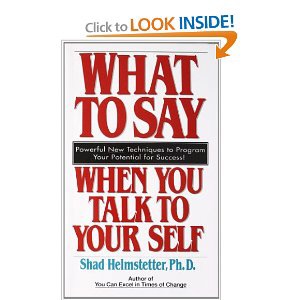
In addition, I believe David teaches us that we need to be proud of ourselves. We must also believe in ourselves. To do this we need to be our own best friend. In other words, we need to talk to ourselves like we would to a friend who needs motivation. In the book What To Say When You Talk To Yourself Shad Helmstetter talks about using patterns – to “erase and replace” our negative thoughts with ones which will build our success.
To do this we can reach out to others who can encourage you. Also, make sure you do not dwell on the negative. Next time someone or a situation deflates you and you are discouraged, remember King David’s example of “encouraging himself.”
Leadership At The Highest Level
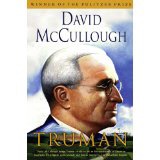
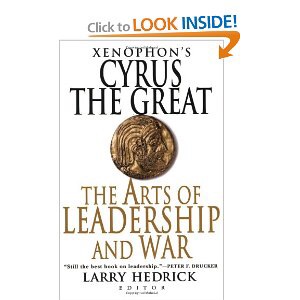
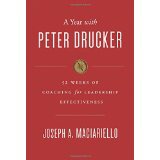 During my A Year With Peter Drucker professional growth time this morning I learned that the two leaders that Peter Drucker was most influenced by were President Harry S. Truman and Cyrus the Great. Truman because of his immediate recognition of Israel after being granted statehood by the United Nations and Cyrus the Great for freeing and returning the Jews to Jerusalem. Cyrus and Truman were both men of integrity who had sympathy for the human condition. Drucker believed that integrity, and doing the right thing, is the essence of leadership (Maciariello, 2014).
Drucker did a lot of reading and studying outside the realm of management. He did this because he believed that leadership at the highest level is rooted in history, religion, sympathy, and human reality (Maciariello, 2014). This studying beyond one’s own discipline coupled with enough practical experience to know real challenges was very important to Drucker. He believed the ability to quantify is very important in management, but when leading there are unique events that can only be observed through human perception. “What we can perceive is shaped by what we know and that can be aided by broadly educating ourselves” (Marciarello, 2014, p. 38). Perception can be trained so we can identify unique events as they unfold.
Xenophon said, “Adversity is the test of leadership.” Because this is true we must develop a personal growth plan to broaden ourselves in all realms including the humanities and social sciences. We need to follow Peter Drucker’s example and read widely outside of our own disciplines. Will you pledge, along with me to do this? To this end I have added two books to my “to read” shelf this morning:
Reference
Maciariello, J. A. (2014). A year with Peter Drucker: 52 weeks of coaching for leadership effectiveness. New York, NY: HarperCollins Publishers.
Education: Exploiting Knowledge
 “Education will become the center of the knowledge society, and schooling its key institution.” This quote by Peter Drucker in May of 2004 has proven so true as we begin 2015. Week 4 of A Year With Peter Drucker: 52 Weeks of Coaching for Leadership Effectiveness by Joseph A. Maciariello (2014) deals with the idea that education is a key to economic development. As I was reading this week’s lesson I couldn’t help but remember what the late H. Dean Evans, former Indiana State Superintendent of Education, used to say about this related to taxes. I had the honor of working for Dr. Evans, and he would say: “The way to raise taxes is to provide great training and education and then everyone will have great jobs and be paying more taxes.” A pretty basic, but true concept. I realize, however, and he did too, that this is a very complex issue to solve.
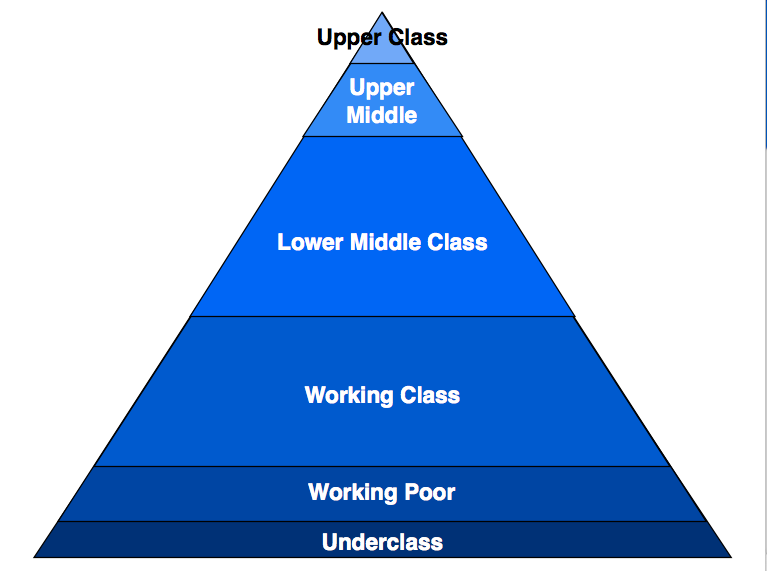
The lesson this week started with a story about E-Veritas Trading Network in Manila, Philippines. Bottom line is this company trained knowledge workers to develop an entire electronic trading system to deliver quality and safe food to their people at a low cost they could afford (Maciariello, 2014). In other words, they created human capital within people at the bottom of the economic and social pyramid so they could develop rapidly and escape poverty. There is evidence all over the world that through education and management training, those at the lower levels of the social and economic pyramid can be lifted up. People globally can be helped to be sheltered from corruption from being involved in small-scale local economic activity.
For another example we can look to South Korea. Within 25 years after the Korean War, Korea became a highly developed country. They did this by using the universities and colleges of the United States for management education of their people. Then when their students returned home all of that knowledge was shared and assimilated into their businesses and economy (Maciariello, 2014). Maciariello argued it is much more effective and efficient to provide resources for educating present and future leaders of a developing country than providing financial aid (Maciariello, 2014).
This concept is equally true domestically in our own country. It is no secret and is widely accepted that the practice of investing in employee development is the most beneficial practice an organization can partake in. This is why the habit of continuous learning is so important. We must be teaching our students how to learn, because the practice of continual learning will be very important to their generation. It is interesting to me how education and knowledge acquisition has really jumped to the forefront of American politics. This jump has even surpassed over the importance of property and capital acquisition that dominated the Age of Capitalism.
Two questions that need to be answered for learners of all ages, whether P-16 or adult professional, are: What mix of knowledge is required for everybody? and What is “quality” in learning and teaching? Can you imagine if we could come up with these answers in a way that everyone can agree on? Interesting, many businesses and organizations have. Maybe at the P-16 level there needs to be more autonomy to evaluate what quality looks like for the students served.
I was moved by this 1993 quote from Peter Drucker: “No country, industry, or company has any ‘natural’ advantage or disadvantage. The only advantage it can possess is the ability to exploit universally available knowledge (Maciariello, 2014, p. 32). Think about how much more universally available that knowledge is today than when Drucker wrote that. Have you and your organization made learning a lifelong habit? It is never too late to start. Don’t forget the two questions that must be answered for all learners in the previous paragraph and I would add a third: How do the individuals in your organization and you yourself learn? We all learn differently so make sure to differentiate for those differences. Have a great week!
Reference
Maciariello, J. A. (2014). A year with Peter Drucker: 52 weeks of coaching for leadership effectiveness. New York, NY: HarperCollins Publishers.
Effective Leadership: The Alternative to Tyranny
It is hard to believe we are already beginning week three of the new year. It seems like just yesterday we were toasting in the new year. As I was reading lesson three of my 52 lessons on Peter Drucker this morning I first thought it was going to be a pretty quick read and a quick reflection. Boy, was I wrong. I ended up reflecting through my educator lens and found myself reflecting deeply about what we need to do to truly accomplish my vision of providing a quality education for every student. As a believer that every child can learn, this is a very important mission to me.
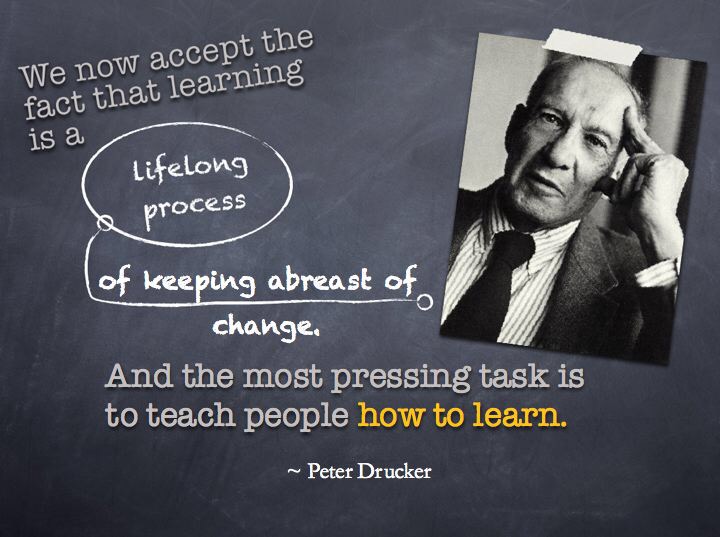
This week’s lesson in Joseph A. Maciariello’s book, A Year with Peter Drucker: 52 Weeks of Coaching for Leadership Effectiveness, dealt with the three fundamental questions from a functioning society of organizations. I must remind you of Drucker’s belief that “management is a human activity (Maciariello, 2014).” Drucker’s three fundamental questions revolve around satisfying needs of human beings. It should also be noted that Drucker also recognized that we now need an enormous number of managers and leaders so we have to organize their development. “Effective leadership and management of society’s organizations is therefore the alternative to tyranny and the remedy for preserving responsible freedom and equality of opportunity (Maciariello, 2014, p. 20). Therefore we must lead responsible autonomy of our organizations so our team members are able to fulfill themselves.
Drucker’s First Question
“What is our business?” In other words, what are we trying to accomplish? What makes us distinct? When thinking about these questions I began to think about how our customers in education to answer these questions. We know that our customers (students) want to be college and career ready and we know that society wants them to be responsible citizens. But more importantly we need to look more closely at what makes our individual schools we lead distinct.
Our Indiana state constitution also recognizes the importance of this distinctness. In our most recent Education Kitchen Cabinet meeting, Speaker of the House Brian Bosma reminded us of the language referring to education. It is important to pay particular attention to the statement, “by all suitable means.” We have a constitutional obligation to make our delivery of knowledge and learning to our students distinct and effective. Here is a copy of what the state constitution says:
Indiana Constitution – Section 8 – Education
Section 1. Knowledge and learning, general diffused throughout a community, being essential to the preservation of a free government; it should be the duty of the General Assembly to encourage, by all suitable means, moral, intellectual scientific, and agricultural improvement; and provide, by law, for a general and uniform system of Common Schools, wherein tuition shall without charge, and equally open to all.
I know in my case what makes the school I lead distinct is the fact that I lead a school system where students are able to be fully online or have the option to go to our hybrid schools (face to face two days a week and online the other three). What also makes us distinct is that we have a 67% mobility rate. We have to embrace the fact that in many cases we are a short term solution to many of our students. This mobility may be because of health issues, bullying, learning needs, or students who have special circumstances such as being an Olympic gymnast. For many students we are the only available choice in a state that embraces school choice. I believe we are beginning to make progress because we have begun to answer the question of what our business is and what makes us distinct. This realization has only come about because of really asking and listening to our customers (students) about what they believe we should be trying to accomplish for them. We have a long way to go, but are making progress.
It should also be noted that when I was a principal of an urban state takeover/turnaround school that I had to realize that what we were trying to accomplish was to turn around a culture and facilitate the learning of our students to provide credit recovery and catchup academic growth (only 19% of our students were on grade level when taking over). I believe we were able to successfully take the school off the “F” list because we accepted that the students we served made us distinct and we embraced it. To be successful we must accept and embrace the population we serve.
Second Drucker Question
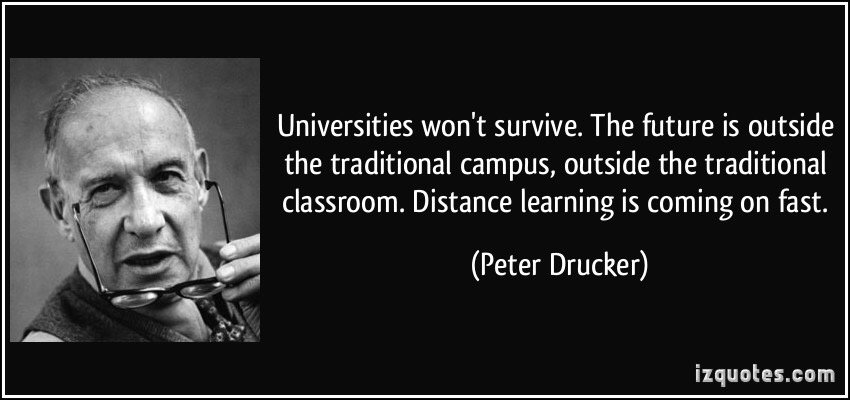
“What are results?” This is a much easier question for a business that sells a product. It is a much tougher, some would say impossible, question to answer in education. While I believe in accountability, I believe this accountability needs to look different based on the distinctness of the organization discussed earlier around the first Drucker question. Recently I have been reviewing Indiana House Bill 1009. This bill has been dubbed the Freedom to Teach Act. It allows a school entity to establish freedom to teach zones, schools, or districts. I am a believer and supporter of this bill, but I also wonder if we should not take one more step and deregulate the accountability (results) piece. Since the plan has to be approved, why not have the school develop, as a part of the plan, an accountability plan. This accountability plan could then be developed based on the distinct characteristics of the school. I must repeat what I said earlier. Every school has distinct populations of students they serve as well as distinct ways of serving their students.
Make no mistake, I believe there will need to be consistent pieces to accountability, but the percentage weightings may be different. Also, there would be different metrics that might be necessary to measure based on the distinct differences of the schools. I am not proposing a specific plan or answer in this post, just proposing that we need to think about this.
Third Question of Core Competencies
“What are your core competencies?” or “What do you have to do with excellence?” To me core competencies are the foundational skills, behaviors, knowledge, and expertise required to be an effective leader in the industry. These competencies assist in providing a common understanding of your organization’s leadership and team member’s roles, responsibilities, and expectations. The core competencies of all organizations need to be integrated into all aspects of the organization, or school in my case.
As a school or organization we need to make a significant contribution to the perceived student/customer benefits of our product and/or service. We must complete this statement: Our students/customers are choosing us because _____________. We need to strive to be difficult for competitors to imitate (if they can or will be able to at all). Our core competencies have to be something our competitors wish they had within their own business or could offer to their students/customers.
Final Thoughts
Our organizations are organs of society. We must integrate the interests of our organizations with the public interest. In education we must find a way to accurately answer the question of what results should our organization be delivering? And, more importantly, is it doing so? These questions are much tougher for social sector institutions than for business organizations. We must continue to strive to find the most accurate indicators of progress for schools and the students they serve.
Reference
Maciariello, J. A. (2014). A year with Peter Drucker: 52 weeks of coaching for leadership effectiveness. New York, NY: HarperCollins Publishers.
Indiana’s State of the State from the ‘Tweet Seats’
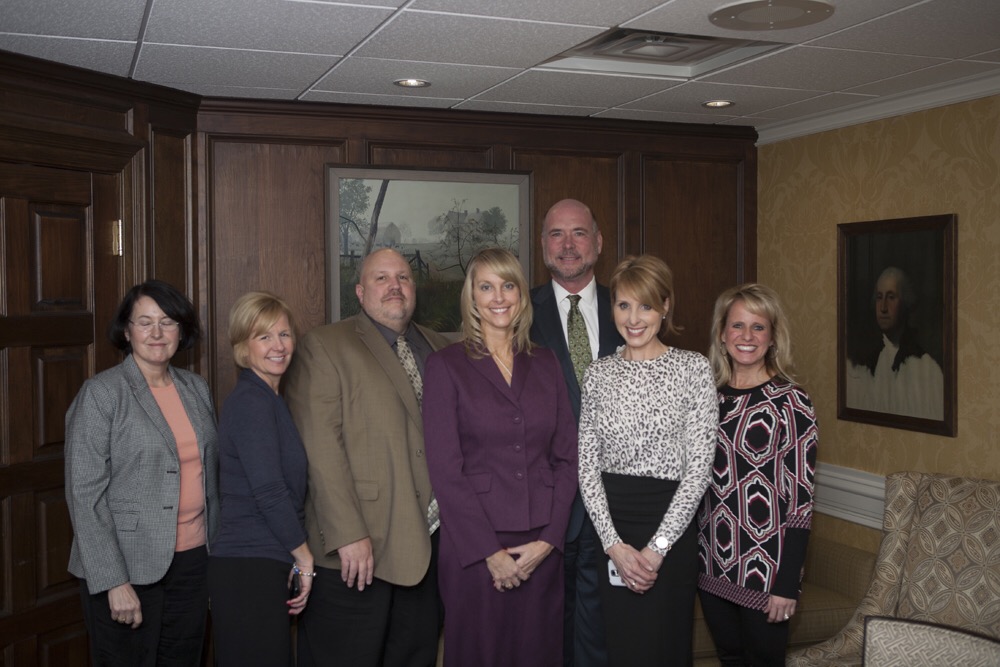
The 2015 ‘Tweet Seats’ with Speaker of the House Brian Bosma
In keeping with my 2015 goal to reread one book of prior great influence each month, I started this month by rereading Lion of Liberty: Patrick Henry and the Call to a New Nation by Harlow Giles Unger. This was so fitting because he was such a believer in state’s rights. This past week I was reminded of how precious these rights are to states after being invited to attend Governor Mike Pence’s State of the State Address by Speaker of the House Brian Bosma and the Indiana House Republicans. Actually, I was invited with responsibilities. I was to be a member of the ‘Tweet Seats.’ In other words, I was responsible, along with four others, to do tweets during the State of the State Address. So, think about all of the things that happened in our Indiana State House on Tuesday, January 13, 2015 that would not have been possible without Patrick Henry’s original call to arms and then all of his work to make sure we had a Bill of Rights in place. Because of our Freedom of Speech I was able to tweet 49 tweets during the State of the State Address to my 70,000 plus followers. I continue to be amazed at the power of social media today. I was also amazed at how many people were following the speech using twitter. Twitter is one of the most powerful tools available right now for receiving news. Twitter is also an important modem for personal professional growth.

My ‘Tweet Seat’
I am including PDFs of the press release and Twitter handles/hashtags here:
TweetSeat_HandlesHashtags_final
Press Release_Tweet Seats_2015
 Patrick Henry’s famous words “Give me liberty or give me death!”—shouted during a speech to the House of Burgesses in 1775—put into clear terms how the colonies should respond to an encroaching British military force. This call to arms has since been immortalized, much like the man himself. A leader through and through, Henry’s life motto might as well have been “no compromise,” making him a great study in leadership.
It was 1787, long after the war had ended. Patrick Henry, seeing the possibility of tyranny as the result of a newly proposed United States Constitution, he rose in opposition to fellow founder, James Madison. Henry would not be satisfied until a Bill of Rights was adopted as part of the constitution, making him the primary historical force behind the liberties Americans have today. He also believed very strongly in state’s rights. He believed that states should govern themselves. Interestingly, he spoke about states being in a better position to govern themselves because they had governors who lived among the people and knew the people. Though strongly anti-Federalist, Henry later changed mind after learning of the radicalism of the French Revolution. He did not want America to suffer the same fate. This showed that while he was certainly a leader of principle, he could be convinced of another course if the evidence was overwhelming enough—an important quality to have in a leader. Henry joined up with George Washington and John Adams to support Federalist policies, and later on was even elected to the Virginia House of Delegates as a Federalist. I could not help but think about what Patrick Henry would be tweeting had there been a colonial iPad for him to use.
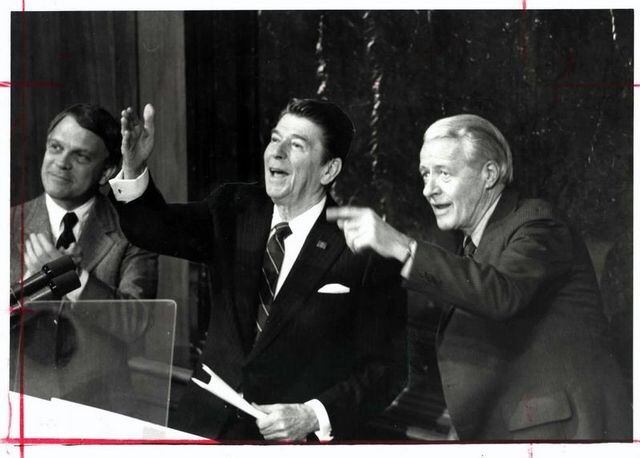
Ronald Reagan in the Indiana House of Representatives Chamber
During his speech, Governor Pence quoted President Ronald Reagan. Reagan, speaking a little more than thirty years ago from the very podium that Pence was speaking from, said the federal government was “still operating on the outdated and arrogant assumption that the states can’t manage their own affairs.” “That day,” Pence said, “he predicted it would be states like ours [Indiana] that would come to America’s rescue.” In that speech Reagan when on to say that states like ours would “offer the most creative solutions and most promising hopes for our nation.” Reagan believed, as Patrick Henry did, in the ability of states to govern themselves. We are so blessed that Governor Pence believes this as well. Pence went on to say: “Well, Reagan was right.”
Governor Pence then said: “At a time when public confidence in our federal government is at an all-time low, states have emerged as a source of inspiration on fiscal policy, economic growth, education and health care reform. And Indiana is leading the way, proving every day that we can balance our budgets, run our schools, choose our health care and serve our people far better than ‘a little intellectual elite in a far distant capitol’ (quote from Ronald Reagan) ever could.”

Proud to be part of this great group!
It was such an incredible experience to be a part of the State of the State Address. Those of us in the ‘Tweet Seats’ were given a copy of the speech just prior to the address so we could get our thoughts together for our tweets. Then Speaker Bosma met with us to go over parts of the speech and legislative agenda he thought were important for us to know to do a quality job of tweeting out the State of the State message. I continue to be so impressed with how passionate Speaker Bosma is for doing what is right for Indiana. I would now like to share my thoughts from the State of the State by listing a “Baker’s Dozen” of my top retweeted and favorited tweets during the speech. Here they are:
1. You get more good teachers by paying good teachers more! #education #INLegis
2. The key to unlocking all potential in #Indiana is #education! @GovPenceIN calls for this to be an #edreform session. #INSOTS #INLegis
3. Every #Hoosier child deserves to start school ready to #learn. #education #INSOTS #INLegis
4. 100,000 more students enrolled in high performing #schools by 2020. #edreform #education #INSOTS #INLegis
5. We need more great #teachers! @GovPenceIN #INSOTS #INLegis
6. Career and Technical #Education needs to be a priority in every #school in the state of #Indiana. #INLegis #INSOTS
7. @GovPenceIN calling for a required balanced #inbudget! Add a balanced budget amendment. #INLegis #INSOTS
8. Graduation rates are up. Test scores are up, the doors of our pre-K programs are open to disadvantaged kids. @GovPenceIN #INSOTS #edreform
9. We have the largest #education voucher system in the country! #edreform @GovPenceIN @INHouseGOP
10. @GovPenceIN calls for more #schoolchoice through innovative #CharterSchools! #edreform #education #INLegis #INSOTS
11. Adjust funding for our #charterschools to provide opportunities for all our children! @GovPenceIN @INHouseGOP #edreform #education #INSOTS
12. We must lift the cap on dollar amount that #choiceschools receive for students. @GovPenceIN @INHouseGOP #INSOTS #INLegis #edreform #inedchat
13. Raise the cap on the #schoolchoice scholarship tax credit. #schoolchoice #CharterSchools #edreform #education
Here is a PDF text transcript of the entire State of the State Address:
2015StateoftheState
As you can see, Governor Pence has laid out a very aggressive plan for Indiana. After spending time reading and listening to his speech, I have no doubt we will be successful. Governor Pence closed out his speech saying, “If we will act with resolve & are bold, we will fulfill Indiana’s promise for this generation and next.” I closed out the evening with this tweet: Great State of the State @GovPenceIN! Lots to do for #Indiana. Loved your final words of #INSOTS: “Let’s get to work!” @Brian_Bosma will help!
In closing I want to thank Speaker of the House Brian Bosma, and the Indiana House Republicans for giving me the honor of being a part of the Indiana State of the State Address “Tweet Seats.” I believe that Patrick Henry would be proud of Indiana and would agree with Governor Pence when he said, “we will fulfill the promise, not just of our time, but we will fulfill the promise first forged beneath that constitution elm in Corydon in 1816—the promise of a state built on freedom that would become a beacon of hope and an example to the nation.” The Governor’s agenda is living out both Patrick Henry’s and Ronald Reagan’s vision for the states of our great nation!

Learning from Speaker of the House Bosma
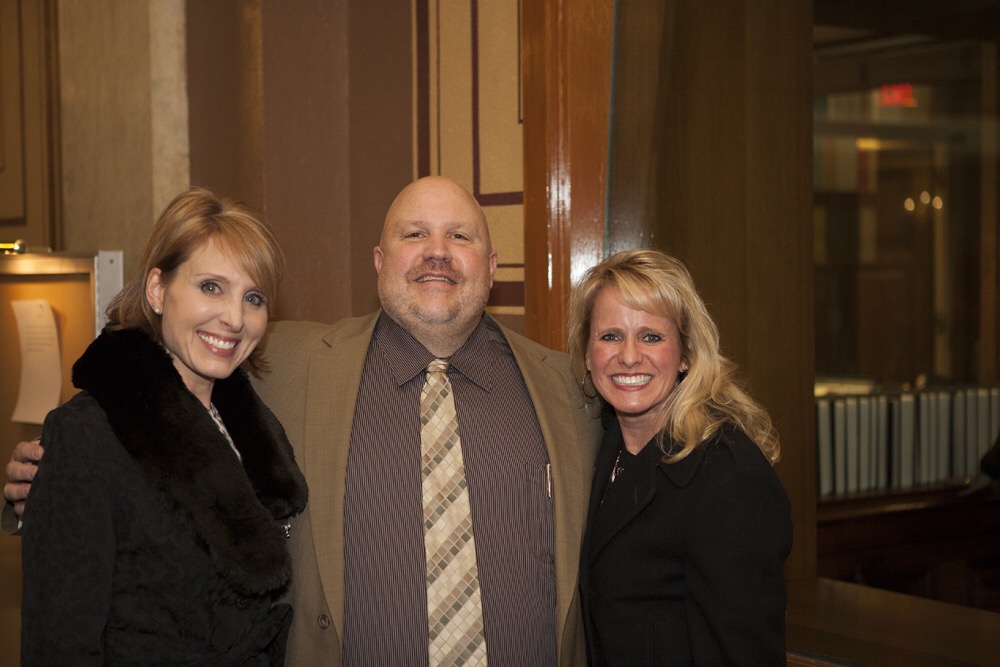
My new best friends – The Chicks on the Right!

I love to Tweet!
Dedication Attracts People
 I must say that I looked forward to my dedicated study time this morning for reading the second week’s lesson in A Year With Peter Drucker: 52 Weeks of Coaching for Leadership Effectiveness. As you know from my first week’s post I dedicated myself to spending personal professional development time each week in doing a personal book study and then writing a post to this blog each week. Click here to read the first week’s post.
This week’s coaching lesson was very appropriate. The title of Week 2 is: “Questions to Ask Before Committing a Portion of Your Life to the Service of an Organization.” This was obviously important because I have had to do this in my life several times. But more importantly, it caused we to reflect on the importance of making sure the school corporation I lead can answer those questions correctly and is able to ensure everyone has a chance to achieve and make a meaningful contribution. These are two of the most important tasks an organization has to perform, according to Drucker (Maciariello, 2014). Interestingly, John C. Maxwell’s Minute With Maxwell word today was “Dedication.” Click here to watch the one minute video. Even though the teaching of Drucker this week was not on dedication, this spoke to me because I believe that our organizations must be dedicated to our team members’ achievement and ability to make meaningful contributions. The school system I lead right now needs to do a much better job of this and we are working very hard at this. I believe we need a leadership progression and training program. We should working side by side with those we lead to answer the questions: What should I contribute?; Where and how can I have results that make difference?; and, What should my contribution be? In Drucker’s view, these were questions that the person looking for a position should answer, but I believe we must help them answer these at all phases; from interviewing to job placement, to competency/leadership building.

The questions Drucker suggested a potential employee should ask of the organization are worth noting. I would also argue that these are questions that the organization, school, or business should be asking of itself as to whether they are providing (Maciariello, 2014). Here are the questions:
– Are you learning enough?
– Are you challenged enough?
– Does the organization make use of your strengths or what you can do?
– Does the organization make use of your strengths or what you can do?
– Does the organization constantly challenge and make you more ambitious in terms of contribution?
– Are you actually suffering from creative discontent?
Interestingly, Drucker talked about positive contentment and negative contentment. He argued that contentment was for six year olds. Thirty year olds should not be content because achieving great results should be hard to achieve and will be uncomfortable. At the same time, however, we must provide the environment where the results are meaningful. I love a quote in the book from Drucker because it is a school example where he says a team member should be saying: “We have that enormous job here in the new school… and we are recruiting faculty and so I spend all my weekends with prospective faculty people (Maciariello, 2014, p. 10).” This person is certainly challenged positively because they have responsibility to mobilize, challenge, and grow human resources. Let me tell you, from personal experience, taking over and turning around a school is anything but comfortable and is very hard work. But, it is extremely rewarding and, I believe, very fun work. It was very rewarding when a couple of people, one of them an Indiana State Board of Education member, said to me, “You should be very proud of providing the leadership for Emmerich Manual High School to be removed from the “F” list.” Let me tell you, I am, but I also always want to recognize the accomplishment took dedication from many more team members than me. There were many more who did much more heavy lifting than me and they were dedicated to the opportunity for achievement and making a meaningful contribution.
Another piece to this is very important. “Knowledge workers must take responsibility for managing themselves (Maciariello, 2014, p. 11).” Our team members, as well as ourselves, must take responsibility for developing ourselves. We need to seek feedback and feedback analysis. Concentration should be on areas of high skill and competence. It takes far more energy and farm more work to improve from mediocrity to first rate performance than it takes to improve from first rate performance to excellence.
Take a little time and reflect on where you are as an individual and where the organization you are a member of is in terms of dedication to every person having the opportunity to achieve and make a meaningful contribution. I know we have some work to do in this area. We have extremely talented individuals, but we need to make sure we are developing our bench strength, to use an athletic analogy, to have our future leaders ready to lead from within. REMEMBER: Opportunities do not come according to your schedule. Your job is to be prepared to recognize and seize opportunities as they come.
Reference
Maciariello, J. A. (2014). A year with Peter Drucker: 52 weeks of coaching for leadership effectiveness. New York, NY: HarperCollins Publishers.
Are You An Inukshuk?
 Last October I was in Calgary, Alberta Canada to speak at a conference. While there I did some studying of the history of the area. In my studies I found that the original people of the region were called Inuit. The Inuit live throughout most of the Canadian Arctic and subarctic. The Inuit are a culturally similar indigenous peoples. Because of the vast openness and size of the arctic and subarctic regions of Canada I learned that the Inuit people would build what are called Inukshuks. I had the chance to get a Inuit hand carved Inukshuk while in Calgary. My carving is proudly displayed in my office and pictured at the beginning of this post. When I learned the story behind the Inukshuk I put it in a prominent place in my office as a reminder of how important coming together as a team is. The Inukshuk are a symbol of the human spirit. They recognize our ability to succeed with others, where we would fail alone. They remind us of our need to belong to something greater than ourselves. They reinforce our ability to commit to common goals.
Inukshuk, pronounced in-ook-shook, are stone monuments erected in the image of humans. One of their purposes was to communicate direction in the harsh and desolate Arctic. They would also mark places of good hunting, food supply, shelter, or safety. As such they were a tool for survival, and symbolic of the the unselfish acts of a nomadic people – the Inuit – who built them as signposts to make the way easier and safer for those who followed. The hands of many and the efforts of an entire group were required to build these massive stone sculptures. They are the result of a consensus of purpose, of focused action by a group united in its goal and labour. The Inukshuk are the product of cooperation, teaching us that as good as our individual efforts may be, together we can do even greater things.
 As a person who considers himself a trailblazer the Inukshuks have a special meaning. To me these structures stand for: Someone was here. you are on the right path. As leaders it is important for us to be able to put our teams at ease by letting them know,’hey I’ve been there, we’ve got this, and it will be o.k.’ This is why I believe that leaders that have had specific experiences have an obligation to take on responsibilities where they are helping and influencing others through tough situations. I actually blogged about this in a post entitled “Deer In The Highlights.” Click here to read that post.
Each stone is a separate entity. Each supports, and is supported by, the one above and the one below it. No one piece is any more or less important than another. Its strength lies in its unity. Its significance comes from its meaning as a whole. What is true about the Inukshuk is true about people. Each individual entity alone has significance. As part of a team each of us supports, and is supported by, another. We are united by our common goals, and together we are part of a greater whole. The stones which make up the Inukshuk are secured through balance. Just as it is important for us to carefully choose and develop our team members’ complimentary skills The stones of the Inukshuk are chosen for how well they fit together. The symbolism is so amazing here. We, as leaders, need our teams to mesh and fit together in order to stand strong and complete the vision and mission intended. Looking at the structure it can be easily seen that the removal of even one stone will destroy the integrity of the whole. So, too, with a team. Each individual in a team is necessary for the realization of the team’s purpose. The removal of even one person will result in the weakening of the structure. What holds the team together is the balance – the complementary nature of the individual skills
The Gift of Reading!
 The inspiration for today’s post came from the text conversation which I have posted a picture of for you. What a great way to start your day, as a leader, to have someone who you consider to be a great friend and colleague text this to you. I had the tremendous honor to give Ambra Tennery her first job as an Agricultural Science teacher. Let me tell you, she was one of the greatest, if not the greatest. She now is providing awesome leadership with the National FFA Organization, but we stay in touch. Ambra obviously took my recommendation of the book How The World Sees You and is turning it into personal professional growth. As leaders it is so important that we post, tweet, and have individual conversations about those things that are influencing our leadership growth and serving as catalysts for leadership development. Here’s a picture of the very last text in the series:
 I am showing the image of that text not to brag, but to show the importance and power of what we do as leaders and mentors every day. I heard my favorite basketball coach, Albert Hendrix, make a comment (actually he yelled it to his players!) last night in a Lebanon High School game that really stuck with me. He said (yelled), “Value every possession!” In that context he meant to make sure that every time we had the ball that we needed to play as a team to score. By the way, Lebanon won the game. But, as I thought about it we need to do the same as leaders, teachers, mentors, and coaches. Every time we have the opportunity to influence others we need to value that possession. Never forget, leadership is influence.
Let’s dig deeper into this idea of recommending books.
Do book recommendations from peers really make that much difference in our book-buying habits? What about posting a review or reflection on your blog? Another great way to review is on Barnes & Noble or Amazon reviews. Twitter has also become a great way to recommend books. Or, the power of giving someone a book you have just finished? I would argue all of these are very powerful today, and are all things we as leaders should be doing. If we truly believe the statement that ‘Leaders are Readers’ then we need to be doing all of the above. It’s a leadership obligation!
In talking to an individual on our team this past week, she said she doesn’t pay attention to general advertisements about books. Instead she only looks at the reviews of people who’ve already read the book and bases her decision solely upon what readers are saying. Her comment really got me thinking about the power of recommendations. I know when I going to put an app on my phone or iPad, for example, if the ratings are not good I won’t do it. Therefore, we have a leadership obligation to take the time to rate books and make comments on the books we read. It does not matter if it is on GoodReads, Amazon, or Audible; we need to be doing it. I have to do a better job of taking time to do this to. I am including a picture here in the post of a recent recommendation I did for Sally Hogshead’s book How The World Sees You.
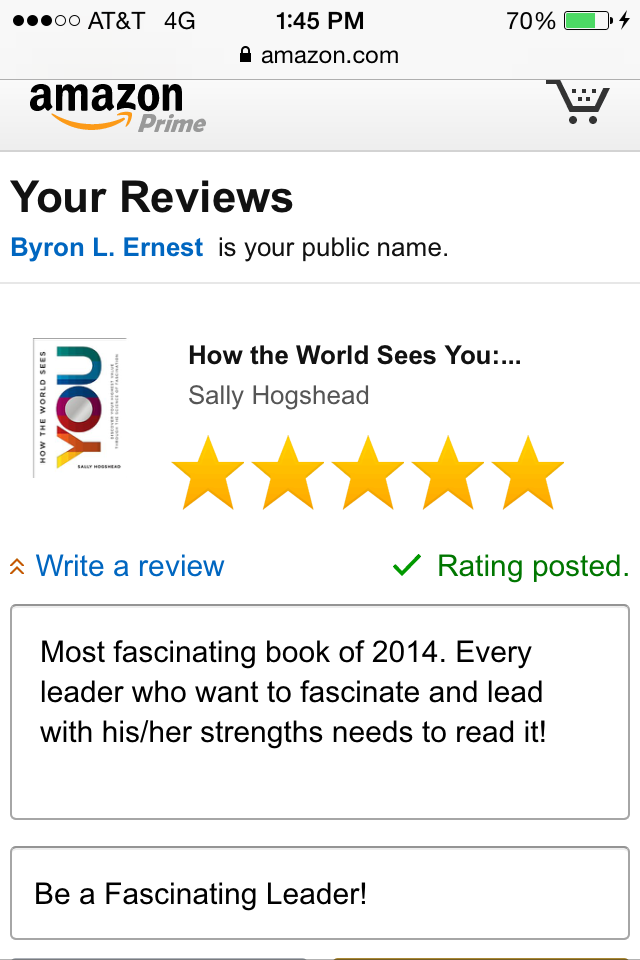
Additionally, I have also posted blogs about this book as well. ‘Rudolph and Elf Fascinating Leadership’ and ‘Just a Kiss of Leadership.’ Click Byron’s Babbles to read those two posts.
Reviews and recommendations are not new, but certainly a powerful marketing tool in the online world. Most of us trust the word of mouth from other ordinary people like us. I recently saw this statistic: 78% of consumers trust peer recommendations. Only 14% trust advertisements. Think about it, we really did not need the data to affirm this. Did we? We look at the comments of other consumers, and then we make our purchases accordingly. It’s true for everything from furniture to TV’s, from comforters to curtains. And, yes, it’s VERY true for books too.
As I said, I believe we have an obligation to promote books that have enabled professional growth in us. One of the most powerful ways to do this is to make a personal and individual recommendation to friends, family members, and those we coach, mentor, and lead. As you know from previous posts I always give a copy of every book that I read to someone who I believe will get value from it. So, for example, last year I read 66 books and gave 66 books to others to read. Now, do I know whether they read them? No, but it is important to do so and I know that many did because I get feedback from them. If you want to read more about what I’ve done to get books that have influenced me into the hands of others, click iRead Because iLead. Interestingly, in his book Eleven Rings, Phil Jackson talks about picking a book each year and giving it to his players to read based on their needs. I was motivated to continue my practice after reading this! Would you read a book someone personally gave you?

So what do you think? Have you ever been swayed into buying a book after reading a blog review or Amazon review? Do you watch what others are reading and saying about books on Twitter? Would you make sure you read a book that someone personally gave you and report back to them? Which influences you more—peer recommendations or advertisements? And why? Don’t forget it is a leadership obligation to give others the gift of reading!
Be Consistent, Not Clever!
 I am very excited about a new book I started reading this morning. It will actually take me all year to read it. The book is A Year With Peter Drucker: 52 Weeks of Coaching for Leadership Effectiveness by Joseph A. Maciariello. From the title I am sure you understand why I said it was going to take me a year to read the book. It is set up to take the year with 52 lessons, one for each week. I am dedicating time each Sunday in 2015 to study the lesson for the week. Each week I am also going to do a reflection post in this blog – I will post the picture of the book so you will know it is the reflection on my year-long book read.
Actually, I found this book because of the inspiration of one of my 2015 reread books. You will remember I have committed to rereading 12 books (one each month) that I have already read. My first reread book for 2015 was Turn The Ship Around!: A True Story of Turning Followers Into Leaders by L. David Marquet. I have written and tweeted a great deal about this book and believe lessons learned have had some of the greatest impact on my latest successes as a leader as any professional growth exercise I have done. I will be doing a post about my fourth reread of this book later in the month. However, in the book Marquet references learning from the teachings of Peter Drucker. I have read some of Drucker’s work and because of my affiliation with the American Society for Quality and the American Society for Quality Education Division I have been exposed to a great deal of his work. So, I decided I was going to find a Drucker book to read and gain more insight. Off to Barnes and Noble I went to get a Starbucks and look through the books. Right away I found the book that I believe Maciariello wrote just for me (even though I have never met him I am sure he wrote it just for me!). Amazingly, in doing the first week’s reading I found some correlation between Marquet and Drucker. It turns out leaders are readers! Who’d of thought?
 The connection I found between Marquet and Drucker right away was the idea of empowerment. Marquet talks about empowerment just being a word and you can’t just tell those you lead they are empowered. We must, as leaders, develop everyone in our organizations to be effective based on competence and trust. Without this competence and trust all we really have are what Drucker referred to as “functionaries” (Maciariello, 2014, p. 4). In other words just going through the motions and doing what they are told to do. Empowerment is really a delegation of authority. Marquet described, however, that delegation alone is not the answer. We must also be committed to increasing the technical knowledge of those on the team. As Marquet said, “When authority is delegated, technical knowledge takes on greater importance at all levels” (Marquet, 2013). He went on to say, “Control without competency is chaos” (Marquet, 2013). I love this quote because it drives home the point that leaders must consistently provide an environment of professional growth that builds the competency of all in our organizations. This means that leaders cannot be self serving.
Another point in this week’s reading was the idea that to be a leader you must have followers. This is much easier said than done. For this to happen you must get things done and you must have the trust of those you lead. Again, sounds easy but in reality is very tough to achieve. “Trust is built on communication and mutual understanding.” “To achieve mutual understanding you must understand what information your colleagues need from you to perform their function, and they must understand what you need from them” (Maciariello, 2014, p.6). This is where the consistency comes in. In other words what I say and what I do must be congruent. This is an area we must all continually work on.
There are four questions in the “Practicum-Prompts” section of the weekly lesson that really jumped out at me. I will close by sharing them with you and telling you that I am going to print these out and post them at my desk and use them as a barometer for my leadership in the coming weeks and months. These questions are on page 8 (Maciariello, 2014):
Is the authority of the leadership group in your organization grounded in responsibility, integrity, and service?
Does it bring out whatever strength is present in each person?
Does it foster a sense of community and citizenship?
What can you do enhance the legitimacy of the leadership group in your area?
I know right now I need to really work on bringing out the strengths and building the technical knowledge of all I serve. I find that this is very easy to do with some and extremely tough with others. Have you noticed there are many individuals (I include myself in this category) that are “sponges?” They want to learn everything. These individuals are easy to work with. The individuals I need to spend more time with are the ones that believe they have arrived and know everything already. After my study this morning, I believe the answer to working with these individuals is to truly developing the sense of community and citizenship. This will in turn bring legitimacy to their leadership.
Remember, it’s about being consistent. You do not need to be clever!
References
Maciariello, J. A. (2014). A year with Peter Drucker: 52 weeks of coaching for leadership effectiveness. New York, NY: HarperCollins Publishers.
Marquet, L. D. (2013). Turn the ship around!: A true story of turning followers into leaders. New York, NY: Penguin Group.
Group Intelligence
 My first book read of 2015 has been a great one. I am reading Eleven Rings: The Soul of Success by Phil Jackson. During his storied career as head coach of the Chicago Bulls and Los Angeles Lakers, Phil Jackson won more championships than any coach in the history of professional sports. I have taken a great deal of notes during the reading of this book. One thing that has really jumped out at me though is the idea of what Jackson calls, “group intelligence.” Many also call this collective intelligence. When we form teams we commit to work together for a common goal.
“The strength of the team is each individual member. The strength of each member is the team.” –Phil Jackson
Jackson stated: “Basketball is a sport that involves the subtle interweaving of players at full speed to the point where they are thinking and moving as one… a powerful group intelligence emerges that is greater than the coach’s ideas or those of any individual on the team.” Really, coach and leader are interchangeable terms in this quote. One thing I’ve learned is that the only way to lead any school or organization with great success and scale is to build a great team. No matter how smart, talented, driven, or passionate you are, your success as a leader depends on your ability to build and inspire a team. A successful leader is one who can inspire his or her team members to work better together toward a common vision and goals.
“Talent wins games, but teamwork and intelligence wins championships.” –Michael Jordan
What we know as an individual is actually a dynamic collection of a lifetime interactions and knowledge sharing with all those we have collaborated with. Collective intelligence strongly contributes to the shift of knowledge and power from the individual to the collective. In education we have been modeling this with professional learning communities and the way educators are learning to participate in knowledge cultures outside formal learning settings. To be successful we must continue to embrace and find ways to make a a culture of group intelligence common place.
 Byron's Babbles
leave a comment