Improving To Great
 In Gem #17 entitled, “Good IsThe Enemy Of Great” in 52 Leadership Gems: Practical and Quick Insights For Leading Others by John Parker Stewart we are reminded that we need to adopt a culture where every aspect of the organization can be improved. “Good is the enemy of great” are the opening words of “Good to Great,” the best-selling iconic book by preeminent leadership and management thought leader Jim Collins.
 In order to do this we must surround ourselves with the right people. Collins taught us to have the right people in the right seats on the bus.
Additionally, we need to remember that the journey to great is just that, a journey. This journey should not end. Once you think you are great, you have nowhere to go but down. Very few organizations ever achieve greatness, even though at times leaders and those who they lead may use that term to describe their organizations.
Many times we are blinded by the facts. We get lulled into thinking everything is going great. We must be open to looking at all the brutal facts about our organizations. Let’s take a moment and think about our leadership style and the culture of our organizations. Should any changes be made?
Owning It
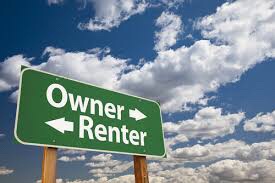 One of the most important responsibilities of great leaders is to continually grow team members into “owners”, and at the same time convert “renters” to “owners” by engaging and developing them to realize their potential and purpose. Gallup (2017) research tells us one of the most important things employees want is to have the opportunity to make a difference and grow professionally where they work. Taking ownership is an important part of this engagement.
 By ownership I don’t necessarily mean monetarily owning. The owner mentality is one of commitment, individually and collectively, to a shared purpose. The metaphor of “renter” vs. “owner” was used in Gem #15 entitled, “Ownership Or Rentership” in 52 Leadership Gems: Practical and Quick Insights For Leading Others by John Parker Stewart . Stewart talked about the difference in the way we care for a rented house versus one we own. I think of the metaphor of a rental car versus the one I own. What’s the saying? “Nothing parties like a rental!”
We will know we have developed owners if they are always looking for ways to make the workplace increase in value. Owners are also always looking for others who can help increase the value of the workplace. Are you developing owners or renters?
Setting Your Leadership Style
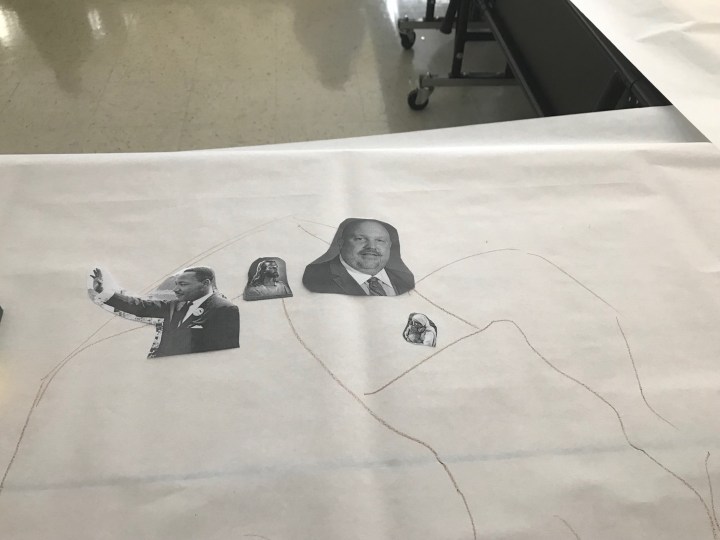
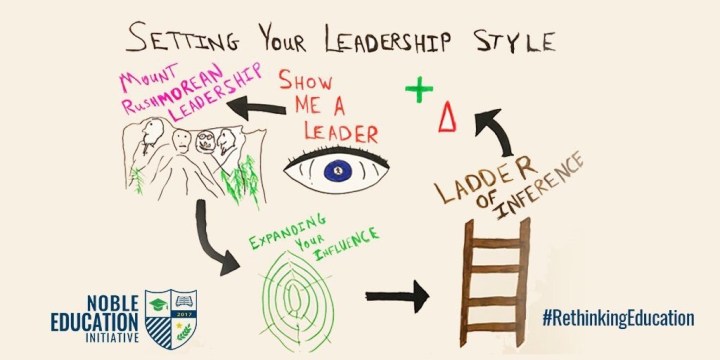 Last evening we did a really cool project during our 3D Leadership Development Program. First of all, the participants were tasked with bringing 10 pictures of leaders that had influenced the participants in a positive way. I must say that all participants put a great deal of thought and reflection into this and all brought their 10 pictures to our gathering. To begin with I had the participants quickly pick four of the leaders and make/draw/create their own person Mount Rushmore with the four most influential leader examples in their lives. These turned out really cool and I have included some pictures of the personal Mount Rushmores that were created, here:
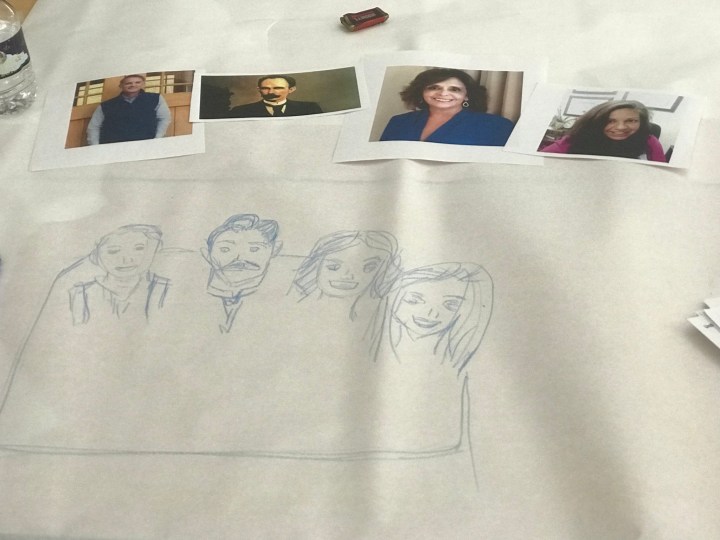
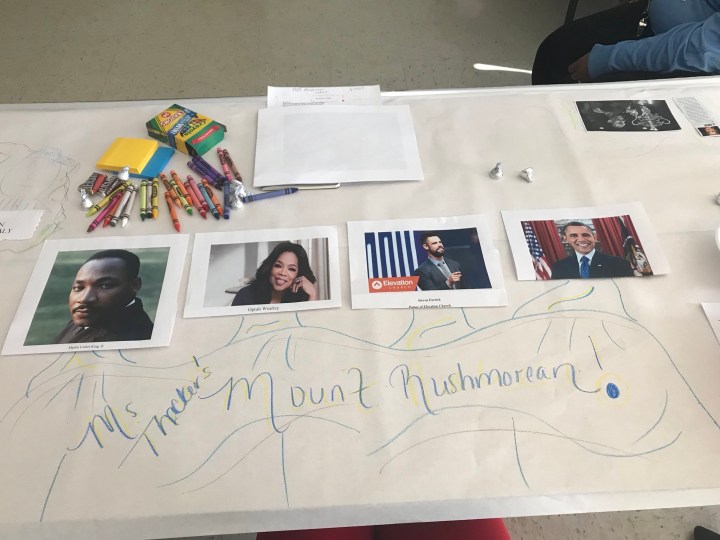 In the discussion afterward, the participants explained how tough it was for them to just pick the four influencers for the original Mount Rushmore. Creating that frustration of only picking four was by design. It is very tough to only pick four for a Mount Rushmore. At the same time we need to realize that our influencers come and go. Also, our influencers have different levels of influence at different times. In other words, as we take our journey of leadership, our role model can, or maybe need to, change. This is why I love reading about a diverse group of leaders. For example, right now I am reading about President James K. Polk. I don’t think he would make my current Mount Rushmore, but I am certainly learning things from his leadership style I can use. Some of them are things I have learned to not do, or stop doing. This is certainly important to our development. The bottom-line is that our personal Mount Rushmore should be continually changing. More importantly, we should constantly be studying and looking for new candidates for our own version of Mount Rushmore.
 I have to admit, the idea for for this activity came from my own desire to have a drawing made of what would be my personal Mount Rushmore. Originally, I thought I would have the Wright Brothers, Gene Simmons (KISS), Patrick Henry, and Thomas Edison. But, then I started wanting President Ronald Reagan, Walt Disney, President Harry Truman, et cetera. Honestly, I couldn’t decide so it never got done. In fact the person I wanted to do the drawing told me that it can’t be fixed, it needs to be fluid. In fact he suggested it should be a Mount Rushmore frame with no pictures and then I should have a bunch of magnet pictures to move in and out. Additionally, as new influencers come on, they can be added.
I’ve got to tell you, it really impacted me to see my picture on one of our participant’s Mount Rushmore. Others in the cohort were also on others’ Mount Rushmore’s or leadership mosaics (described next). This really caused me to think about and ask the question of “Am I worthy of this?” Particularly, when I was right next to Jesus on Mount Rushmore. See picture here:
 After that activity and share out, I had participants go back and create a leadership mosaic using all 10 pictures/leaders. Here is what I asked them to do:
•Place a tear sheet on the wall
•Now create a collage with all 10 pictures
•Be creative so that the 10 individuals you selected are incorporated in a way that tells a story.
•Now gallery walk
•Place at least one comment on each
•Popcorn out things that jumped out at you
I have to tell you, this was impactful. There were individuals who teared up while looking at the 37+ mosaics that were created. It was amazing. Here are a few examples:
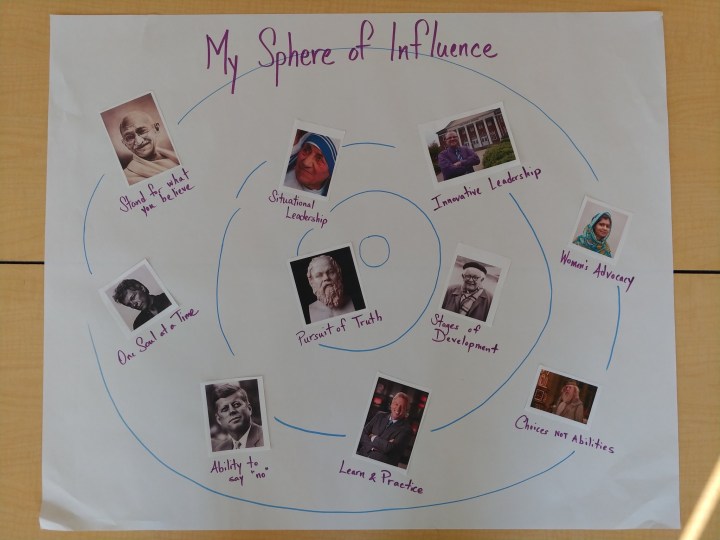
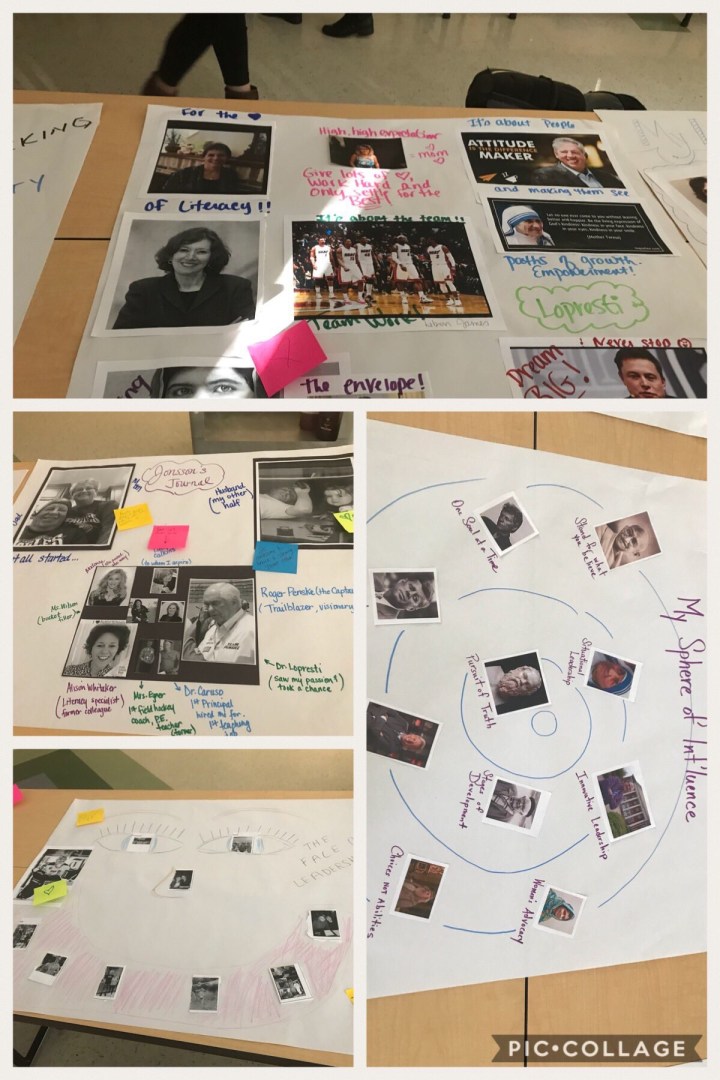 We then had a very impactful discussion about leadership style and influence. Then one of our always thoughtful and very engaged participants, Christopher Scholl, from Langtree Charter Academy Upper school spoke up and said, “What really struck me was how different everyone’s mosaics are, but everyone completed the assignment correctly, did everything we were supposed to, and all were very impactful.” We then had a discussion about this. Chris went on to say, “As leaders we need to lead more like the way you set up this activity. We need to lay out the vision, but how our teams and those we lead get there or what the final product looks like really does not matter and needs to be theirs to own.” Wow, this was an awesome discussion that came out of this. It really is intent-based leadership being described at its best. David Marquet would sure be proud. Get all the team developed in the technical skills necessary (otherwise it is chaos) and then let them do their jobs and tell you, the leader, what they intend to do. This will truly drive innovation and creativity. And…HELLO…it means the decisions will be made right where the data is being created.
It was also discussed how we must also create space like this for our students to be able to have the autonomy to create and not have to always turn in assignments where every child’s work looks exactly the same. This is why I am such a big believer that we should be looking at student outcomes and transferable skills. In fact, we should be changing our whole school accountability models to look at outcomes instead of outputs or the inputs.
The whole point of the personal Mount Rushmore and leadership mosaic activities was for participants to take a deep personal and reflective look at their personal leadership style. Keep in mind that leadership style is different than leadership skills, theory, and tactics. To me, leadership style focuses specifically on the traits, behaviors, and personalities of leaders. In my opinion, no one should ever let anyone determine their leadership style for them. Leadership styles can be broken down in several different ways depending on what information is being looked at. There are many ways to define styles, such as: being charismatic, participative, situational, transactional, transformational, adaptive, disruptive, loud/boisterous (like me), quiet or servant-like. One more way to differentiate leadership styles is according to whether leaders are task-oriented or people-oriented. Task-oriented leaders are said to have a considerate style and people-oriented leaders an initiating-structure style.
So why was it important for us to take a deep look at our own personal leadership style and recognize those we learned those skills from. Since organizations are always striving to find great leaders that can lead them to success, much effort has been put forth into finding out how they operate. More specifically, organizations are trying to identify the characteristics and behaviors associated with the best leaders. As a result, many leadership theories have been developed over the years that attempt to explain what makes a leader great. Organizations figure if they can identify the traits that make a successful leader, they cannot only identify potential leaders more readily, but also can hone in on those specific skills for improvement. While I agree with all of what I am saying here, I also want to make sure we do not lose sight of the fact that leadership style should be an individual thing. I certainly would not want a world where all the leaders looked and acted exactly the same. I do have some leaders, however, I would love to know who the world is on their Mount Rushmore and who they are using as a role model. Ill bet you have some you are wondering about too.
I challenge those reading this post to reflect on who is on your Mount Rushmore or your leadership mosaic. Most importantly, I encourage you to reflect on whether you are worthy of being on someone else’s Mount Rushmore or leadership mosaic. Thinking about being on someone else’s Mount Rushmore is not egotistical or vain; It is, again, about reflecting on our worthiness of being a role-model of leadership influence. I would love to have some replies of who you would put on your personal Mount Rushmore and why.
The Anatomy Of An Idea
 Leaders speak last. I really believe in this and try to practice it. When you’re the last to speak, you empower those you lead to voice their opinions and ideas without you butting in. You also become smarter as a leader, since you get to hear all your employees’ thoughts and suggestions. I was reminded of how much I believe in this while reading Gem #14 entitled, “In The Decision Making Process, Voice Your Opinion Last” in 52 Leadership Gems: Practical and Quick Insights For Leading Others by John Parker Stewart . If we are always giving the answer first, sooner or later, your discouraged team members will stop sharing any ideas, and that kills communication in your organization.
 Also, watch how you ask questions and make comments. Again, speak last. Watch comments like the following:
• “Here’s the problem, here’s what I think… What do you think?”
• “Before you go into that, let me just say one thing first…”
• “I understand where you’re coming from, but I think…”
Furthermore, pay attention to your nonverbal clues. Avoid giving away any verbal or non-verbal cues, like shaking or nodding your head, or gesturing with your hands. Make no mistake, I am not saying I’m good this, but I work really hard at speaking last.
So, next time you have decisions to make, speak last. I guarantee you will see how the quality and creativity of the discussion will improve exponentially.
Organizing
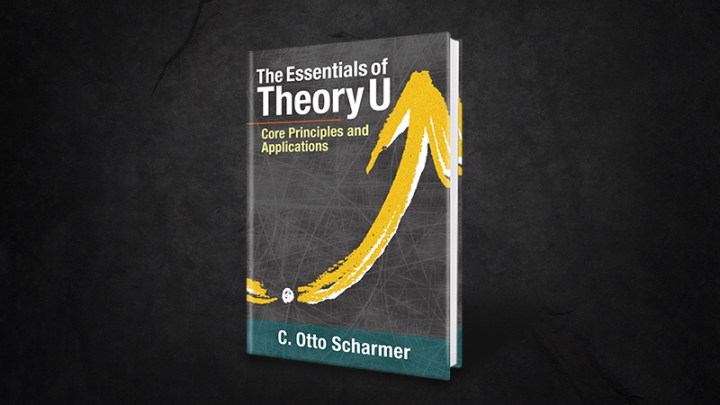
 The following is an excerpt from The Essentials of Theory U
Organizing
Guest post by Otto Scharmer
Global organizations are a new species on the face of our planet—a species that in less than two centuries has progressed to rule the world. Organizations are essentially geometries of power. They structure our collective decision making. When we look at the evolution of organizations, we see four different stages: centralized, decentralized, networked, and eco-system, which reflect different stages or qualities of how organizations operate. Again, the art is to develop tools that allow the organization to change and evolve into these different stages, depending on what is needed.
Centralized
In 1.0 organizational structures, decision-making power is located at the top of the pyramid. It is centralized, top-down, often with formalized roles. These 1.0 structures work well as long as the guy (or core group) at the top is really good and the organization is relatively small and agile. However, once organizations or companies begin to grow, they need to decentralize in order to move decision making closer to the markets, customers, or citizens. The resulting 2.0 structures are defined by both hierarchy and competition.
Decentralized
In a 2.0 organizational structure, decentralization enables the source of power to move closer to the periphery. The result is a functionally, divisionally, or geographically differentiated structure in which decisions are made closer to the markets, consumers, communities, or citizens. The good thing about 2.0 structures is the entrepreneurial independence of all of its divisions or units, its accountability, and its focus on meritocracy. The bad thing is that no one is managing the interdependence, the white space between the units. Which brings us to 3.0 structures.
Networked
In 3.0 organizational structures the source of power moves even farther from the center. It originates from beyond the traditional 501-71384_ch01_5P.indd 48 1/17/18 1:59 AM The Matrix of Social Evolution 49 boundaries of the organization. The result is a flattening of structures and the rise of networked relationships. Power emerges from the relationships to multiple stakeholders across boundaries. How many people report to me matters less than the quality of my stakeholder relationships inside and outside the organizations, or how many people follow me on Facebook and Twitter. A good thing about 3.0 structures is empowerment and networked stakeholder connections. A bad thing is the increased vulnerability in the face of disruption or being sidetracked by vested interests, because small groups can organize their lobbying activities much more easily than large groups.
Eco-system
Finally, 4.0 structures, or eco-system structures, operate by connecting and cultivating the entire living eco-system that is organized around a shared purpose. “Swarm” organizations and Agile or Tealbased organizations are all based on self-organizing circle structures in the context of shared purpose and institutional interdependency. As the decision making is being pushed even further to the frontline of organizations (empowering), these flattened and fluid structures of decision making only work well to the degree that the mindset of the participants has shifted from ego-system to eco-system awareness. This means that the decision-making circles develop the capacity to act from local knowledge while being aware of the cross organizational interdependency and aligned by a shared purpose.
 *******************************
More about Otto Scharmer
Otto Scharmer is a Senior Lecturer at MIT and co-founder of the Presencing Institute. He chairs the MIT IDEAS program for cross-sector innovation that helps leaders from business, government, and civil society to innovate at the level of the whole system. He is the author of Theory U (translated into 20 languages) and co-author of Leading from the Emerging Future, which outlines eight acupuncture points of transforming capitalism. His latest book, The Essentials of Theory U: Core Principles and Applications, illuminates the blind spot in leadership today and offers hands-on methods to help change makers overcome it through the process, principles, and practices of Theory U.
In 2015, he co-founded the MITx u.lab, a massive open online course for leading profound change that has since activated a global eco-system of societal and personal renewal involving more than 100,000 users from 185 countries. With his colleagues, he has delivered award-winning leadership development programs for corporate clients and co-facilitated innovation labs on reinventing education, health, business, government, and well-being.
Leadership Lessons From My Mom
 I had the opportunity to walk along the beach tonight in Fort Lauderdale, Florida. Having lost my mother to a stroke this past week I could not help but reflect on her teachings as the warm sand squished between my toes. I guess this post is really a tribute to my mom. My mom’s servant leadership modeling had a profound impact on my development and who I am today. She always taught me that our gifts are not about us. Leadership is not about us. Our purpose is not all about us. Living a life of significance is about serving those who need our gifts, our leadership, and our compassion. She taught me it is much more important to be significant, not successful.
As a third generation educator I saw first hand the significance a teacher and school leader can have in the lives of all students and the teachers the administrator leads. Mom taught me that success is only about building yourself (make no mistake that is important). Significance, however, is about empowering others toward greatness. It is about leaving the world better than when we started. Significance is about the influence we have on those we come in contact with.
Mom used to always tell me that when one door closes, God always opens another. And…you know what this has always proven to be right. It’s amazing how smart moms are! Most credit Alexander Graham Bell for saying “when one door closes, another door opens, but we so often look so long and so regretfully upon the closed door, that we do not see the ones which open for us.” My mom, however, taught me that God was in charge of the door opening and closing. She also taught me, thank goodness, to look for the open doors.
Mom always taught me that the closed door was closed and to not give in to the temptation to look back. We can’t go back, so check out and be curious about the open doors. As leaders we need to walk forward to the next door that we can open, or that God has opened for us. Great leaders keep their eyes toward the future instead of looking at the present or the past. Effective leaders are open to new ideas, open to challenges that will present themselves, open to the input of others, and open to the possibilities they don’t even see just yet, or maybe only see in their dreams.
So as I watched the ebb and flow of the waves in the Atlantic Ocean and enjoyed the warm sand today I was reminded to keep a keen eye out for the doors opening to significance. Are you looking for open doors?
A Better Boss Stays Engaged
 Guest post by Mark Miller
In the Talent Magnet, we established how important it is for leaders to Demonstrate Care. The well-worn axiom is true: People don’t care how much you know until they know how much you care. According to Top Talent, this is a highly valued trait of the women and men they want to work for.
What other attributes or best practices are often associated with a Better Boss? Well, there are some things leaders can delegate, and there are others we cannot. The second expectation of a Better Boss underscores this truth. Top Talent expects their leaders to Stay Engaged.
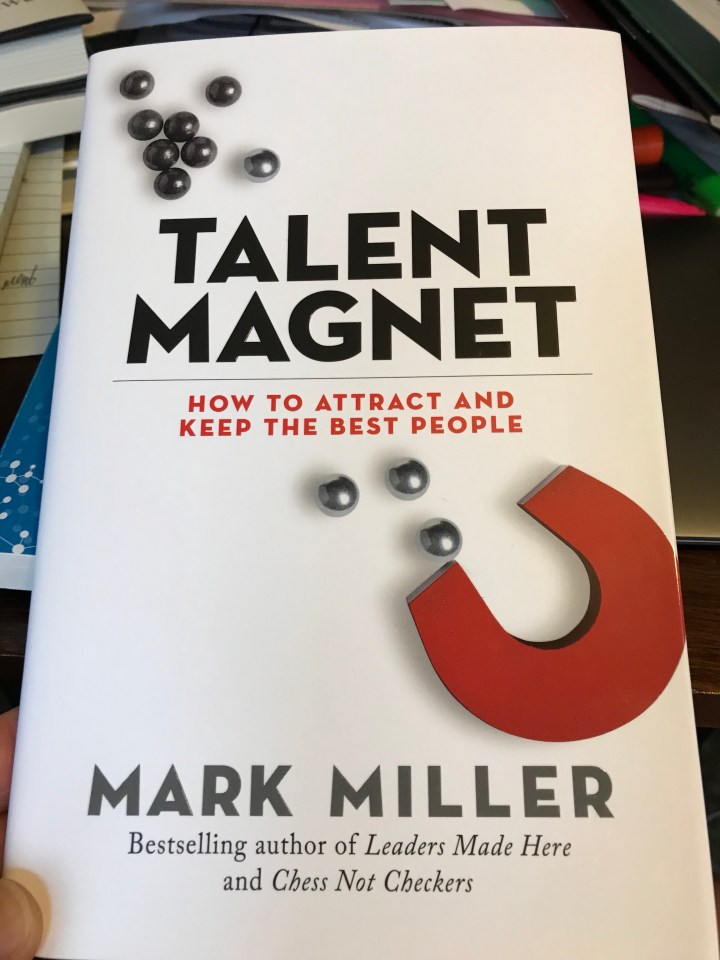 The following is an excerpt from the Talent Magnet Field Guide co-authored with Randy Gravitt.
Why do some organizations prosper while others plateau? The answer is usually found in how well they are led and in how much talent they have. As the leader, you have the ability to impact both. But in the eyes of your people, your ability to lead well is contingent on your level of engagement. A Better Boss must Stay Engaged.
Whenever we hear the word engagement it often brings to mind a wedding proposal. But great marriages are not built on a one-time engagement day. No, both the bride and the groom must remain engaged if a relationship is to flourish over time. The same is true for leaders. If they really hope to attract Top Talent and keep them energized over time, the leaders themselves have to show up – ready to contribute.
To be a Better Boss, your presence is required – not every minute of every day, but your presence must be felt. You must remain involved and stay grounded in reality. Leaders demonstrate involvement in many ways. Staying focused in meetings, listening to the opinions of others, being willing to do real work, and taking ownership when things go wrong communicates a strong message to your team.
Your responsibility is to fully lean in and Stay Engaged. When you do, you meet one of Top Talent’s most often stated expectations of their leaders: Showing up in reality – never just going through the motions.
************************************
About Mark Miller
Mark Miller began his Chick-fil-A career working as an hourly team member in 1977. In 1978, he joined the corporate staff working in the warehouse and mailroom. Since that time, Mark has steadily increased his value at Chick-fil-A and has provided leadership for Corporate Communications, Field Operations, and Quality and Customer Satisfaction.
Today, he serves as the Vice President of High-Performance Leadership. During his time with Chick-fil-A, annual sales have grown to over $9 billion. The company now has more than 2,300 restaurants in 47 states and the District of Columbia.
When not working to sell more chicken, Mark is actively encouraging and equipping leaders around the world. He has taught at numerous international organizations over the years on topics including leadership, creativity, team building, and more.
Mark began writing about a decade ago. He teamed up with Ken Blanchard, co-author of The One Minute Manager, to write The Secret: What Great Leaders Know and Do (2007). More recently, he released Chess Not Checkers (2015), and Leaders Made Here (2017). His latest is Talent Magnet: How to Attract and Keep the Best People (February 2018). Today, over 1 million copies of Mark’s books are in print in more than two dozen languages
How Do We Change This World?
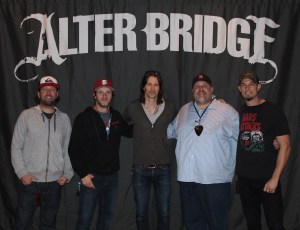
 This morning as I was driving to visit with my mom I was listening to my favorite band, Alter Bridge. I would argue that no group has a line up of more inspiring songs. If you disagree, let’s have that discussion because I would love it, but that is not the point of this post. One of my top five songs from Alter Bridge is “Rise Today.” The main lyric of the song says, “I Wanna Rise Today And Change This World!” How can you not be inspired by that? But then as I sat with my mom, I got to thinking about what it, or what does it, mean to “rise today and change this world?” Particularly, when we all have different ideas of what it means to change the world.
 Then I remembered what Leo Tolstoy, the Russian novelist, so famously wrote: “Everyone thinks of changing the world, but no one thinks of changing himself.” This got me thinking that if we really want to change the world we need to think and act on changes that we need to make to ourselves. Tolstoy’s dictum is a useful starting point for any leader engaged in organizational change that will change the world. I’m convinced that organizational change and changing the world is inseparable from individual change. Most change falters because individuals overlook the need to make fundamental changes in themselves.
There are a few pieces of the lyrics of “Rise Today” that really hit home as I was reflecting on the question of what it means to change the world. Here they are:
- Have we lost our way tonight?
- Have we lost our hope to sorrow?
-
Feels like we’re all alone, running further from what’s right
And there are no more heroes to follow - Hope we find a better way before we find we’re left with nothing
-
Seems to me that we’ve got each other wrong. Was the enemy just your brother all along?
Research shows that half of all change efforts for transformational change fail either because leaders don’t act as role models for change or because people defend the status quo. Let me tell you, I have experienced this a lot lately. So as I think deeply about the five phrases I pulled from the song, it really comes down to something I learned from my studies at the Harvard Graduate School of Education: Technical vs. Adaptive Leadership. The problem is we view most things as technical challenges and they really aren’t. Technical leadership is just about applying the solution we already know to apply. An example I can think of right now to illustrate the difference is with budgets. Most think doing a budget is just a math problem – tweak here, tweak there, presto… done. That would be a technical challenge. But, with all budgeting, difficult discussions, trade-offs, staffing changes and re-deployments, and disappointments happen—this is the adaptive leadership work.
“Adaptive leaders learn to live with unpredictability. They spend less time fretting about the inability to establish a routine or control the future and focus more on exploiting opportunities.” ~ Dr. Leonard Wong
- Be able to consider diverse and conflicting views in all situations.
-
Be able to operate with autonomy under a general framework (and not just look for the easy way to be compliant).
- Model great behaviors as being both technically and and tactically proficient.
- Be mentally flexible and agile.
- Recognize and be able to navigate the gap between the way things are and the desired state.
- Understand there are multiple perspectives on the issue.
- Remembering that new learning will absolutely need to happen.
- Knowing that resistance will be triggered in stakeholders.
So, if we are going to change the world we know that behaviors and attitudes will need to change. The tough part is people with the problems are key to solving the problems. And, those groups will have varying opinions on solutions. Thus, why I believe the lyric, “Seems to me that we’ve got each other wrong. Was the enemy just your brother all along?” is so appropriate. We must also remember that with adaptive leadership, old ways need to change, and that will create a sense of loss for some (or a lot).
As I reflect on rising today to change this world, I believe we must, as leaders, not miss thinking, “What’s good, right, and just for everyone?”
Servant Leadership; Not Just Cliche`
 Servant Leadership in Action: How You Can Achieve Great Relationships and Results by Kenneth H Blanchard
My rating: 5 of 5 stars
I began reading Servant Leadership in Action from a somewhat jaded view. It had seemed to me that the term and thought of servant leadership has become somewhat of just a cliche`. I have watched leaders become doormats in the guise of being a servant leader. Or poor leaders making the excuse of not producing because of being a servant leader. This book reminds us that servant leadership is about influence and action and not just cliche`. My favorite thing about this book is all the great leaders that Ken Blanchard had write chapters, or really essays, that are collected in the book. I have read most, if not all, of the books by many of the chapter authors in this book. It is a great review of many of the great leaders of our time. We are guided through how to truly be a servant leader to those we serve. We are taught that servant leadership is about relationships and a desire to lift up those around us. Great leaders, we are reminded, are always looking for ways to develop and advance those in their organizations. This book is designed in six sections to help us understand how to do this. Additionally we are given exemplars that have been lifted up as the models for servant leadership. If you want to do more for the people you serve and care more about people, then read this book to learn how to empower them to use common sense and good judgment. you want to start catching people doing the right things, and great things, read this book!
~Dr. Byron L. Ernest
Empowering To Pull Together
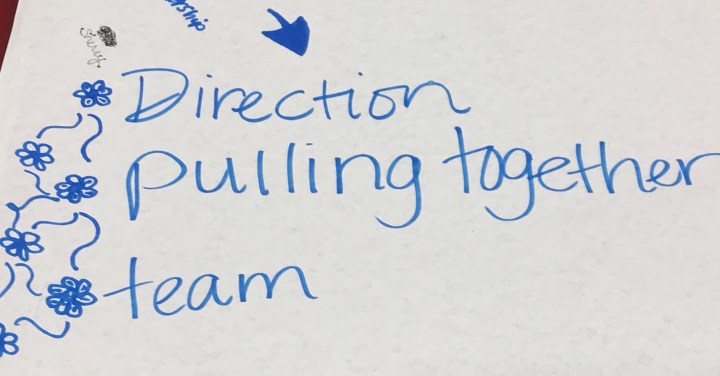
 This past week during our 3D Leadership gatherings a theme kept coming out about empowerment and having everyone pulling together. We talked about this and that empowerment does not just mean making sure everyone is doing something. So many times we, as leaders, fall into the trap of getting wrapped up in our own things and we forget that true empowerment means making sure everyone understands the vision, is pulling in the same direction, and have had the skills developed to do the right things and do things right. There must be a common language and a common approach, which helps to communicate the goals and objectives and create a winning culture, with increased teamwork and ensures that we are all pulling in the same direction.
 I believe in a more distributed leadership model. This model secures team members’ full participation in the organization’s or school’s decision-making processes, promotes meaningful collaboration and harmonious work relations, generates passion for accomplishing goals, and boosts student and teacher productivity. I was reminded of how powerful this is in Gem #8 entitled “People Tend To Support What They Create” in 52 Leadership Gems: Practical and Quick Insights For Leading Others by John Parker Stewart. In this lesson Stewart reminded us that creation is a pervasive instinct for we humans. So, we naturally become much more engaged when we have a part in creation of programs, processes, procedures, and policies. I really believe this is why I loved teaching so much. This is what it is like in an effective classroom with students. It should be that way in a well run school or organization too.
Done properly, team members take leading roles, assume responsibility, and act independently as individuals or groups. The thing I really like about a more distributed model is that it promotes the staff’s full participation in key decision-making and implementation processes and also makes them accountable. But, it does require us, as the leader to serve as both chief coordinator and evaluator of processes and results. In other words, we need to be in the boat rowing 🚣♀️ too.
How can you help your team become involved in decision making and creation?
 Byron's Babbles
leave a comment