Look For Strengths, Not The Abscence of Weaknesses!
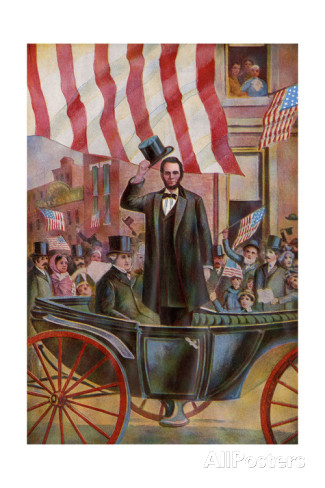 If you had to choose a better U.S. President between James Buchanan, our 15th President, or Abraham Lincoln, or 16th President, which would you choose. If you are like most historians and political scientists you chose Lincoln. He is considered by most to be one of our best Presidents ever; if not the best in history. This is interesting considering the background of the two individuals. Buchanan had significant, relevant national and international experience and failed; Lincoln had very little national and international experience and succeeded. This is what Maciariello (2014) points out as one of the most challenging aspects of succession planning: “What no one could have known is just how much this man could grow in character and competence as he tried to solve one problem after another in extraordinary times that lasted from his first day in office until his death.” (Maciariello, 2014, p. 242)
Succession is one of the key responsibilities of leadership. The succession decisions should focus on the maintenance of the spirit that keeps the institution alive. Solutions have to fit the specific organization and maintain its spirit of performance. The goal should be to maintain or restore the spirit of the organization while using the leader’s unique strengths to change effective practices and meet pressing challenges (Maciariello, 2014). We must also remember what Peter Drucker taught us about not avoiding weaknesses: “Strong people always have strong weaknesses too.” (Maciariello, 2014, pp. 247-248)
“Whoever tries to pick a man or staff an organization to avoid weakness will end up at best with mediocrity.” ~ Peter Drucker
Abraham Lincoln modeled this for us as well in choosing Ulysses S. Grant as his commander in chief. Grant had many flaws, but was just the right person to carry out Lincoln’s plan for winning the Civil War. Grant did carry out the plan and the war was ended. As the example of Ulysses S. Grant illustrates, individuals with weaknesses often have extraordinary strengths on which distinguished careers can be built. We need to strive to be more like Lincoln and ponder the challenges facing our organizations and then look for the right individuals with the strengths to meet the demands. 
“The proof of the sincerity and seriousness of management is uncompromising emphasis on integrity of character. This, above all, has to be symbolized in management’s ‘people’ decisions. For it is character which leadership is exercised; it is character that sets the example and is imitated. Character is not something one can fool people about. The people with whom a person works, and especially subordinates, know in a few weeks whether he or she has integrity or not. They may forgive a person a great deal: incompetence, ignorance, insecurity, or bad manners. But they will not forgive lack of integrity in that person. Nor will they forgive higher management for choosing him.” ~ Peter Drucker
Reference
Maciariello, J. A. (2014). A year with Peter Drucker: 52 weeks of coaching for leadership effectiveness. New York, NY: HarperCollins Publishers.
Leadership To Operational

In order for leadership to be effective, the leader must be able to go from leading to creating a system to operationalize the strategic plan. Strategic planning is an outward process of alignment. Therefore, in order to create a system by which to operationalize the goals all of the following must be in place to go from leading to organizationalized:
- Organization policies must be aligned to operationalizing.
- Team members must know his or her role in carrying out the operationalizing of the system.
- There must be a laser focused strategic plan to get the organization where it is going.
- The appropriate resources must be provided, available, and in place.
- There must be measures of effectiveness.
- An accountability system must be in place.
- Professional learning, growth, and development opportunities must be well thought out and deliberate.
If these points are in place then an operational system can be formed to carry out the strategic plan.
Ideation SPAN™EX Style!

What A Great Group Of Education Transformers!
This past week I spent time with the great innovators and transformational leaders at Nureva, Inc. as part of an advisory board made up of education professionals to provide feedback and discuss new product designs, functionality, and desired solutions to educational needs. This was very astutely arranged by Kimberleigh Doyle at Nureva Education. During this advisory time we were introduced to Nureva’s newest product, SPAN™. Let me tell you, I was blown away. As you know I am a digital adoptee and believe in the power of what technology tools can do to enhance learning. Click here to learn more about my journey and click here to learn more about SPAN™.
I do need to explain the title of this blog post. With Smart Technologies we had SMART Exchange; a community of SMART Technology users where we could upload lessons, share lessons, and collaborate. Of course, I argued that we would need this for SPAN™. And…of course, I thought it should be called SPANDEX! You know, for SPAN™ Exchange! Can’t you just imagine the website? Anyway, I settled for SPAN™EX, but I am not sure I convinced everyone else.


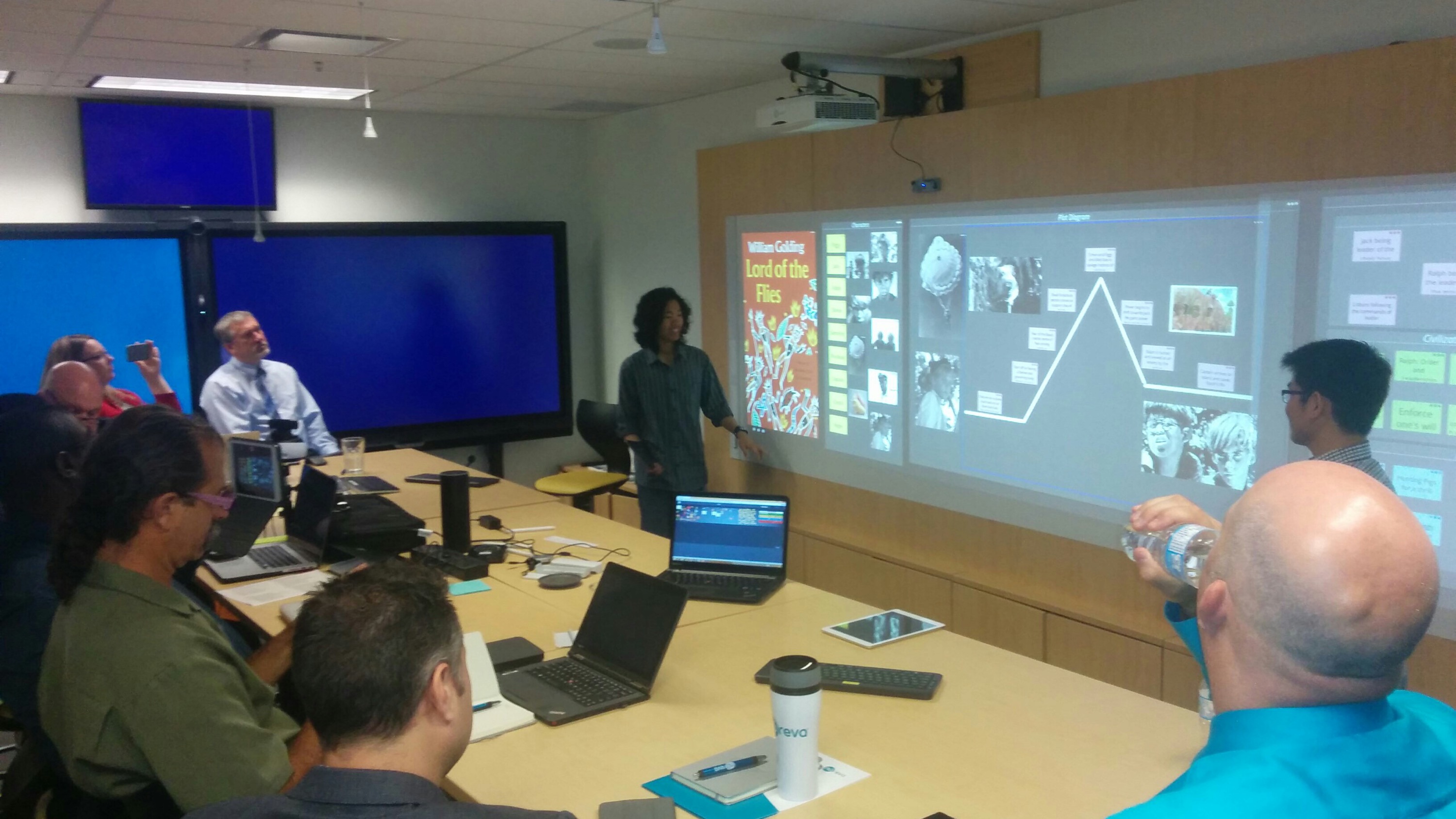
Nureva, Inc. was founded by technology veterans David Martin and Nancy Knowlton in 2014. They are friends of mine and were also the founders of SMART™ Technologies. As a SMART™ Exemplary Educator I fully understand the functionality and power of interactive white board technology. The designers and innovators at Nureva have transformed the way we can use interactive technology with SPAN™. Basically, there are two interactive projectors and 20 feet of interactive space. The projectors employ solid-state illumination, SSI, and the projectors provides a useful life of 25,000 hours. As the user, you are provided with different backgrounds, called a canvas, then an entire collaborative group can be adding and manipulating content at the same time.
The technology makes “ideation” possible. “Ideation” is a disciplined process of generating ideas and then working those ideas in a team or group environment over a sustained period of time. You have more than likely participated in ideation activities even though you may not have labeled them as such.This group does not even need to be at the same location – as the leader of a virtual school with students in all 92 counties can you see where my thoughts went immediately. Click here for an FAQ about SPAN™.
Check out these videos to see SPAN™ in action:


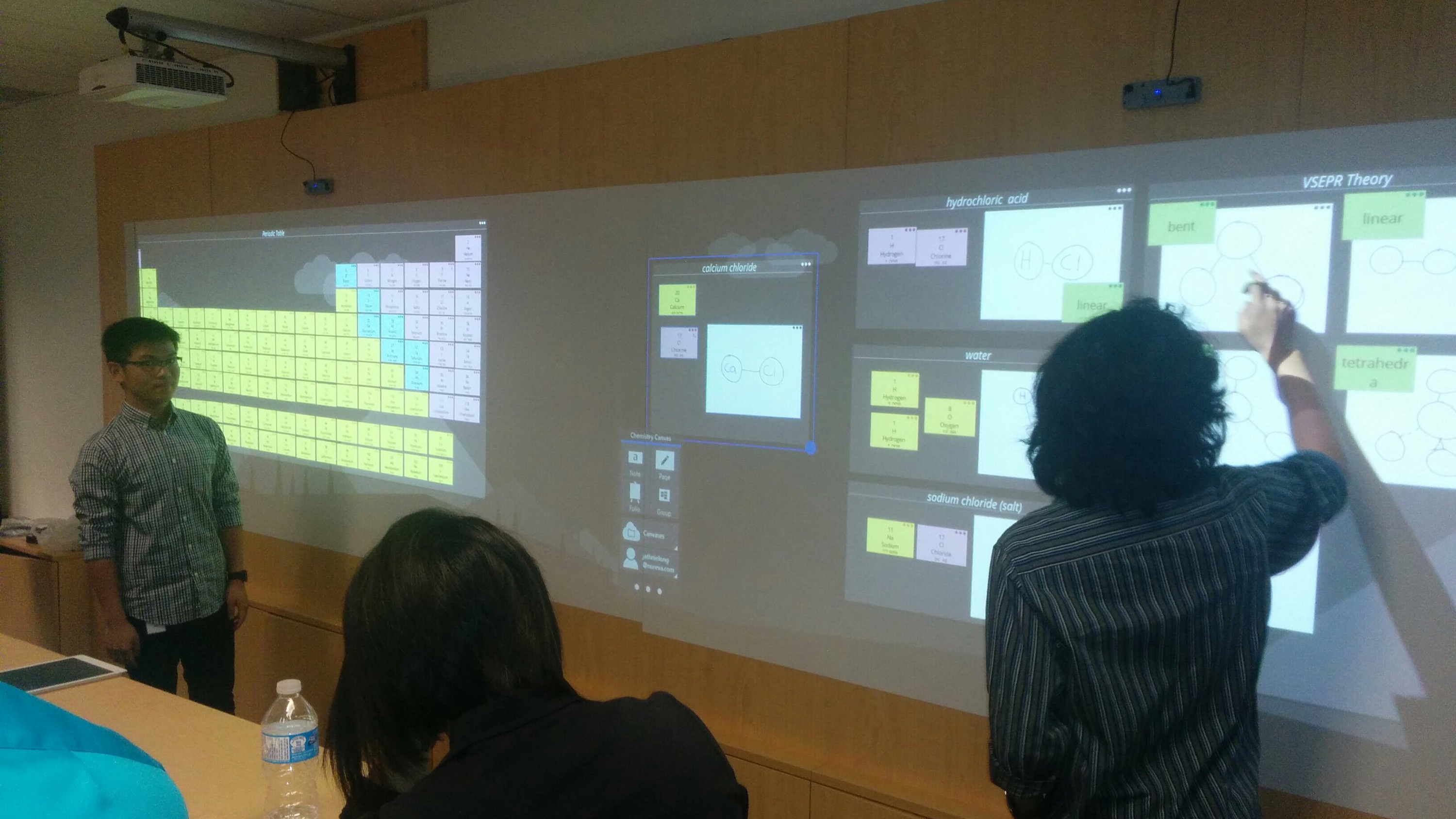 More importantly, however, Nureva made a very smart move and hired two high school interns to work on the project. In fact, they were the ones who taught us how to use SPAN™. They had learned it in a week’s time just by using it with no training. We had the chance to work with Mathieu Chin and Jathaniel Ong during the time we in Calgary and gain insight from them. Let me tell you; I learned a lot from them. I asked them to name the top five important uses of SPAN™ they would advise teachers to use in effective facilitation of learning. Here is their list:
- Collaboration – they believe they learn more when collaborating with other students. I hope this sounds familiar to all reading as we move to college and career readiness standards. Business and industry stakeholders continue to tell us we need to facilitate learning in a way our students learn to collaborate.
- Creation – these two very astute interns recognized the importance of being able to create and produce during the learning process. We were able to witness collaborative creations they had made during learning of chemistry, World War II history, literature, and food science.
- Student Centered – these interns wanted to be involved in the lesson, not just watching a teacher present.
- Transportable – our interns valued that they could collaborate and work in their groups from anywhere. They really saw value in being able to take the learning anywhere and have 24/7 learning. This product is cloud based and changes and collaboration are done in real time.
- Full class involvement – with SPAN™, unlike traditional interactive products, all students can be working in the collaborative space on their computers at once and 10 can actually be manipulating on the projected image at once. Talk about engagement!

I Learned So Much From Mathieu Chin & Jathniel Ong!
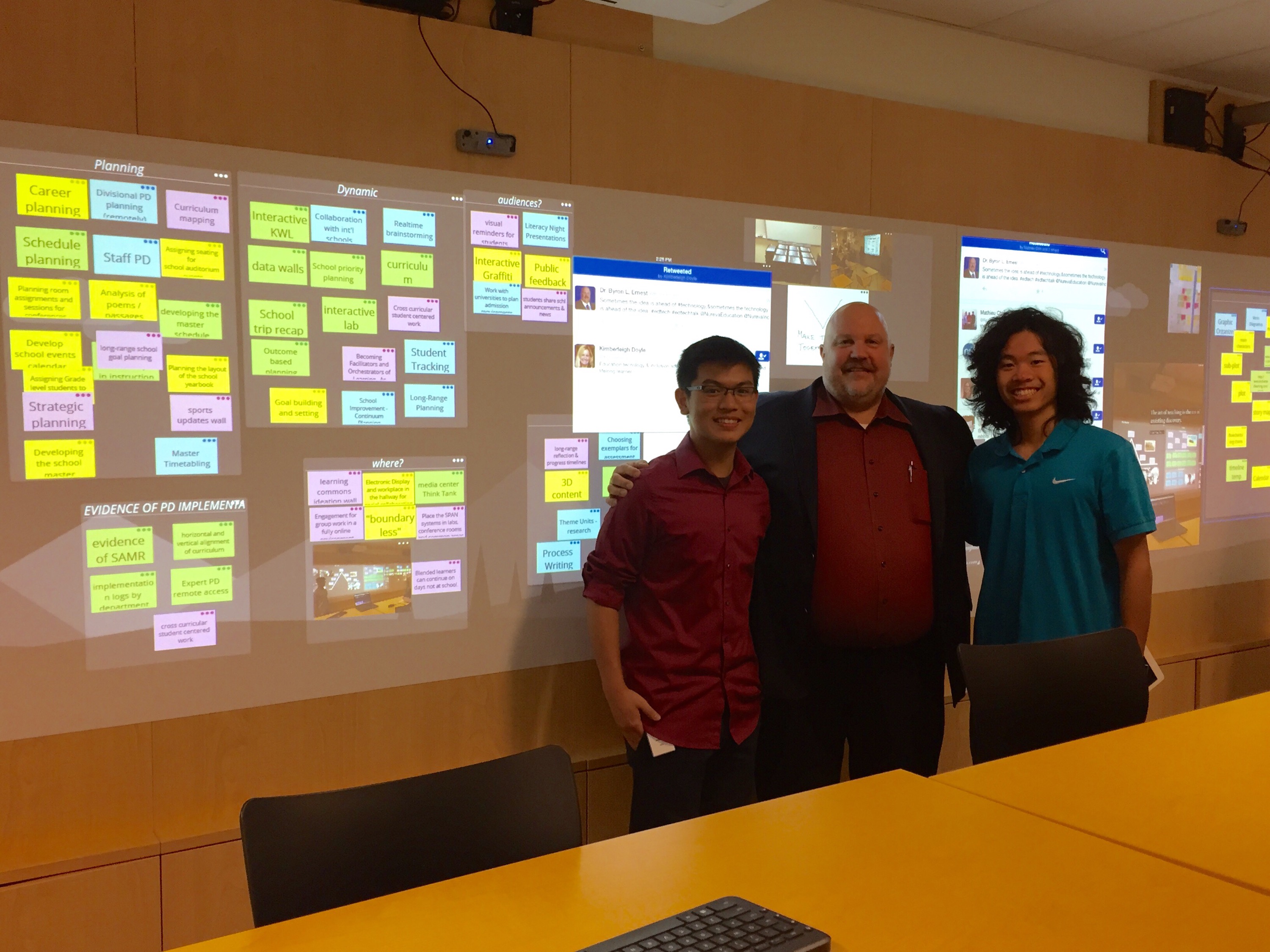
As you can see, I am very excited about SPAN™ and its possibilities for facilitating highly effective learning for students. It was so great to be a part of testing the product and providing feedback, but the most important point I want to make here is the power of the insight of students. This experience reminded me how important it is for us to seek the input of our most knowledgeable stakeholder – our student. Kudos to Nureva, Inc. for modeling this for us as they transform the way we use technology in education.
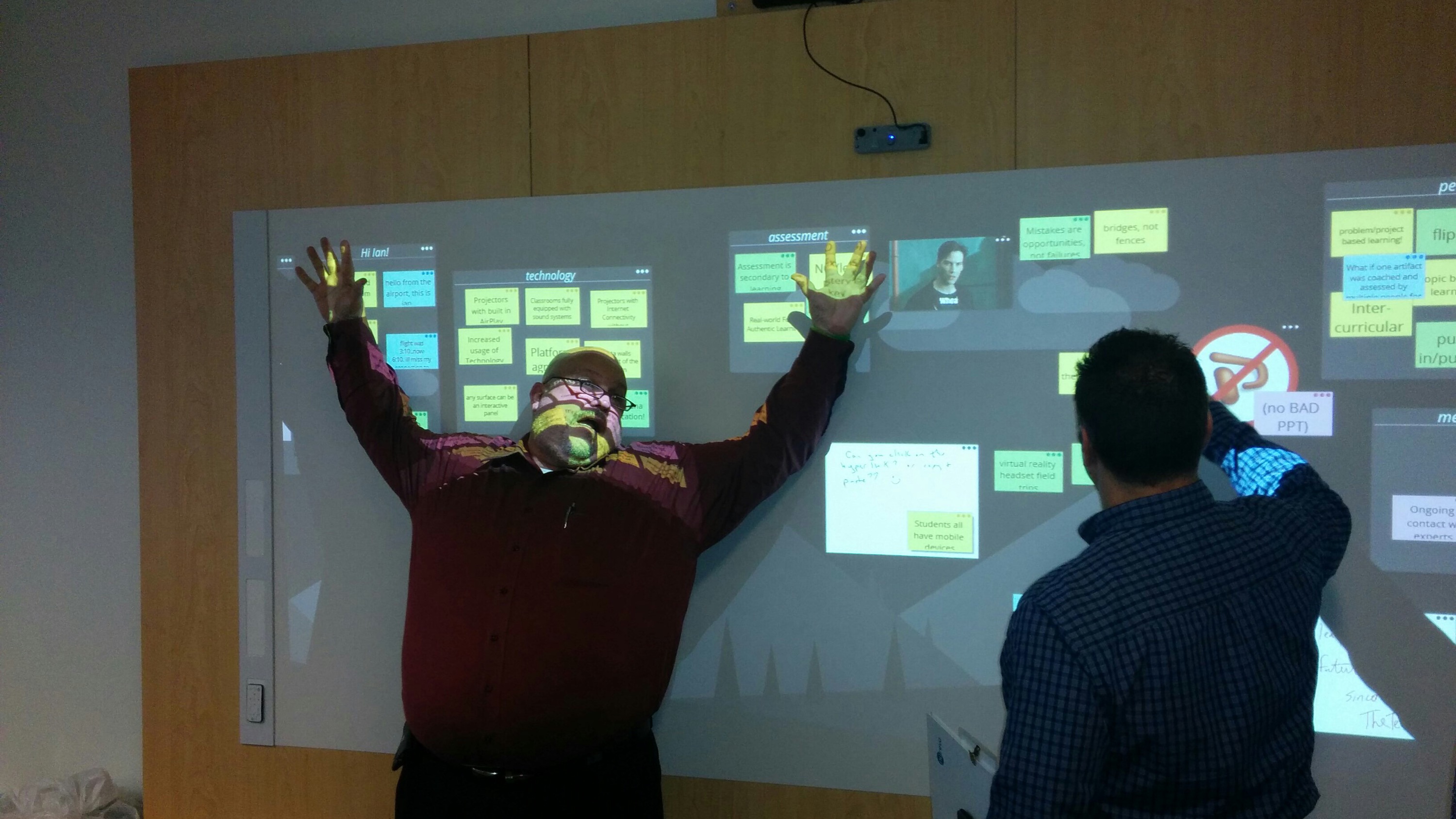
Having A Little Fun With SPAN™
Connecting The Dots
 I had the opportunity to spend time this week in Calgary, Alberta Canada as a guest of Nureva, Inc. as part of a group of education professionals for a discussion about education technology. As a newly appointed Indiana State Board of Education member it was great to be meeting on the top floor of the Calgary Board of Education building. It was humbling to be learning from a group of outstanding educators from all over the United States and Canada.
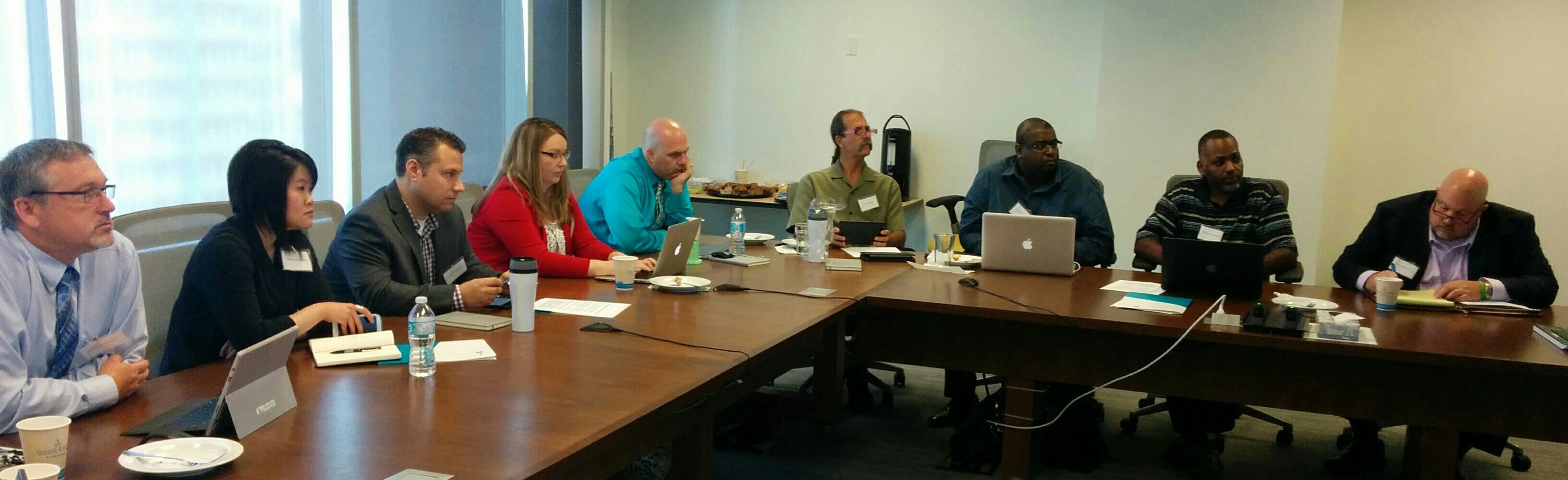 It was so exciting to be working with a group of individuals and education technology company that believes in and practices “holistic adoption” of projects and initiatives; whether those projects and initiatives are related to business technology, educational technology or other academic processes.
 This “holistic adoption” must include professional development. This adoption must also include strong involvement of community and stakeholders, both in the decision-making and adoption/professional development phases. Of course, the most important piece of holistic adoption is the impact on the children we serve.
 We must be able to measure the impact. We also know, the most important person affecting our students is the teacher. Therefore, I would submit the most important essential question, from a school perspective, when holistically adopting new strategies is: What does that mean to a teacher who has never done this before?
 As I reflected on my essential question, I thought about the “connect the dots” sheets we used to get in school. You remember – those numbered sheets that if you follow the numbers with your pencil, it creates a picture. Anytime we bring on a new project or initiative, we must connect the dots to previous initiatives; or, it will look like we, as leaders are abandoning the ongoing initiatives or initiatives from before. We must connect all of the dots for those we lead.Those dots may be past to present, connecting initiatives to student learning, connecting what the intitiative means to teachers and students, or connecting the initiative to the mission, vision, strategies, and action plans of the school/organization. In other words, making sure we connect the dots for those we lead to what his or her role is in accomplishing the mission.
Are you connecting the dots for those you lead?
Farm Party Strategy 9.0
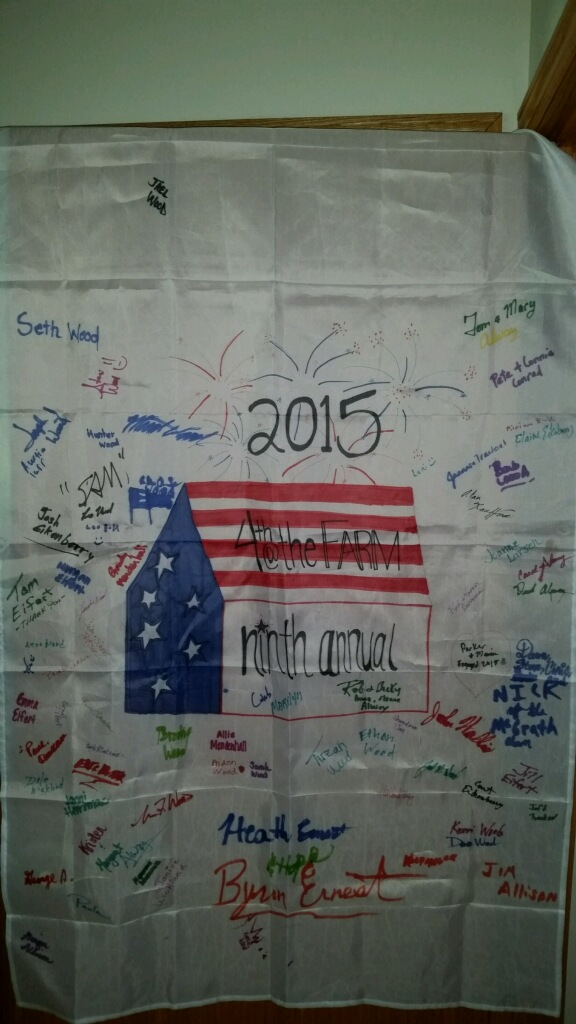
9th Annual Farm Party Banner
This past weekend my family and I had the opportunity to spend a few days up in the Ludington/Scottville, Michigan area for the Fourth of July weekend. The main objective was to attend the Ninth Annual Farm Party of our good friend, Kevin Eikenberry, and his family. He had been inviting us for the past several years and it seemed as if every year something came up preventing us from attending. This year, however, we made it happen. We had an absolutely wonderful time.
I believe the Annual Farm Party answers the three essential questions that Rachel E. Curtis and Elizabeth A. City pose in their great book Strategy in Action: How School Systems Can Support Powerful Learning and Teaching (2012). These questions are:
- What are we doing?
- Why are we doing it?
- How are we doing it?
While these seem to be simple questions; they are very complex to answer when used in the context of strategic planning for an organization.
 So, let’s take a stab at these from the perspective of the Annual Farm Party.
- What are we doing? Ninth Annual Farm Party – Food, Hay Rides, Fireworks, Bonfires, Recreation, and Socializing
- Why are we doing it? Kevin hosts this party to honor his father, family, neighbors, and friends. He is really providing a family/community reunion of sorts. Except, it is much more fun than any family reunion I have ever been to.
- How are we doing it? Kevin hosts at his family farm he grew up on. He really relies on neighbors, family, and friends to pull the party off. I was amazed to watch everyone doing their “jobs.” It was a little daunting to be a “first-timer” to the party, because I had no “job.” Kevin even went so far as to put in 30 amp electric service boxes for those of us who had brought travel travel trailers or RVs to stay in.

Annual Farm Party Banners
This principle of every person person knowing what his or her role is to accomplishing the goals, mission, and vision of the organization is one of the most important lessons I learned from Liz City and Rachel Curtis during my work at Harvard University for Strategy in Action. These two great teachers of strategy drove home the fact that each of us and our team members needs to know our role in carrying out the theory of action of our organizations. Again, it is worth repeating – Every person needs to know his or her role in carrying out the mission, vision, and goals of the organization.
So, back to the Annual Farm Party model. There were individuals who the job of cooking on the grill, cooking in the house, building the bonfire and keeping it stoked, conducting hay rides, bringing picnic tables, setting up food tables, banner making and signing, and on and on. Anyway, you get the idea – everyone knew their role. In fact the roles were so well defined that as an outsider (don’t confuse outsider with not feeling welcome, we were welcomed) I felt like I was being lazy and not helping. But…this was evidence of a well oiled machine.
The take away from me, however, is as a school leader I need to make sure to be very deliberate when a new team member comes on board to make sure he or she understands very quickly what their role is in the goals and action steps of our strategic plan. As the Harvard University research shows, individuals need clearly defined roles to operate at the highest level of engagement. Teams, on the other hand, as the same research showed, need the goals, but need to not be given a prescription of how to carry out the mission. The teams must be the innovators. In fact, to this end as a part of really studying the school we are turning around we have the following written on my office white board at all times:

- What are these people doing?
- Are they doing the right things?
- Then, making what they are doing more visible to everyone!
“It turns out that all influence geniuses focus on behaviors…. They don’t develop an influence strategy until they’ve carefully identified the specific behaviors they want to change. They start by asking: In order to improve our existing situation, what must people actually do? ~ Authors of Influencer: The Power to Change Anything
Thanks Kevin and family for the great Fourth of July, inviting our family to the Ninth Annual Farm Party, and the great exemplar of team members knowing their roles in the Annual Farm Party mission and the answering of the three important questions of strategy:
- What are we doing?
- Why are we doing it?
- How are we doing it?
Reference
Curtis, R. E. & City, E.A. (2012). Strategy in action: How school systems can support powerful learning and teaching. Cambridge, MA: Harvard Education Press.
.
Fishing for Strategy

14 Pound King Salmon Caught By Heath!
While our family was in Michigan this past weekend, my son and I went fishing in Lake Michigan. There was something really special about being on the boat and headed out to the middle of Lake Michigan at 5:00 a.m. on the morning of the Fourth of July. It was cold and foggy and I couldn’t help but think of George Washington crossing the Delaware.
I was struck by how the captain of the Dreamweaver III, our charter, used strategic planning to give us a great experience. Strategic planning is about the allocation of resources to carry out the mission, vision, and goals of the organization. Our mission, vision, and goal was very simple: Catch Fish!
To that end, our captain, Shane Ruboyianes, had pulled satellite images of water temperatures and had plotted the best fishing location based on the catches of the previous week’s excursions and the temperature bands on the satellite images. He explained that the band was wider on our day of fishing than on the previous days. The tighter the band, he explained, the tighter the fish hang to the edge of the warm temperature band. Thus, the greater the likelihood of catching our limit – five each. Our captain then informed us that he thought our best strategy (he used that term) was to go one hour out (one way) to the middle of Lake Michigan to fish. On a seven hour fishing trip we would be committing two hours of our trip (time resource) to this strategy. We committed the two hour resource of time.

Heath with the lure he caught his big King Salmon on!

A Collection of Some of Our Lures Used

The Product of our Great Morning Together!
- What are we doing? Fishing on Lake Michigan
- Why are we doing it? Catch Salmon to eat and spend quality time together as dad and lad
- How are we doing it? Hired a highly recommended charter boat. Based on water temperature maps we committed to going 30 miles (one hour) out. Based on the fish caught, we changed lures accordingly.
So, what’s the lesson? We made a commitment to where we would fish – it would have been tough to change after committing to this. Conversely, we were agile about lures – constantly changing according to what was being caught.
How can you relate this story to your organization’s strategic planning?
Is your organization agile enough to make course corrections according to what the data is telling you?
Reference
Curtis, R. E. & City, E.A. (2012). Strategy in action: How school systems can support powerful learning and teaching. Cambridge, MA: Harvard Education Press.
Network Society
 This week’s lesson from Peter Drucker (Maciariello, 2014) dealt with how many organizations in our society are becoming network organizations. A networked organization is one that operates within a system of interdependent organizations for the purpose of achieving objectives that are agreeable to partner organizations. Many schools, including my own, have a number of partner organizations, whether outsourced services or community partners. This lesson really gave me an opportunity to think about the behaviors necessary to make a network successful:
- Trust
- Shared Values
- Integrity
- Commitment
- Goal Alignment
- Continuous Communication
- Conflict Resolution Processes
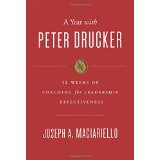
In the partnership of a network there can be no command and control (Maciariello, 2014). The questions must be, “What are the objectives?; “What are our values?”; and, “What are our ways of doing things?” Networked organizations are demanding to lead, and rely on developing and maintaining strong personal relationships among the partnering organizations. A network is somewhat like a team, except the network builds the team out of a wide variety of organizations.
Reference
Maciariello, J. A. (2014). A year with Peter Drucker: 52 weeks of coaching for leadership effectiveness. New York, NY: HarperCollins Publishers.
Information Not Power
 Just a few days away from the Fourth of July and hit the half way point of A Year With Peter Drucker (2014) by Joseph A. Maciariello. It is fitting that the week 26 lesson from Peter Drucker had to do with centralization, confederation, and decentralization. The British set up the colonies as a centralized or unified government where the autonomy and authority rested mainly at the top with the king or king appointed governors. Then in 1774 the colonies established the Continental Congress (Maciariello, 2014). This same Continental Congress endorsed the Declaration of Independence on July 4, 1776. During the period of time from the Declaration through the end of the Revolutionary War our government was in the form of a confederation. In other words, maximum autonomy was granted to the colonies.
Then in 1787 when the Constitutional Convention met a federal system of government was formed with an executive, a congress, and a judiciary. This was put into play with the ratifying of the Constitution of the United States in 1789. All powers not specifically given to the federal government were given to the states with the passing of the Tenth Amendment. The system of government established by the U.S. Constitution is often designated as federal decentralization (Maciariello, 2014). 
So, what can we learn from this? Drucker believed that a global society where the trend was moving toward knowledge-based organizations would see organizations and governments being held together by information, not power. Drucker believed that top leadership would have to take charge of two key resources: key people and money. Interestingly, this is consistent with another book I am reviewing right now as part of a book launch with Becky Robinson and Weaving Influence. The book is The Disciplined Leader: Keeping the Focus on What Really Matters by John Manning. In the book, which is set up in 52 lessons, he posits that what all great disciplined leaders do is focus on what really matters. What the research showed is the focus must be on people. Great leaders understand that people are the most vital asset in a successful organization. As Manning states: “The Disciplined Leader knows how to Focus on the Vital Few and ignore or delegate The Trivial Many (Manning, 2015, p. 5).” Think about it, the people is where the information is.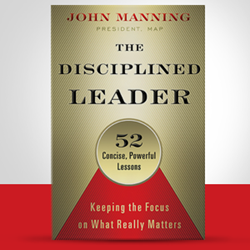
Drucker pointed to Toyota as an example of what many would call operating under decentralization, where the individuals units have rules, but operated independently. Drucker argued this is really a confederation. In a confederation the independent units operate independently, but carry out the overall spirit of the organization as a whole. A unit of confederation is independent, but it operates under loose direction of the parent organization (Maciariello, 2014). The organization that operates with people and information as its most important parts, a confederation, is held together by values, strategy, and information.
If your organization is held together by power and not information, your ability for continuous improvement may be hindered.
References
Maciariello, J. A. (2014). A year with Peter Drucker: 52 weeks of coaching for leadership effectiveness. New York, NY: HarperCollins Publishers.
Manning J. (2015). The disciplined leader: Keeping the focus on what really matters. Oakland, CA: Berrett-Koehler Publishers, Inc.
Authenticity 101
“Authentic leadership is the full expression of “me” for the benefit of “we.” ~ Henna Inman
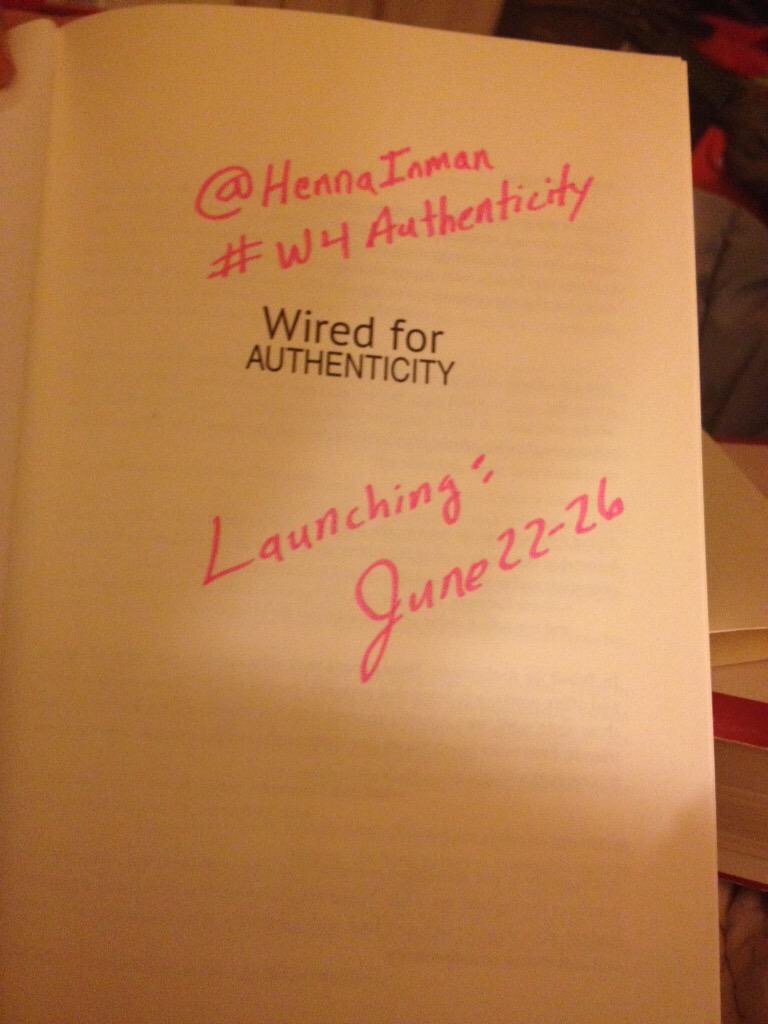
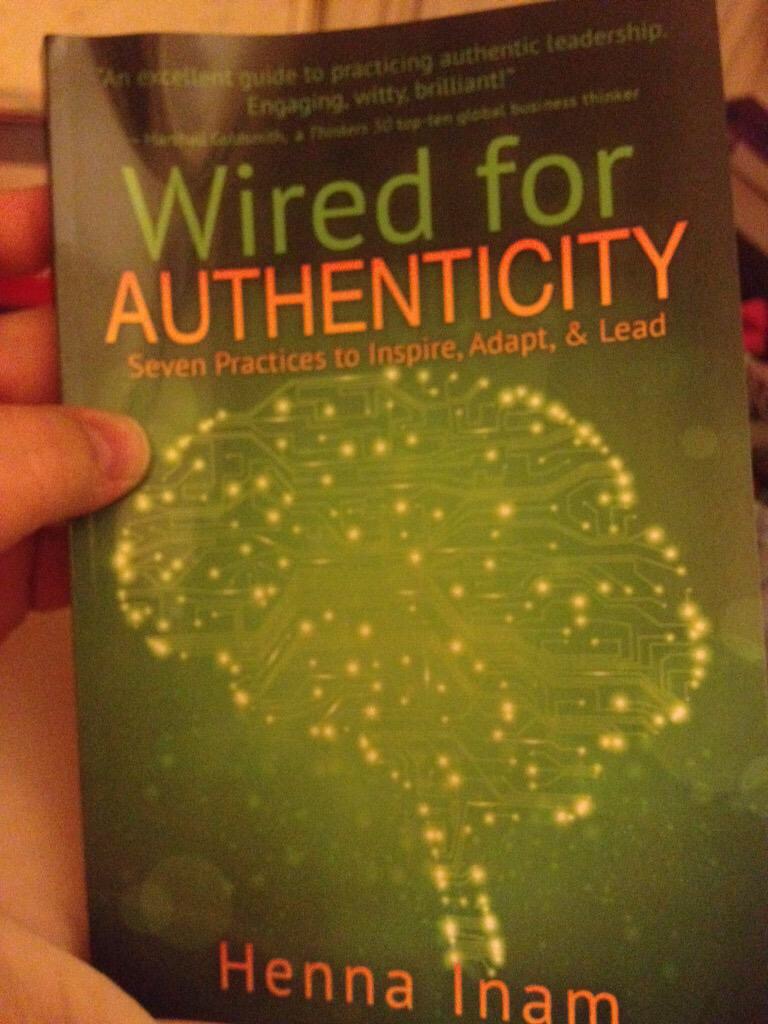
I had the great honor of receiving an advance copy of Henna Inman’s great book, Wired for Authenticity: Seven Practices to Inspire, Adapt, & Lead. What an awesome read. I gave the book five stars on both GoodReads and Amazon. Here is what I wrote as a review: “This is the only book out there that actually gives leaders best practices for being authentic. If I had to retitle the book, it would be: ‘Authenticity 101.’ This is a must read for all who want to be authentic in dreaming big and leading change and innovation.”
Inman’s Step 1 is to “Find Your ‘why.'” We learn best when we set a goal. Inman suggested writing a goal in the margin of the book that I, as the reader, wanted to be authentic in. I wrote, policy consensus and implementation. In order for us to truly be authentic, we need to lose who we think others believe we ought to be, or what is “good” and become who we really are. Being authentic means we will have our own ideas, core values, and beliefs. Guess what? That’s an incredible thing! Can you imagine how bad our constitution would have been if all the founding fathers would have had group think and all agreed on everything? I, for one, am glad they had disagreements and heated arguments, but in the end reached consensus and implemented a constitution that has stood the test of time. They were truly Leading Audaciously!
“We can choose to create within a high-change, high-uncertainty environment only by being in our authentic selves – not the saboteurs. ~ Henna Inman

“The trouble is when our identity starts to limit us and how we perceive our self-worth.” ~ Henna Inman
We must dare to dream big and lead with audacity. I have blogged about this before using my heroes the Wright Brothers as the example. Click here to read that post. Inman explains that when we dream big, we invite all of our saboteurs in for a feeding frenzy. When we get out of our comfort zones and do the audacious and pursue our big dreams we wake up our saboteurs to show up and try to make us fail. That’s ok. We have to continue our climb for what we believe in and not be intimidated. We must also strive to not be the saboteur and work to build consensus by turning the full expression of all the “me’s” into the good of the “we!”
“Our becoming who we are comes from our intentions and actions, not from concepts or theory.”
~ Henna Inman
Opportunities, Competence, & Commitment
 “Now, what does this mean for you?” ~ Julius Rosenberg of Sears in 1917
Rosenberg asked each of his store managers this question in order to integrate their efforts into the overall mission of Sears. The mission statement for Sears at the time was: “Your job is not selling, it is buying.” Rosenberg believed that his sales managers needed to be making sure that Sears was putting the right products on the shelves, not just being good salesmen (Maciariello, 2014). This mission statement helped those at Sears to “do the right thing.” In other words all of the employees at Sears were able to see the whole of the organization’s mission as one’s personal mission. This also helps all of those in the organization to “do things right” (Maciariello, 2014). This is a very important part of the whole mission statement, vision, and strategic planning process – all in the organization must fully understand his or her role in carrying our the plans and doing the right things. It is also important all parts of the mission statement fit reality.
A well written mission statement, according to Peter Drucker (Maciariello, 2014), can be used to effectively allocate the time, talents, and resources of all the people in an organization. One of the things I picked up from this week’s lesson from Drucker is: “It [mission statement] can be used as a recruiting, appraisal, and retention tool to ensure that those in an organization are focused on doing the right thing (Maciariello, 2014, p. 177)”. We need to spend more time talking and asking questions like Rosenberg’s. In fact, I am going to start asking that question after presenting our mission statement: “Now, what does that mean for you.” I am very excited to have learned this today!
When there is a well-produced mission statement, decisions can be guided toward doing the right thing and consensus. In order for this to work constructive dissent must be encouraged to prevent organizational obsolescence (Maciariello, 2014). Drucker said, “If you can bring dissent and disagreement to a common understanding of what the decision is all about, you create unity in action, and in all things trust. And trust requires that dissent come out in the open, and that it be seen as disagreement (Maciariello, 2014, p. 181)”. We must focus on what is right, not who is right.
Does your mission statement accurately your organization’s competence and commitment?
Reference
Maciariello, J. A. (2014). A year with Peter Drucker: 52 weeks of coaching for leadership effectiveness. New York, NY: HarperCollins Publishers.
 Byron's Babbles
leave a comment