Pulling Together
 I’m so excited I just started reading 52 Leadership Lessons: Timeless Stories For The Modern Leader by John Parker Stewart. As you know, I love books that are broken into 52 lessons. These lessons allow me to reflect and the blog each week. This week’s lesson was entitled “Baboons and Impalas” and dealt with how our differences make us fit together better. Stewart taught us that the baboons are watchmen for the impala and the Impalas stir up insects for the baboons. This is a great relationship that benefits both. Now, let’s relate this to our context as leaders. Turning a group into a team is one of the biggest challenges leaders face. We find ourselves leading groups of very diverse individuals in complex projects and tasks. We don’t always get to hand pick our team, but rather we often inherit teams and all of their past baggage. Whatever the state of the group, we all need team skills. It seems easier and more comfortable to work with people of similar styles, thinking and background, but diversity brings a richness to a team. Leaders and team members should value, encourage and reward diversity.
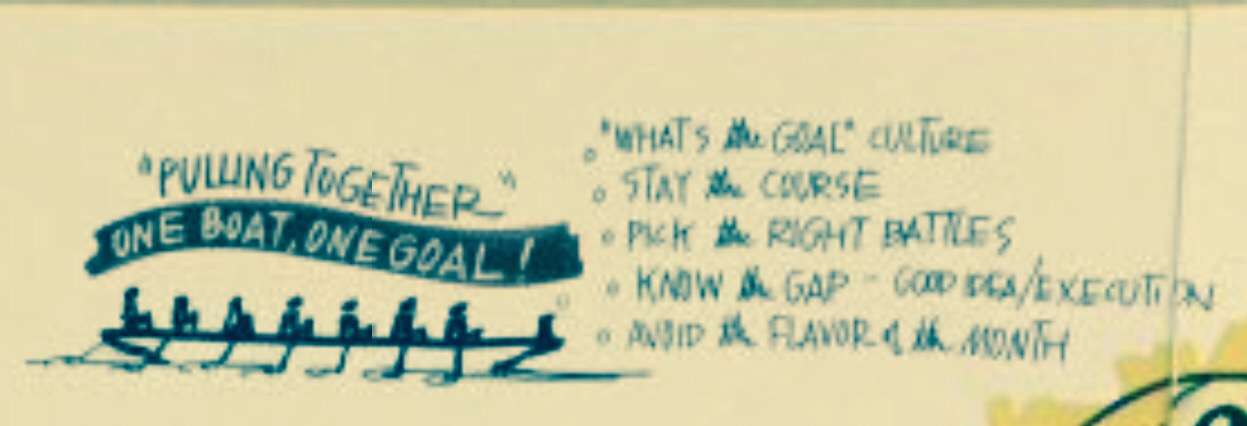
Ralph Waldo Emerson said, “No member of a crew is praised for the rugged individuality of his rowing.” Effective teams do not encourage heroes or superstars. They look for ways to maximize their resources and build on each other’s strengths and diversity. Therefore, we need to:
- Develop a what’s the goal culture.
- Stay the course.
- Pick the right battles.
- Know the gap – good ideas/execution.
- Avoid the flavor of the month.
Effective leaders embrace differences, respect disagreement, honor those who question processes and direction, and doesn’t surround himself or herself with “yes” people. As Stewart taught us, “When selecting others to be on a team with you, choose unlike yourself.” Create a balanced team by thinking of the baboon and the impala.
Everyone Is A Leader
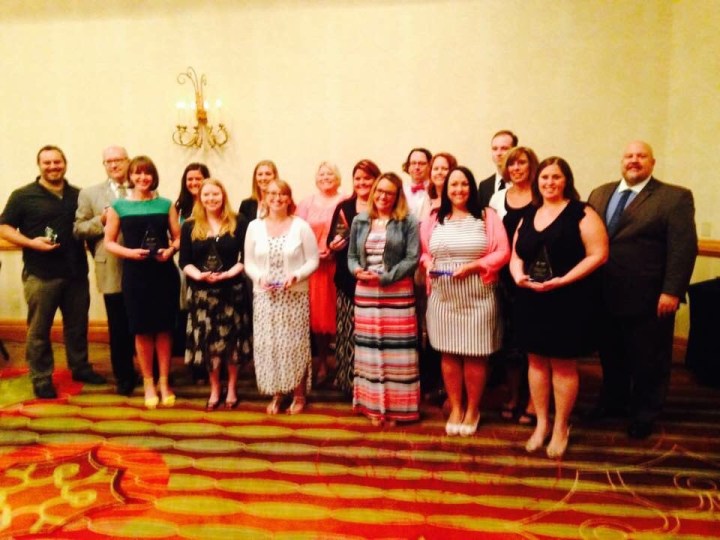
Focused Leader Academy Cohort #1
I am finally in for the evening and sitting down for some reflection time with my computer blogging. What a day! This morning we graduated our first cohort of teacher leaders from our Focused Leader Academy. Then we had our commencement exercises for our Hoosier Academies Network of Schools 2016 graduates. This post is about our celebration breakfast for our Focused Leader Academy. 
We had an incredible program recognizing our teacher leaders and an outstanding program by Andy Worshek of Turn the Ship Around! He is an expert on Intent-Based Leadership. Andy served in the navy for 24 years, and achieved the rank of Master Chief. Assigned to the nuclear powered submarine USS Santa Fe with Captain David Marquet and imagines a workplace where everyone engages and contributes their full intellectual capacity, a place where people are healthier and happier because they have more control over their work—a place where everyone is a leader.
 Great Leadership creates an organizational culture that spawns generations of additional leaders throughout the organization. Which is exactly what we are doing with our Focused Leader Academy. With this program we are embracing continual learning as the primary activity of the organization. Andy taught us today that most people don’t quit the job, they quit the people. This really hit home as a leader of leaders. Andy discussed that instead of thinking about leaders and followers we need to think about having leaders and leaders. In order to do this we must move authority to information instead of information to authority. In other words, in a highly functioning organization the authority to use information is kept at what I call street level so it can be used effectively. In a school that means with teachers. Make no mistake, however, when shifting this model, we have an obligation to make sure that those we are empowering have the technical knowledge and skill to handle this authority. Otherwise, Andy taught us this would lead to chaos. Furthermore, for intent based leadership to work there must be organizational clarity. This is clarity is one of the things I am very proud we spent a great deal of time working on this past year as a school and with our Focused Leader Academy.
“Don’t move information to authority, move authority to the information.”
― L. David Marquet, Turn the Ship Around!: A True Story of Turning Followers into Leaders
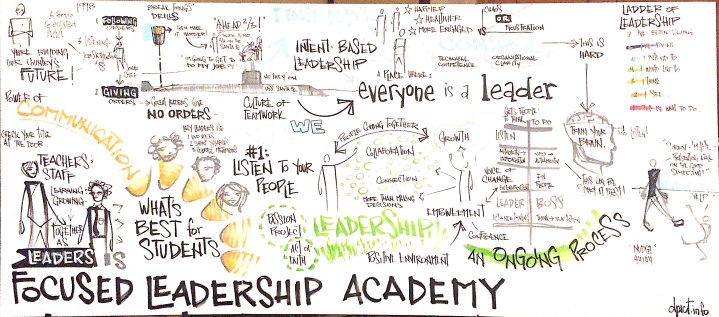
Another eye opener for me was the idea of needing to change the environment, not the person. People’s behaviors depend on the environment. If you manipulate the environment, you manipulate behaviors. Since the earliest times, humans have needed to be sensitive to their surroundings to survive, which means that we have an innate awareness of our environment and seek out environments with certain qualities. The culture and environment of an organization can facilitate or discourage interactions among people. Additionally, the environment of an organization can influence peoples’ behavior and motivation to act.
“When a flower does not bloom in your garden, you fix the environment in which it is growing. You do not fix the flower.” ~ Alexander den Heijer
 Too many organizations believe that “leadership” is a noun based on someone’s title. I believe, however, that leadership is a verb based on someone’s actions. By that definition, everyone is a leader. If we believe everyone is a leader then effective leadership helps to unify a culture, and a collaborative culture made up of leaders and leaders can solve just about anything. Now, that is an ideal environment where everyone is a leader. Organizations should realize that leaders permeate the organization. I believe the role of a leader is to find and develop other leaders – in essence, to multiply ourselves. We must intentionally look for people displaying leadership behaviors and create a process for developing the next generation of leaders. I believe that the Focused Leader Academy has done that for us.
Vital Leadership Learnings
 A couple of weeks ago we had the honor of having Will Pemble from MAP Vital Factors Solutions work with our Focused Leader Academy on being disciplined leaders. This day was set up by John Manning, author of The Disciplined Leader (2015). As you know from previous posts, our Focused Leader Academy read the book, that is set up in 52 lessons, and blogged about each lesson. We then had a discussion about what we felt were the vital few leadership focuses we needed more work on for each section of the book and overall. Really, that pre-exercise was an incredible discussion and experience. It was very interesting to hear the individual vital few from the FLA participants and then hear the discussion of narrowing down to the group’s vital few. This allowed for a rich discussion about how individual vital leadership skills affect the vital few of an organization.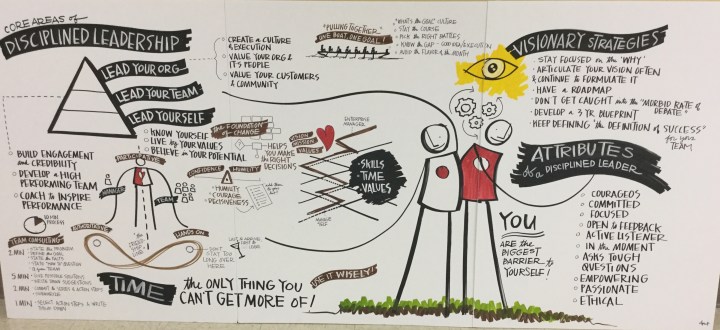

Here are our Focused Leader Academy Vital Few (I have included the lesson number from the book, in case you want to check it out and follow along):
Part 1:
Our top 2 were…. #4 Know Yourself and #13 See Mistakes as Opportunities. Then we were torn between #14 Listen More, Talk Less and #11 Drop Defensiveness.
Part 2:
Our top two were…. #30 Empower Employees and #37 Advocate for Your Team. Then we settled on #31 Give Effective Performance Feedback because we knew what we were getting ready to embark on with redesigning our entire performance evaluation system. We also had #26 Honor Your Commitments high on our list.
Part 3:
Our top three were….#39 Develop a “What’s the Goal?” Culture, #43 Put More Weight on “Why?” and #46 Avoid the Dangerous Gap Between Good Ideas and Execution. We also had a strong feeling for #51 Keep Ethics Strong.
So then we went back and voted to come up with our TOP THREE VITAL FEW…
Part 1: #13 See Mistakes as Opportunities
Part 2: #30 Empower Employees
Part 3: #39 Develop a “What’s the Goal?” Culture
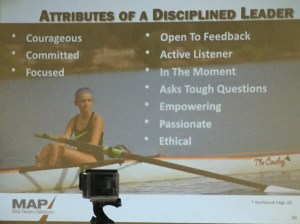
 Will Pemble started out our workshop by have us develop a list of all the qualities of a disciplined leader. Here’s our list:
- Runs toward a challenge
- Decisive
- Listener
- Reflective
- Active participant
- Clear values that the leader sticks to
- Loves what he/she does
- Commitment
- Communicator
- Risk-taker
- Willing to be uncomfortable
- Willing to suffer (What’s your suffer score? How much are you willing to suffer for something?)
- Willing to fail… a lot
- Learner
- Accepting
- Courageous
- Focused
- Empowering
- Open to feedback
- Passionate
- Ethical
- In the moment
- Asks the tough questions
Pretty awesome list, huh? Of course, if we could all be great at all those, we would be the most incredible leaders ever. Well, I’ve got some work to do…I don’t know about you. I’m guessing we all have some work to do.
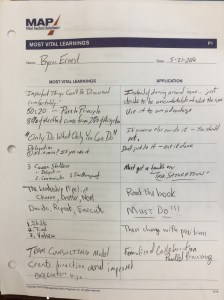 We had a cool sheet that we kept individually during the day that was titled: “Most Vital Learnings.” I really liked having this sheet that had spaces for 10 vital learnings (see photo). In keeping with the vital few mantra of The Disciplined Leader, I have selected my vital few most vital learnings. Here they are:
- “Important things can’t be discussed comfortably.” Instead of dancing around issues, we need to decide to be uncomfortable and hit the issue head on and solve it.
- “Pareto Principle”… 80:20 – 80% of the effect comes from 20% of the system. We need to use this to our advantage. We must focus on the vital few and ignore the trivial many.
- Decide, repeat, execute. Need we say more? This is definitely a vital few.
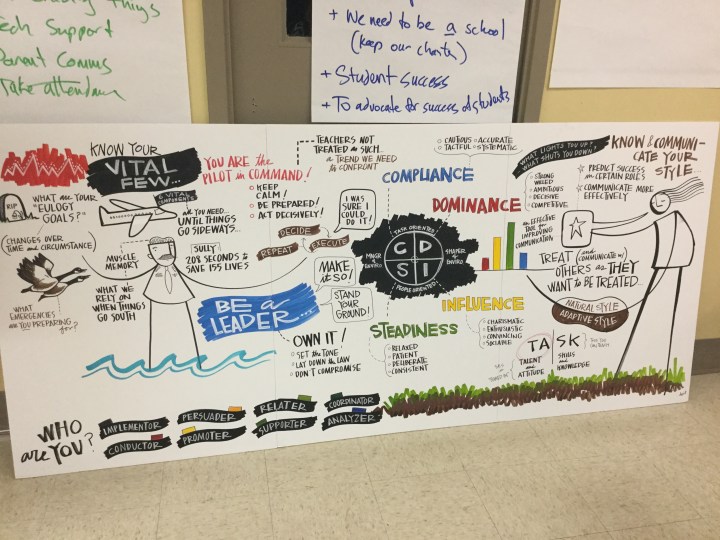
As you can see, our experience with the book, The Disciplined Leader, and Will’s great facilitation of our workshop was incredible. It was also incredible to be back together with Sita Magnusun doing our graphic facilitation for this program. I first met Sita at my first Harvard University class and have been both blown away by her work and continue to believe in graphic facilitation as a component of effective facilitation of learning. Two of her graphics are posted here.
The Vital Few of Extending My Reach to Lead
 I just completed the book The Disciplined Leader by John Manning (2015). There will be two more posts about the experience of the book, but this post deals with my vital few (three) from Part III of the book – Extend Your Reach The Responsibility to Lead Your Organization. One thing that really resonated with me in this section of the book was the idea that leading our organization is about extending my leadership reach beyond myself and our team to a degree that’s much further from me yet still critically connected to my organization’s center: me. Extending my reach also means having an alignment of values and people.
My vital three for Part III are (I have included a link to my original post on each lesson):
- Develop a “What’s the goal” culture https://byronernest.wordpress.com/2016/04/03/whats-the-goal/
- Put more weight on “why” https://byronernest.wordpress.com/2016/04/21/leaders-ask-why/
- Cultivate Curiosity https://byronernest.wordpress.com/2016/04/24/leading-curiously/
 HOW can your leadership be both spread and focused? This is a critical tension faced by many companies with multiple operations. One of the keys to putting strategy into action is to have everyone in the organization understand her role in carrying out the goal. I believe this is the first step to extending our leadership reach. So, as I look at my role of developing great teacher leaders it is important for me to define and organize high-impact teacher-leader roles that can allow great teachers to have a far greater effect on vastly more students, teaching peers, and the culture of excellence we are building for the organization. State and district education leaders must ensure that schools have the support they need to design and implement high-impact teacher-leader roles.
I also want my reach as a leader to encourage our team members to be curious. Curiosity as it applies to leadership will always lead to creativity and innovation. Curious leaders will not be content to keep doing things the same way over and over. A curious leader will look at things from multiple perspectives, continuing to ask questions. Being curious is simply being eager to learn and to know; to be enthusiastically inquisitive. Curious leaders are always moving forward. Curious leaders are not afraid of failure. In fact, curious leaders know that “failure” is the prerequisite to success. Curious leaders know that you will never know how far you can go until you go too far – I call this swinging the pendulum.
If we are truly committed to growing leaders in our organizations, we must find ways to extend our reach. What are you doing as a leader?
Moral Compass
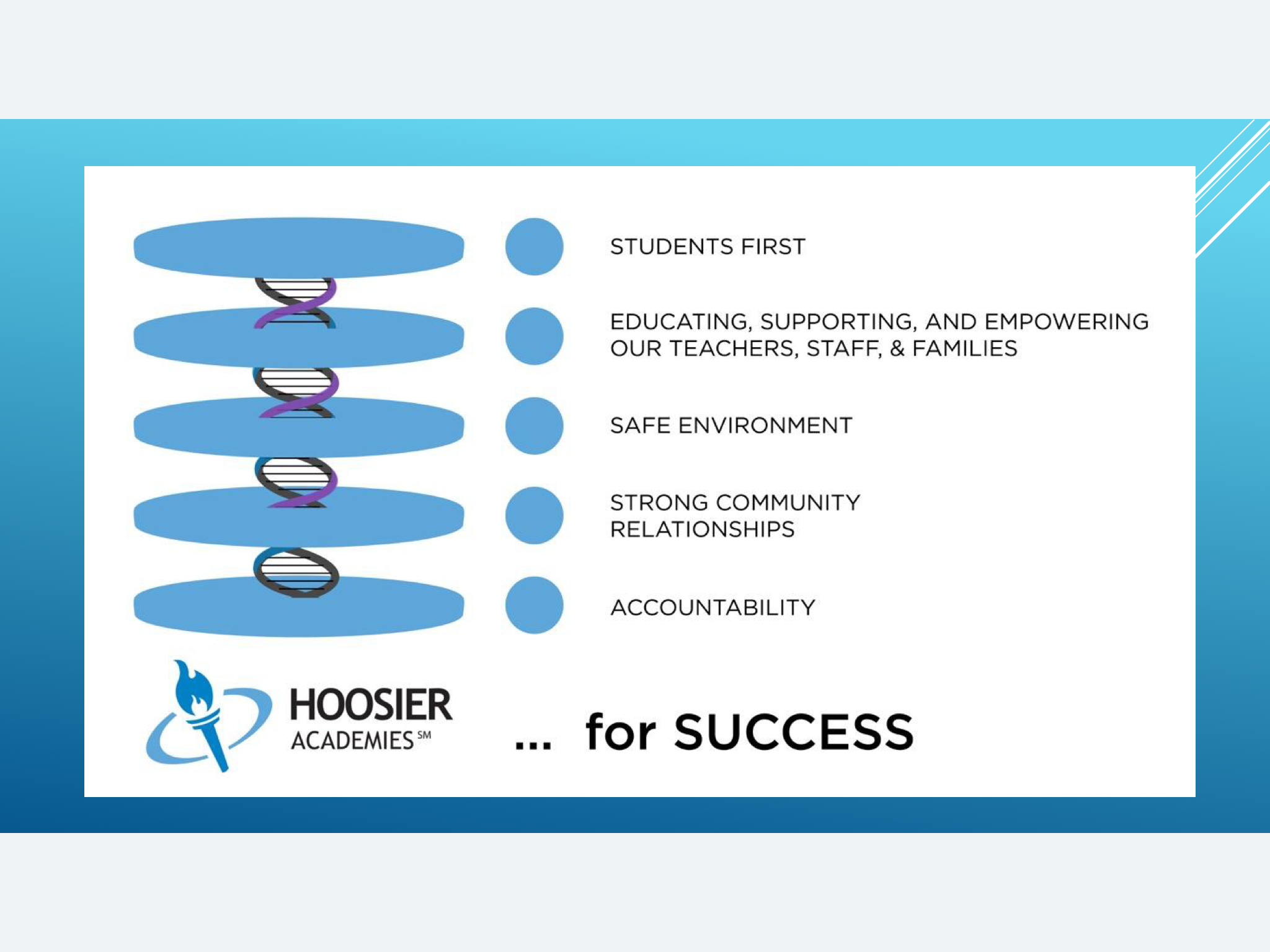 Lesson #51 in The Disciplined Leader by John Manning (2015) really affirmed our decision to spend the past year with our Focused Leader Academy and, ultimately, all of our stakeholders completely redoing our vision and mission for the Hoosier Academies Network of Schools. We also went on to explicitly develop a set of core values. I was amazed these had not ever been developed for our schools. Those in our organization now understand the importance of these and why the organic development of vision, mission, and core values is crucial for organizational success.
“It is leadership’s responsibility to make sure good ethics are part of the foundation of the company. A good starting point is to use your clearly defined vision, mission, and values to provide direction to the organization.” ~ John Manning
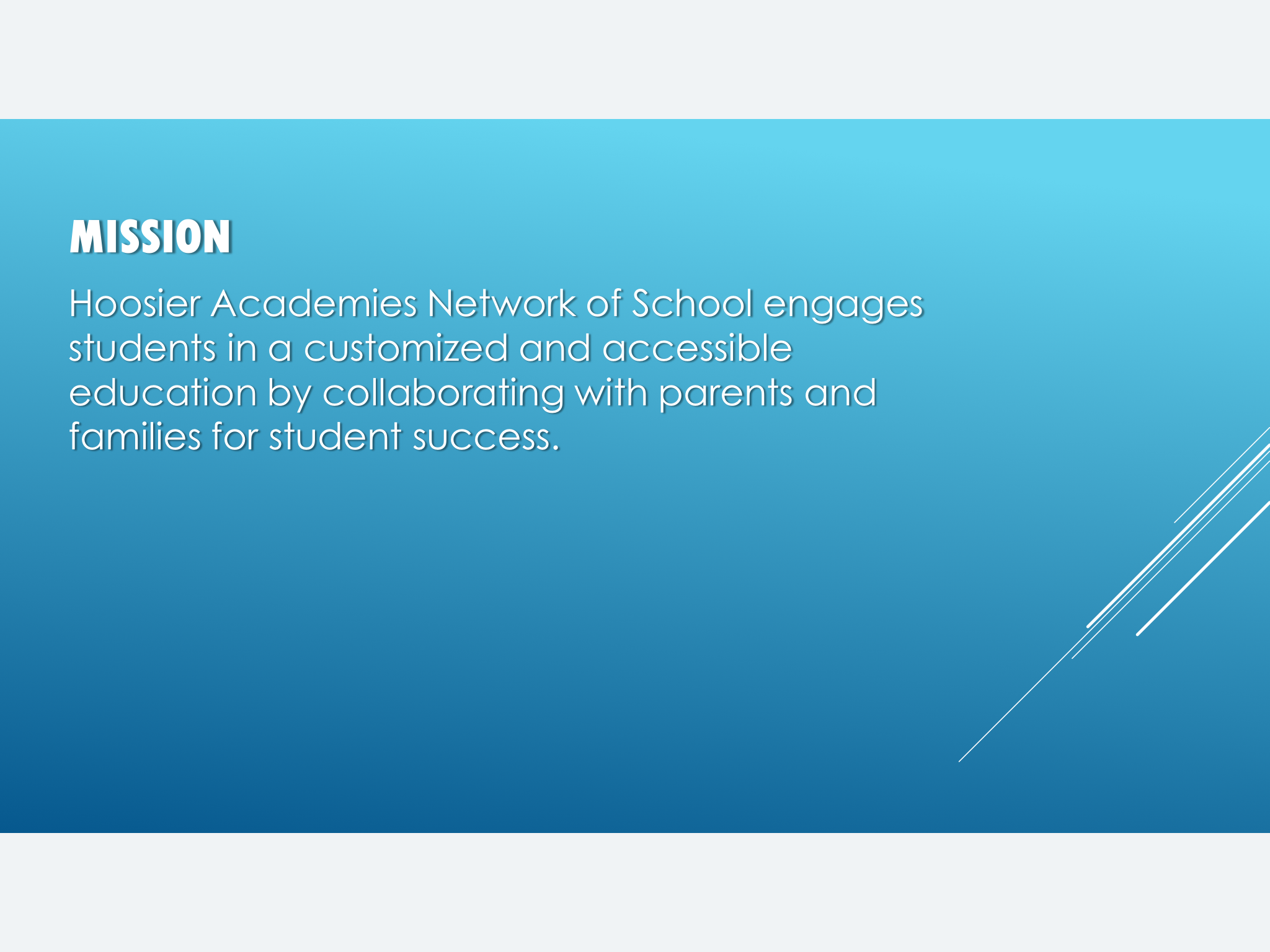
Here is the vision and mission we created:

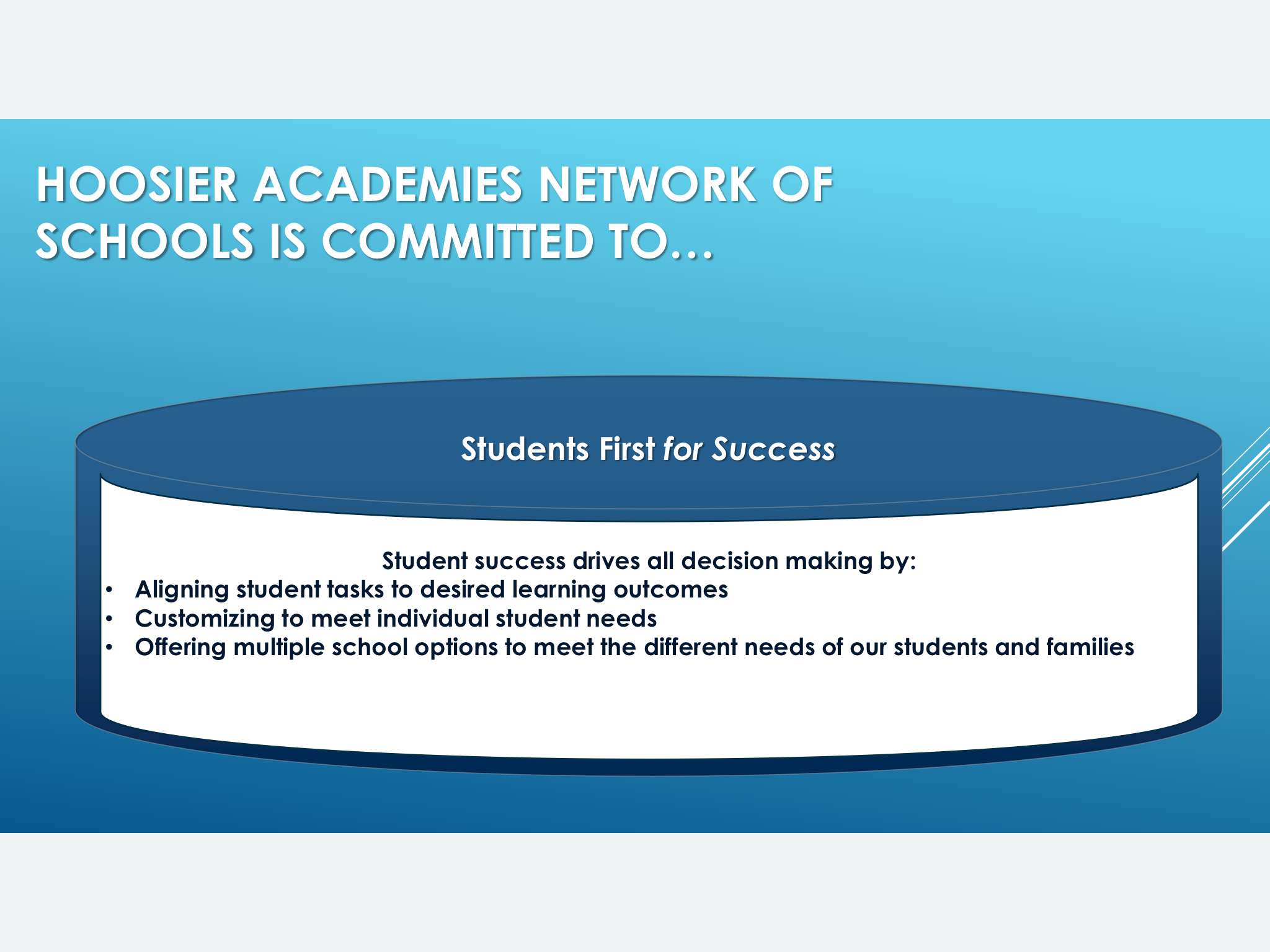
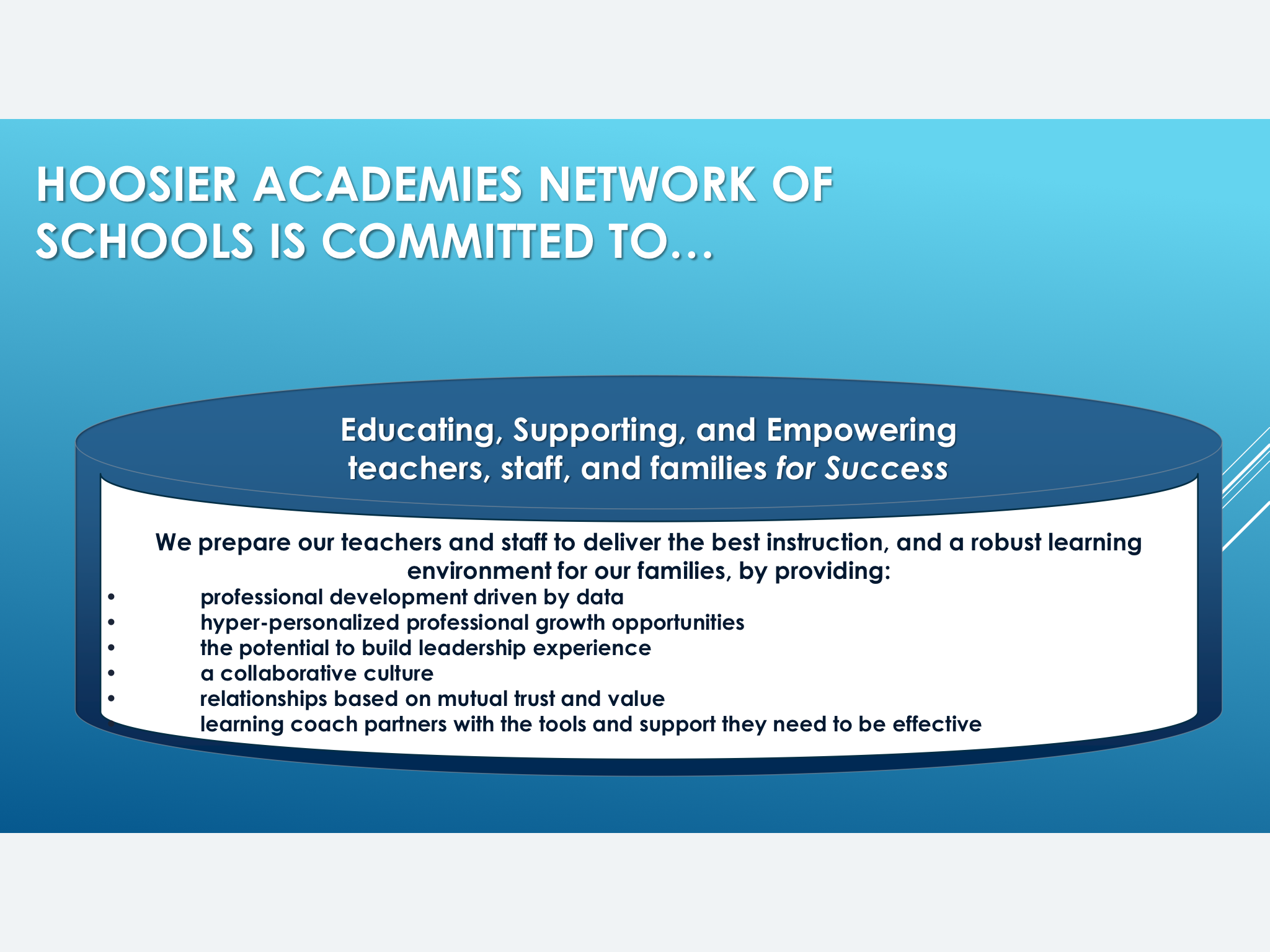
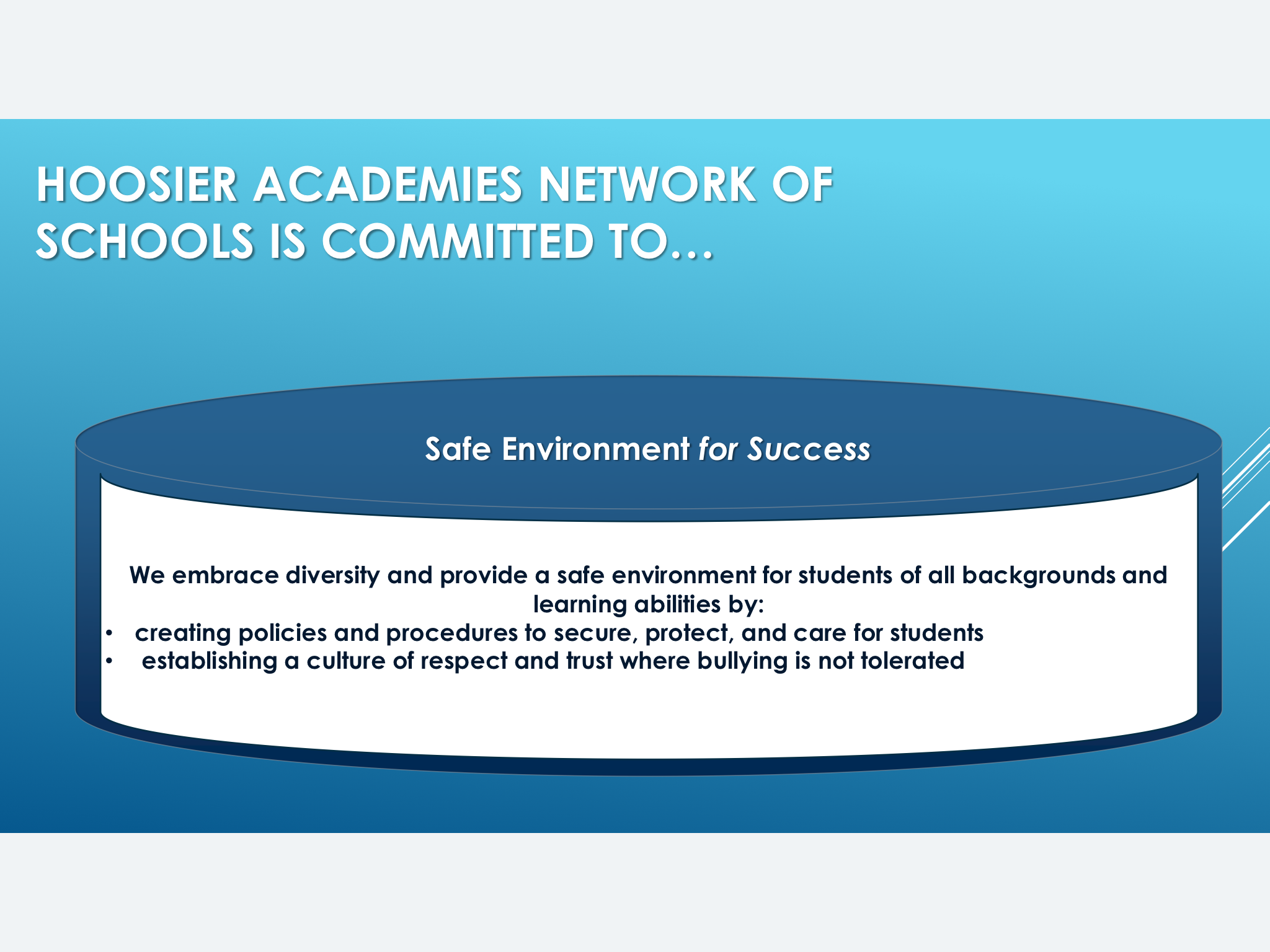
Here are our core values that serve as our moral compass:

Competitive Advantage
 It is no secret that I do not believe in neighborhood assigned schools for all children, especially low-income families. Children deserve and need their parents to have educational choice—not just what others think is good for them. School choice is all about empowering informed parents to make the best choice for the education of their children. With school choice, however, comes responsibility for leaders to not just start schools that look like all the others. As a charter school leader it is important for us to differentiate our school to meet the needs of our families and students.
I was reminded of this last Friday night when we honored our outstanding parents who serve as outstanding learning coaches. I blogged about this in Driving Decision Making. Every student has a story and needs some type of differentiation to make the school experience right for him or her. We must do all we can to make school information widely available so parents can make informed choices. Education is a complex, highly personal endeavor, which means that what happens at the individual level—the level of the teacher and the student—is the most crucial factor in realizing success. In education, I always say we need to work very hard to make policy meet reality. The Every Student Succeeds Act (ESSA), which sends key decisions back to the states, allows us an opportunity to collaboratively bring the state legislature, state boards of education, departments of education, schools, teachers, and families together to do what is best for our children.
 In Lesson #50 of The Disciplined Leader John Manning (2015) posited, “Don’t limit competitive information to what’s obvious. Dig deep to understand your competitors’ people, their products, their services, what they do well, and what they don’t. Plug this competitive analysis into your business plan and see how it fits against the backdrop of what’s happening in your industry.” (Manning, 2015, Kindle Locations 2566-2568) This same philosophy holds true for school choice. We must study what other schools are doing and make sure that our own schools are not just doing the same things the same old way, but truly doing things that are making a positive impact on student achievement and performance.
“Leadership needs to drive activities and invest resources to study their competition and use this information to develop a competitive advantage.” ~ John Manning
We need to create transformational disruptions that create innovative opportunities for our teachers, students, and families. Instead of being customers, let’s consider our students and families as end users of what we offer in our schools. What promising approaches could we be bringing into our schools to give us a competitive advantage?
Driving Decision Making
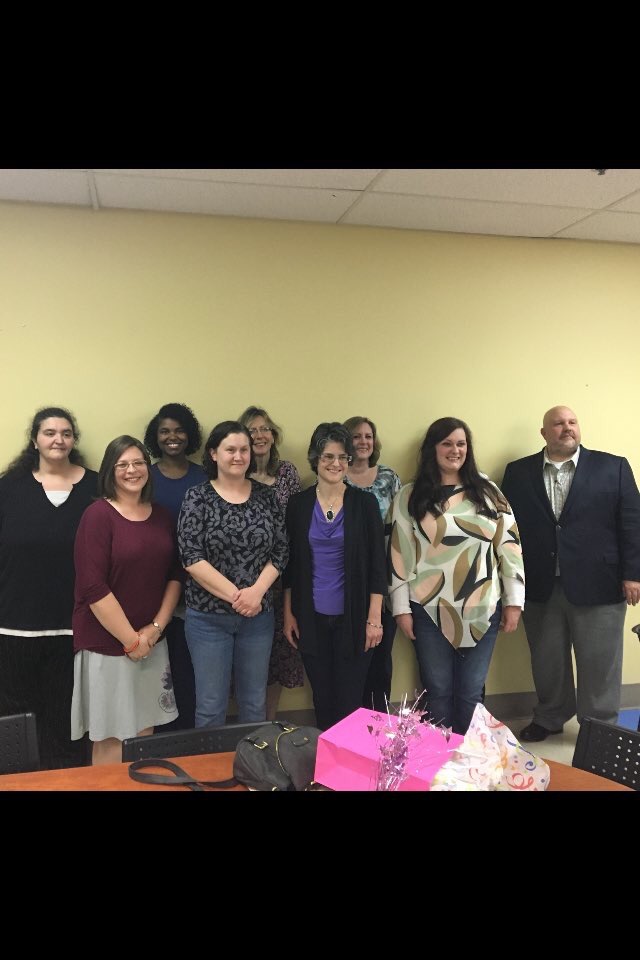 Last night we honored our Outstanding Learning Coaches (parents and family members who work with our students in an online environment) of the Year as nominated by our teachers. It was an honor for me to be there and speak with these great parents and give them a COW (Creator of Wow) Award in addition to the Outstanding Learning Coach Award. I told these parents that with our new vision of “Success for Every Student in Indiana” that we must continue to improve our family engagement. Learning Coaches are a crucial component to the family engagement at Hoosier Academies Network of Schools. I am so proud of the work that our Community Engagement Coordinator, Rachael Borrelli does to engage our families and support our Learning Coaches. She and the teachers are to be commended for implementing this Outstanding Learning Coach awards program.
As I listened to the tear jerking, literally, stories of why these families want their children in our school, I realized we must continue to improve living out our vision, mission, and core values. Every student has a story and a context. These stories are why school choice is so important and parents must have the ability and right to send their children to the school that is the best fit for the context in which they live. This all fit with Lesson #49 of The Disciplined Leader by John Manning (2015). In this lesson Manning (2015) taught us that we must keep customers in the cross hairs of decision making. I blogged about whether we should consider students and parents as customers or whether society is the customer of schools in Leaders Listen, but regardless we need to listen to our families and engage their needs.
If we keep the interest of our families in mind and engage them in the process of educating their sons and daughters it is powerful in improving the achievement and performance of children. As Manning stated, “It is leadership’s responsibility to be an advocate for customers, so focus on them whenever you conduct any business planning.” (Manning, 2015, Kindle Location 2535) As leaders we must always make sure that those we serve are being considered in the decision making process. We will obviously never be able to please everyone, but we must be able to connected the dots between our customer’s needs and our core values for carrying out the vision and mission of the organization.

“You should also engage and align your employees to follow your lead when they’re making decisions, too. When those two strategies come together, you’ve got a winning formula for building customer loyalty.” ~ John Manning
It was so great to connect with a group of parents and students last night and it was even greater to witness our teachers interacting with those parents, families, and students. With our newly created vision, mission and core values I am confident we are continuing to improve our family engagement and decision making prowess. What does your organization need to do to improvement using customers in the decision making process?
Leaders Listen
 In Lesson #48 of The Disciplined Leader, John Manning (2015) taught us to “Listen To Your Customers.” As an educational leader, I have been in more than my share of discussions about whether the students and parents are customers of our schools and the educational system. This post is not about answering that question – it’s just too complex. I’ll tackle that topic in a future post. Although, I have to give a shout out to Dr. David Burkus, author of Under New Management: How Leading Organizations Are Upending Business As Usual and Associate Professor at Oral Roberts Universty. He and I recently had an in depth conversation about about this during the launch of his book – which, by the way, every leader should read.
Dr. Burkus and I discussed how students are much too precious and complex to just be considered as customers. He suggested that society is the customer of education. The success of our society relies on the quality of individuals, we in education produce. I tend to agree with that, but also know that we must listen to our students and families as if they were customers in the context that Manning (2015) spoke of. I also understand the complexity of educating a child and all the factors involved – parents, family, health, socio-economic factors, emotional, learning style. Thus, all the more reason to listen as if our families and students are customers, because regardless, as Dr. Burkus pointed out, society will ultimately be a customer. Failure to establish a home-school-community collaboration aimed at increasing student success puts our children’s and nation’s futures at stake.
“This loyalty comes from genuine relationships—those that are carefully cultivated between the customers and your organization. This comes from interactions in which the customer feels that he or she matters personally, not financially, to a business.” ~ John Manning
As Manning (2015) pointed out. It is all about relationships. Effective communication, which includes listening, is essential for building school-family partnerships. It constitutes the foundation for all other forms of family involvement in education. Good two-way communication between families and schools is necessary for our students’ success. Not surprisingly, research shows that the more parents and teachers share relevant information with each other about a student, the better equipped both will be to help that student achieve academically. The good news is that many are beginning to realize the value of connecting parents and community members to what is happening in the classroom. Still, there are too many families and community members who do not feel equipped to partner with schools to create the best teaching and learning environments for children. It is not surprising that these people tend to avoid substantive involvement in critical issues such as daily attendance, teacher quality, student retention, and other areas that impact student success.
Bottom-line: we need to listen and get feedback from our teachers, students and families; we must talk to our students and families and build meaningful relationships; and, we must find out why students come to our schools and why they leave our schools. Just as we ask our students to do their homework, we must do our homework, as leaders, to understand what he or she needs to be successful. We must design environments for families to access key information to make their engagement with their children’s school more productive, enjoyable and beneficial. We must invite, engage, enable, and empower our families to become more engaged in their child’s educational experience.
As leaders we must listen to the needs of our students and families.
ESSA Opportunity #1: Assessments
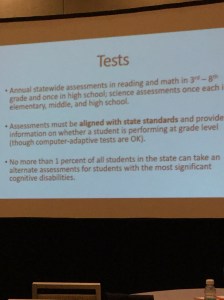 I am beginning a series of ten posts detailing opportunities I see us having with the Every Student Succeeds Act (ESSA). This post deals with new opportunities afforded by ESSA for Assessments. ESSA continues the No Child Left Behind (NCLB) schedule of federally required statewide assessments. ESSA still requires annual statewide assessments in reading and math in 3rd–8thgrade and once in high school; science assessments once each in elementary, middle, and high school. Those assessments must be aligned with state standards and provide information on whether a student is performing at grade level. ESSA allows computer-adaptive tests as well. These computer-adaptive models could be used to measure a student’s academic proficiency above or below grade level to determine a student’s actual performance level.
It is also important to keep in mind that no more than 1 percent of all students in the state can take an alternate assessments for students with the most significant cognitive disabilities. There is still the requirement of 95% participation in state testing. States or localities may create their own laws on assessment participation, and districts are required to notify parents about those, but the 95% participation requirement must be met.
There are some options already being used in some states for the high school level. An option for states or districts to use a nationally-recognized assessment (e.g. SAT or ACT) at the high school level in place of the state test. These assessments may measure individual student growth. Any assessment that is used must be aligned to the state standards, provide results that can be used for accountability, and meet all the technical requirements that apply to statewide tests. They also have to be peer reviewed. Under ESSA, any district-selected assessments must be approved by the state.
In addition, summative assessments can be administered through multiple statewide interim assessments that , when combined, produce an annual summative score are allowed under ESSA. Also allowable under ESSA are assessments that are partially delivered through portfolios, projects, or extended performance tasks.
Finally, ESSA encourages and gives states the opportunity to audit their assessments to look at over-testing. As you can see, ESSA gives new flexibility in assessment design. The new law allows for use of nationally recognized high school assessments and innovative assessment flexibility. Now it is up to the states to collaborate and come up with solutions that are best for the students.
How Many Flavors Do You Need?
 In Lesson #47 of The Disciplined Leader John Manning (2015)taught us to Avoid The “Flavor of the Month” Syndrome. I actually blogged about this back in Flavor Of The Month Or Research And Development? I put a little different twist on it, but this is an important topic when it comes to putting strategy in action. Founded in 1945 by Burt Baskin and Irv Robbins in Glendale, California, Baskin-Robbins is known for its “31 flavors” slogan, with the idea that a customer could have a different flavor every day of any month. Now, if we look at using this theory for strategy, we will surely fail.
Because of being focused so heavily on culture building and leadership development this year I have thought a great deal about alignment of the team to our strategies while still making sure we, what I call, hyper personalize the professional growth and development. Training and development programs almost universally focus factory-like on inputs and outputs: absorb curriculum, check a box; learn a skill, advance a rung; submit an assessment, fix a problem. Flavor-of-the-month remedies, off-the-shelf programs, immersions, and excursions stuff people full of competencies and skills but produce astonishingly few great leaders. This is why I believe these programs must be developed and personalized by the leader of the organization to fit the context of the individuals being developed. The program must also be customized for the context of the organization at the time. We are taking applications right now for our next cohort of our Focused Leader Academy. I already know the curriculum will need to be adjusted as I look at those who are applying and where we are as a school.
Just like Baskin-Robbins has 31 flavors to satisfy every individual taste, every day of the month. We must not resort to cookie cutter development for those we serve by jumping at anything that comes along as the next “silver-bullet” of leadership development. I would propose using Manning’s (2015) three ways of avoiding the flavor of the month syndrome when developing your leaders and putting all strategies in action:
- Create consensus during planning.
- Stay committed to identified strategies.
- Formalize decision making for new ideas.
My challenge to you is to unleash the most initiative, imagination, and passion and the job of leaders is to expand the scope of human accomplishment in your organization.
 Byron's Babbles
leave a comment