Stories That Wake Us Up

I’m transported by Padraig’s wisdom. With Dunluce Castle rising above us, I start to understand. “Mr. Lewis’s kinds of stories—the fairy tales, the myths, the universes all wrapping themselves around other worlds—are inside ours.” I look to Padraig. “These stories make us remember something we forgot. They make a young boy want to hop out of a bed and see the ruins of a castle. These kinds of stories wake us up.” “Yes!” Padraig takes my face and the rough wool of his mittens scratch. I smile and feel my cheeks lift, cradled in his hands. “The way stories change us can’t be explained,” Padraig says. “It can only be felt. Like love” (p. 242) ~ Once Upon a Wardrobe
Yes! “These kinds of stories wake us up.” Just as Megs described this awakening to Padraig in Once Upon a Wardrobe, I too was woke up by this very story. In the book, George called this being “In the story” (p. 44). As he said, “When I read a story or you tell me one, I can go into them” (p. 44). Once Upon a Wardrobe is a story so well written and told by Patti Callahan Henry that I was transported to Oxford England and The Kilns. In fact, I was so “in the story” that I applied to be a Visiting Scholar in Residence at The Kilns and the University of Oxford. Even though I was a rabid student of the work of C. S. Lewis, without being taken into this story and Patti’s other book, Becoming Mrs. Lewis, I would have not been inspired to want to see and live at The Kilns. In fact, as I write this, I am in the air flying to England for my second Visiting Scholar in residence study trip. Stories really are powerful!

As an avid reader, my point of this post is the power in being transported by stories. Also, we need to remember the power of influence gained in honing our storytelling abilities. Patti Callahan Henry transported me to The Kilns and Oxford to the point that I had to go be a part. Without her stories I would not have had the amazing experience last fall with my first visit, nor the second journey that began today. I’m glad as Padraig called it, I do not have everything “squared away” in my life and because Patti’s inspiration am learning, growing, and having fun with this odyssey.
This all reminded me of how important a skill storytelling is for us as leaders. Storytelling is a skill we need to develop because it allows us to connect with those we serve and our audiences on a deeper level, inspire and motivate others, communicate complex ideas in a clear and engaging way, and create a shared vision. Storytelling also helps to build trust, foster emotional connections, and make information memorable and impactful. Overall, storytelling is a powerful tool for effective leadership and can help leaders influence and inspire others to achieve common goals. In other words, stories transport us.
The Artwork of Stories & Relationships
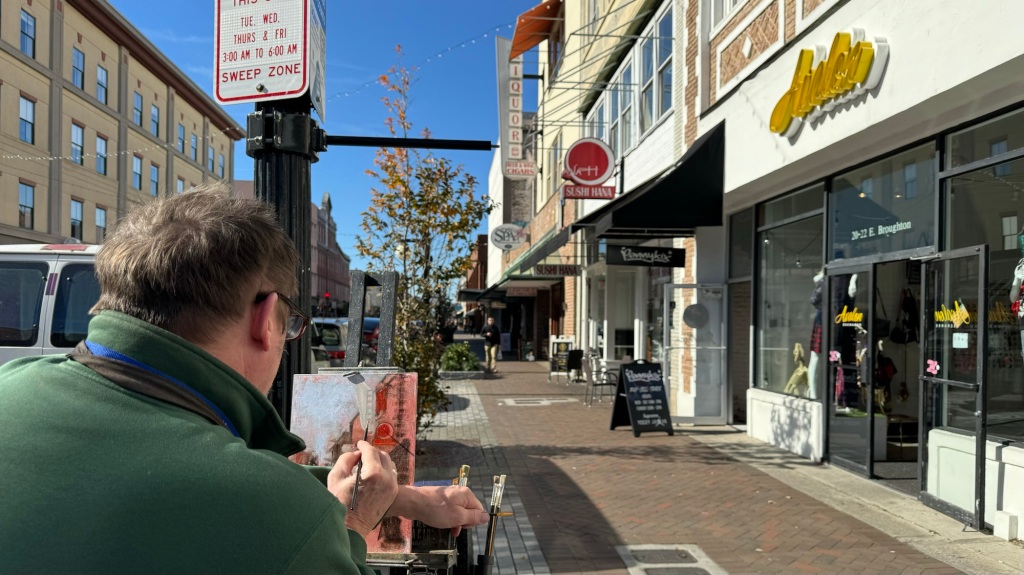
I love the opportunities that chance encounters bring for making new and valuable connections. Last week as we were going into Sushi Hana in Savannah, Georgia for lunch, I noticed an artist painting a streetscape in front of the restaurant. Those of you who know me well, know I can’t resist watching an artist practice their craft. He was just getting started, but I could tell this painting was going to be special (like I really know anything about it). The artist and I exchanged hellos and I told him I liked his work. My family and I went into Sushi Hana’s and ordered and I told them I had to go back out and meet the artist. I met Jeffrey Baumgartner, who coincidentally is from Chicago with Indiana connections. Small world! We immediately connected and he informed me it would take about three hours to complete. I told him I wanted to buy the painting. Then my wife came out and told me I needed to come in and eat. Imagine that!

After lunch I was back out to check the progress of “my” painting. It was coming along nicely and Jeffrey and I talked some more and made a plan for me to call him and 3:00 and see where he was on completing the painting. So, at exactly 3:00 as I stood along the Savannah River, I called my new artist friend back to see how my painting looked. He was just painting his signature on it as I called. Jeffrey told me it looked awesome. So I left my family to explore and climbed those old uneven steps up from River Street with some newfound energy and enthusiasm. Over to Broughton Street to see this exquisite piece of artwork (see photo). It was wonderful and I wanted it.

We agreed on a price then proceeded to talk, laugh, and share stories. Two students from the Savannah College of Art and Design (SCAD) came by who had watched and talked to Jeffrey earlier. He proceeded to give them an art, business, and leadership experience like no college professor could give. This artist was living it. He had driven his van (that he says is a “VanGo,” pun intended) to Savannah, set up in a campground, and was painting a new streetscape every day for a living. If that isn’t a real world and relevant context for teaching I don’t know what is. Not only was he schooling these young and aspiring artists, he was forming relationships. As a believer and teacher of building relationships as the most important leadership trait, I was watching and learning. Jeffrey was a master at it.
As I was complimenting him on his relationship-building prowess he told me that he came from the theater. “It’s all about the story, Byron,” he told me. So true; it is all about the story. I had gotten my painting, made new friends in Jeffrey and the students, and expanding my knowledge in leadership and creating an ideal customer experience. Jeffrey’s ability to connect had made the experience of buying this painting memorable and with a tremendous story.
Being able to build relationships is an important trait to have developed for a painter selling paintings, or any leader for that manner, because it helps in establishing trust and rapport with potential buyers. By building relationships, we can understand the preferences and tastes of our customers, tailor their artworks accordingly, and creating a personalized experience for the buyers. This lesson can also be transferred to all of us as leaders. We are creating experiences for those we serve.
Additionally, building relationships allowed Jeffrey to form a network of loyal clients who most likely will provide repeat business and recommend the artist to others. In Jeffrey’s case, he has a loyal following. This can help in expanding the reach and recognition of the painter’s work.
Moreover, through building relationships, we can also receive feedback and constructive criticism, which can be valuable for growth and improvement. By understanding the needs and desires of our clients and clients and those we serve, can better fulfill their expectations and create artworks that resonate with them.
Overall, being able to build relationships enables a painter to connect with their audience on a deeper level, promote their work effectively, and establish a strong presence in the art market.
Is It Time To Re-Story?
I am a big believer in reflecting on the narratives we are developing with our lives and continually creating a new, more fulfilling and meaningful story for ourselves. To do this we can do what Bruce Feiler called “re-storying” our lives in his great book, The Search: Finding Meaningful Work in a Post-Career World. Sometimes the prompt that allows us to re-story our lives is what Feiler called a “workquake,” which Feiler defined as “a moment of disruption, inflection, or reevaluation that redirects our work in a meaningful way.” Things like taking a new job, going back to school, losing employment, the birth of a child – or, as witnessed in the last few years, even a pandemic can cause a workquake, according to Feiler. In other words, what I call “life happening.”
To re-story our lives means to consciously and intentionally rewrite or reshape the narrative of our personal experiences. It involves examining the stories we have been telling ourselves about our lives, identifying any negative or limiting beliefs that may be holding us back, and then actively working to change those stories into more positive and empowering ones. How about you? Have you had a workquake or life happened in a way it is time to re-story?
Leading With Stories
C.S. Lewis was a well-known author and scholar who believed that storytelling was a powerful tool for exploring ideas and conveying truth to readers. It was said in Once Upon A Wardrobe, by Patti Callahan Henry, “I believe the world is held together by stories.” In many ways the world is held together by stories. Stories help us make sense of our experiences, connect with others, and create meaning in our lives. It is brought out in Once Upon A Wardrobe, which Lewis was a character in, and in having read a great deal of Lewis’ work we can find he firmly believed in the power of imagination and creativity in storytelling, and believed that stories could be used to convey important spiritual and moral lessons to readers. He was the master of using allegory and symbolism to explore complex ideas in a way that was accessible to a wide audience. It was genius of Patti Callahan Henry to have George ask the question, “Where did Narnia come from?”. He was to referring to Lewis’ book, The Lion, The Witch, and The Wardrobe. Stories have the power to shape our understanding of the world around us.

The ability to tell stories that inform enable us for understand ourselves better and convey to others what we value. These narratives shape entire societies as well as the cultures of our companies, organizations, and communities. Stories help us understand and interact with the world around us. One reason I love reading and hearing stories so much is that those stories can challenge my beliefs, broaden my perspectives, navigate difficult situations, find common ground with others, and build empathy and understanding.
Stories can take the form of conversations, literature, speeches, presentations, film, music, or oral traditions. As leaders, we have an obligation to sharpen our storytelling skills. As a teacher, I understood that effective lessons are couched in good stories. This is true in leadership as well. Stories really are how we process our lives and the world around us.
Crawling Inside The Story

Here are a couple of questions for you to reflect on:
- Can you remember a book or story that you have heard or read that made you feel like you were actually a part of it?
- Have you ever been so engrossed in a book or listening to a story that you didn’t realize how much time had passed and ended up being late for something?
- Do you enjoy writing or telling stories? If so, what do you like to write about or tell stories about?
Great writing and storytelling have the ability to transport us to another world, allowing us to feel as if we are a part of the story itself. I am reading the incredible book, Once Upon A Wardrobe, by favorite author, Patti Callahan Henry. I am a huge fan of historical fiction and Patti is the absolute best. Through her vivid descriptions, relatable characters, and engaging plotlines, her exceptionally good writing captures my imagination and emotions, and makes me feel like I am experiencing the story firsthand.

This is what makes us do what eight year old George Devonshire said he did when reading a great book: “crawl inside the story”. George, who is a character in Once Upon A Wardrobe, told his sister, Megs, this when she was reading to him. George told Megs it was like he was really there. That is what great storytelling does. In fact Megs misses her train back to college because she gets so engrossed reading The Lion, the Witch, and the Wardrobe by C.S. Lewis to George. George had read the book many times, but Megs had not. She became so engrossed in the book, she completely lost track of time. She had crawled inside the story.
Stories are important for our learning, understanding, influence as a leader, and finding answers – that is what Once Upon A Wardrobe is all about. A great story will explore universal themes and emotions that resonate with us on a personal level. Don’t forget; the best story is told with a clear and engaging plot, well-developed characters, vivid descriptions, and a compelling narrative tone. If you’ve not read one of Patti Callahan Henry’s many best sellers, you need to. You’ll be hooked and you’ll for sure experience crawling into a story for yourself.
Who Tells Your Stories?
I sat down to wait a few minutes for my son to get home for a visit yesterday afternoon and flipped on the American Pickers. As usual, Mike Wolfe made a comment that resonated with me. I learn a lot of history watching that show and would love to go on a pick with him sometime. After picking a father-daughter team’s collection, Wolfe said he was inspired to tell his daughter the stories now, so she did not have to wait till later in life, or worse yet, not hear them at all. It is so important that we tell our stories to the younger generation. On the show, this was related to the stories behind things they had in the house or things that had been collected, but could relate to lots of things. I’m reminded of times when our family is together and someone will tell a story and we will say things like, “wow I did not know that,” or “that’s where that came from.” I’m sure you can think of stories like that.
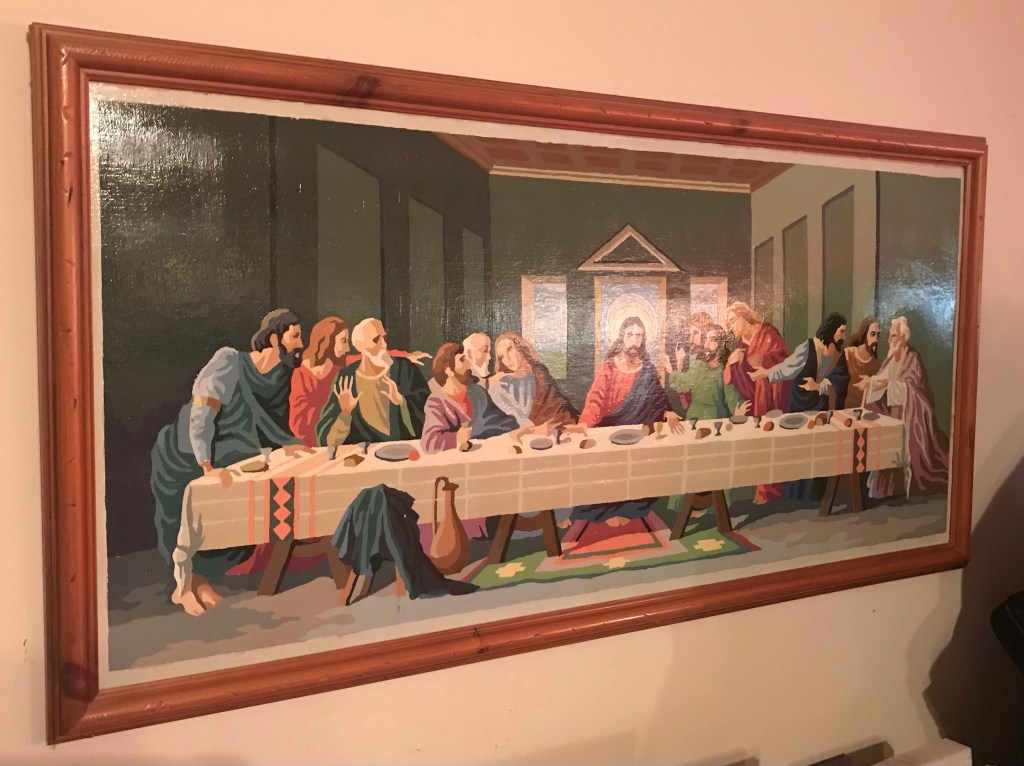
For example, a couple of years ago, while visiting with family at a brunch the morning after a family wedding, we got to talking about the Last Supper painting on my uncle’s dining room wall. Family members did not know that back in the ‘70s my late grandmother had painted one for herself and then decided to paint one for all of her four children. I can remember looking up at that painting as we ate meals at my grandmother’s house. I always loved grandma’s and when she passed away my mom, uncles and aunt gave me grandma’s because I was the only grandchild that was out on my own at the time and had loved it so much. I always check out the paintings when visiting because all five are just a little different. And, my Uncle Earl’s which was the last one she painted is the best of all. It is evident that she was improving as a painter. But I still love the first that I have hanging in my dining room (featured picture of this post). Incidentally, I also have the second, which is the one she painted for my mom (she was the oldest). This is a story I want all my cousins and everyone related to my mom’s side of the family to hear and know. Those Last Supper paintings tell a story, but it is my responsibility as the family member that knows all the intimate details to tell the story.
The cool part about bringing up the Last Supper paintings at family gatherings is the fact that grandma signed and dated them all. So that always makes for a lengthy discussion of what was going on in the world, who was born at that time, et cetera, et cetera. The stories get told. The younger generations hear and learn. I’m reminded of the final song from Hamilton, which I still have not seen in person and want to so badly. The song is Who Lives, Who Dies, Who Tells Your Story. This is the finale song and is actually done by multiple characters. The song has a lot going on in it. Eliza Hamilton has the biggest part as she lived for 50 years after Hamilton’s death. Eliza wants to preserve his legacy and has lots of time, contrasted with Alexander running out of time. Eliza raised money for the Washington Monument, told the stories of American Revolutionary War veterans, and founded the first private orphanage, Graham Windham, in New York City.
If you think about it, the Hamilton broadway play has served an important part in telling the stories. So many more people know history that would be lost without the work of Lin-Manuel Miranda. He told the stories! How about you? Are you telling the stories? If not, who tells your stories?
The Long & Short Of Great Stories

We’re all in situations where we have to be able to tell stories. I believe story telling is an important skill for leaders. It’s one reason I have fell in love with reading fiction novels. We can learn from great authors like Amor Towles. I am reading The Lincoln Highway by Amor Towles right now and loving it. A quote I wrote in my notes the other day while reading was: “The funny thing about stories is they can be told as long stories or short stories or anything in between.” I thought about this today as I was doing a leadership development gathering in Georgia. A lot of how I facilitate gives the participants an opportunity to reflect and tell stories. Some are short and we long for more, others are long, and many are in between. Not everyone is a natural-born storyteller. That doesn’t mean, however, that we don’t run into a ton of different situations where we need to do just that.
I love listening to peoples’ stories. The more animated they get, the more interested I become. Our stories should be anchored in personal experiences and show vulnerability. I also love imagery. Imagery is one of the things I love about Towles’ writing. He is a master at this and I am striving to learn from his work. Right now I am reading about Duchess’ and Woolly’s trip from Nebraska to New York in the Studebaker they “borrowed” from Emmett without his permission. On the trip they are staying in Howard Johnson motels. Remember them? Orange roofs and blue spires. When Towles described the buildings, rooms, the restaurant, and even the food and placemats I was transformed back to my childhood and could see myself there with my parents. I was transformed back to those days gone by. Amazing! Towles knows how to give just the right amount of detail without overwhelming with unnecessary details. Something we all need to hone in our own storytelling. Reading the work of great writers helps us do this.
Good storytelling isn’t about buzz words and fancy language. It’s about conveying our message clearly and simply. We need to connect with our audience as humans. I always try to tell stories as if I was telling the story to my friends sitting around a fire on my back porch. Or, better yet, consider how you would tell the story standing around a water cooler. I guess shorter probably is better, but always remember, every story can be told long, short, or in between – the message is the key.
Telling Our Stories

I am so loving The Bookshop At Water’s End by Patti Callahan Henry. Patti has done such an incredible job of developing the characters in this novel. It is yet another affirmation that we can learn so much from fictional characters. We get to know everything about these characters. In real-life and non-fiction we only get to know what is revealed, based on authenticity. In the book it was said that, “Some things can only be told by those living them.” This is why how we live, lead, serve, and tell the story is so important.
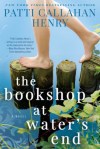
Another line in the book, “Sometimes we tell our stories, and sometimes our stories tell us.” If that statement doesn’t cause you to stop, think, and take stock, I’m not sure what will. As I have watched interviews, reflected, and remembered 9/11 today these quotes from the book are even more powerful. Every person who was living on that day experienced the event differently. Those stories can only be told by each of us in the context we lived it. And, for some the stories tell much about the person.

Additionally, I had the chance to eat dinner with my son on Thursday night and his sliders came in a basket lined with cool paper printed with actual news stories. His paper had an article about November 9, 1989 when the Berlin Wall fell and an article about when the Titanic was found. He wanted to talk about these two things. I was around for those events, but didn’t have much connection with the Titanic. I did, however, live through the Cold War and have stood where the Berlin Wall was and brought home pieces of the Berlin Wall.
As leaders we need to remember these statements. It is why relationships are job one. If we want to live by the Platinum Rule, “Do unto others as they would want to be done to them,” we must know the stories of those we serve. Notice the difference between the Platinum Rule and Golden Rule is only changing “you” to “they” and “them.” Now Jesus might not be happy with me promoting the platinum over the golden, but when we study the leadership of Jesus we find that he also took time to hear the stories and context of those he served. He met people where they were regardless of their story. One thing is for sure: we all have a story. We either tell that story, or it tells us.
The Whole Story

Another line in the great book I’m reading right now, Great Circle, by Maggie Shipstead had an impact on me this morning and caused me to reflect. The line was, “I didn’t need to know the whole story. No story is ever completely whole.” As a person who always says things like “That’s not my story to tell.” This reminded me that we don’t always know the whole story. In fact, rarely ever do we know the whole story; or need to know the whole story for that matter. I’ve actually blogged about this before in It’s Not My Story To Tell in a little different context. The problem seems to be that ,somehow, we learn to confuse complete with perfect. Complete comes to mean existing within a narrow scope of our human experience. It means having all of the light and none of the dark. Having flaws or struggles make us less than. Why do we do this? The more we hold on to these beliefs, whether about ourselves or others we serve, the more we are let down. We don’t feel successful, happy, or connected, and we sure aren’t confident. None of this hardness makes us stronger.

As I continued to reflect, I realized that we really aren’t completely ever whole because each continues to mold us into the sculpture we are becoming. The whole of us is not just the shiniest parts. We tend to only look at those parts, both in ourselves and others. Then, when we don’t find what we think should be there we consider ourselves and others incomplete. We make complete out to needing to find all the missing pieces and then becoming something. Instead, wholeness should have us being who we already are – realizing the story is never completely whole. Everything is part of our wholeness. Being whole means seeing perfection and imperfection, hurting and healing, fear and courage as one in the same. Remember, everyone does not need to see the whole story. Also, remember you don’t always need to know the whole story.
It’s Not How You Talk, It’s HOW You Talk
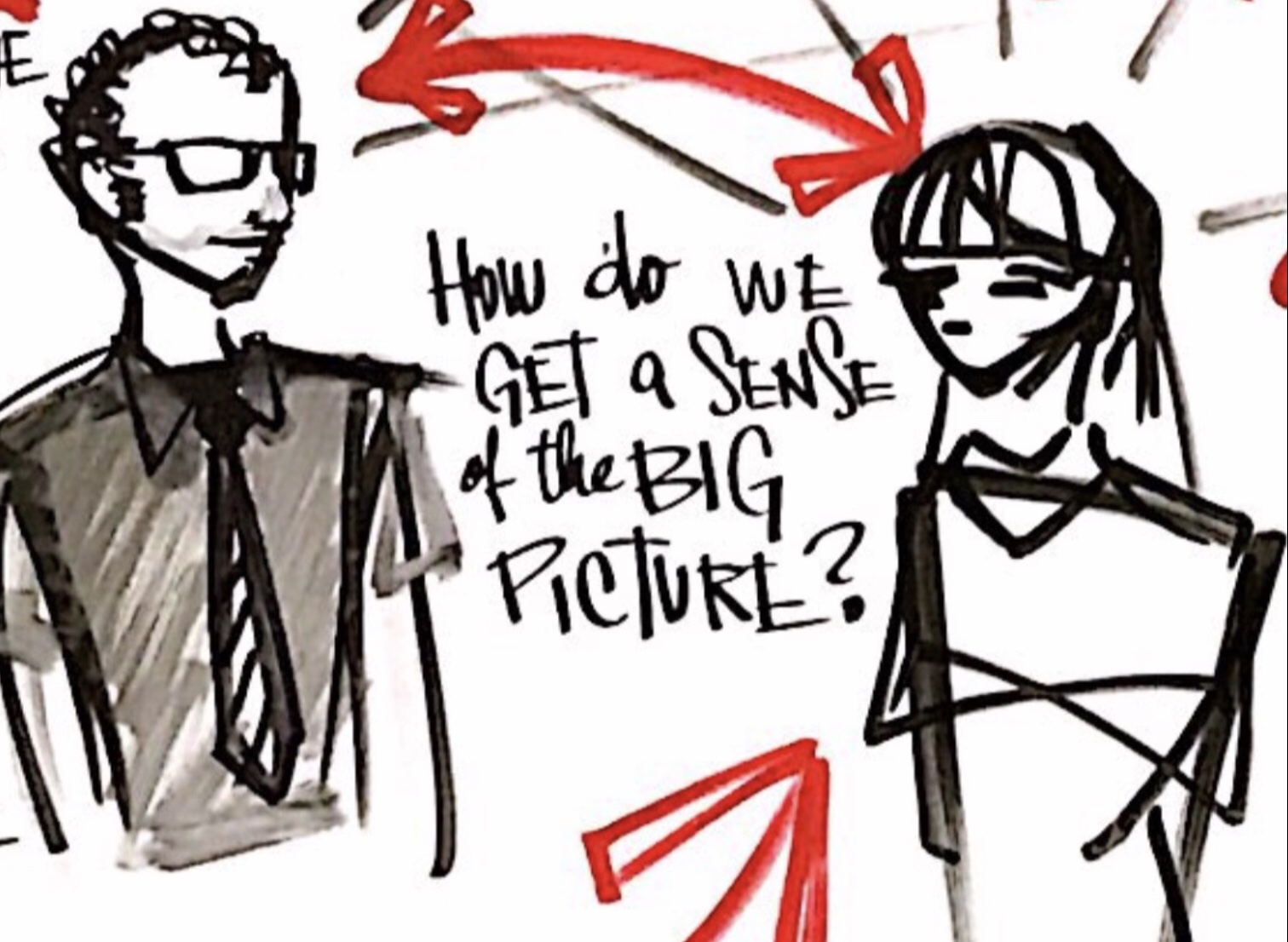 I stepped in at the end of an interview this week and caught the last part of the conversation and had the chance to briefly meet the candidate. When the candidate left I said, “I know I was only in here for 10 minutes of that, but I’d hire that person.” The persons doing the interview said, “She’s awesome, we intend to.” They proceeded to call her back in and give her an offer and she accepted. After the now new hire left, the comment was made that “it is not how you talk, it’s HOW you talk. Her words meant something.” Bingo! That was a perfect description of what was just witnessed.
This candidate didn’t have things she was saying that we had never heard before, although she did have innovative ideas. So, her “what” wasn’t much different. Additionally, she had not chosen to be a career changer and go into teaching for reasons much different from others. So, her “why” wasn’t much different either. This person, however, had learned how to convey a more strategic voice.
If we want to establish credibility and influence people, it’s important to be concise and let individuals know clearly what role you want to play in the conversation. It is also important to demystify the content of the message and we deliver by eliminating jargon and being a person of few, but effective, words.
This is really about developing your voice, which is less about performance and more about your strategic instincts, understanding the context we are in, and an awareness of the signals we are sending. We all have different ways of communicating, but saying it in the correct context, or how we say it, is crucial. This “how” includes being visionary and developing the ability to convey our aspirations for the future. This then sets the stage for transformation to occur.
So, if you want to show up with a strong strategic voice and effectively connect the dots for those you are speaking to remember that the context matters, be clear, concise and jargon free, and paint the picture that bridges any distance between you and those you are speaking to. Sometimes finding the right words can be the biggest challenge of our day. Remember to make your words mean something because “it’s not how you talk, but HOW you talk.”
 Byron's Babbles
leave a comment